Market · Site conditions
Drones in Oman (2026): CAA Rules, Green Zones, Mountains and Heavy-Lift Logistics
Drones in Oman in 2026: CAA Decision 1412/2023 in plain terms, the March suspension and green zones, four climate zones and IS-9 and HL-150 selection.
- Author
- VEXAFLY Aviation Technology Co., Ltd.
- Scope
- Market · Site conditions
- Published
- Length
- 5 min read · 9 sources
Short answer: in 2026 drones in Oman operate under the CAA’s Decision No. 1412/2023: every drone registered, a licence for aerial work, insurance, a 120 m height limit and line of sight unless authorised, 5 km buffers around airports and seaports, no night flights without approval and prior approval to import. The CAA suspended all drone permits from 3 March 2026 and resumed them on 25 May 2026, only inside green zones on the Serb platform, so check the current status before any flight. Use the IS-9 for pipelines and desert routes and the HL-150 for mountain supply.
What do Oman’s drone rules say in plain terms?
The full text is the CAA’s Regulation Governing Unmanned Aircraft Systems (Decision No. 1412/2023). This summary is ours; read the original before you rely on it.
| Topic | What the decision says | What it means for a buyer |
|---|---|---|
| Registration | Every drone is registered (Article 2) | Register each aircraft before use |
| Import and export | Prior approval of the CAA and relevant authorities for drones or components (Article 3) | Apply before the shipment leaves |
| Licence | Licence for flying activities and aerial work (Article 5); applicant aged 18 or more, or a company registered in Oman, third-party liability insurance, exam or training and an operational permit (Article 9) | Companies need Omani registration, insurance and trained pilots |
| Height and sight | Visual line of sight, or authorised tracking and collision avoidance; 400 ft (120 m) above ground unless authorised (Article 17) | Long routes need an authorisation or many short line-of-sight legs |
| Buffers | Not within 5 km of airports, seaports and protected places | Port and plant jobs need specific approval |
| Night | No night flights without prior approval | Plan dawn and daytime work |
What changed in 2026:
| Date | What happened |
|---|---|
| 3 March 2026 | The CAA suspended all drone permits: government, commercial and recreational (Times of Oman) |
| 25 May 2026 | Permits resumed, with operations only inside the green zones on the Serb platform (Times of Oman) |
Serb is the licensing platform; its visitor page shows how green zones work. Check the current status and your zone with the CAA before planning any flight.
Oman site conditions at a glance
| Zone | Figure | What it means for equipment |
|---|---|---|
| Muscat coast | Seeb: June mean maximum 40.0 °C, June mean minimum 30.3 °C, 89.7 mm rain a year (WMO, 1986–2009) | 10.0 °C headroom under 50 °C; warm nights |
| Interior plains, Ibri | June mean maximum 42.9 °C, July mean minimum 30.3 °C, 67.5 mm rain a year (WMO, 2000–2009) | 7.1 °C headroom; shade the dock |
| Mountains, Saiq (Jebel Akhdar plateau) | June and July mean maximum about 30.8 °C, January mean minimum 4.8 °C, 309.5 mm rain a year including about 47 mm in each of July and August (WMO, 1998–2009) | About 12 °C cooler than Ibri in June, and wetter: IP67 matters |
| Monsoon coast, Salalah | About 7–8 rain days a month in July and August, when mean maxima of 28.5 and 27.1 °C are the lowest of the year (WMO, 1986–2009) | A wet season on the south coast |
| Cyclones | Tropical Cyclone Shaheen reached the coast on 3 October 2021 and Muscat flights were suspended; reported as a rare storm for the Arabian Sea (NPR) | IP67 airframes; survey flights after storms |
| Solar | Ibri II: 500 MWac (607 MWp), about 300 km west of Muscat, described by its developer as Oman’s largest utility-scale PV independent power project (ACWA Power); Nama PWP signed an agreement with a Masdar-led consortium for Ibri III, 500 MW with storage, beside it (Masdar) | Wide sites in heat: IS-9, or a docked IS-4 |
Facts checked on 26 November 2026.
Which drone for which Oman job?
| Job | Model | Why |
|---|---|---|
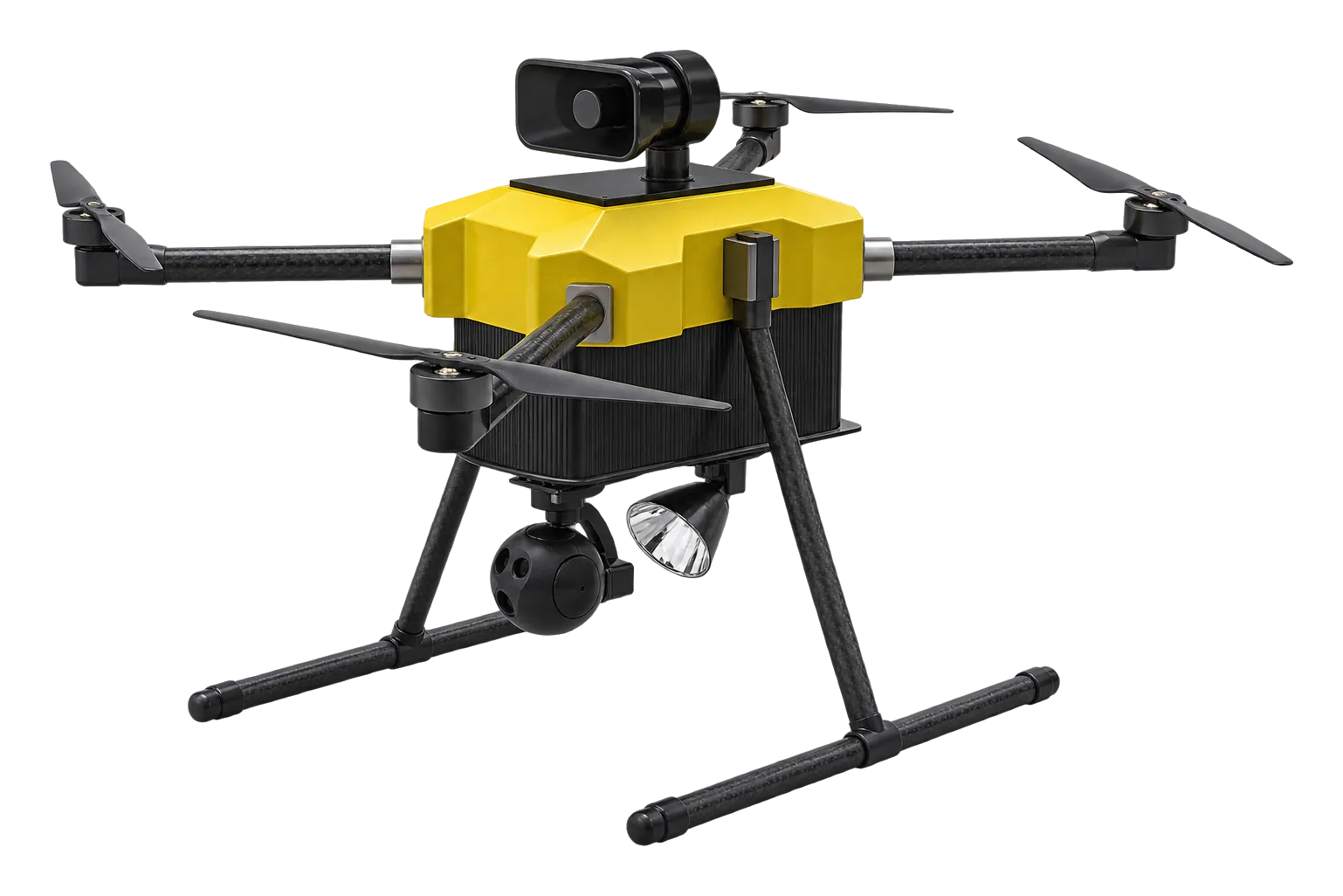
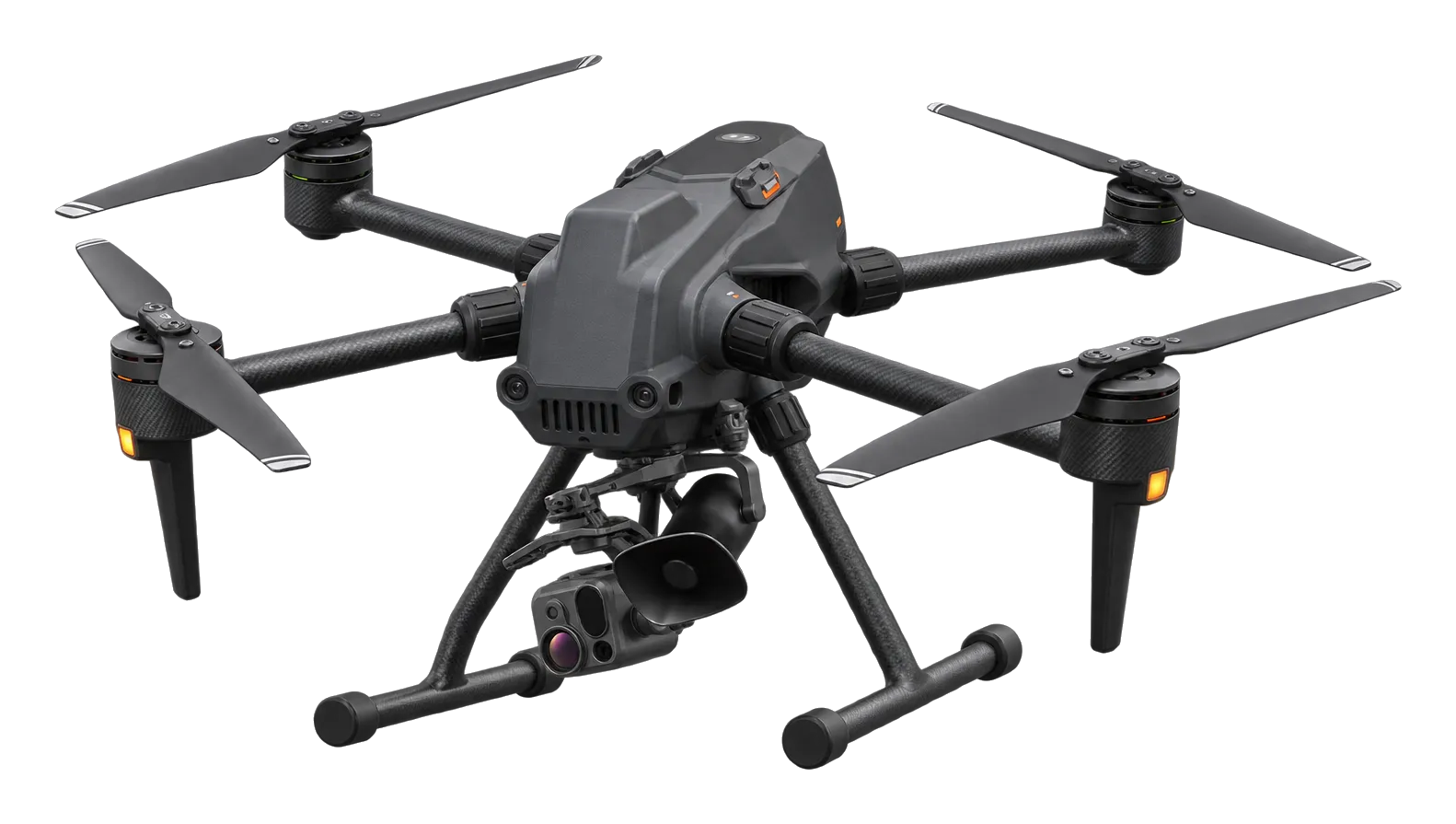
| Pipelines, power lines, desert routes | IS-9 | Up to 120 minutes, 65 km range, IP67, −40 to 50 °C |
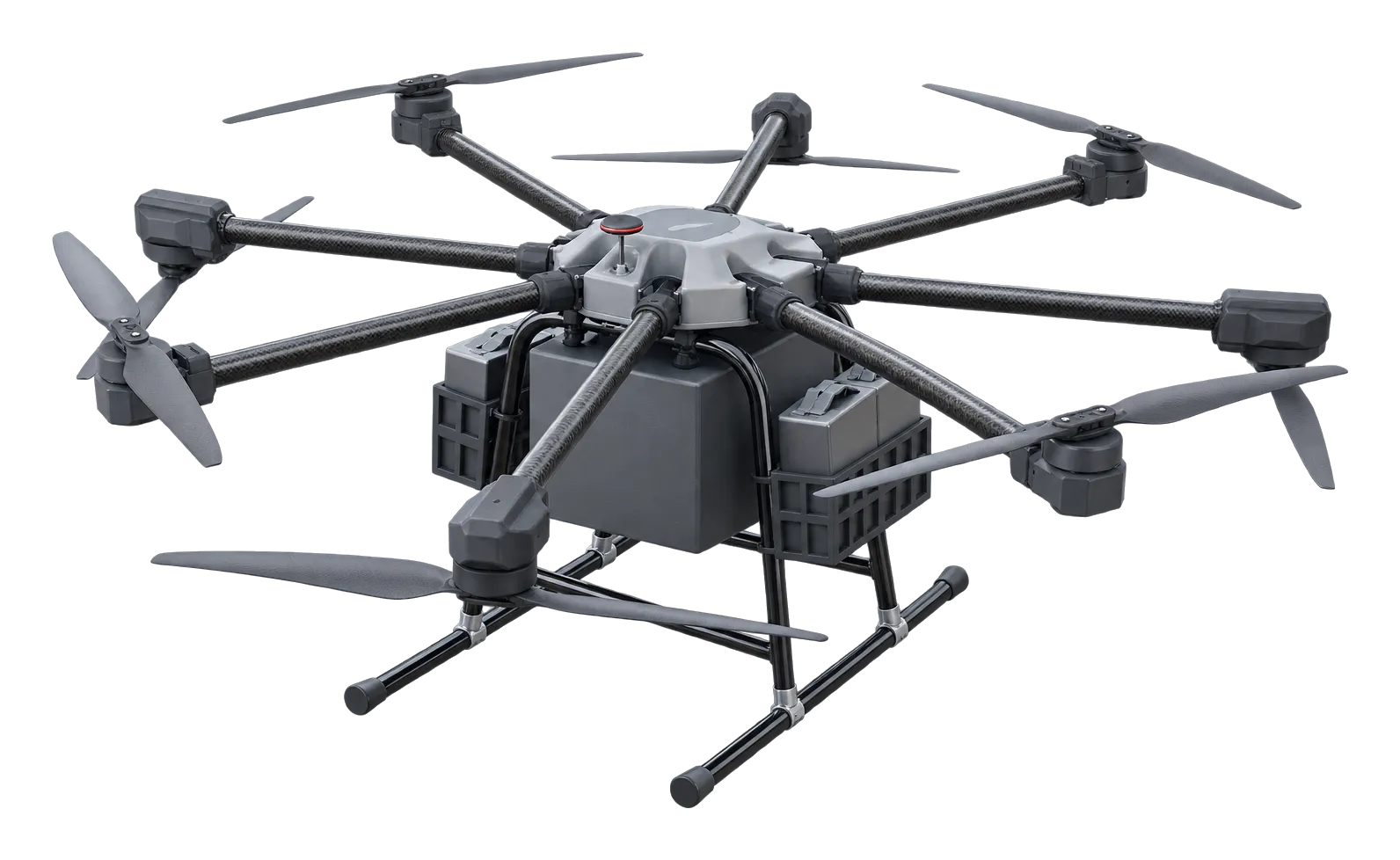
| Mountain village or site supply | HL-150 | 120 kg rated, 44.6 km empty range, 2K gimbal pod to watch the load |
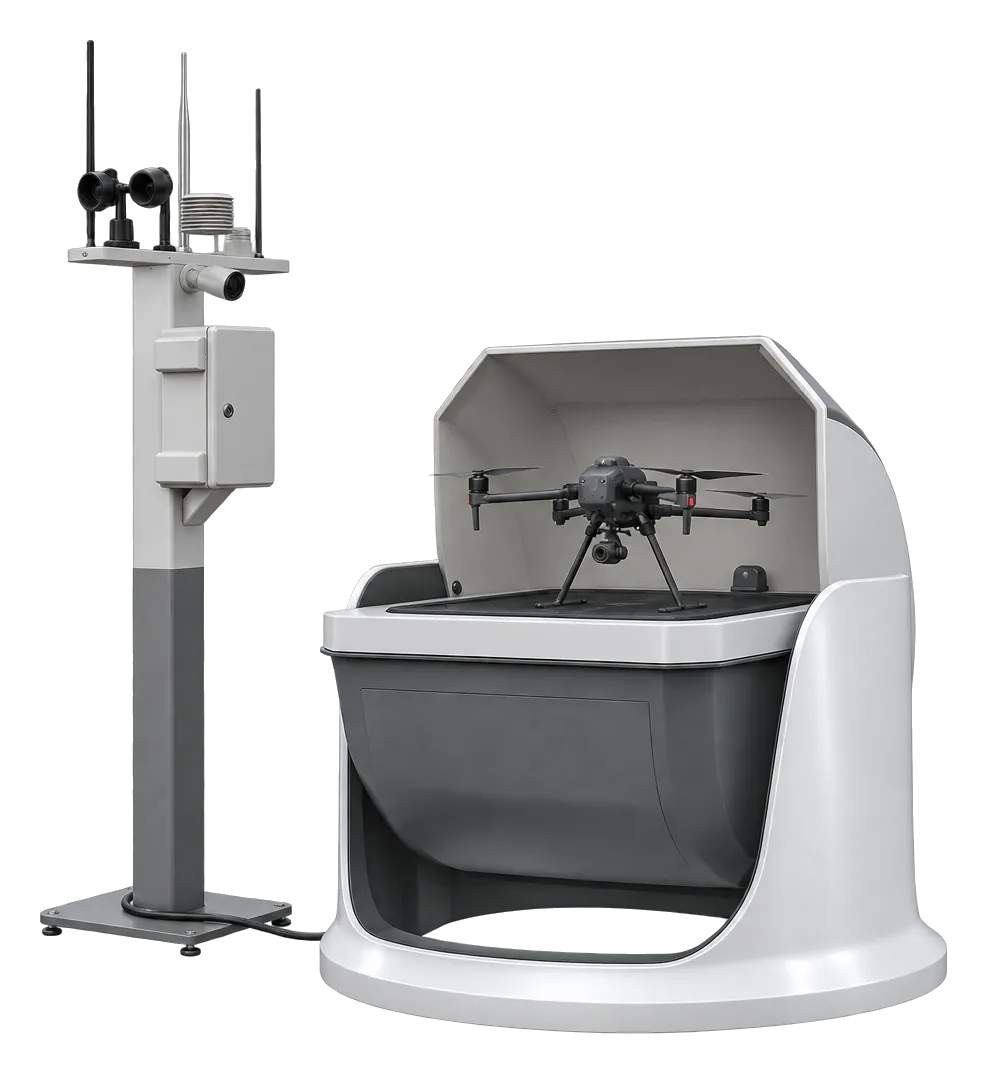
| Solar plant inspection at Ibri | IS-9, or DS-1 with the IS-4 | Wide site, heat; the dock is rated to 50 °C |
| Post-cyclone damage survey | IS-9 | Long sortie, IP67 |
- Best for pipelines and desert routes: the IS-9, with 120 minutes of flight and IP67, if your authorisation allows beyond-line-of-sight work.
- Best for mountain supply: the HL-150, rated 120 kg and carrying 60 kg about 24 km in still air.
- Best for scheduled solar-plant checks: a DS-1 dock with an IS-4, rated −35 to 50 °C.
How do the four zones change the setup?
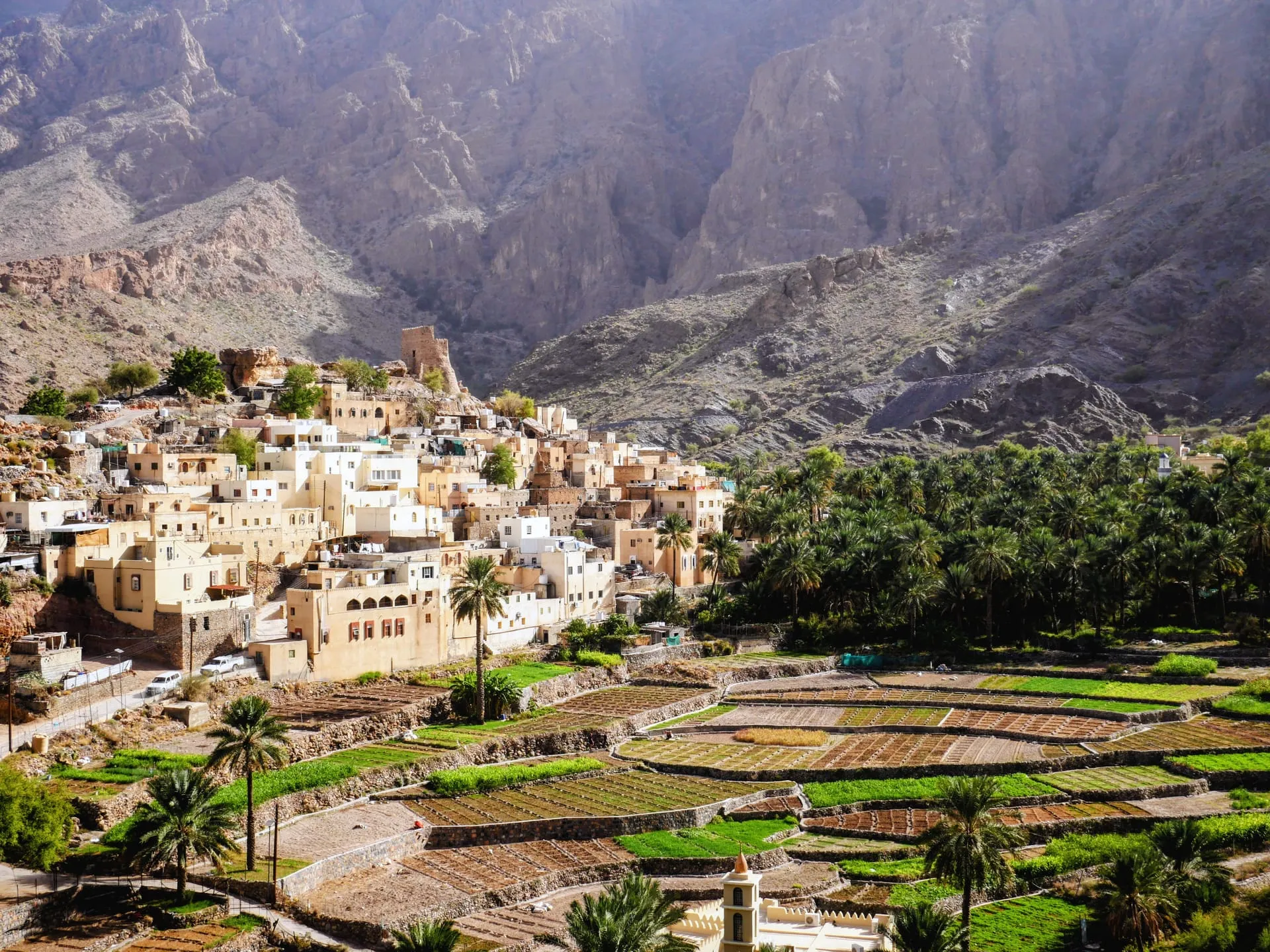
On the coast the problem is heat that barely cools at night; at Ibri it is peak heat, only 7.1 °C below a 50 °C equipment limit; on the plateau it is rain and cold nights; on the south coast it is the monsoon. The IS-9 and HL-150 are IP67 and suit all four; the IS-4 is IP45 and the DS-1 IP54, so keep them out of storms and sand. The files list no working temperature for the IS-4 or HL-150: ask in the quotation. See extreme-heat operation.
Can a heavy-lift drone supply mountain sites?
Example: the HL-150 load table, with an assumed 25 % reserve and a round trip. Radius = range × 0.75 ÷ 2.
| Load | Brochure range (still air) | One-way radius with a 25 % reserve |
|---|---|---|
| 20 kg | 41.7 km | 15.6 km |
| 40 kg | 30 km | 11.3 km |
| 60 kg | 24 km | 9.0 km |
| 80 kg | 19.2 km | 7.2 km |
| 100 kg | 13.8 km | 5.2 km |
So a site 9 km away takes 60 kg a trip only if the reserve also covers the climb and the thin air; if the site is much higher, cut the load. Thin air at altitude reduces lift, so plan with the rated payload and read high-altitude heavy lift and mountain site transport.
How do you inspect long lines under a 120 m and line-of-sight rule?
Either split the line into short line-of-sight legs, or obtain the authorisation the decision allows for tracking and collision avoidance. The IS-9’s 65 km range is only usable in the second case. Read BVLOS inspection and pipeline inspection.
How do you import a drone into Oman?
Article 3 means approval comes first. Apply to the CAA, with the aircraft documents, then ship and clear customs through a broker. See our import guide and cargo range guide.
Next step
Send the zone, the route length or the load and distance, and whether your CAA authorisation covers beyond-line-of-sight flight. We reply with a configuration and a load or sortie estimate.
Q & A
Common questions
01Can companies fly drones in Oman after the 2026 suspension?
The CAA suspended all drone permits from 3 March 2026 and announced their resumption on 25 May 2026, with operations only inside the green zones on the Serb platform. Check the current status and your zone with the CAA before planning any flight.
02Do I need approval to import a drone into Oman?
Yes. Article 3 of the decision requires the CAA's prior approval, together with relevant authorities, to import or export drones or their components. Apply before the shipment leaves China.
03How high and how far can a commercial drone fly in Oman?
The decision limits flights to 400 ft (120 m) above ground unless authorised, within visual line of sight or with an authorised tracking and collision-avoidance system. Long-range flights, such as the IS-9's 65 km, need that authorisation.
04Which drone works in Oman's mountains and in summer heat?
The IS-9 (−40 to 50 °C, IP67) suits long routes in all four zones and the HL-150 (IP67) suits supply work; the plateau is about 12 °C cooler and wetter than the interior. A 50 °C equipment limit leaves 7.1 °C below Ibri's June mean maximum, so shade docks and ask for the temperature rating of any model whose file lists none.
05Can a heavy-lift drone supply mountain villages or work sites?
Yes within its load table: the HL-150 is rated at 120 kg and carries 60 kg about 24 km in still air in the brochure. Plan with a reserve, and note that thinner air at altitude reduces lift.
References
- 1CAA issues circular suspending all operating air activities in Oman — Times of Oman
- 2Civil Aviation Authority announces resumption of drone and paragliding permits — Times of Oman
- 3Serb Visitor — Serb
- 4Muscat climate normals — World Meteorological Organization (WWIS)
- 5Ibri climate normals — World Meteorological Organization (WWIS)
- 6Saiq climate normals — World Meteorological Organization (WWIS)
- 7Salalah climate normals — World Meteorological Organization (WWIS)
- 8Ibri 2 PV IPP — ACWA Power
- 9Tropical Cyclone Shaheen: Rare storm is battering coast of Oman — NPR
VEXAFLY Aviation Technology Co., Ltd.. VEXAFLY Aviation Technology Co., Ltd. — industrial drone maker in Nanjing. Our application engineers write and check these pages and configure inspection, cleaning, lift and fire-response systems for project buyers. About VEXAFLY