Inspection
Drone Operation in Extreme Heat in 2026: Limits, Batteries and Dock Sites
Drone operation in extreme heat in 2026: planning bands, battery limits, density altitude and dock shade, with Gulf and desert scheduling and UAE rules notes.
- Author
- VEXAFLY Aviation Technology Co., Ltd.
- Scope
- Inspection
- Published
- Length
- 4 min read · 8 sources

Short answer: in 2026, drone operation in extreme heat is limited by three things at once: thin hot air that cuts lift, batteries that dislike temperatures above about 40 °C, and an outdoor dock that heats in the sun. The practical answer is to fly at dawn, shorten flights, carry less, keep batteries cool and stand down when the air nears the aircraft’s published rating.
How hot is too hot? A planning table
These bands are our planning rules, not a standard. Replace them with your maker’s manual.
| Air temperature | Action | Battery | Dock (DS-1: −35 °C to 50 °C) |
|---|---|---|---|
| Below 35 °C | Normal operation | Charge 10–30 °C if possible | Within rating |
| 35–45 °C | Shorten flights, reduce payload | Cool before charging, charge below 45 °C | Shade and airflow |
| 45–50 °C | Dawn only, short sorties | Store in air-conditioning | At the rating: stand-down rule |
| Above 50 °C | Stand down | No flight | Above the rated limit |
Published temperatures: the UAE recorded 51.8 °C at Sweihan on 1 August 2025 and 51.6 °C in May 2025; Phoenix Sky Harbor’s record is 122 °F (50 °C) on 26 June 1990. On the hottest Gulf and desert days the air can exceed the dock’s 50 °C rating.
Why does heat cut flight time and payload?
Hot air is less dense. Aviation calls the effect density altitude: the altitude at which the aircraft behaves as if it were. A high density altitude lowers performance, so rotors need more power to hold the same weight. The extra current heats motors and batteries further. A drone that carries its full load on a cool morning may have no margin at midday.
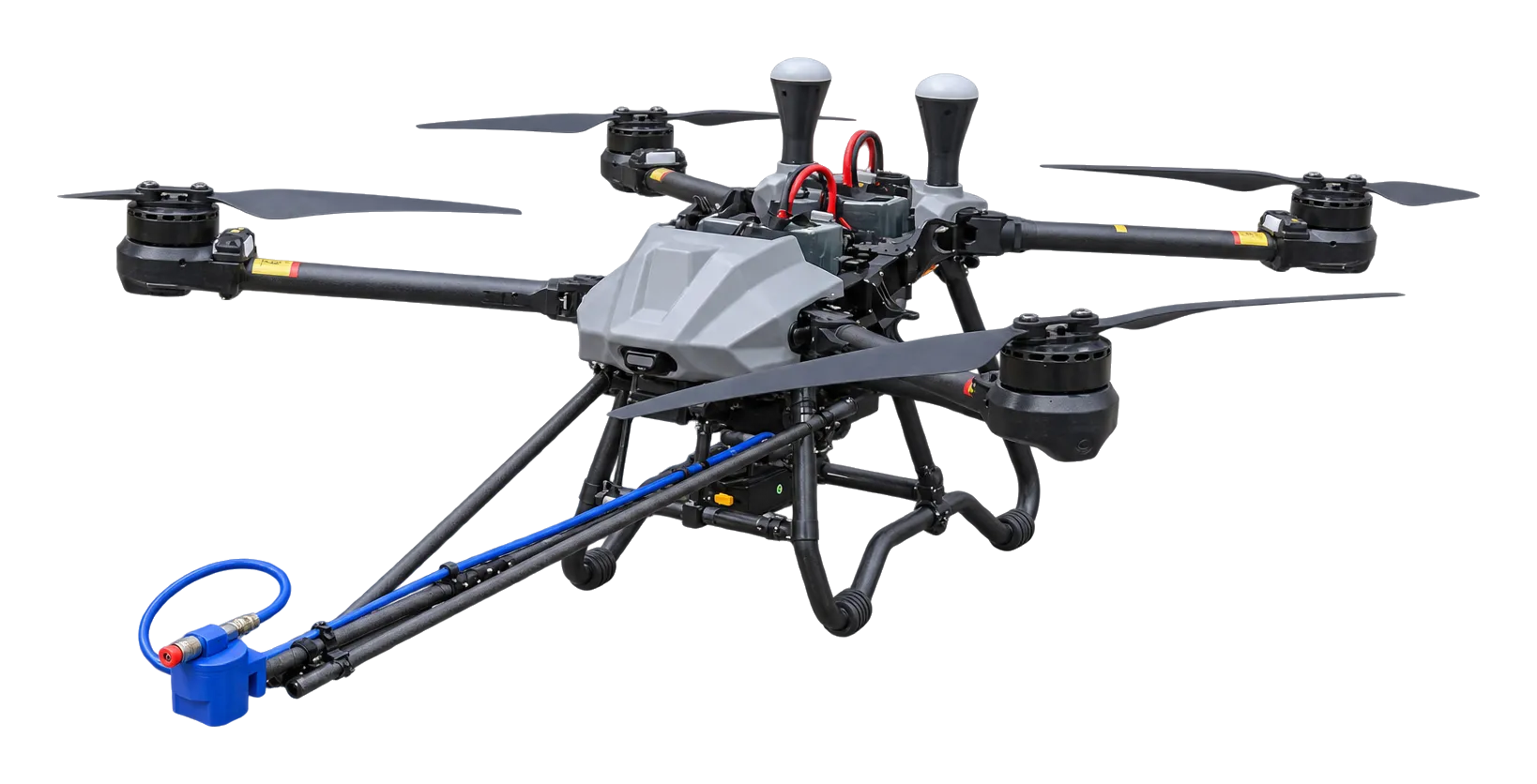
For the CW-65 the weight check is simple: the take-off weight limit is 111 kg and the aircraft with batteries is 55.8 kg, which leaves 55.2 kg for water, hose and margin. A full 62 L tank would exceed the limit, so the fill level is set on the quotation. On a hot day, plan less than the cool-day figure.
Batteries: storage, charging and the 45 °C line
Lithium-ion batteries charge safely between about 0 °C and 45 °C, with the best life when charged at 10–30 °C. Some makers advise against flying with batteries above 40 °C. Practical steps: keep spare packs in an air-conditioned vehicle, never in direct sun, let a hot pack cool before charging, and replace swollen or heat-damaged packs.
What does a dock do in the desert sun?
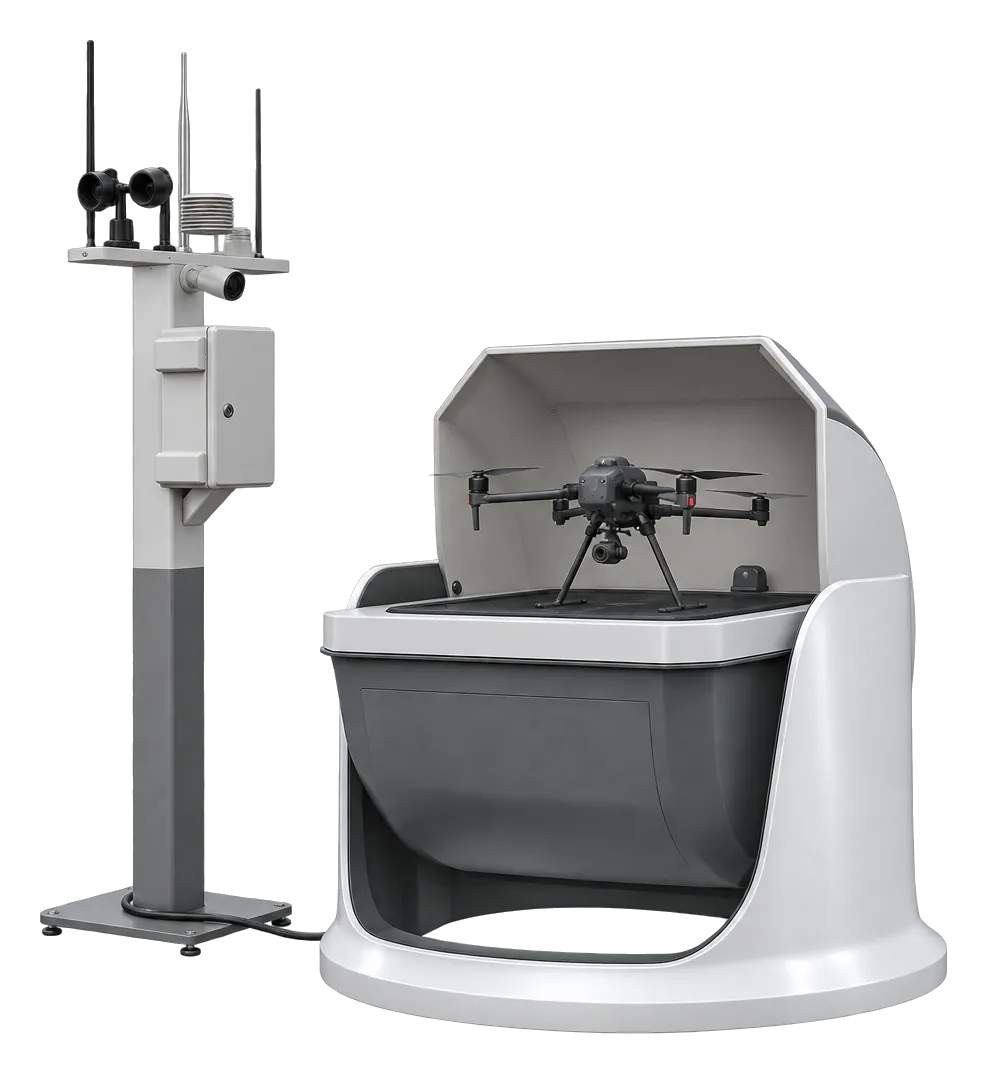
A dock is an enclosure in the sun. The DS-1 is rated −35 °C to 50 °C, IP54, with a 5,000 m maximum operating altitude. Gulf records exceed 50 °C, and a dark cabinet in direct sun runs hotter than the air. Plan a shade structure that does not block the landing area, leave airflow around the dock and stand flights down when the weather station shows the air near the rating. Our file gives no cooling data, so ask how the dock cools itself; the answer is confirmed in the quotation. See dock installation requirements.
Example: a summer cleaning shift in Dubai
Example only, with assumed figures. A facade-cleaning team uses a CW-65 in July. Assume shade air at 30 °C at 05:30, passing 40 °C by about 10:00; check your own forecast. Plan two sessions of about 25 minutes each on the customised battery (20–40 minutes in the brochure) between 05:30 and 09:30, with batteries resting in an air-conditioned vehicle at 20–30 °C before charging. Afternoons: no flights. A tethered CW-65 has no battery flight-time limit, which removes battery heat from the flight window but not motor and speed-controller heat. See tethered or tank cleaning drone.
Dust, glare and hot surfaces
Hot desert air carries dust, so use the IP rating in your favour and rinse after the shift; see drone IP ratings. Glare on screens and facades hides the aircraft: use a hood and a visual observer. Hot roofs and tarmac create thermals that push a light aircraft around on landing.
What about rules and seasons in the UAE, Saudi Arabia, Arizona and Australia?
Rules differ by country and change. UAE drone operations were suspended for part of 2026 under GCAA Safety Decision 2026-03; check the GCAA’s current safety decisions and the UAE drone platform before planning work. Dubai also has its own civil aviation authority. For other countries, check your aviation authority and your season. See our market pages for the United Arab Emirates, Dubai, Saudi Arabia, Phoenix and Australia.
Best picks
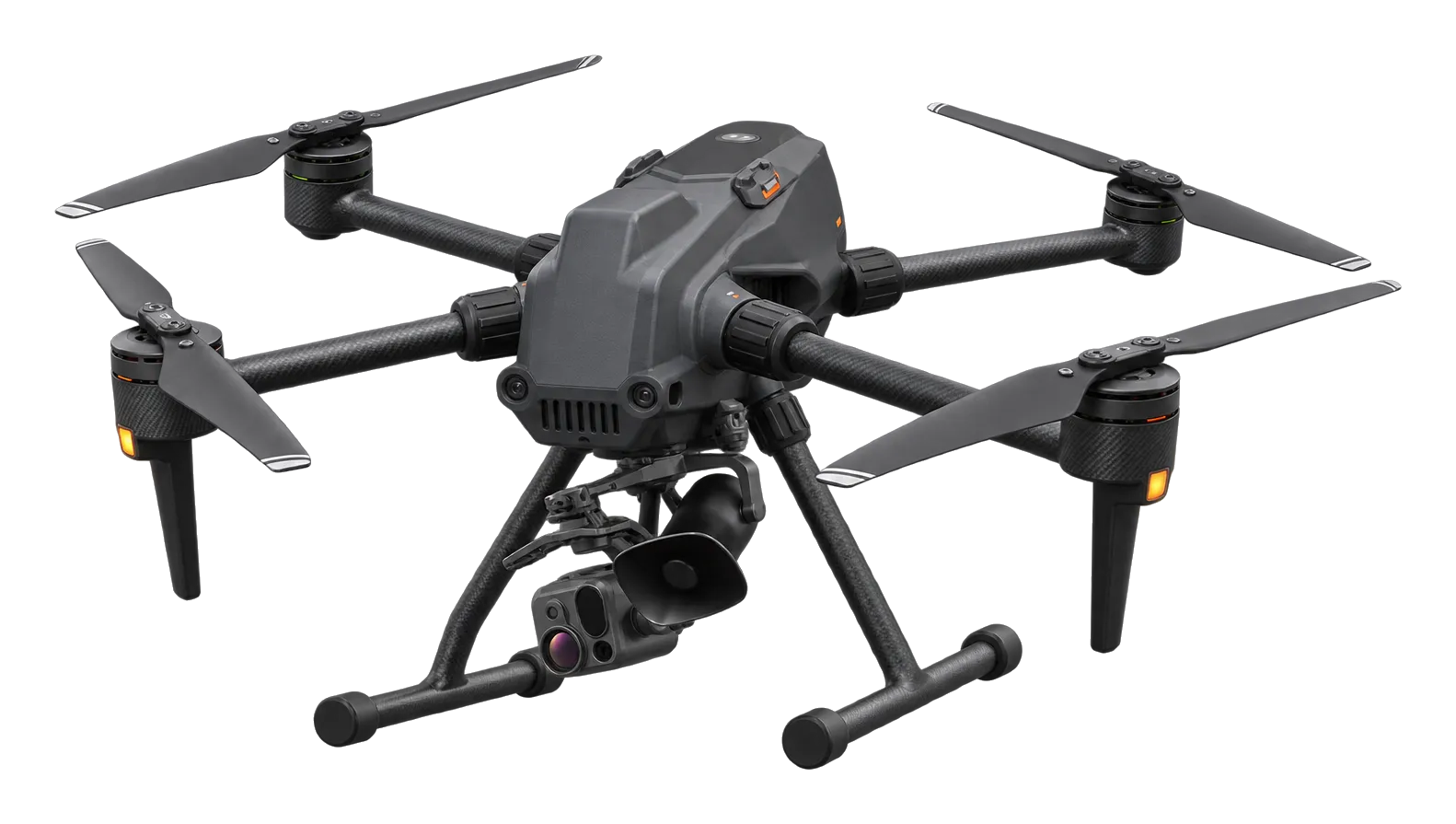
- Best for hot-climate docked patrols: DS-1 plus IS-4, rated to 50 °C for the dock; dawn rounds.
- Best for long desert corridors: IS-9, −40 °C to 50 °C, IP67, 120 min maximum.
- Best for summer facade work: CW-65 tethered, no battery limit on flight time.
- Best for fire-ground heat: RX-200, rated to 60 °C.
Next step
Send your site, the hottest months, the working hours and how you store and charge batteries. We tell you which models are rated for the air you expect and which temperatures we must confirm in the quotation. For the cold end of the range, read drones in cold weather.
Q & A
Common questions
01What temperature is too hot to fly an industrial drone?
It depends on the aircraft’s published range and the battery. Our IS-9 and DS-1 are rated to 50 °C, and some makers advise against flying with batteries above about 40 °C. Set stand-down thresholds from your maker’s manual, with margin.
02Why do drones lose flight time in the heat?
Hot air is less dense, so motors work harder for the same lift, and batteries lose capacity and life when hot. The result is a shorter flight and less payload margin.
03Can a drone dock stay outside in a Gulf summer?
The DS-1 is rated to 50 °C, and Gulf records have passed 51 °C. A sun-loaded enclosure runs hotter than the air, so plan shade and airflow, and ask how the dock cools itself; we give that in the quotation.
04How should batteries be stored and charged in desert heat?
Keep them in an air-conditioned vehicle or room at about 10–30 °C, charge below 45 °C and never leave them in a hot car or in direct sun.
05Are drones allowed to fly in the UAE right now?
The GCAA suspended drone authorisations through Safety Decision 2026-03, and reports say activity resumed from 30 June 2026. Check the GCAA’s current safety decisions and the UAE drone platform before planning work.
06What are the best hours to fly in the Gulf summer?
Shortly after dawn, before the air passes about 40 °C. Plan two short sessions, then stop; afternoons give the shortest flights and the hottest batteries.
References
- 1UAE temperatures hit 51.8°C as peak summer heat intensifies — Khaleej Times
- 2UAE records hottest May in over two decades with temperatures reaching 51.6°C — Gulf News
- 3Historical Extreme Temperatures in Phoenix, Yuma, and El Centro — National Weather Service
- 4BU-410: Charging at High and Low Temperatures — Battery University
- 5Heatwave across Europe: how much heat can a drone actually handle? — Dronewatch
- 6Density Altitude — SKYbrary Aviation Safety
- 7Can You Fly Your Drone in Hot Weather? — Pilot Institute
- 8UAS Registration — UAE General Civil Aviation Authority
VEXAFLY Aviation Technology Co., Ltd.. VEXAFLY Aviation Technology Co., Ltd. — industrial drone maker in Nanjing. Our application engineers write and check these pages and configure inspection, cleaning, lift and fire-response systems for project buyers. About VEXAFLY