Market · Site conditions
Heavy Lift Drones in Australia 2026: CASA Weight Classes, Heat, Cyclones and Bushfire Work
Heavy lift drones in Australia, 2026: which CASA class each aircraft falls in, who can approve it, and how heat, cyclones and fire airspace change the choice.
- Author
- VEXAFLY Aviation Technology Co., Ltd.
- Scope
- Market · Site conditions
- Published
- Length
- 4 min read · 5 sources
Short answer: in 2026 the first question for heavy lift drones in Australia is the CASA class, not the payload. Our HL-150 and RX-120 weigh 257.8 kg at take-off, which is large (above 150 kg) and goes to CASA itself; the 60 kg CW-30P is medium. Mining heat, cyclones and fire-agency airspace then shape the set-up.
Site conditions at a glance
| Condition | Figure | What it means for equipment |
|---|---|---|
| CASA weight classes | Small 2–25 kg, medium 25–150 kg, large above 150 kg (CASA) | Every aircraft below is medium or large |
| ReOC for hire or reward | Pilots need a RePL; delegates issue a ReOC only up to 150 kg; the ReOC names make and model above 25 kg (CASA) | Order lead time depends on paperwork, not on the factory |
| Application time | Up to 70 business days (CASA) | Start before the purchase order |
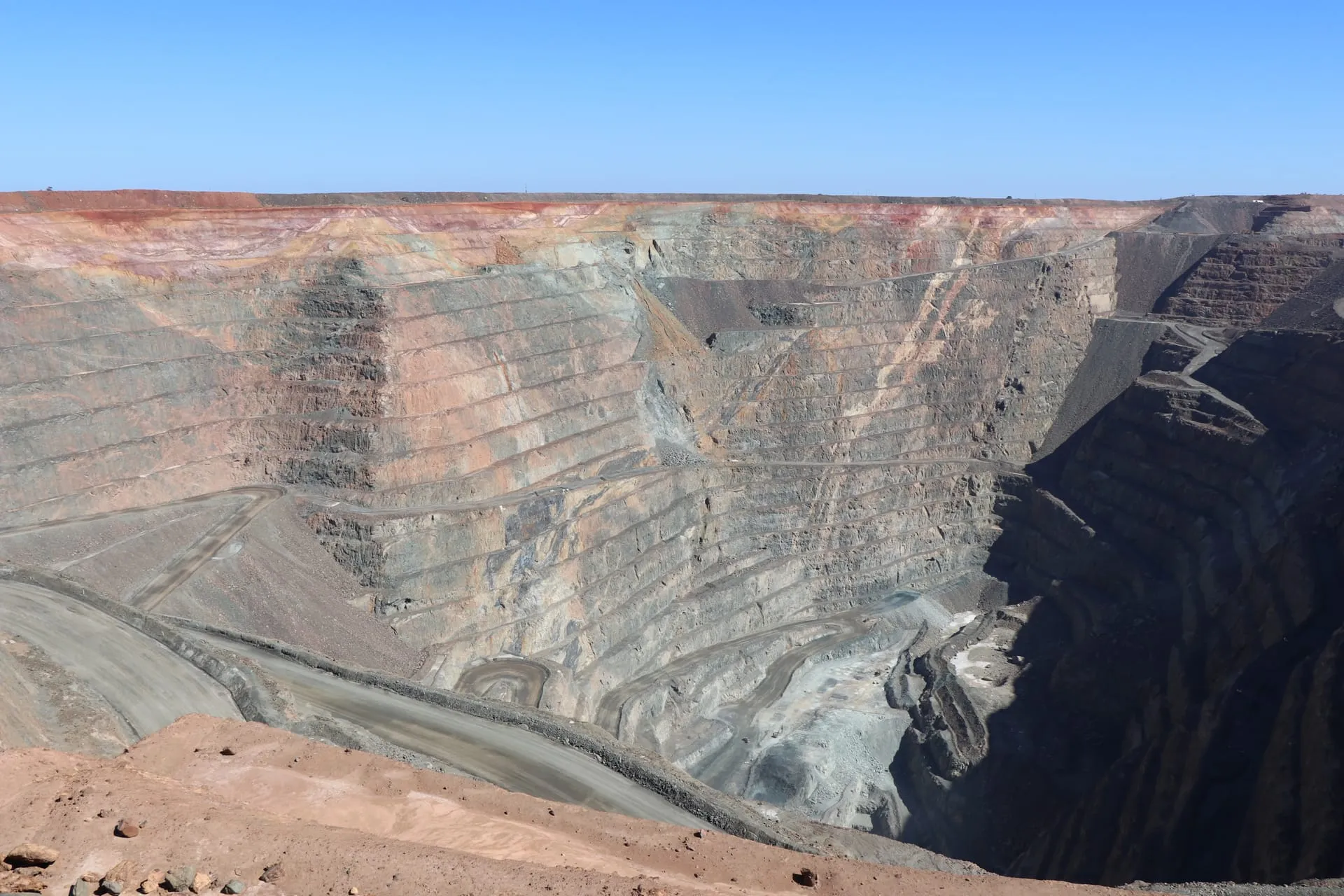
| Mining heat | Pilbara temperatures regularly above 40 °C; heat, altitude and humidity all affect lift (BHP) | Plan payload below the rated figure on hot days |
| Cyclones | The Pilbara coast has more cyclones than any other part of Australia; 49 caused gales at Port Hedland since 1910 (BoM) | IP67 airframes, and a stow plan for the season |
| Bushfire scale | Black Summer in NSW: 5.5 million ha burnt, 2,448 homes destroyed (AIDR) | Long smoke seasons; emergency airspace belongs to the agency |
Facts checked on 28 November 2026.
Which aircraft for which job, and which CASA class?
| Job | Aircraft | Weight | CASA class | What you need |
|---|---|---|---|---|
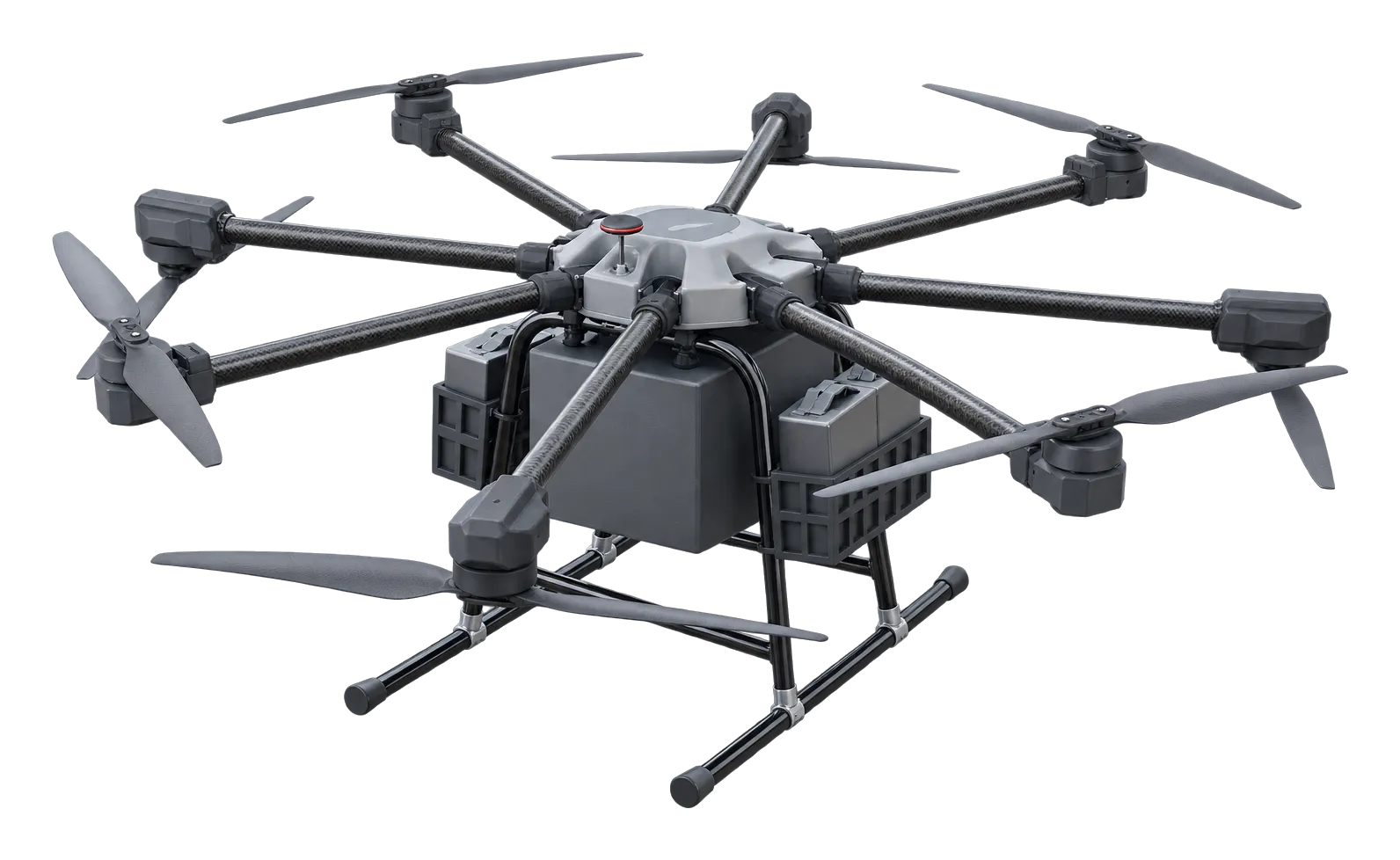
| Hardware to a ridge-top tower | HL-150 hook | 257.8 kg MTOW | Large | CASA assessment, additional certification |
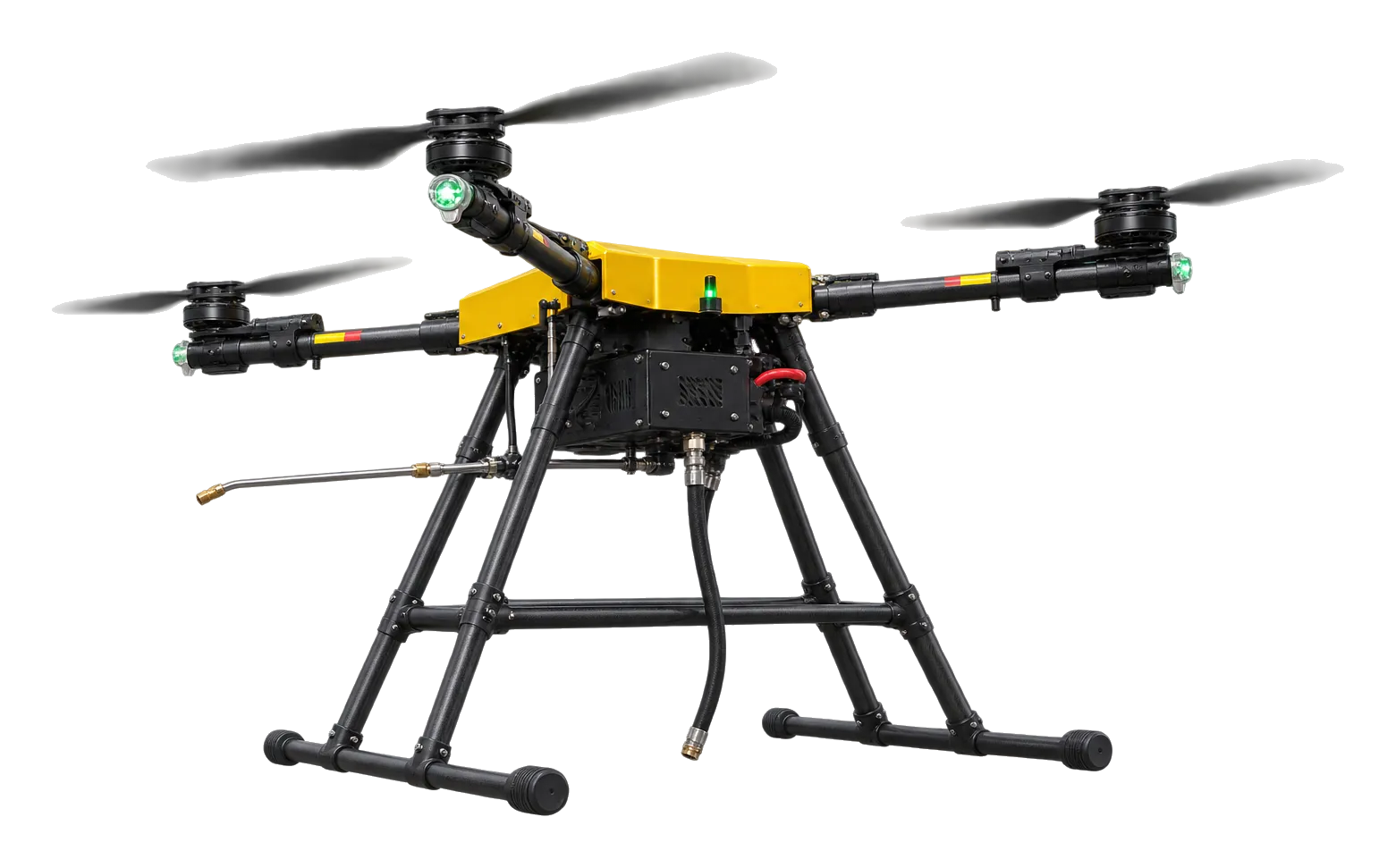
| Roof and solar cleaning at mine camps | CW-30P hose-fed | 60 kg MTOW | Medium | ReOC naming the model, RePL for the pilot |
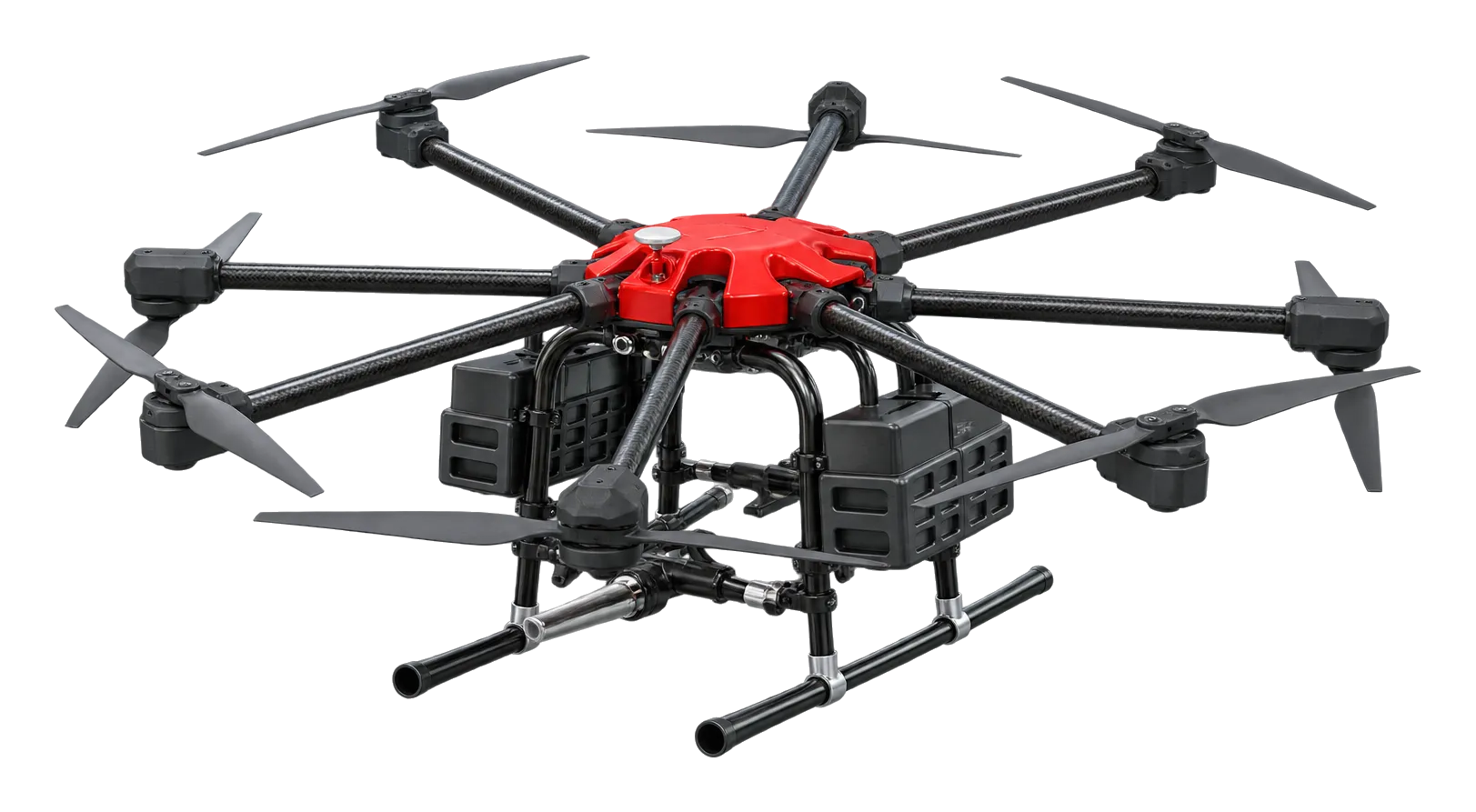
| Site fire team at a remote plant | RX-120 pods | 257.8 kg MTOW | Large | CASA assessment, agency procedures |
| Survey before every lift | IS-4 | 7 kg MTOW | Small | ReOC and RePL for paid work |
The HL-100 appears in the Perth page; we do not state its CASA class here because take-off weight depends on the configuration and is confirmed in the quotation.
What does CASA need from you by weight class?
Small and medium aircraft are the route most buyers take: a ReOC held by your business, a RePL for each pilot and, above 25 kg, the manufacturer and model written into the certificate. For a large aircraft the delegate route closes, because delegates may issue only for aircraft up to 150 kg. Our advice is to ask CASA for a pre-application discussion with the full specification in hand and to read the Part 101 Manual of Standards. Rules change; check the CASA pages the day you order.
Example: how many lifts does a tower job need?
Example (assumptions are ours). A ridge-top tower needs 6 t of hardware. At the HL-150’s rated payload of 120 kg: 6,000 ÷ 120 = 50 lifts. At an assumed 12 minutes per round trip including hook-up, 50 × 12 = 600 min, about 10 flying hours, or two working days with battery swaps. Cycle time depends on distance and climb. A helicopter job of this size is compared in heavy lift drone or helicopter.
How do heat, dust and cyclones change the plan?
BHP’s Western Australian iron ore sites fly close to 20 drone flights a day, with about 80 CASA-licensed pilots, and the company names heat, altitude and humidity as lift limits. For a heavy aircraft that means three habits: plan the load at 70–80 % of rated payload on days above 40 °C, carry spare batteries kept in shade, and rinse after dust. The HL-150 airframe is IP67. In cyclone season the aircraft and any dock are stowed indoors; schedule maintenance for that window.
Can drones help in a bushfire?
They can work with the agency. NSW National Parks used drones in Black Summer when smoke grounded crewed aircraft, and 38 % of NSW national park land was affected. Inside an emergency operation drones must not fly without the agency’s permission. The RX-120, with four 23 kg pods or a 40 mm hose, is for trained industrial fire teams protecting their own site; see wildfire firefighting drones.
- Best for remote towers and line construction: the HL-150 hook, 120 kg rated and 150 kg maximum payload, up to 44.6 km without load in the brochure.
- Best for mine-camp roofs and solar arrays: the hose-fed CW-30P, working height up to 50 m, medium class.
- Best for a site fire team at a processing plant: the RX-120, IP67, rated −20 °C to 60 °C.
Import and logistics
We quote FOB China. Duty, radio approval and import permits vary by country; confirm them with your customs broker. Lithium batteries for large aircraft normally travel by sea, so allow shipping time in the plan. Service and parts are described on our service page.
Next step
Send us your heaviest single load, the longest carry and the site’s peak temperature. We reply with a payload table for that heat, and you take the model name to CASA before you order. Large aircraft first: tell us if you want the HL-150 or RX-120 discussed.
Q & A
Common questions
01What counts as a heavy lift drone under CASA rules?
CASA has no heavy lift class. It sorts all drones by take-off weight: small 2–25 kg, medium 25–150 kg and large above 150 kg. A transport drone is then treated by its weight class, so an HL-150 at 257.8 kg is large.
02Do I need a ReOC to fly a drone over 25 kg?
If you fly for hire or reward, yes: a business needs a ReOC and its pilots need a RePL. Above 25 kg the ReOC lists the manufacturer and model. Flying a medium aircraft over your own land without payment has its own category; read the CASA page for it.
03Can a ReOC delegate approve a 250 kg drone?
No. Industry delegates can issue a ReOC only for aircraft of no more than 150 kg. For aircraft above that, CASA says additional certification is needed, which means CASA assesses the case itself. Allow more time.
04What load does a heavy drone really lift on a 40 °C Pilbara day?
Less than the brochure number. BHP says high temperature, altitude and humidity all affect lift. We state rated payload (120 kg for the HL-150) and confirm the figure for your site temperature and altitude in the quotation.
05Can drones help in bushfires in Australia?
Yes, with the incident agency. NSW National Parks used drones in the Black Summer fires when smoke grounded crewed aircraft. Drones must not fly during emergency operations without the agency’s permission, so private aircraft stay out unless invited.
06How long does CASA approval take?
CASA says ReOC applications can take up to 70 business days. A large aircraft needs additional certification on top of that. Ask CASA early and plan the delivery date around it.
References
- 1Part 101 (Unmanned Aircraft and Rockets) Manual of Standards 2019 — Federal Register of Legislation
- 2Black Summer bushfires, NSW, 2019-20 — Australian Institute for Disaster Resilience
- 3Eyes in the sky: Firefighting by drone — NSW National Parks and Wildlife Service
- 4Tropical Cyclones Affecting Port Hedland — Bureau of Meteorology
- 5Australian firm successfully carries heavy loads between multiple drones — Australian Aviation
VEXAFLY Aviation Technology Co., Ltd.. VEXAFLY Aviation Technology Co., Ltd. — industrial drone maker in Nanjing. Our application engineers write and check these pages and configure inspection, cleaning, lift and fire-response systems for project buyers. About VEXAFLY