RX-200Fire response
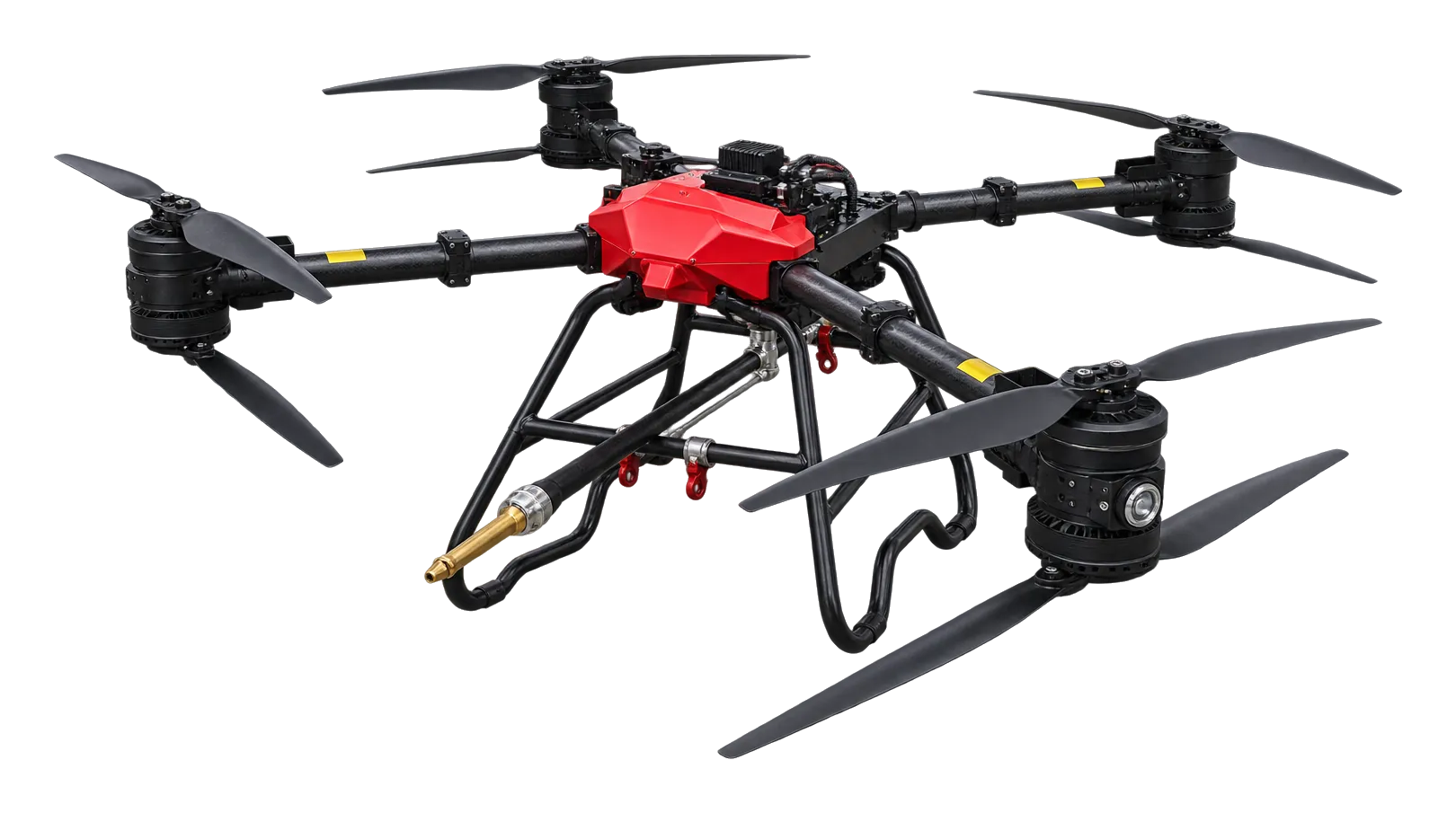
RX-200 Firefighting Drone
Fire brigades and industrial fire teams that need to reach high floors, roofs and terrain beyond ladders.
Specs on requestDetails of RX-200 Firefighting Drone

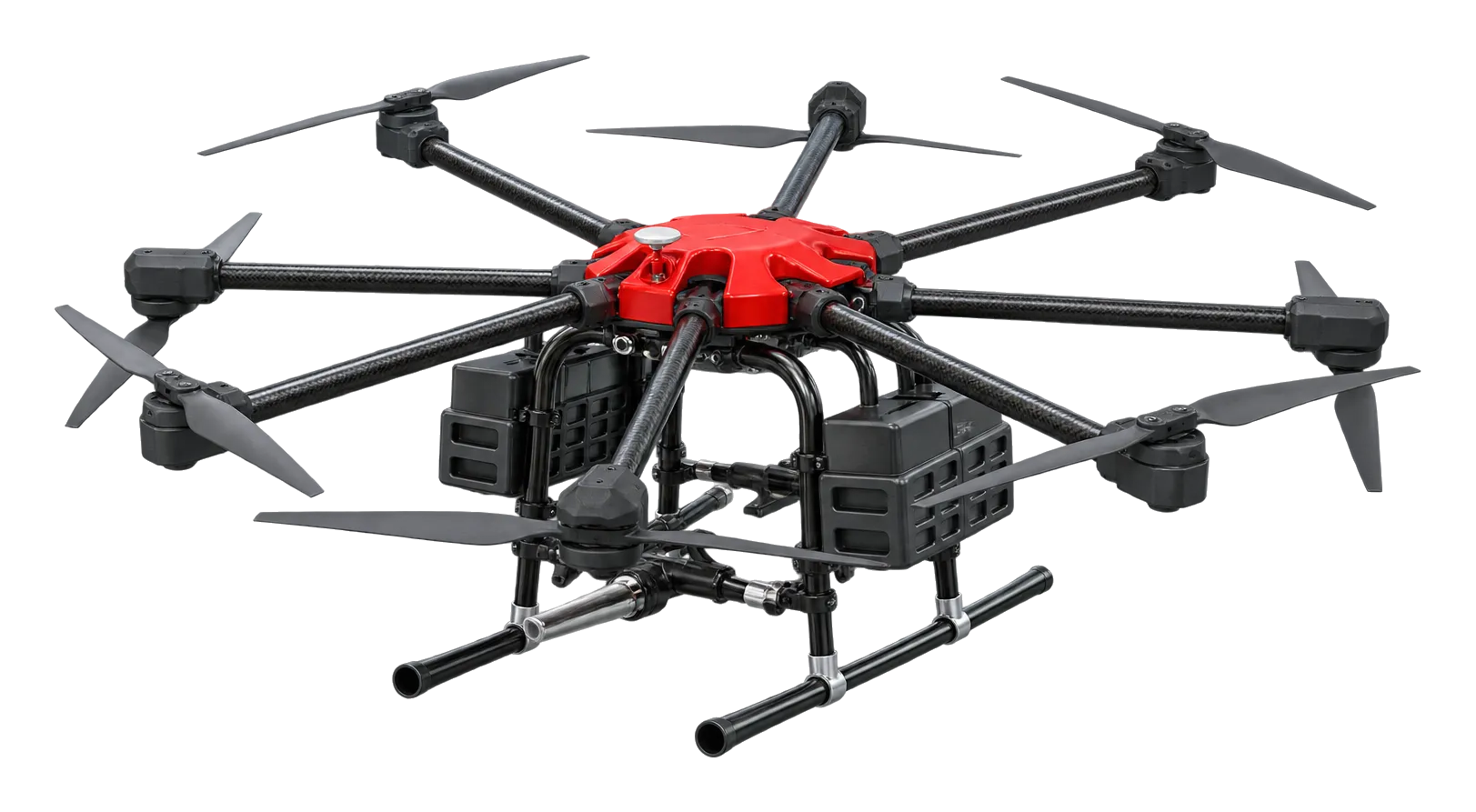
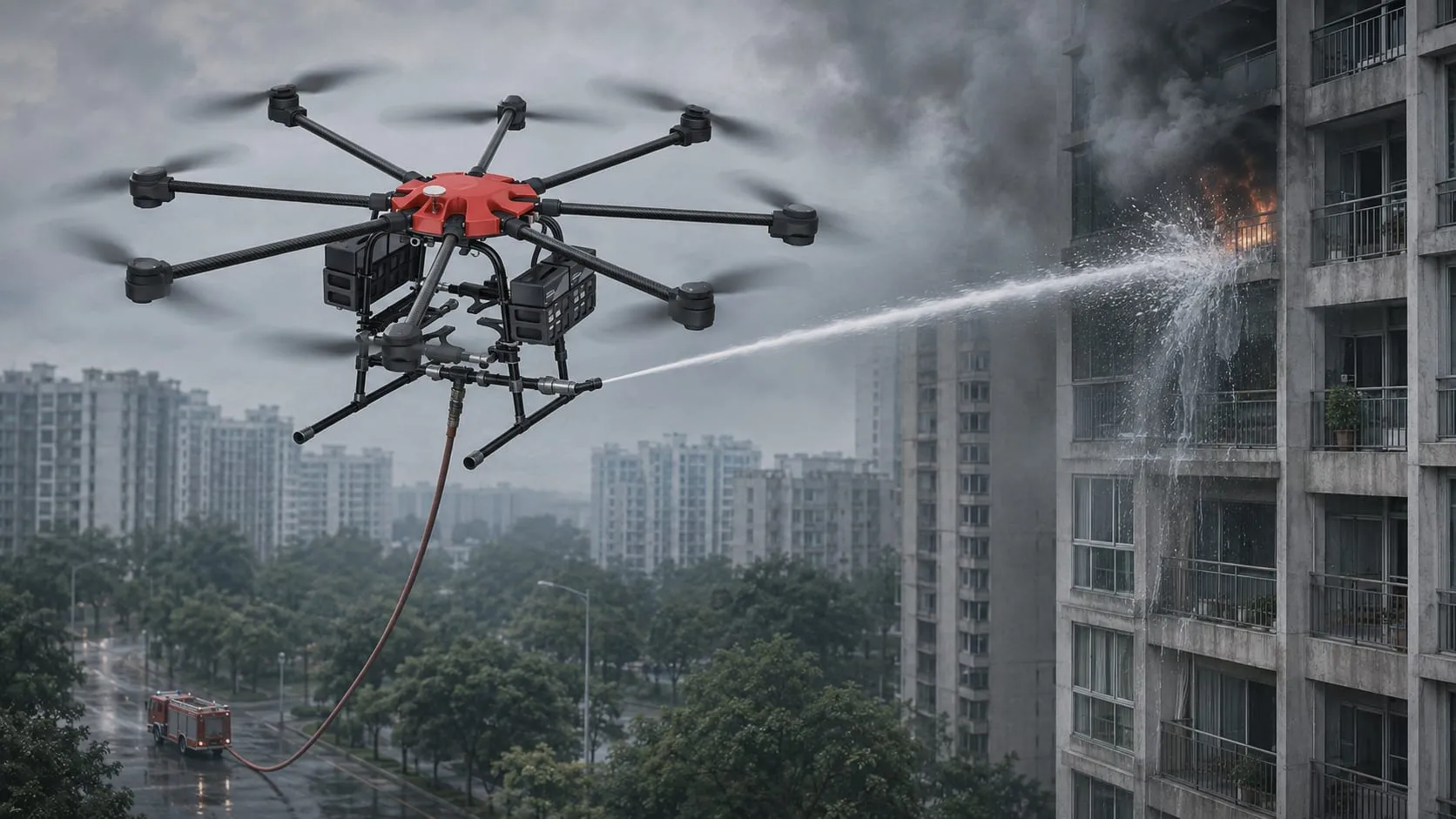
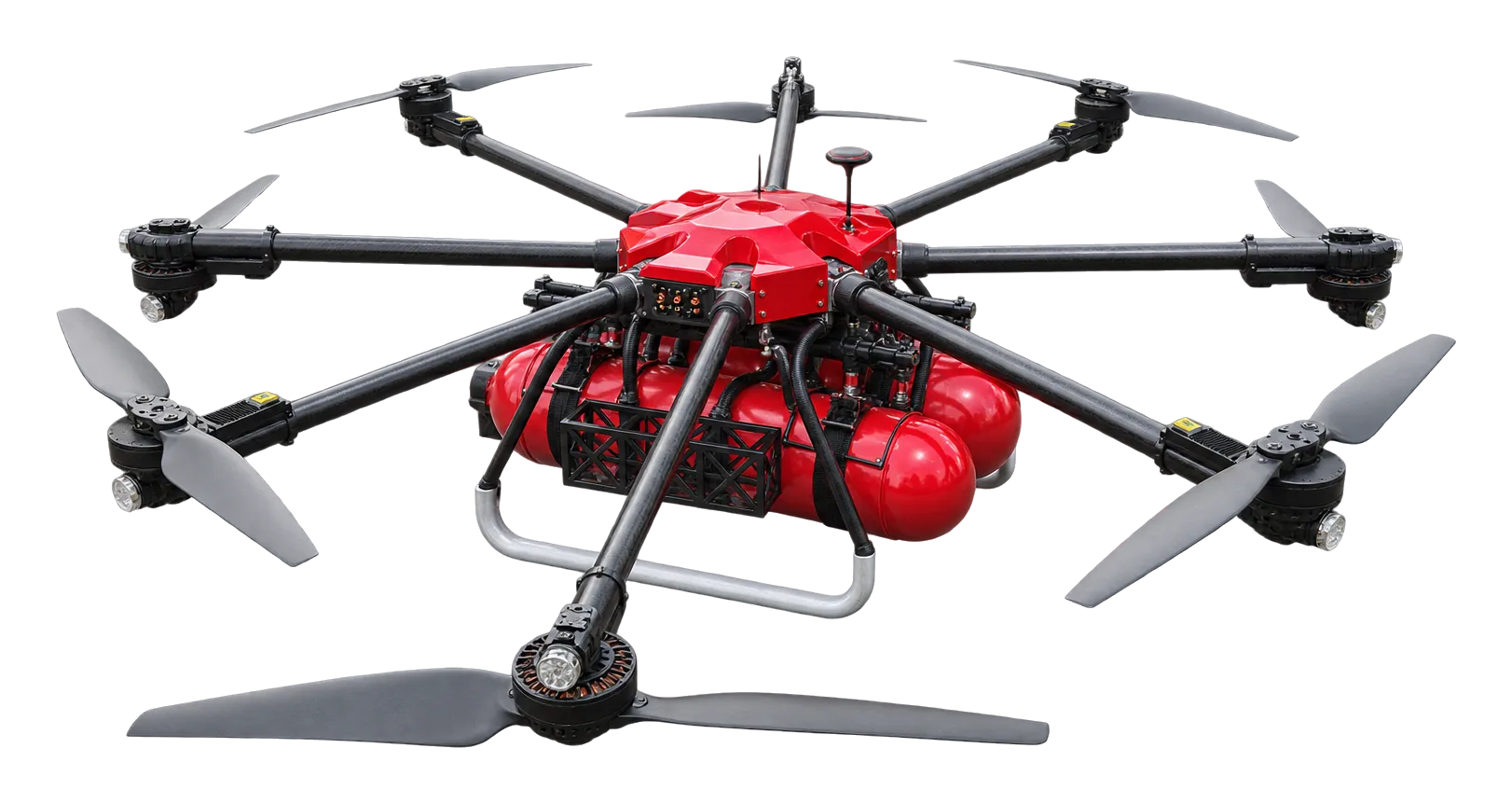
An eight-rotor firefighting drone that carries four extinguishing pods or a hose and nozzle. Longer flight time than the RX-200 with a lighter load, for crews that cover wide areas.
Price range varies with configuration, batteries and order quantity. The final price is on our quotation.
Supplier facts
Made by VEXAFLY Aviation Technology Co., Ltd., Nanjing, China · founded 2016 · customers in 60+ countries · 12-month standard warranty · ISO, CE · OEM / ODM · Partner programme
Best for:Fire services and industrial fire teams that need range as well as load: estates, forest edges, industrial parks.
Specs on request · Reference values
Short answer: the RX-120 is an eight-rotor firefighting drone for trained crews. It carries four 23 kg extinguishing pods or a 40 mm hose and nozzle, lifts up to 120 kg and, according to the brochure, flies up to 63 minutes — longer than the heavier RX-200.
| Scene | Better kit | Why |
|---|---|---|
| Roof or terrain fire, no access | Pods | Dropped from 90–150 m and burst 0–6 m above the fire |
| Facade or upper floor | Hose | Continuous water from the ground supply, about 15 m throw |
| Mixed industrial site | Both | Same aircraft, kit changed between missions |
Fire teams covering an estate or industrial zone often spend more flight time getting to the fire than fighting it. With up to 63 minutes in the air, the RX-120 leaves more time over the scene. Plan with a reserve: heat, smoke and wind all raise power use.
See the heavier RX-200, the compact RX-100 and all fire-response drones.
Parameters
| Max load | 120 kg |
|---|---|
| Max take-off weight | 257.8 kg |
| Max flight time / range | 63 min / 44.6 km |
| Max flight speed | 20 m/s |
| Max flight height | 4500 m |
| Dimensions folded / unfolded | 2320 × 1010 × 870 / 4605 × 4605 × 990 mm |
| Weight without / with battery | 63 kg / 107.8 kg |
| Extinguishing pods | 4 × 23 kg max, Ø 260 × 650 mm |
| Pod agent | Water-based agent or ABC dry powder, ≥ 20 kg net |
| Pod coverage / safety radius | ≥ 50 m² / ≥ 20 m |
| Pod release | Radio proximity fuze, 0–6 m; drop height 90–150 m |
| Fire hose | Ø 40 mm, 10 mm outlet, 15 m spray distance (test, 15 bar) |
| Ingress protection | IP67 |
| Working temperature | −20 °C to 60 °C |
Reference values from the manufacturer brochure; hose figures are test values at 15 bar. Final configuration and figures are confirmed in the quotation. Ask for a model recommendation →
Selection
Our engineers check these points with you, so the quotation fits your site rather than a catalogue default.
FAQ
Both carry four 23 kg pods. The RX-120 flies longer and further with a lighter maximum load; the RX-200 has more load margin for heavy hose work and the largest drops.
In the brochure test the nozzle sprays about 15 m at 15 bar, with up to 100 m of pipe tested. The usable height depends on your pumps and the hose route.
Water-based agent or flame-retardant ABC dry powder in the pods. Your fire authority decides which agents and drop procedures are allowed.
Yes, operator training is part of delivery. Drops need a trained pilot, a spotter and a clear procedure agreed with the incident commander.
Request a Quote
Tell us the site, the task and the flight rules you work under. An engineer replies with a matched configuration and price.
Nine firefighting drone makers in China in 2026, grouped by fire scene: scouting, wildland, high-rise, heavy hose and pods, tethered and truck systems.
Start a fire department drone program in 2026: year-one roadmap, Part 107 or COA, SOPs mapped to NFPA 2400, staffing arithmetic, fleet mix and US funding rules.
Fire extinguisher drones in 2026 by delivery method: burst pods, powder balls, capsules, projectiles and tank spray, with agents, coverage and safety zones.
Fire brigades and industrial fire teams that need to reach high floors, roofs and terrain beyond ladders.
Mountain, grassland and forest-edge fires and smaller urban teams.
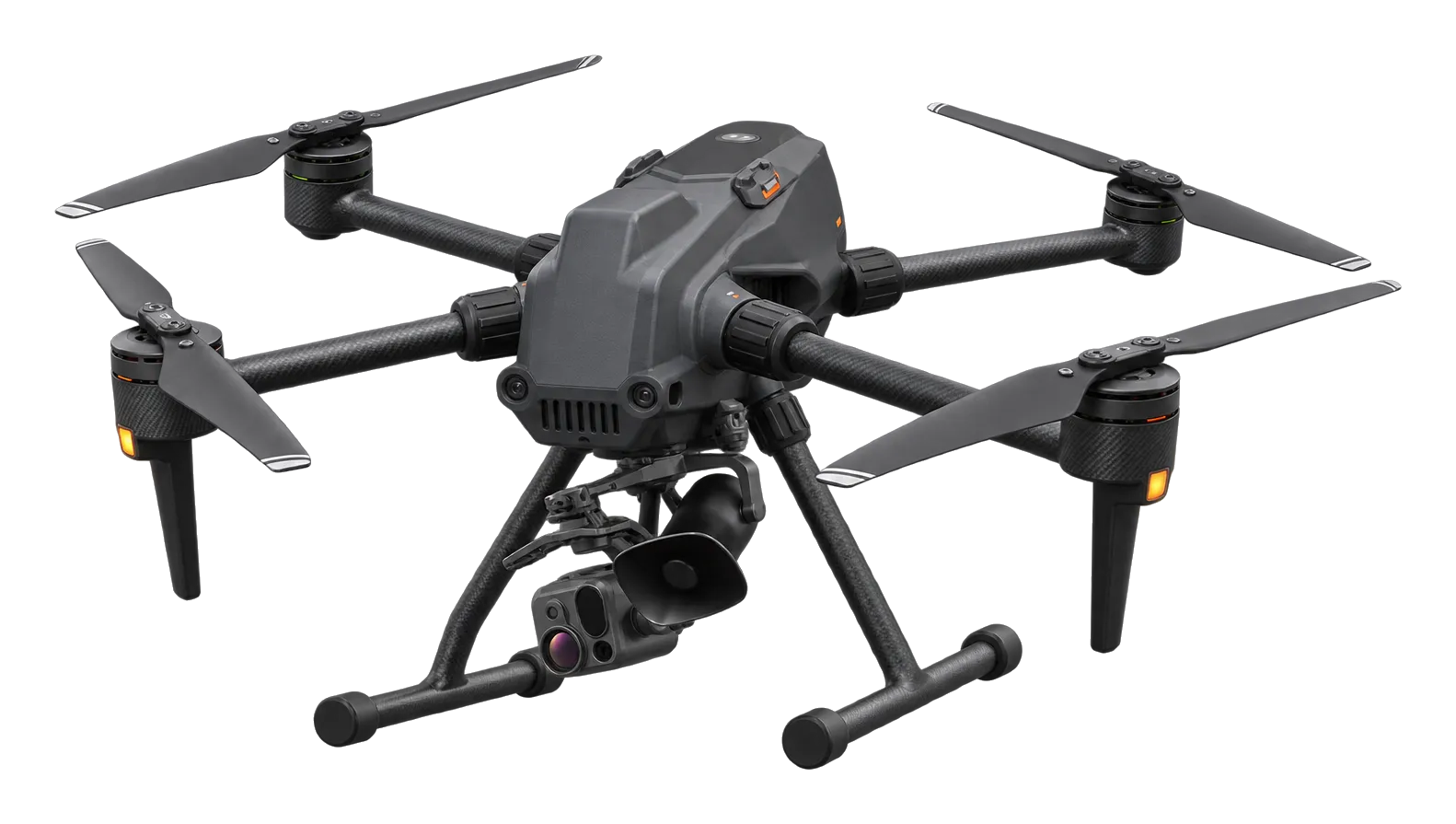
Substations, solar sites, pipelines and industrial parks that need the same inspection flown again and again.
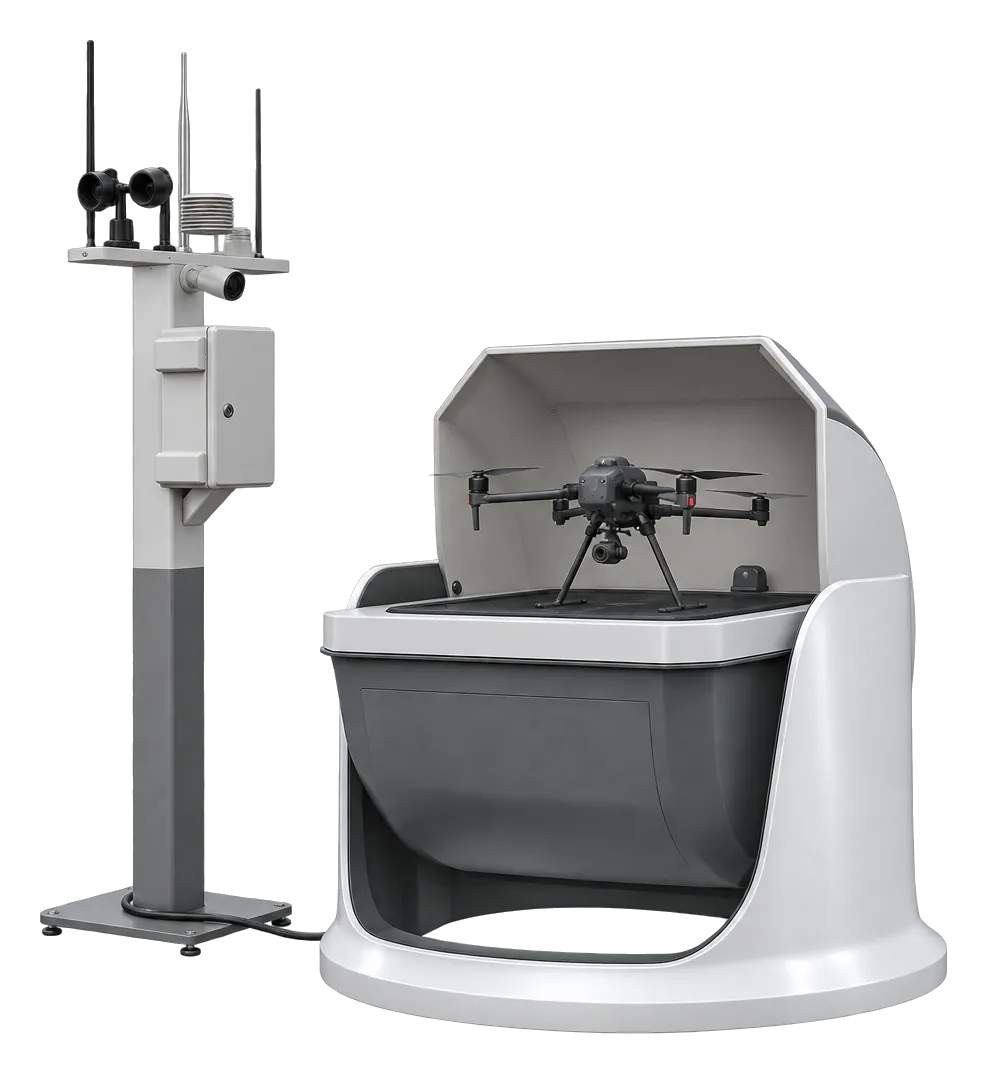
Routine inspection of power lines, substations, solar plants and industrial sites, by hand or from a dock.