Firefighting
Starting a Fire Department Drone Program in 2026: Roadmap, SOPs and Fleet Mix
Start a fire department drone program in 2026: year-one roadmap, Part 107 or COA, SOPs mapped to NFPA 2400, staffing arithmetic, fleet mix and US funding rules.
- Author
- VEXAFLY Aviation Technology Co., Ltd.
- Scope
- Firefighting
- Published
- Length
- 4 min read · 6 sources
Short answer: a fire department drone program in 2026 starts with policy and training, not with an aircraft. Plan a year: policy, a legal route (Part 107, a public-aircraft COA or both), written procedures, trained pilots and observers, a maintenance log, then the first scout, and later a docked or heavy aircraft. NFPA 2400 gives the checklist.
What does a programme need in year one?
| Phase | Months (planning guide) | Deliverables | Authority or standard |
|---|---|---|---|
| 1 Policy and needs | 0–2 | Mission list, risk assessment, chief’s approval | NFPA 2400 programme criteria |
| 2 Legal route | 1–3 | Part 107 or COA decision, state and local privacy rules | FAA |
| 3 Purchase specification | 2–5 | Specification from the needs assessment, bid, award | NFPA 2400, procurement rules |
| 4 Training | 4–7 | Pilots, observers, test lanes | NFPA 2400 qualifications, NIST methods |
| 5 Pilot operations | 6–9 | Limited call-outs, logbooks, after-action reviews | Your SOPs |
| 6 Review and expand | 10–12 | Fleet review, dock or heavy aircraft plan | Chief and finance |
Months are planning assumptions, not rules.
Part 107, COA or both?
For aircraft under 55 lb, the FAA lists two routes. Part 107 allows flights up to 400 ft above ground level and within visual line of sight; a public-aircraft operation lets a government agency self-certify its aircraft and operators for governmental functions. Many departments hold both, using Part 107 for training and routine work. The FAA’s emergency Special Governmental Interest process can approve flights for firefighting quickly; visual-line-of-sight requests may be issued in minutes. A drone programme guide is linked from the FAA’s public safety page. Aircraft of 55 lb or more need a different approval.
Which SOPs should you write first?
Map your procedures to the three areas NFPA 2400 covers. In the 2019 edition these are:
| Area | What to write | Evidence to keep |
|---|---|---|
| Organisational deployment (chapter 4) | Mission objectives, risk assessment by the remote pilot before each operation, purchase specification | Mission list, signed risk forms |
| Qualifications (chapter 5) | Job performance requirements for the remote pilot in command and the visual observer | Training and proficiency records |
| Maintenance (chapter 6) | Logbook for all maintenance, battery storage, charging, disposal and emergency policy, parts storage | Logbook, battery register |
Do not quote clause numbers for the 2024 edition without reading it; NFPA offers free access to view the standard.
How many pilots and observers do you need?
Example only, assumed figures. Round-the-clock cover with one scout team per shift: 3 shifts × (1 remote pilot + 1 visual observer) = 6 qualified people. Add one relief per shift for leave and training: 6 + 3 = 9. A heavy drone crew of a pilot and a payload handler per shift adds 3 × 2 = 6, for 15 trained staff across the department.
How do you train and test pilots?
NFPA 2400 includes ten NIST aerial test methods, five on manoeuvring and five on functionality, built around cheap targets such as white buckets, so pilots can check their skill in a parking lot. NFPA also sells a three-hour online module on public safety drones, and the IAFF announced in August 2026 a five-year programme to train HazMat instructors to use drones for air testing before crews are exposed.
What fleet mix works?
| Role | Aircraft | Why | Number to check |
|---|---|---|---|
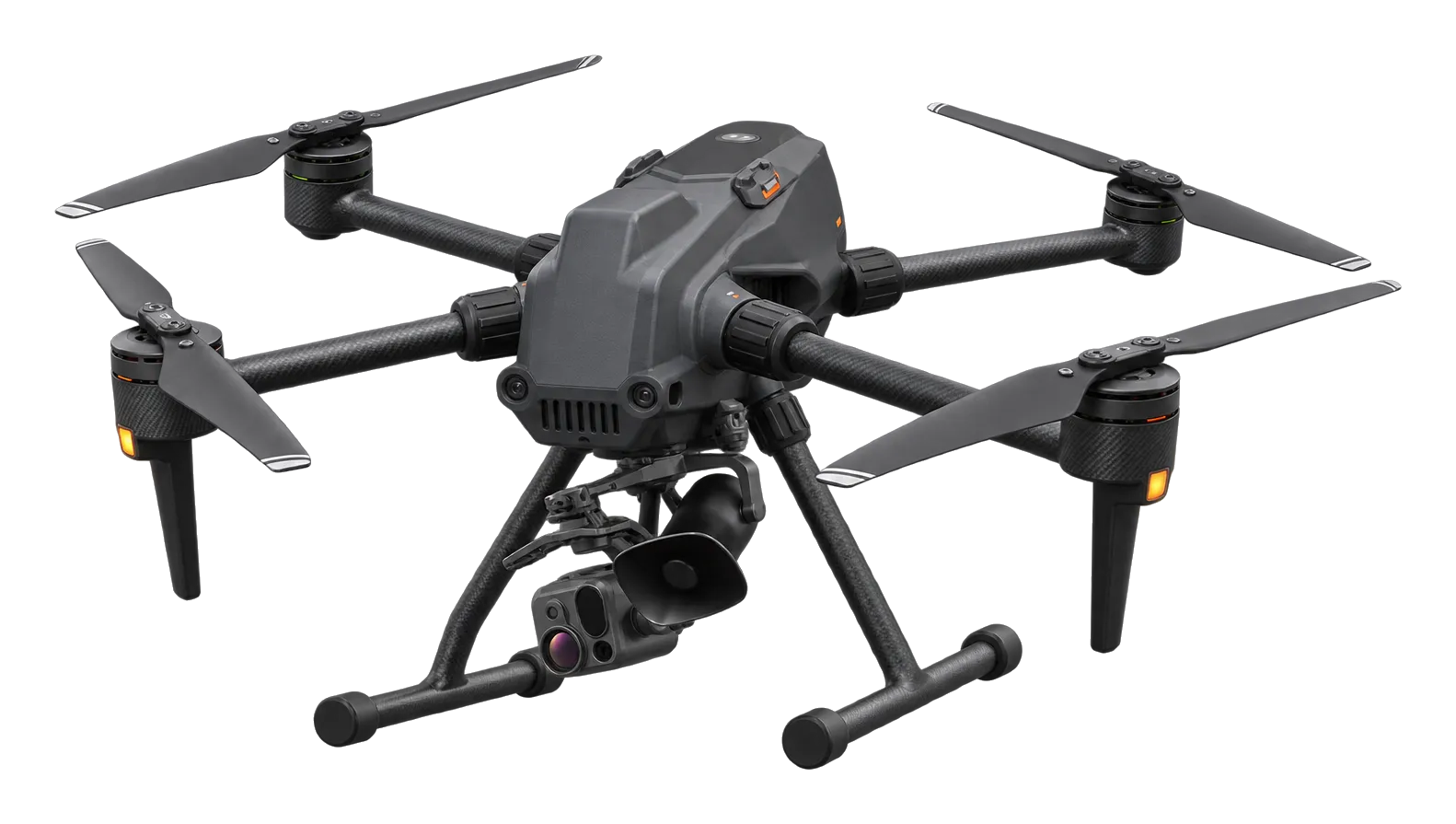
| Quick-launch scout | IS-4X | One-person carry, IP67 | 60 min |
| Zoom plus thermal and dock | IS-4 with DS-1 | Scheduled first look | 63 min |
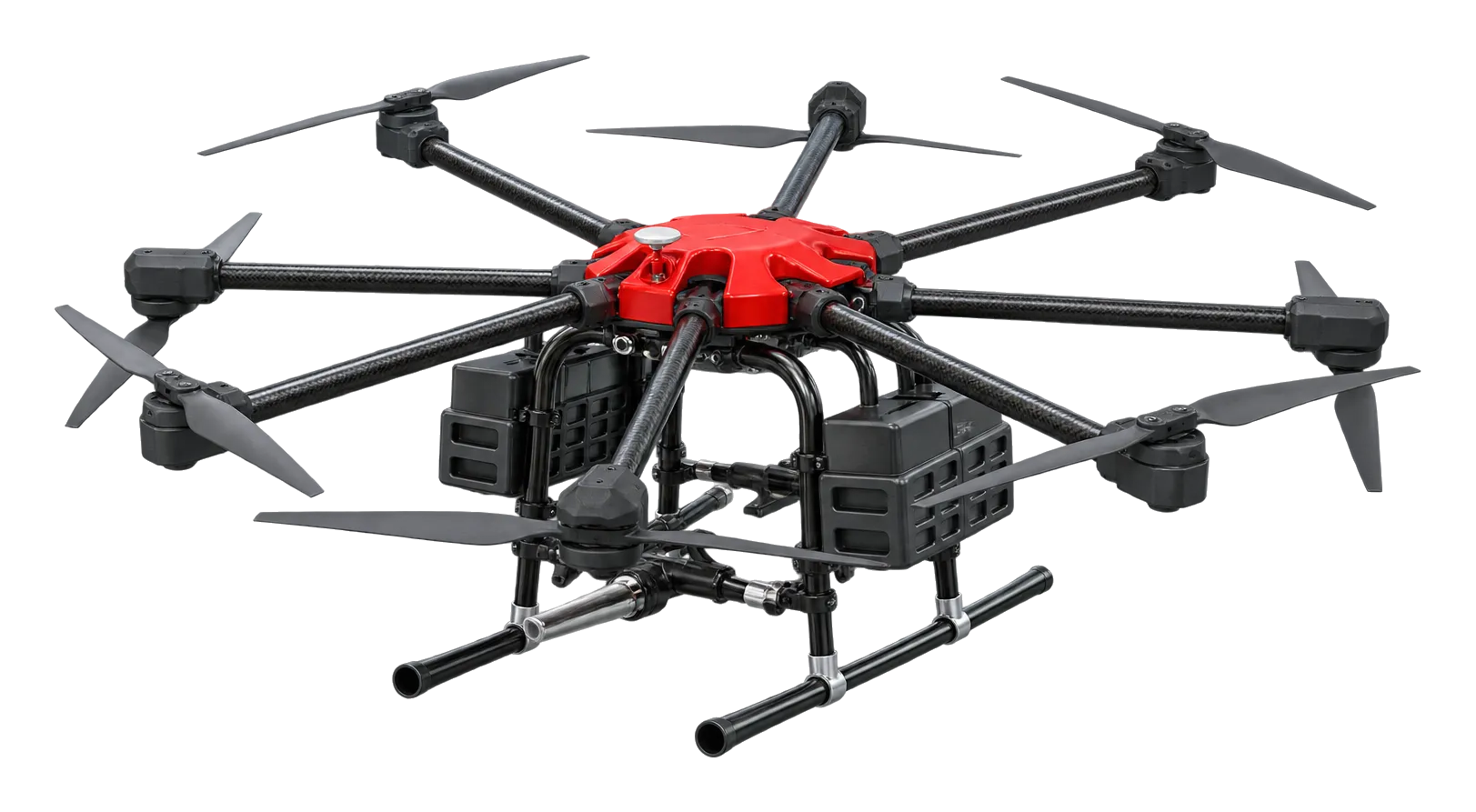
| Later suppression | RX-120 | Pods or hose | 63 min, 44.6 km |
See thermal drones for firefighting for sensor choices.
How should video and data be handled?
Decide before the first flight: where video is stored, who can view it, how long it is kept under your records law, how evidence is logged and how faces or private property are treated. Write it into the SOPs and brief staff. Follow your own jurisdiction’s public records and privacy rules.
How do the 2025–26 US rules change the budget?
Two US rules matter for budgets. On grants, OMB’s M-26-02 bars federal grant funds for drones on the federal prohibited list from 22 December 2025, and the FY2025 AFG notice already lists UAVs and drones as ineligible equipment. On equipment, the FCC added foreign-produced drones to its Covered List the same day, so a new foreign model without an earlier authorisation cannot get one. Ask any supplier, including us, for the FCC ID; ask your customs broker about the Section 232 duty and the FAA about aircraft of 55 lb or more. See FCC certification and importing industrial drones from China. See how to buy firefighting drones and NFPA 2400.
- Best first aircraft: a thermal scout such as the IS-4X, 60 min, one-person carry.
- Best for an automatic first look: IS-4 with the DS-1 dock.
- Best for later suppression: RX-120, 63 min, pods or hose.
- Best for training quality: the NIST test lanes in NFPA 2400.
Next step
Send your station map, shift pattern and the scenes you attend, and we outline a fleet and a training plan from our fire-response range and service team. For costs, read firefighting drone price.
Q & A
Common questions
01What do fire departments use drones for?
Thermal size-up, hotspot checks, search, HazMat air testing from a distance, wildland mapping and pre-incident site surveys. Heavy aircraft add pods or hose work later.
02Part 107 or COA?
Both are routes for aircraft under 55 lb. Part 107 limits flights to 400 ft above ground level and visual line of sight unless waived; a public-aircraft operation with a Certificate of Waiver or Authorization lets an agency self-certify aircraft and operators for governmental functions. Many departments hold both.
03How much does a programme cost?
A starter scout team is roughly US$10,000–25,000 in one industry guide, and a docked programme US$25,000–60,000+. People and training are the largest costs; a Part 107 certificate is about US$300–400 including the US$175 test fee.
04Is there a fire department drone grant?
Federal money is restricted. The FY2025 AFG notice puts UAVs and drones under ineligible equipment, and OMB guidance bars grant funds for prohibited-list aircraft from 22 December 2025. Treat a grant as unconfirmed until FEMA confirms it in writing.
05How many pilots do we need?
One remote pilot and one visual observer per shift is a common minimum for scouts. Add relief for leave and training; our example reaches nine people for three shifts.
06When should we add a heavy firefighting drone?
When scouts are flown routinely, procedures are written and a clear mission needs one, such as facade or roof work above ladder reach. Heavy aircraft are above 55 lb, which takes you out of Part 107.
References
- 1Operate a Drone, Start a Drone Program — Federal Aviation Administration
- 2NFPA 2400 Standard Development — National Fire Protection Association
- 3Emergency Situations (Special Governmental Interest process) — Federal Aviation Administration
- 4New IAFF drone program aims to reduce fire fighter exposure at HazMat scenes — IAFF
- 5M-26-02: Ensuring Government Use of Secure Unmanned Aircraft Systems and Supporting United States Producers — Office of Management and Budget
- 6Firefighting Drones: Uses, Costs & How to Fly One (2026) — Drone Launch Academy
VEXAFLY Aviation Technology Co., Ltd.. VEXAFLY Aviation Technology Co., Ltd. — industrial drone maker in Nanjing. Our application engineers write and check these pages and configure inspection, cleaning, lift and fire-response systems for project buyers. About VEXAFLY