Firefighting
Thermal Drones for Firefighting in 2026: Resolution, Radiometrics and Real Limits
Thermal drone for firefighting in 2026: sensor resolution, what one pixel covers, radiometric or not, where thermal misleads, weather ratings and docked use.
- Author
- VEXAFLY Aviation Technology Co., Ltd.
- Scope
- Firefighting
- Published
- Length
- 4 min read · 5 sources
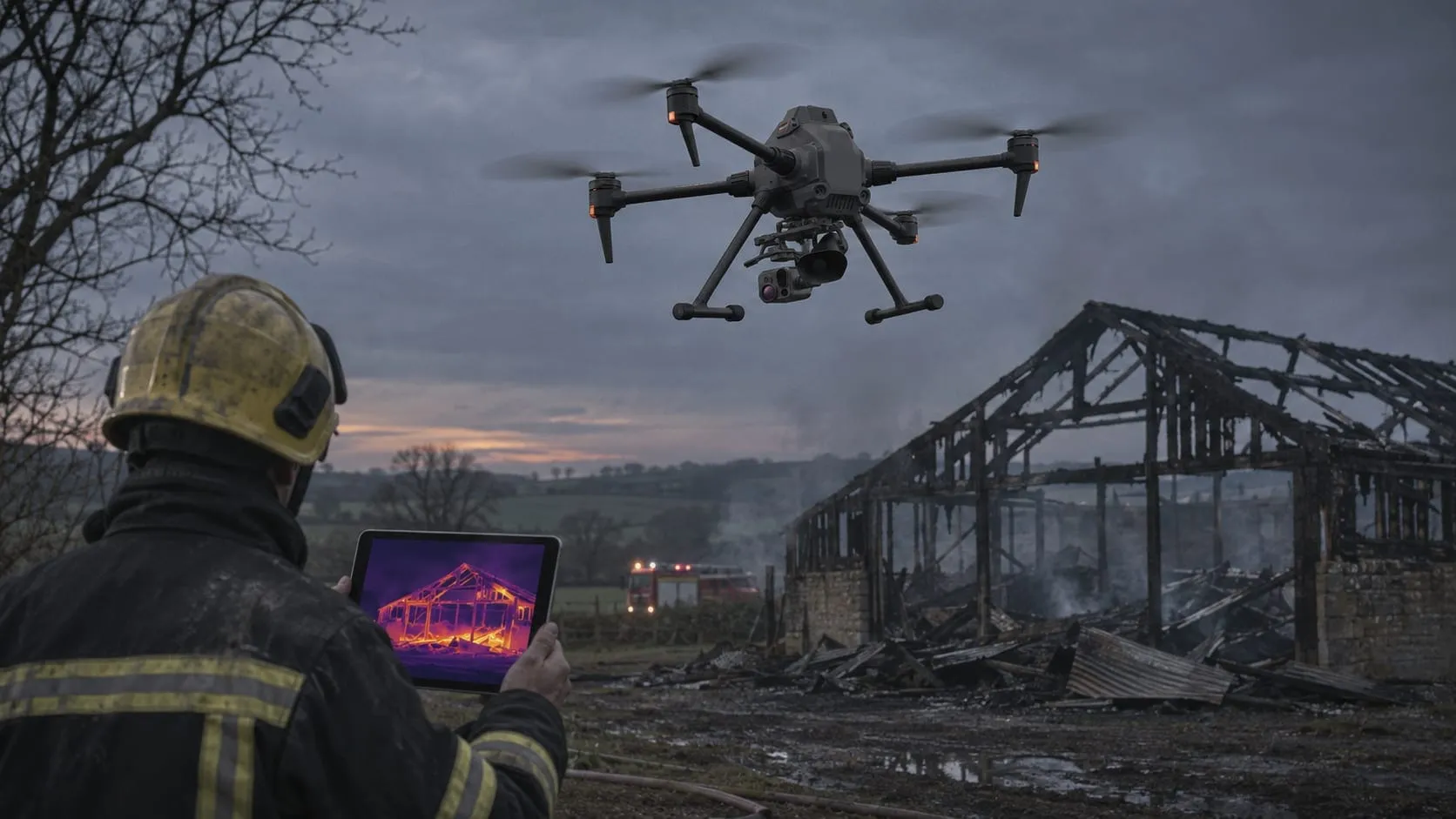
Short answer: a thermal drone for firefighting should be chosen by task, not by megapixels: size-up needs a wide, quick view; overhaul needs radiometric readings; wildland night mapping needs long flights. Check resolution, radiometric status, flight time and weather rating, and ask for each in writing.
Which thermal set-up fits which fire task?
| Task | What you need to see | Sensor | Airframe |
|---|---|---|---|
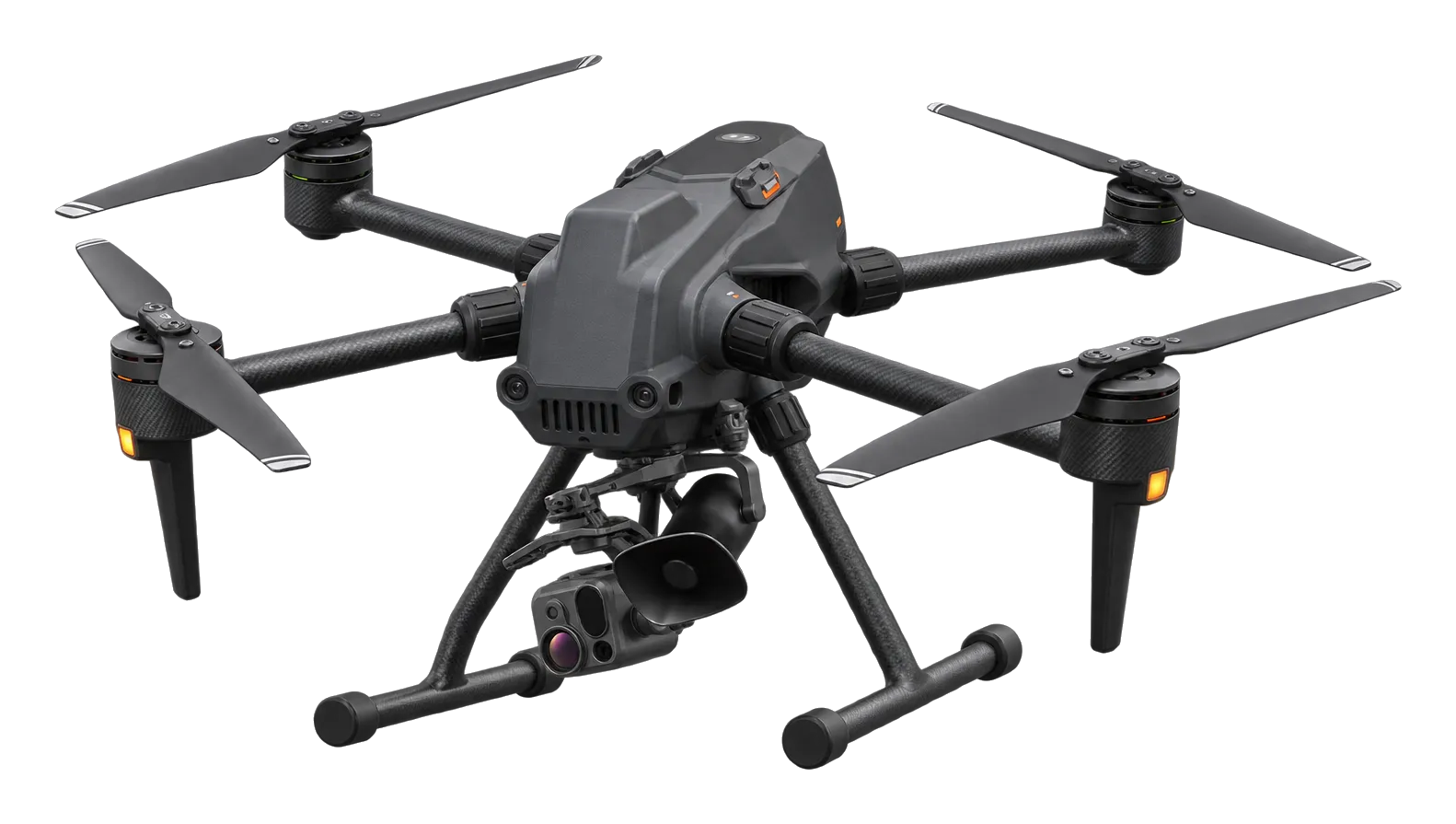
| Structure size-up | Hot walls, roof, people at windows | Thermal + zoom, visible view | IS-4 four-optical gimbal (18× optical zoom + infrared) |
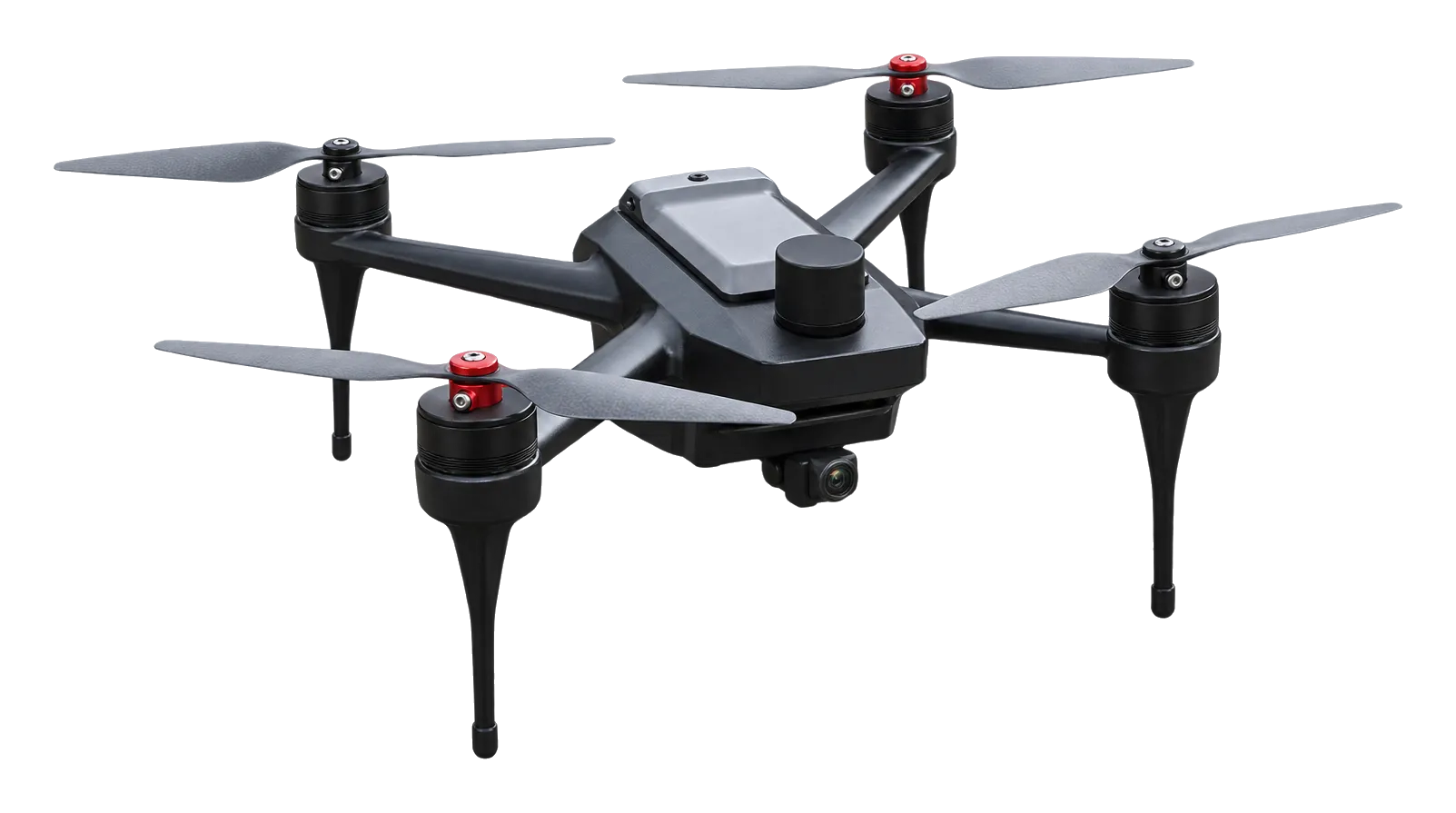
| Overhaul and hotspot checks | Heat still hidden in walls and roofs | Radiometric thermal | IS-4 or IS-4X |
| Wildland night mapping | Fire edge and hotspots | Thermal, wide area | Long flight time, small airframe |
| HazMat standoff | Heat and leaks from a safe distance | Thermal + zoom | Zoom payload; IS-4 video range 15 km in the brochure test |
| Search and rescue | A person on cooler ground | Thermal, high resolution | Fast launch, IS-4X |
The IAFF announced a five-year programme on 4 August 2026 to train HazMat instructors to use drones for air testing before crews are exposed.
What does one pixel cover?
Example only, assumed figures. The ground width of an image is 2 × height × tan(half the field of view). With an assumed 32° horizontal field of view (check your payload sheet):
| Height | Ground width | 640 px | 1,280 px |
|---|---|---|---|
| 50 m | 28.7 m | 4.5 cm per pixel | 2.2 cm per pixel |
| 100 m | 57.3 m | 9.0 cm per pixel | 4.5 cm per pixel |
| 150 m | 86.0 m | 13.4 cm per pixel | 6.7 cm per pixel |
At 100 m, a 20 cm hotspot covers about 2 pixels at 640 and 4–5 pixels at 1,280. For small targets either fly lower or use more pixels. The IS-4 lists a 1K infrared dual-optical gimbal; we do not publish a pixel count for it here, so ask for the sensor resolution before ordering.
Radiometric or not?
Radiometric cameras record actual temperatures per pixel; non-radiometric cameras show only relative differences. For overhaul, where you must tell a crew that a wall is at a certain temperature, you need radiometric data. For finding where the heat is, you do not. A dealer’s buying guide explains the trade-off.
Where does thermal imaging mislead?
Glass blocks thermal radiation and reflects it, so a window can show your own reflection. Shiny metal roofs reflect the sky and can look cold. Wet surfaces and rain cool targets and hide heat. Keep a visible camera next to the thermal feed and confirm what you see.
What do weather and flight time allow?
The IS-4X is rated IP67 with wind level 6, and its brochure range is 5 km; the IS-4 is IP45 with wind level 7, so it is not for heavy rain. Both list flight times measured hovering in light wind: 60 and 63 minutes. The IS-4 carries 3 kg and has an ADS-B receiver to sense nearby crewed aircraft.
Do thermal drones help after the fire?
Yes. The Forest Service uses small aircraft to find hotspots inside and outside a fire perimeter, and New South Wales parks crews stitch night scans into a thermal map that shows dangerous hotspots. For a building, a post-fire pass over the roof and walls shows heat still held in the structure.
Hand-flown or docked?
| Option | Flight time | Protection | Best for |
|---|---|---|---|
| IS-4X by hand | 60 min | IP67 | Quick launch at a call, one-person carry |
| IS-4 by hand | 63 min | IP45 | Zoom plus thermal size-up |
| IS-4 in a DS-1 dock | 63 min per sortie | See dock specification | Scheduled patrols of one site |
See drone dock price and inspection drone payload selection for the dock and camera options.
US buyers
In the US, check three things before ordering a foreign-built drone: its FCC Covered List status, the Section 232 duty and FAA approval for aircraft of 55 lb or more. Confirm with your customs broker and the FAA. The Section 232 proclamation sets 100 % on aircraft above 25 kg, 25 % on listed drones of 25 kg or less, and the 100 % rate also covers drones with thermal cameras and docking stations. Ask your customs broker how your configuration is classified.
- Best for one-person rapid launch: IS-4X, 2 kg frame, 60 min, IP67.
- Best for zoom plus thermal size-up: IS-4 four-optical gimbal, 18× optical zoom.
- Best for scheduled site patrols: IS-4 with the DS-1 dock.
- Best for wet weather: IS-4X, IP67 against the IS-4’s IP45.
Next step
Tell us what you must see, from what height and how often. We match a payload and battery plan to the duty cycle. Compare the inspection range and the fire-response range, or read how a scouting drone fits a department in fire department drone programmes and forest fire drones.
Q & A
Common questions
01Which thermal camera is best for firefighting?
The one whose resolution, radiometric status and zoom fit your tasks. For size-up and hotspots, 640 × 512 pixels is a common market reference; for larger structures or higher flights, higher resolution helps. Always compare datasheets.
02Can thermal drones see through smoke?
A thermal camera generally sees heat through smoke better than a visible camera does, and the Forest Service notes that drones fly in smoke or fog, day or night. Dense steam and water spray can still hide a target.
03Are thermal drones legal to own and fly?
Ownership is not usually the question; flying is. Aviation, privacy and export rules differ by country, so check with your aviation authority. In the US, check the FCC Covered List status and the Section 232 duty on foreign-built drones; the 100 % duty rate also covers drones with thermal cameras.
04Do we need a radiometric camera?
If you must report temperatures, as in overhaul checks or hazard records, yes. If you only need to see where heat is, a non-radiometric camera is enough.
05How long should a scout drone fly?
Long enough for a full pass without a battery change at the scene. The IS-4 lists up to 63 minutes hovering and the IS-4X up to 60 minutes; real missions with wind and climbs are shorter.
References
- 1Radiometric vs Non-Radiometric Thermal Cameras — DroneFly
- 2Eyes in the sky: Firefighting by drone — NSW National Parks and Wildlife Service
- 3New IAFF drone program aims to reduce fire fighter exposure at HazMat scenes — IAFF
- 4Drones help make fighting fires safer, cheaper, better throughout Rocky Mountain Region — USDA Forest Service
- 5Presidential proclamation on imports of unmanned aircraft systems (Section 232) — U.S. Government Publishing Office
VEXAFLY Aviation Technology Co., Ltd.. VEXAFLY Aviation Technology Co., Ltd. — industrial drone maker in Nanjing. Our application engineers write and check these pages and configure inspection, cleaning, lift and fire-response systems for project buyers. About VEXAFLY