Buying
Importing Industrial Drones from China in 2026: Class, Duty, Licences and Papers
Import drones from China in 2026: what changes by aircraft class, HS codes, US Section 232 and FCC checks, Chinese export licences, batteries and documents.
- Author
- VEXAFLY Aviation Technology Co., Ltd.
- Scope
- Buying
- Published
- Length
- 4 min read · 7 sources
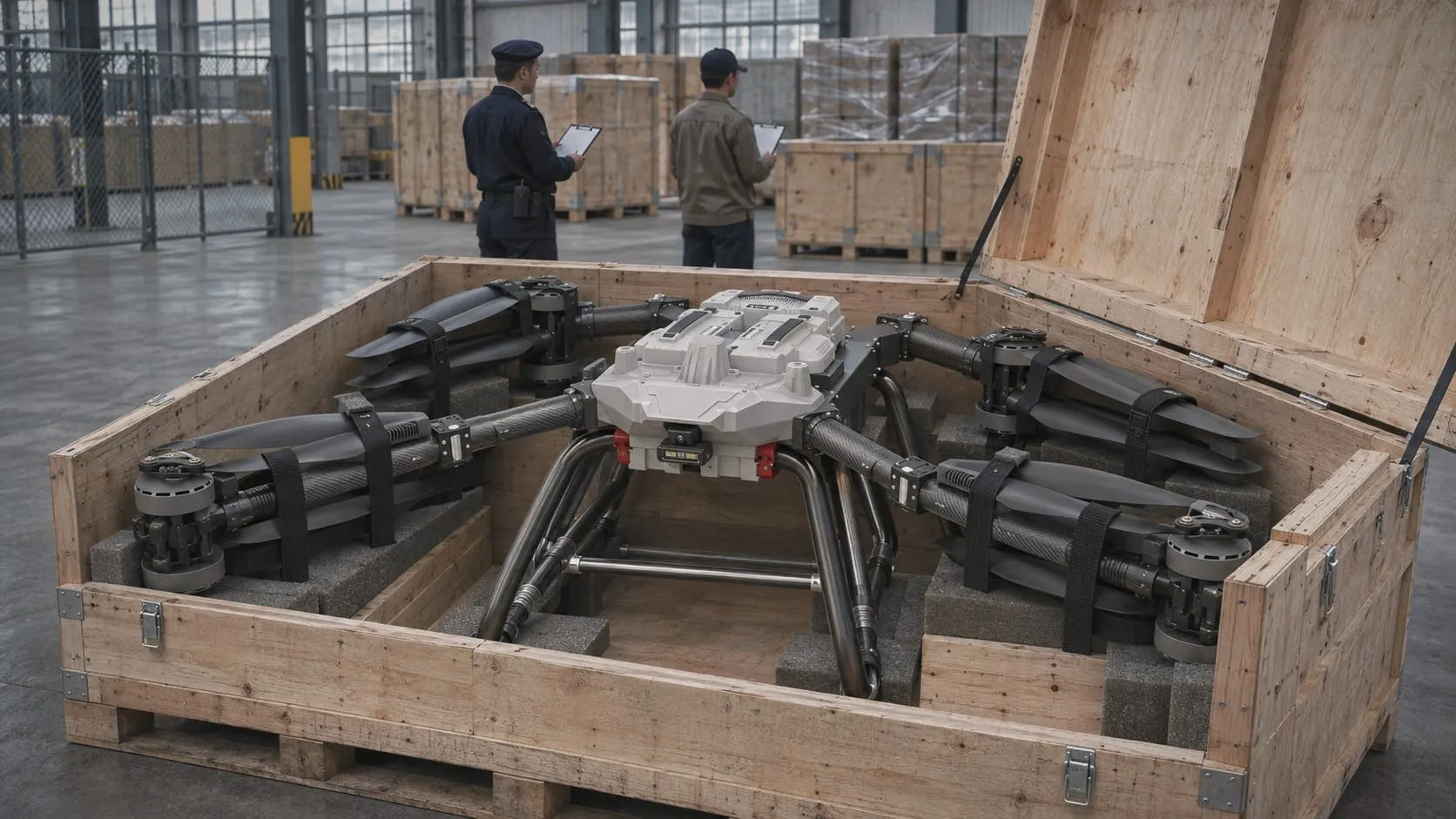
Short answer: in 2026 you can still contract with Chinese makers for industrial drones, but how you import drones from China depends on the aircraft class and the destination. A small inspection drone, a dock, a 111 kg cleaning drone and a 333 kg lifter meet different duty lines, battery rules and approvals. Check the Chinese export licence, the destination rules and the batteries before you pay a deposit.
Can you still import an industrial drone from China in 2026?
For buyers outside the US the answer is generally yes, subject to your own country’s customs, registration and operating rules. For US delivery, three checks come first with a foreign-built drone: the model’s FCC Covered List status, the Section 232 duty and FAA approval for aircraft of 55 lb or more. Your customs broker and the FAA confirm each. On the Chinese side, some drone items have needed an export licence since 18 November 2026; see our note on China drone export controls.
What does your aircraft class change?
| Aircraft | MTOW | Likely HS line (broker confirms) | US Section 232 | Battery freight | Approval to ask about |
|---|---|---|---|---|---|
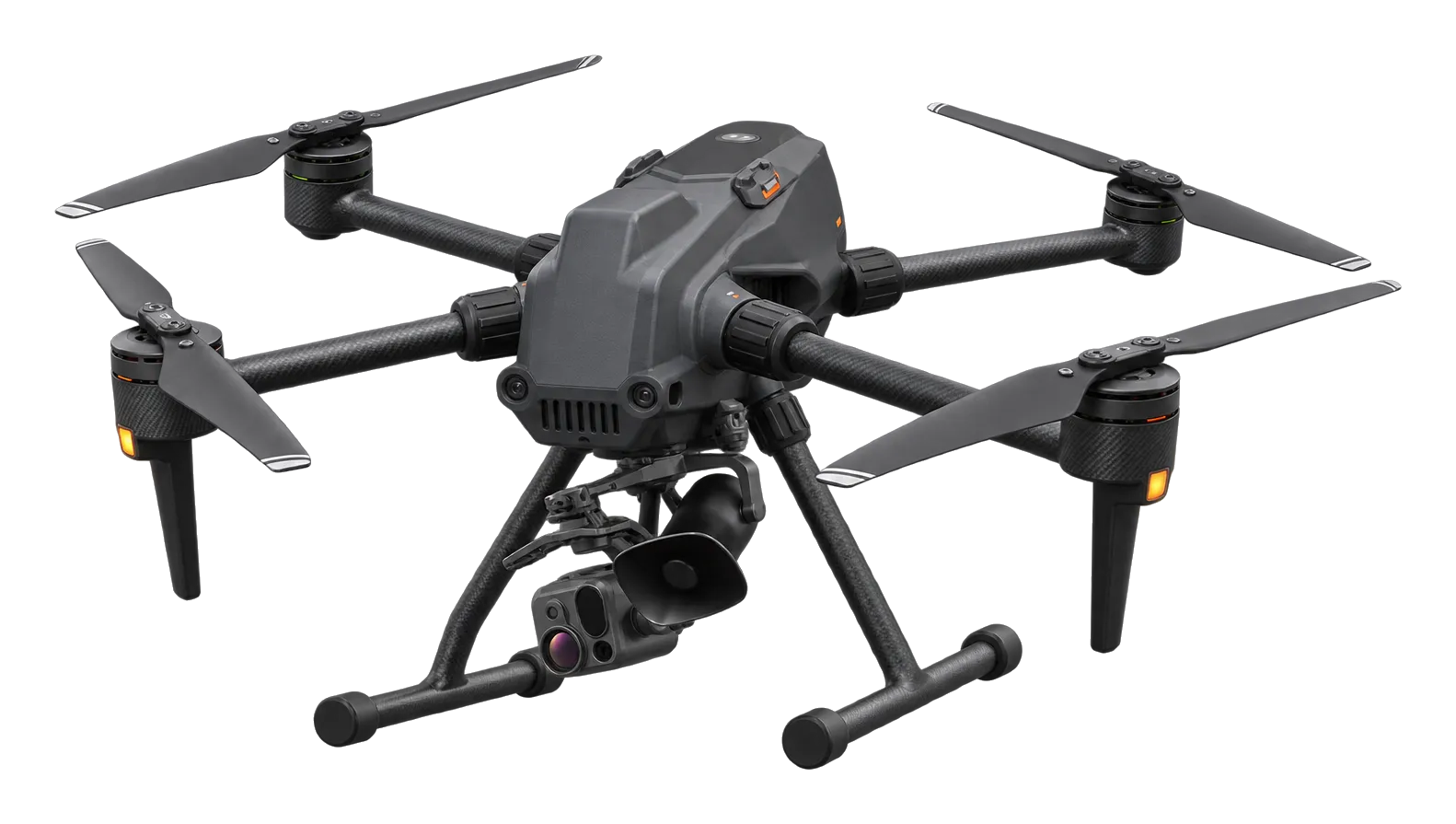
| IS-4 inspection | 7 kg | 8806.22 / .92 (above 250 g to 7 kg) | 25 % for listed drones of 25 kg or less; 100 % if thermal imagers are integrated | Air possible with limited charge | Registration and pilot rules at destination |
| DS-1 dock | n/a | A docking station, not heading 8806 | 100 % (docking stations are listed) | Dock has no flight battery | Remote-flight permission |
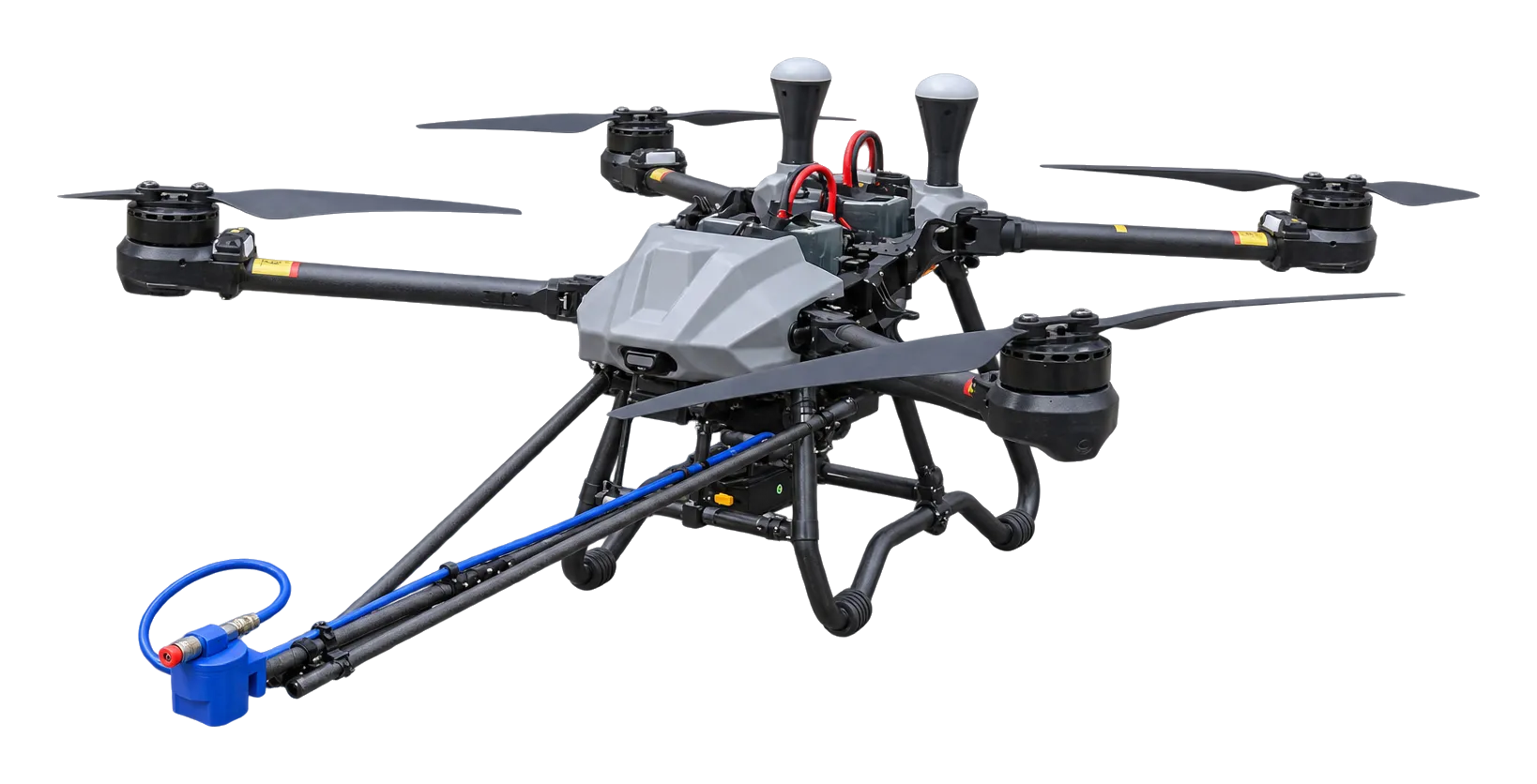
| CW-65 cleaning | 111 kg | 8806.24 / .94 (above 25 kg to 150 kg) | 100 % above 25 kg | About 22 kg of battery: sea | Weight class rules |
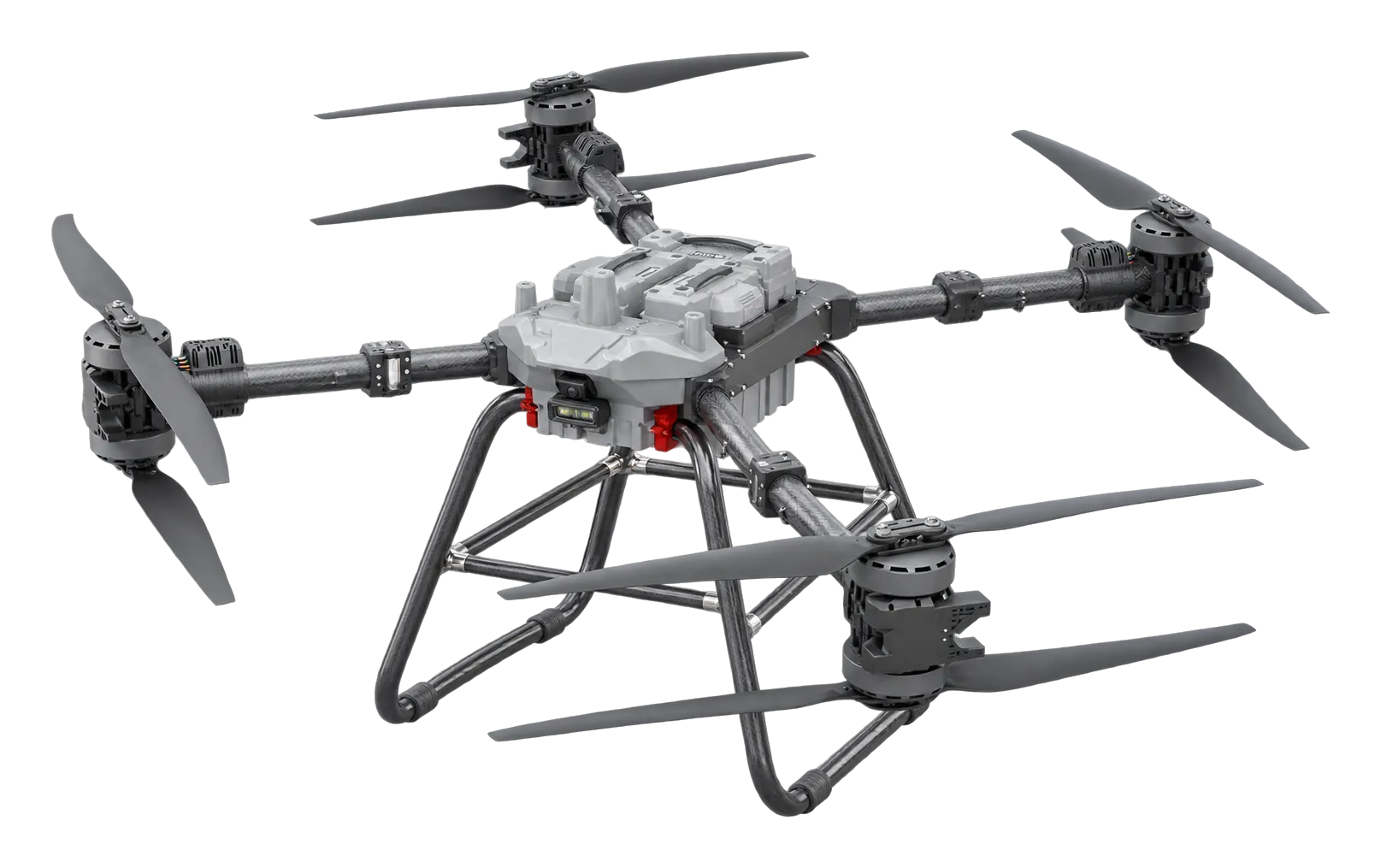
| HL-200 lift | 333 kg | 8806.29 / .99 (above 150 kg) | 100 % above 25 kg | About 44 kg of battery: sea | Special permission in many countries |
| PV passenger | n/a | 8806.10 | See eVTOL import guide | Sea | Aviation authority certification |
Weight limits outside the US are lower than many buyers expect: Brazil asks ANAC design approval above 25 kg, Mexico an airworthiness certificate above 25 kg, and Canada special permission above 150 kg. In the US, aircraft of 55 lb (25 kg) and heavier need a Section 44807 exemption from the FAA.
Which HS code and duty apply?
The US tariff lists heading 8806 with the general rate “Free” on every line; Section 232 and any Section 301 duties are added on top. The Section 232 proclamation sets 100 % for unmanned aircraft above 25 kg, for those with integrated thermal imagers and for docking stations, and 25 % for listed aircraft of 25 kg or less, in addition to other duties. Section 301 duties on Chinese-origin goods may also apply; your broker confirms the rate. Other countries use the same six-digit codes with their own rates and taxes.
Does China need to license the export?
From 18 November 2026 China requires a licence for certain drones, flight controllers, engines and related technology, and says compliant applications will be approved. Which of our models are affected is checked per model and destination and can add time to the lead time. Ask your seller who files the licence and what delay to expect.
How do the batteries decide the shipping mode?
Heavy aircraft carry batteries of tens of kilograms in total. Those sets normally ship by sea as dangerous goods; only a small spare pack goes by air, within package limits. Read the lithium battery shipping guide before you pick air freight.
Which documents must travel with the drone?
| Document | What it is for |
|---|---|
| Commercial invoice | Value, buyer, seller, description by model |
| Packing list | Weights, boxes, battery count with watt-hours |
| Certificate of origin | Origin marking and duty rules |
| UN38.3 test summary and safety data sheet | Forwarder and carrier need both for the batteries |
| Dangerous-goods declaration | For battery freight |
| Importer security filing (US ocean) | Filed by the importer or broker before loading |
Example: landed duty for one heavy-lift drone to the US
Example only. Value is an assumption inside our HL-200 reference range (US$31,500–45,300). The customs value is US$38,000. US customs value excludes international freight and insurance, so those do not raise the base.
- General rate for heading 8806: Free, US$0.
- Section 232 at 100 %, if the aircraft is covered: US$38,000.
- Section 301: rate confirmed by your broker.
- Plus: freight, insurance, broker fee and port charges.
In the same case to a non-US country, duty and VAT follow that country’s tariff; ask your broker for the figure.
What happens after the drone lands?
Collect the battery documents, inspect on receipt against the pre-shipment inspection record, then register and obtain approvals under local rules. In the US, the online FAA registration is for drones under 55 lb only.
Best for …
- Best for first-time importers: a named-port FOB quote with the broker engaged before the deposit (see Incoterms).
- Best for small inspection fleets: IS-4 kits, where air freight of the aircraft is simpler than for heavy models.
- Best for heavy aircraft such as HL-200 and CW-65: sea freight with a dangerous-goods capable forwarder.
Next step
Tell us the destination country, the aircraft and whether you want a dock; we reply with the documents and the licence check. Use the contact form.
Q & A
Common questions
01Can I import a drone from China into the US in 2026?
For US delivery, the model’s FCC Covered List status, the Section 232 duty and FAA approval for 55 lb and heavier aircraft all need checking first, with your customs broker and the FAA. We do not state that any of our aircraft can be imported or flown in the US.
02Which HS code is an industrial drone?
Heading 8806 covers unmanned aircraft. The US tariff splits it by maximum take-off weight, for example above 25 kg up to 150 kg, and above 150 kg. Your customs broker classifies the actual aircraft.
03Does China need to license the export?
For some drones, flight controllers, engines and related technology, yes, since 18 November 2026. Which models are affected is checked per model and destination, and the licence can add time.
04Do I need an FCC ID?
For the US, ask your broker and check the FCC Covered List FAQ. Read our [FCC guide](/blog/drone-fcc-certification/). We do not imply that any model holds an FCC authorisation.
05Can drones with batteries go by air?
Small packs can, under dangerous-goods rules with a limited state of charge. Large battery sets of heavy aircraft normally go by sea. See our [battery shipping guide](/blog/drone-lithium-battery-shipping/).
06Do I have to register the drone after import?
Rules differ by country. In the US the online FAA registration is only for drones under 55 lb; heavier aircraft use a paper process.
References
- 1Proclamation 11055: Adjusting Imports of Unmanned Aircraft Systems (Section 232) — GovInfo
- 2FCC fact sheet: UAS and UAS critical components on the Covered List — Federal Communications Commission
- 3Harmonized Tariff Schedule of the United States — U.S. International Trade Commission
- 4China optimizes, adjusts export control measures for some drone-related items — People’s Daily (Xinhua)
- 5Section 44807: Special Authority for Certain Unmanned Aircraft Systems — Federal Aviation Administration
- 619 CFR 152.102: Definitions (price actually paid or payable) — eCFR (National Archives)
- 7How to Register Your Drone — Federal Aviation Administration
VEXAFLY Aviation Technology Co., Ltd.. VEXAFLY Aviation Technology Co., Ltd. — industrial drone maker in Nanjing. Our application engineers write and check these pages and configure inspection, cleaning, lift and fire-response systems for project buyers. About VEXAFLY