Personal air mobility
Buy an eVTOL From China in 2026: Import Route, Documents and Battery Shipping
How to buy an eVTOL from China in 2026: import routes by plan, documents to request, lithium battery shipping, customs, registration and a landed-cost formula.
- Author
- VEXAFLY Aviation Technology Co., Ltd.
- Scope
- Personal air mobility
- Published
- Length
- 6 min read · 6 sources
Short answer: in 2026 you can buy an eVTOL from China on a quotation with a minimum order of one unit, but shipping it is the easy half. The hard half is what your aviation authority lets you do with it. Pick the import route from your plan, ask for battery and weight documents before you pay, and read the landed price as FOB plus freight, insurance, duty and fees.
Which import route fits your plan?
| Your plan | Realistic route | What the authority or customs will ask |
|---|---|---|
| Fly privately in the US as an ultralight | Only if the aircraft meets every Part 103 limit as weighed; no registration (103.7(c)), but the FAA may inspect it (103.3) | Empty weight with batteries, top speed, seats. We make no Part 103 claim for any PV model; see the Part 103 guide |
| Exhibition, demonstration or research flights | Registration plus an experimental certificate for exhibition, research or market surveys (14 CFR 21.191) through the local FSDO | Purpose, flight area, pilot, aircraft documents, test plan |
| Experience flights at a closed site abroad | Import and register under the destination country’s rules; fly only inside a permitted area | The authority’s classification of the aircraft, site plan, pilot training, insurance |
| Dealer stock for resale | Get the authority’s view per model before importing, because your buyers need the same answer | Written guidance on classification and permitted use |
Can you import an eVTOL and fly it in the same country?
Buying an aircraft does not give you the right to fly it. Customs asks what the goods cost; an authority and an insurer ask whether it may fly. Settle the second question first.
In the US, check three things before ordering a foreign-built drone: its FCC Covered List status, the Section 232 duty and FAA approval for aircraft of 55 lb or more. Confirm with your customs broker and the FAA. Those checks were written for unmanned aircraft; whether they reach a piloted multicopter is for the broker and the agencies to say, and we do not state it either way. Our guides on importing industrial drones and FCC certification explain the process. We do not claim that any of our aircraft can be imported into or flown in the US.
Which documents should come with the aircraft?
| Document | Issued by | Why you need it |
|---|---|---|
| Commercial invoice and packing list | Seller | Customs value, weights and crate sizes |
| Bill of sale | Seller | Proof of ownership; the FAA wants one signed in ink to register an imported aircraft |
| UN 38.3 test summary and safety data sheet | Battery maker | Dangerous-goods paperwork; makers must make the summary available for cells and batteries made after 30 June 2003 |
| Weighed empty-weight record and manuals | Seller | What an authority checks against its limits (a brochure value is not a weighed aircraft), plus training and maintenance plans |
| Export paperwork | Seller and Chinese customs | See our export controls guide |
How is a battery-powered aircraft shipped?
The aircraft carries lithium-ion packs well above 100 Wh, so it moves as dangerous goods.
- Get the battery data: watt-hours per pack, pack count, mass and charge level at shipment.
- By air: the IATA guidance for the 2026 regulations limits a vehicle’s battery to 30 % state of charge; above that, the State of Origin and the State of Operator must approve. Entries include UN 3171 (battery-powered vehicle) and UN 3556 (vehicle, lithium ion battery powered). Loose packs also sit at 30 %.
- By sea: the IMDG Code applies, mandatory under SOLAS chapter VII since 1 January 2004.
- Let the forwarder declare it. Whether the shipment is a vehicle or batteries packed with or apart from the airframe is for the forwarder’s dangerous-goods specialist.
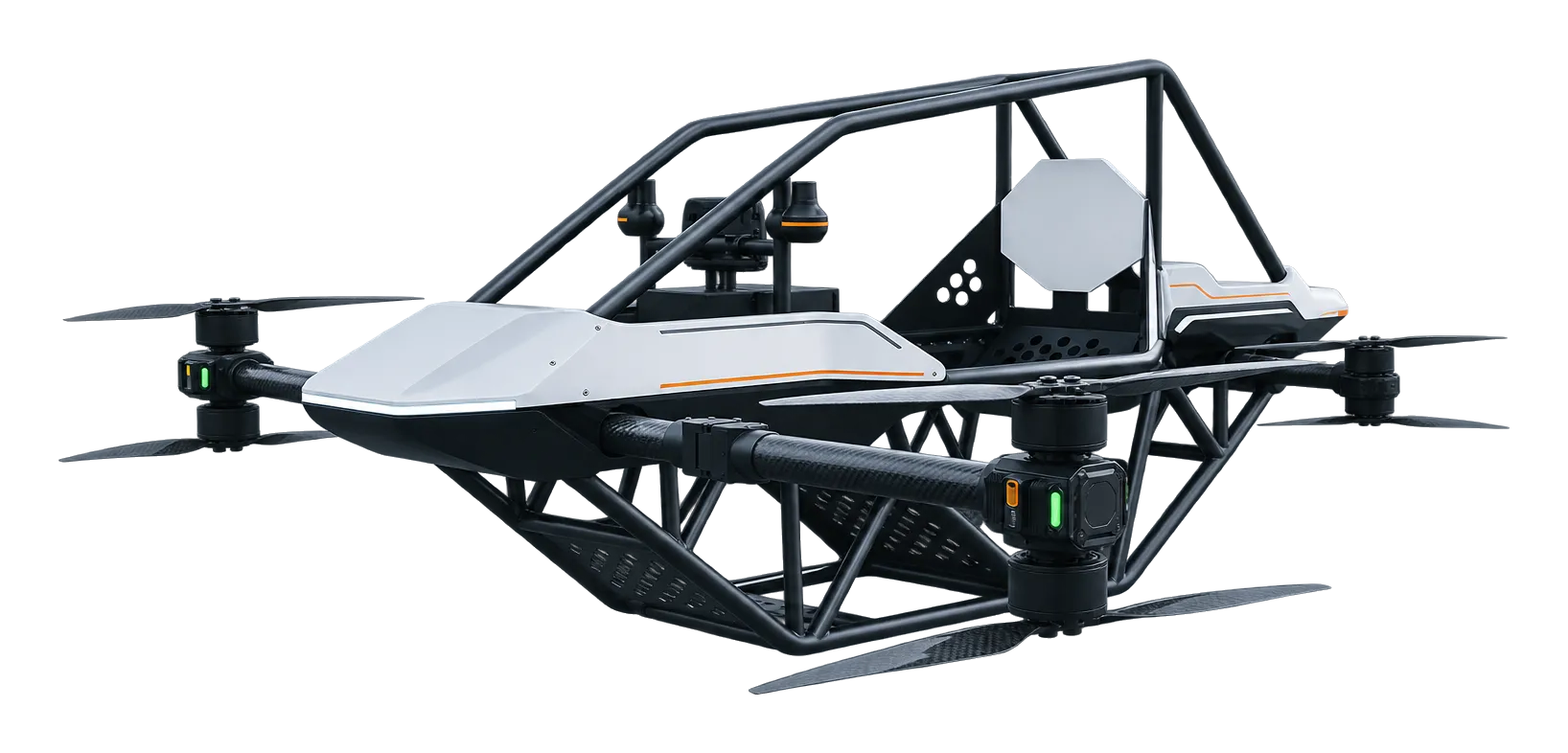
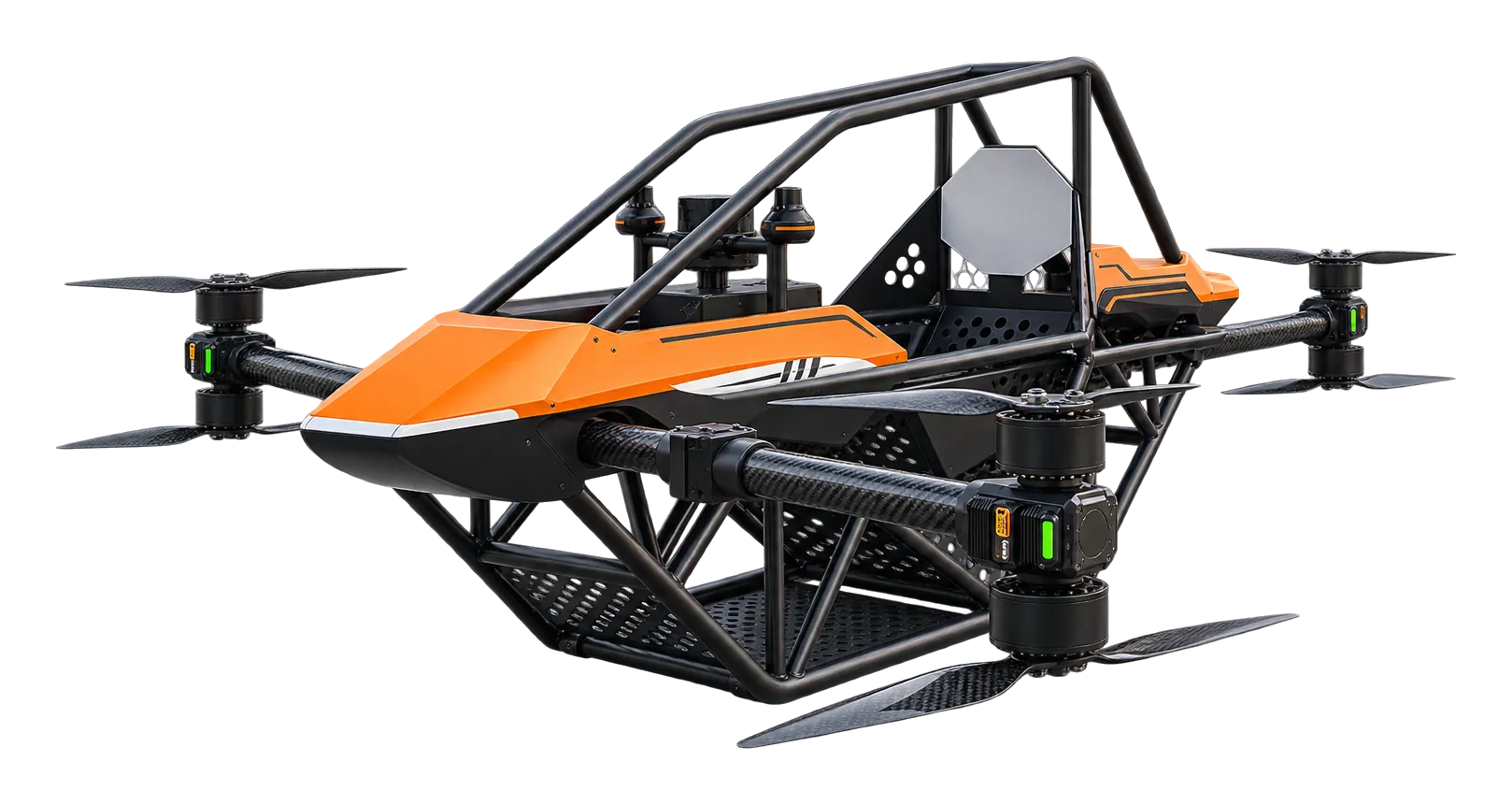
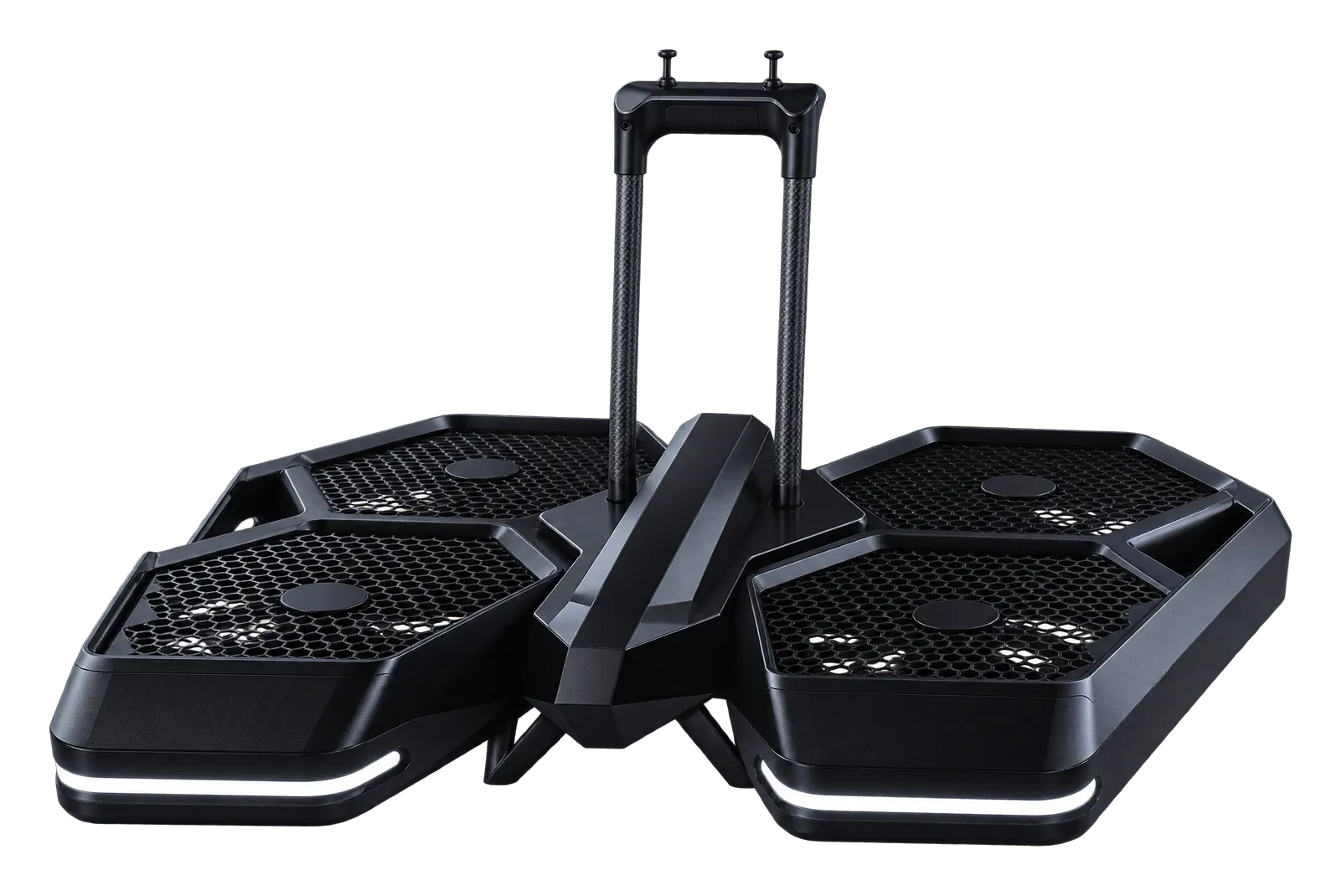
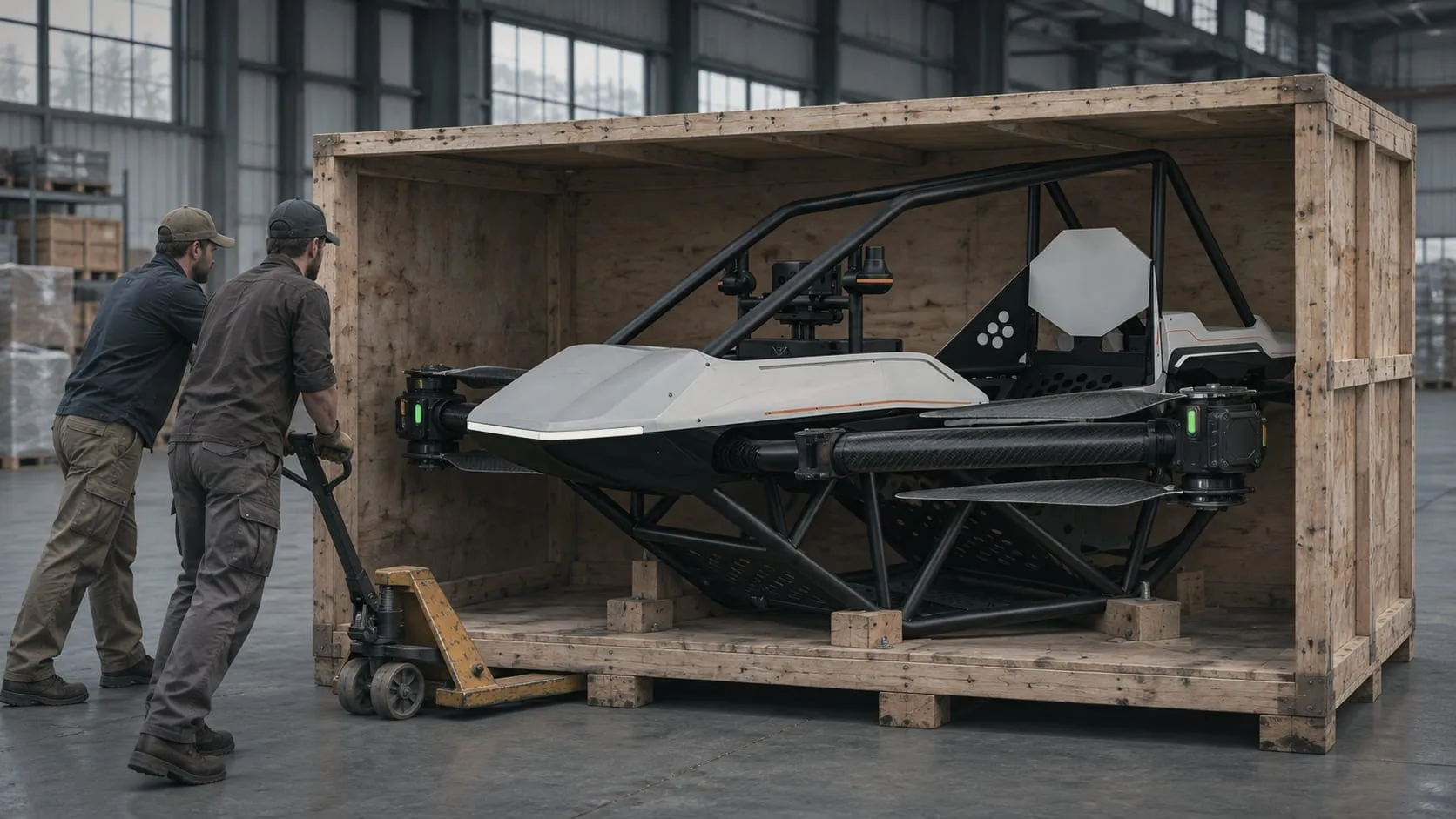
- Plan the crate. The PV-2 ST folds to 2,565 × 950 × 1,182 mm; with an assumed 150 mm of packing on every side the crate is about 5.3 m³. The PV-2 Pro (2,791 × 1,450 × 1,182 mm folded) needs about 8.0 m³.
More on packs in our drone battery shipping guide.
What do you need after the aircraft lands?
Registration and airworthiness depend on the route. In the US, an imported aircraft that is not a Part 103 vehicle is registered with a statement that foreign registration ended or never existed, a bill of sale signed in ink, an original AC Form 8050-1 and a US$5 fee, with “Import” written on the envelope. For an experimental certificate, 14 CFR 21.191 lists research and development, exhibition and market surveys among the purposes; your local FSDO handles the application. Other countries have their own registers and permits.
The maker overview lists who sells what; none of the single-seat aircraft on this site claims a certificate.
Example: landed cost of a PV-2 ST
Example only. The aircraft is quoted at the middle of our reference range, FOB China (see the FOB, CIF and DDP guide). Every other line is a placeholder you replace with a real quote.
| Line | Basis | US$ |
|---|---|---|
| FOB China | (69,400 + 99,000) ÷ 2 | 84,200 |
| Ocean freight, one crate of about 5.3 m³ | Assumed | 4,000 |
| Cargo insurance | Assumed 0.5 % of FOB | 421 |
| Broker and port fees | Assumed | 900 |
| Inland transport to the site | Assumed | 1,200 |
| Subtotal before duty | Sum of the lines above | 90,721 |
Duty comes on top. Your customs broker classifies the aircraft (the US tariff schedule is where the lookup starts) and gives the rate; do not rely on one you read online. Each percentage point on a customs value of US$84,200 adds US$842 (the value basis differs by country). The formula is the point: FOB + freight + insurance + duty + broker + inland transport. Our price guide adds running costs.
What should you ask a Chinese seller before you pay?
- What is the weighed empty weight of the delivered aircraft, with and without batteries?
- Which UN 38.3 summary covers the battery, and who prepares the dangerous-goods paperwork?
- What training comes with delivery, and what are the warranty and spare-part lead times?
- Can the aircraft be inspected before shipment? See our pre-shipment inspection guide.
Which model suits which import?
- Best for a first import: the PV-2 ST. It folds to 950 mm wide and its pack set weighs about 24 kg (4 × 5.99 kg), so crate and handling stay small.
- Best for an event or demonstration programme: the PV-2 Pro, with 40–60 min endurance and a whole-aircraft parachute, at the top of the reference range (US$104,000–125,000).
- Best for a closed experience site: the PV-U, 18 km/h and 5 m ceiling, 90 kg payload.
Next step
Tell us the destination country, the intended use (demonstration, tourism, research or resale) and the authority you will approach. We reply with a model, a line-by-line quotation and the technical documents available for your classification request. See also the air mobility range and OEM and ODM options.
Q & A
Common questions
01Can I buy an eVTOL in the USA?
Several makers take orders or reservations for single-seat aircraft. Buying is a commercial step; whether you may fly the aircraft depends on how the FAA classifies it, so ask your local FSDO before paying a deposit.
02How much does an eVTOL from China cost?
Reference prices, FOB China: US$69,400–99,000 for the PV-2 ST and PV-U, US$104,000–125,000 for the PV-2 Pro, minimum order one unit. They vary with configuration and quantity; the final price is on the quotation. Freight, insurance, duty and fees come on top.
03Can the lithium batteries ship with the aircraft?
Yes, as dangerous goods with the right documents. Air freight limits the battery to 30 % state of charge, and your forwarder decides how the shipment is declared.
04Do I need an import licence?
It depends on the destination country and on how customs classifies the aircraft. Ask your customs broker; no single rule applies everywhere.
05Do I need a pilot licence to fly it?
It depends on how your authority classifies the aircraft. Our licence guide sets out the options by country.
References
- 1IATA Battery Guidance Document (2026 regulations) — IATA
- 2The International Maritime Dangerous Goods (IMDG) Code — International Maritime Organization
- 3Aircraft Registration: Import an Aircraft — Federal Aviation Administration
- 414 CFR Part 103 — Ultralight Vehicles — eCFR (National Archives)
- 514 CFR 21.191 — Issue of experimental airworthiness certificates — eCFR (National Archives)
- 6Basic Importing and Exporting — U.S. Customs and Border Protection
VEXAFLY Aviation Technology Co., Ltd.. VEXAFLY Aviation Technology Co., Ltd. — industrial drone maker in Nanjing. Our application engineers write and check these pages and configure inspection, cleaning, lift and fire-response systems for project buyers. About VEXAFLY