Buying
Drone Factory Acceptance Test in 2026: What to Check Before an Industrial Drone Ships
Drone factory acceptance test in 2026: a test matrix for lift, cleaning and inspection drones, what goes on the record, witness options and a one-day plan.
- Author
- VEXAFLY Aviation Technology Co., Ltd.
- Scope
- Buying
- Published
- Length
- 5 min read · 4 sources
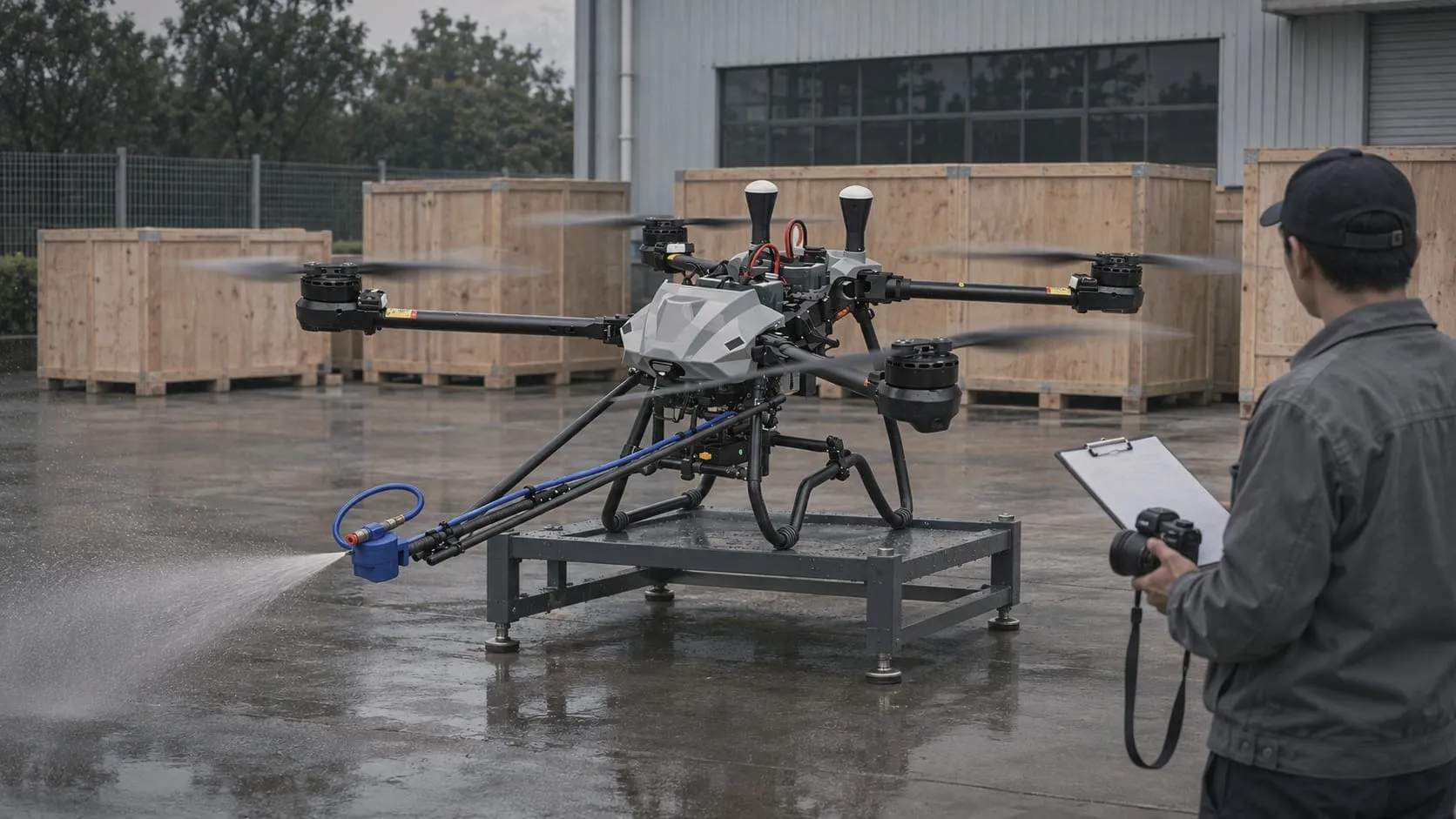
Short answer: a drone factory acceptance test is a written test plan, run on your aircraft before shipment, that checks load, function, firmware, batteries and the packing list against the contract. In 2026 the best practice for an industrial order of one to five units is to test every aircraft, record the evidence and agree the pass criteria before you pay the balance.
What should a drone FAT prove before it ships?
Three things. The aircraft is the one you ordered (model, serial number, firmware). It performs at the contracted load and settings. And what is in the crates matches the packing list. A good FAT is a dated release record, not a marketing flight. Write it into the contract so the pass criteria cannot change afterwards.
Which tests fit which aircraft?
| Aircraft | Test | Method | Pass criterion | Evidence |
|---|---|---|---|---|
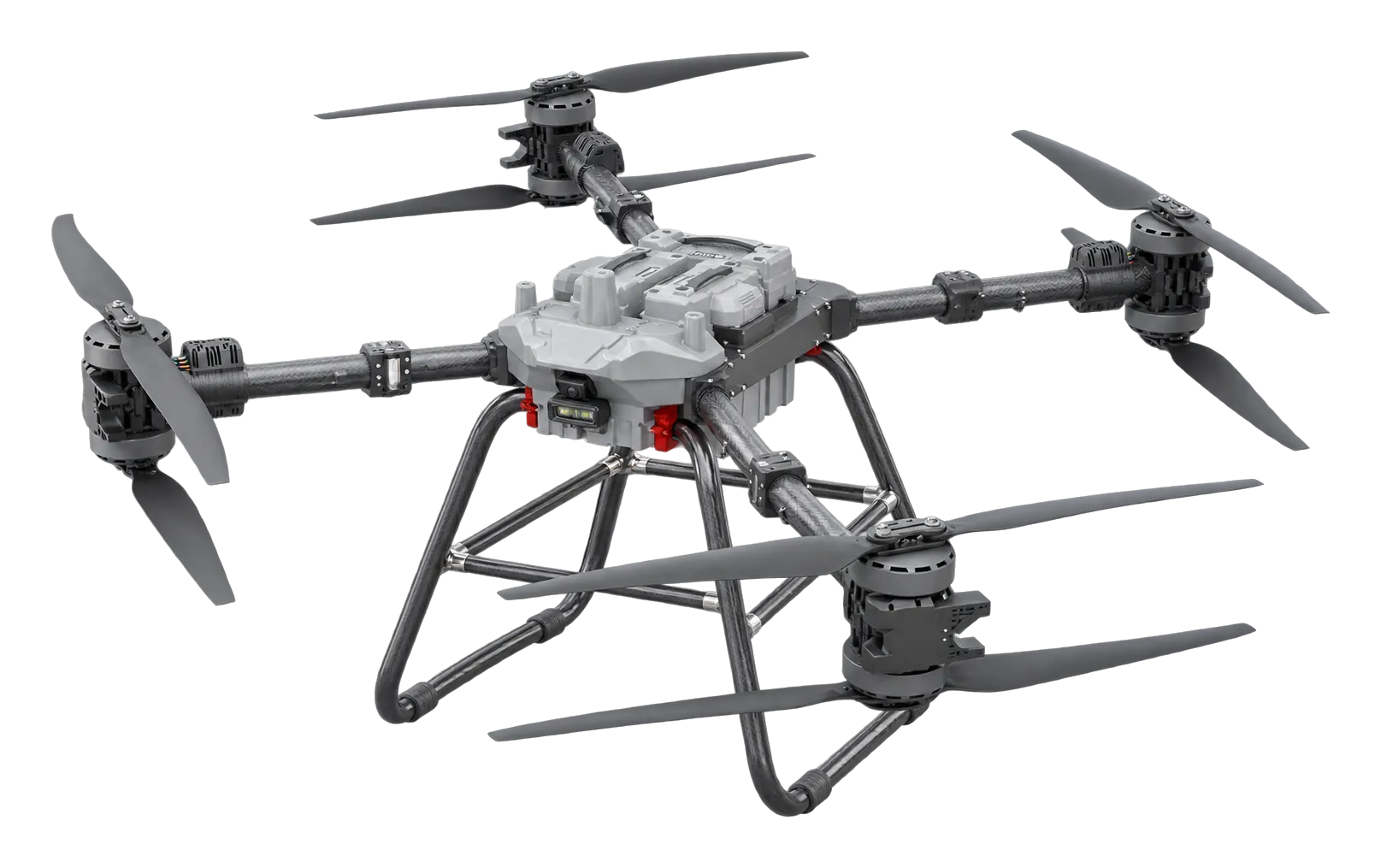
| HL-200 | Hover and short flight at rated load | Fly with 150 kg, not the 200 kg maximum, unless the contract says | Stable hover, return to land, no warnings | Video, flight log |
| HL-200 | Hook or sling release cycles | Release a test load several times | Releases on command every time | Video |
| HL-200 | FPV camera and 10 km controller link check | Check image and link at test distance | Clear image, no dropouts | Screen recording |
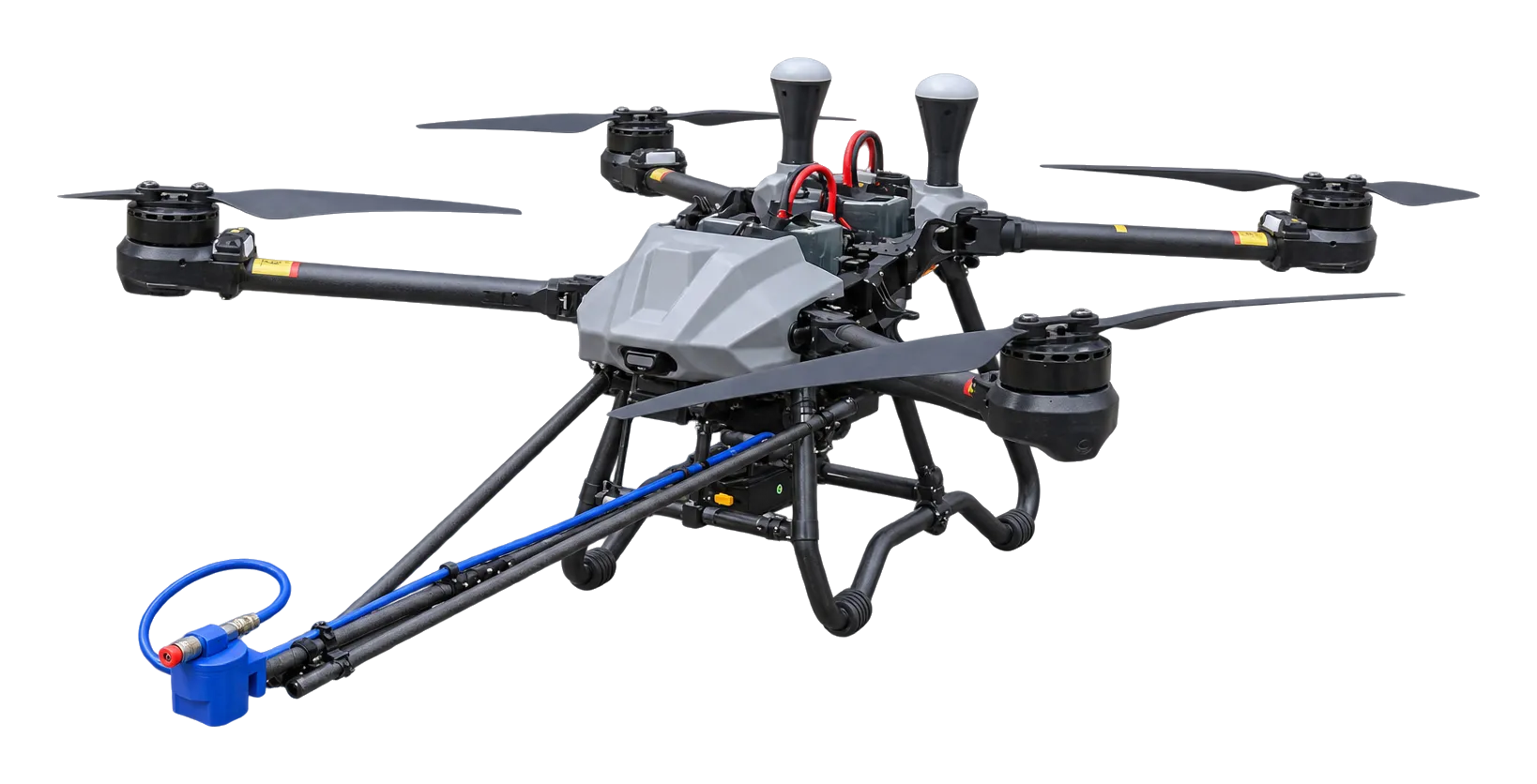
| CW-65 | Ground pump pressure and flow | Run the 5.5 or 13 kW unit with hose at stated lengths | Pressure and flow at the quoted figures | Gauge photo, log |
| CW-65 | Lance angles | Cycle 45°, 90° and 180° | Moves to each angle, no leaks | Video |
| CW-65 | Tether power, if ordered | Run tethered hover | Stable power | Log |
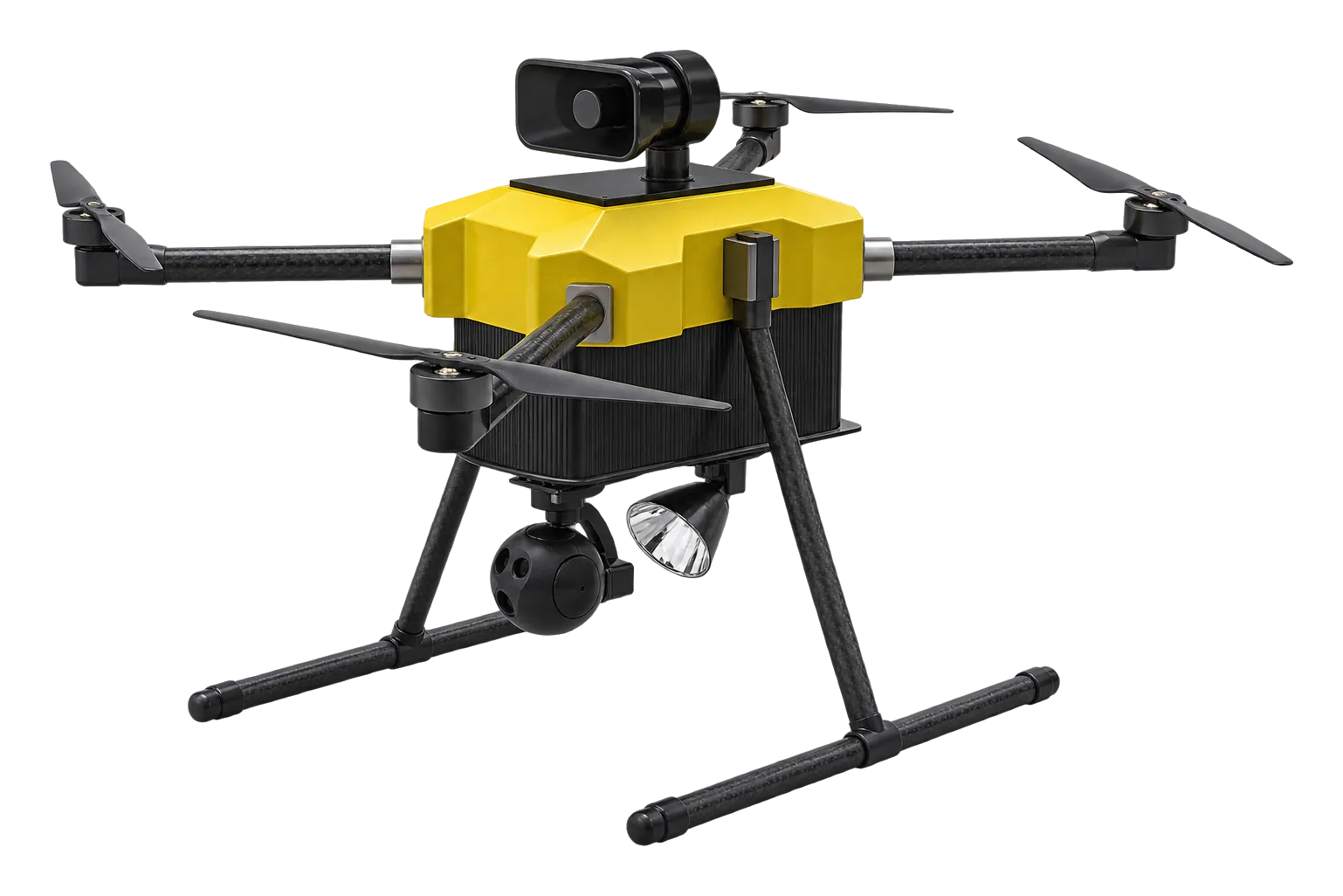
| IS-9 | Endurance sample | A short flight; a full 120 min test only if agreed | Battery consumption in line with brochure | Log |
| IS-9 | Payload gimbal function | Move gimbal, zoom or thermal | All axes and modes work | Video |
| All | Serials, firmware, accessories | Read from the aircraft, controller and payload | Match the contract | Photos |
IP67 is a design rating, not a FAT item; check the test certificate document instead of a spray test. For the CW-65, set the water fill level as written in the quotation. A full 62 L tank would exceed the 111 kg maximum take-off weight, so never test or ship it as a full tank load.
What goes on the record: serials, firmware, batteries
- Serial numbers of aircraft, controller, payload, pump and each battery.
- Firmware versions of flight controller, remote controller and payload.
- Number of batteries and their charge at packing; for air freight 30 % or less, see the battery shipping guide.
- Accessories against the packing list, with a photograph of each crate before sealing.
- Documents in the crate or sent digitally.
Witness in person, by video or by an inspector?
| Option | Good | Weak |
|---|---|---|
| You attend | You see everything, build a relationship | Travel cost and time |
| Live video, scripted | Cheap, quick | You cannot touch or smell a problem |
| Third-party inspector | Independent view | Cost; the inspector must be able to attend drone tests |
Inspection companies such as Bureau Veritas operate worldwide; we make no claim that a given firm offers drone testing, so ask first. Statistical sampling does not help with 1–5 units, so test each one.
Example: a one-day FAT plan for a lift drone
Example only, with times as assumptions. An HL-200 with three battery sets:
| Time | Block | Hours |
|---|---|---|
| 08:00 | Serials, firmware and parts check | 1.0 |
| 09:00 | Ground checks, controller link, FPV | 1.0 |
| 10:00 | Hover and short flight at 150 kg | 1.5 |
| 11:30 | Hook release cycles | 1.0 |
| 13:30 | Charge each of the three sets, log the cycle | 2.0 |
| 15:30 | Packing, charge level set, photographs | 1.5 |
That is 8 hours. A test at 150 kg is inside the brochure range of about 12 km, which tells you the short flight is a function check and not a range test.
What happens if a test fails?
Say in the contract that the failed test is repeated on the same unit after the fix. Record the fault, the cause, the fix and the retest. Sale-of-goods rules (see UNCITRAL’s CISG) put a duty on the buyer to examine goods, so also keep your own acceptance record on arrival. Our quotation guide shows which lines to fix before this point, and the warranty guide covers what is covered afterwards.
Factory test or site acceptance: where each check belongs
| Check | FAT | SAT |
|---|---|---|
| Serials, firmware, accessories | Yes | Check against record |
| Load flight at rated figure | Yes | Yes, with your real load |
| Wind, altitude, climate | No | Yes |
| Operator training result | Partly | Yes |
| Permit and local rules | No | Yes |
Best for …
- Best for first orders: live video FAT with a written script and logs, cost low.
- Best for lift contractors: attend in person for the HL-200 load flight; the test at 150 kg takes about 1.5 hours.
- Best for cleaning service brands: pump pressure and flow gauge photos for the CW-65, plus lance cycling.
- Best for long-route inspection: a short IS-9 endurance sample and gimbal function check.
Next step
Send your acceptance list with the quotation request, and ask for our test plan in return. Use the contact form and name the model and witness option. The service page shows how support continues after handover.
Q & A
Common questions
01What is a drone factory acceptance test?
A planned set of tests at the maker’s site, agreed before the order, that shows an aircraft meets the contract and is complete before it ships. The result is a dated record, not a sales demonstration.
02What should be tested before shipment?
Flight at the rated load, the function of every payload and release, firmware and serial records, pump pressure and flow for cleaning drones, battery count and charge level for transport, and the packing list.
03What is the difference between FAT and SAT?
A FAT happens at the factory before shipment. A site acceptance test (SAT) happens at your site with your conditions and loads once the aircraft arrives.
04Can I do a FAT by video?
Yes, as a live video session with a script agreed in advance. It saves a trip but you cannot touch the aircraft; ask for logs and photos of serial plates.
05Who pays for a third-party inspection?
Usually the buyer, unless the contract says otherwise. Agree this before ordering. Inspection companies exist worldwide; confirm the inspector can attend drone tests.
06What if the drone fails a test?
The contract should say who fixes it and who pays, and require a repeat of the failed test on the same unit. Write the failure and the fix in the record.
References
- 1Aerial Drone Tests (standard test methods for small UAS) — NIST
- 2Commercial Drone Acceptance Testing: From Factory Spec to Site Handover — Unmanned Innovation
- 3IATA Battery Guidance Document (2026 regulations) — IATA
- 4United Nations Convention on Contracts for the International Sale of Goods (Vienna, 1980) — UNCITRAL
VEXAFLY Aviation Technology Co., Ltd.. VEXAFLY Aviation Technology Co., Ltd. — industrial drone maker in Nanjing. Our application engineers write and check these pages and configure inspection, cleaning, lift and fire-response systems for project buyers. About VEXAFLY