PV-2 STPersonal air mobility
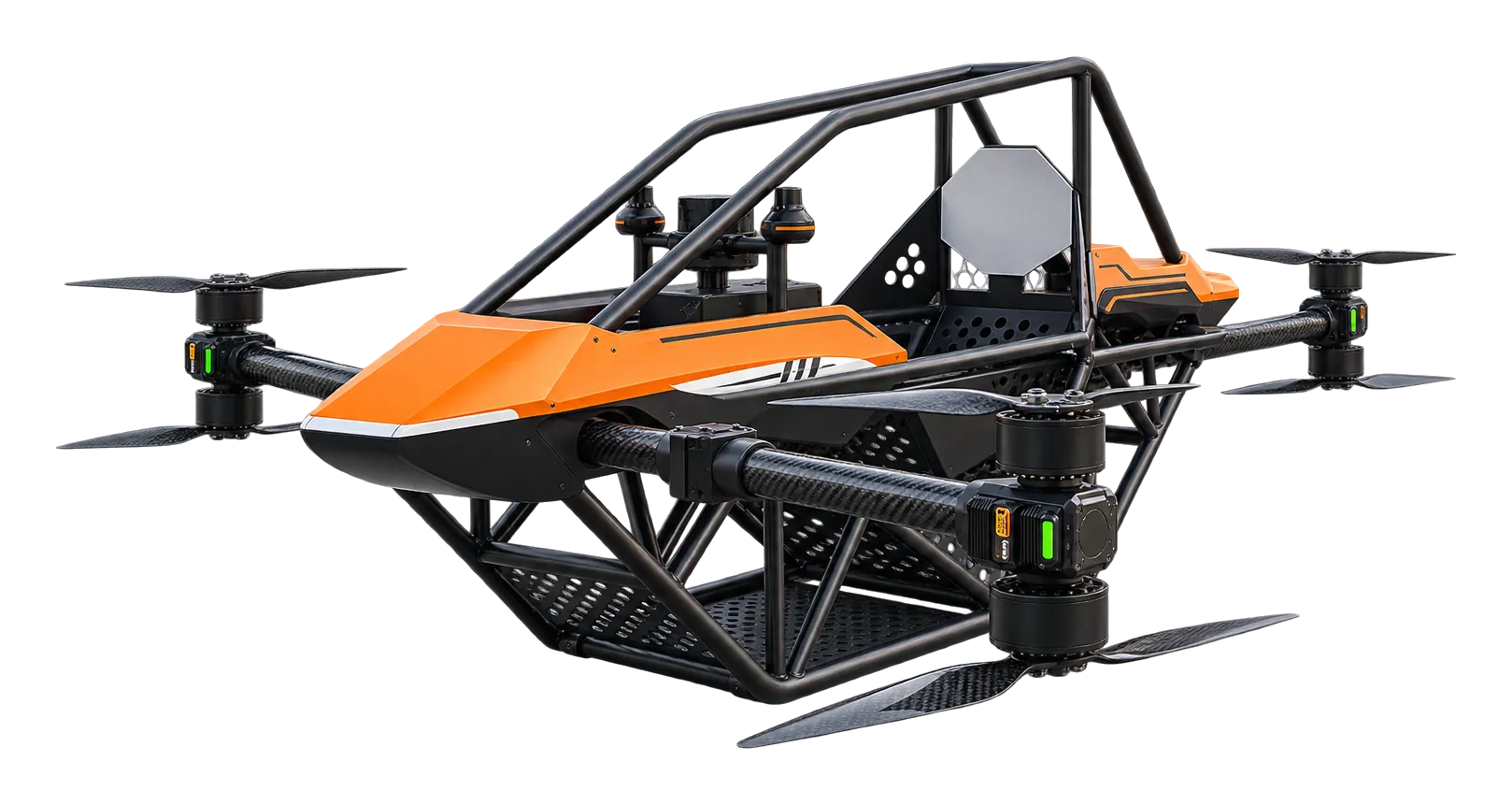
PV-2 ST Personal Air Vehicle
Shorter demonstration and leisure flights where a lighter, more compact aircraft is easier to move.
Specs on requestDetails of PV-2 ST Personal Air Vehicle

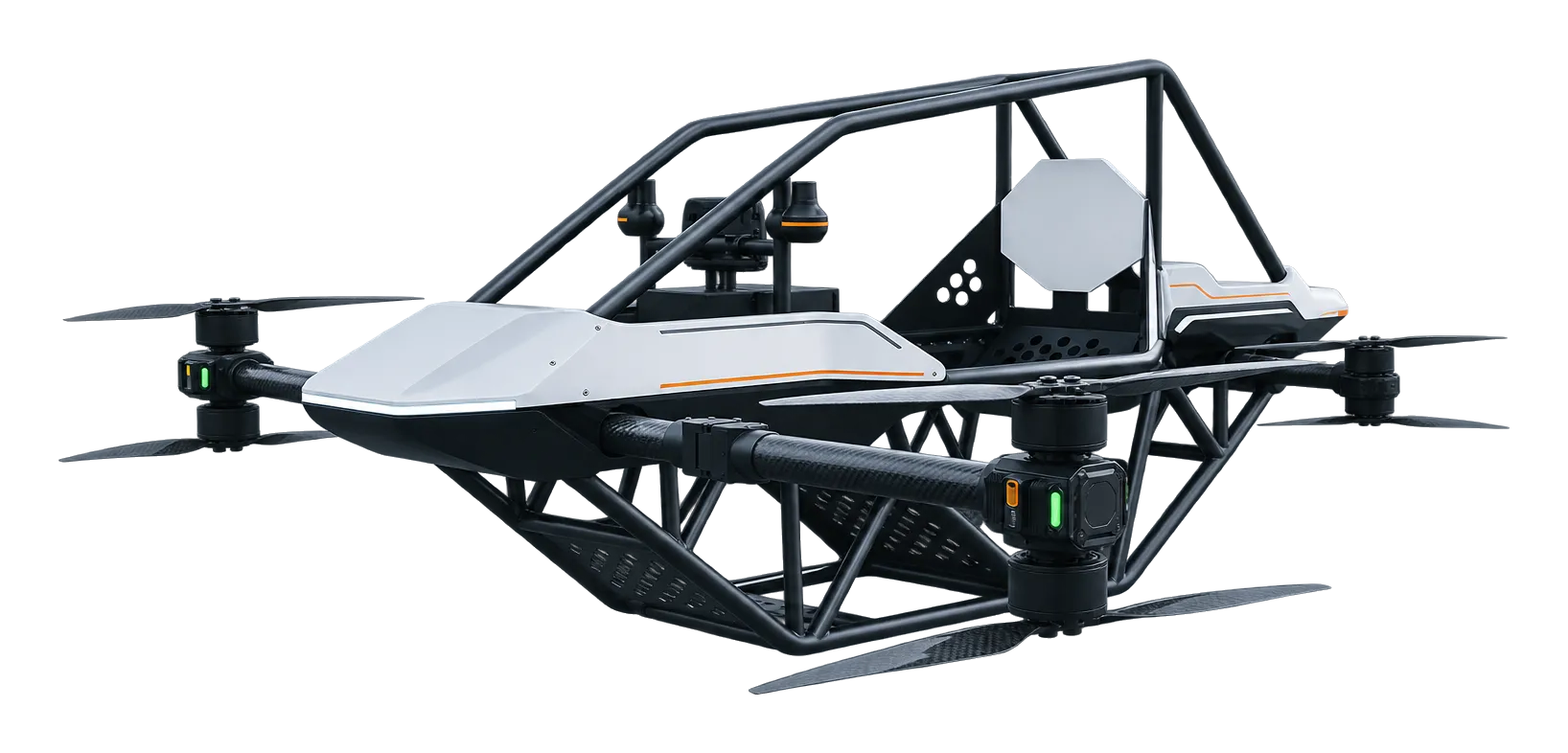
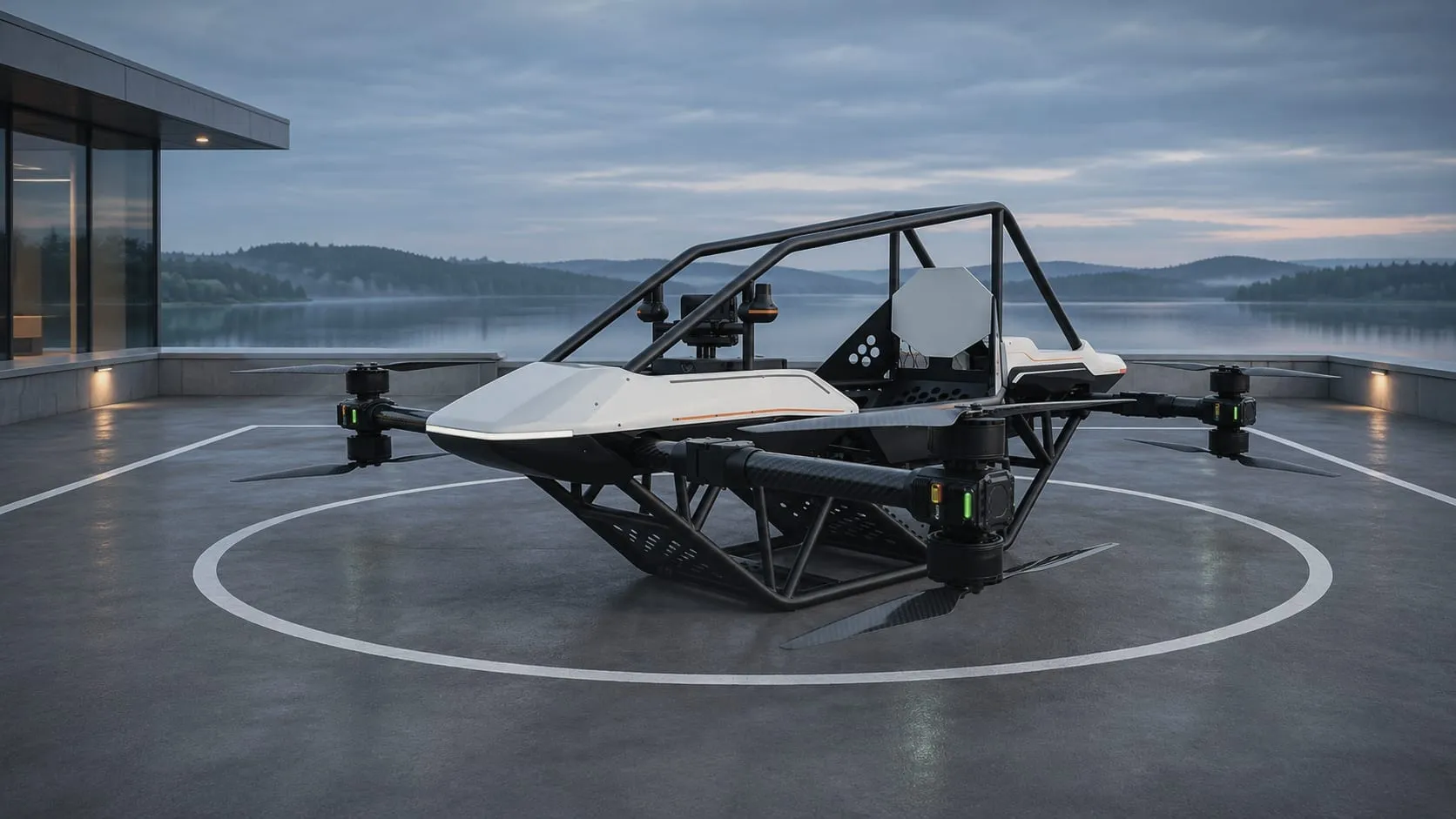
The flagship of the PV series: a single-seat, all-electric VTOL with a coaxial quad-rotor layout, a titanium frame, RTK guidance and a whole-aircraft parachute as standard.
Price range varies with configuration, batteries and order quantity. The final price is on our quotation.
Supplier facts
Made by VEXAFLY Aviation Technology Co., Ltd., Nanjing, China · founded 2016 · customers in 60+ countries · 12-month standard warranty · ISO, CE · OEM / ODM · Partner programme
Best for:Demonstration flights, tourism sites and closed-field programmes that want the longest endurance in the PV series.
Specs on request · Reference values
Short answer: the PV-2 Pro is a single-seat, all-electric VTOL aircraft with a coaxial quad-rotor layout. The brochure lists 120 kg payload, 40–60 minutes of endurance and 100 km/h top speed, with a whole-aircraft parachute and RTK guidance as standard. Where and by whom it may be flown is set by your local aviation authority.
| Model | Layout | Endurance | Max take-off weight |
|---|---|---|---|
| PV-2 Pro | Seated, coaxial quad-rotor | 40–60 min | 267 kg |
| PV-2 ST | Seated, coaxial quad-rotor | 25 min | 209 kg |
| PV-U | Standing, ducted quad-rotor | 15–30 min | 254 kg |
Start with your aviation authority, not with the aircraft. Ask what category the aircraft falls into, what the pilot needs and where flights are allowed. Then plan the site: a flat landing area, a charging point for the ground fast-charge module and a fenced zone for spectators. We support the paperwork with technical documents and train pilots and technicians on delivery.
Parameters
| Configuration | Coaxial quad-rotor, 8 propellers, all-electric |
|---|---|
| Occupants | 1, seated |
| Dimensions unfolded (incl. propellers) | 3850 × 4450 × 1190 mm |
| Dimensions folded | 2791 × 1450 × 1182 mm |
| Empty weight without / with battery | 105 kg / 147 kg |
| Max take-off weight | 267 kg |
| Max payload | 120 kg |
| Endurance | 40–60 min |
| Max level speed | 100 km/h |
| Service ceiling | 5 m above ground |
| Wind resistance | Level 6 |
| Positioning | 5-constellation GNSS + RTK (0.8 cm H / 1.5 cm V) |
| Battery | 4 groups, parallel-linked packs |
| Parachute | Whole aircraft, automatic and manual deployment |
Reference values from the manufacturer brochure, measured under specific test conditions. Airworthiness, pilot licensing and where you may fly are set by your local aviation authority. Ask for a model recommendation →
Selection
Our engineers check these points with you, so the quotation fits your site rather than a catalogue default.
FAQ
That depends on your country. Airworthiness, registration, pilot licensing and permitted flying areas are decided by your local aviation authority. We provide the technical documents they usually ask for, but we do not guarantee approval.
The brochure gives a service ceiling of 5 m above ground: the aircraft is designed for low-altitude flying over a defined area, not for climbing over terrain or buildings.
A whole-aircraft parachute with automatic and manual deployment, multi-redundant flight control, obstacle-avoidance radar and RTK positioning are standard according to the brochure.
The Pro flies longer (40–60 min against 25 min) and carries more. The ST is lighter and smaller when folded. Both are single-seat coaxial quad-rotors.
Request a Quote
Tell us the site, the task and the flight rules you work under. An engineer replies with a matched configuration and price.
Best personal eVTOL in 2026 by use: experience flights, private fields, two-seat travel and certified service, with public facts on Jetson, Helix and EH216-S.
eVTOL safety features in 2026: redundancy, parachutes at low height, flight-control protections, IP ratings and standards, with a maker checklist and PV data.
eVTOL tourism in 2026 for site operators: site types, rider limits, permissions, weather go/no-go and a flights-per-day calculation with battery sets.
Shorter demonstration and leisure flights where a lighter, more compact aircraft is easier to move.
Experience flights, exhibitions and closed sites where slow, low flying is the point.
Substations, solar sites, pipelines and industrial parks that need the same inspection flown again and again.
Routine inspection of power lines, substations, solar plants and industrial sites, by hand or from a dock.