Personal air mobility
eVTOL Safety Features in 2026: Redundancy, Parachutes and What to Ask the Maker
eVTOL safety features in 2026: redundancy, parachutes at low height, flight-control protections, IP ratings and standards, with a maker checklist and PV data.
- Author
- VEXAFLY Aviation Technology Co., Ltd.
- Scope
- Personal air mobility
- Published
- Length
- 5 min read · 6 sources
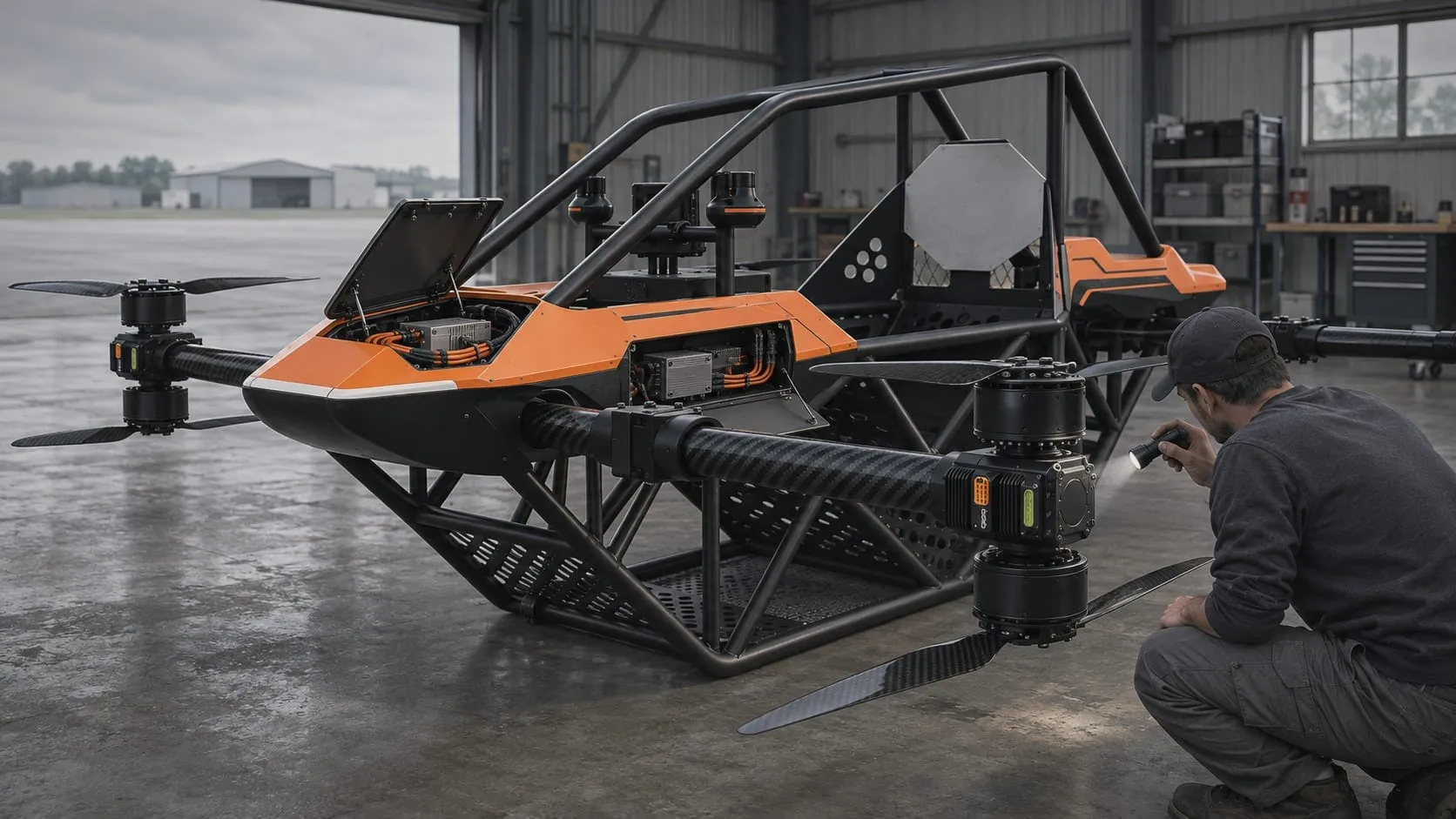
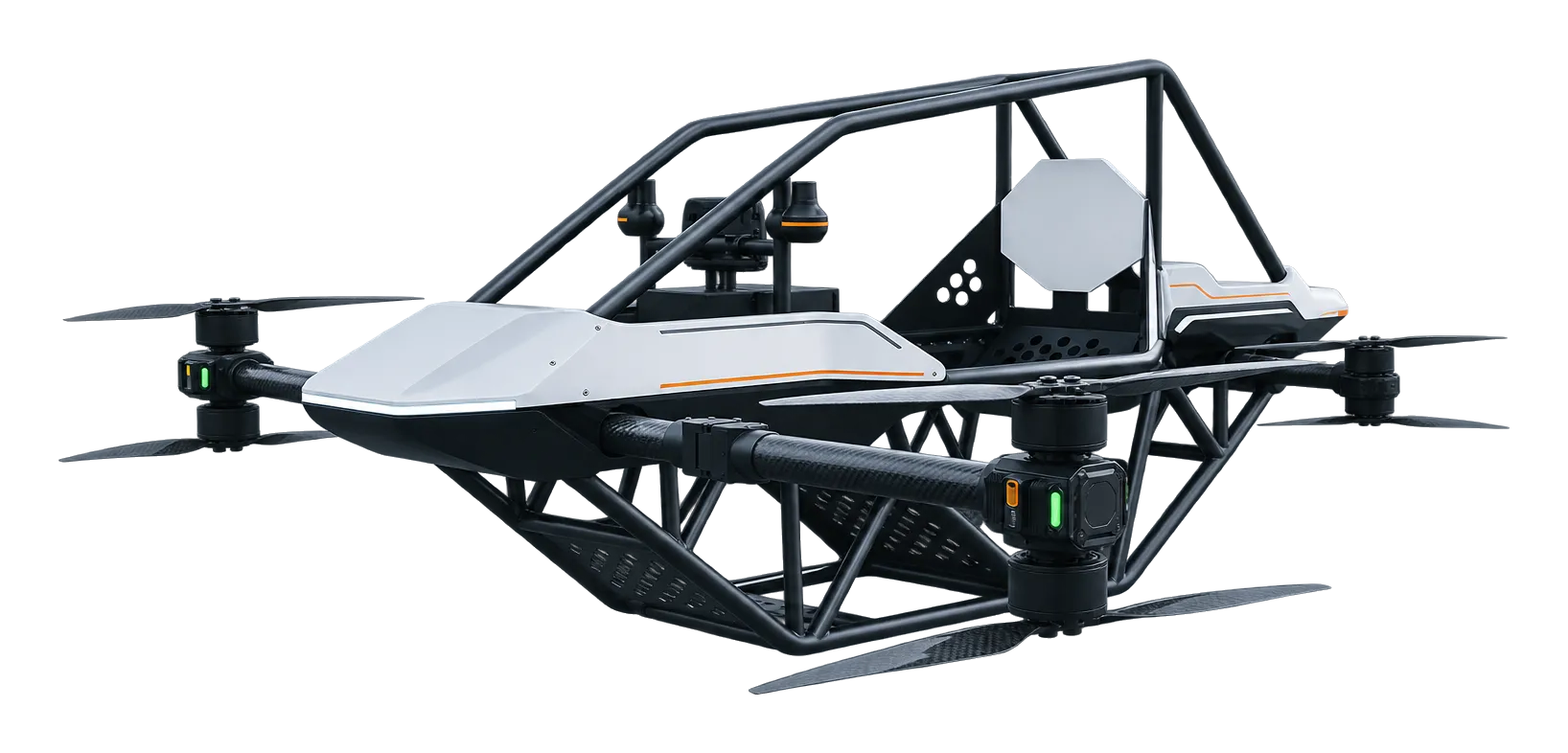
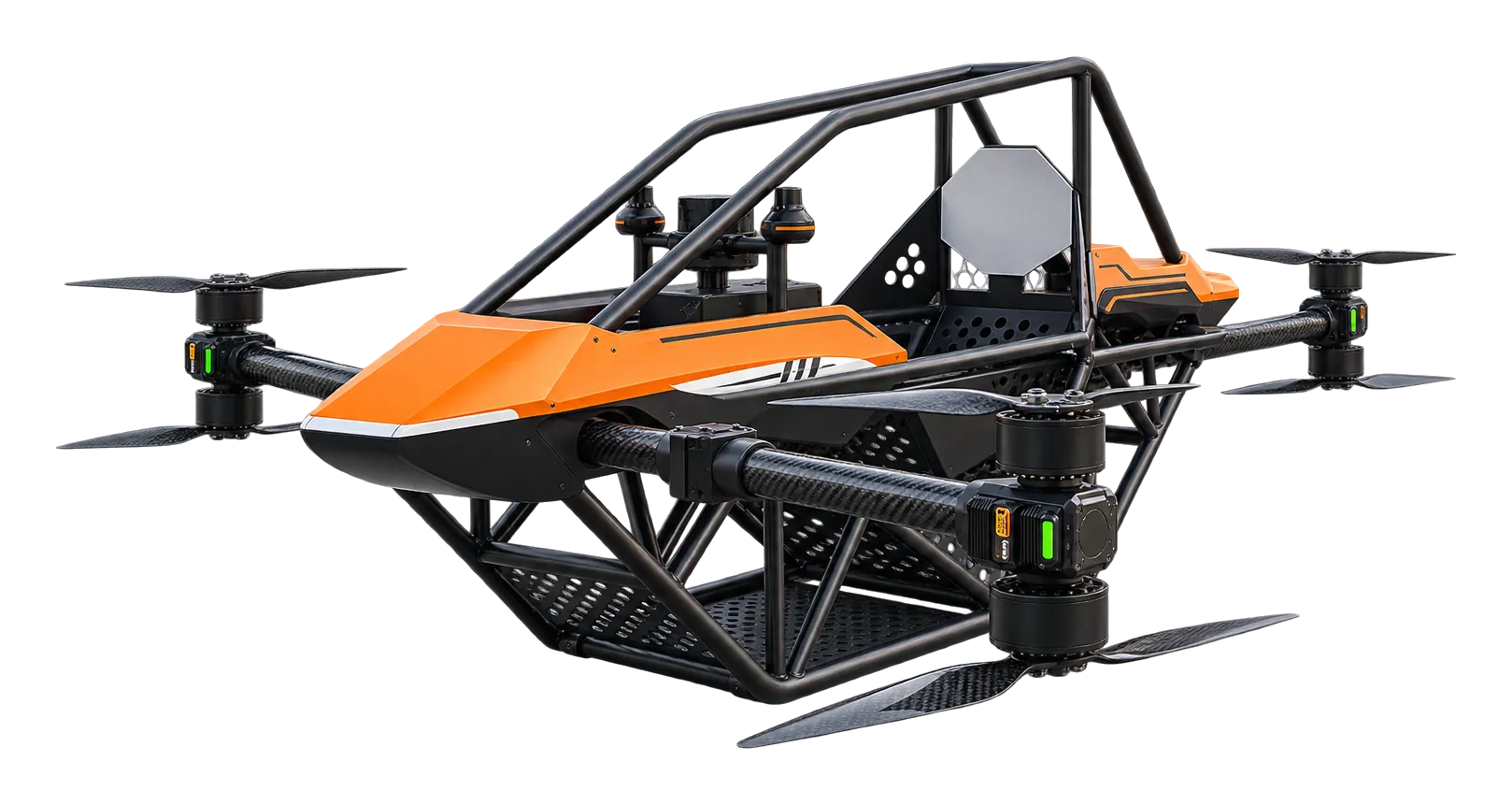
Short answer: in 2026 the eVTOL safety features worth paying for are the ones you can test: redundant propulsion and flight control, independent batteries, a parachute that works at your flying height, protections for low battery and link loss, and a speed and height envelope that suits the site. A feature list is a start; the evidence behind it separates makers. The table shows what to ask and what our three PV models list.
Feature by feature: what protects against what?
Listed in a product file is not the same as tested.
| Feature | Protects against | Evidence to ask for | PV-2 Pro | PV-2 ST | PV-U |
|---|---|---|---|---|---|
| Redundant flight control | One control failure | Failure-mode test report | Multi-redundant | Not listed | Not listed |
| Whole-aircraft parachute | Loss of control | Minimum height, deployment tests | Automatic and manual | Not listed | Not listed |
| Obstacle radar | Collisions | Detection range, test | Listed | Not listed | Not listed |
| Low-battery, power, navigation and link-loss protections | Silent failures | What the aircraft does in each case | Not listed | Not listed | Listed |
| Enclosed rotors | Contact with people | Guard design | Not listed | Not listed | Ducted rotors |
| Two telemetry radios | Lost control link | Range and failover test | Not listed | Listed | Not listed |
| Ingress rating | Rain and dust | Test report | Not listed | IP35 | Not listed |
| Speed and height envelope | Everything else | Written limits | 100 km/h, 5 m | 100 km/h, up to 5 m | 18 km/h, 5 m |
Crash prevention or crash mitigation?
NASA’s 2019 study of occupant protection splits safety into two jobs.
- Prevention: redundant propulsion and control, independent batteries, protections for low battery and link loss, limited speed and height, weather limits, a trained operator.
- Mitigation: a parachute, enclosed rotors, a seat and restraint, low speed and height, a clear landing area with spectators outside it.
A programme needs both. A parachute does not replace a weather limit.
What happens if a motor or a battery fails?
EASA’s SC-VTOL-02 asks designs to prevent single failures from causing a catastrophic effect, to keep energy storage systems independent so that a failure of one, including fire, does not lose another, and to isolate stored energy from occupants. EASA adds that more than two propulsion units can improve safety by sharing critical functions if implemented properly.
Published examples, all maker statements: LIFT says the HEXA has 18 motors, flies with six out, gives each motor its own battery and controller and has four flight computers; Jetson says its ONE flies with one motor lost and has a redundant battery propulsion system; Pivotal lists triple-redundant failsafe systems for the Helix. Put the same two questions to every maker, ours included: what is the motor-out test result, and are the packs independent? The PV-2 ST lists four packs; independence is not stated.
Does a parachute help at low height?
Only above the height it needs. ASTM F2316 sets minimum requirements for airframe emergency parachutes on light sport aircraft: strength, rate of descent, staged deployment, extraction, attachment and occupant restraint. LIFT says its HEXA parachute is effective from 40 ft (12.2 m). Jetson added a ballistic parachute on 12 May 2025 after more than 20 successful test deployments; until then its aircraft had none and test pilots flew close to the ground.
Our PV aircraft have a 5 m service ceiling, which is 16.4 ft, far below 40 ft. So ask every maker for the minimum effective deployment height with test reports. The PV-2 Pro lists automatic and manual deployment, but our file gives no minimum height.
Which flight-control protections matter?
Look for defined actions: what the aircraft does on low battery, a power fault, poor navigation accuracy and loss of link. The PV-U lists protections for all four; ask what each triggers (land, hold or return). LIFT adds geofences and a Beginner mode to the HEXA, Pivotal lists automated take-off and landing for the Helix, and Jetson lists radar-driven automatic landing. Get the behaviour in writing.
What about rain, wind and ingress?
The PV-2 ST is rated IP35 and LIFT quotes IP54 for the HEXA; our IP rating guide explains the digits. Neither rating is permission to fly in rain. Brochure wind resistance is level 6, which is Beaufort 6 or 22–27 knots; set a lower site limit with your authority.
Example: a six-question safety review for a resort
| Question | The answer you want | PV data point |
|---|---|---|
| What happens if one motor stops? | A written test result showing a controlled landing | PV-2 Pro lists multi-redundant flight control |
| Are the battery packs independent? | One pack failing does not remove all power | PV-2 ST: four 5.99 kg packs; independence not stated |
| What is the minimum parachute height? | A figure in metres with test reports | PV-2 Pro: 5 m ceiling (16.4 ft); no minimum in the file |
| What happens on link loss or low battery? | A defined action for each | PV-U lists both protections |
| What is the weather limit? | Sustained and gust figures below level 6 | Level 6 is 22–27 knots |
| What is the rider weight envelope? | Rider and gear below payload | 90 kg (PV-U), 120 kg (PV-2 Pro) |
What certification standards exist?
| Standard | What it covers | Status for PV |
|---|---|---|
| EASA SC-VTOL-02 (10 June 2024) | VTOL-capable aircraft up to 9 seats and 5,700 kg; Enhanced (continued safe flight and landing; needed over congested areas and for passenger transport) or Basic (controlled emergency landing) | No claim |
| ASTM F2316 | Airframe emergency parachutes for light sport aircraft | No claim |
| FAA Part 103 | No airworthiness standard at all | No claim; see the Part 103 guide |
Which model for which safety priority?
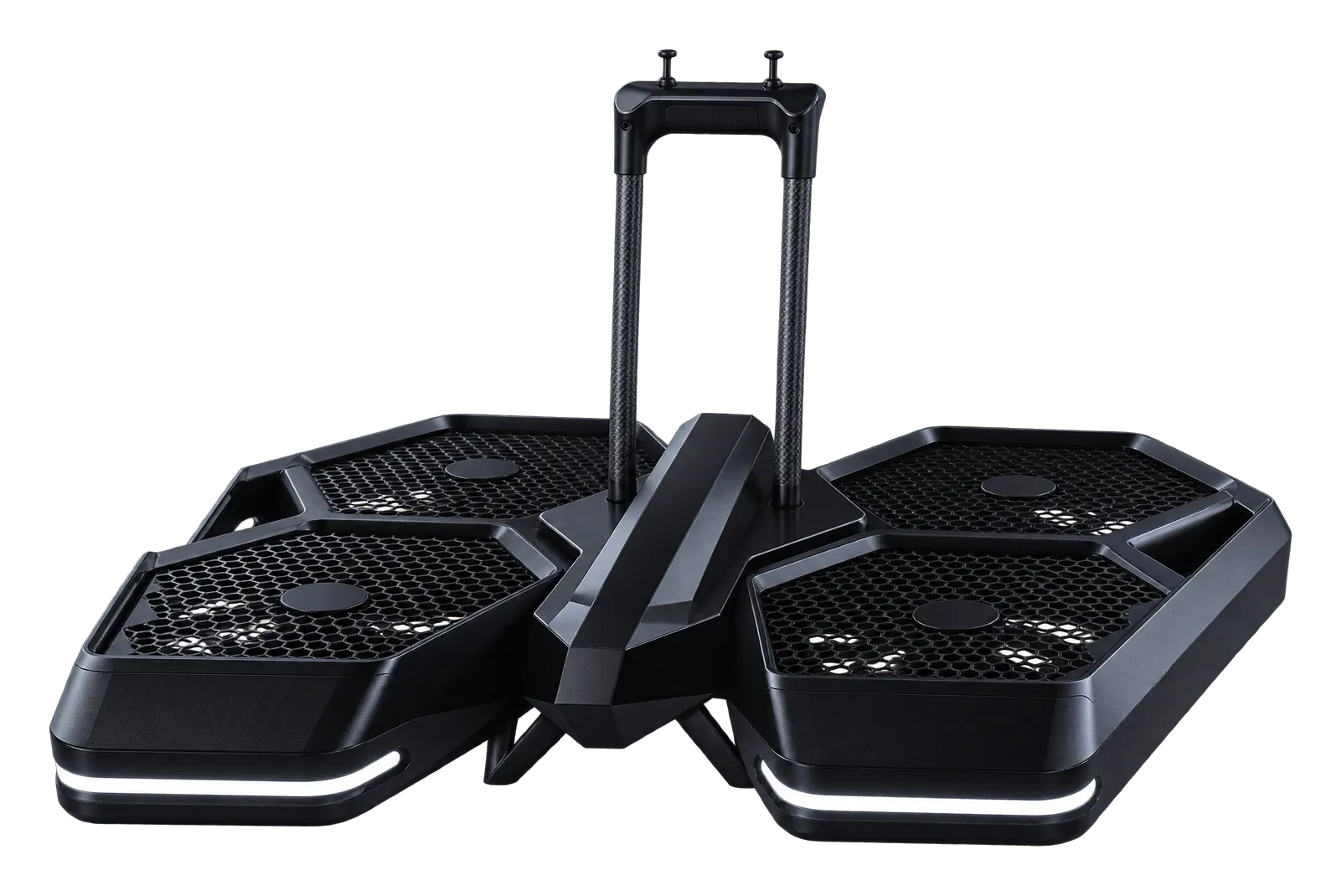
- Best for nervous first-time riders: the PV-U, with enclosed ducted rotors, 18 km/h, a 5 m ceiling and four protection functions.
- Best for longer flights with a parachute: the PV-2 Pro, whole-aircraft parachute with automatic and manual deployment, 40–60 min.
- Best for wet-climate demonstrations: the PV-2 ST, IP35, although rain still means no flying.
Next step
Send the six questions to every maker you consider, ours included, and compare the written answers. Ask us for the PV test data we can share, and read the tourism guide and pilot training guide before you write a site procedure. The air mobility range lists the models.
Q & A
Common questions
01Is eVTOL safer than a helicopter?
No in-service record is large enough yet to say so. The certification aim, such as EASA's SC-VTOL Enhanced category, is continued safe flight and landing after a failure. Compare test results, not claims.
02How safe is eVTOL?
It depends on the design, maintenance, weather limits and operator. Look for test evidence, a defined response to each failure and a trained crew.
03What happens if a motor fails?
That depends on the design, so ask for a motor-out test result. LIFT says its HEXA flies with six of 18 motors out, and Jetson says its ONE flies with one motor lost.
04Does it have a parachute, and from what height does it work?
Only the PV-2 Pro lists one, with automatic and manual deployment. Our file gives no minimum height; ask for it with test reports.
05What happens if the battery fails or the link is lost?
The PV-U lists protections for low battery, power anomaly, poor navigation accuracy and link loss. Ask what each one does: land, hold or return.
06Can it fly in rain?
Treat rain as no-fly. The PV-2 ST is rated IP35, which describes protection against water and dust, not permission to fly in rain.
References
- 1Special Condition for small-category VTOL-capable aircraft (SC-VTOL-02) — EASA
- 2Challenges in Vehicle Safety and Occupant Protection for Autonomous eVTOL Vehicles — NASA Technical Reports Server
- 3F2316 Standard Specification for Airframe Emergency Parachutes — ASTM International
- 4HEXA FAQ — LIFT Aircraft
- 5Introducing the Jetson Airframe Parachute System — Jetson
- 6Vertical Take-off and Landing (VTOL) — EASA
VEXAFLY Aviation Technology Co., Ltd.. VEXAFLY Aviation Technology Co., Ltd. — industrial drone maker in Nanjing. Our application engineers write and check these pages and configure inspection, cleaning, lift and fire-response systems for project buyers. About VEXAFLY