Inspection
Drone IP Ratings Explained in 2026: IP45, IP54 and IP67 on a Real Site
Drone IP rating guide for 2026: what each digit tests, which rating a site needs for rain, dust, salt and washing, and why IP67 does not mean pressure-washable.
- Author
- VEXAFLY Aviation Technology Co., Ltd.
- Scope
- Inspection
- Published
- Length
- 4 min read · 5 sources
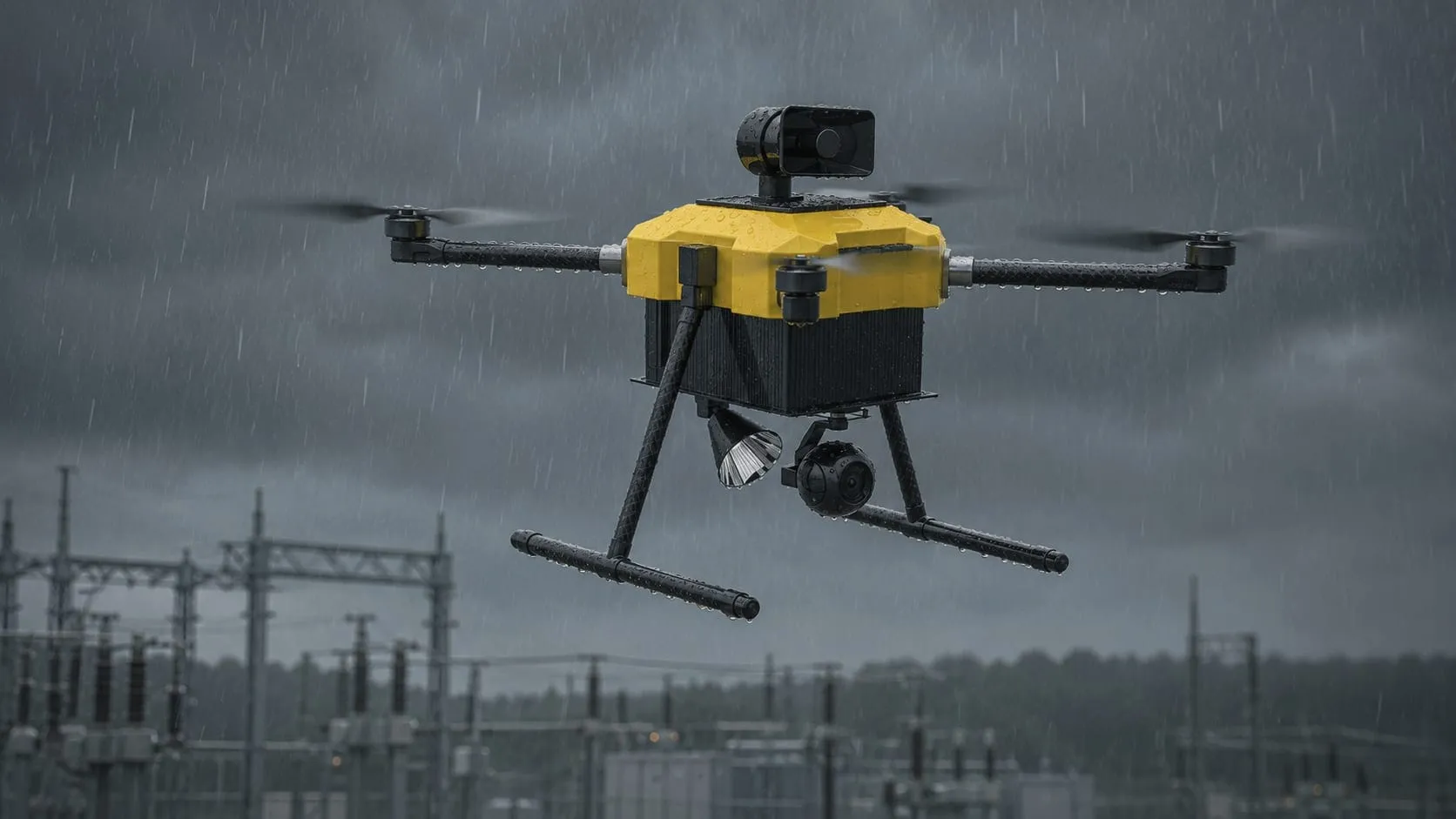
Short answer: a drone IP rating tells you how well the enclosure keeps out dust and water in a lab test, in two digits. In 2026, choose the rating from the site: IP45 tolerates drizzle patrols, IP54 suits a docked patrol in mixed weather, and IP67 suits monsoon routes, dust and wash-down sites, but no rating means the aircraft can be pressure-washed or flown in any rain.
Which IP rating does your site need?
| Site and job | Minimum to look for | Our example | Caveat |
|---|---|---|---|
| Light rain or drizzle patrol | IP45 | IS-4 | Not for heavy rain; set a stand-down rule |
| Docked patrol, mixed weather | IP54 dock | DS-1 dock plus IS-4 | Dock and aircraft are rated separately |
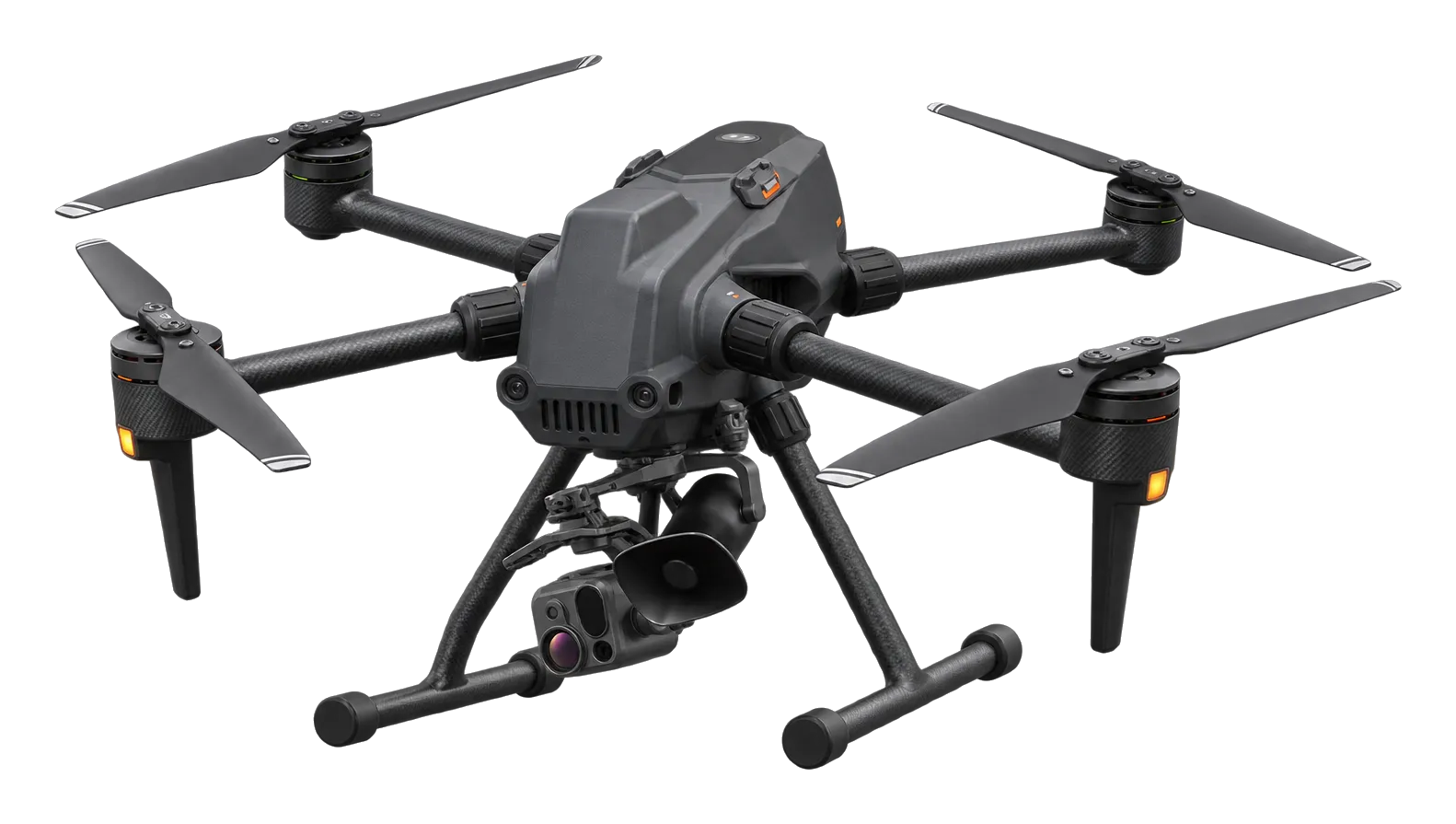
| Steady rain, monsoon routes | IP67 | IS-9 | Fly within the maker’s rain limit |
| Desert or mine dust | Dust digit 5–6 | IS-9 | Rinse and inspect after dusty days |
| Coastal salt spray | IP67 plus rinse routine | IS-4X, IS-9 | IP does not test salt corrosion |
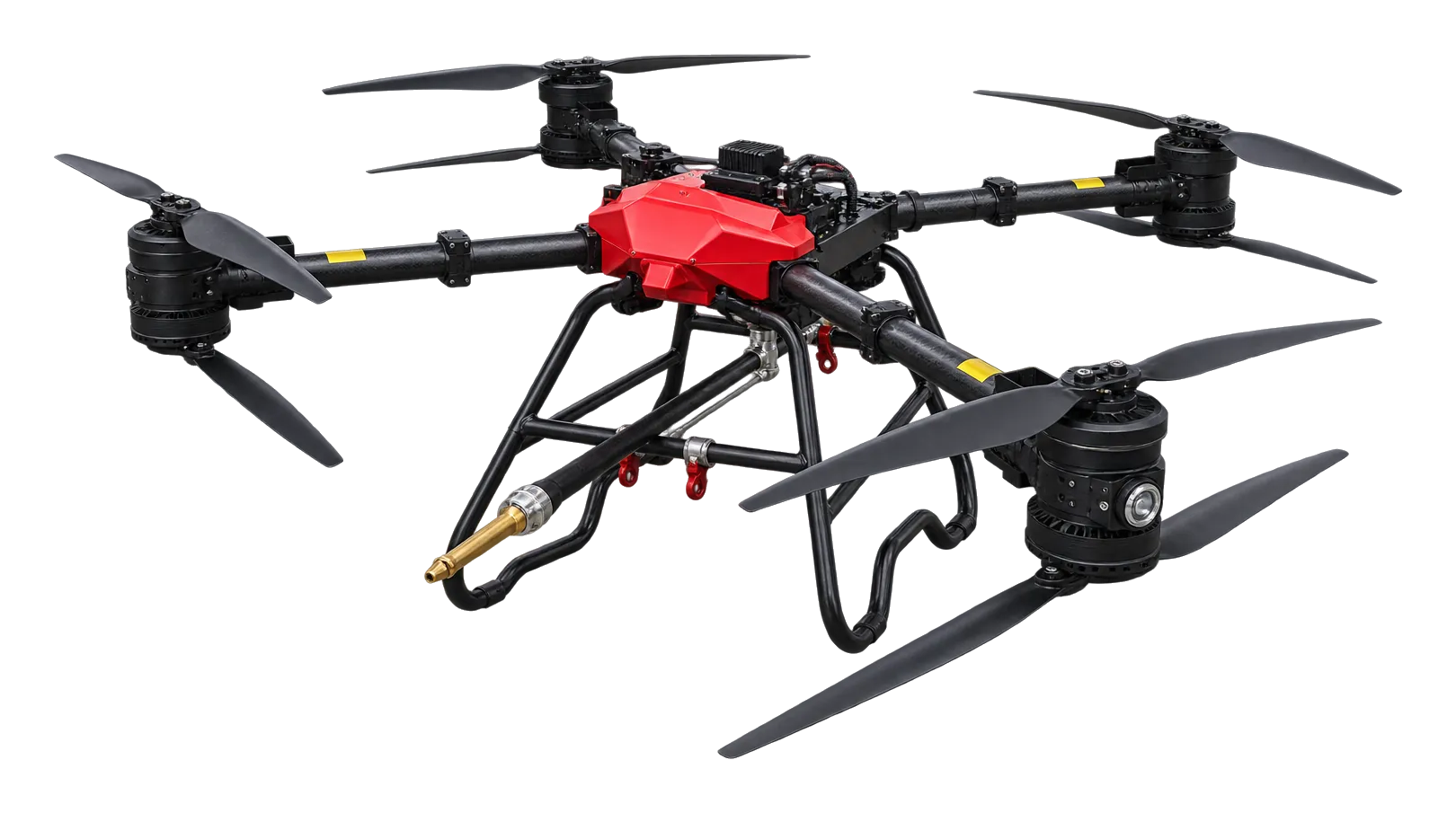
| Wash-down after cleaning or spraying | IP67, low-pressure rinse | CW-65 | IP67 is immersion, not jets |
| Fire ground water and heat | IP67 | RX-200 | Check the temperature range separately |
What do the two digits test?
The standard is IEC 60529. The first digit covers solids, the second water; X means not tested for that digit.
| Digit | First digit (solids) | Second digit (water) |
|---|---|---|
| 3 | Spray up to 60° from vertical | |
| 4 | Objects over 1 mm | Splashing from any direction |
| 5 | Dust-protected | Jets from a 6.3 mm nozzle |
| 6 | Dust-tight (vacuum test, up to 8 h) | Powerful jets from a 12.5 mm nozzle, about 100 L/min |
| 7 | Immersion up to 1 m for 30 minutes |
So IP45 means protected against small objects and splashing; IP54 means dust-protected and splashing; IP67 means dust-tight and survives immersion. The digits are not a ladder: a product can be IPX7 for immersion and fail IPX6 jets.
Rain: when should you stand down even with IP67?
A published rule of thumb from one major maker is to avoid flying its IP-rated aircraft when rainfall exceeds 100 mm in 24 hours. That is about 4.2 mm an hour on average (100 ÷ 24, our arithmetic): a steady downpour, not a shower. Rain also hurts cameras, lenses and landing: wet lenses spoil photos and wet pads are slippery. Set your own limit from the maker’s manual and your payload.
How do dust, sand and mine sites change the choice?
Dust attacks motors and gimbals first. A dust-tight first digit keeps the enclosure sealed, but vents, cooling paths and moving parts still wear. Fly early, rinse and inspect after dusty days, and keep spare propellers. See mining drone inspection and drones in extreme heat for sites where dust and heat combine.
Docks and aircraft: why are they rated separately?
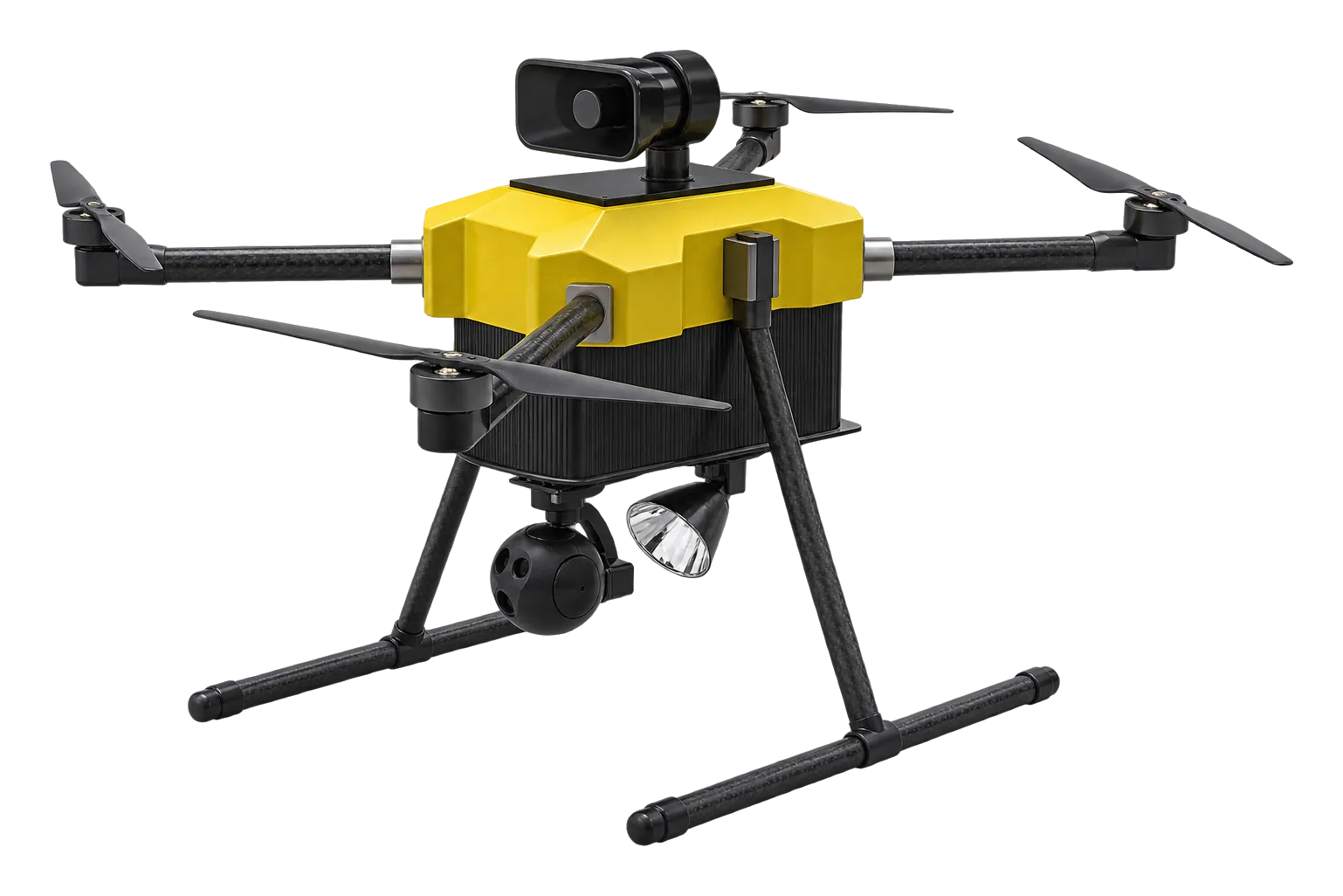
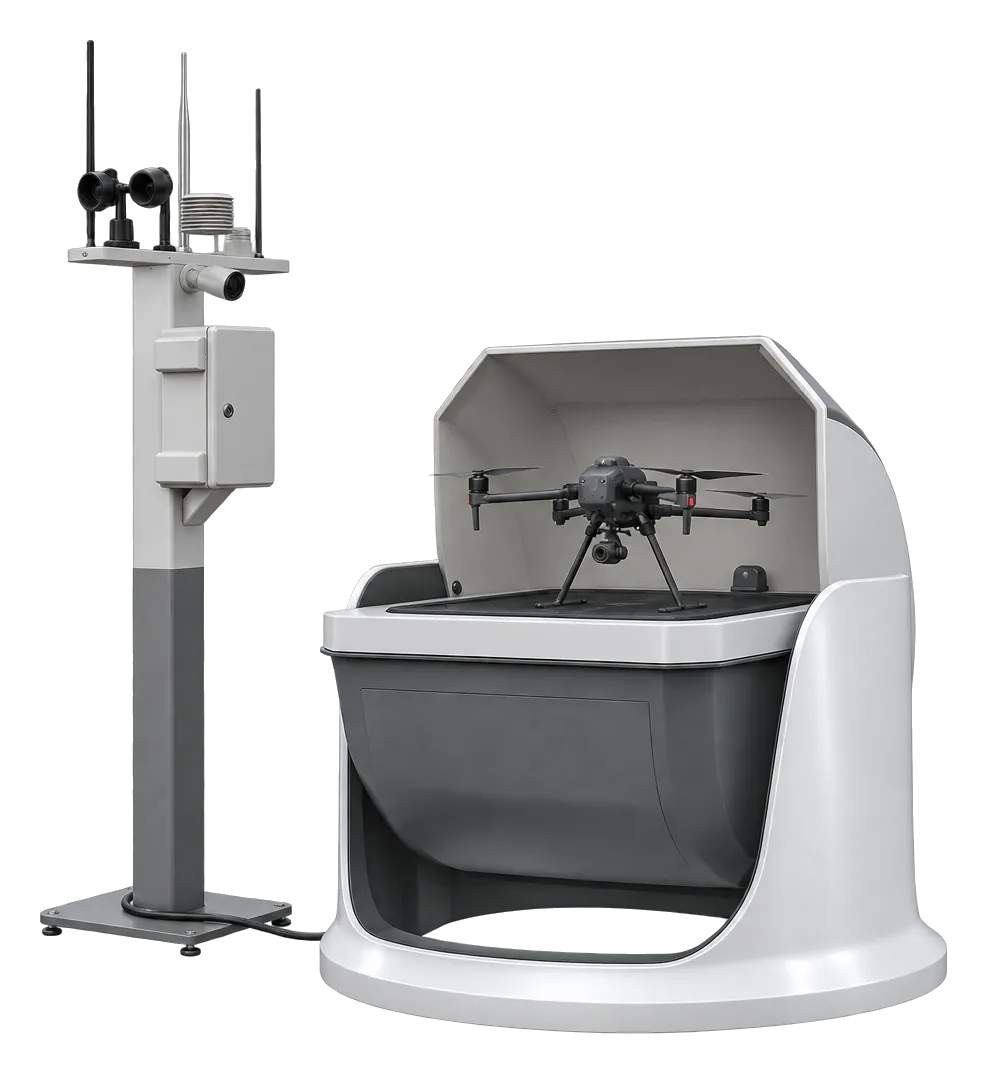
The dock is an outdoor cabinet with a cover, weather station and charging electronics; the aircraft is a flying machine with open rotors and cooling. They have different test results. The DS-1 is IP54 and pairs only with the IS-4, which is IP45 and listed as not suited to heavy rain. A docked site in a wet climate needs the dock’s weather station to stop flights when rain starts, not the rating to survive it. See dock installation requirements.
What does an IP rating not promise?
- Pressure washing: IP67 covers immersion. Jets are tested by the 5 and 6 digits.
- Salt water: the tests use fresh water, so salt corrosion needs rinsing and maintenance.
- Permanence: one maker’s own specification says its IP rating is not permanently effective and may decrease with wear and tear.
- Every part: ask which parts the rating covers, including charge ports and payload connectors.
- Flying in any rain: the rating describes the enclosure, not the camera, rotor performance or visibility.
Example: three sites, three ratings
Example only. A coastal substation with salt air and frequent showers has a docked patrol: the DS-1 (IP54) and IS-4 (IP45) are fine for drizzle rounds, with a stand-down rule for heavy rain and a monthly rinse and corrosion check. A pipeline in monsoon season needs an IP67 aircraft such as the IS-9, flown within a rain limit you set. A CW-65 facade-cleaning job ends with washing the aircraft: IP67 covers immersion, not jets, so rinse at low pressure and follow the maker’s maintenance steps; see cleaning drone maintenance and the industrial drone maintenance schedule.
Best picks
- Best for wet corridors: IS-9, IP67, −40 °C to 50 °C.
- Best for fire ground water: RX-200, IP67, −20 °C to 60 °C.
- Best for docked patrols in mixed weather: DS-1 (IP54) plus IS-4 (IP45, drizzle only).
- Best for wash-down jobs: IP67 CW-65, rinsed at low pressure.
Next step
Send your rain and dust profile, whether the site is coastal and how you wash the aircraft. We reply with the rating each model has and where it stops, so the quotation matches the site.
Q & A
Common questions
01What does IP67 mean on a drone?
The first digit 6 means dust-tight. The second digit 7 means the enclosure withstood immersion in water up to 1 m for 30 minutes in a lab test. It does not cover jets, salt water or years of wear.
02Can an IP-rated drone fly in the rain?
Often yes in light to moderate rain, within the maker’s limits. One maker’s rule of thumb is to avoid flying its IP-rated drones when rainfall exceeds 100 mm in 24 hours. Our IS-4 is IP45 and not suited to heavy rain.
03Is IP67 waterproof, and can I pressure-wash it?
It is water-resistant to a defined test, not waterproof in every situation. Jets are tested by the 5 and 6 digits, not by 7. Rinse at low pressure as the maintenance manual says.
04Which rating do I need for dust on mines and deserts?
Look for a first digit of 5 or 6. Fine dust still gets into gimbals and connectors over time, so rinse and inspect after dusty days.
05Does the dock need the same rating as the drone?
No. The DS-1 dock is IP54 while the IS-4 it houses is IP45. The dock protects the aircraft between flights; both ratings matter to your site.
06Does an IP rating cover salt water?
No. The IEC tests use fresh water. Coastal sites need rinsing, corrosion checks and a maintenance routine beyond the rating.
References
- 1IEC 60529 Degrees of protection provided by enclosures (IP Code) — IEC
- 2IP code — Wikipedia
- 3Can You Fly a Drone in the Rain? IP Ratings Guide + DJI List — heliguy
- 4Matrice 350 RTK Specs — DJI Enterprise
- 5What is an IP Rating? A Guide to Understanding Drone IP Ratings — Coptrz
VEXAFLY Aviation Technology Co., Ltd.. VEXAFLY Aviation Technology Co., Ltd. — industrial drone maker in Nanjing. Our application engineers write and check these pages and configure inspection, cleaning, lift and fire-response systems for project buyers. About VEXAFLY