Heavy lift
How Far Can a Cargo Drone Fly? Range at Load for 100–200 kg Aircraft (2026)
How far can a cargo drone fly in 2026? Range by load for 100–200 kg aircraft, one-way distance with a reserve, wind effects and the rules that limit a route.
- Author
- VEXAFLY Aviation Technology Co., Ltd.
- Scope
- Heavy lift
- Published
- Length
- 5 min read · 6 sources
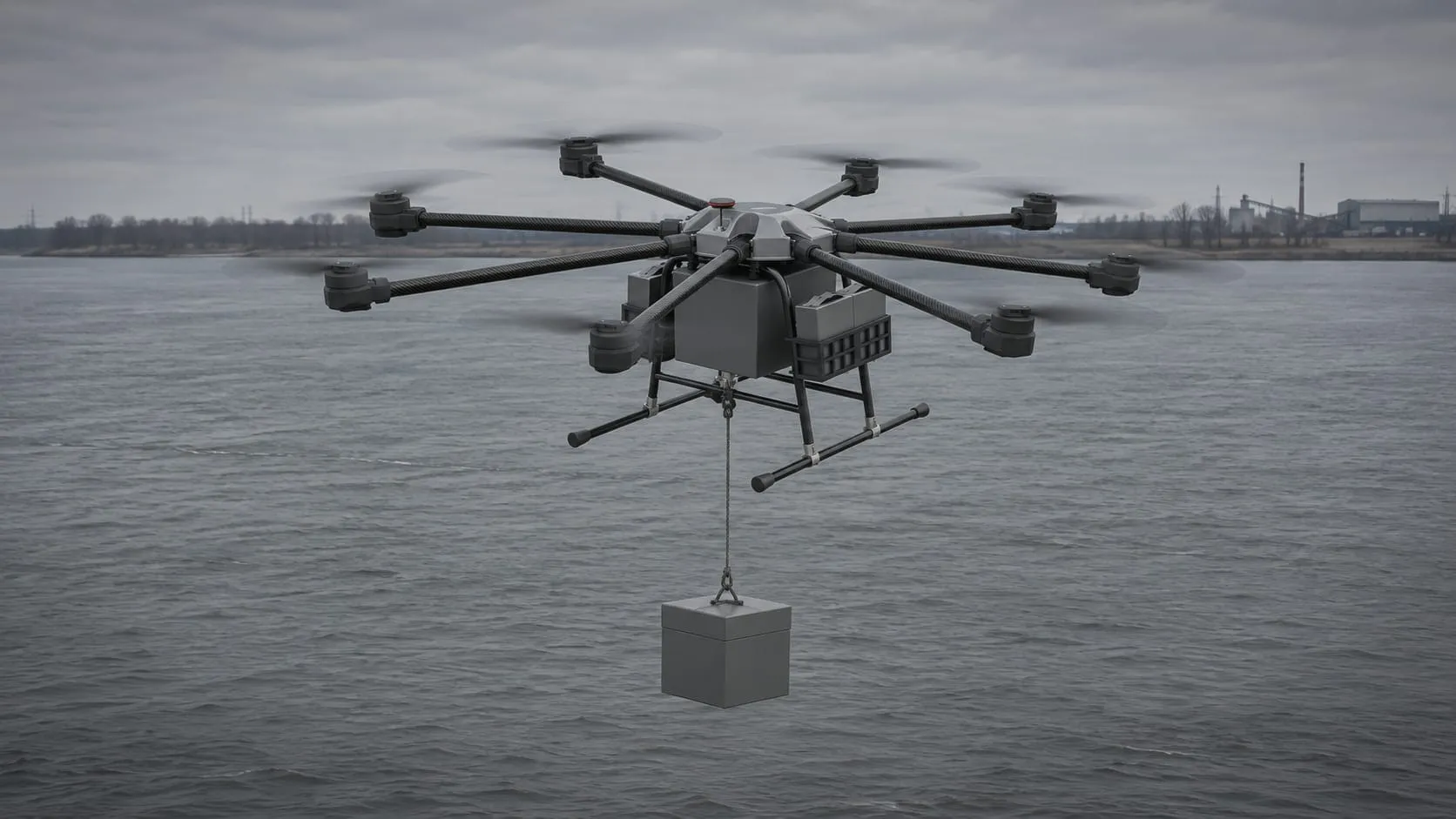
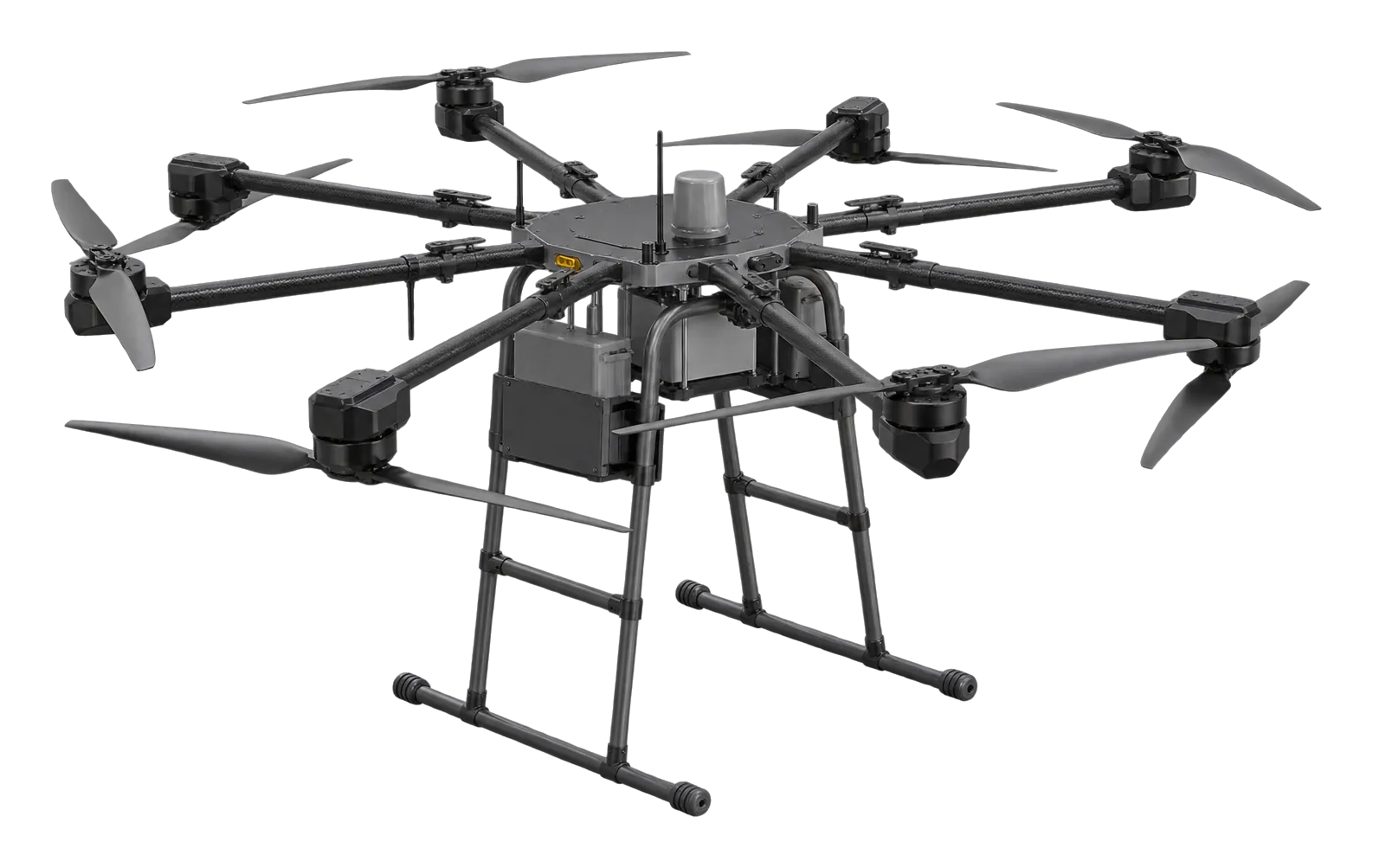
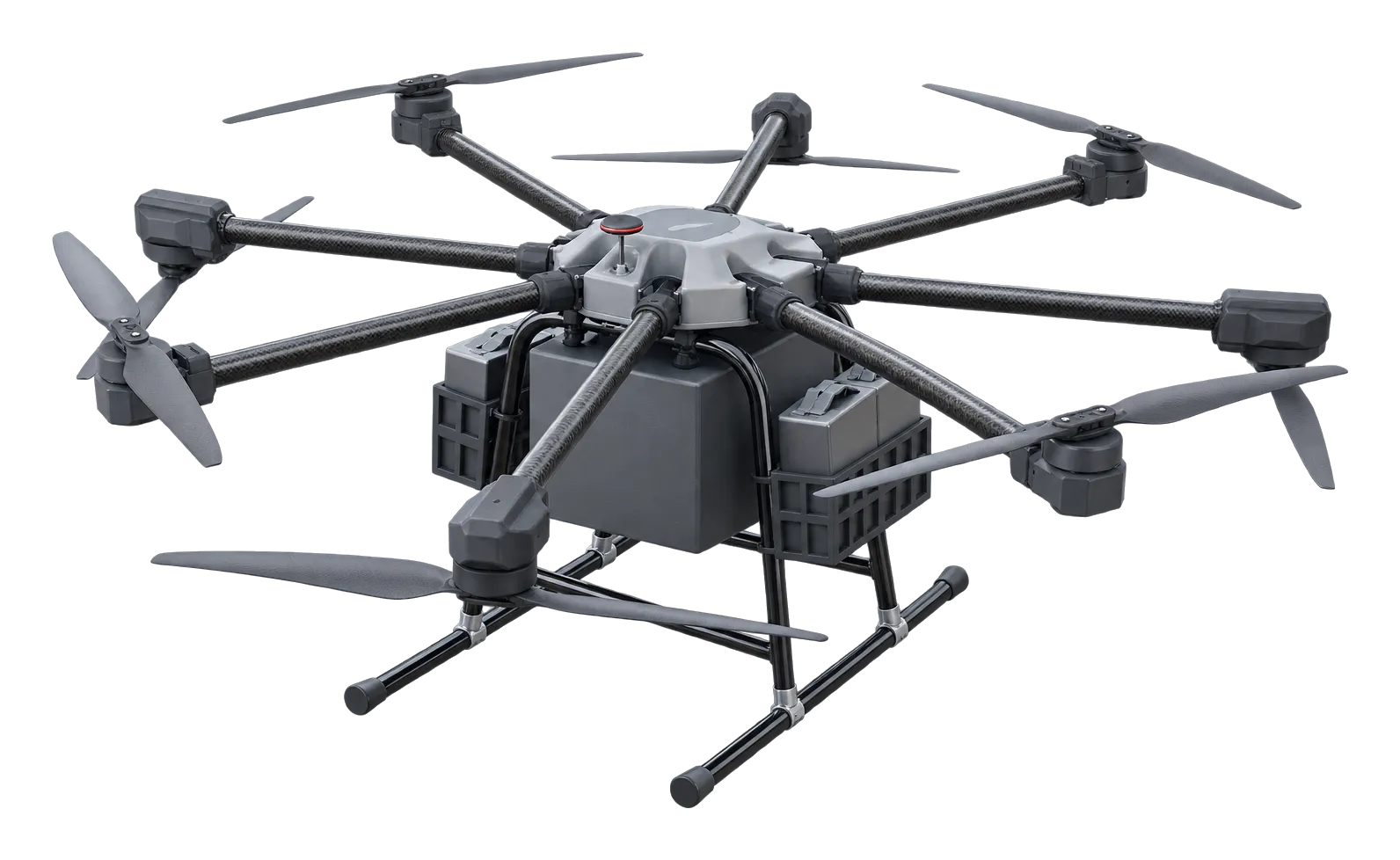
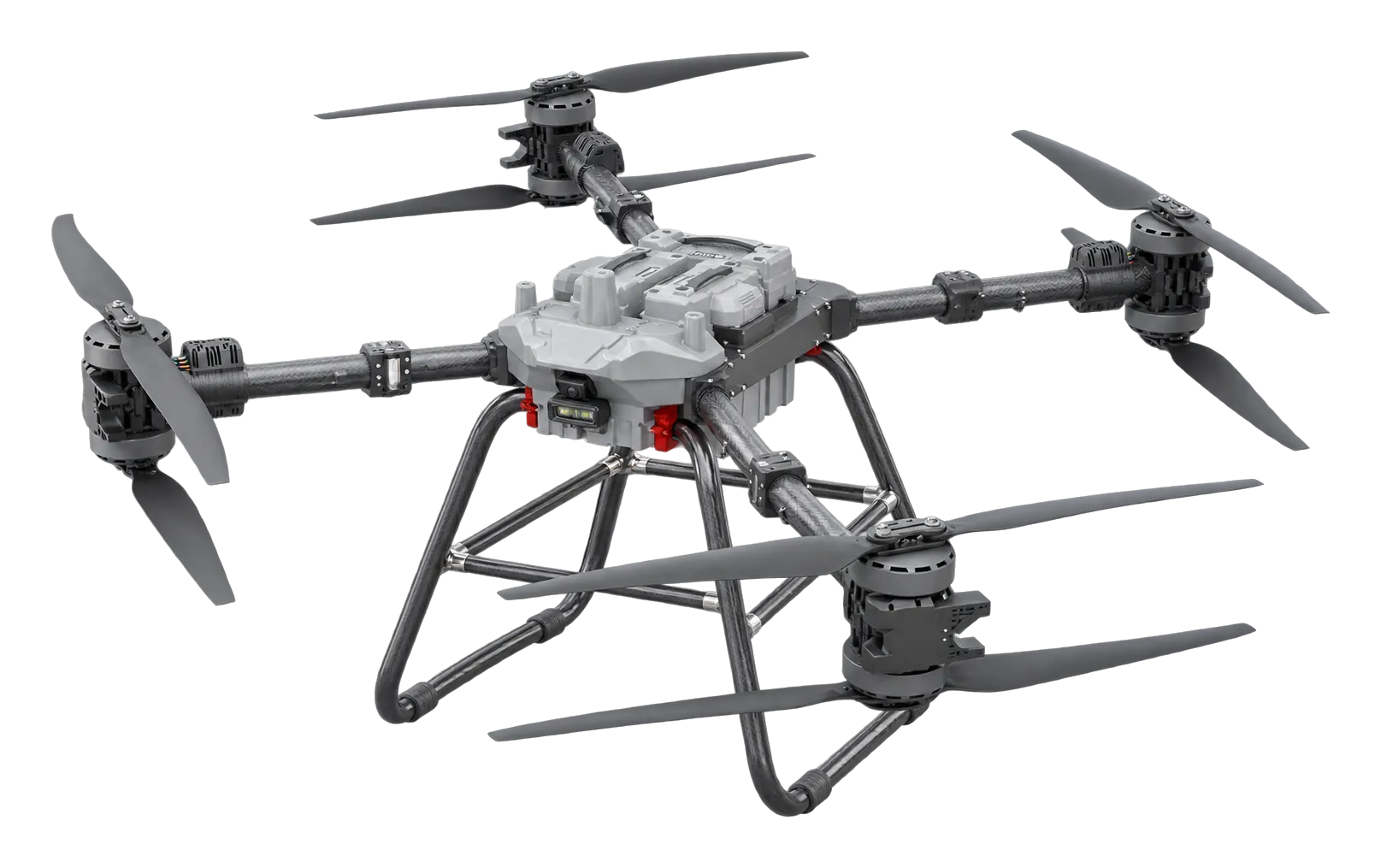
Short answer: in 2026 a cargo drone can fly about 12–16 km in still air with a 100–150 kg load and about 40 km with 20 kg, going by our HL-150 and HL-200 brochure tables. The usable one-way distance is about half of that: you fly back, keep a reserve and hover at the drop. Ranges of hundreds of kilometres belong to fixed-wing cargo aircraft.
Range by load at a glance
Start with the load, then read across. All figures are theoretical still-air values from the maker’s brochure.
| Load | HL-150 | HL-200 | HL-100 | Pick by |
|---|---|---|---|---|
| 20 kg | 58 min, 41.7 km | 40 min, 41 km | on quotation | Cost and site |
| 60 kg | 40 min, 24 km | 28 min, 29.4 km | on quotation | HL-150 for hover time, HL-200 for reach |
| 100 kg | 23 min, 13.8 km | 18 min, 15.7 km | rated load; range on quotation | HL-200 for reach, HL-150 for margin |
| 150 kg | its maximum; no figure | 15 min, 12 km | beyond its rating | HL-200 |
The two aircraft trade time against distance. At 60 kg the HL-150 stays up longer (40 against 28 minutes) while the HL-200 covers more ground (29.4 against 24 km). Jobs with long hovers favour endurance; long carries favour reach.
Why is the brochure range not my delivery distance?
Five things come out of the headline figure before the first load lands: the return leg, the reserve (plan to land with 30 % left), the hover at the drop, the climb (height difference costs more than flat distance) and wind, since the table is for still air.
Makers also use different yardsticks: DJI states 12 km and 14 minutes for its FlyCart 100 at a take-off weight of 149.9 kg, in still air at 25 °C and sea level, so that is not 150 kg of payload.
How do I work out the one-way distance?
Treat range as a battery budget: an aircraft with a range of R km uses 1 ÷ R of its battery per kilometre, and a 30 % reserve leaves 70 % to spend. For a trip loaded out and light back, the one-way distance is
d = 0.70 ÷ (1 ÷ loaded range + 1 ÷ empty range)
We use the 20 kg row as the empty leg, because the hook and sling stay on.
| Mission (30 % reserve) | Calculation | One-way distance |
|---|---|---|
| HL-200, 100 kg out | 0.70 ÷ (1/15.7 + 1/41) | 7.9 km |
| HL-200, 150 kg out | 0.70 ÷ (1/12 + 1/41) | 6.5 km |
| HL-150, 60 kg out | 0.70 ÷ (1/24 + 1/41.7) | 10.7 km |
| HL-150, 100 kg out | 0.70 ÷ (1/13.8 + 1/41.7) | 7.3 km |
The assumptions matter. In the first row, wrongly assuming a loaded return gives 5.5 km, and ignoring the reserve gives about 11 km.
What does wind do to range?
Example (estimate, still-air speeds held): an HL-200 carries 100 kg to a drop 6 km away. Endurance is 18 minutes loaded and 40 minutes on the 20 kg row, which implies 15.7 km ÷ 18 min = 14.5 m/s loaded and 41 km ÷ 40 min = 17.1 m/s light.
| Wind | Out (loaded) | Back (light) | Battery used |
|---|---|---|---|
| Still air | 6.9 min | 5.9 min | 53 % |
| 5 m/s headwind out, tailwind back | 10.5 min | 4.5 min | 70 % |
| 8 m/s headwind out, tailwind back | 15.4 min | 4.0 min | 95 % |
With a 30 % reserve, 70 % is the most you should plan to use. The 5 m/s case is already on that line and the 8 m/s case is not flown. Hovering adds more: each minute at the drop with 100 kg costs about 5.6 % (1 ÷ 18).
Multirotor or fixed-wing cargo drone?
| Type | Example | Range evidence |
|---|---|---|
| Heavy-lift multirotor | HL-200 | 12 km at 150 kg (brochure, still air) |
| Delivery multirotor | DJI FlyCart 30 | 28 km empty, 16 km with 30 kg, dual battery |
| Fixed-wing or hybrid | US Marine Corps requirement | 45 kg (100 lb) out 74 km (40 nm), release, 74 km back empty, no refuelling |
The requirement is for a demonstration planned in early 2027; the current battery-powered TRV-150C is rated about 14 km with a full 150 lb (68 kg) load. Multirotors hang loads on a sling and hover to place them, which is why they work on tower and roof sites; long-range aircraft solve a different problem.
How far am I allowed to fly?
US Part 107 requires the remote pilot or a visual observer to see the aircraft for the whole flight (section 107.31), and section 107.51 sets 400 ft above ground, 87 knots and 3 statute miles of visibility for small drones. Aircraft as heavy as ours fall outside Part 107 (see drones over 55 pounds), so the approval sets the limits. A proposed Part 108 for beyond-visual-line-of-sight flights, published in August 2025, covers aircraft up to 1,320 lb but is not final on 26 November 2026. In the EU, BVLOS is one of EASA’s examples of the specific category. A pilot cannot see a 4 m aircraft 10 km away, so long routes need an approval or a chain of observers.
Best for your route
- Best for hover-heavy carries of 40–80 kg: HL-150, 40 minutes at 60 kg and 32 minutes at 80 kg.
- Best for 100–150 kg over short hops, or the longest reach at 60 kg: HL-200, 12 km at 150 kg and 29.4 km at 60 kg.
- Best for short site logistics: HL-100, with range for your route given in the quotation.
Next step
Send the one-way distance, height difference, load and your wind limit through the contact form and we check the mission with the reserve method above. Island legs: island and offshore drone delivery. Batteries: heavy-lift drone batteries and charging.
Q & A
Common questions
01How far can a cargo drone fly?
It depends on the load. On our tables the HL-200 flies 41 km with 20 kg and 12 km with 150 kg in still air; the usable one-way distance is about half once you fly back with a reserve.
02How far can a 100 kg cargo drone fly?
The HL-150 table gives 13.8 km and the HL-200 table 15.7 km in total in still air. That is roughly 7–8 km one way with a 30 % reserve and an empty return, a sensible planning distance.
03What drone has a 1,000 mile range?
Only fixed-wing and hybrid concepts claim ranges of that order, not the multirotors used on construction and power-line sites, which fly 10–20 km at heavy loads.
04Why can't you fly a drone above 400 feet?
In the US, Part 107 caps small drones at 400 ft above ground level (section 107.51). Heavier aircraft take their limits from their own approval; a Section 44807 exemption brings a blanket COA at or below 400 ft in Class G airspace.
05How far can the controller reach?
The HL-150 and HL-200 list controller range up to 10 km. The aircraft can fly farther than that empty, but a route beyond visual line of sight needs the matching approval.
References
- 1DJI FlyCart 30 specs — DJI
- 2DJI FlyCart 100 specs — DJI
- 314 CFR 107.31 Visual line of sight aircraft operation — eCFR / FAA
- 414 CFR 107.51 Operating limitations for small unmanned aircraft — eCFR / FAA
- 5Normalizing Unmanned Aircraft Systems Beyond Visual Line of Sight Operations (proposed rule) — Federal Register
- 6U.S. Marine Corps wants new cargo drones that fly 100 pounds 40 miles out — Defence Blog
VEXAFLY Aviation Technology Co., Ltd.. VEXAFLY Aviation Technology Co., Ltd. — industrial drone maker in Nanjing. Our application engineers write and check these pages and configure inspection, cleaning, lift and fire-response systems for project buyers. About VEXAFLY