Heavy lift
Drones Over 55 Pounds in 2026: US and EU Rules for Heavy Aircraft
Drones over 55 pounds in 2026: why Part 107 does not apply, and how Section 44807, registration, Part 135, proposed Part 108 and the EU specific category work.
- Author
- VEXAFLY Aviation Technology Co., Ltd.
- Scope
- Heavy lift
- Published
- Length
- 4 min read · 8 sources
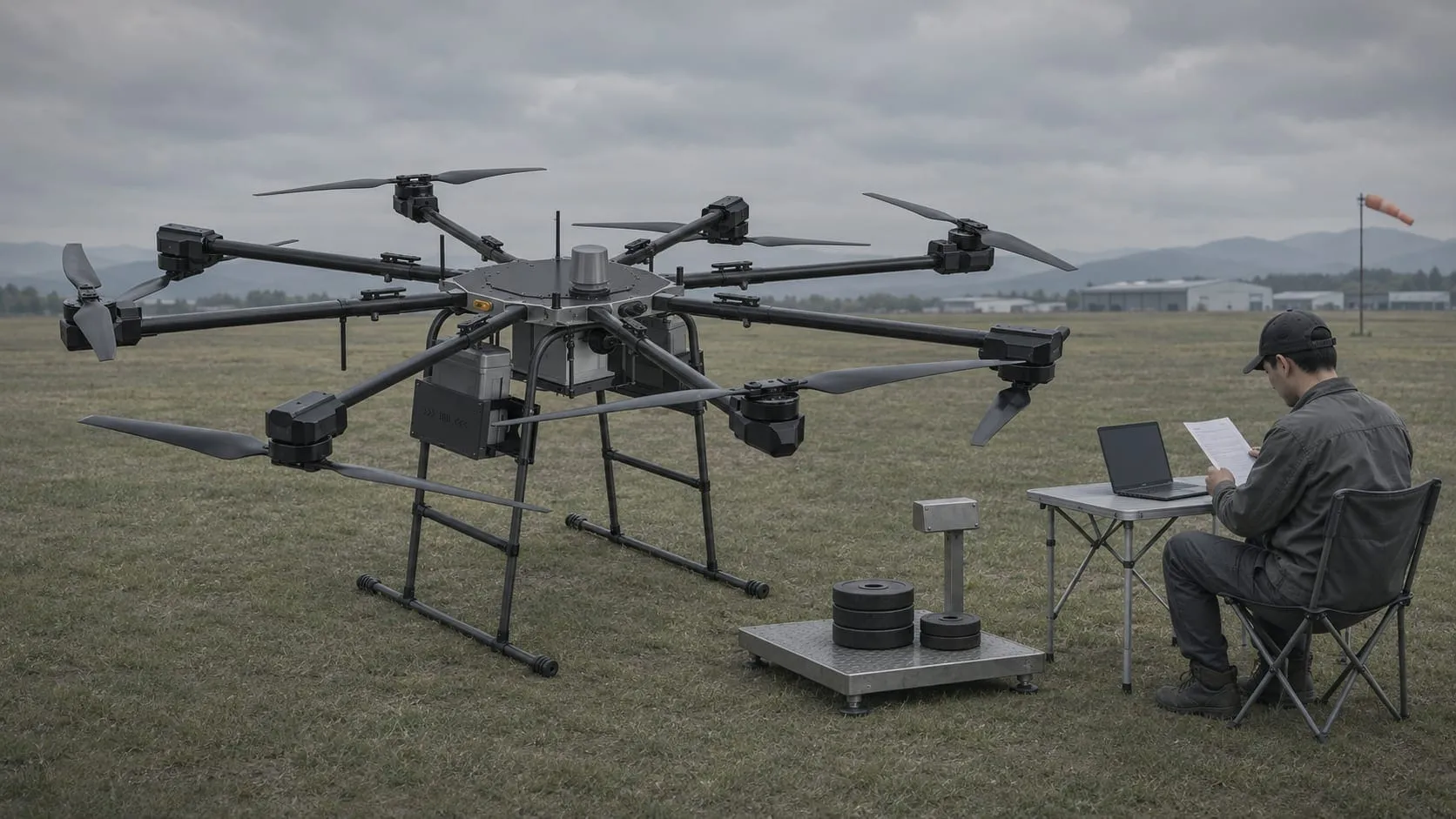
Short answer: this is general information, not legal advice. Drones over 55 pounds (about 25 kg) fall outside the US small-drone rule, Part 107, which applies only to aircraft under 55 lb at take-off, counting everything on board or attached. In 2026 the usual US route is an exemption under 49 U.S.C. §44807 plus a certificate of authorization (COA); in the EU the aircraft fall into the specific category. All our HL aircraft are above the line.
Which rules apply to your drone?
| Operation | US route | EU route |
|---|---|---|
| Lifting loads on one construction or power-line site | Section 44807 exemption and a COA; a blanket COA covers flights at or below 400 ft in Class G airspace | Specific category: operational authorisation from the national authority, usually through a SORA or PDRA |
| Agricultural spraying | 44807 exemption plus a Part 137 certificate | Specific category, plus national spraying rules |
| Carrying goods for hire | Part 135 certificate, airspace authorisation, and an exemption or waiver for BVLOS | Specific category |
| Flights beyond visual line of sight | Exemption or waiver today; Part 108 proposed | Specific category; BVLOS is a listed example |
Where do heavy-lift drones sit on the 55 lb scale?
| Aircraft | Weight | In pounds | Multiple of 55 lb |
|---|---|---|---|
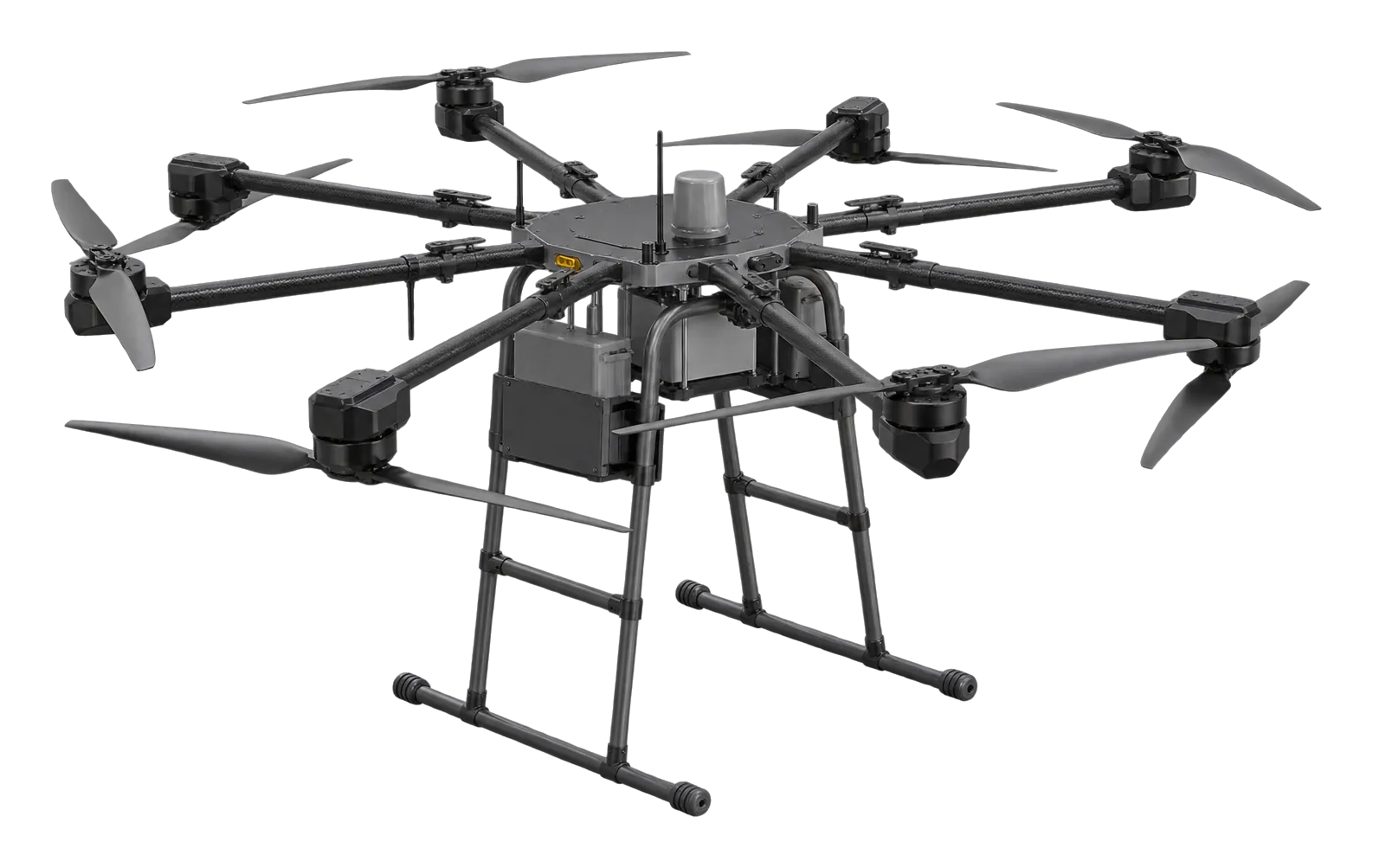
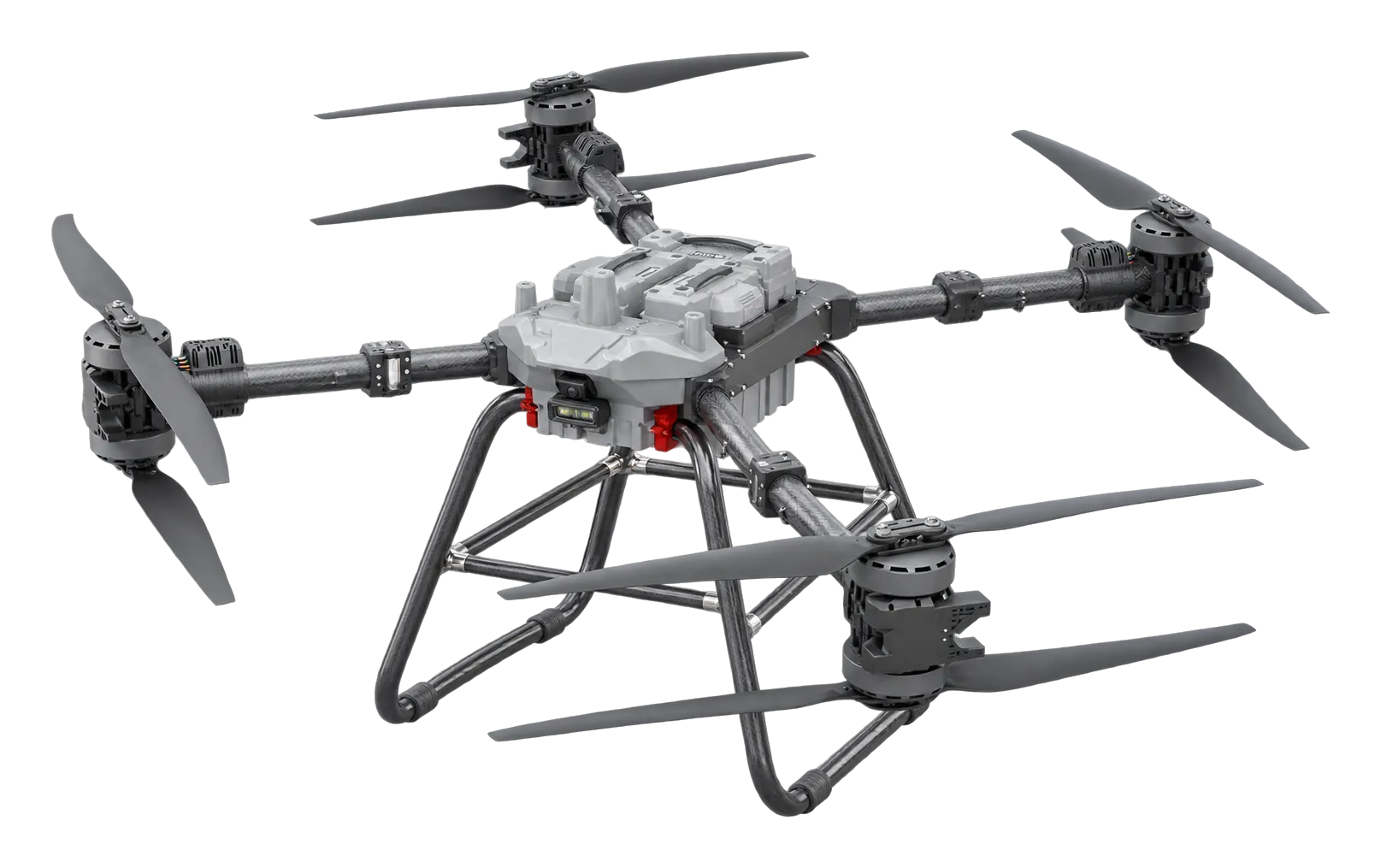
| HL-100 airframe alone | 60 kg | 132 lb | 2.4 |
| HL-150 at maximum take-off weight | 257.8 kg | 568 lb | 10.3 |
| HL-200 at maximum take-off weight | 333 kg | 734 lb | 13.3 |
Example (weight arithmetic): 333 kg × 2.2046 = 734 lb, which is 734 ÷ 55 = 13.3 times the Part 107 line. Even an empty HL-100 airframe (60 kg, 132 lb) is over it before battery or load. So any 100–200 kg-class cargo drone needs the Section 44807 route in the US and the specific category in the EU from day one.
How does a Section 44807 exemption work?
- Confirm the aircraft or the operation falls outside Part 107: weight, or something Part 107 does not allow to be waived.
- Write the petition under Part 11. It needs a Concept of Operations and an Operations Manual. Complex operations (over people, BVLOS, multiple aircraft, a moving vehicle, package delivery, Part 135, high speed) add a Safety Risk Analysis.
- Register the aircraft (next section).
- Apply for a COA through the FAA’s CAPS system; it needs the exemption number and the registration number.
- Use the blanket COA: exemption holders get one covering flights at or below 400 ft in Class G airspace.
- Note the clock: the FAA says the 44807 authority will expire on 30 September 2033.
The Aeronautical Information Manual adds that 44807 lets the FAA take a risk-based approach to whether an airworthiness certificate is required, and that “large UAS” is not an FAA-recognised category of aircraft. Your exemption’s conditions also set pilot qualifications.
How do you register a drone over 55 lb, and do spraying or delivery need more?
Unmanned aircraft of 55 lb or more are registered by mail under 14 CFR Part 47, not on FAADroneZone; use the FAA’s registry page for the forms and current fee. Civil agricultural spraying also requires a Part 137 certificate. Carrying property for hire needs a Part 135 certificate, airspace authorisation, and an exemption or waiver for BVLOS, and every Part 135 applicant goes through the FAA’s five-phase certification process.
Will Part 108 change the 55 lb limit?
The FAA proposed Part 108 in the Federal Register on 7 August 2025. It would cover BVLOS operations of unmanned aircraft up to 1,320 lb in three weight tiers: 55, 110 and 1,320 lb. On 26 November 2026 it is not final; trade press reports that the final rule has been at the White House’s OIRA since 10 July 2026 with no publication date. All three aircraft in the table are under the 1,320 lb cap, but we do not claim they would qualify: the rule is not final and each tier carries conditions.
What are the rules in Europe?
The open category is limited to drones under 25 kg. EASA lists MTOM above 25 kg among the examples of the specific category, with BVLOS, flights above 120 m, dropping material and urban use above 4 kg. The specific category needs an operational authorisation from the aviation authority of the state of registration, unless you declare under a standard scenario; standard scenarios need a drone with a C5 or C6 class label, and otherwise the route is a PDRA or SORA. Operators register in the member state where they live or have their principal place of business. Higher-risk operations fall into the certified category. Ask the maker which class label, if any, an aircraft carries.
What should the maker supply for the application?
Ask for the flight manual with limits, the load tables, the maintenance manual, a spec sheet showing maximum take-off weight, the battery test summary and a system description for your risk assessment. Our product pages list weights and load tables, and we provide the product documents authorities ask for; see the service page.
Best for your route
- Best for one-site construction lifting in the US: Section 44807 plus the blanket COA at or below 400 ft in Class G.
- Best for spraying: 44807 plus a Part 137 certificate.
- Best for paid deliveries: a Part 135 certificate.
- Best for EU projects: an operational authorisation based on a SORA.
Next step
Check the rule for your country with its aviation authority, then send the operation you plan through the contact form and we assemble the documents. Related reading: drone remote ID requirements, beyond-visual-line-of-sight flights and industrial drones in the United States.
Q & A
Common questions
01Can I fly a 100 kg drone under Part 107?
No. Part 107 applies only to aircraft under 55 lb at take-off, including everything attached. A 100 kg drone is about 220 lb, so you need another route, usually a Section 44807 exemption.
02How long does a 44807 exemption take?
We found no official processing time. It varies with the operation and the completeness of the petition, so start before the aircraft ships.
03Is 55 lb the same as 25 kg?
Almost: 55 lb is 24.9 kg, so the US and EU thresholds sit close together. The routes above them differ, as the pathway table shows.
04Do I need a pilot certificate to fly under an exemption?
Check the conditions of your own exemption; they set the pilot qualifications. We do not give a general answer.
05What about Europe?
The open category is limited to drones under 25 kg. Heavier drones fall into the specific category, which needs an operational authorisation from the national authority, usually through a SORA or PDRA.
References
- 1Section 44807: Special Authority for Certain Unmanned Aircraft Systems — Federal Aviation Administration
- 2AIM Chapter 11 Section 3: Large UAS (MGOW 55 Pounds or More) — Federal Aviation Administration
- 314 CFR 107.3 Definitions — eCFR / FAA
- 4Aircraft Registration (unmanned aircraft) — Federal Aviation Administration
- 5Normalizing Unmanned Aircraft Systems Beyond Visual Line of Sight Operations (proposed rule) — Federal Register
- 6Civil Drones — Specific Category — EASA
- 7Package Delivery by Drone (Part 135) — Federal Aviation Administration
- 8Part 108 Is Stuck at the White House: What Part 107 Pilots Should Do — UAV Coach
VEXAFLY Aviation Technology Co., Ltd.. VEXAFLY Aviation Technology Co., Ltd. — industrial drone maker in Nanjing. Our application engineers write and check these pages and configure inspection, cleaning, lift and fire-response systems for project buyers. About VEXAFLY