Buying
Remote ID Requirements in 2026: What Industrial Drone Buyers and Importers Must Check
Remote ID requirements in 2026 for industrial drones: standard, broadcast module and FRIA routes, heavy aircraft, an import checklist and the EU approach.
- Author
- VEXAFLY Aviation Technology Co., Ltd.
- Scope
- Buying
- Published
- Length
- 4 min read · 6 sources
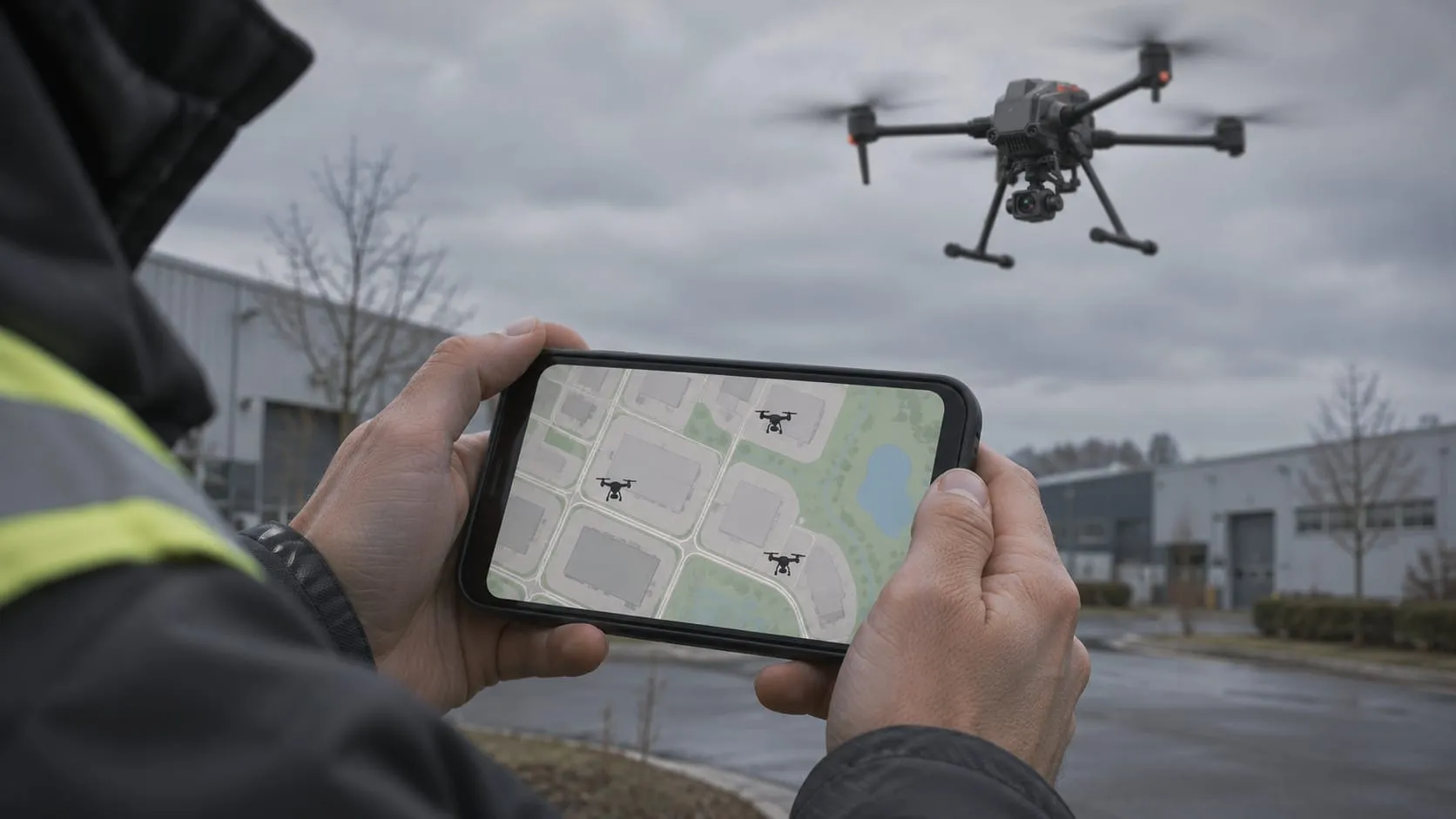
Short answer: in 2026 the Remote ID requirements in the US apply to every registered drone, heavy industrial aircraft included, and a broadcast module only works for flights the pilot can see. For a buyer the checklist is short: a compliant standard aircraft for dock and BVLOS work, a listed module or FRIA for visual flights, and written proof of the declaration of compliance before you order.
Which Remote ID route fits your operation?
| Your operation | Route | Limit |
|---|---|---|
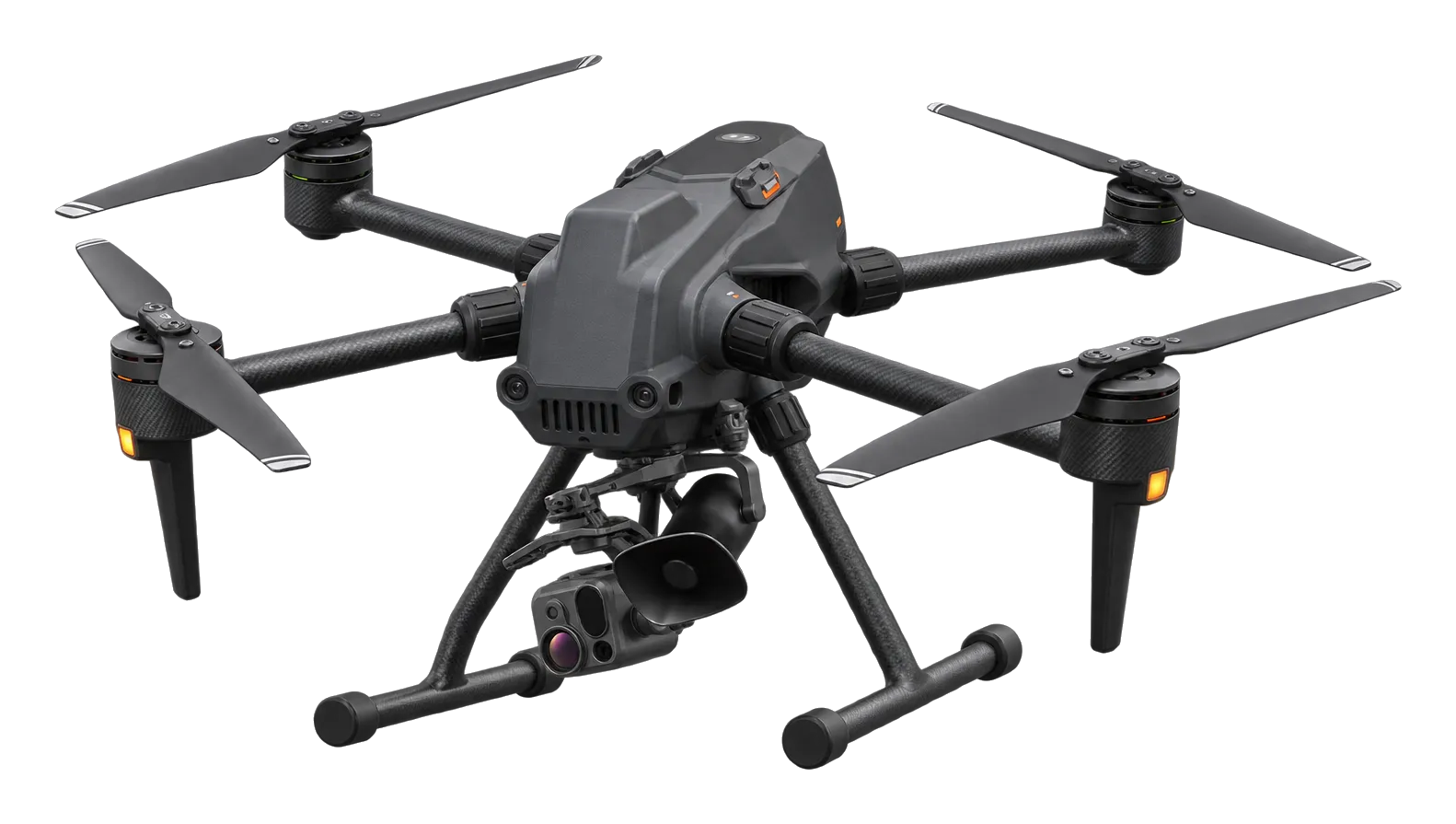
| Crew inspection with an IS-4 in sight | Standard Remote ID, or a broadcast module on a listed declaration | Module: pilot must see the aircraft at all times |
| Docked or BVLOS patrol | Standard Remote ID aircraft | Also needs the BVLOS approval itself |
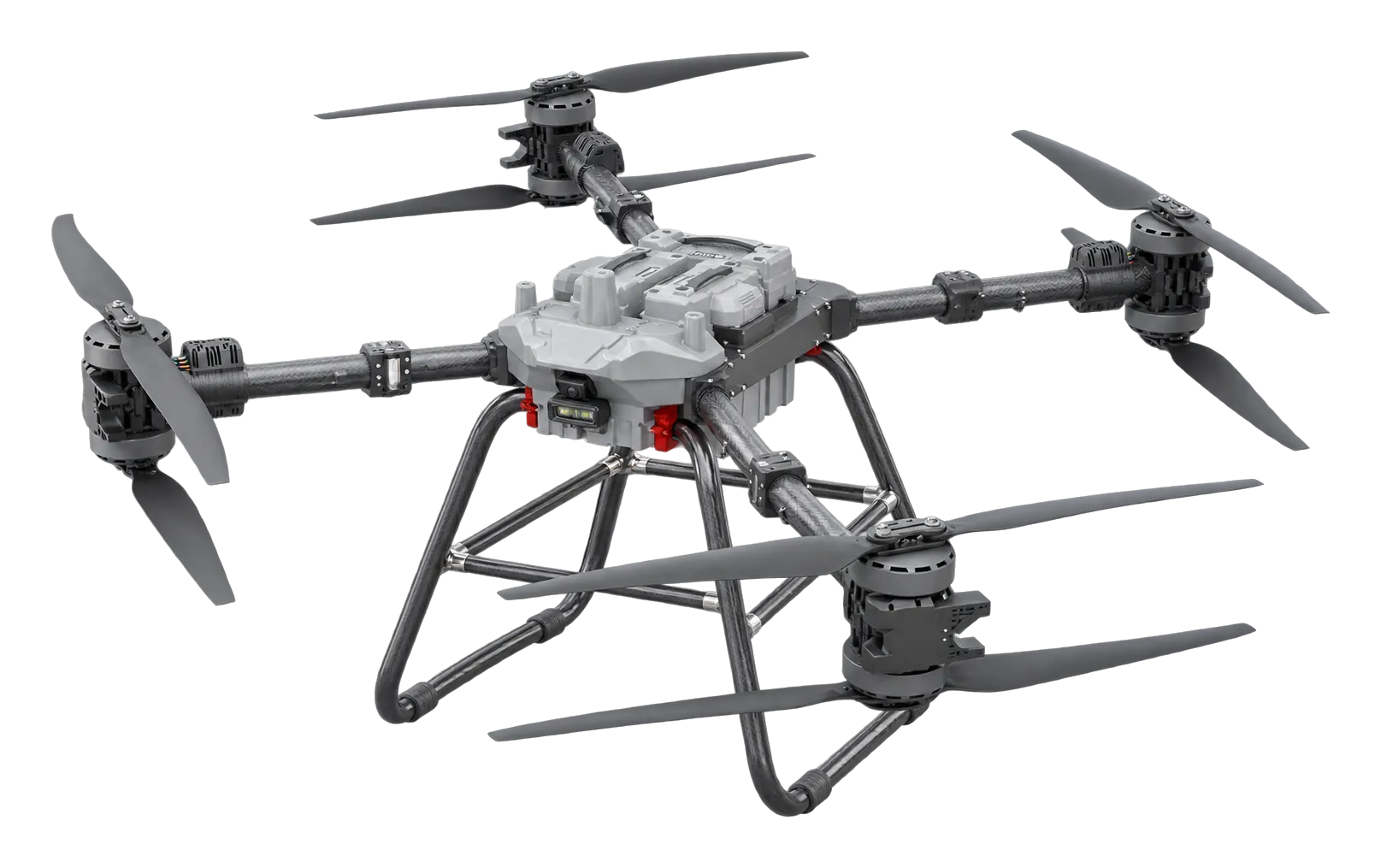
| Heavy lift of 55 lb or more (HL-200) | Part 89 as for any registered aircraft | Plus a Section 44807 exemption |
| Trade-show or flight demo | FRIA | Must stay inside the FRIA and in sight |
| EU open category | Direct remote ID | Specific category: follow your national authority |
A US importer of a foreign-built aircraft also has to look at the FCC Covered List, the Section 232 duty and the FAA rule for 55 lb and over; your customs broker and the FAA can confirm each. We do not state that any of our aircraft carries a US declaration of compliance.
What does the rule require?
14 CFR 89.101 applies to persons operating unmanned aircraft that are registered or required to be registered under Part 47 or Part 48, and to foreign civil aircraft flown in the US; aircraft that transmit ADS-B Out under 91.225 are outside it. Since 16 September 2023 no one may fly unless the aircraft meets 89.110 (standard) or 89.115 (alternative). Under the standard, the drone broadcasts from take-off to shutdown, its serial number is on an accepted declaration, and the pilot must land as soon as practicable if the broadcast is lost.
Many websites say Remote ID covers drones from 0.55 to 55 lb. The rule is wider: aircraft of 55 lb and over are registered under Part 47 and are covered as well.
Standard, module or FRIA: what are the limits?
| Standard Remote ID | Broadcast module | FRIA | |
|---|---|---|---|
| Built into the aircraft | Yes | No, added | Not needed |
| Where you can fly | Anywhere the operation is approved | Only with the pilot seeing the aircraft | Only inside the FRIA, in sight |
| Serial on declaration | Aircraft | Module | Not applicable |
| Fits BVLOS | Yes, with approval | No | No |
What about heavy industrial drones?
A 333 kg MTOW aircraft such as the HL-200 is not a “small” drone in US terms, yet Part 89 still applies. The FAA also requires a Section 44807 exemption for aircraft of 55 lb or more; both approvals must be planned together. Outside the US, heavy drones are usually in a specific or certified category with their own conditions.
Importing a drone: the Remote ID checklist
| Check | Why |
|---|---|
| Is the model on the FAA declaration of compliance list? | Only manufacturers submit; produced-for-US aircraft must meet the standard (89.515) |
| Serial number format | Must follow ANSI/CTA-2063-A (89.505) |
| Permanent English label | Required for Remote ID aircraft in Part 89 Subpart F |
| Radio authorisation | The Remote ID radio is part of the aircraft; see drone FCC certification |
| Registration | Register each aircraft, with its Remote ID serial |
| Loss of broadcast | The pilot must land as soon as practicable |
Worked example: why a module does not suit a dock patrol
Example with assumed figures. Suppose a pilot can reliably see a 725 mm aircraft out to about 0.8 km, an assumption that depends on light and background. An IS-4 survey of a tower at 1.5 km could be flown with a pilot walking to a viewpoint within 0.8 km, so a broadcast module is workable. A dock patrol covering the DS-1’s 8 km control distance reaches 10 times that radius, so the aircraft needs standard Remote ID plus BVLOS approval. The geometry decides the equipment.
How does the EU handle remote identification?
All open-category drones, with limited exceptions, need remote identification. EASA lists direct remote ID modules supplied with an EU declaration of conformity, noting that it has not verified them. Our guide to EU class marks explains the matching category question; BVLOS work is covered in BVLOS drone inspection.
Best for …
- Best for VLOS crews: a standard Remote ID aircraft or a listed module, with the pilot keeping sight.
- Best for dock and BVLOS sites: only standard Remote ID aircraft plus approval.
- Best for demos: a FRIA, limited to the area and visual contact.
- Best for heavy lift: plan Part 89 and a 44807 exemption together.
Next step
Tell us the country, operation type and whether the aircraft will be flown beyond visual range. We reply with what documents we can supply; the import guide covers the customs side.
Q & A
Common questions
01What is the Remote ID rule?
It requires a drone in US airspace to broadcast its identity and position so that authorities and others can receive it. The rule is in 14 CFR Part 89 and has applied to all operations since 16 September 2023.
02Do drones over 55 lb need Remote ID?
Yes, they fall under Part 89 because they are registered under Part 47. They also need a Section 44807 exemption from the FAA to fly commercially. The two are separate approvals.
03Can a broadcast module be used for BVLOS or dock flights?
No. A drone with a broadcast module must stay where the pilot can see it at all times. Dock and BVLOS work needs a standard Remote ID aircraft plus the right operational approval.
04How do I check that a drone is Remote ID compliant?
Look up the model and serial number in the FAA’s declaration of compliance system. Only manufacturers can submit declarations; buyers can only check them.
05Does Remote ID apply to foreign drones flown in the US?
Yes. Part 89 applies to foreign civil unmanned aircraft operated in the US as well as to US-registered ones.
06Do EU rules differ?
The idea is the same but the rules are separate: open-category drones, with limited exceptions, need remote identification, and EASA keeps a list of direct remote ID modules supplied with an EU declaration of conformity.
References
- 1Remote Identification of Drones — Federal Aviation Administration
- 214 CFR Part 89 Remote Identification of Unmanned Aircraft — eCFR (US Government)
- 3FAA-Recognized Identification Areas (FRIAs) — Federal Aviation Administration
- 4UAS Declaration of Compliance — Federal Aviation Administration
- 5Section 44807: Special Authority for Certain Unmanned Aircraft Systems — Federal Aviation Administration
- 6Open Category: Low Risk: Civil Drones — EASA
VEXAFLY Aviation Technology Co., Ltd.. VEXAFLY Aviation Technology Co., Ltd. — industrial drone maker in Nanjing. Our application engineers write and check these pages and configure inspection, cleaning, lift and fire-response systems for project buyers. About VEXAFLY