Market · Site conditions
Industrial Drones in the United States (2026): Sites, Weight Rules and Import Checks
Industrial drones in the United States in 2026: wildfire, solar, tall-building and hurricane sites matched to aircraft weight, FAA rules and import checks.
- Author
- VEXAFLY Aviation Technology Co., Ltd.
- Scope
- Market · Site conditions
- Published
- Length
- 6 min read · 6 sources
Short answer: in 2026 industrial drones in the United States are picked by site first and by weight second. Wildfire regions, solar arrays, tall buildings and the hurricane coast set the job; the aircraft’s take-off weight, under or over 55 lb (25 kg), sets the FAA route. Before ordering any foreign-built aircraft, run the three import checks below.
Site conditions at a glance
This page starts from the site, not from a list of manufacturers.
| Condition | Figure | What it means for equipment |
|---|---|---|
| Weight line for routine commercial flights | Part 107 covers drones under 55 lb (25 kg) at take-off; heavier aircraft need an exemption under Section 44807 | Inspection aircraft fit; cleaning, lifting, spraying and fire-pod aircraft do not |
| Part 107 flight limits | 400 ft above ground, or up to 400 ft above the top of a structure when the aircraft stays within 400 ft of it; 87 knots; 3 statute miles visibility (14 CFR 107.51) | Facade work near a tower uses the structure rule; open-ground jobs stay under 400 ft |
| Remote ID | Registered drones need Standard Remote ID or a broadcast module (FAA) | Settle it before the first flight; see our Remote ID guide |
| Spraying | Dispensing agricultural products or chemicals by drone falls under Part 137 | A spray drone needs Part 137 on top of the weight exemption |
| Wildfire | 2024: 64,897 fires, 8,924,884 acres (about 3.6 million ha). 2025: 77,850 fires, 5,131,474 acres (about 2.1 million ha) (NIFC) | Long fire seasons and flight restrictions over incidents |
| Solar build-out | Record 30 GW of utility-scale solar in 2024, 61 % of capacity additions; EIA expected 32.5 GW in 2025, 11.6 GW of it in Texas (EIA) | Large arrays create steady inspection and cleaning work |
| Airspace over incidents | The FAA sets temporary flight restrictions (TFRs) for wildfires and hurricanes and coordinates drone use with NIFC (FAA) | Only aircraft working for the incident fly inside them |
Facts checked on 26 November 2026.
Which rules apply to your aircraft weight?
Read the table from the left: the job comes first, the weight second, the paperwork third.
| Job and aircraft class | Take-off weight | FAA route | Why it fits the job |
|---|---|---|---|
| Routine inspection: IS-4 quadcopter | 7 kg (15.4 lb) | Part 107 | Small, RTK-positioned, carries up to 3 kg of zoom or thermal payload |
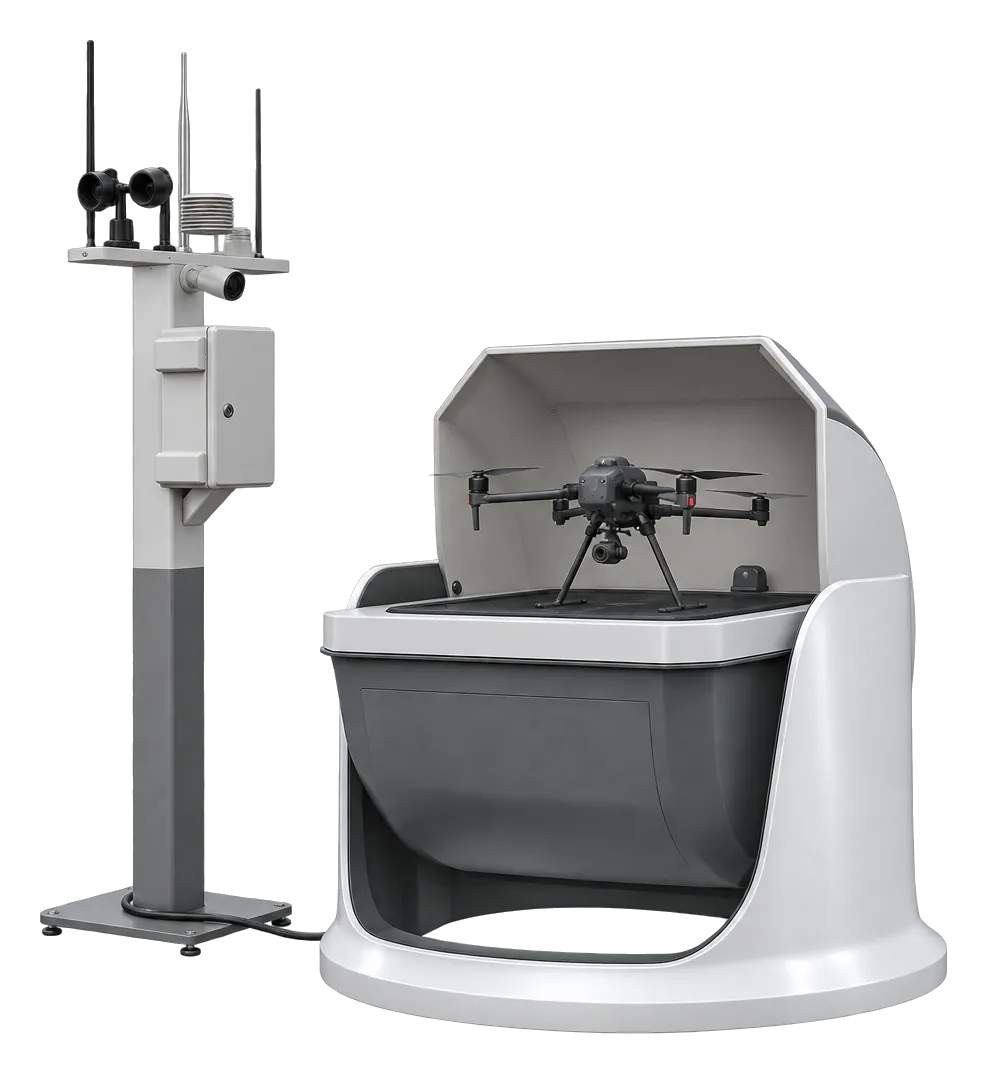
| Scheduled inspection: DS-1 dock with IS-4 | Aircraft 7 kg; the dock counts as a UAS for FCC and duty purposes | Part 107 for the aircraft; check FAA rules for remote launches | The same site flown again and again without a crew visit |
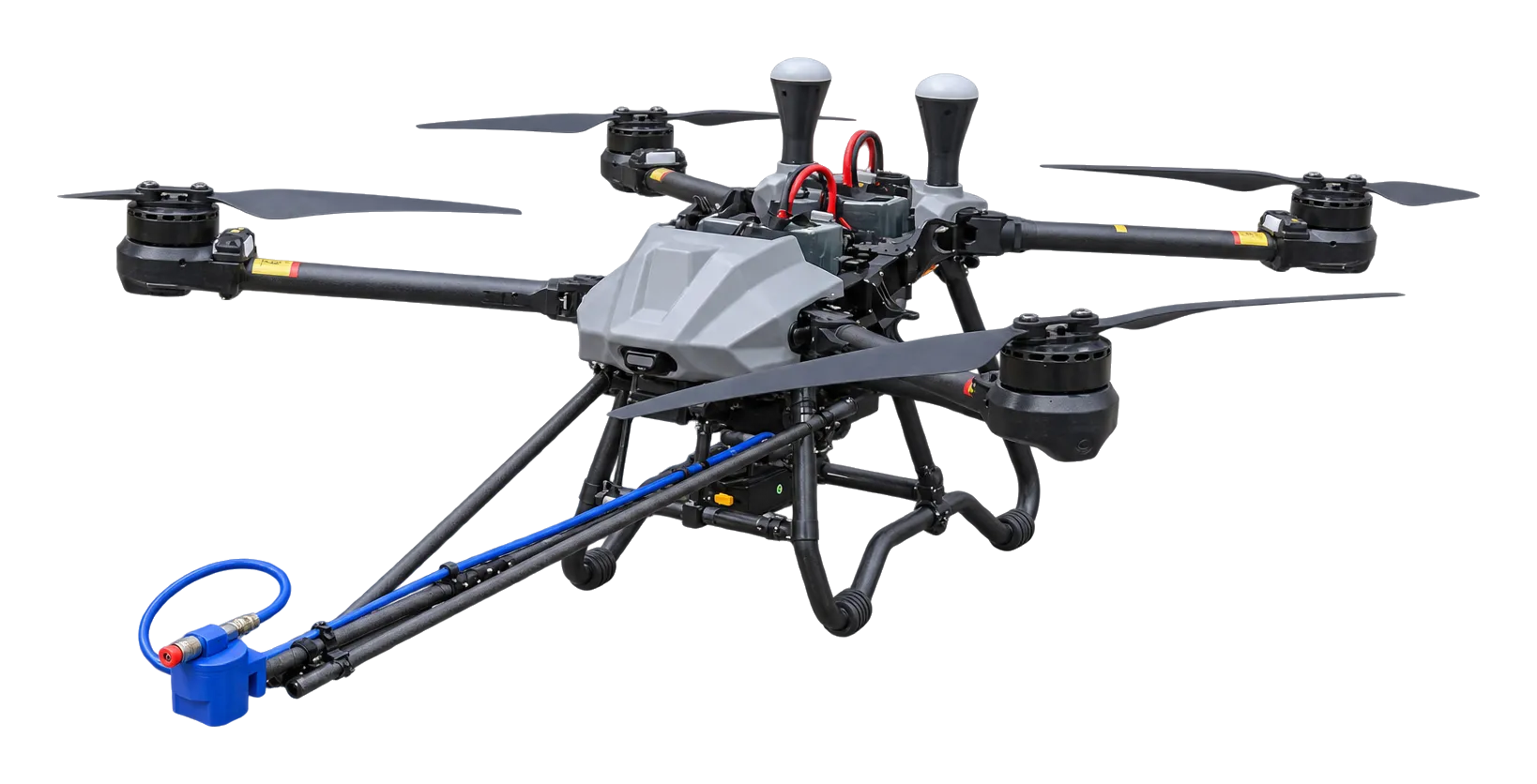
| Facade and solar cleaning: CW-30P / CW-65 | 60 kg (132 lb) / 111 kg (245 lb) | Section 44807 exemption | Water stays on the ground; the aircraft lifts only hose and lance |
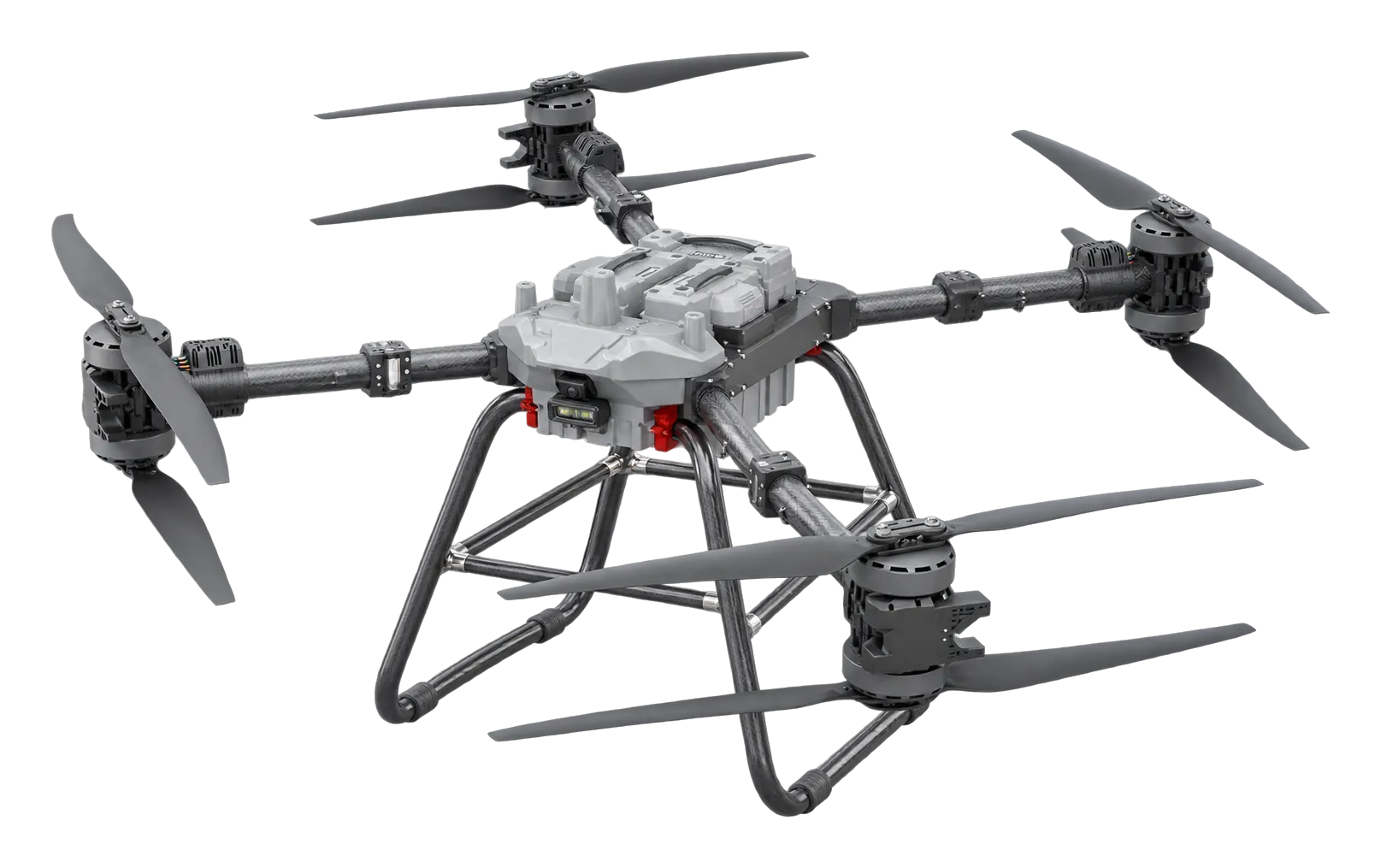
| Tower and line logistics: HL-200 | 333 kg (734 lb), 150 kg rated load | Section 44807 exemption | Moves loads over ravines and rooftops where a crane cannot reach |
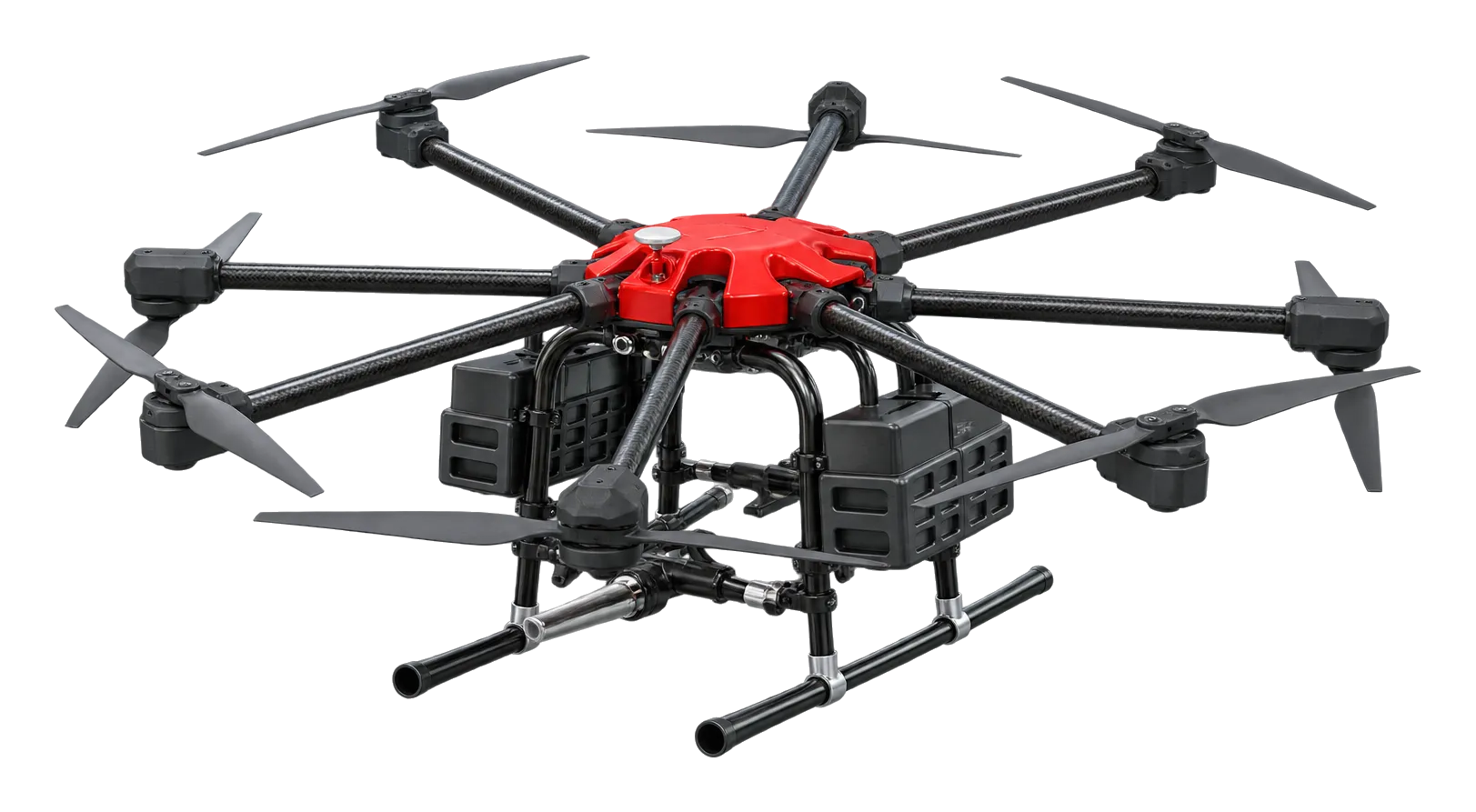
| Industrial fire teams: RX-120 | 257.8 kg (568 lb), 120 kg maximum load | Section 44807 exemption plus agency procedures | Four 23 kg pods or a 40 mm hose; 63 min in the brochure |
| Crop spraying: AS-30 | Up to 68 kg (150 lb) | Section 44807 exemption plus Part 137 | 30 L tank on a mid-size frame |
- Best for wildfire-prone regions with an industrial fire team: an RX-120-class aircraft, 120 kg maximum load and four 23 kg pods; it needs Section 44807 and your agency’s procedures.
- Best for solar plants with a fixed inspection round: a docked 7 kg quadcopter flying up to 63 min per sortie (brochure); the dock and any thermal payload sit in the 100 % duty group.
- Best for roofs, carports and canopies without robot rails: a hose-fed CW-30P, about 50 m working height, three spray angles.
- Best for tower and line construction in rough ground: an HL-200-class aircraft, 150 kg rated load; the brochure range at 100 kg is 15.7 km.
What are the three checks before you order a foreign-built drone?
Before you order any foreign-built drone for a US site, check three things:
- FCC Covered List status of the exact model. Since 22 December 2025 foreign-produced drones and their critical components are on the FCC Covered List. New models cannot get FCC equipment authorisation and are therefore blocked from import and sale; models authorised earlier are not affected, and drones already bought can still be used. Docking stations are included. Limited exemptions apply, so read the FCC’s current Covered List FAQ and the Holland & Knight summary. Ask the seller for the model’s FCC authorisation number.
- Section 232 duty. From 3 September 2026 a 100 % duty applies to drones with a take-off weight above 25 kg, drones that integrate thermal imagers and docking stations; listed drones of 25 kg or less pay 25 % (proclamation).
- FAA approval for any aircraft of 55 lb or more.
Confirm all three with your customs broker and the FAA. This page does not say that any VEXAFLY model can be imported, sold or flown in the US; the products named here show aircraft classes, not US availability. The longer checklists are how to import industrial drones from China and drone FCC certification.
Public buyers: federal grant money cannot be used on drones on the federal prohibited list from 22 December 2025 (OMB M-26-02), and FEMA’s FY2025 Assistance to Firefighters notice lists UAVs and drones as ineligible equipment. Budget without assuming a grant will pay.
Which drones work in wildfire and hurricane season?
NIFC counted 77,850 wildfires and 5,131,474 acres burned in 2025, after 8,924,884 acres in 2024, and hurricanes bring the same airspace logic to the coasts. Inside a TFR only aircraft working for the incident fly. A utility or industrial site uses drones before and after: thermal surveys once the front has passed, perimeter mapping, structure checks and, for trained industrial fire teams, pod or hose work with an RX-120-class aircraft. See Los Angeles, Houston and our guide to NFPA 2400 and drone programmes.
Where do cleaning and inspection demand grow?
Solar and tall buildings. EIA expected 32.5 GW of new solar for 2025, 11.6 GW of it in Texas. On roofs, carports and irregular layouts a hose-fed CW-30P reaches panels without anyone on the array, and pressure at the nozzle must stay within the module maker’s guideline; heat and dust set further limits in Phoenix. On towers, a 7 kg camera drone can survey a facade under Part 107, while the 111 kg CW-65 (rated to 100 m, about 328 ft) needs an exemption, a closed area below and a water supply: see New York.
Example: weight and duty check for a cleaning aircraft
Example (arithmetic only; not a quotation and not a statement that any model can enter the US). A buyer compares foreign-built cleaning aircraft in the CW-65 class. Take-off weight 111 kg × 2.2046 ≈ 245 lb, above 55 lb, so a Section 44807 exemption is needed. The reference price of that class is US$11,300–16,000 FOB China (varies by configuration and quantity; final price on quotation). A 100 % duty on a customs value equal to the FOB price would add the same amount again, US$11,300–16,000; customs value rules differ, so ask your broker. An inspection quadcopter of 7 kg (15.4 lb) stays under Part 107, but a thermal payload puts it in the 100 % group too.
Next step
Write down three facts before you ask any supplier for a quote: the job, the heaviest aircraft you can accept (under or over 55 lb) and who will hold the FAA approval. Product pages list weights and specifications for comparison: inspection, cleaning, heavy lift and fire response. Rules change quickly; check the current FAA, FCC and customs pages on the day you order.
Q & A
Common questions
01What kind of drones do US industries use?
By number, inspection quadcopters lead: utilities, solar plants and refineries fly aircraft under 55 lb because they fly under Part 107. Heavier aircraft for cleaning, lifting, spraying and fire work exist but need an FAA exemption. Match the job to the weight first, then check the paperwork.
02Which drones fly under Part 107, and which need an exemption?
Part 107 covers drones under 55 lb (25 kg) at take-off. Anything heavier needs an exemption under Section 44807, which the FAA reviews case by case. Check the current FAA page before you plan a heavy aircraft.
03Can I import a drone from China into the US in 2026?
Not as a simple purchase. A new foreign-built model needs FCC equipment authorisation or an exemption, the Section 232 duty can be 100 %, and the FAA rules still apply. Confirm each step with your customs broker and read our import guide before you pay a deposit.
04Do I need Part 137 to spray with a drone?
The FAA says dispensing agricultural products or chemicals with a drone falls under Part 137. A heavy spray drone also needs the Section 44807 exemption. Check with the FAA and your state pesticide authority.
05Can federal grants pay for a foreign-built drone?
Do not assume so. From 22 December 2025 federal grant money cannot buy drones on the federal prohibited list, and FEMA’s FY2025 Assistance to Firefighters notice lists UAVs and drones as ineligible equipment. Check the current notice with the grant office before you budget.
References
- 1Section 44807: Special Authority for Certain Unmanned Aircraft Systems — Federal Aviation Administration
- 2Wildfires and Acres (1983–2025) — National Interagency Fire Center
- 3Solar, battery storage to lead new U.S. generating capacity additions in 2025 — U.S. Energy Information Administration
- 4Presidential proclamation on imports of UAS and UAS components — U.S. Government Publishing Office
- 5FCC Adds All Foreign-Made Drones and Critical Components to the Covered List — Holland & Knight
- 6Dispensing Chemicals and Agricultural Products (Part 137) with UAS — Federal Aviation Administration
VEXAFLY Aviation Technology Co., Ltd.. VEXAFLY Aviation Technology Co., Ltd. — industrial drone maker in Nanjing. Our application engineers write and check these pages and configure inspection, cleaning, lift and fire-response systems for project buyers. About VEXAFLY