Heavy lift
Offshore Drone Delivery in 2026: Island, Ship-to-Shore and Platform Supply by Route
Offshore drone delivery in 2026: which aircraft fits an island hop, ship-to-shore leg or platform run, with wind, salt spray and reserve over water.
- Author
- VEXAFLY Aviation Technology Co., Ltd.
- Scope
- Heavy lift
- Published
- Length
- 6 min read · 7 sources
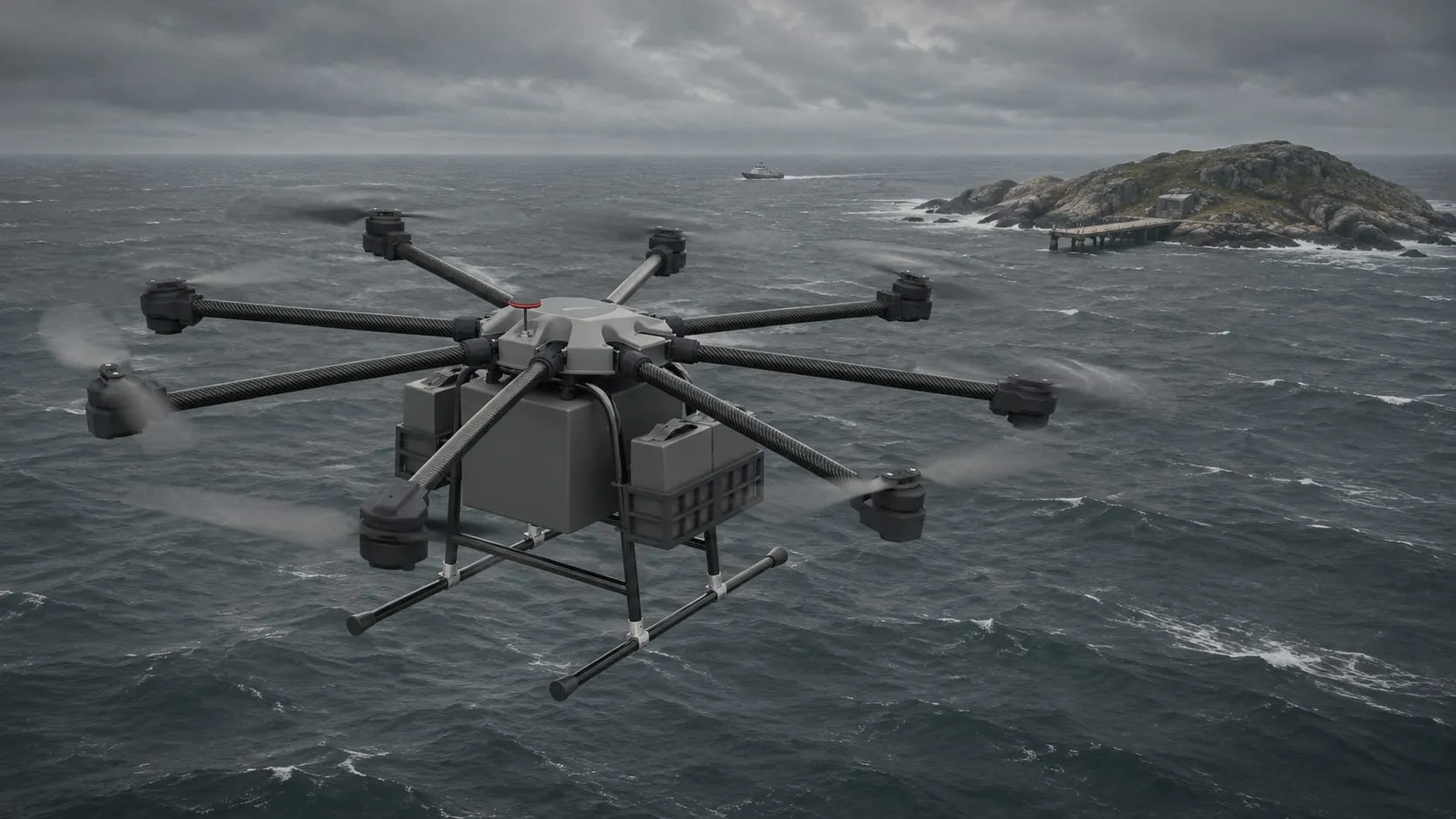
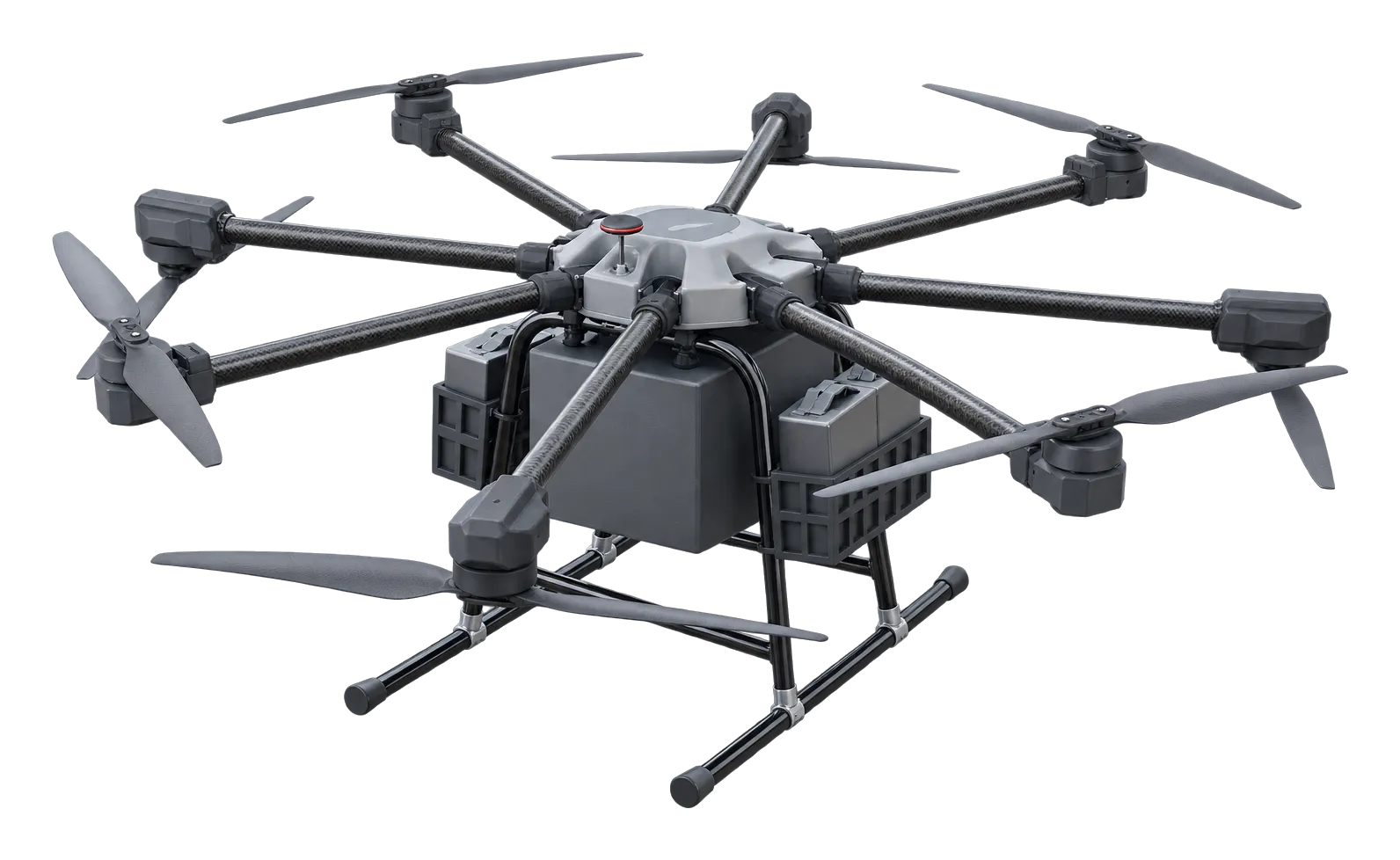
Short answer: in 2026 the right setup for offshore drone delivery depends on the route. Heavy-lift multirotors such as the HL-150 and HL-200 fit short sea legs of up to about 10 km, between a harbour and an island, a ship and the shore, or inside a wind farm. Platform runs of 80–150 km have been flown with larger long-range aircraft, not with multirotors.
Which aircraft for which sea route?
Public pages on this topic are written by operators and research projects selling a service. None gives a buyer a selection logic. This is ours, built on distance, load and what is possible on the water:
| Route type | Typical distance | Typical load | Aircraft class | Our fit |
|---|---|---|---|---|
| Harbour to nearby island | 2–10 km | 10–60 kg | Heavy-lift multirotor | HL-150 |
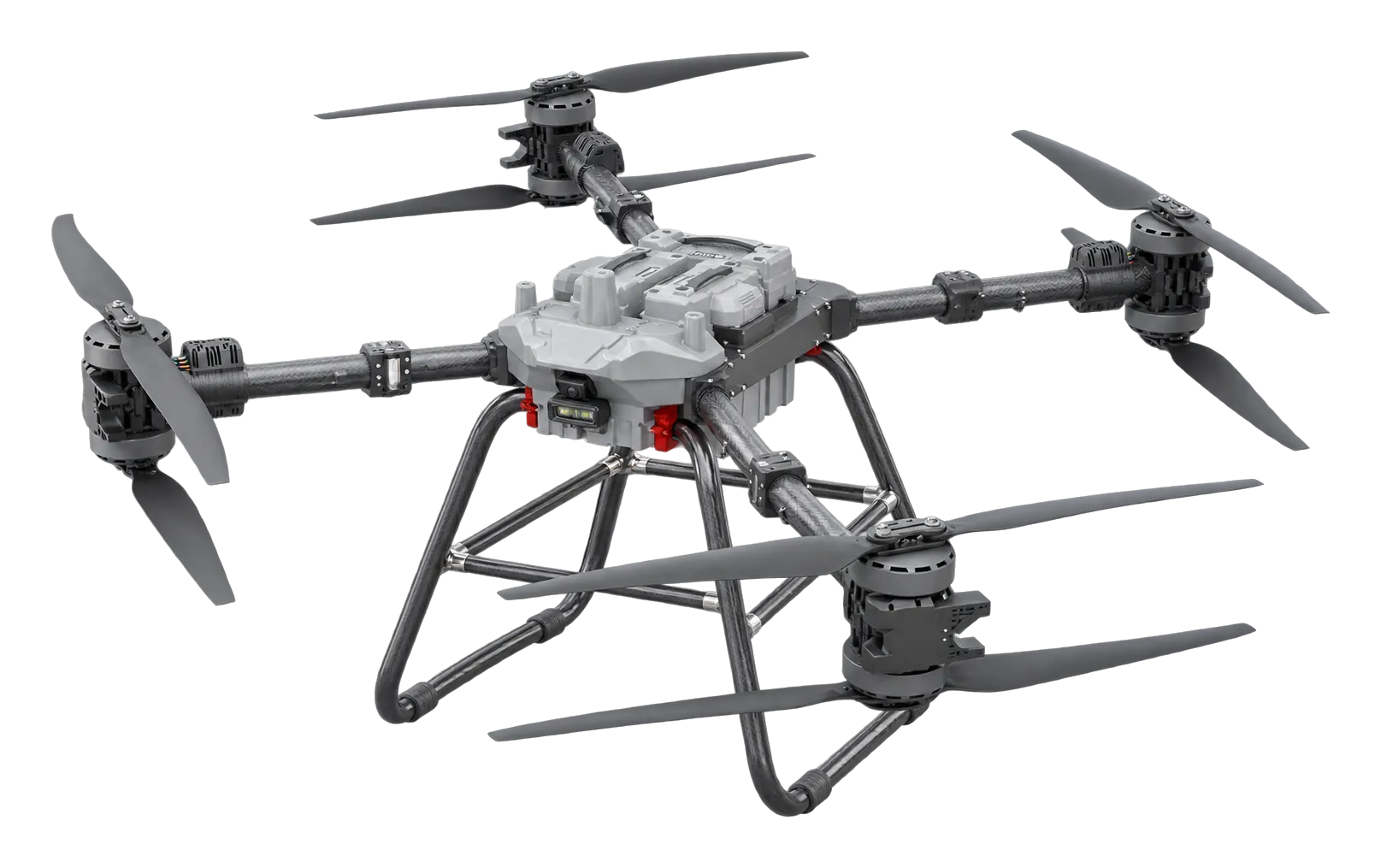
| Ship at anchor to shore | 1–10 km | 20–150 kg, awkward pieces | Heavy-lift multirotor | HL-200 for heavy pieces |
| Inside an offshore wind farm | 2–5 km | 50–70 kg kits | Heavy-lift multirotor | See wind turbine delivery |
| Shore to platform | 80–150 km | 50–400 kg | Long-range VTOL or unmanned helicopter | Not an HL job |
| Daily bulk supply | Any | Tonnes | Boat or ship | Drones bridge urgent items only |
How far offshore can a heavy-lift multirotor go?
The brochure tables give still-air figures: the HL-150 flies 24 km at 60 kg and the HL-200 12 km at 150 kg, both out and back included in the total, so a safe one-way leg is a fraction of that. Equinor’s 2020 test flew a 3D-printed part about 80 km from Mongstad to the Troll A platform in about an hour; the aircraft was a Camcopter S-100 of over 100 kg with a cruise above 150 km/h. In China, a 2025 supply flight covered 150 km to a drilling platform in 58 minutes with a 2-tonne-class eVTOL. Different aircraft, different job. See our cargo drone range guide for how to turn range into a one-way distance.
What wind and sea state stop the job?
Wind over open water is steady and strong. The Met Office Beaufort scale gives the numbers: Force 4 is 6–8 m/s with waves of about 1 m, Force 5 is 9–11 m/s (2 m waves), Force 6 is 11–14 m/s (3 m waves).
| Beaufort force | Wind | Waves | Against a 12 m/s class limit |
|---|---|---|---|
| 4 | 6–8 m/s | about 1.0 m | Inside the limit; headwind costs range |
| 5 | 9–11 m/s | about 2.0 m | Close to the limit; cut the load |
| 6 | 11–14 m/s | about 3.0 m | At or past the limit; no flight |
| 7 | 14–17 m/s | higher | No flight |
A public cargo-drone specification, DJI’s FlyCart 100, lists 12 m/s for take-off and landing. The wind limit of the HL aircraft is given in the quotation; do not plan to the edge of any limit.
How much reserve do you need over water?
On land a failing battery means an emergency landing in a field. At sea there is none, so keep a larger reserve than the 20–30 % common inland. We use 35 % in this example.
Example (estimate, HL-150 brochure table, still-air speeds held constant, 35 % reserve assumed): an island 8 km offshore, 40 kg out, return with the empty hook (the 20 kg row is the proxy), 2 minutes of hover at the drop.
| Case | Out | Hover | Back | Battery used | Result |
|---|---|---|---|---|---|
| Still air, 40 kg | 13.3 min of 50 = 26.7 % | 4.0 % | 11.1 min of 58 = 19.2 % | about 50 % | Go (limit 65 %) |
| 6 m/s headwind out, tailwind back, 40 kg | 33.3 min of 50 = 66.7 % | 4.0 % | 7.4 min of 58 = 12.8 % | about 84 % | No-go |
| Same wind, 20 kg | 22.2 min of 58 = 38.3 % | 3.4 % | 12.8 % | about 55 % | Go |
Over water, wind sets the payload. Plan the day’s loads from the marine forecast, not from the datasheet. This is simplified: a real aircraft may fly faster into wind at higher power.
Do salt and spray damage the drone?
They do, slowly. IP67 (IEC 60529) rates ingress of dust and water, not corrosion, and the standard salt-mist test is a different one, IEC 60068-2-52. We do not publish a salt-mist result for the HL range, so ask us for corrosion data and a maintenance plan before ordering. DJI’s own note on its cargo drone says the protection rating does not apply to the propulsion system and advises idling the aircraft for one minute after rain to avoid corrosion. The Ningbo island route uses a hoist, redundant systems and a parachute for operation in wind and sea spray.
Where does the drone take off and land?
Choose a pier, a quay or a flat island pad that is clear of cranes and masts. Landing on a ship deck needs the maker’s confirmation for your vessel. Lowering the load on a hook or winch avoids landing on a moving deck; read the sling load and winch guide for rope length and release methods.
What has been flown already?
| Where | What | Load and distance | Note |
|---|---|---|---|
| Orkney, UK (2023) | Royal Mail inter-island mail | up to 6 kg, between close islands | Flown under extended visual line of sight permissions |
| Singapore anchorage | Ship-to-shore trials | parcels of up to 10 kg | More than 200 flights supported by MPA; commercial service still “will take time” |
| Dachen Island to Taizhou (2024) | Frozen fish | 30 kg, 33 km in 25 min | In strong winds, per trade press |
| Ningbo, Xiangshan (2026) | Commercial island route | up to 80 kg, 3 minutes against 20 by ferry | Hoist, redundancy, parachute |
| Troll A, Norway (2020) | Platform test | about 50 kg class, 80 km | Test flight of a large unmanned helicopter |
Which permits do you need?
In the UK, heavier and beyond-visual-line operations go through the specific category and a SORA-based operational authorisation. Orkney shows that short island hops can sometimes stay within visual line of sight. Elsewhere, ask your aviation authority and your port or harbour authority; check the current rules before quoting a job.
Best for …
- Best for island hops up to about 10 km with 20–60 kg: HL-150, 24 km at 60 kg in still air.
- Best for heavy pieces over short ship-to-shore or harbour legs: HL-200, 12 km at 150 kg and 150 kg rated.
- Best for 80–150 km platform runs: long-range VTOL or unmanned helicopter classes, not a multirotor.
Next step
Send us the two end points of your sea route, the heaviest item and the worst month’s wind through the contact form. We reply with a leg plan and the battery use for your route. Battery planning for the same job is in heavy lift drone batteries and charging.
Q & A
Common questions
01How far offshore can a cargo drone fly?
It depends on the aircraft class. Our heavy-lift multirotors have published still-air ranges of 12–44 km depending on load (HL-150 24 km at 60 kg, HL-200 12 km at 150 kg), so plan island and ship-to-shore legs of up to about 10 km. Runs of 80–150 km, such as Equinor's 2020 test and a 2025 supply flight to a drilling platform in China, used much larger aircraft.
02Can a drone land on a moving ship?
We do not publish a moving-deck landing capability for the HL range, so confirm it with us for your vessel. Many operations avoid the question by lowering the load on a hook or winch, as the Ningbo island route does with a hoist.
03What wind stops offshore drone deliveries?
There is no single number. One public cargo-drone specification lists a 12 m/s take-off and landing limit, which is Beaufort Force 6 to 7. The limit for an HL aircraft is confirmed in the quotation; crews stop well below it when the sea is rough.
04Do salt and spray damage a drone?
Yes, over time. Ingress protection such as IP67 covers dust and water jets, not a salt-mist test, and a maker may exclude the motors from the rating. Rinse with clean water, dry, inspect connectors and keep a maintenance log.
05Is a drone better than a boat or helicopter for island supply?
For urgent small and medium loads over short legs, often yes: Ningbo reports 3 minutes against more than 20 by ferry. For bulk, food for a week or heavy machinery, boats still win on cost per tonne.
06Do I need beyond-visual-line-of-sight approval?
Not always. Royal Mail's Orkney inter-island mail is flown under extended visual line of sight permissions because the islands are close. Longer legs go through your authority, for example the UK specific category with a SORA-based authorisation.
References
- 1Equinor completes world’s first logistics operation with a drone to an offshore installation — Equinor
- 2Written reply on ship-to-shore drone trials since the launch of the Maritime Drone Estate — Ministry of Transport Singapore
- 3Royal Mail and Skyports Drone Services launch fully electric drone deliveries in Orkney — Orkney Islands Council
- 4Ningbo turns to drones for island logistics — China Daily
- 5Beaufort wind force scale — Met Office
- 6IEC 60068-2-52:2017 Salt mist, cyclic (sodium chloride solution) — IEC
- 7UK SORA-based Operational Authorisations — UK Civil Aviation Authority
VEXAFLY Aviation Technology Co., Ltd.. VEXAFLY Aviation Technology Co., Ltd. — industrial drone maker in Nanjing. Our application engineers write and check these pages and configure inspection, cleaning, lift and fire-response systems for project buyers. About VEXAFLY