Market · Site conditions
Facade Cleaning Drones in Spain (2026): Building Height, AESA Rules and Solar
Facade cleaning drones in Spain in 2026: which model for which building height, what AESA and Real Decreto 517/2024 require, plus solar and fire-season notes.
- Author
- VEXAFLY Aviation Technology Co., Ltd.
- Scope
- Market · Site conditions
- Published
- Length
- 4 min read · 5 sources
Short answer: in 2026 facade cleaning drones in Spain are picked by building height and then by the aviation route. The CW-30P covers buildings up to about 50 m, the CW-65 up to 100 m, and both weigh more than 25 kg, so they fly in the specific category under an AESA authorisation. Facts checked on 28 November 2026.
Site conditions at a glance
This page starts from the building.
| Condition | Figure | What it means for equipment |
|---|---|---|
| National drone decree | Real Decreto 517/2024, in force 25 June 2024 (AESA) | Check geographical zones and pilot training before you quote a job |
| Weight line | Above 25 kg or spreading substances means the specific category (ENAC wording, valid EU-wide) | CW-30P (60 kg) and CW-65 (111 kg) both need an operational authorisation |
| Solar | Almost 50 GW of PV installed, 8.8 GW added in 2025 (Red Eléctrica) | Roof and field arrays give a second use for a hose-fed drone |
| Wildfire | About 380,877 ha burnt by end of August 2025, 4.6 times the 2006–2024 average for that period (Copernicus) | Fire cover matters for industrial estates and solar parks |
Facade inspection and maintenance duties are set by each region and municipality, not nationally, so ask your town hall or building manager which cycle applies to the building.
Which drone for which building height?
Storey height varies, so measure. The table uses 3 m per storey as an example only.
| Building | Approx. height | Model | Why |
|---|---|---|---|
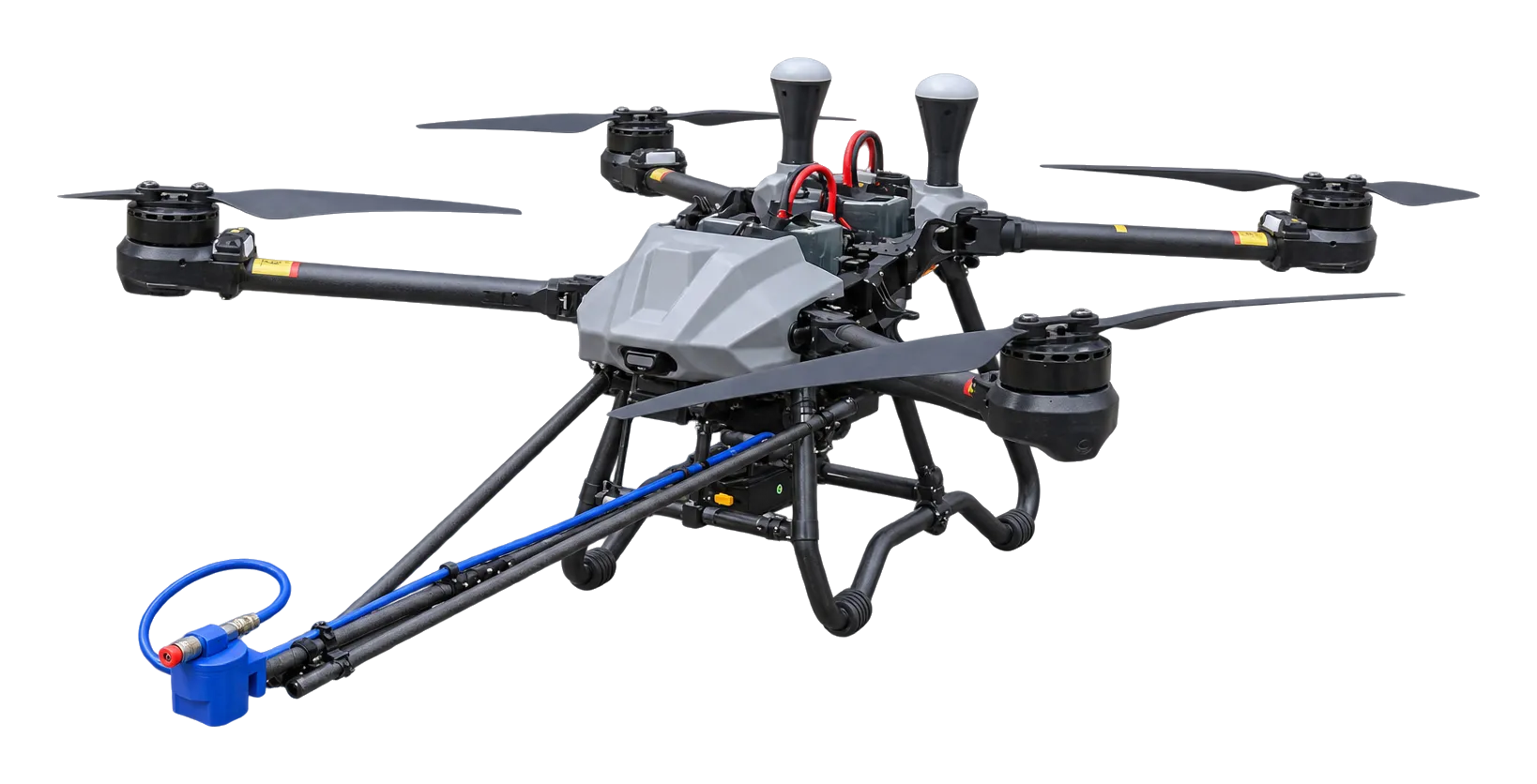
| 6 to 16-storey residential block or hotel | up to about 48 m | CW-30P | Rated to about 50 m, hose-fed from a ground pump |
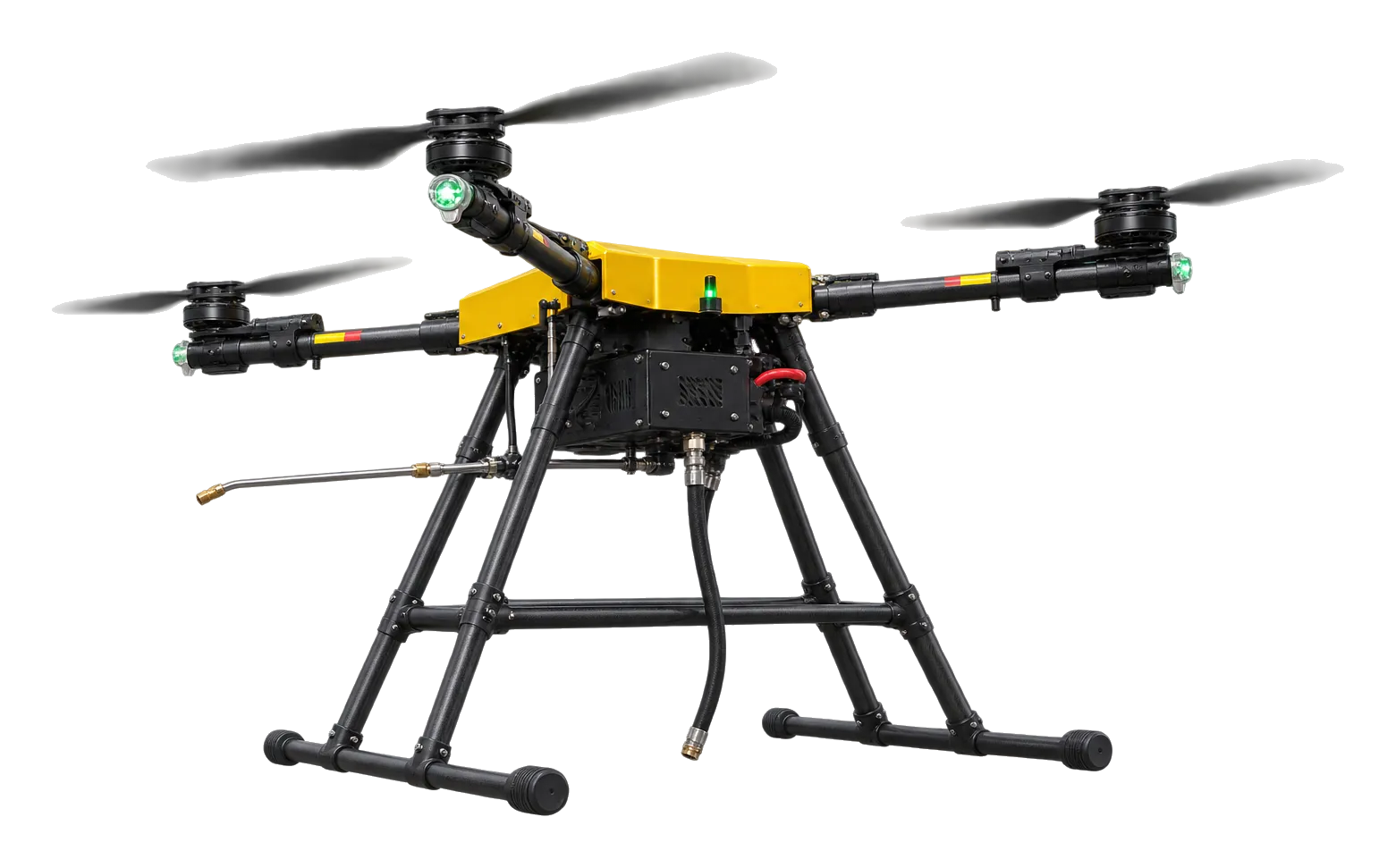
| 17 to 33-storey glass tower | 50 to 100 m | CW-65 | Rated to 100 m, tethered, ground pressurisation 5.5 or 13 kW |
| Industrial roof or canopy | low | CW-30P, 90° lance | Washes down onto the roof without walking on it |
| Rooftop or carport PV | low | CW-30P, 45° lance | Angle matches the modules; set pressure to the module guideline |
Example (assumption: 3 m per storey). A 15-storey block is 45 m, inside the CW-30P’s 50 m. An 18-storey tower is 54 m, above it, so the CW-65 is the fit. Real height is measured on site, parapets included.
What does AESA require?
For a cleaning drone above 25 kg you are in the specific category. The EU framework asks for an operational authorisation from the aviation authority of the state of registration, unless a standard scenario applies. Real Decreto 517/2024 adds national detail: training for specific-category pilots, UAS geographical zones, insurance minimums and a separate regime for public-service activities that EASA does not cover.
Checklist before the first facade:
- Register as an operator and confirm the pilot training route with AESA.
- Check the geographical zones around the building, especially near airports and heliports.
- Write the operations manual: pump position, exclusion zone below the facade, wind limit, abort rules.
- Confirm insurance against the national minimums.
- Apply for the operational authorisation and wait for it before you invoice a job.
Read the BOE text of the decree and ask AESA about your case. We cannot promise any outcome.
Water, pumps and street-level safety
A facade job is a plumbing job with an aircraft on the end. The ground unit needs a water source, a power supply of 220 V for the CW-65 pressurisation device, and a safe place away from pedestrians. The CW-30P pump figures of 28 MPa and 32 L/min are separate maxima, not a working point you run at together. See pump and hose set-up and tethered versus tank for the layout, and detergents for what may run off a Spanish street drain, which is a local-rules question.
Can the same drone clean solar arrays?
Yes, with limits. A 45° lance suits tilted modules, and the hose-fed CW-30P keeps weight in the air low. Nozzle pressure must stay within the module maker’s limit; one major maker caps it at 35 bar and wants approval for automated cleaning to keep the warranty. Read the guideline first, then set the pump. For frequency, see solar panel cleaning frequency.
What about fire season and industrial estates?
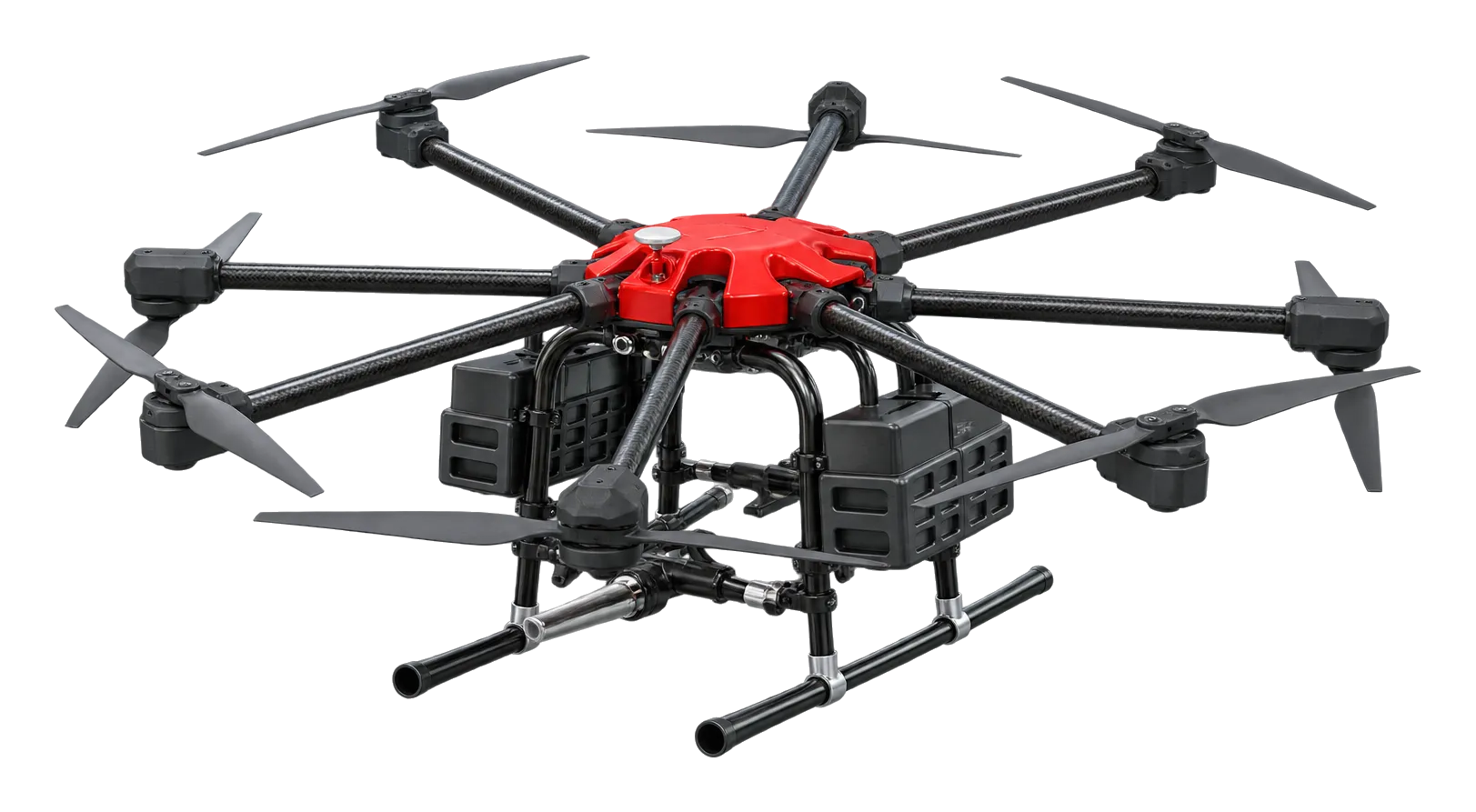
After the 2025 season Spain’s burnt area was a record for that point in the year, and the Copernicus report notes Spain and Portugal made up 65 % of Europe’s burnt area to the end of August. A private industrial estate or solar park may want its own cover. The RX-120 carries four 23 kg pods or a 40 mm hose and is IP67, rated −20 °C to 60 °C. Which rules apply depends on who operates it: public fire services follow Spain’s national regime for non-EASA activities, while a private team follows the specific category. Ask the aviation authority. See industrial firefighting drones.
Recommended configurations
| Site | Model | Why |
|---|---|---|
| 6 to 16-storey block or hotel | CW-30P | 50 m rating, hose-fed, lower cost |
| Glass tower of 50 to 100 m | CW-65 tethered | No battery limit, 100 m rating |
| Rooftop and carport PV | CW-30P, 45° lance | Matches module tilt; use the maker’s pressure limit |
| Industrial estate fire cover (private team) | RX-120 | Pods or hose, specific category |
Best for service companies on mixed buildings: CW-30P (50 m, three spray angles), then add a CW-65 when towers appear. Best for tower owners: CW-65 (100 m, 62 L tank rating, tethered option); remember tank litres are not payload kilograms.
Next step: send the building address, height and facade type and we will suggest the model and a pump layout, or compare the cleaning range and our fire-response range.
Q & A
Common questions
01Do you need AESA permission to clean a facade with a drone?
For an aircraft above 25 kg, yes. It sits in the specific category, which needs an operational authorisation from the national aviation authority unless a standard scenario applies. Check the AESA drone pages and Real Decreto 517/2024 for your operator and building location.
02How tall a building can a cleaning drone handle?
The CW-30P is rated to about 50 m and the CW-65 to 100 m. The real limit is the water line, wind and the clear space around the building. Measure the height on site, including parapets and plant rooms.
03Hose-fed or tank: which suits Spanish buildings?
Hose-fed suits long jobs on mid and high rises because the pump stays on the ground and the aircraft stays light. A tank version is easier to move between small jobs but needs refills. Read our tethered versus tank guide before you decide.
04What does Real Decreto 517/2024 change for operators?
AESA says it brought training for specific-category pilots, UAS geographical zones, rules for non-EASA activities and insurance minimums. We are not lawyers: ask AESA or a Spanish aviation adviser how it applies to your company.
05Can a cleaning drone wash solar panels without voiding the warranty?
Only if you stay within the module maker’s cleaning guideline, including nozzle pressure. Some makers limit pressure and require approval for automated cleaning. Get the guideline in writing before you set the pump.
06Who may fly firefighting drones in Spain?
It depends on who operates. Public bodies carrying out firefighting under state control fall under the national regime; a private or industrial team follows the EASA specific category. Ask the national aviation authority which applies to you.
References
- 1Entra en vigor el nuevo Real Decreto sobre el uso civil de UAS — AESA – Agencia Estatal de Seguridad Aérea
- 2Real Decreto 517/2024 (BOE-A-2024-11377) — Boletín Oficial del Estado
- 3The Spanish Electricity System in 2025 — Red Eléctrica
- 4European State of the Climate 2025: Wildfires — Copernicus Climate Change Service
- 5Specific category (Categoria specifica) — ENAC
VEXAFLY Aviation Technology Co., Ltd.. VEXAFLY Aviation Technology Co., Ltd. — industrial drone maker in Nanjing. Our application engineers write and check these pages and configure inspection, cleaning, lift and fire-response systems for project buyers. About VEXAFLY