Firefighting
Industrial Firefighting Drones in 2026: Standby, Foam and Hose for Plant Fire Brigades
Industrial firefighting drones in 2026 for plant brigades: tank farms, ports, warehouses, standby duty cycle, foam trucks and ATEX limits on where they fly.
- Author
- VEXAFLY Aviation Technology Co., Ltd.
- Scope
- Firefighting
- Published
- Length
- 4 min read · 5 sources
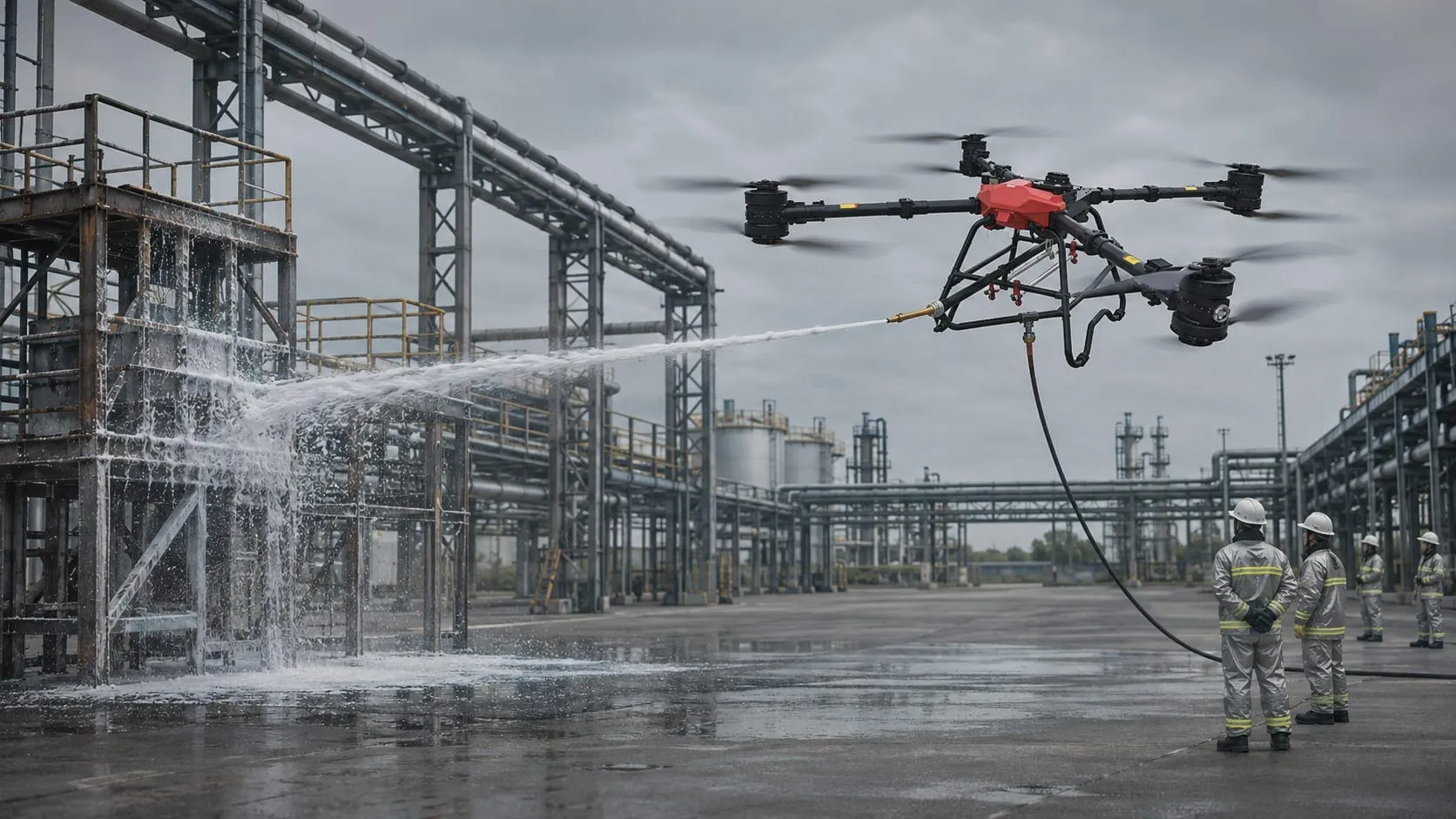
Short answer: an industrial firefighting drone setup in 2026 is a scout on standby plus a heavy aircraft for hose or pod work, chosen by plant risk. Tank farms favour hose flow, warehouses favour pods and range, and explosive atmospheres limit all of it: our RX aircraft list no ATEX certification, so they do not fly into classified zones.
Which drone fits which plant risk?
| Site risk | First aircraft | Second aircraft | Limit |
|---|---|---|---|
| Tank farm | IS-4 scout on standby | RX-100 with hose mount and foam truck | Classified zones, standoff |
| Chemical park | Scout with thermal and zoom | RX-120 pods or hose | ATEX / DSEAR, wind across the site |
| Port and container yard | Scout over long distances | RX-120, 44.6 km range | Cranes, wires, radio shadow |
| Warehouse roof | Scout for heat under the roof | RX-200 pods, 150 kg rated | Fire inside the building |
| Large estate | Docked scout | RX-120 for range | Airspace permission |
How do tank farms and chemical parks use them?
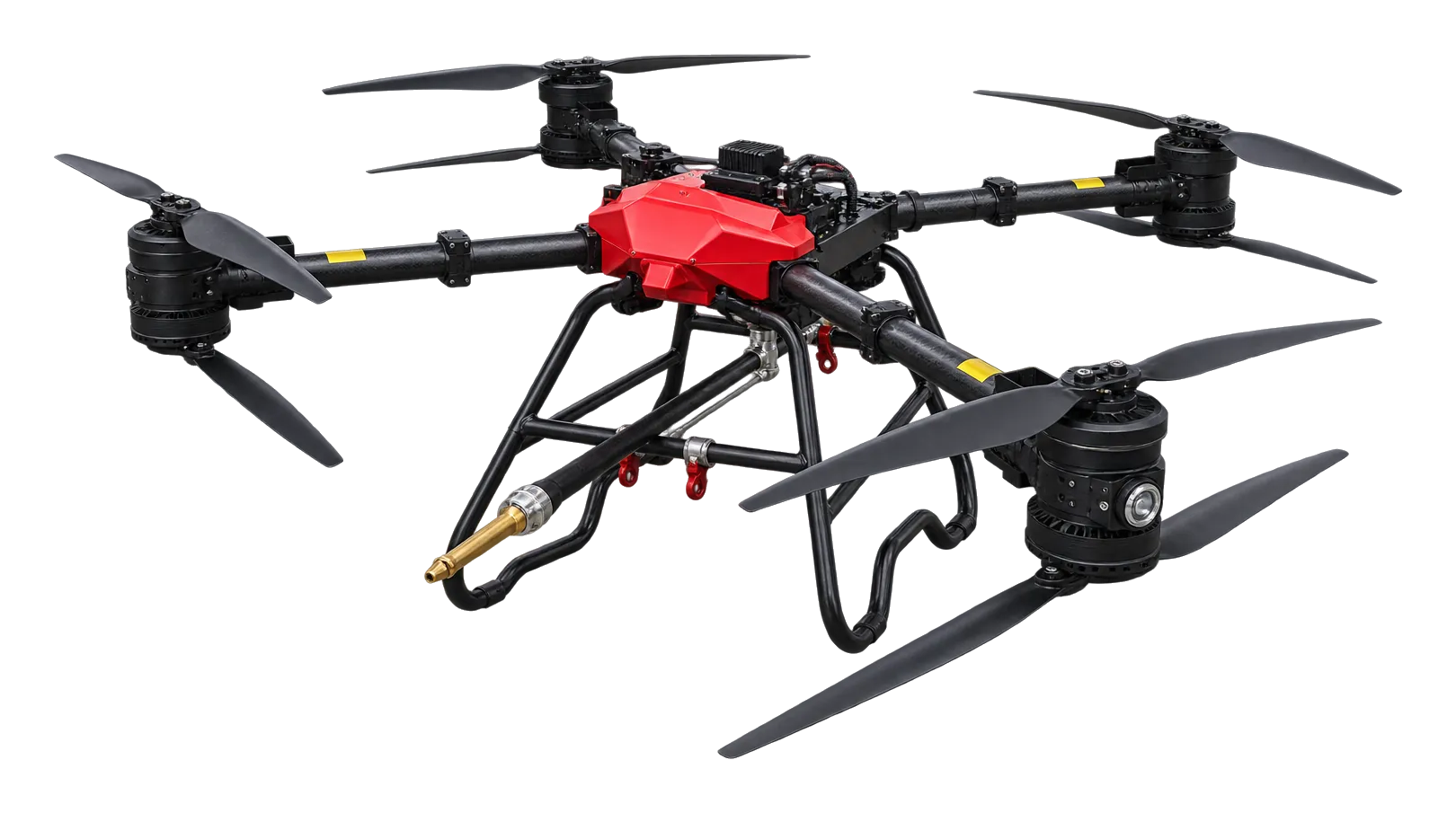
The task is standoff, cooling and checking. A scout shows heat on tank walls without sending a crew into the bund. The RX-100 hose mount (Ø 50 mm, 1,900 L/min or more, 20 m throw) works with a compressed-air foam truck, so the brigade’s existing equipment delivers the water while the drone positions the nozzle. The RX-200 gallery shows storage-tank spraying in training.
What about ports and warehouses?
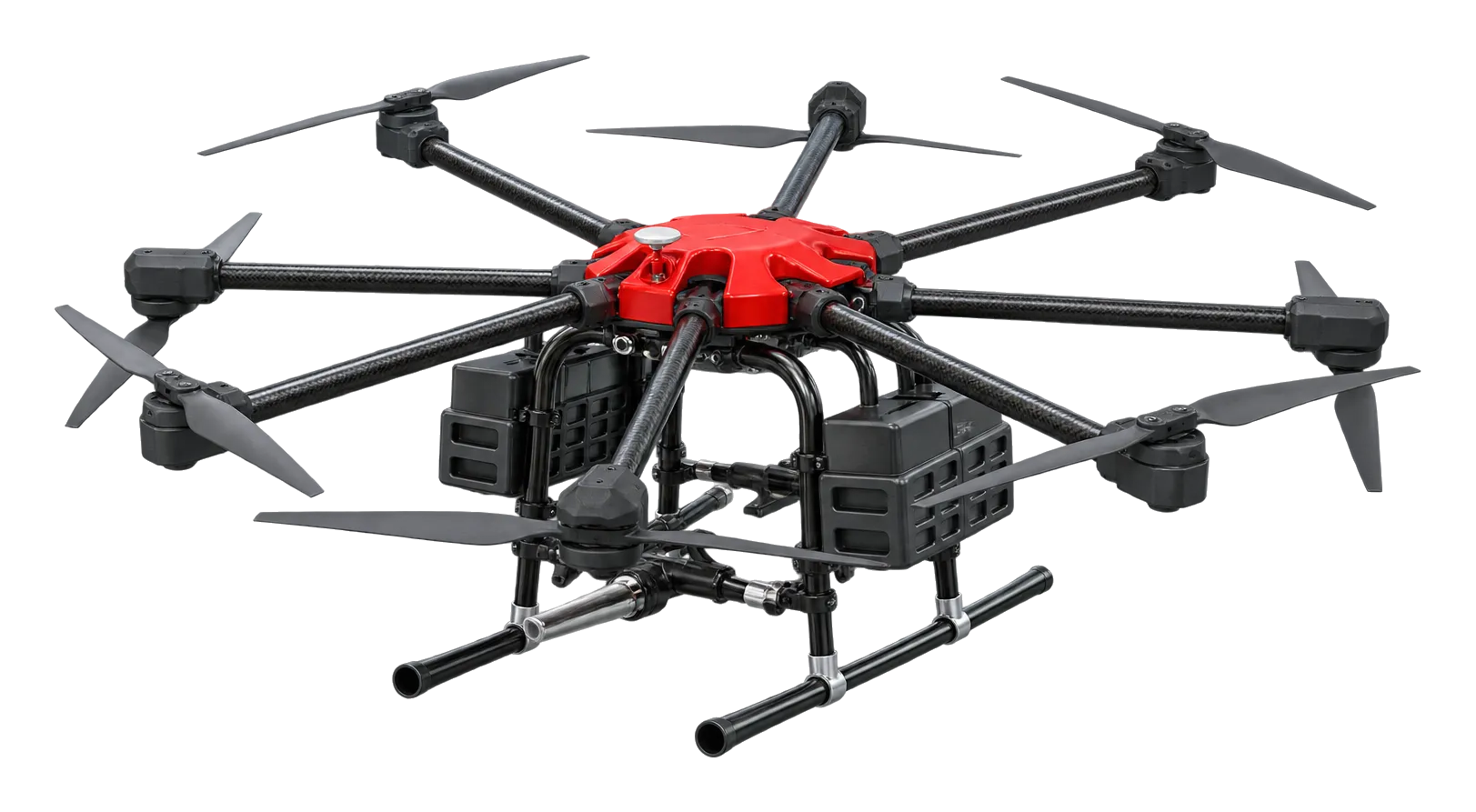
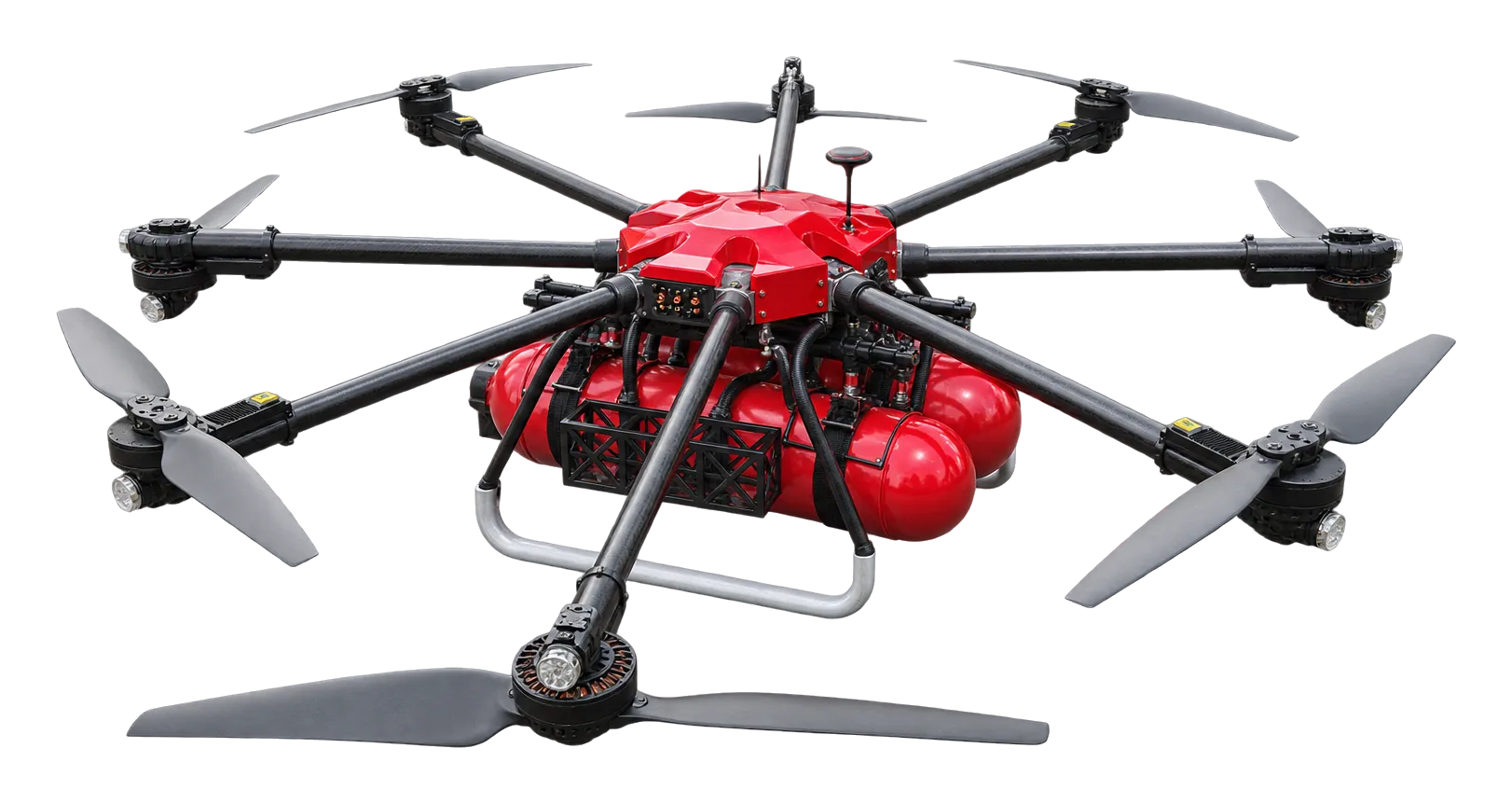
Distance and roof height dominate. The RX-120 flies up to 44.6 km and 63 minutes in the brochure; at its top speed of 20 m/s it covers 1,200 m in 60 seconds (allow more for take-off and climb). The RX-200 carries four 23 kg pods (150 kg rated) that suit large roofs, but pods do not reach a fire inside a building.
Can drones fly near explosive atmospheres?
Not unless the aircraft is certified for the zone. The ATEX Directive 2014/34/EU covers equipment and protective systems for potentially explosive atmospheres such as petrochemical plants, offshore platforms, mines and flour mills. In the UK, DSEAR 2002 requires employers to identify dangerous substances and control the risk of fire and explosion. The RX product files list no ATEX certification, and their brochure working range is −20 °C to 60 °C; one Swiss maker states operation at up to 200 °C for its own aircraft. Our guidance is to keep to the standoff your site safety case sets and ask your safety officer.
What does a standby watch require?
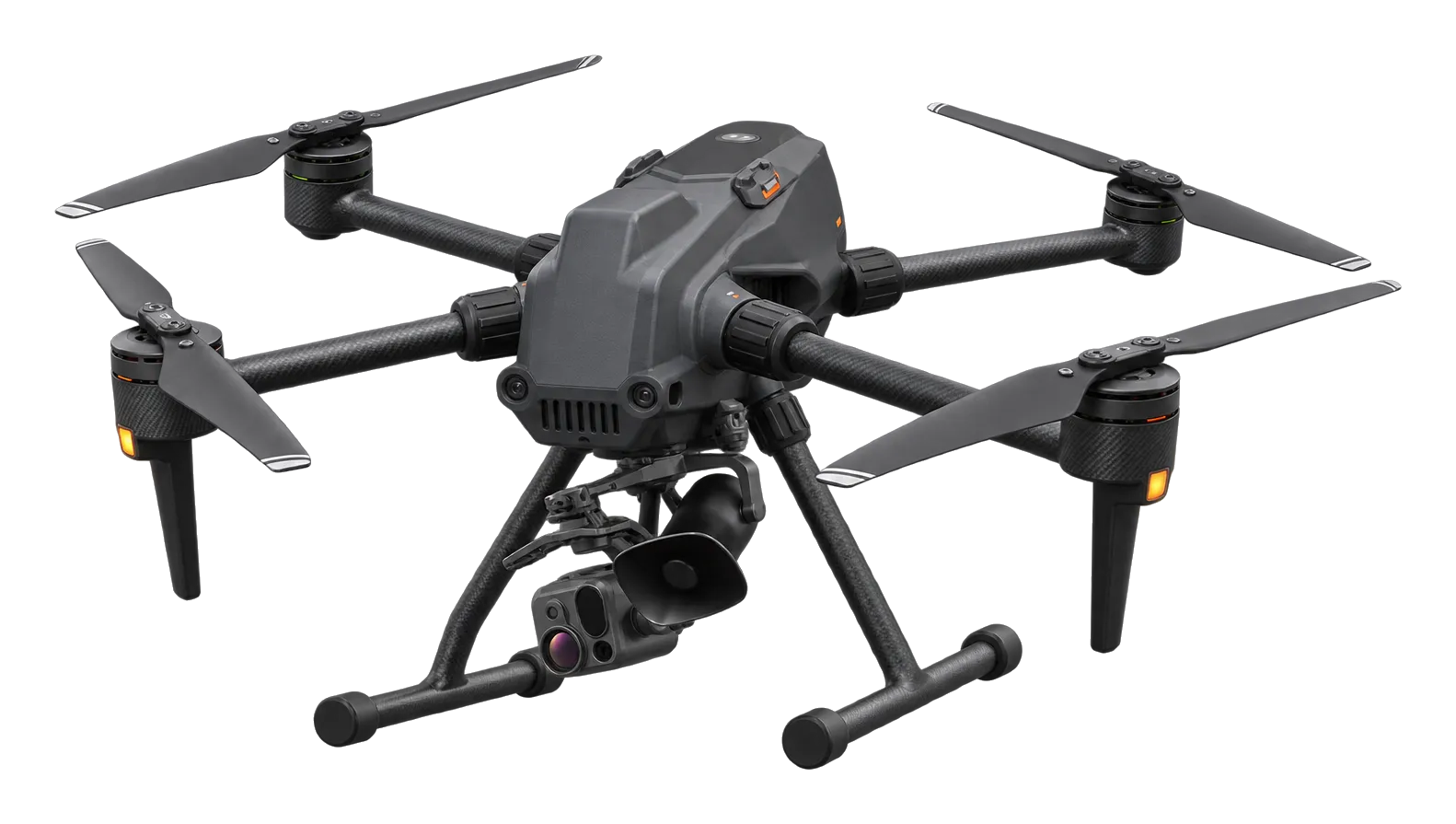
Example only, assumed figures. An 8-hour hot-work watch over a tank farm with an IS-4 scout. Plan 40 minutes of usable flight, below the 63-minute hover figure because of wind and climbs: 480 ÷ 40 = 12 flights. Assume a battery set needs 60 minutes to recharge: one set cycle is 40 + 60 = 100 minutes, so to fly every 40 minutes you need 100 ÷ 40 = 2.5, rounded up to 3 battery sets in rotation, and a second aircraft so a swap never leaves the site unwatched. A docked setup, IS-4 with the DS-1, automates the swaps.
Which duty needs which aircraft?
| Duty | Best aircraft | Why | Number to check |
|---|---|---|---|
| Continuous heat watch | IS-4 + DS-1 dock | Docked, scheduled | 63 min per sortie |
| Heavy dry-powder drop | RX-200 | Four 23 kg pods | 150 kg rated |
| Tank-wall cooling | RX-100 hose | Truck-fed flow | 1,900 L/min or more |
| Wide estate | RX-120 | Range | 44.6 km |
How does it work with your foam truck and fire water?
The drone carries only the nozzle end; the truck or fire pump provides flow and pressure. The RX-120 and RX-200 hose is Ø 40 mm with a 10 mm outlet and sprayed about 15 m at 15 bar in the brochure test. Plan the hose route, the nozzle height and a fall-back for pump failure in your drills. A truck maker has shown a compressed-air-foam aerial truck that carries two 50 kg drones and a recon drone for high-rise, forest and petrochemical work.
Who operates it?
A plant brigade trains its own team; a contractor supplies pilots; the public fire service may take command at a large incident. Write the command rules into the emergency plan. In the US, check three things before ordering a foreign-built drone: its FCC Covered List status, the Section 232 duty and FAA approval for aircraft of 55 lb or more. Confirm with your customs broker and the FAA. Our partner programme and service page cover training and spares.
- Best for tank-farm cooling with existing trucks: RX-100 hose mount, 1,900 L/min or more.
- Best for heavy dry-powder drops: RX-200, four 23 kg pods, 150 kg rated.
- Best for wide industrial estates: RX-120, 44.6 km range.
- Best for continuous heat watch: IS-4 with the DS-1 dock.
Next step
Send your site layout, the classified zones, your foam and water supply and the buildings you need to reach. We reply with the aircraft family and a battery plan. See oil and gas drone inspection, fire extinguisher drones and tethered firefighting drones, or use the contact form.
Q & A
Common questions
01Do firefighting drones exist for industrial sites?
Yes. Makers offer pod, hose and scouting aircraft for plants, ports and warehouses, and a truck maker lists a drone-equipped foam truck for petrochemical, high-rise and forest work.
02Can a drone fly over a tank farm or chemical plant?
Only where your site safety case and local rules allow it. Electrical equipment in potentially explosive atmospheres is covered by rules such as ATEX in Europe and DSEAR in the UK, and our RX aircraft carry no ATEX certification in the product files.
03Can drones carry foam?
Some can. One maker's unmanned aircraft carries 100 L of foam. Our RX-100 hose mount works with a compressed-air foam truck, so the foam comes from the truck, not the aircraft.
04How does a drone work with our foam truck and fire water system?
The drone lifts a hose nozzle; the truck supplies water or foam. Hose diameter and pump pressure set the reach: Ø 50 mm and 1,900 L/min or more on the RX-100 mount, Ø 40 mm and 15 m spray at 15 bar on the RX-120 and RX-200 in the brochure test.
05Who flies it, the plant brigade or the public fire service?
Either, but one trained team should own the procedure. Many plants train their own brigade; others contract an operator. Agree who commands the drone at an incident before the first call.
References
- 1Equipment for potentially explosive atmospheres (ATEX) — European Commission
- 2The Dangerous Substances and Explosive Atmospheres Regulations 2002 (DSEAR) — Health and Safety Executive
- 3XCMG Machinery Showcases Latest Emergency Rescue Equipment and Solution at China Fire 2023 — PR Newswire
- 4New IAFF drone program aims to reduce fire fighter exposure at HazMat scenes — IAFF
- 5FireDrone: High-Temperature Drone for Firefighting — FireDrone
VEXAFLY Aviation Technology Co., Ltd.. VEXAFLY Aviation Technology Co., Ltd. — industrial drone maker in Nanjing. Our application engineers write and check these pages and configure inspection, cleaning, lift and fire-response systems for project buyers. About VEXAFLY