Cleaning
Drone vs Rope Access Window Cleaning in 2026: Speed, Crew, Rules and Limits
Drone vs rope access window cleaning in 2026: speed, crew, permits and limits of drones, rope access, cradles and boom lifts, with a 60 m tower example.
- Author
- VEXAFLY Aviation Technology Co., Ltd.
- Scope
- Cleaning
- Published
- Length
- 4 min read · 7 sources
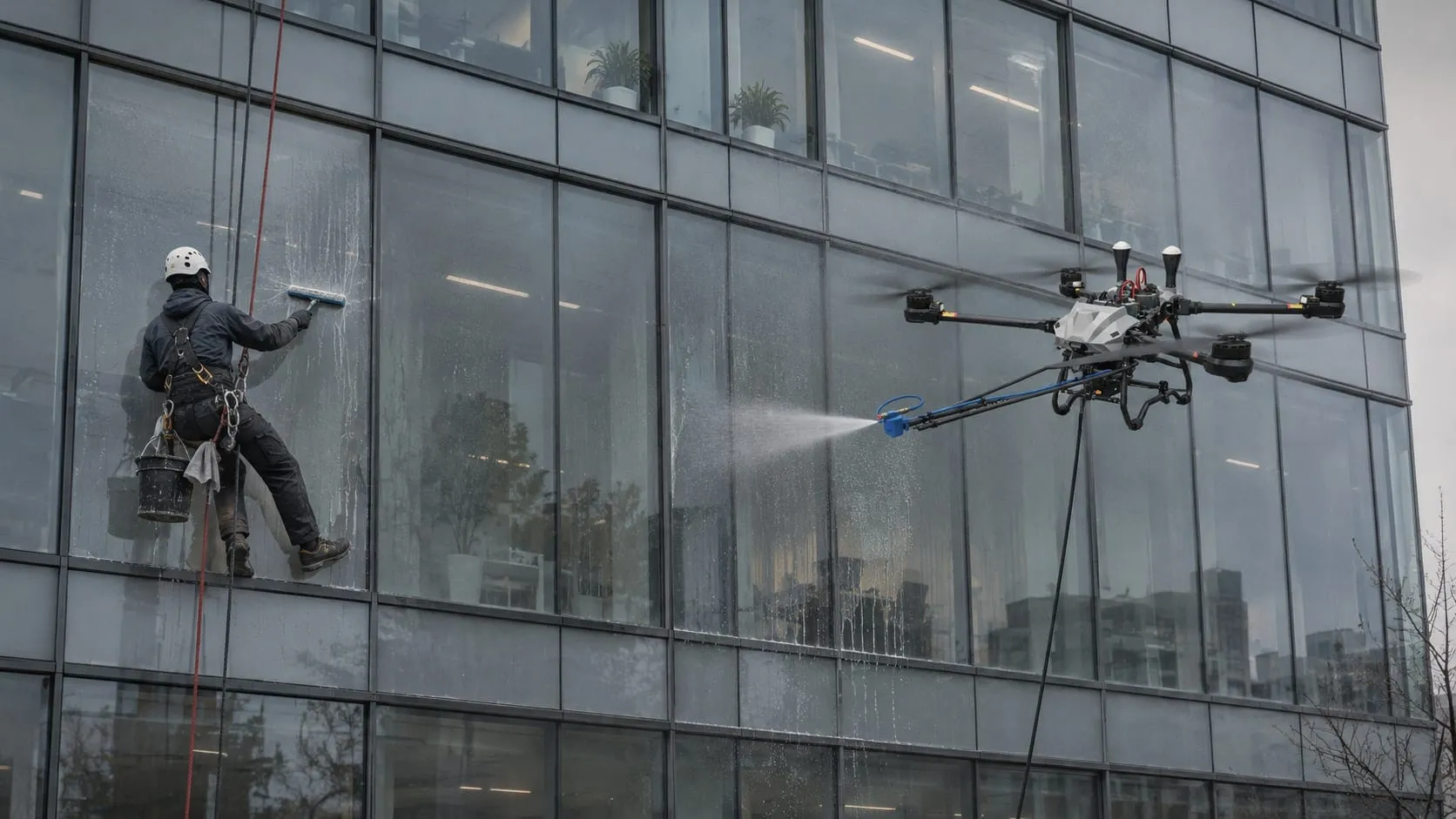
Short answer: in 2026 a drone beats rope access for routine washes of large, flat glass: it needs a smaller crew, no anchor points and nobody on the wall. In drone vs rope access window cleaning, rope access, cradles and boom lifts still win wherever hands must touch the glass, such as scrubbing, sealant work and recessed windows. Many contractors keep both.
How do the four methods compare?
| Method | Crew | Set-up | Height limit or rule | Cannot do | Best for |
|---|---|---|---|---|---|
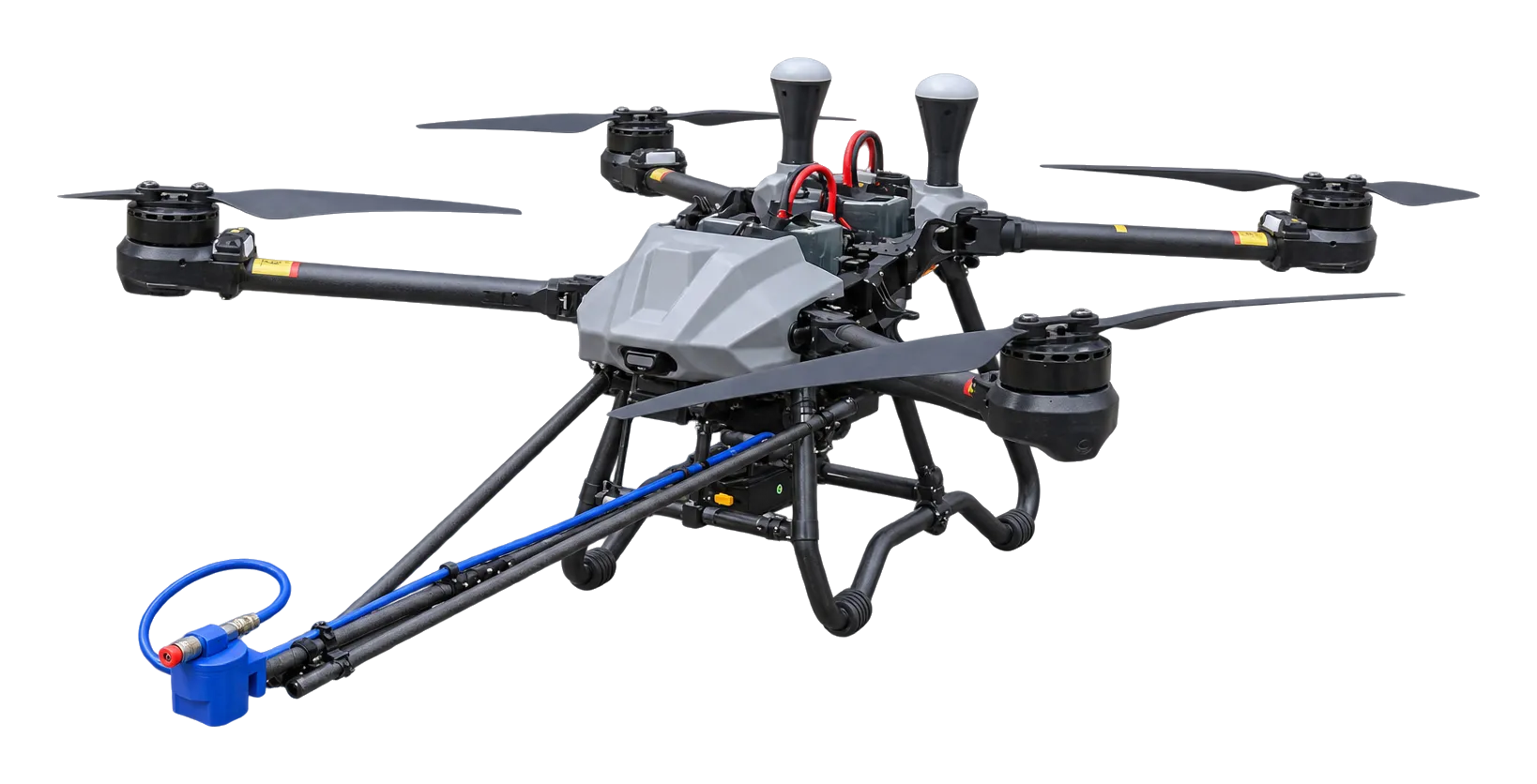
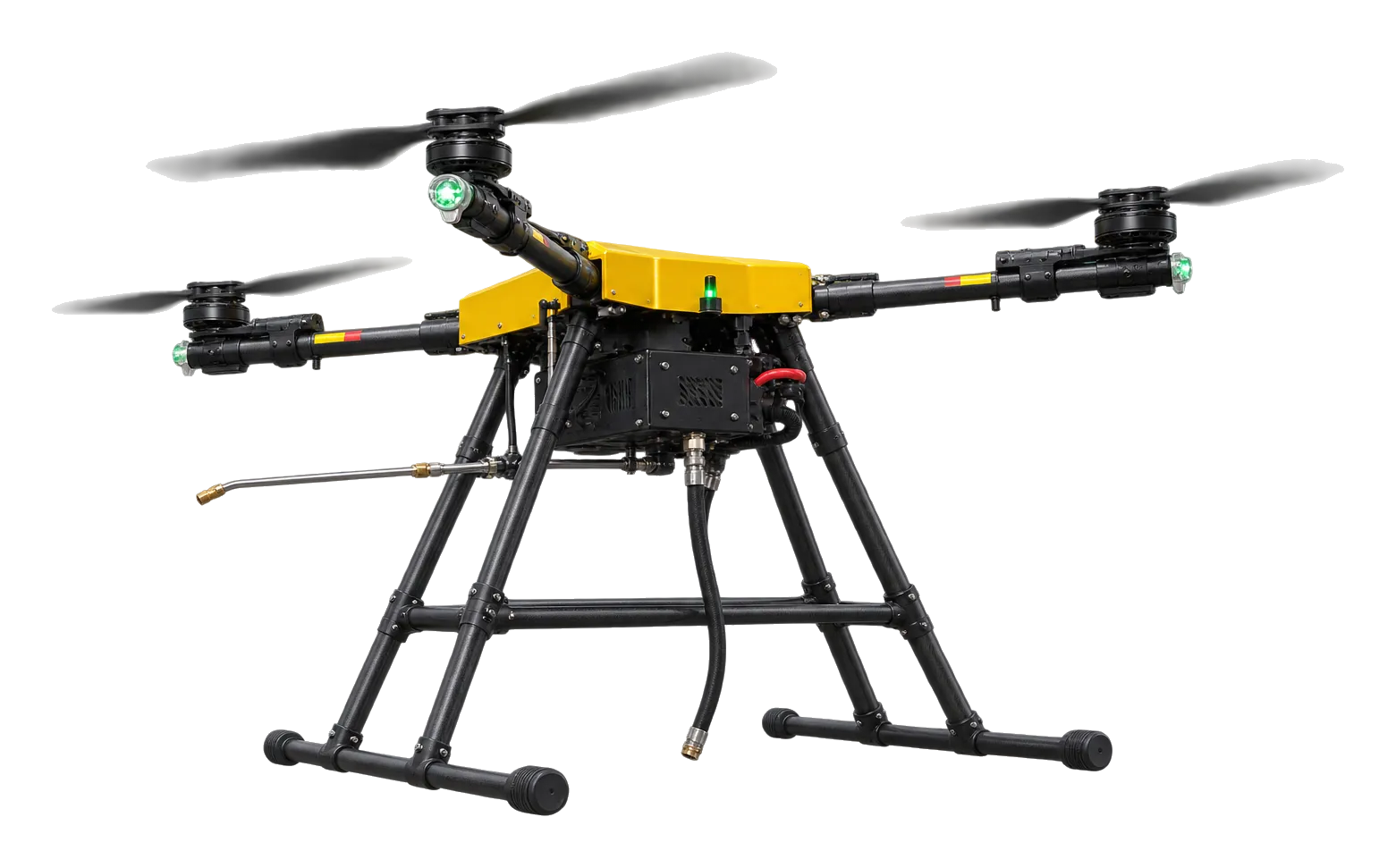
| Drone (CW-65, CW-30P) | Pilot and hose handler | Pump, hose, drop zone, flight permission | CW-30 to 50 m, CW-65 to 100 m; US: 400 ft AGL, or within 400 ft of a structure | Scrub, replace sealant, touch the glass | Routine washes |
| Rope access | Technicians, in pairs or more | Certified anchorages, rigging | US: no rope descent system above 300 ft (91 m) unless other access is not feasible | Work fast on large areas or in gusts | Detail and repairs |
| Cradle or BMU | Operators on the platform | Permanent rig on the roof | US: 29 CFR 1910.66 | Reach buildings with no rig | Towers with a rig |
| Boom lift or MEWP | Operator and ground spotter | Firm, level ground | Reach of the machine | Go above that reach | Low-rise |
How fast is each method on a real facade?
Power Washers of North America describes a UK warehouse cleaned in one day by drone against eight days with lifts, with a reported 20 % cost reduction, and a nine-storey building done in two days. Eolinet, in wind-turbine cleaning, reports one day by drone against four to five by rope. A maker, Lucid Bots, claims an eight-storey job takes one day and two people by drone against three days and four workers traditionally. Treat these as trade and maker claims, not market data.
What does each method need on site?
- Drone: a drop zone, a spot for the pump, water and power at ground level, and permission to fly. No roof anchors.
- Rope access: under OSHA, the building owner certifies in writing that each anchorage holds 5,000 lb (2,268 kg) per attached employee, based on an annual inspection; the system is inspected at the start of each shift and is not used in storms or gusty wind.
- Cradle or BMU: a maintained permanent rig.
- Boom lift: ground that carries the machine and room to position it.
Which is safer?
The hazards differ. Rope access puts people on the wall. A drone keeps people on the ground but adds falling water, a falling aircraft and a hose: cordon the area below and use a trained pilot. In the UK, follow the HSE’s work-at-height guidance. See our window cleaning safety guide.
When does rope access or a BMU still win?
Rope or platform crews win on scrubbing, sealant and gasket replacement, hardware repair, close inspection by touch, recessed glass and heavy build-up. A tower with a working BMU also needs no flight permission. Our best window cleaning drone guide lists where a drone is the wrong tool.
Example: a 60 m office tower
Assumptions: four elevations of 40 m by 60 m give 4 × 40 × 60 = 9,600 m². The drone is a CW-65, since the CW-30 is rated to 50 m, at an average 600 m² per hour including moves, with two people. Rope access uses four technicians at 55 m² per hour each, including rigging and drops. Days are 8 hours. All rates are assumptions; use your own.
| Method | Formula | Time on site | Crew-hours |
|---|---|---|---|
| Drone | 9,600 ÷ 600 | 16 h, 2 days | 2 × 16 = 32 |
| Rope access | 9,600 ÷ (4 × 55) | 43.6 h, about 5.5 days | 4 × 43.6 ≈ 175 |
Add lead time for the drone: Eolinet quotes about three weeks for aviation filing, while a prequalified rope team can start sooner.
What rules must you check?
- OSHA: rope descent systems and powered platforms.
- FAA Part 107.51: 400 ft AGL, or within 400 ft of a structure and no more than 400 ft above its top.
- Aircraft of 55 lb or more: the FAA requires a Section 44807 exemption. The CW-65 has a 111 kg take-off weight, well above that.
If you are in the US and buying a foreign-built aircraft, also check its FCC Covered List status and the Section 232 duty. Your customs broker and the FAA can confirm both; see importing industrial drones from China.
Which method is best for what?
- Best for routine glass washes up to 100 m: CW-65, 3–6 m spray range, tether with no flight-time limit.
- Best for buildings up to 50 m: CW-30P, 6–10 m throw.
- Best for restoration and sealant work: rope access, hands on the glass.
- Best for towers with a permanent BMU: the cradle, with no flight permission.
Next step
Send the elevations, height and whether the building has a rig. We reply with the aircraft, pump and crew plan, and what is left for rope access. For price, see what a drone wash costs; other pages: United States, Singapore and cleaning drones.
Q & A
Common questions
01Is a drone faster than rope access for window cleaning?
For routine washing of large, flat glass, usually yes: a trade report describes one warehouse cleaned in one day by drone against eight days with lifts. On detailed or heavily soiled facades the gap narrows, because the drone does not scrub.
02Is drone building cleaning effective?
For washing and rinsing glass and cladding, yes. It removes dust, pollen and light soiling. Hard-water stains and construction residue still need hand work.
03Is it cheaper?
Often, because the crew is smaller and nothing needs rigging, but published prices vary and several come from sellers. Our guide to what a drone wash costs shows how to build a quote.
04When do you still need rope access?
For scrubbing, sealant and gasket replacement, repairs, close inspection by touch and glass recessed behind deep mullions or sunshades.
05How high can each method go?
The CW-30 class is rated to about 50 m and the CW-65 to 100 m. In the US a rope descent system is not allowed above 300 ft (91 m) unless other access is not feasible or is more hazardous.
06Do drones need roof anchors?
No. They need a drop zone, a place for the pump and hose, and permission to fly. The anchor certification that rope access requires does not apply.
References
- 129 CFR 1910.27: Scaffolds and rope descent systems — eCFR / OSHA
- 229 CFR 1910.66: Powered platforms for building maintenance — eCFR / OSHA
- 314 CFR 107.51: Operating limitations for small unmanned aircraft — eCFR
- 4Section 44807: Special Authority for Certain UAS — FAA
- 5What Can Cleaning Drones Actually Clean? — Power Washers of North America
- 6Drone cleaning vs rope access: the comparison — Eolinet
- 7Work at height — Health and Safety Executive (UK)
VEXAFLY Aviation Technology Co., Ltd.. VEXAFLY Aviation Technology Co., Ltd. — industrial drone maker in Nanjing. Our application engineers write and check these pages and configure inspection, cleaning, lift and fire-response systems for project buyers. About VEXAFLY