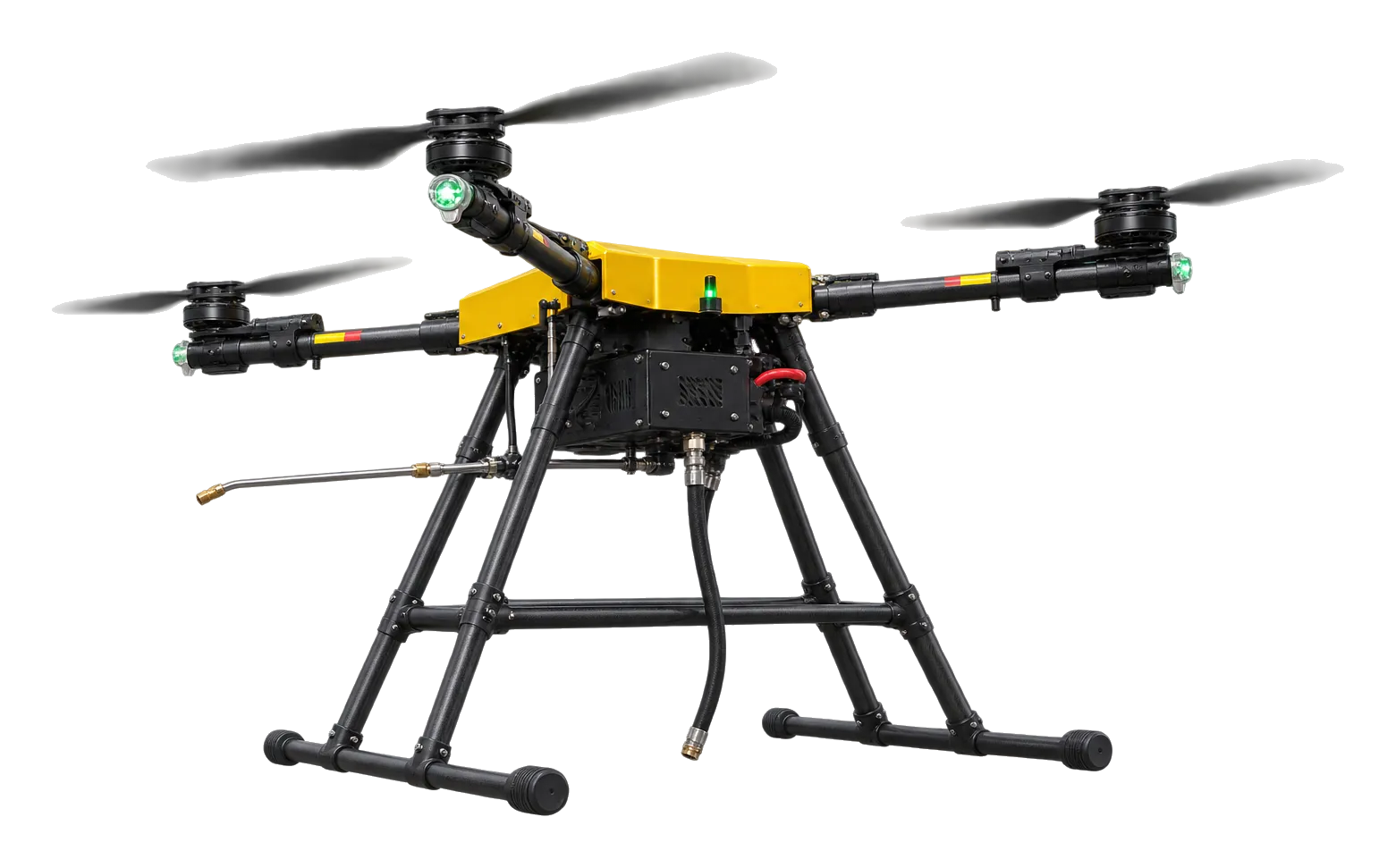
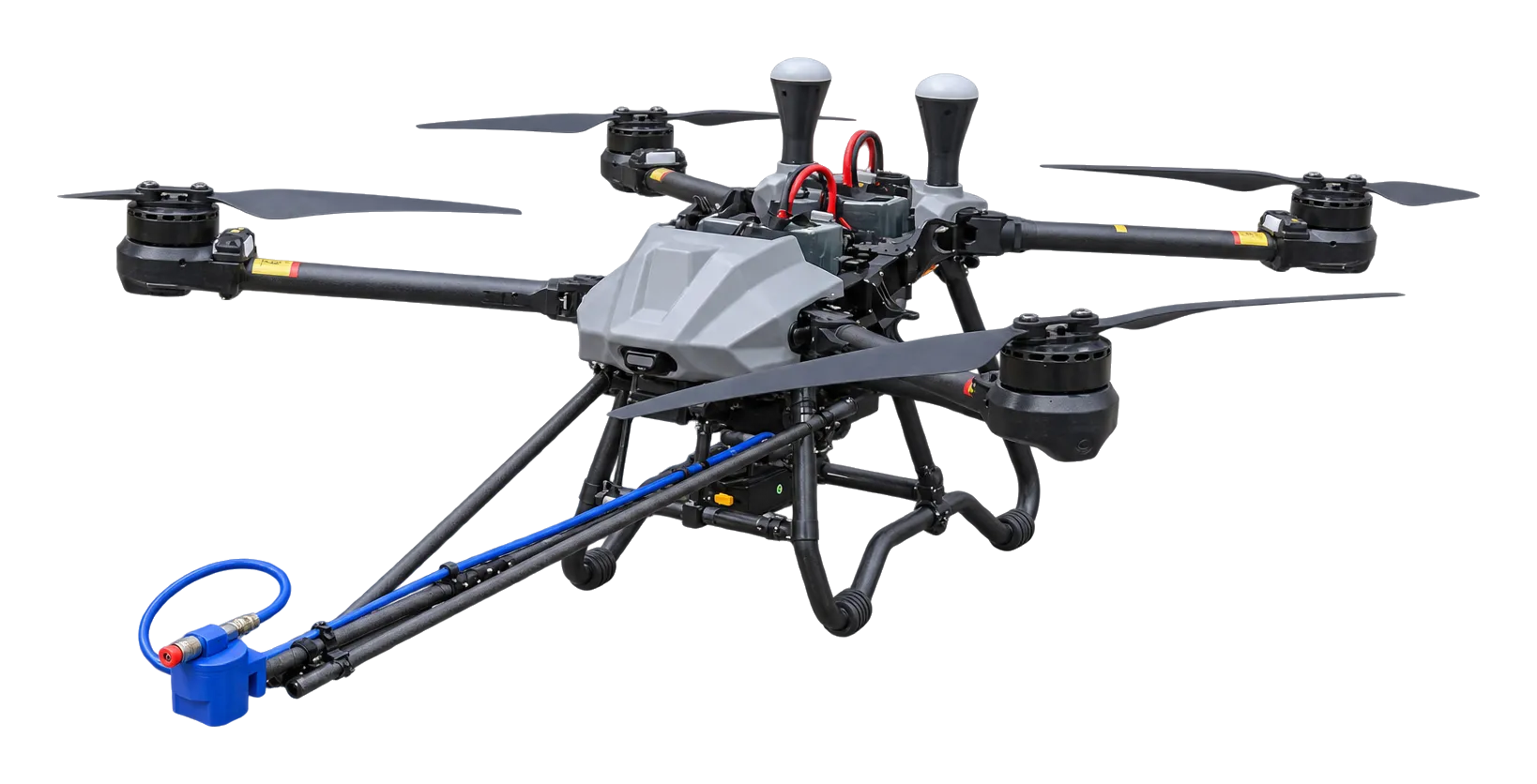
Cleaning
Best Window Cleaning Drone in 2026: Which Setup Suits Which Building
Best window cleaning drone in 2026, by building: mid-rise offices, 100 m towers, hotels with podiums, glass roofs, small sites, and where no drone wins.
- Author
- VEXAFLY Aviation Technology Co., Ltd.
- Scope
- Cleaning
- Published
- Length
- 4 min read · 6 sources
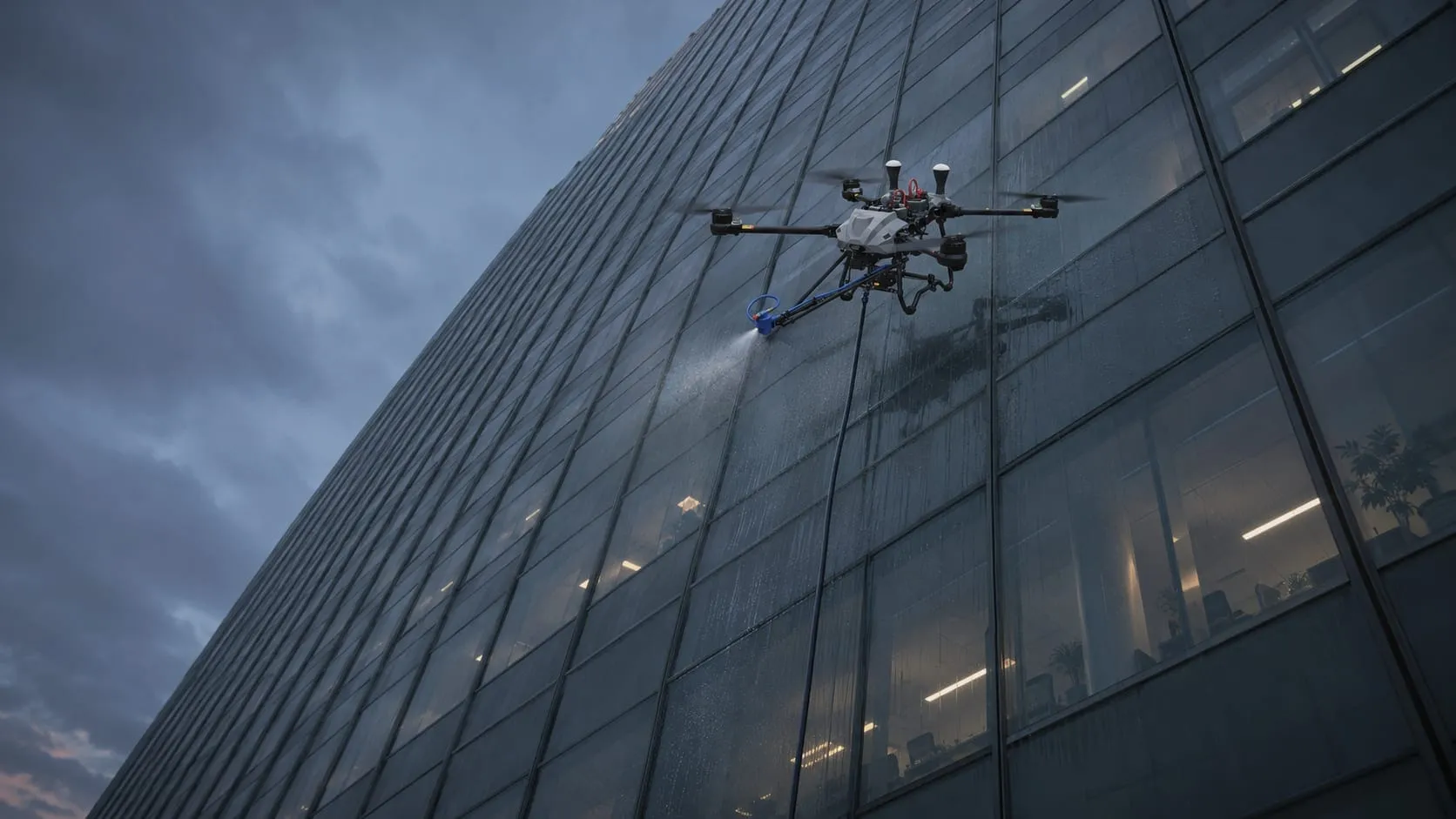
Short answer: in 2026 there is no single best window cleaning drone; the best one matches the building. For offices of about 3–12 storeys, to about 50 m, with water at street level, choose a hose-fed CW-30P. For towers between 50 and 100 m, choose the CW-65. For roofs with no hose route, choose a tank aircraft such as the CW-30T. Where glass is deeply recessed or heavily soiled, a hand crew beats any drone.
Which drone for which building?
| Building | Height | Facade detail | Water access | Best set-up | Limit |
|---|---|---|---|---|---|
| Mid-rise office | 15–50 m | Flat curtain wall | Tap or hydrant at street level | CW-30P with 5.5 kW pump, 6–10 m throw | Rated to about 50 m |
| Tower | 50–100 m | Curtain wall with setbacks | Ground pump, hose, tether | CW-65 with 5.5 or 13 kW unit | Rated to 100 m; wind |
| Hotel with canopies and podiums | 30–80 m | Balconies, canopies, drop zones | Service yard | CW-65 staged from the podium roof | Canopies block the spray angle |
| Glass roof or atrium | Low | Sloped glass | Tap | CW-30P, lance at 90° down, low pressure | Seals and gaskets |
| Scattered small sites | Up to 50 m | Mixed | None | CW-30T: 30 L, 3–5 m throw, 0.8–1.8 MPa | One 30 L fill covers little area |
| Recessed glass, restoration | Any | Deep mullions, heavy build-up | Any | Hand crew; drone only rinses | Drones do not scrub |
What makes a drone the best one for your building?
Five numbers decide it: the height rating, the stand-off throw, the water route, the wind limit and the hose weight you can manage. Other makers publish their own figures: Lucid Bots lists up to 150 ft (about 46 m), Apellix up to 195 ft (about 59 m) and ABZ Innovation up to 60 m for its C10. Ours are to 50 m for the CW-30 and to 100 m for the CW-65, with 6–10 m throw on the CW-30P and 3–6 m on the CW-65 (brochure values). The CW-65 data lists wind resistance to level 7 and the CW-30 data sheet to level 6; plan lower.
Mid-rise office: what matters?
DroneBundle puts the sweet spot on large, flat, repeating facades of roughly three to twelve storeys. A 6–10 m throw gives a safe stand-off, and the pump can stand on a tap at the kerb. This is the CW-30P’s job. Check the facade cleaning guide for water and power.
What changes above 50 m?
Water must be lifted about 0.098 bar per metre, so 100 m of height needs about 9.8 bar before friction and nozzle pressure. The hose gets heavier and wind stronger. That is why the CW-65 pairs with a 5.5 or 13 kW ground unit and a tether; see the pump and hose guide.
Hotels with canopies and podiums
Canopies and podium roofs break the drop zone and hide parts of the glass. A podium roof can also serve as a staging point. A Power Washers of North America report describes an operator soft-washing algae from hotel window ledges without a lift or scaffold. Rules on flying over people differ: US Part 107.39 allows people under a covered structure only where it gives reasonable protection from a falling aircraft. US buyers of a foreign-built drone should settle the FCC Covered List status, the Section 232 duty and FAA approval for aircraft of 55 lb or more before ordering; your customs broker and the FAA can confirm, and our import guide explains the steps.
Glass roofs and atria
Tilt the lance 90° down, keep the pressure low and rinse with pure water. DroneBundle notes that pressure washing is rarely right for glass or seals.
When is no drone the best tool?
- Glass recessed behind deep mullions, balconies or sunshades.
- Hard-water stains, construction residue and bird droppings that need a brush.
- Mirrored glass, which can fool vision sensors; glass can also reflect GNSS signals and steel can disturb the compass.
A drone replaces the lift, not the whole window cleaning crew. See drone vs rope access.
Example: a 22-storey hotel with a podium
Assumptions: the tower top is 75 m above ground; a podium roof 12 m up has a safe area and a water feed; the CW-65 is hose-fed; only static head is counted, at 0.0981 bar per metre.
| Pump position | Water lift to tower top | Static head |
|---|---|---|
| Ground | 75 m | 7.4 bar |
| Podium roof | 63 m | 6.2 bar |
Staging from the podium cuts the lift by 12 m, or about 1.2 bar. Friction and nozzle pressure come on top.
Which one is best for you?
- Best for 3–12 storey offices: CW-30P, to about 50 m, 6–10 m throw.
- Best for 50–100 m towers: CW-65, rated to 100 m, tether with no flight-time limit.
- Best for glass roofs and atria: CW-30P with the lance at 90° down and low pressure.
- Best for scattered sites with no hose route: CW-30T, 30 L tank.
- Best for EU buyers who need a class-marked system: a C5-class system such as the ABZ C10, up to 60 m.
- Best for heavy build-up and recessed glass: a hand crew; drones rinse, they do not scrub.
Next step
Send the elevations, the height, the glass type and the water at street level. We reply with the aircraft that fits and what it will not do. Prices are in the window cleaning drone price guide; the full range is on the cleaning drones page.
Q & A
Common questions
01What is the best drone for cleaning high-rise windows?
There is no single best. Up to about 50 m a hose-fed drone such as the CW-30P suits flat curtain walls; from 50 to 100 m the CW-65 is rated higher and can fly on a tether. Wind, glass recesses and water access decide the rest.
02Is there a drone that can clean windows?
Yes. A cleaning drone sprays water or detergent from a lance and rinses the glass without a person on a rope or lift. It works best on large, flat, repeating facades.
03Can a drone clean as well as a squeegee?
For regular washing, a pure-water rinse leaves glass clean. For hard-water stains, construction residue or bird droppings, a brush or squeegee is still needed, so many crews use both.
04Which drone for a 100 m tower?
The CW-65 is rated to 100 m. The brochure lists wind resistance to level 7, but crews plan with a lower limit, and the pump and hose must be sized for the height.
05What is the best window cleaning robot?
Robots of that name are suction-cup machines for household glass, so they are not comparable with a facade drone.
06How much does a window cleaning drone cost?
Reference prices FOB China start near US$4,500 for the CW-30 class and reach US$16,000 for the CW-65. The price guide lists what each quotation line covers.
References
- 1The Best Cleaning Drones on the Market Today: A Complete Buyer’s Guide — Commercial UAV News
- 2Drone Window Cleaning: Rules, Costs and How It Works — DroneBundle
- 3ABZ Innovation C10 cleaning drone — ABZ Innovation
- 4Sherpa Cleaning Drone — Lucid Bots
- 514 CFR 107.39: Operation over human beings — eCFR
- 6What Can Cleaning Drones Actually Clean? — Power Washers of North America
VEXAFLY Aviation Technology Co., Ltd.. VEXAFLY Aviation Technology Co., Ltd. — industrial drone maker in Nanjing. Our application engineers write and check these pages and configure inspection, cleaning, lift and fire-response systems for project buyers. About VEXAFLY