Cleaning
Facade Cleaning Drones in 2026: How to Choose by Height, Facade and Water Supply
Choosing a facade cleaning drone in 2026: building height, glass, metal or stone cladding, hose-fed or tank, wind limits and what the site must provide.
- Author
- VEXAFLY Aviation Technology Co., Ltd.
- Scope
- Cleaning
- Published
- Length
- 4 min read · 3 sources
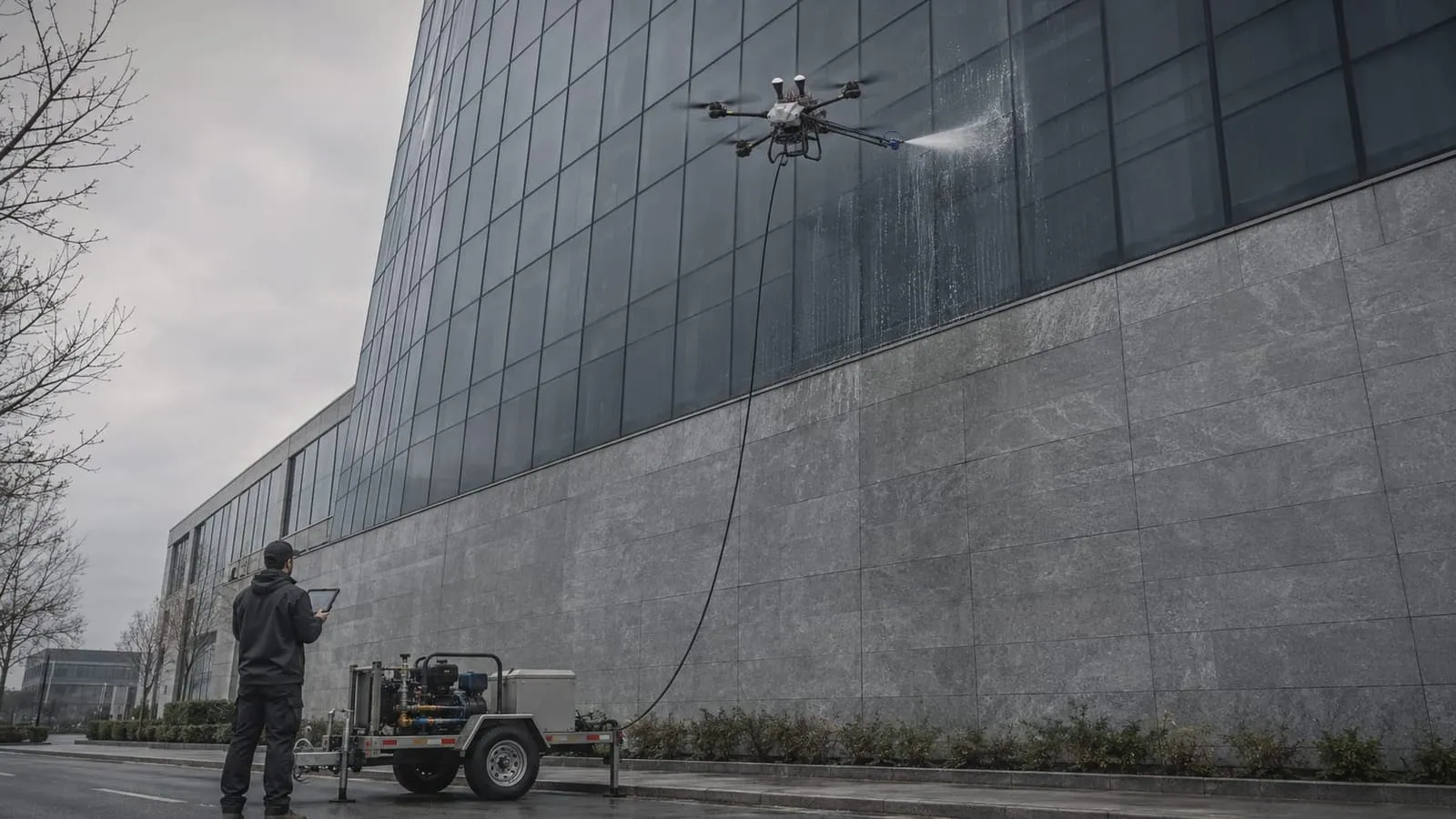
Short answer: in 2026 the right facade cleaning drone depends on four things about the building: its height, the facade material, where water and power come from at street level, and how windy the site is. For most offices and hotels a hose-fed drone with a ground booster pump is the practical choice; tanks are for scattered roofs and panels. Up to about 50 m a mid-size aircraft works; for 50–100 m choose a larger, heavier one.
The selection matrix
Most pages that rank for this topic are single-product pages. They tell you what one drone can do, not which setup fits your building. Start here instead:
| Building and site | Recommended setup | Why |
|---|---|---|
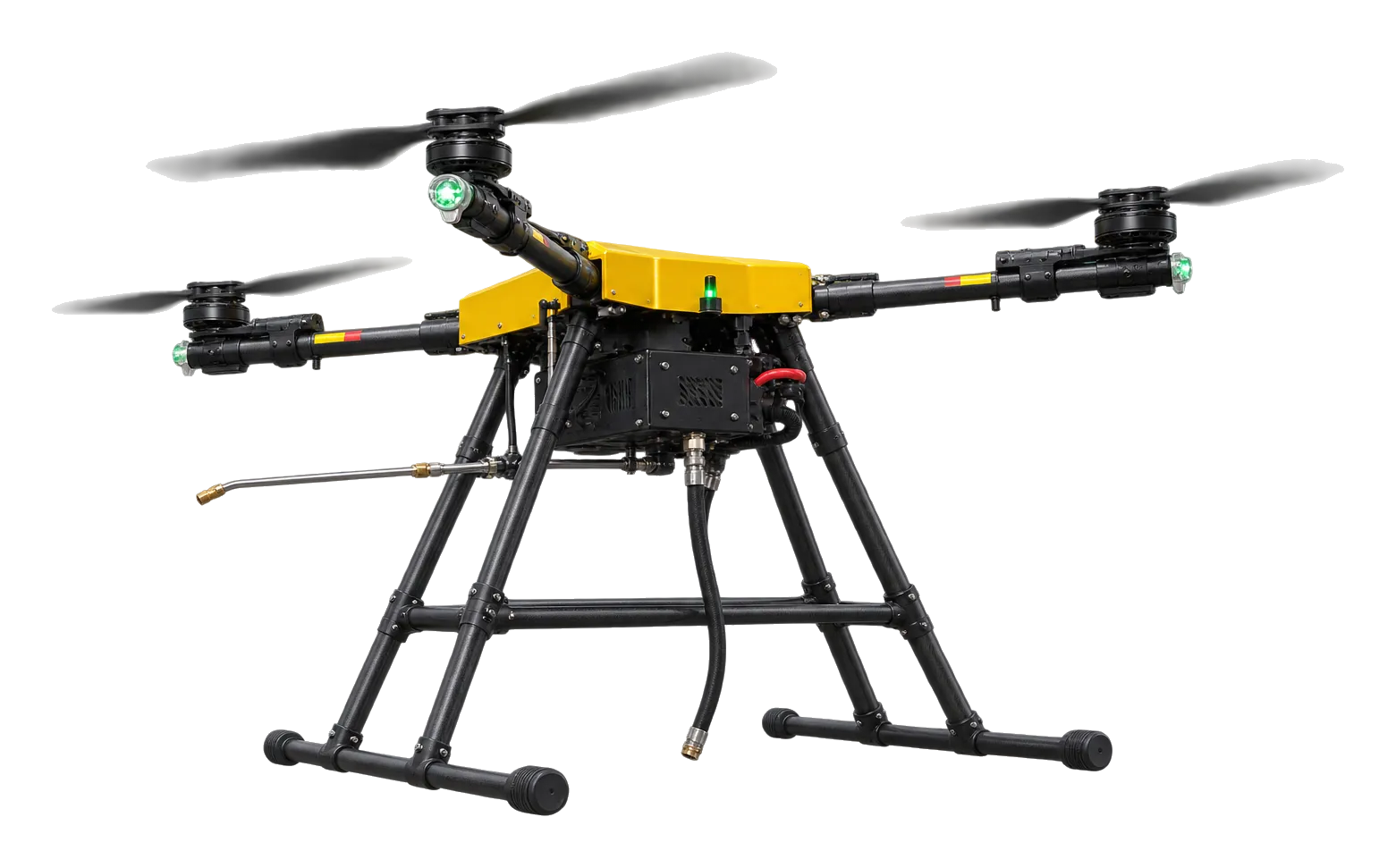
| Up to ~50 m, glass or metal panels, hydrant or tap at ground level | Hose-fed mid-size drone (CW-30P) + booster pump | Light aircraft, unlimited water, short set-up |
| Up to ~50 m, no hose route (scattered roofs, canopies, small solar roofs) | Tank version (CW-30T) | Carries 30 L, no hose to drag over roofs |
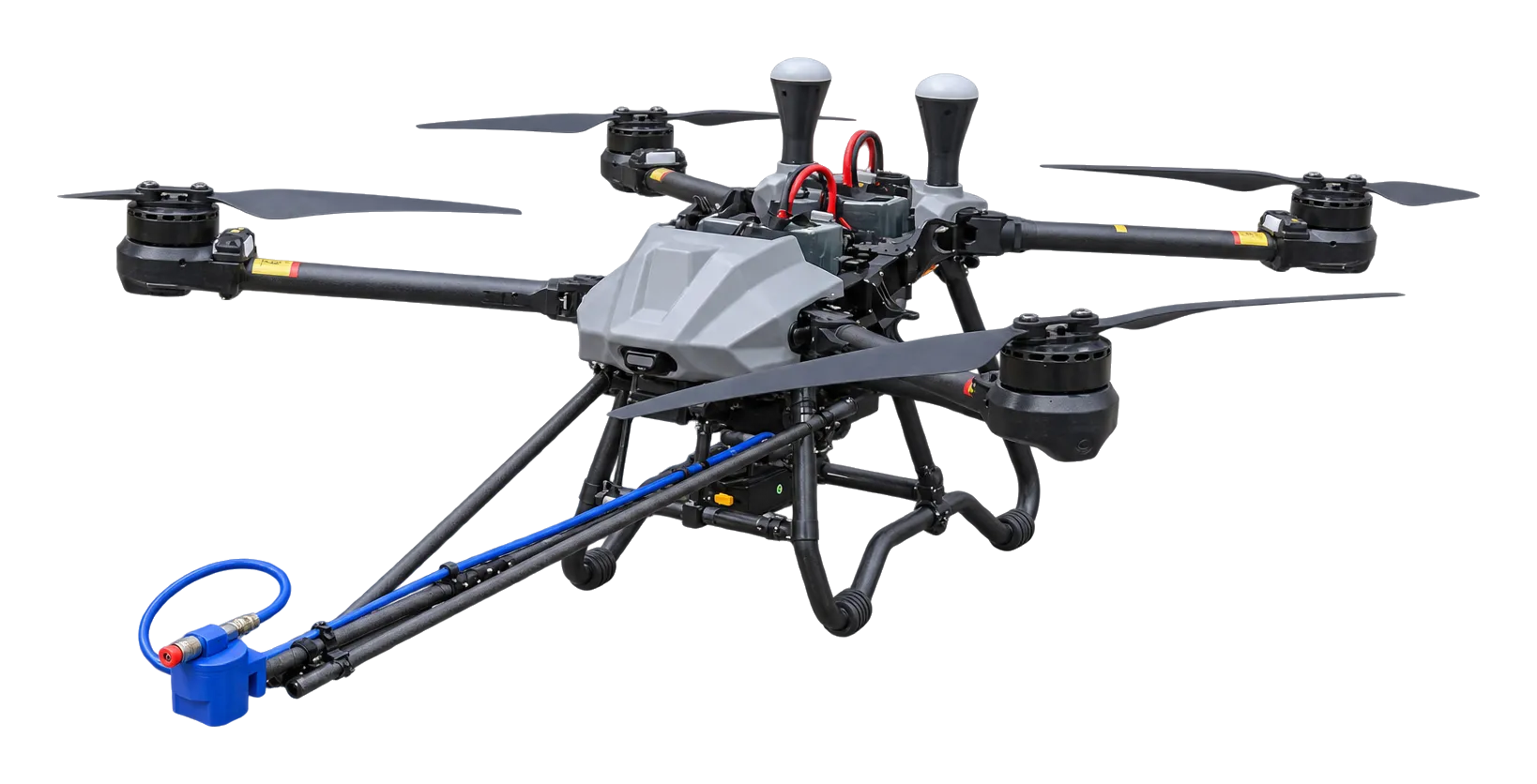
| 50–100 m towers, curtain walls | Large hose-fed drone (CW-65) + 5.5 or 13 kW pump, tethered power | Heavier aircraft holds position better in gusts; tether removes battery swaps |
| Stone, render or brick with heavy soiling | Drone for pre-wetting and rinse; manual or rope access for scrubbing | Spray alone does not lift ingrained dirt |
| Busy street, no closure possible | Rope access or cradle | Without an exclusion zone below, a drone job is hard to permit |
Best for most commercial buildings: a hose-fed drone with the pump on a trailer, so water and pressure stay on the ground and the aircraft stays light.
How high is your building?
Height decides more than anything else. The hose gets heavier with every metre, the pump must push water further, and wind grows with height. The CW-30P is rated to about 50 m with a 3–10 m spray distance; the CW-65 is rated to 100 m, weighs 55.8 kg with batteries and can fly on a tether with no flight-time limit (brochure figures). Above 100 m, plan rope access or a building maintenance unit for the top floors and use the drone below.
What is the facade made of?
- Glass curtain walls: the easiest case. Soft water or a mild detergent, then a rinse; keep the pressure moderate around seals and gaskets.
- Aluminium composite and painted metal: wash well. Check the cladding maker’s limits on pressure and detergent.
- Stone, render and brick: porous surfaces hold dirt; a drone pre-wets and rinses but rarely restores them alone.
- Solar glass on roofs or facades: see our separate solar panel cleaning drone guide.
Hose-fed or on-board tank?
| Question | Hose-fed (ground pump) | On-board tank |
|---|---|---|
| Water per flight | Unlimited | 30 L on the CW-30T |
| Pressure at the nozzle | High (pump on the ground) | Lower (0.8–1.8 MPa on the CW-30T) |
| Spray distance | 3–10 m (CW-30P) | 3–5 m |
| Set-up | Pump, hose, water source | Refill station only |
| Best for | Facades, towers, large arrays | Scattered roofs, canopies, signs |
What must the site provide?
Before quoting a building, a crew checks: a level area for the pump and water trailer; a water source and its flow; mains power or a generator for the pump (the CW-30P booster pump is 5.5 kW at 220 V); a take-off spot clear of trees and cables; and a way to close the pavement below. Detergent run-off may need to be collected where local rules require it.
Worked example: one office facade
Example only — an estimate with assumed figures, not a guarantee. A 40 m office building has 2,000 m² of glass on its street front. The crew assumes a cleaning rate of 400 m² per hour once the hose is set up, which gives about 5 hours of spraying. The booster pump delivers up to 32 L/min, so at full flow water use would be at most about 1,900 L per hour; in practice the nozzle is not open all the time. Add an hour to set up and an hour to pack down and the job fits one working day for a crew of two. Measure your own rate on the first jobs and price from that.
Wind, people and permissions
Wind near tall buildings accelerates at corners and over roofs. The CW-65 brochure lists wind resistance up to level 7, but crews normally stop much earlier. People below the facade are the main risk: plan a cordoned zone and a spotter. A commercial flight near buildings needs a qualified remote pilot and, in many countries, a specific permission. In the EU most facade jobs fall into the specific category.
Who buys these drones?
Window cleaning and facility service companies adding a drone crew, property managers with several towers, and integrators who build cleaning services for clients. If you plan to offer cleaning as a service in your region, see our partner programme. For other cleaning setups, browse the cleaning range.
Next step
Send the building height, facade type, water and power at ground level and your local rules through the contact form. An engineer replies with the aircraft, pump and hose length that fit.
Q & A
Common questions
01Is drone building cleaning effective?
For regular washing of glass, metal cladding and painted surfaces, yes: a drone applies water or detergent and rinses at pressure without anyone on a rope. It removes dust, pollen and bird droppings well. It does not replace manual scrubbing for heavy grime, graffiti or mineral staining.
02How high can a cleaning drone work?
The limit is usually the hose and the pump, not the aircraft. The CW-30P is rated to about 50 m and the CW-65 to 100 m in the manufacturer brochure. Local rules on flight height near buildings also apply.
03What equipment comes with a facade cleaning drone?
A typical set is the aircraft, batteries or a tether power unit, a ground booster pump, hose, spray lance and a controller. Detergent dosing, a generator and a water trailer are often added depending on the site.
04Can it clean in wind?
Only within the limit of the aircraft and your own safety margin. Wind near tall buildings is gustier than at street level; most crews stop well below the published limit and avoid corners where gusts accelerate.
05Do we need a permit?
In most countries a commercial drone flight near buildings and people needs a remote pilot qualification and often a specific permission. In the US this is FAA Part 107; in the EU most facade work falls in the specific category. Check with your aviation authority before quoting jobs.
References
- 1Specific category — civil drones — European Union Aviation Safety Agency
- 2Certificated Remote Pilots including Commercial Operators — Federal Aviation Administration
- 3Operations over People — Federal Aviation Administration
VEXAFLY Aviation Technology Co., Ltd.. VEXAFLY Aviation Technology Co., Ltd. — industrial drone maker in Nanjing. Our application engineers write and check these pages and configure inspection, cleaning, lift and fire-response systems for project buyers. About VEXAFLY