Cleaning
Solar Panel Cleaning Drones in 2026: Which Setup Fits Your Plant?
Solar panel cleaning drones in 2026 by plant type: rooftops, commercial roofs and utility-scale farms. Water use, hose or tank, and drones vs robots and crews.
- Author
- VEXAFLY Aviation Technology Co., Ltd.
- Scope
- Cleaning
- Published
- Length
- 3 min read · 2 sources
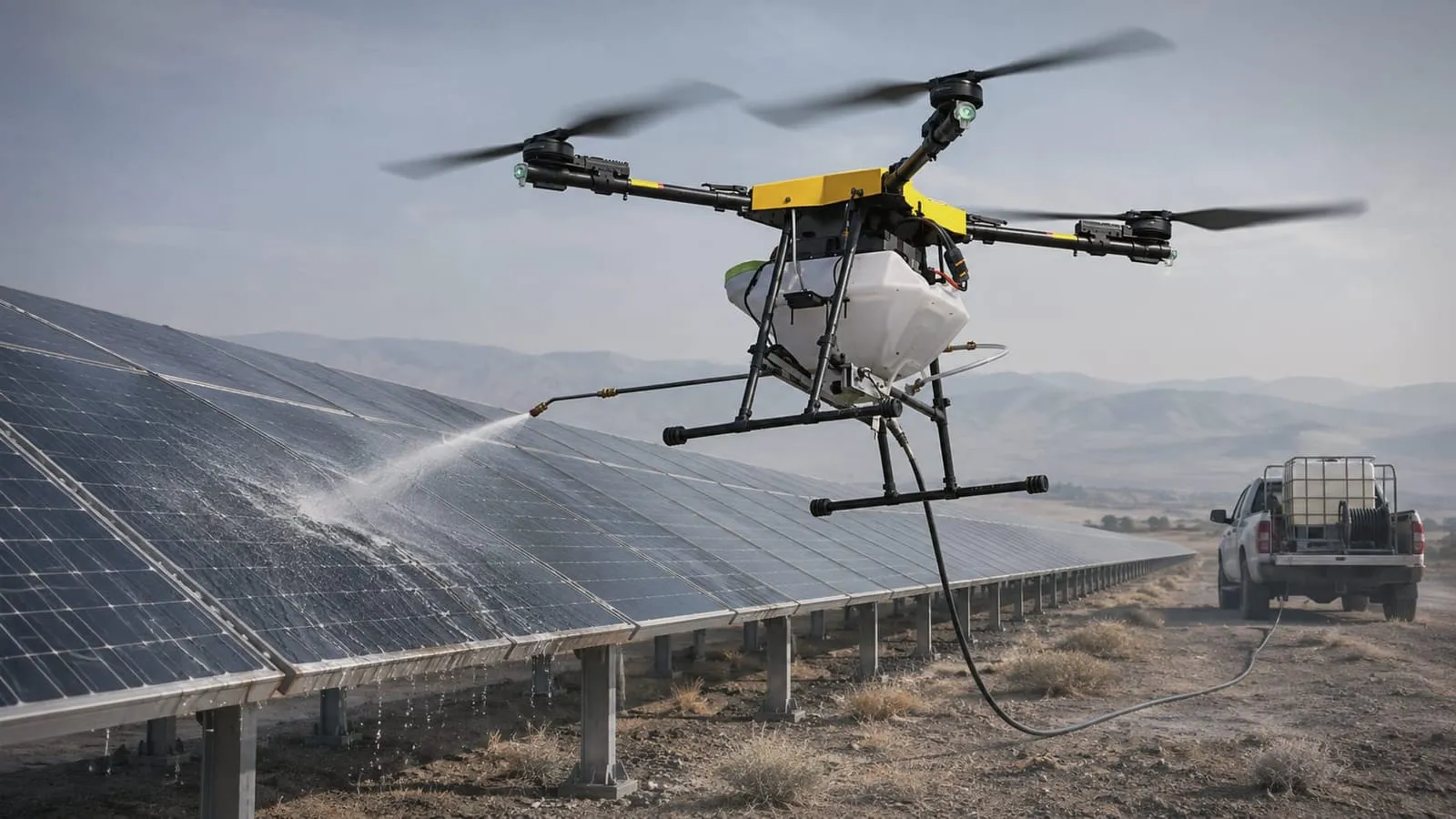
Short answer: in 2026 a solar panel cleaning drone is the right tool when panels are hard or risky to reach — pitched or fragile roofs, carports, and large ground arrays without robot rails. Choose a hose-fed drone with water pumped from a bowser or trailer for big arrays, a tank drone for small, scattered roofs, and keep rail robots for very large, uniform rows cleaned every night.
Which setup for which plant?
| Plant type | Typical constraint | Recommended setup | Why |
|---|---|---|---|
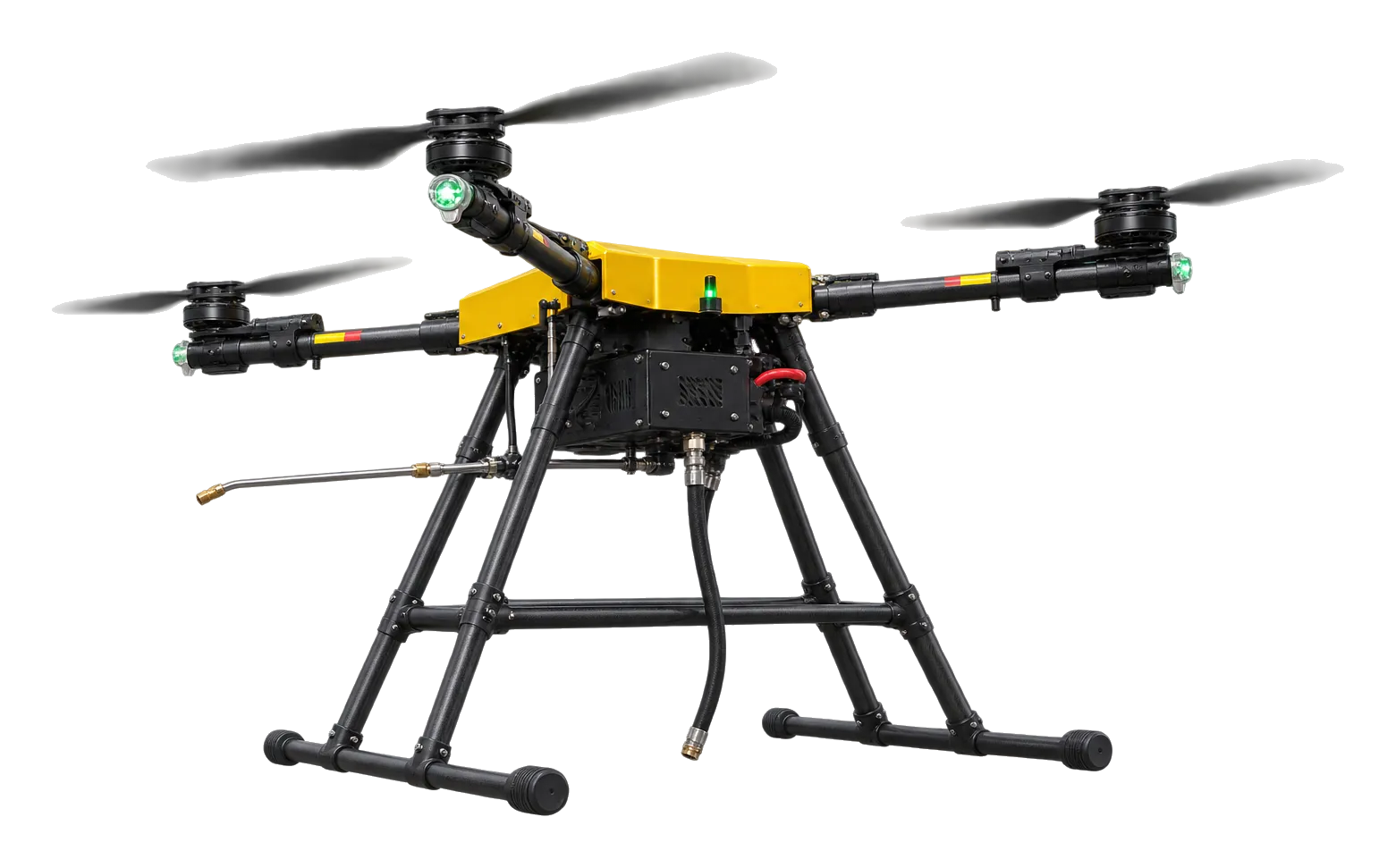
| Residential and small commercial roofs | Fragile or steep roof, no walkways | Tank drone (CW-30T) | No hose over the roof edge, quick set-up |
| Commercial and industrial roofs (≥ 0.5 MW) | Large area, roof access by stairs only | Hose-fed CW-30P with the pump at roof level or ground | Unlimited water, steady pressure |
| Carports and canopies | Cars and people below | Hose-fed drone, cleaning at off-peak hours | No ladders or lifts in the car park |
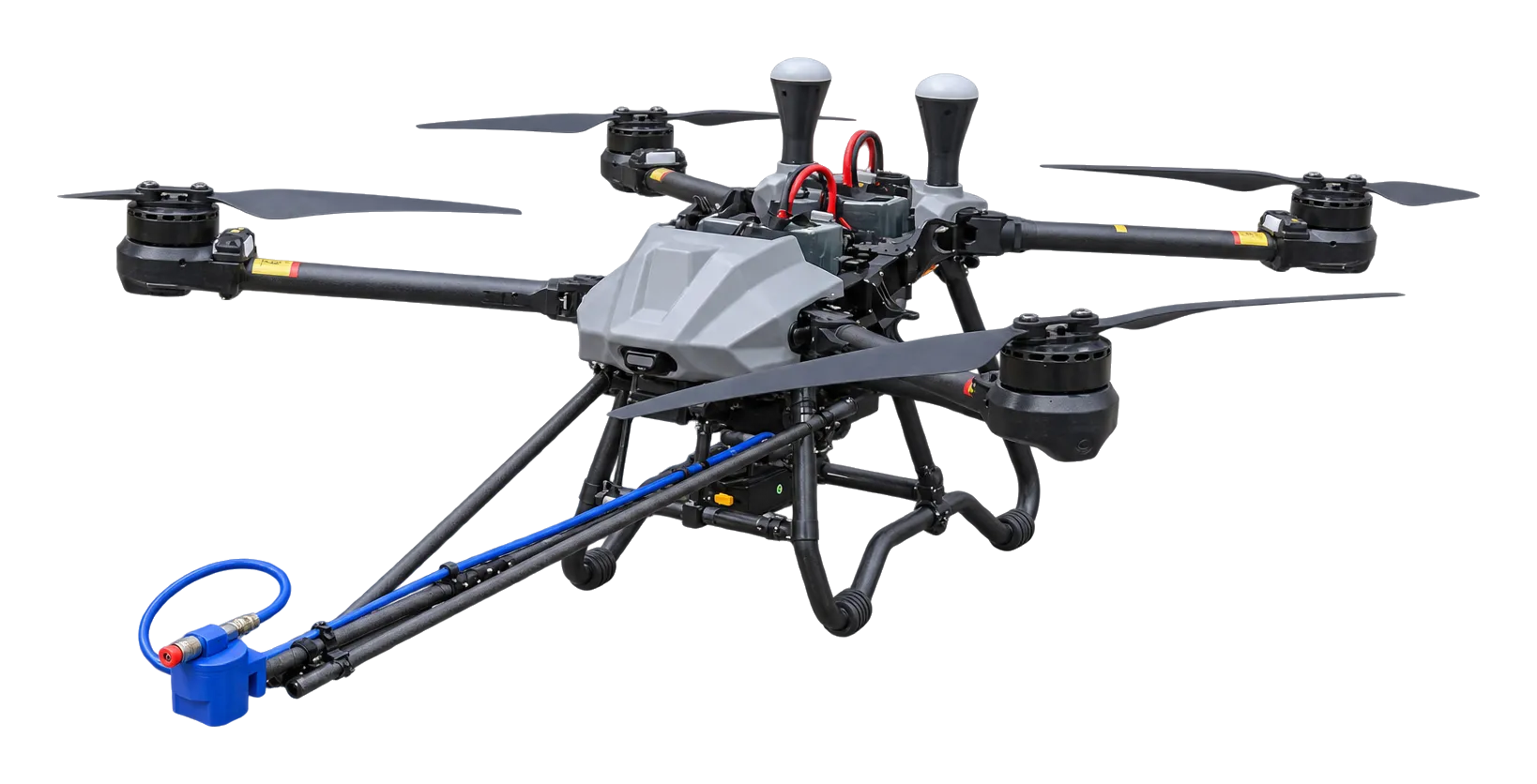
| Utility-scale ground arrays | Distance, dust, little water | Hose-fed drone with water trailer moving along the rows; CW-65 for long sessions on a tether | Fewer refills, long working time |
| Very large, uniform rows | Daily soiling | Rail robots; drone for the edges and blocks without rails | Lowest cost per wash on uniform rows |
Best for dusty, dry regions: a hose-fed drone with a water trailer, because refilling a 30 L tank every few minutes eats the working day.
How dirty do panels get?
Soiling losses vary hugely by region, season and tilt. The IEA’s photovoltaic programme has published a full report on soiling losses that shows why desert and agricultural sites lose more than temperate cities. The practical answer for a buyer: measure. Compare the output of a cleaned test string with an uncleaned one for a few weeks before deciding how often to wash.
Drone, robot or crew?
| Method | Strengths | Limits |
|---|---|---|
| Hand crew with brushes and hoses | Scrubs heavy dirt; no capital cost | Slow, walking on modules, water-hungry, safety on roofs |
| Rail or self-driving robots | Cheap per wash on uniform rows, can run nightly | Hardware on every row; struggles with gaps, slopes and mixed layouts |
| Cleaning drone | No contact with modules, reaches roofs and uneven ground, one machine for many sites | Rinse rather than scrub; needs water on site and a trained pilot |
Many operators combine them: robots on the main blocks, a drone for edges, rooftops and carports, a hand crew twice a year for heavy dirt.
Worked example: water for 1 MW
Example only — assumed figures. A 1 MW ground array made of 550 W modules has about 1,820 panels. At roughly 2.6 m² each, that is about 4,700 m² of glass. If a rinse uses 0.5 L per square metre, one wash needs about 2,400 L — a single water trailer. At an assumed cleaning rate of 600 m² per hour, spraying takes about 8 hours. Change the litres per square metre and the rate to your own test results.
What the site must provide
- Water: a hydrant, tank or bowser close to the rows; filtered or low-mineral water to avoid spots.
- Power: for the booster pump (the CW-30P pump is 5.5 kW at 220 V) and for charging batteries or a tether unit.
- Access: a track along the rows for the water trailer.
- Timing: early morning or evening, when glass is cool; cold water on hot panels is avoided by most module makers.
Clean only where needed
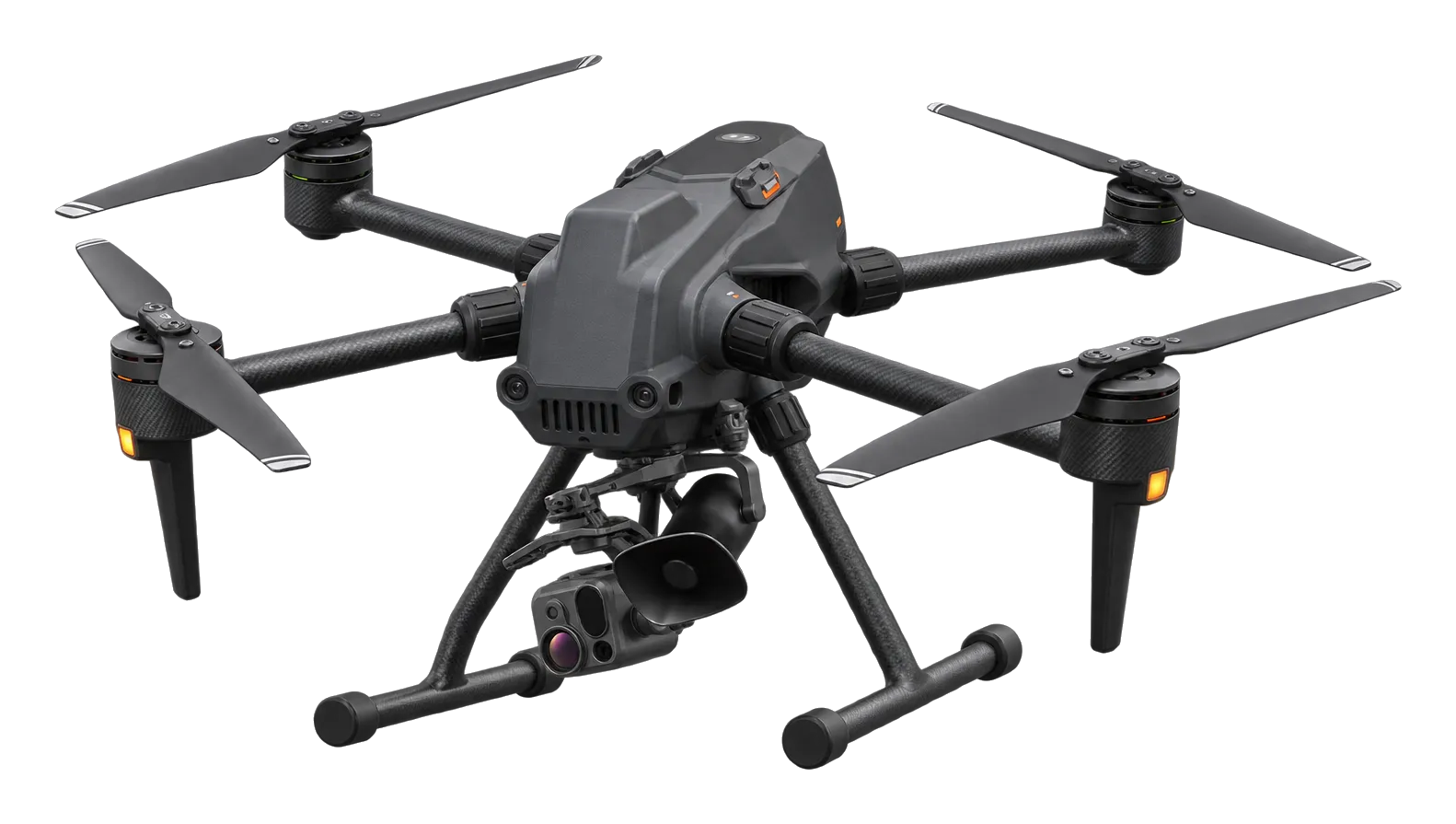
An inspection flight with a thermal camera shows which blocks lose most output. An IS-4 inspection drone with a thermal payload can survey the plant, and the cleaning drone then goes to the blocks that need it. For docked, scheduled surveys, see our guide on drone docks versus crewed flights.
Next step
Tell us the plant type and size, the soiling you see, and the water and power on site through the contact form. We reply with a drone, pump and water setup, and a reference price.
Q & A
Common questions
01Can you clean solar panels with a drone?
Yes. A drone sprays water or a mild cleaning solution and rinses the glass without anyone walking on the array. It works best for regular washing of dust and pollen; caked dirt and bird droppings may need a second pass or a brush.
02How much water does drone cleaning use?
It depends on the soiling and the nozzle. Many crews plan with a fraction of a litre per square metre for a rinse. Measure on a test row before you size the water trailer.
03Is a drone better than a cleaning robot?
On very large, uniform rows, rail robots that clean every night can be cheaper per wash. On rooftops, carports, uneven terrain and mixed sites, a drone is easier to deploy and needs no hardware on each row.
04Can the same drone inspect the panels?
Cleaning drones carry a spray lance, not a thermal camera. Use an inspection drone such as the IS-4 with a thermal payload to find hot spots and soiling patterns, then send the cleaning drone where it is needed.
05What water quality is needed?
Low-mineral or filtered water avoids spots. Many module makers state limits for water hardness and pressure in their cleaning instructions; follow them to keep the warranty.
References
- 1Soiling Losses – Impact on the Performance of Photovoltaic Power Plants — IEA PVPS
- 2Certificated Remote Pilots including Commercial Operators — Federal Aviation Administration
VEXAFLY Aviation Technology Co., Ltd.. VEXAFLY Aviation Technology Co., Ltd. — industrial drone maker in Nanjing. Our application engineers write and check these pages and configure inspection, cleaning, lift and fire-response systems for project buyers. About VEXAFLY