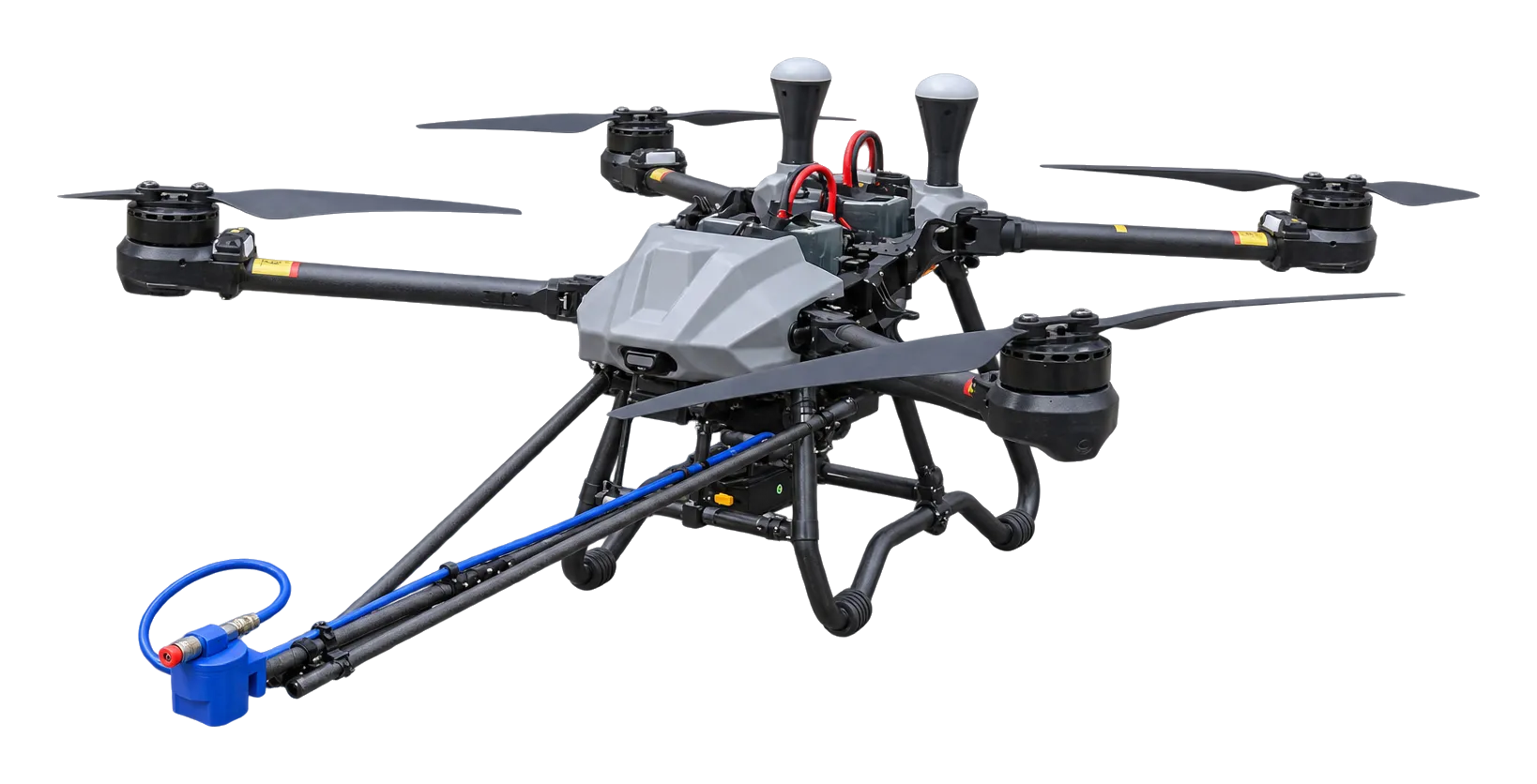
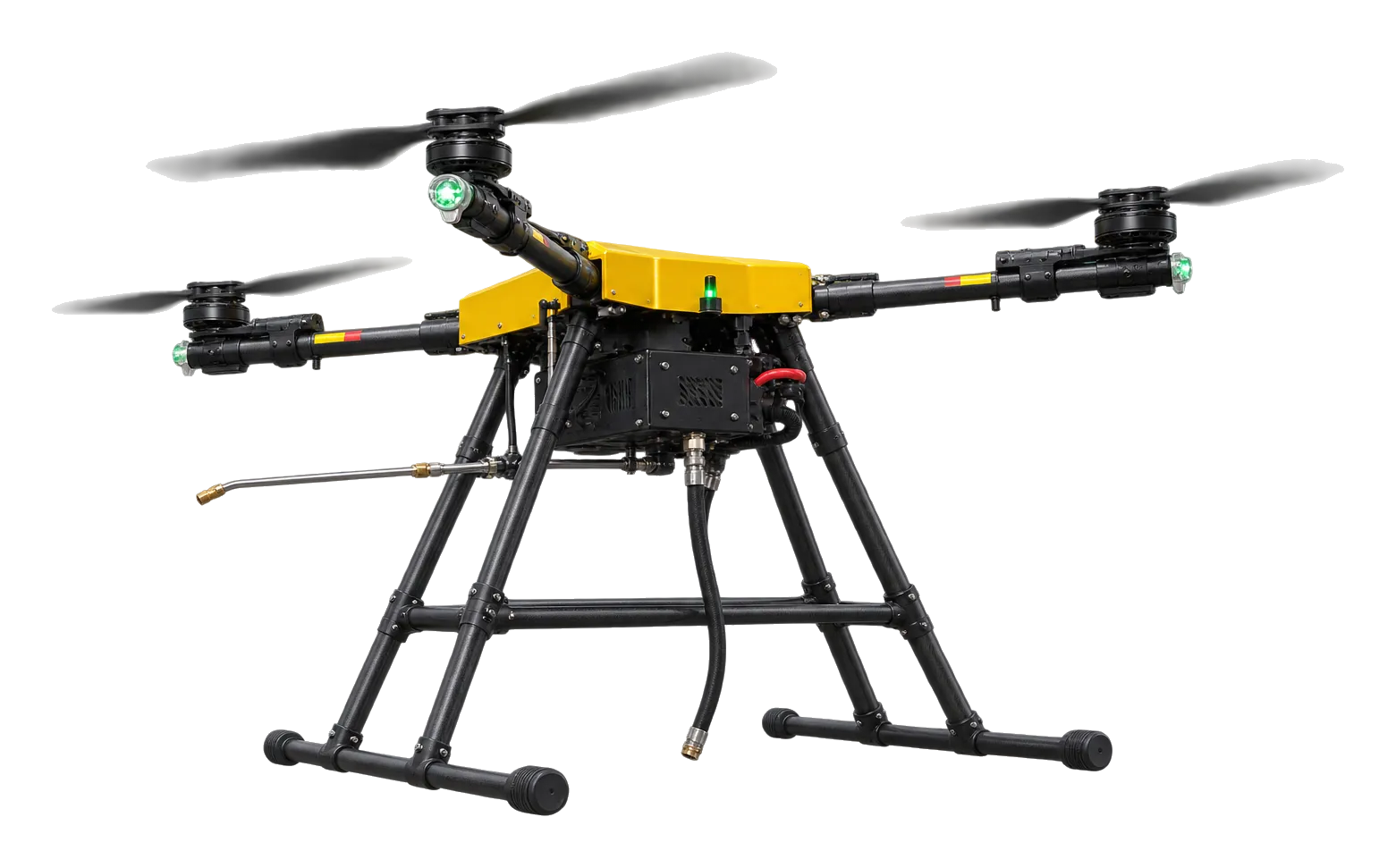
Cleaning
Drone Window Cleaning Safety in 2026: Exclusion Zones, Wind, Crew and Rules
Drone window cleaning safety in 2026: a risk register, exclusion-zone sizing, wind limits, crew roles, US, EU and UK rules and a pre-job checklist.
- Author
- VEXAFLY Aviation Technology Co., Ltd.
- Scope
- Cleaning
- Published
- Length
- 5 min read · 10 sources
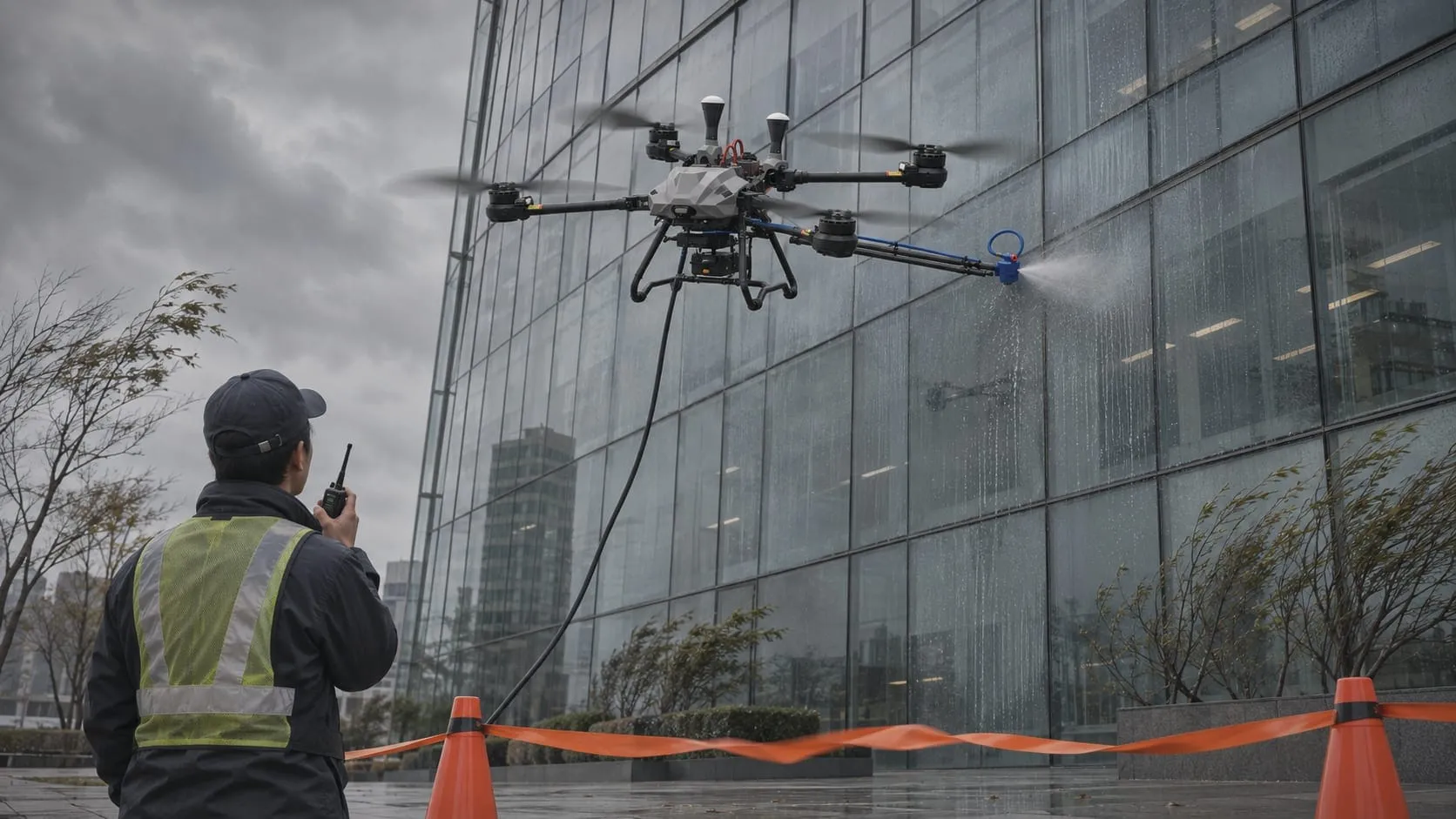
Short answer: in 2026, drone window cleaning safety comes from the ground plan more than from the aircraft: a risk register, an exclusion zone sized to the working height, wind limits set below the aircraft rating, and a crew with named roles. In the US the CW-65 (55.8 kg with battery, 111 kg maximum take-off weight) is above the 55 lb Part 107 line, so check Section 44807 and your local rules before quoting a job.
What can go wrong on a drone window-cleaning job?
Our planning list, not a regulation:
| Hazard | Cause | Control | Who owns it |
|---|---|---|---|
| Aircraft or hose falls on people | Fault, snagged hose, gust | Cordon sized to working height; no flight over people; tether power | Site supervisor |
| Gusts near corners and roof edges | Wind speeds up around corners and over roofs | Your own wind limit; gust readings at working height | Pilot |
| Position loss near steel and glass | GNSS multipath, compass interference, mirrored glass | Hover test at low height before climbing; manual control ready | Pilot |
| Hose pull | A charged hose pulls differently as the aircraft climbs | Hose handler pays out and takes in; tether | Hose operator |
| Overspray | Mist on cars, entrances, air intakes | Work outside opening hours; cover or move cars | Site supervisor |
| Glass or seal damage | Pressure close to seals; coated glass in sun | Keep stand-off; moderate pressure at seals | Pilot |
| Ice | Wet glass and hose near 0 °C | Stop when it freezes | Site supervisor |
How big should the exclusion zone be?
Example (planning assumption, not a rule; your authority’s risk assessment sets the real figure): the cordon radius from the facade line equals the working height plus the spray reach. The CW-65 sprays 3–6 m, so use 6 m.
| Working height | Radius | Closed strip along a 60 m facade |
|---|---|---|
| 40 m | 40 + 6 = 46 m | 60 × 46 = 2,760 m² |
| 20 m | 20 + 6 = 26 m | 60 × 26 = 1,560 m² |
Strips this size are why entrance facades are best scheduled outside opening hours. In the US, 107.39 bars flight over people unless they are directly participating, under a covered structure or the aircraft meets an operations-over-people category.
How much wind is too much near a tower?
| Force (Beaufort) | Wind | Use here |
|---|---|---|
| Up to 4 | 6–8 m/s | Suggested planning ceiling until you hold gust logs for the building |
| 6 | 11–14 m/s | CW-30 rating (data sheet level 6; the catalogue says 7, we plan with 6) |
| 7 | 14–17 m/s | CW-65 rating, a limit and not a target |
Wind near tall buildings is gustier than at street level and accelerates around corners. Hose and tether handling is in our pump and hose guide.
Who does what on the ground?
| Role | Does | Must not |
|---|---|---|
| Pilot | Flies, calls go/no-go | Handle the hose |
| Hose and pump operator | Pays out the hose, watches pressure and flow | Leave the pump |
| Visual observer | Watches the cordon, sky and people | Do other work |
| Site supervisor | Permits, risk assessment, closures, neighbours | Fly |
Which rules apply where?
| Where | What to check |
|---|---|
| US | Part 107 covers aircraft under 55 lb at take-off; heavier needs a Section 44807 exemption. 107.51 allows up to 400 ft above a structure within 400 ft of it. 107.39 limits flight over people. |
| EU | The specific category covers aircraft of 25 kg or more and flights that drop material: an authorisation, a standard scenario declaration or an operator certificate. |
| UK | The specific category needs an operational authorisation through a PDRA or UK SORA. |
| New York City | Admin Code §10-126(c) restricts take-off and landing to designated places; the city’s buildings department says it applies to drones. |
A US buyer of any foreign-built aircraft should ask three questions: is the exact model on the FCC Covered List, does the Section 232 duty apply, and does the FAA need to approve an aircraft of 55 lb or more? The customs broker and the FAA confirm each answer. Our guides to importing industrial drones from China and aircraft over 55 pounds set out the checks.
Drone or rope access: what changes?
OSHA limits rope descent systems to 300 ft (91 m) above grade. The drone takes the person off the facade, with the aircraft, hose and cordon in their place; our drone versus rope access guide compares the two.
What goes on the pre-job checklist?
- Aviation permissions and insurance in hand; take-off weight checked with battery, hose and water.
- Risk assessment signed; cordon plotted on a site plan.
- City closure permit for the pavement or lane, if needed.
- Gust readings at working height; go/no-go figure agreed.
- Take-off and landing area clear of trees, cables and people.
- Hose, pump pressure and fittings checked; safety data sheet for any agent on site.
- Briefing: pilot, hose operator, observer, supervisor; stop signal agreed.
- Cars, entrances and air intakes protected.
Which setup fits which building?
- Best for towers to 100 m: CW-65, rated level 7 (14–17 m/s), tethered so no battery landings over the cordon.
- Best for low-rise streets: CW-30T, 2.15 m unfolded span, no hose across the pavement.
- Best for very tall or recessed glass: a building maintenance unit or rope access; a drone is not the answer above its rated height.
Next step
Send the building height, facade length and street layout, and we draft the cordon and crew plan with you. Train the crew first: see our pilot training guide.
Q & A
Common questions
01Does drone window washing work?
Yes, for regular washing of glass: the aircraft sprays and rinses from a stand-off distance with nobody on a rope. It does not scrub. Safety depends on the cordon, wind limit and crew as much as on the aircraft.
02How safe is skyscraper window cleaning?
Falls to a lower level caused 389 of the 1,034 US construction deaths in 2024 (OSHA, citing BLS data). A drone removes the person from the facade but adds an aircraft and a hose above a cordon, which is why the exclusion zone and tether matter.
03Can the drone fly over people?
In the US, Part 107.39 bars flight over people unless they are directly participating, under a covered structure or the aircraft meets an operations-over-people category. Plan the cordon so nobody is below the aircraft or hose.
04Do I need a city permit?
Pavement or lane closures usually need one, and some cities restrict take-off and landing: New York City does. Apply early and ask your aviation authority about the flight itself.
05What should the crew do if the wind rises mid-job?
Stop spraying and land at the pre-agreed point. Write the stop criteria into your procedure and rehearse them; we cover this in operator training.
References
- 114 CFR 107.39 Operation over human beings — eCFR
- 214 CFR 107.51 Operating limitations for small unmanned aircraft — eCFR
- 3Section 44807: Special Authority for Certain Unmanned Aircraft Systems — FAA
- 4Civil Drones — Specific Category — EASA
- 5Specific Category overview — UK Civil Aviation Authority
- 6Beaufort wind force scale — Met Office
- 71910.27 Scaffolds and rope descent systems — OSHA
- 8Why does the final rule limit RDS use to 300 feet above grade? — OSHA
- 9OSHA’s Fall Prevention Campaign — OSHA
- 10Local Law 102 of 2020 report: unmanned aircraft systems for façade inspections — NYC Department of Buildings
VEXAFLY Aviation Technology Co., Ltd.. VEXAFLY Aviation Technology Co., Ltd. — industrial drone maker in Nanjing. Our application engineers write and check these pages and configure inspection, cleaning, lift and fire-response systems for project buyers. About VEXAFLY