Cleaning
How Often to Clean Solar Panels: Intervals by Climate and Soiling Rate in 2026
How often to clean solar panels in 2026: measured soiling rates, the rain rule, an interval table by climate and a formula with a 1 MW worked example.
- Author
- VEXAFLY Aviation Technology Co., Ltd.
- Scope
- Cleaning
- Published
- Length
- 4 min read · 6 sources
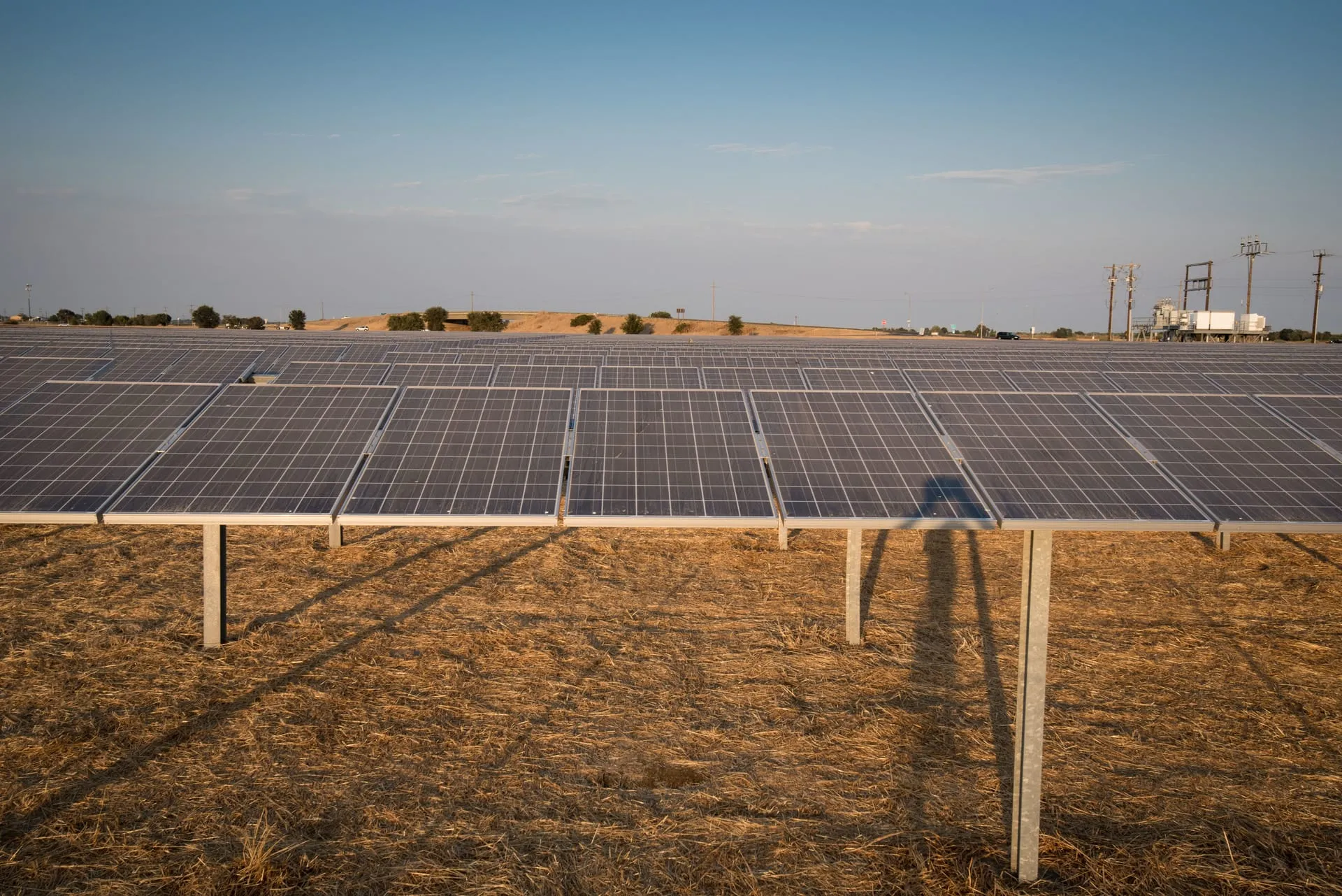
Short answer: in 2026 the answer to how often to clean solar panels depends on the site. A desert plant that soils at about 0.30 % a day may justify a wash every 50–100 days, a suburban or urban site every 60–120 days and rural farmland every 80–170 days. A wet temperate roof may need one only after dry spells. Measure the loss on a cleaned reference string, then use the formula below. Homes usually need one or two washes a year.
Which interval should you test first?
Starting intervals come from the formula below, assuming 1,700 kWh per kWp a year, US$50 per MWh and a wash cost of US$800–3,534 per MW. They are places to start testing, not rules.
| Site | Measured soiling rate | Rain resets it? | Interval to test | Method |
|---|---|---|---|---|
| Desert plant | 0.30 % a day | Rarely | 50–100 days | Drone, robot or crew, by cost |
| Suburban, urban or road-side | 0.19–0.20 % a day (Central Valley) | Partly | 60–120 days | Drone or crew |
| Rural farmland | 0.11 % a day (Central Valley) | Partly | 80–170 days; wash after harvest and dry spells | Drone or crew |
| Coastal | No rate in these data | Depends | Inspect first | Reference string |
| Rainy temperate | Low | Yes | Wash after inspection | Hand crew or drone |
How fast do panels get dirty?
The Kimber model data in pvlib list daily loss rates: Central Valley rural 0.0011, suburban 0.0019 and urban, highway or airport 0.0020; Northern California 0.0011, 0.0010 and 0.0016; Southern California 0, 0.0016 and 0.0019; desert 0.0030 in every environment. Sandia’s PVPMC notes that sites near fields, roads or industry soil at very different rates, even between sub-arrays of one plant. The IEA PVPS programme estimates global soiling losses at 3–5 % of annual PV energy.
Does rain clean solar panels?
In the Kimber model, rain above 6 mm in a day cleans the panels, with a 14-day grace period, and soiling is capped at 30 %. First Solar says rain is enough for lighter soiling on many installations. Sticky soiling such as droppings or a pollen film needs a wash.
Example: a 1 MW desert plant
Assumptions: 1 MW, 1,700 kWh per kWp a year, or 4.66 MWh a day; soiling grows in a straight line with no rain; energy worth US$50 per MWh (double the dollars at US$100).
| Rate | 30 days | 60 days | 90 days |
|---|---|---|---|
| Desert 0.30 % a day | 9 % loss at the end; 6.5 MWh, US$325 | 18 %; 25.6 MWh, US$1,279 | 27 %; 57.2 MWh, US$2,861 |
| Urban 0.20 % a day | 6 %; 4.3 MWh, US$217 | 12 %; 17.0 MWh, US$852 | 18 %; 38.1 MWh, US$1,907 |
| Rural 0.11 % a day | 3.3 %; 2.4 MWh, US$119 | 6.6 %; 9.4 MWh, US$469 | 9.9 %; 21.0 MWh, US$1,049 |
What interval does the maths give?
Cost per day is C ÷ T for the wash plus E·r·p·T ÷ 2 for the lost energy, so the lowest total is at T = √(2C ÷ (E·r·p)). Here C is the cost per wash per MW, E the MWh a day, r the daily soiling rate and p the price per MWh. For the desert plant E·r·p = 4.66 × 0.003 × 50 = 0.70 US$ per day squared.
- Contract wash at US$3,534 per MW (US$200 + US$2.00 for each of 1,667 panels, one US operator’s published rate): √(7,068 ÷ 0.70) = about 101 days; at US$100 per MWh, 71 days.
- Own crew at an assumed US$800 per MW: about 48 days; at US$100 per MWh, 34 days.
- Rural 0.11 % a day at US$3,534 and US$50: about 166 days.
The formula assumes no rain. Rain above 6 mm resets the clock and stretches the interval.
When does a drone pay compared with a robot or a hand crew?
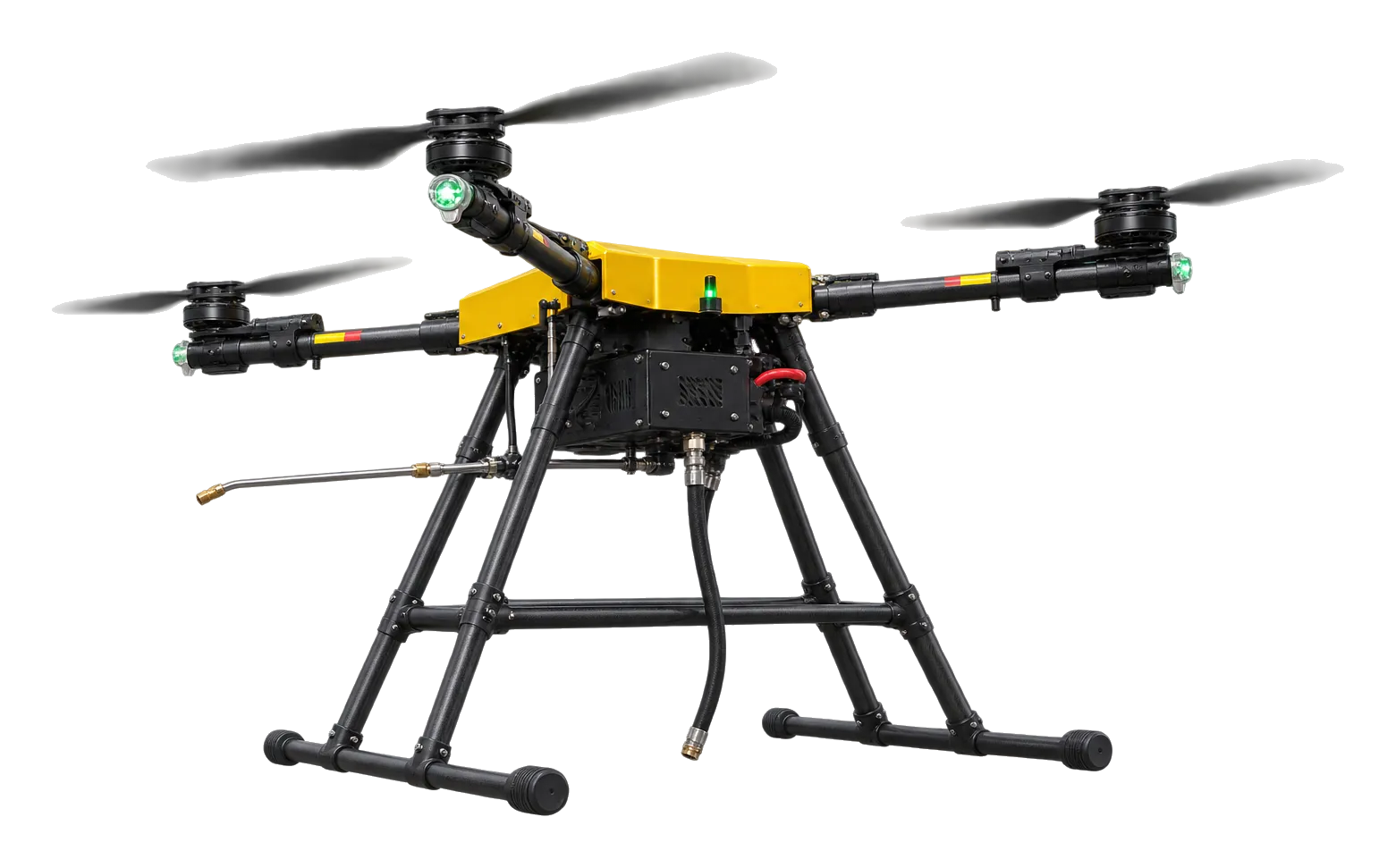
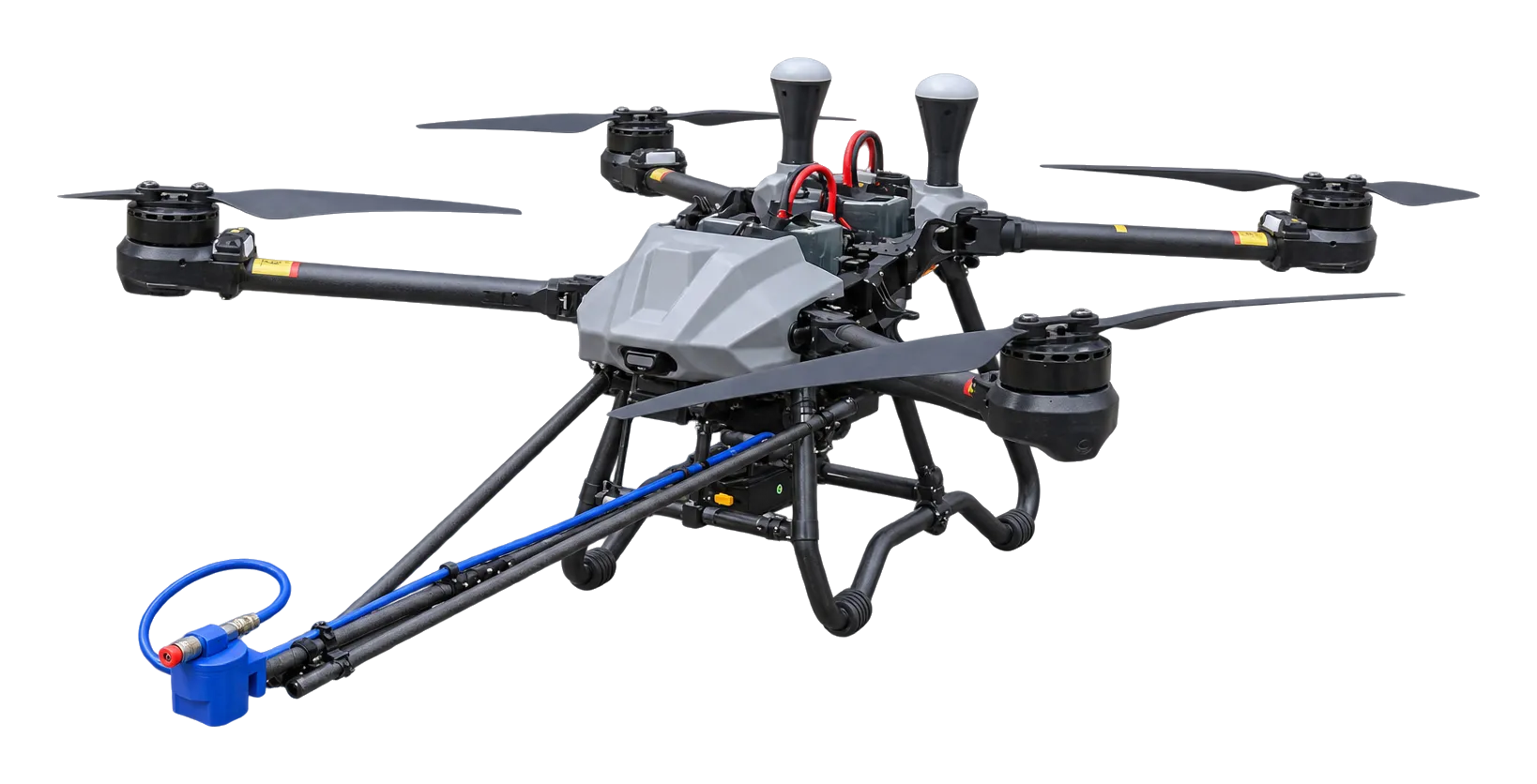
The cost per wash drives the interval, so the cheapest method is washed most often. Rail robots suit large, uniform rows. Hand crews are slow. A drone suits rooftops, carports and mixed layouts where robots cannot run; the CW-30P lance tilts to 45° for panel slope. See robot vs drone and what a drone costs for solar.
What does the module maker say?
First Solar asks for cleaning at dusk to dawn, water at no more than 35 bar at the nozzle and reverse-osmosis water. It says motorised or automated cleaning needs its approval for warranty. Check the module maker’s cleaning guideline before you choose a method.
Homeowners: the short version
Enphase advises cleaning at least once or twice a year. Check after dust storms or long dry spells, and compare output with the same month a year earlier.
Which interval is best for which site?
- Best for desert utility plants: test a one to three-month interval; measured rate 0.30 % a day.
- Best for farmland sites: wash after harvest and dry spells; 0.11–0.19 % a day measured in California.
- Best for rainy temperate sites: rely on rain above 6 mm and wash only after inspection.
- Best for drones: rooftops, carports and mixed layouts where robots cannot run, with the CW-30P.
Next step
Send the plant size, the site and your yearly yield. We help you set a test interval and size the water; see the water consumption guide, the solar panel cleaning drone guide, the CW-30P and our pages for Phoenix and Chile.
Q & A
Common questions
01How often should solar panels be cleaned?
Test an interval from your soiling rate: roughly every 50–100 days in a desert, 60–120 days at a suburban or urban site and 80–170 days on rural farmland, under the assumptions in the table. Homes often need one or two washes a year.
02Does rain clean solar panels?
Often, for light soiling. In the Kimber model more than 6 mm of rain in a day cleans the panels. Bird droppings, pollen films and dust that sets in humid air are not washed off by rain.
03How do I know when my panels need cleaning?
Compare the output of a cleaned reference string with a dirty one, or use soiling sensors. The IEA PVPS programme notes that soiling varies across a plant and that several sensors help.
04Is solar panel cleaning worth it?
It is when the lost energy, valued at your price, exceeds the cost of a wash. The interval formula balances the two, and the example shows the size of the loss.
05Do I really need to clean my solar panels?
Not always. First Solar says rain is enough for lighter soiling on many installations. Dusty, dry or farmland sites lose more and may pay back a wash.
06Desert, farmland or coastal: which needs more?
Deserts soil fastest in the measured data. Farmland is lower but spikes after harvest and dry spells. Coastal sites have no measured rate here, so inspect them first.
References
- 1Soiling Losses – Impact on the Performance of Photovoltaic Power Plants — IEA PVPS
- 2pvlib.soiling.kimber (Kimber soiling model) — pvlib python
- 3Soiling Losses — Sandia National Laboratories (PVPMC)
- 4FS-Series PV Module Cleaning Guidelines (PD-5-804) — First Solar
- 5Solar panel cleaning and maintenance guide — Enphase
- 6Commercial Solar Panel Cleaning (prices) — DronePower1
VEXAFLY Aviation Technology Co., Ltd.. VEXAFLY Aviation Technology Co., Ltd. — industrial drone maker in Nanjing. Our application engineers write and check these pages and configure inspection, cleaning, lift and fire-response systems for project buyers. About VEXAFLY