Market · Site conditions
Solar Panel Cleaning in Chile 2026: Robot, Drone or Crew, and What DGAC Allows
Solar panel cleaning in Chile in 2026: robot, drone or crew by array type, the DGAC 9 kg rule in populated areas, desert water limits and mines at altitude.
- Author
- VEXAFLY Aviation Technology Co., Ltd.
- Scope
- Market · Site conditions
- Published
- Length
- 4 min read · 5 sources
Short answer: solar panel cleaning in Chile is a choice between robots, drones and crews by array type, and a weight question for the authority. Robots fit uniform rows built for them, a hose-fed drone fits mixed layouts, rooftops and blocks without rails, and DGAC’s DAN 151 limits populated-area operations to 9 kg, so a 60 kg cleaning drone needs a separate answer on which rule and authorisation apply. In 2026 water, not the aircraft, is the first constraint in the north.
Chile site conditions at a glance
| Condition | Figure | What it means for equipment |
|---|---|---|
| DAN 151 weight | Populated-area operations: maximum take-off weight up to 9 kg including accessories, not counting an emergency parachute (DGAC DAN 151 Ed. 3, 27 May 2024) | Small inspection aircraft only; heavy aircraft need a separate answer |
| DAN 151 process | Prior DGAC authorisation, registration card and pilot credential; the aircraft registered before operations (same document) | Start the paperwork before the aircraft arrives |
| DAN 151 limits | Visual line of sight up to 500 m and 120 m (400 ft); no dropping of objects and no night flights without special authorisation (same document) | Long plant routes need authorisation |
| Draft Ed. 4 | A draft of 24 March 2026, for consultation, adds severity categories S1–S5 (DGAC); its status was not checked | Check which edition is in force |
| Grid | January–October 2026: 72,041 GWh generated, 33,071 GWh from non-conventional renewables (about 46 %); 41,408 MW maximum gross capacity (Coordinador, counters read on 26 November 2026) | A renewables-heavy grid with many plants to maintain |
| Solar | 2024: 10,898 MW installed, 29 % of capacity; 2023 generation 18,441 GWh, 20 % (IRENA) | Plant count and size are large |
| Copper | About 5,300 kt of mine output in 2024 (estimate), around 23 % of world output (USGS) | Mine sites are the other big drone market |
Facts checked on 26 November 2026. We found no sourced Atacama soiling-loss or water-scarcity figure, so none is quoted.
Robot, drone or crew: which method for which array?
| Array | Where robots fit | Where a drone fits | Notes |
|---|---|---|---|
| Large utility plant, uniform rows | Rows built for robots | Edges and blocks without rails | Compare cost per wash on a test block |
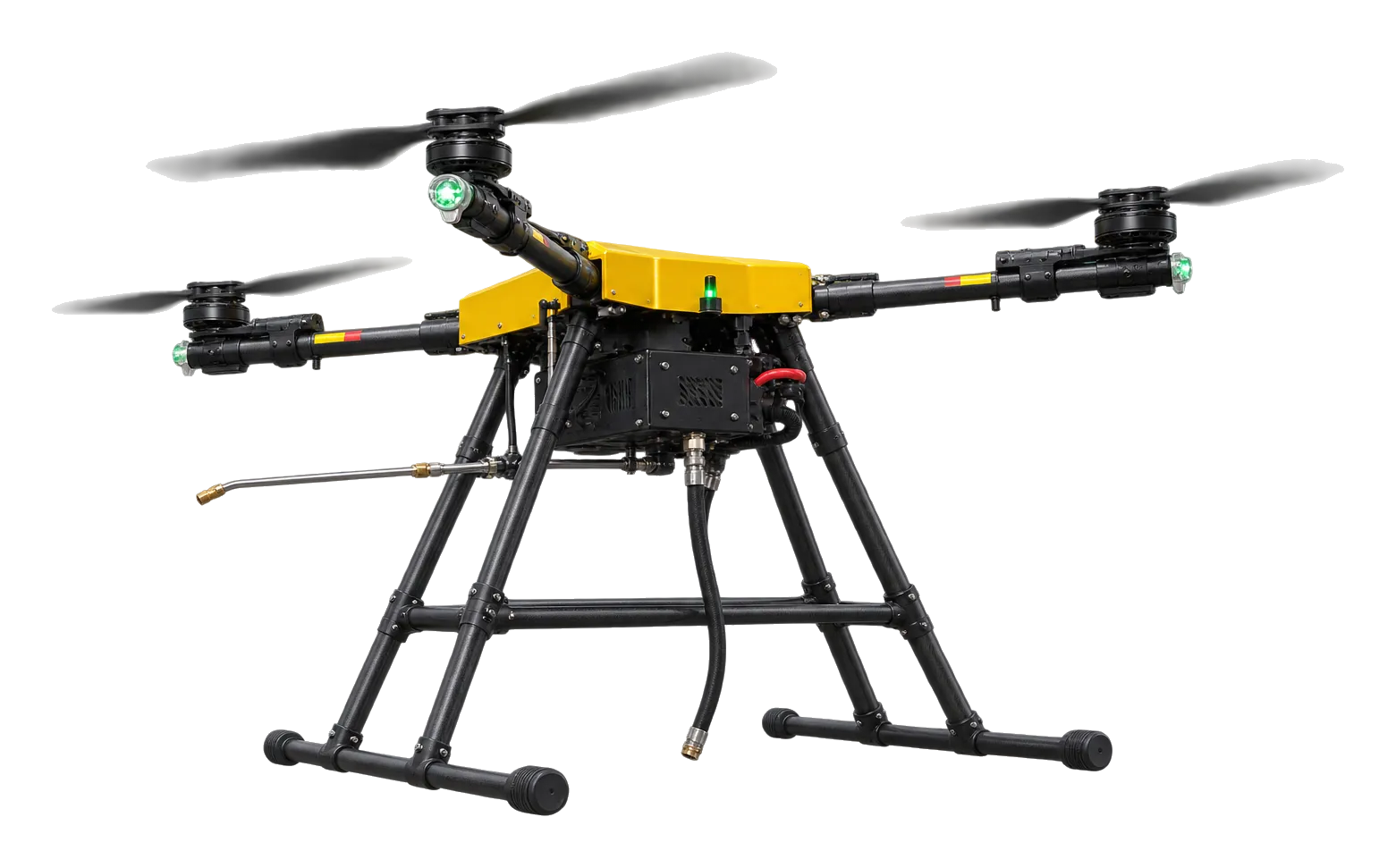
| Utility plant with mixed layout or uneven ground | Limited | CW-30P hose-fed from a water truck | Check module maker’s pressure limit |
| Mine camps, warehouses, carports | None | CW-30P or CW-30T tank drone | Roofs and canopies are unsafe to walk |
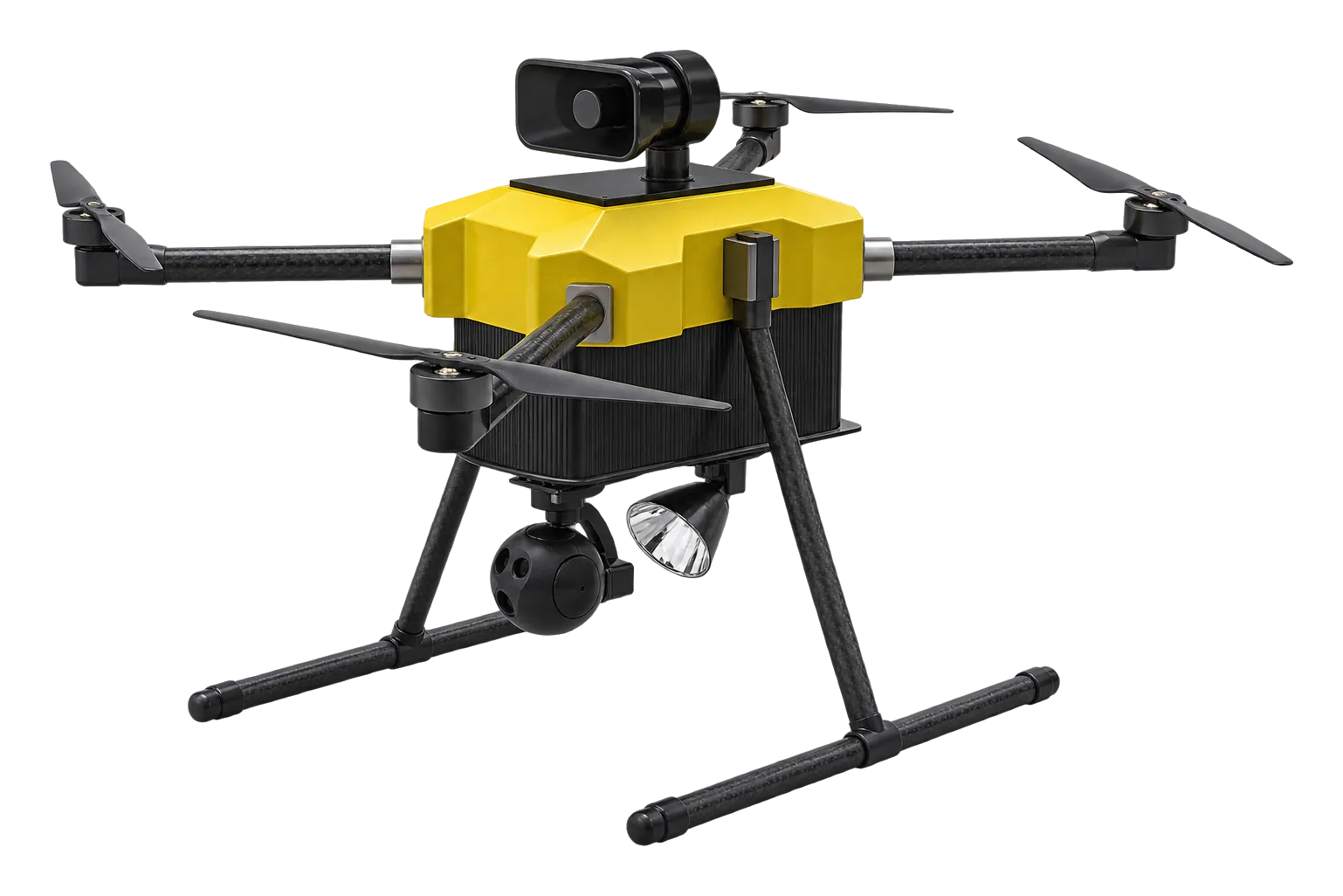
| Thermal survey of a plant | – | IS-9, IP67, up to 120 min | Finds hot spots before washing |
- Best for mixed utility layouts: a hose-fed CW-30P with a 45° spray angle and a ground pump of 5.5 kW.
- Best for plant-wide thermal surveys: the IS-9, up to 120 min and a 65 km maximum range in the brochure.
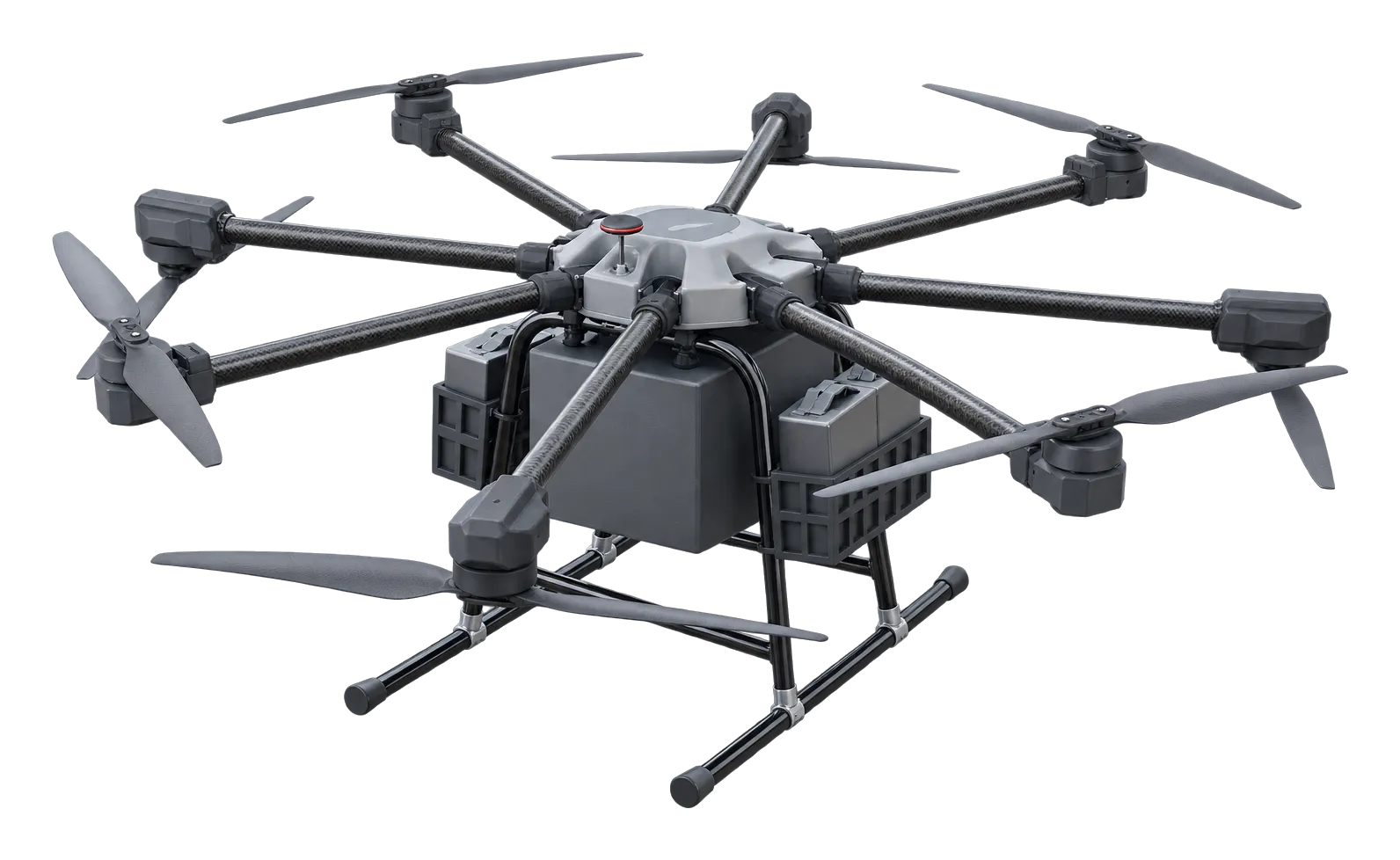
- Best for mine-site supply at altitude: the HL-150, 120 kg rated, 44.6 km unloaded.
For the method comparison read solar cleaning robot vs drone.
What does DGAC allow?
DAN 151 is about operations in populated areas, with a 9 kg ceiling. A desert plant is usually unpopulated, but a heavy aircraft still needs DGAC’s answer: ask which rule and authorisation apply to an aircraft of that weight over an unpopulated plant. The draft Edition 4 of March 2026 adds severity categories and was not confirmed as in force. Ask DGAC about spraying too: DAN 151 says objects may not be dropped without special authorisation, and whether a liquid jet counts is DGAC’s call.
How do water and dust shape the choice?
Water is scarce at many northern sites, so plan litres per MW with the plant before you pick a method. A hose-fed drone takes water from a truck or tank: the CW-30P pump delivers up to 32 L/min, so the nozzle open for an hour would use at most 1,920 L, and real use is lower. Dust is the reason to wash; how often is a measurement, not a guess: see how often to clean solar panels and cleaning drone water consumption. The pump’s 28 MPa maximum is far above module limits; set pressure at the nozzle.
Which drones work at Andean mine sites?
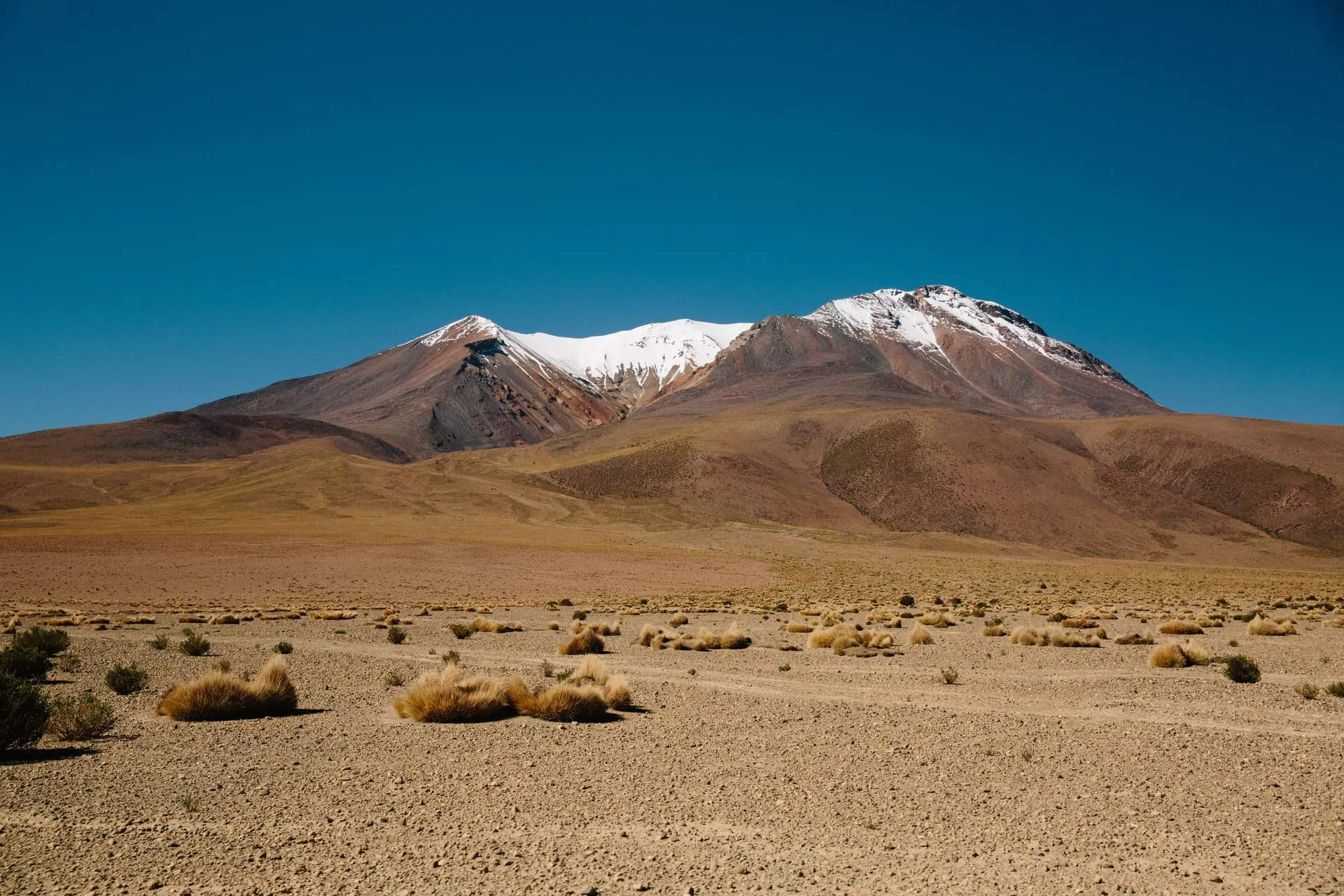
Use the NASA standard atmosphere figures: air density is 0.865 kg/m³ at 3,500 m (29 % below sea level) and 0.778 kg/m³ at 4,500 m (36 % below), against 1.226 kg/m³ at sea level. Thrust at a given speed scales with density, so heavy aircraft such as the HL-150 need a reserve and a load plan for your take-off altitude. The IS-9 is rated IP67 and −40 °C to 50 °C. See mining inspection drones.
Example: which aircraft stays under the 9 kg line?
Example (illustrative; the quotation confirms whether the 7.3 kg figure includes the battery). The IS-9 airframe is 7.3 kg. With a 1 kg camera it is about 8.3 kg, under the 9 kg line. With a 3 kg sensor it is about 10.3 kg, over it. A CW-30P at 60 kg is 60 ÷ 9 ≈ 6.7 times the limit, so a cleaning drone is never a 9 kg aircraft.
What about import and documents?
Use a customs broker and keep the product documents, serial numbers and battery papers ready for DGAC. See drones in Peru for the Andean altitude table and drones in Argentina for the neighbouring rules.
Next step
Send the array type, the water source and your altitude. We reply with the method that fits and the documents DGAC may ask for.
Q & A
Common questions
01Can drones clean solar panels in Chile?
Technically yes: a hose-fed CW-30P washes panels from a ground pump at up to about 50 m. The rule question comes first, because the aircraft weighs 60 kg and DAN 151 limits populated-area operations to 9 kg. Ask DGAC which rule and authorisation apply at your plant.
02Drone, robot or manual cleaning for a desert PV plant?
Robots suit uniform rows built for them; a drone suits mixed layouts, rooftops and blocks without rails; crews are the baseline and the most water-hungry. Test each method on one block and compare cost, water and output gain.
03What does DGAC require to fly a drone in Chile?
For populated areas DAN 151 requires prior DGAC authorisation, a registration card, a pilot credential and an aircraft registered before operations. Flights stay within visual line of sight up to 500 m and 120 m height, and dropping objects or flying at night needs special authorisation.
04How much water does panel cleaning use?
It depends on the soiling, the nozzle and how long it is open. As an upper bound, the CW-30P pump delivers up to 32 L/min, so 10 minutes of spraying is at most 320 L. We found no sourced Chile figure, so plan litres per MW with the plant.
05Which drones work at Andean mine sites?
Sealed aircraft with altitude reserve: the IS-9 is rated IP67 and −40 °C to 50 °C, and the HL-150 moves loads of up to 120 kg rated. At 4,500 m air density is about 36 % below sea level, so ask for a load plan at your take-off altitude.
References
- 1DAN 151: Operaciones de RPAS en áreas pobladas (Ed. 3) — Dirección General de Aeronáutica Civil
- 2Renewable energy statistical profile: Chile — IRENA
- 3Coordinador Eléctrico Nacional: system statistics — Coordinador Eléctrico Nacional
- 4Mineral Commodity Summaries 2025: Copper — U.S. Geological Survey
- 5Earth Atmosphere Model (metric units) — NASA Glenn Research Center
VEXAFLY Aviation Technology Co., Ltd.. VEXAFLY Aviation Technology Co., Ltd. — industrial drone maker in Nanjing. Our application engineers write and check these pages and configure inspection, cleaning, lift and fire-response systems for project buyers. About VEXAFLY