Market · Site conditions
Drones in Brazil 2026: RBAC 100 Categories, Crops, Solar and Remote Logistics
Drones in Brazil in 2026: where industrial aircraft sit under ANAC’s RBAC 100, insurance and approvals, soy and cane spraying, solar and river logistics.
- Author
- VEXAFLY Aviation Technology Co., Ltd.
- Scope
- Market · Site conditions
- Published
- Length
- 5 min read · 4 sources

Short answer: in 2026 drones in Brazil are sorted by ANAC’s new RBAC 100. Aircraft up to 25 kg flown within sight, under 120 m and away from third parties fit the open category; heavier aircraft, such as a 254 kg spray drone or a 60 kg cleaning drone, belong to the specific category, which needs ANAC operational authorisation and an authorised UAS design. Crops and solar give the work; the rules decide how you start.
Brazil site conditions at a glance
| Condition | Figure | What it means for equipment |
|---|---|---|
| New rule | RBAC 100 Emenda 00 was approved by Resolução 805 of 15 June 2026 and issued on 16 June 2026 (ANAC); the effective date was not checked | Check whether it is in force for your operation |
| Open category | Flight weight up to 25 kg, visual or extended visual line of sight, up to 120 m above ground, away from third parties, with a risk assessment (RBAC 100.5) | Inspection aircraft can start here |
| Specific category | ANAC operational authorisation; the UAS design must be authorised by ANAC unless type-certificated (100.105) | Heavy aircraft need technical documentation from the maker |
| Insurance | Third-party cover required, except for state entities and for applying agrochemicals, fertilisers or seeds over uninhabited areas within sight and up to 120 m (100.37) | Spraying is exempt; cleaning and lifting are not |
| Other agencies | Anatel, DECEA, the Ministry of Defence and the Ministry of Agriculture have rules that also apply | A drone job can involve several approvals |
| Airspace requests | DECEA’s SARPAS system | Request airspace before each flight |
| Crops | 2026/27 grain area 85.3 million ha; soybean 49.3 million ha (181.6 Mt); maize 23.7 million ha (Conab) | Scale favours large tanks and wide swaths |
| Solar | 2024: 53,116 MW installed solar, 22 % of capacity; wind 32,959 MW; renewables 87 % (IRENA) | Distributed and utility plants need cleaning and inspection |
Facts checked on 26 November 2026. The Ministry of Agriculture’s own drone-application rule was not opened for this page.
Open or specific: where do our aircraft sit under RBAC 100?
| Aircraft | Flight weight | Category | What it takes |
|---|---|---|---|
| IS-4 | 7 kg | Open, if within sight, under 120 m and away from third parties | Risk assessment |
| IS-9 | About 10–12 kg with a payload | Open under the same conditions; long lines beyond sight need the specific category | Risk assessment; authorisation for long routes |
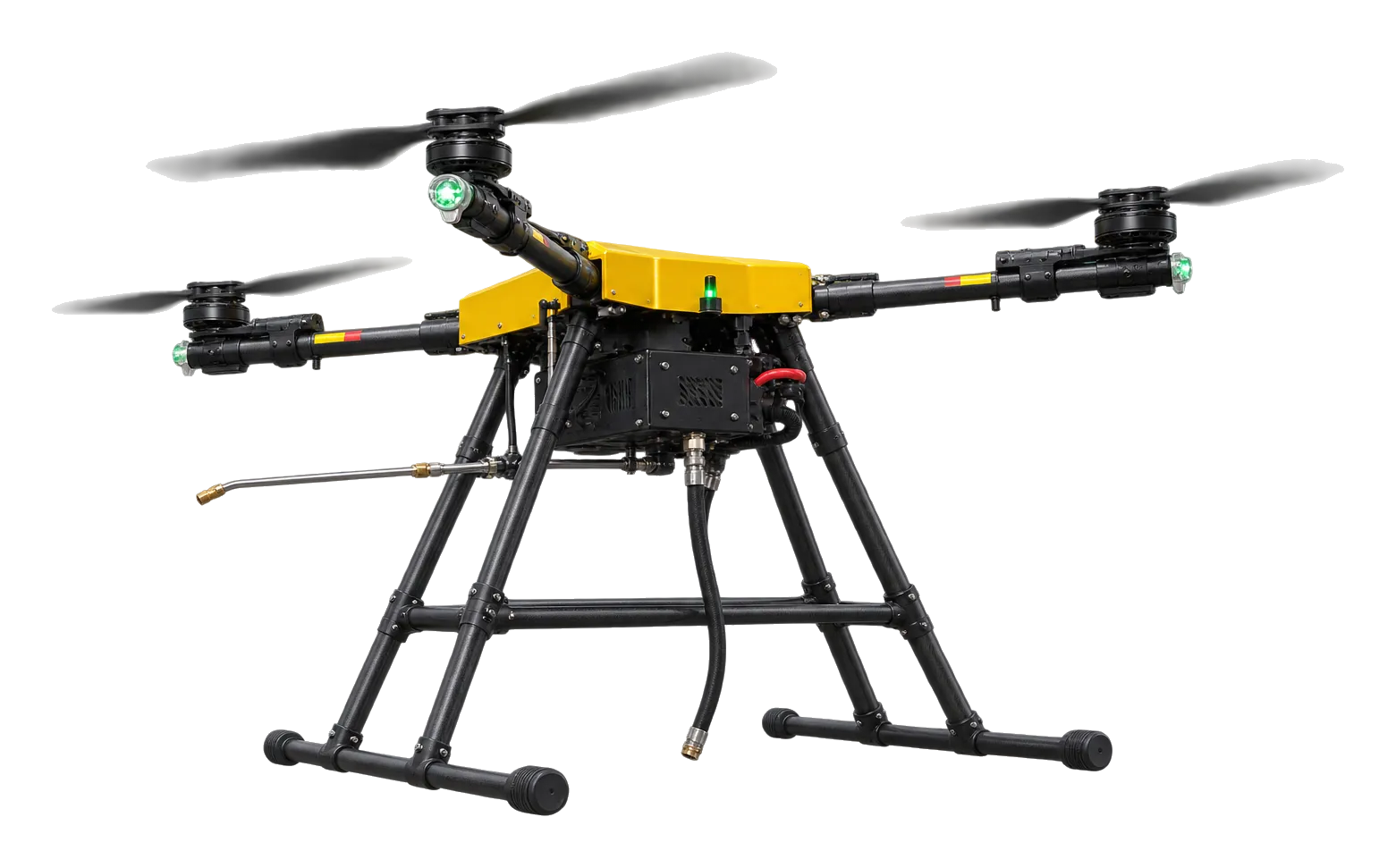
| CW-30P / CW-30T | 60 kg | Specific | ANAC authorisation, design approval, third-party insurance |
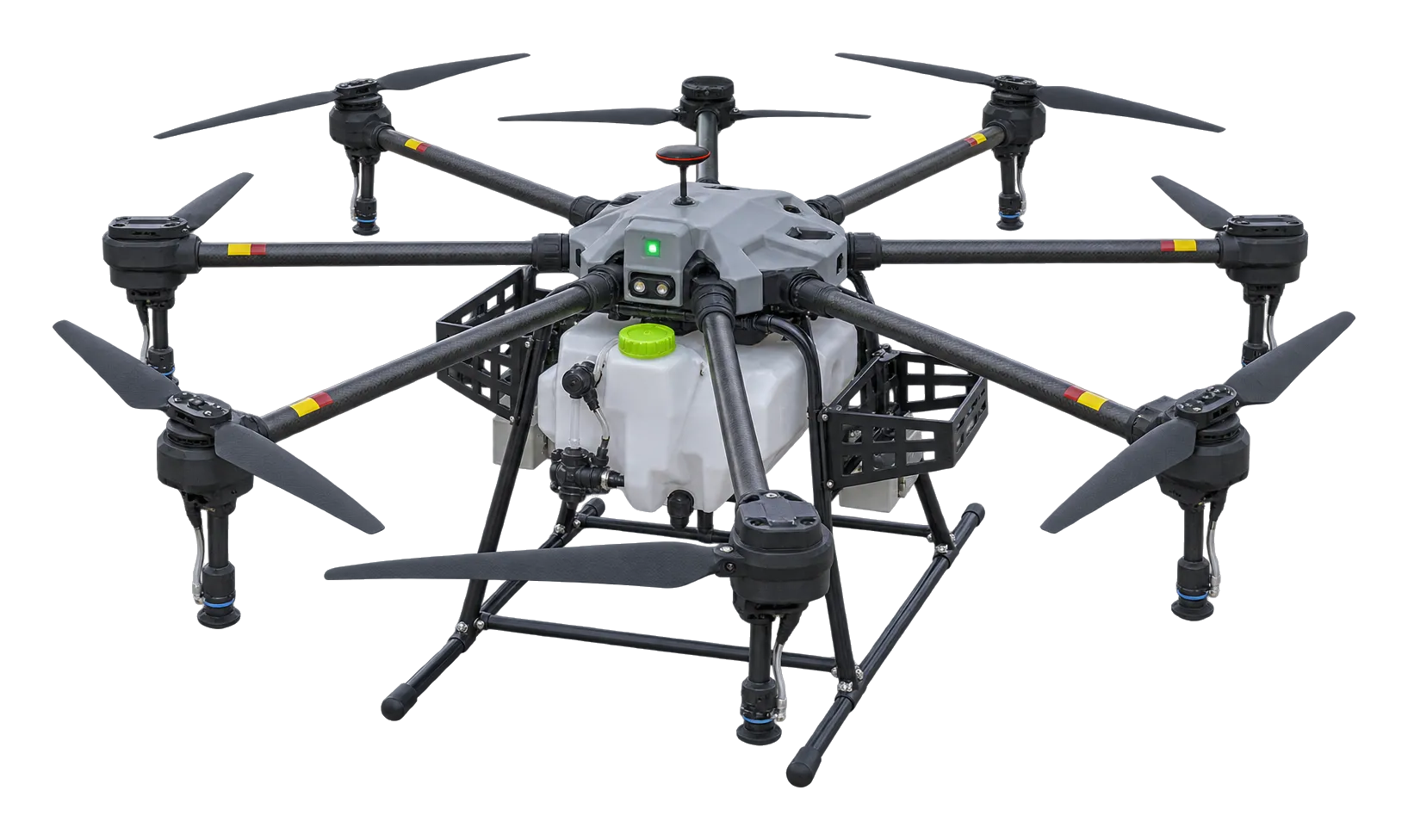
| AS-100 | 254 kg | Specific | Same, with the spraying exemption from insurance in uninhabited areas |
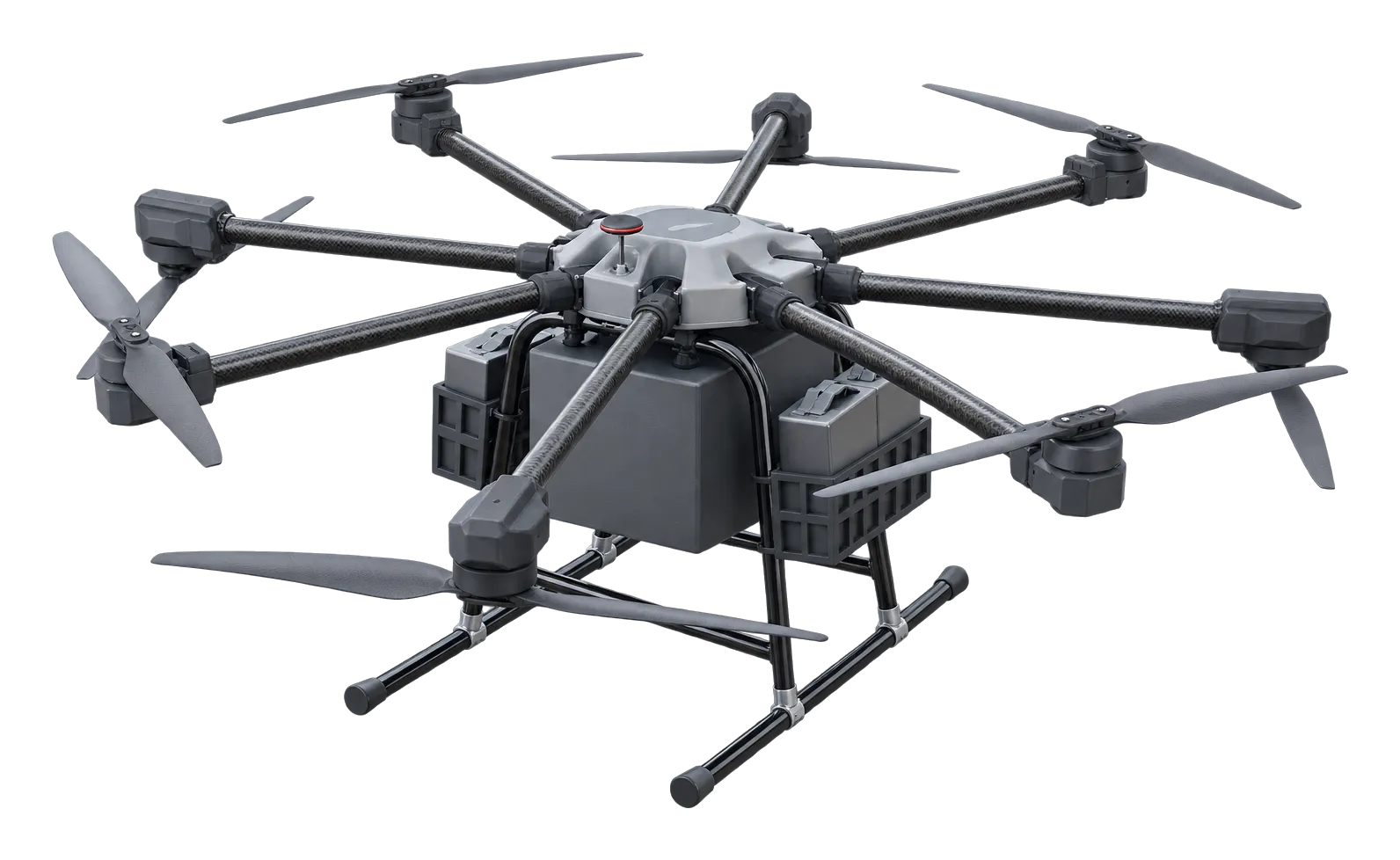
| HL-150 | 257.8 kg | Specific | Same, with insurance |
What do the insurance rule and agency approvals mean?
Spraying agrochemicals, fertilisers or seeds over uninhabited areas, within sight and up to 120 m, is the one operation named as exempt from third-party cover, besides state entities. A contractor who also cleans solar roofs or lifts cargo needs insurance for those jobs. Anatel (radio equipment), DECEA (airspace), the Ministry of Defence and the Ministry of Agriculture have their own rules. Older Brazilian guides still describe the earlier RBAC-E 94 classes by weight; confirm which text applies on the day you apply.
Which drone suits broadacre soy, maize and sugarcane?
Large fields reward tank size and swath. The AS-100 carries 100 L or spreads 120 kg, with four centrifugal nozzles making 30–500 μm droplets, an 8–15 m swath and up to 24 L/min system flow; the maker quotes up to 35 ha an hour. Tank litres are not payload kilograms: the aircraft weighs up to 254 kg at take-off. Hover time is 20 min empty and 8 min with a full load, so refill logistics decide the day. For cane see sugarcane drone spraying and for sizing agricultural drones for large farms.
- Best for soy, maize and cane contractors: the AS-100, 100 L tank and an 8–15 m swath.
- Best for distributed and utility solar plants: a hose-fed CW-30P, about 50 m working height, 45° nozzle for tilted panels.
- Best for river-side and remote farm supply: the HL-150, 44.6 km unloaded and 13.8 km at 100 kg in the brochure table.
Can drones clean Brazil’s solar plants?
Solar passed 53 GW in 2024, 22 % of installed capacity. On roofs and plants without robot rails, a hose-fed CW-30P (60 kg, 5.5 kW booster pump, 32 L/min) washes from the ground with a lance at 45°. The pump’s 28 MPa maximum is a separate figure from its flow; set the pressure at the nozzle to the module maker’s guideline. See drone solar panel cleaning business.
What about river-side and remote logistics?
A farm or camp across a river is where an HL-150 pays off: 120 kg rated, 150 kg maximum, with the range falling from 44.6 km empty to 13.8 km at 100 kg. Plan staging points on long carries; see island and offshore drone delivery.
Example: how many loads for a soybean contractor?
Example (the dose is an assumption; labels differ). If a product label allows 10 L per hectare by drone, one AS-100 tank of 100 L covers 10 ha, so a 1,000 ha programme needs 1,000 ÷ 10 = 100 loads. At the maker’s top rate of 35 ha an hour, 1,000 ÷ 35 ≈ 28.6 hours of spraying, before turns, refills and battery swaps. Brazil’s 49.3 million ha of soybean shows the scale; it is not a claim about drone adoption.
Next step
Send your crop or site, the field sizes and the category you expect. We reply with the aircraft and the technical documents for the ANAC file. See also the spraying cost per hectare guide.
Q & A
Common questions
01What are Brazil’s drone categories under RBAC 100?
The open category covers aircraft up to 25 kg flown within visual or extended visual line of sight, up to 120 m, away from third parties and with a risk assessment. The specific category needs ANAC operational authorisation. Check whether RBAC 100 is in force for your operation on the day you apply; older guides still quote the earlier RBAC-E 94 classes.
02Do heavy agricultural drones need ANAC authorisation?
Yes. An aircraft above 25 kg, such as the 254 kg AS-100, flies in the specific category with ANAC authorisation, and the UAS design must be authorised unless it is type-certificated. Ministry of Agriculture rules for agricultural application also apply.
03Is insurance required for drone spraying in Brazil?
RBAC 100 requires third-party cover, except for state entities and for spraying agrochemicals, fertilisers or seeds over uninhabited areas within visual or extended visual line of sight and up to 120 m. Cleaning and cargo jobs are not exempt.
04Which drone size suits soybean farms?
Large fields favour a large tank: the AS-100 carries 100 L with an 8–15 m swath. Smaller or fragmented plots are easier with an AS-50 or AS-65. Always confirm the label dose and drift limits for your product.
05Can drones clean Brazil’s solar plants?
Yes, on distributed roofs and plants without robot rails, with a hose-fed CW-30P and a ground pump. Aircraft over 25 kg sit in the specific category, and the cleaning job is not exempt from third-party insurance.
06How do I import an agricultural drone from China into Brazil?
Through a customs broker, with product documents, serial numbers and battery shipping papers. Radio equipment may need Anatel approval and the aircraft needs ANAC authorisation: confirm each with your broker and the agency.
References
VEXAFLY Aviation Technology Co., Ltd.. VEXAFLY Aviation Technology Co., Ltd. — industrial drone maker in Nanjing. Our application engineers write and check these pages and configure inspection, cleaning, lift and fire-response systems for project buyers. About VEXAFLY