Agriculture
Sugarcane Drone Spraying in 2026: Tall Cane, Ripener Rounds and Brazilian Rules
Sugarcane drone spraying in 2026: which jobs suit a drone (ripener, herbicide, biocontrol), how tall cane changes settings, hectares per day and Brazil’s rules.
- Author
- VEXAFLY Aviation Technology Co., Ltd.
- Scope
- Agriculture
- Published
- Length
- 4 min read · 5 sources
Short answer: in 2026 sugarcane drone spraying is a large-block job with a legal checklist. In Brazil the rule is MAPA Portaria 298/2021: a 20 m buffer from homes and water, a 28-hour CAAR course for the operator and monthly reports. For rounds above 300 ha choose a 100 L class aircraft; for mixed block sizes, a 50–62 L aircraft. Tall cane is flown 3–4 m above the crop at moderate speed.
Which cane job suits which drone?
At the top of Google you find supplier news and research abstracts, not a buying guide. Start from the job.
| Job | Canopy stage | Block size | Aircraft | Setting note |
|---|---|---|---|---|
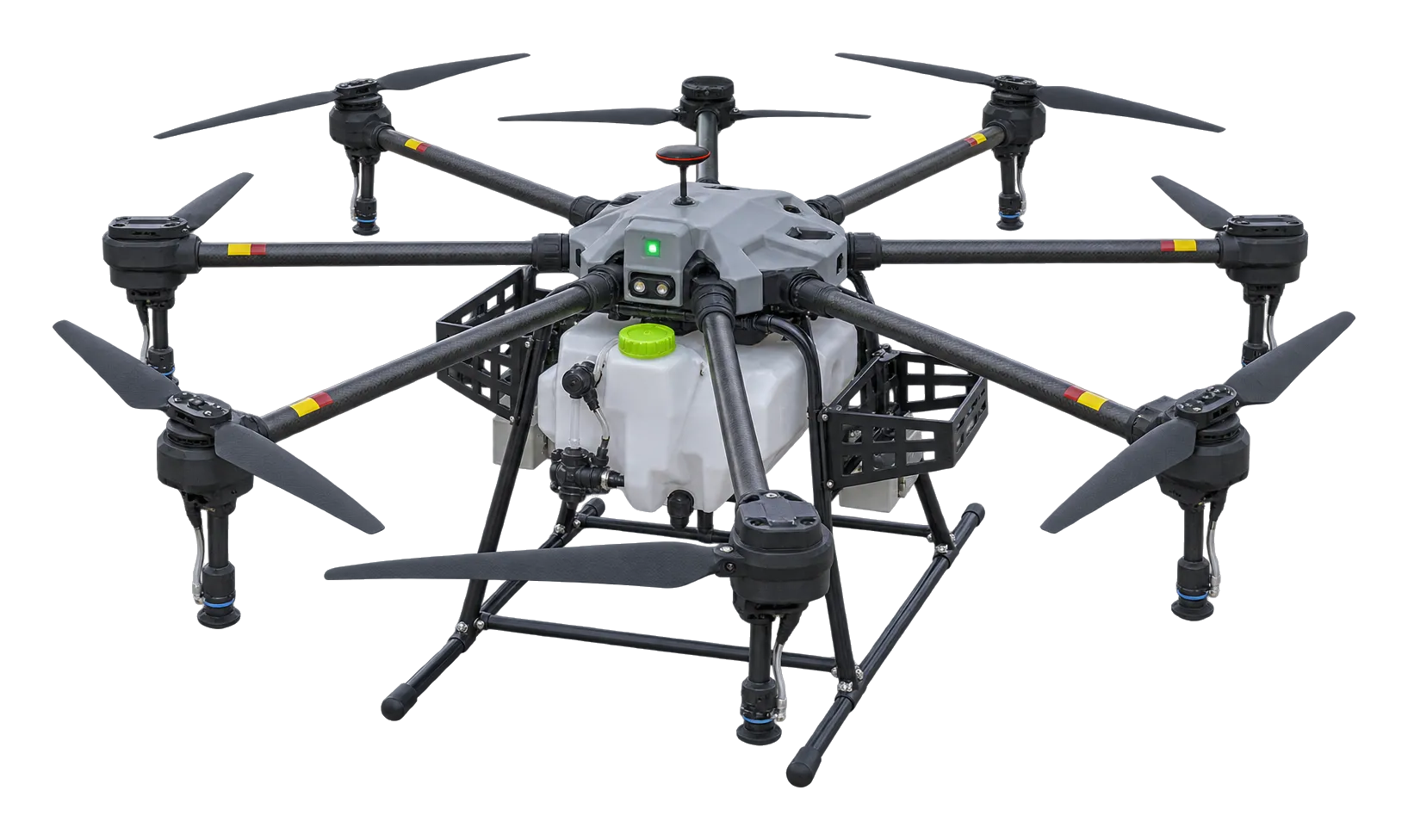
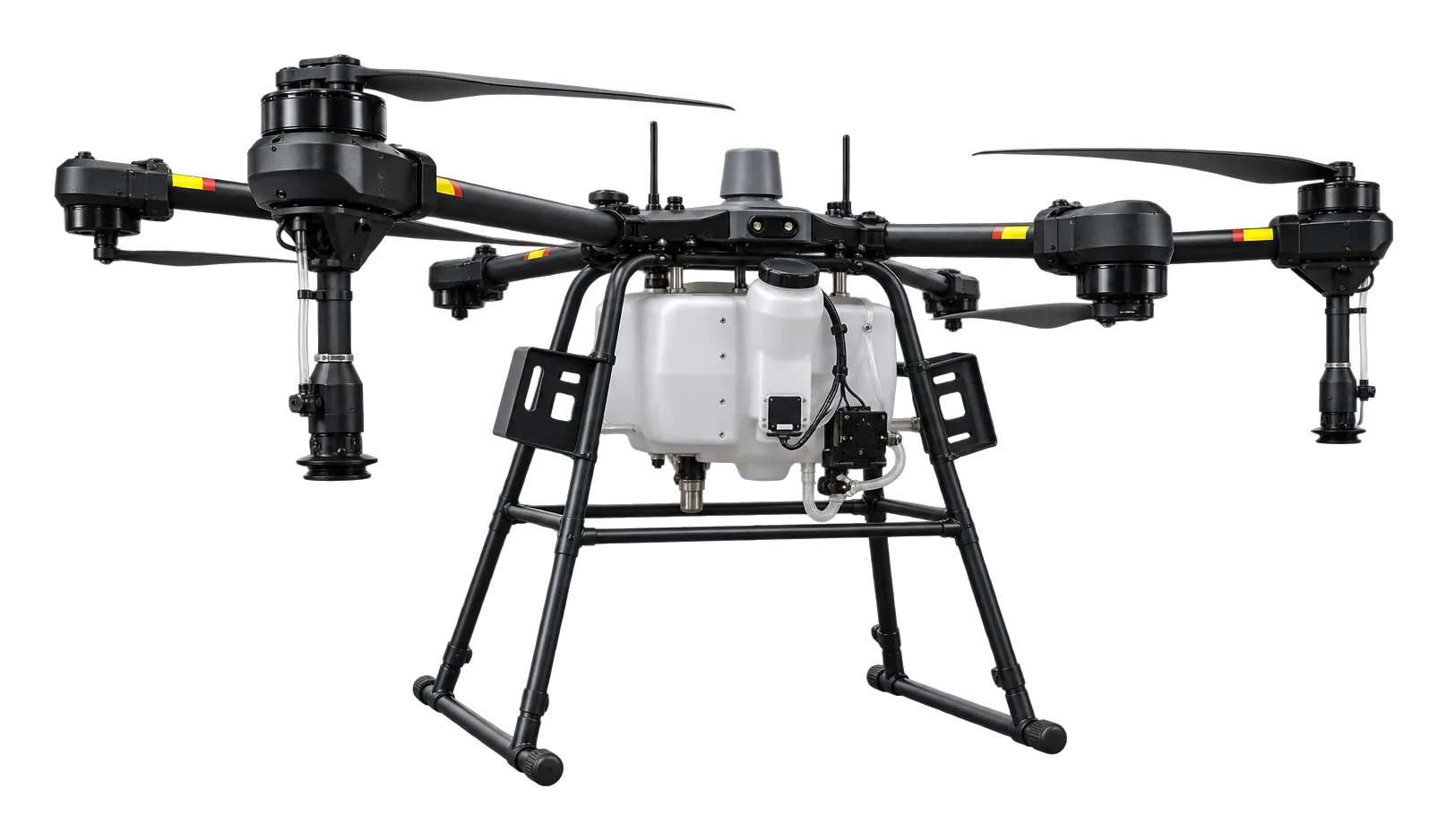
| Ripener | Tall, near harvest | 300 ha+ | AS-100 (100 L, 8–15 m) | Maker guide: 30 L/ha, 3–4 m above crop |
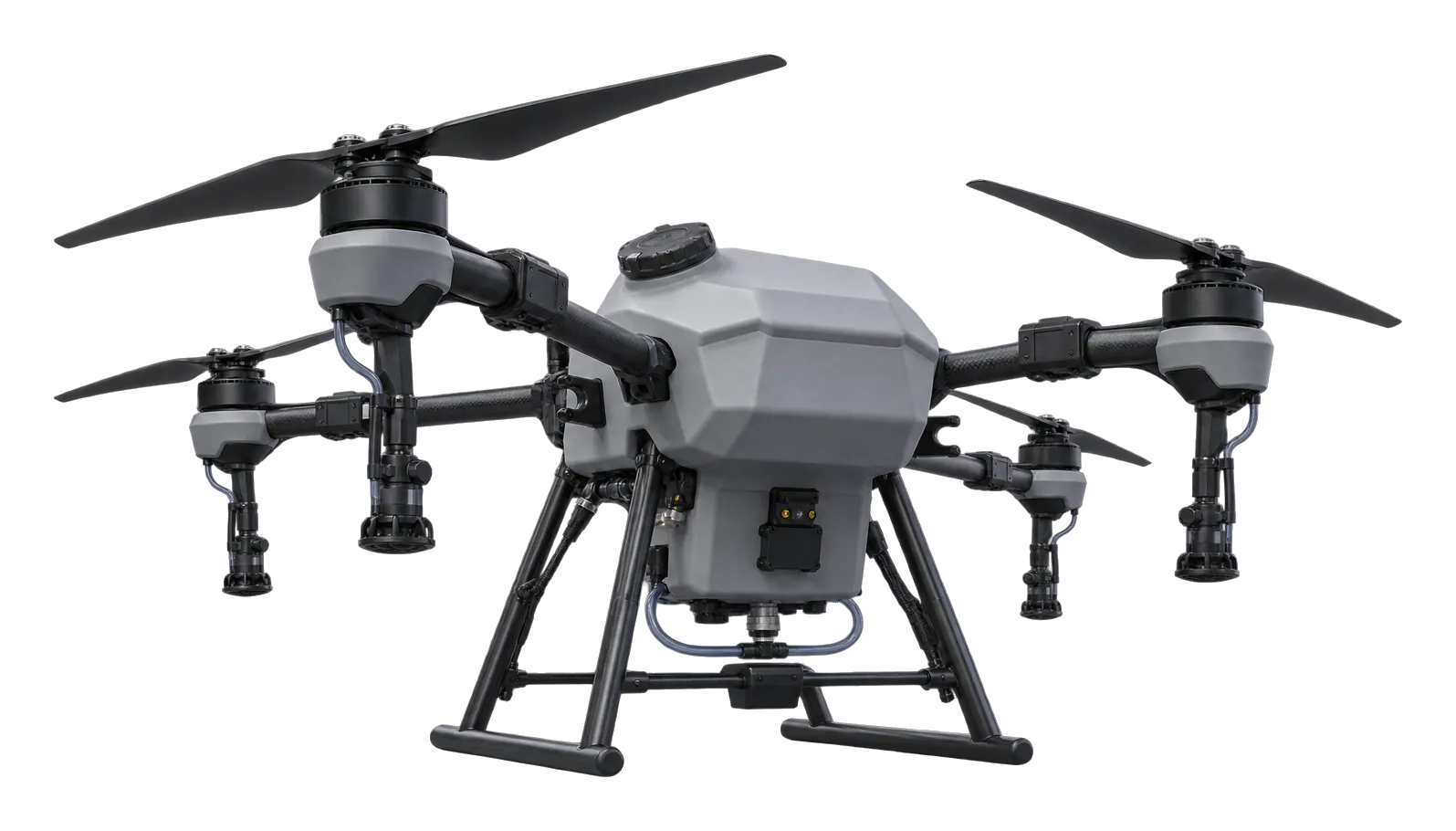
| Herbicide before canopy closure | Young | Mixed | AS-50 / AS-65 (8–20 m) | Check drift to neighbours |
| Fungicide or insecticide | Mid-season | Mixed | AS-50 / AS-65 | Label sets volume and droplet size |
| Biocontrol release | Any | Any | Specialised dispensing aircraft | Not a spray; see below |
| Heavy fertiliser | Young | Large | AS-92 (170 L spreader) | Weigh a hopper |
How does tall cane change the settings?
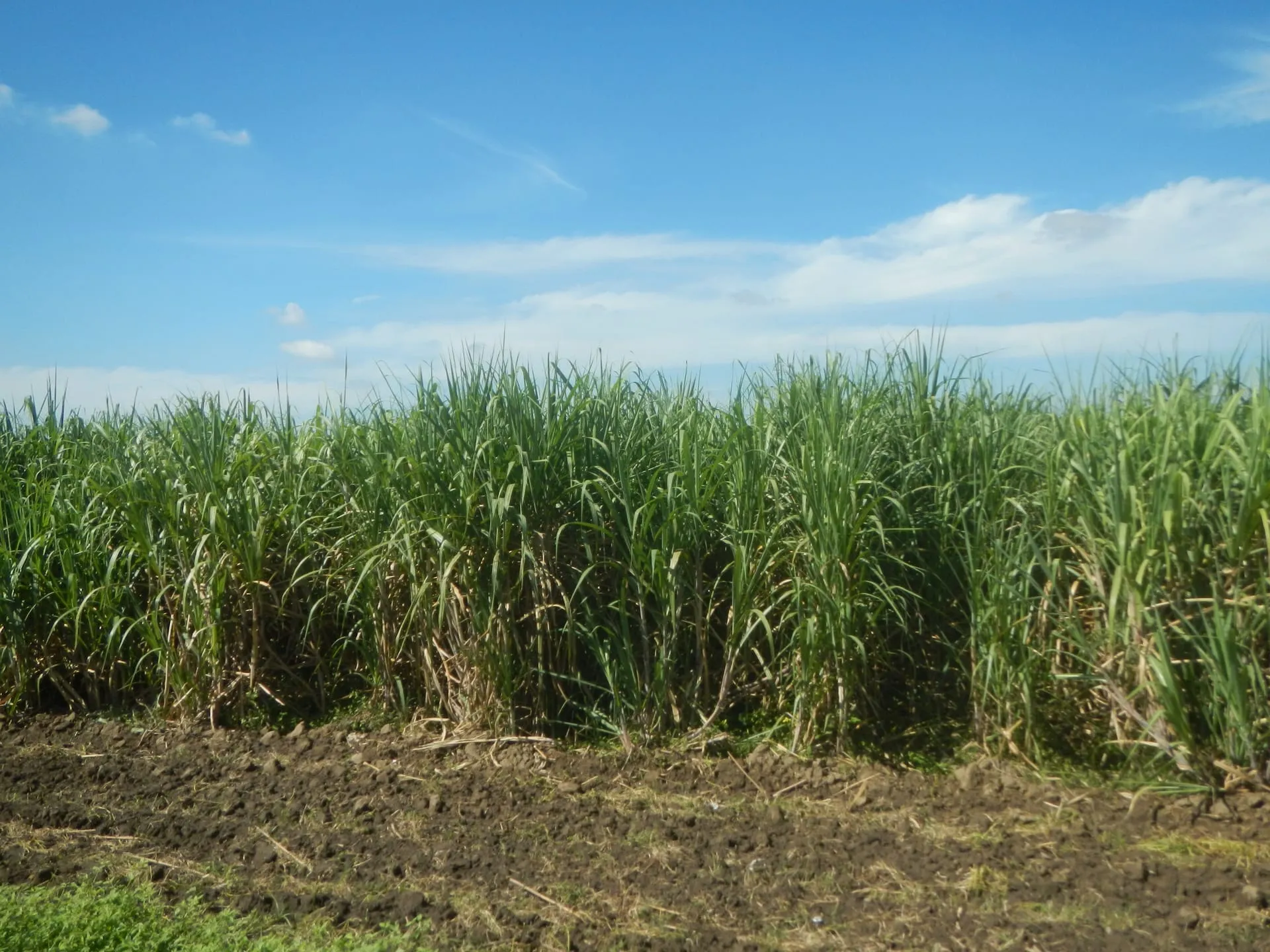
Cane stands 3 m or more near harvest. The aircraft flies above it: one maker guide for large drones gives 3–4 m above the crop, 5.5–8 m/s, 6.5–8 m route spacing and 200–450 µm droplets at 30 L/ha, and states that ripener applied by fixed-wing aircraft or helicopter from around 15 m drifts more than a drone at 2.5–4 m with RTK positioning. Those are maker statements, not tests of ours. Ripener drift to neighbouring crops is the risk: stop in gusts, keep the buffer and watch the wind direction.
What is the scale in Brazil?
CONAB’s fourth survey for the 2025/26 harvest puts Brazilian cane at 8.95 million ha harvested, 673.2 million t and 75.2 t/ha, with drought, heat and fires in the Centre-South the year before. At that scale, aircraft on estates run for weeks. See our Brazil market page for the wider picture.
How long does a ripener round take?
Example (assumed inputs, an estimate): a 500 ha ripener round at 30 L/ha (a maker reference; the label decides), so 15,000 L.
| AS-100 | AS-50 / AS-65 | |
|---|---|---|
| Width × speed × efficiency | 12 m × 6.5 m/s × 45 % | 9 m × 6 m/s × 45 % |
| Area rate | 35.1 m²/s ≈ 12.6 ha/h | 24.3 m²/s ≈ 8.7 ha/h |
| Time for 500 ha | about 40 h (5 days of 8 h) | about 57 h |
| Loads | 150 (100 L) | 300 (50 L) or 242 (62 L) |
The maker quotes up to 35 ha/h for the AS-100. We plan with the lower figure until a field test gives your own rate. Water, battery sets and a bowser at the field edge decide whether the aircraft keeps flying.
What does Brazil require?
Portaria MAPA 298/2021 prohibits application within 20 m of towns, villages, isolated homes, animal groups, water-supply sources and permanent preservation areas (unless that is the target). The operator needs the 28-hour CAAR course; the aircraft must be regular with ANAC; each application is recorded with weather data; and a monthly report goes into SIPEAGRO by the 15th. Aircraft above 25 kg need ANAC design approval, which affects every AS and AR model. Check the current rules. The text of the portaria and a trade-press summary are in the sources.
Drone or aircraft for ripener?
Fixed-wing aircraft win on estates of 1,000 ha and more with long blocks. Drones win on irregular blocks, headlands and fields close to homes, where the 20 m buffer and drift make flying a plane difficult. Many mills use both. The quotation question is whether you want an aircraft that goes where a plane cannot, or one that competes with it on rate.
Can drones release biological control?
Yes. A Brazilian project releases Cotesia flavipes wasps from drones in biodegradable dispensers against the sugarcane borer, Diatraea saccharalis; it involves Sardrones, Esalq/USP and Embrapii (Revista Cultivar, June 2026). Release is not spraying and needs a dispensing module, so ask us before assuming a standard sprayer can do it.
What about South Africa and Thailand?
South Africa’s SASRI ran a drone ripening project for small-scale growers in KwaZulu-Natal and Mpumalanga in 2021–22. Where summers reach 35–40 °C, night spraying may be needed, see night drone spraying. For fleets above 1,000 ha see agricultural drone for large farms; for other markets, South Africa and Thailand.
What about batteries and heat?
In 35–40 °C summers, batteries run hot: keep spare sets in shade, rotate them and let them cool before charging. A generator and charging station on a trailer follow the aircraft. For shipping battery sets see drone lithium battery shipping.
Best for …
- Best for estates and contractors with 300 ha+ rounds: the AS-100, 100 L tank, 24 L/min flow, 8–15 m width.
- Best for growers’ associations and mixed block sizes: the AS-50 / AS-65, 8–20 m width, 70 L spreader.
- Best for heavy fertiliser rounds: the AS-92, 170 L spreader, 193 kg MTOW (above 150 kg).
Reference prices, FOB China: AS-100 US$24,200–29,100; AS-50 / AS-65 US$7,300–13,300; AS-92 US$15,400–29,100 (varies with configuration and quantity; final price on quotation).
Next step
Send us the area of your largest blocks, the jobs you want to do and your state’s rules. We reply with the aircraft, the number of battery sets and a time estimate per round.
Q & A
Common questions
01Can a drone spray ripener on tall cane?
Yes, from above the canopy. A maker guide for its large drones gives 3–4 m above the crop, 30 L/ha, 200–450 µm and 5.5–8 m/s. Ripener drift matters near other crops, so wind limits and buffers apply.
02How many hectares a day can a drone spray in sugarcane?
On our example inputs, an AS-100 at 12 m width, 6.5 m/s and 45 % efficiency treats about 12.6 ha/h, roughly 100 ha in an 8-hour day. The maker quotes up to 35 ha/h; real rates depend on dose, turns and refills.
03Is drone spraying allowed in Brazil and what course is needed?
Portaria MAPA 298/2021 regulates it: the operator needs the CAAR course (28 h), the aircraft must be regular with ANAC, each application is recorded and a monthly report goes to SIPEAGRO. Check the current text before you start.
04Drone or plane for ripener?
Planes cover big estates faster but fly higher, about 15 m by one maker’s statement, with more drift. Drones suit irregular blocks and edges near neighbours.
05Can drones release biological control?
Yes, trials are under way. Sardrones, with Esalq/USP and Embrapii support, releases Cotesia flavipes wasps in biodegradable dispensers against the sugarcane borer. Portaria 298 exempts biological agents from the buffer clause.
References
- 1Portaria MAPA nº 298, de 22 de setembro de 2021 — Ministério da Agricultura e Pecuária (Brazil)
- 2Mapa regulamenta o uso de drones em atividades agropecuárias — Revista Cultivar
- 3Produção de cana recua 0,5% na safra 2025/26 — Revista Cultivar (CONAB data)
- 4Project uses drones for biological control in sugarcane — Revista Cultivar
- 5Small-scale growers enlightened on drone ripening — SASRI
VEXAFLY Aviation Technology Co., Ltd.. VEXAFLY Aviation Technology Co., Ltd. — industrial drone maker in Nanjing. Our application engineers write and check these pages and configure inspection, cleaning, lift and fire-response systems for project buyers. About VEXAFLY