Market · Site conditions
Solar Panel Cleaning Drones in South Africa 2026: Measure Soiling First, Then Pick the Method
Solar panel cleaning drones in South Africa in 2026: soiling evidence from the Northern Cape, the SACAA 7 kg line, approvals and which method fits which array.
- Author
- VEXAFLY Aviation Technology Co., Ltd.
- Scope
- Market · Site conditions
- Published
- Length
- 4 min read · 5 sources
Short answer: in 2026 solar panel cleaning drones in South Africa are worth buying only after you have measured what dirt costs you. Two Northern Cape studies found small or no soiling losses, so test first, then match method to array: a hose-fed drone for rooftops, carports and mixed layouts, crews or robots where rows are uniform. Any cleaning aircraft above 7 kg needs SACAA approval.
South Africa site conditions at a glance
| Condition | Figure | What it means for equipment |
|---|---|---|
| Weight line | Operations without approval exclude aircraft “weighing more than 7 kg”; no flights above 150 ft or within 10 km of an aerodrome (SACAA) | Every cleaning aircraft in our range is far over the line |
| Line of sight | Operations are limited to radio line of sight; beyond it is “reserved for future use” (same page) | No long unattended dock routes |
| Rooftop solar | More than 8.3 GW installed, more than the contracted and operational utility-scale solar of 2.8 GW (Engineering News) | Many small, scattered roofs: a mobile aircraft suits service firms |
| Soiling, semi-arid Northern Cape | Maximum 2.7 % reduction over six months, including a 75-day rain deficit (Stellenbosch University) | Washing may not pay back; measure |
| Soiling, Kalkbult | No loss on silicon modules, about 1 % on thin film; cleaning not recommended at that site (NMBU) | Rain can do the job for free |
Facts checked on 28 November 2026.
Does your plant need cleaning at all?
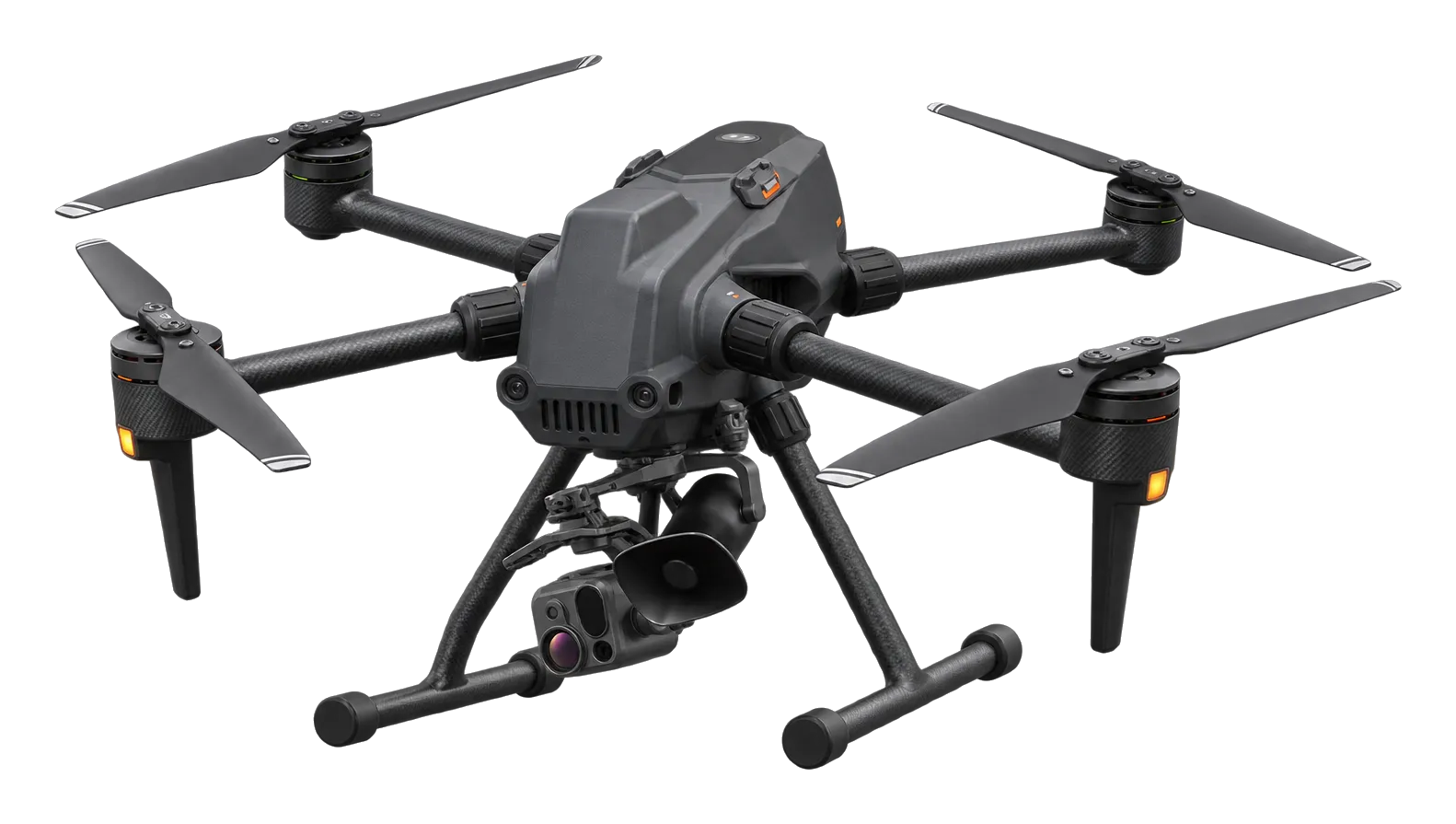
Do not start from the aircraft. Start from the loss. Compare a cleaned reference string with an uncleaned one over a dry season, or ask your O&M contractor for performance-ratio data after dry spells. An IS-4 thermal pass can show hot spots and uneven dirt before anyone washes. If the measured loss is near zero, as at Kalkbult, the cheapest method is no cleaning.
Example (assumptions labelled). A 10 MWp rooftop portfolio yielding 1,800 kWh per kWp a year makes 18,000 MWh. A 2.7 % soiling loss, the Northern Cape maximum above, is 18,000 × 0.027 = 486 MWh a year. At 0 %, the Kalkbult result, there is nothing to recover. The washing decision comes from your measured loss, not from the drone.
Which method fits which array?
| Array type | Evidence needed | Method to compare |
|---|---|---|
| Utility plant, Northern Cape | Soiling station or string data over a dry season | Wait for rain, robot on uniform rows, crew, drone for edges |
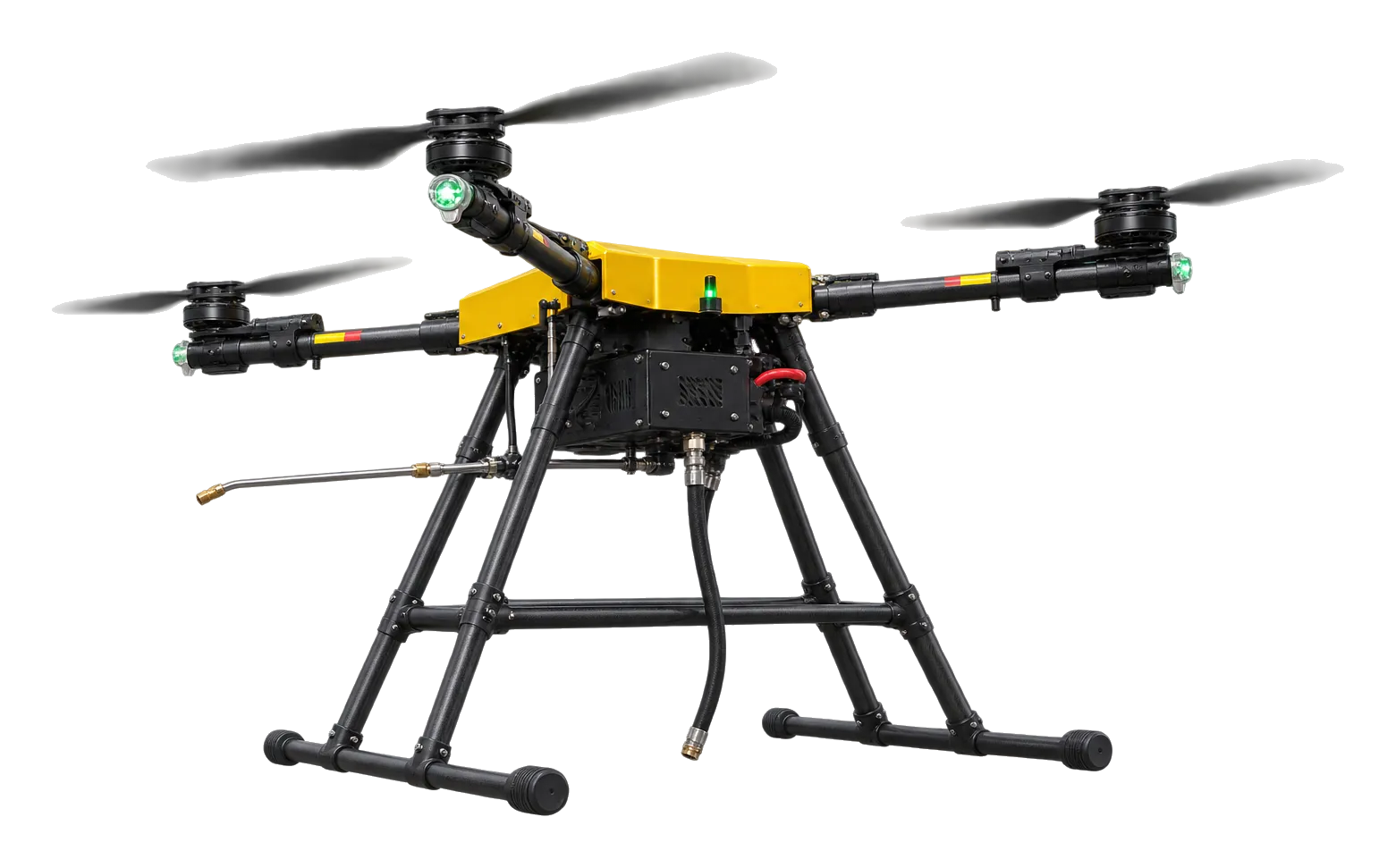
| Rooftop and carport, Gauteng | Roof access and water point | Hose-fed CW-30P |
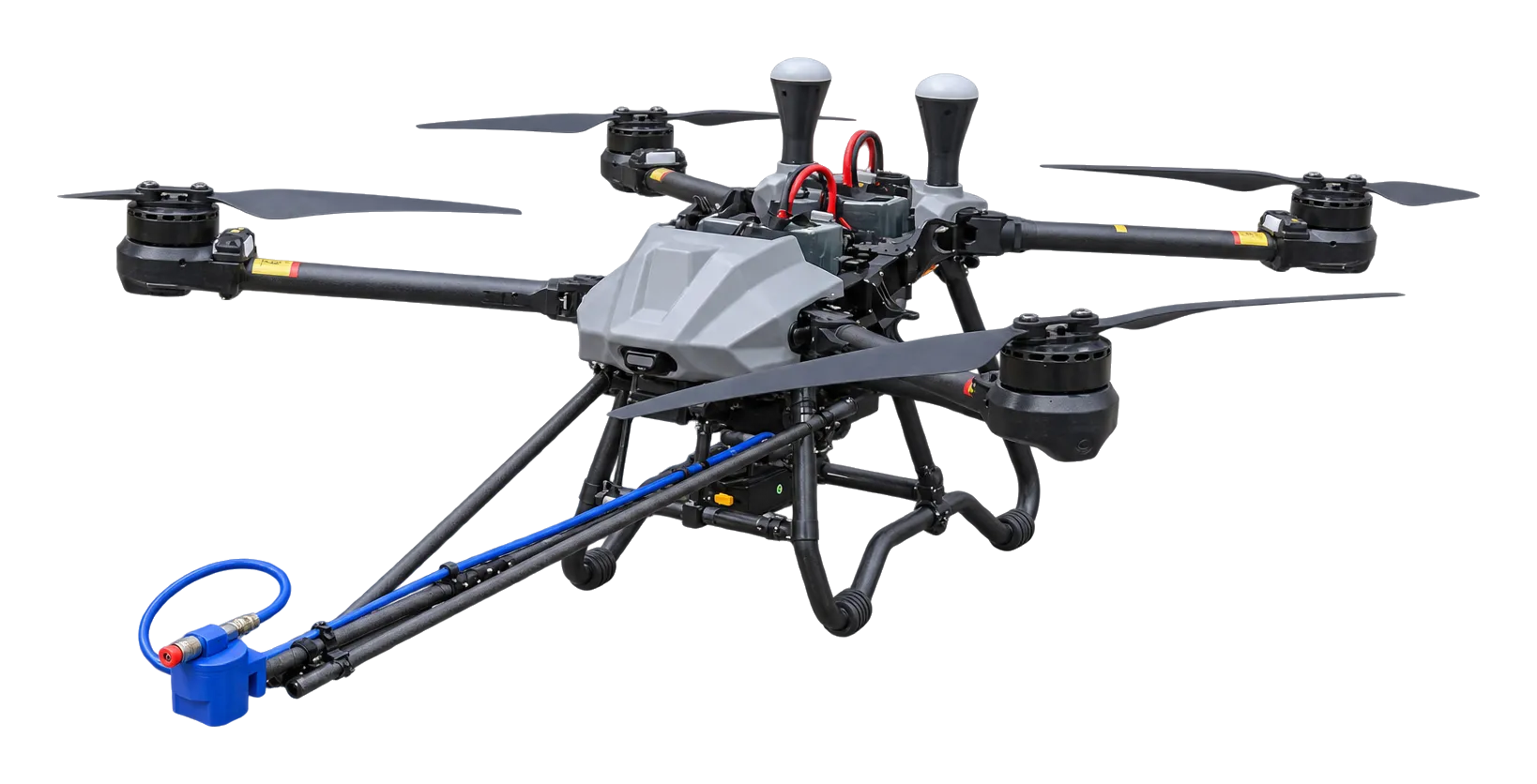
| Facade-integrated PV and tall roofs | Building height and street access | Tethered CW-65 |
| Any site | Module maker’s cleaning guideline | Check pressure and approval first |
For the method comparison read solar cleaning robot vs drone.
- Best for rooftops and carports: the CW-30P, hose-fed from a ground pump, working height up to 50 m.
- Best for facade PV and tall roofs: the CW-65, rated to 100 m and tethered for unlimited flight time.
- Best for checking before you wash: the IS-4, 63 minutes hover in the brochure, 3 kg payload.
Which SACAA approvals do you need?
SACAA lists five items for commercial operation: an air service licence, an operator certificate (UASOC), an aircraft approval (RLA), a remote pilot licence (RPL) and a certificate of registration. Corporate and non-profit operators need all but the air service licence. Class 1A and 1B are below 7 kg; the IS-4 at 7 kg is not below it, so plan for approval. Keep 50 m from people and from property without permission. Check the current text on the SACAA page and ask SACAA about radio approval for the aircraft.
How do wind, water and pressure limit the work?
Wind force 6 is 22–27 knots, about 39–50 km/h; force 7 is about 50–61 km/h (NWS). The CW-30 is rated level 6 and the CW-65 level 7 in brochure figures, so stop when gusts approach the rating. The CW-30P pump gives up to 28 MPa and 32 L/min as separate maxima, not at once. Module pressure limits are far lower; set pressure at the nozzle and read the module maker’s guideline. See cleaning drone water consumption.
What about import and logistics?
Treat import generically: confirm duties, radio approval and documents with your customs broker, and keep product papers and serial numbers ready for SACAA. Lead time and export licensing are checked per model and destination; see our guide to importing industrial drones from China. Johannesburg altitude and Cape Town wind change the planning; see Johannesburg and Cape Town.
Next step
Send the array type, the roof or ground layout and any soiling data. We reply with whether a drone makes sense and which approvals to start.
Q & A
Common questions
01Can drones clean solar panels in South Africa?
Yes, technically. A hose-fed CW-30P washes panels from a ground pump at up to about 50 m. The harder questions are whether your site loses enough energy to dirt to justify washing, and which SACAA approvals an aircraft of 60 kg needs.
02Which SACAA approvals does a drone cleaning operator need?
For commercial work SACAA lists an air service licence, an operator certificate, an aircraft approval, a remote pilot licence and a certificate of registration. Corporate and non-profit operators need all of them except the air service licence. Confirm the current list with SACAA.
03Is soiling in the Northern Cape bad enough to justify cleaning?
Two published studies say not necessarily. One recorded a maximum 2.7 % reduction over six months; the other found no loss on silicon modules over a summer because rain cleaned the panels. Measure your own plant over a full dry season.
04How much water does a cleaning drone use?
It depends on soiling, the nozzle and open time. As an upper bound the CW-30P pump delivers up to 32 L/min, so 10 minutes of spraying is at most 320 L. See our water-consumption guide for how to plan litres per MW.
05Will drone washing void my module warranty?
It can if pressure or method breaks the module maker’s cleaning guideline. Read the guideline first and get written approval where it asks for one; set pressure at the nozzle, not at the pump.
06Can an IS-4 dock route fly beyond line of sight in South Africa?
Not under the current SACAA rules: operations are limited to radio line of sight. A dock can still schedule flights, but the route must stay within sight or radio line of sight.
References
- 1Unmanned Aircraft Systems — South African Civil Aviation Authority
- 2Capacity of rooftop solar installed in South Africa has passed 8 GW mark — Engineering News
- 3The Influence of Dust Soiling on the Performance of Photovoltaic Modules in the Semi-Arid Areas of South Africa — Stellenbosch University
- 4Cleaning schedule based on soiling effects on photovoltaics in Kalkbult, South Africa — Norwegian University of Life Sciences (NMBU)
- 5Beaufort Wind Scale — US National Weather Service
VEXAFLY Aviation Technology Co., Ltd.. VEXAFLY Aviation Technology Co., Ltd. — industrial drone maker in Nanjing. Our application engineers write and check these pages and configure inspection, cleaning, lift and fire-response systems for project buyers. About VEXAFLY