Market · Site conditions
Industrial Drones in Canada 2026: Weight Classes, Cold, Wildfires and Long Lines
Industrial drones in Canada in 2026: Transport Canada weight classes, safety assurance, cold, wildfire seasons and long pipeline and power-line routes.
- Author
- VEXAFLY Aviation Technology Co., Ltd.
- Scope
- Market · Site conditions
- Published
- Length
- 5 min read · 3 sources
Short answer: industrial drones in Canada are sorted by weight before anything else. Transport Canada’s small class (250 g to 25 kg) is where inspection aircraft sit; cleaning and spray drones of 60–111 kg are medium (over 25 kg up to 150 kg) and need advanced operations with a manufacturer safety declaration; aircraft over 150 kg, such as the HL-150 and RX-120, are large and fly only with special operations permission. Cold, long lines and wildfire seasons then decide which aircraft you really need.
Canada site conditions at a glance
| Condition | Figure | What it means for equipment |
|---|---|---|
| Weight classes | Small: 250 g to 25 kg (basic or advanced operations). Medium: over 25 kg up to 150 kg (advanced). Large: over 150 kg (special operations, permission) (Transport Canada) | The class decides which jobs are routine and which need a permit |
| Beyond visual line of sight | Only Level 1 Complex operations, minimum age 18; page modified 4 November 2025 (same page) | Long linear routes need that certificate and an eligible aircraft |
| Safety assurance | Advanced and Level 1 Complex operations need a manufacturer-declared RPAS Safety Assurance under Standard 922 (controlled airspace, near and over people, control link, detect-and-avoid, environmental envelope); only listed models are eligible (Transport Canada) | Ask whether the exact model is declared before you order |
| 2023 wildfires | More than 6,000 fires and about 15 million ha burned, against an average of about 2.5 million ha a year; 29 mega-fires over 100,000 ha by mid-July (NRCan) | Thermal mapping and fire-team aircraft are standing needs |
| Linear assets | The Canada Energy Regulator oversees pipelines and power lines that cross provincial, territorial or national borders (CER) | Long corridors with regulated owners set the route and reporting rules |
Facts checked on 26 November 2026. No sourced pipeline-length or cold-climate statistics were found, so none are quoted.
Small, medium or large: where do our aircraft sit?
| Aircraft | Weight | Transport Canada class | What it takes |
|---|---|---|---|
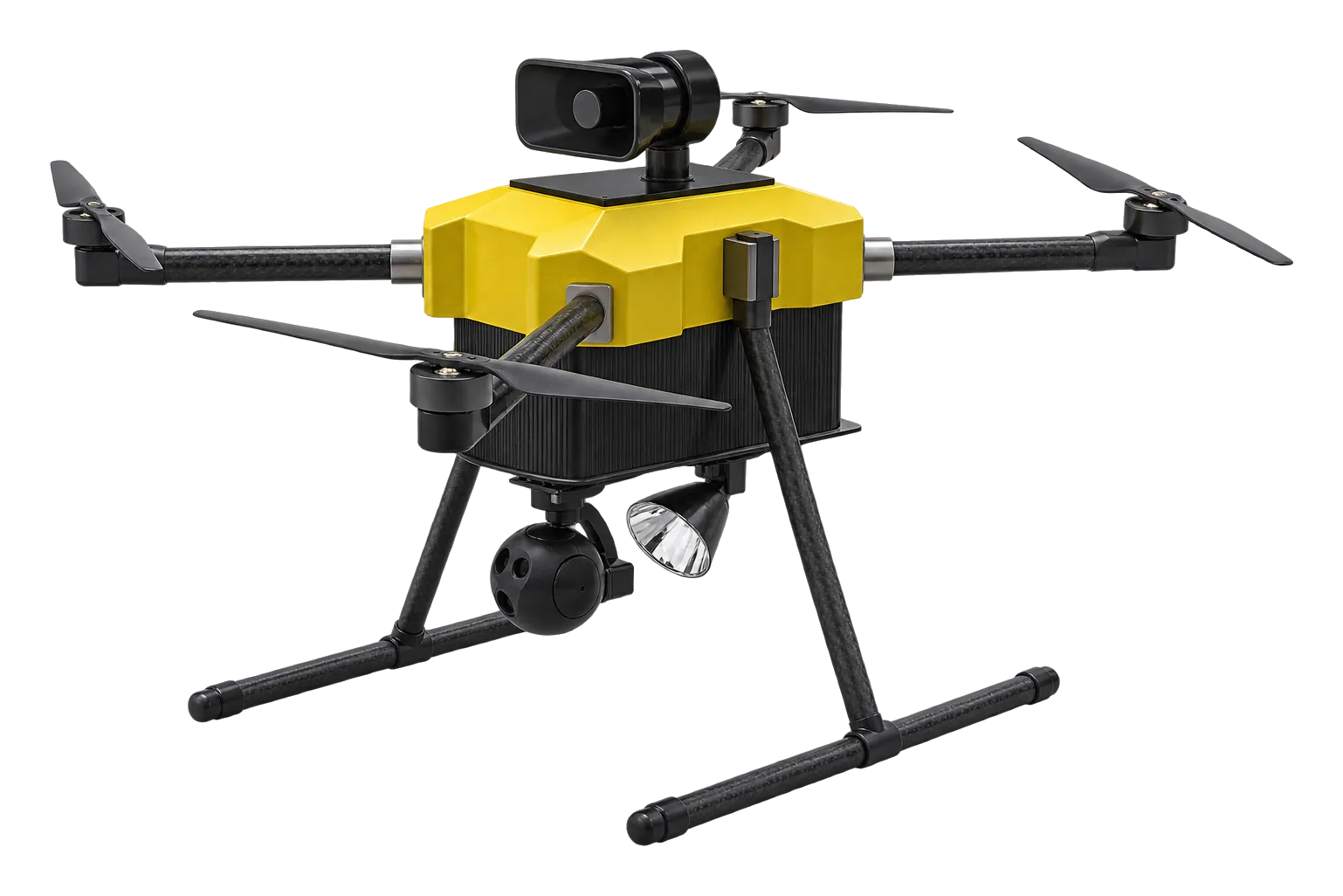
| IS-4 inspection quadcopter | 7 kg maximum take-off weight | Small | Basic operations; advanced operations need a safety assurance declaration |
| IS-9 long-endurance quadcopter | 7.3 kg airframe plus a 3–5 kg payload, about 10–12 kg | Small | As above |
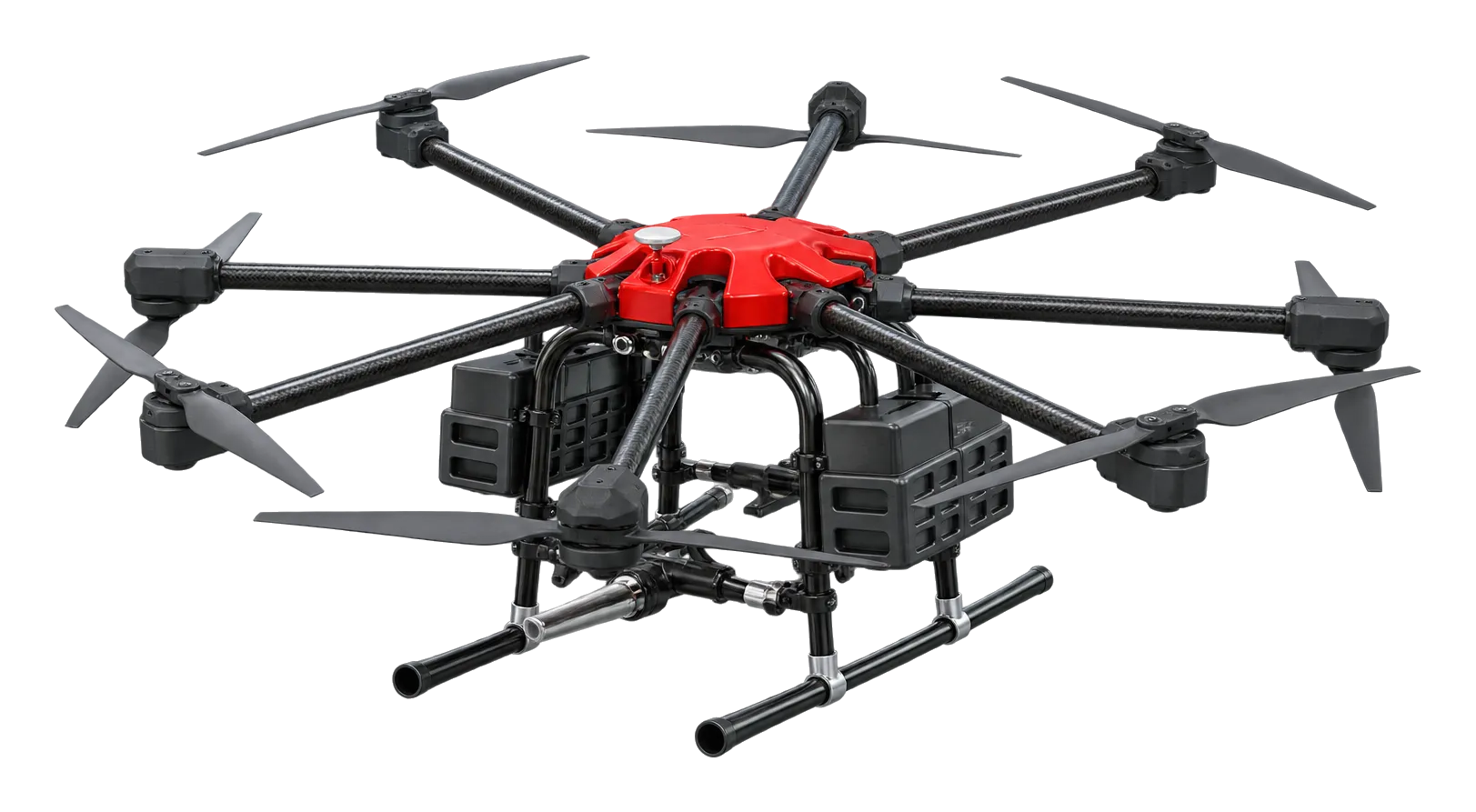
| CW-30P / CW-30T, CW-65 cleaning drones | 60 kg and 111 kg | Medium | Advanced operations with a declared aircraft |
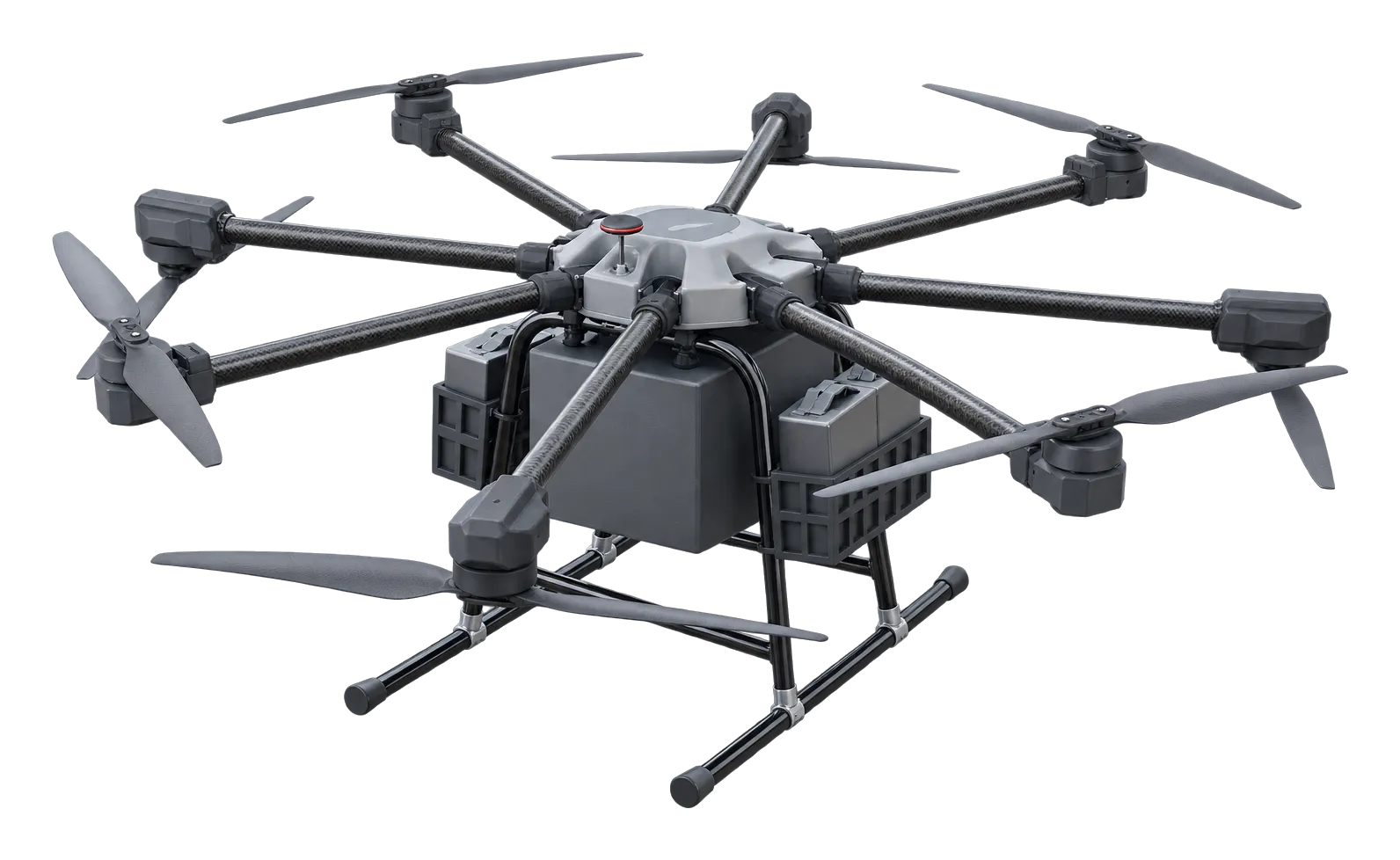
| HL-100 transport drone | 60 kg airframe, 100 kg rated payload (take-off weight not in our file) | Medium or large | Needs the maximum take-off weight to classify |
| HL-150, RX-120, HL-200 | 257.8 kg, 257.8 kg and 333 kg | Large | Special operations permission, project by project |
- Best for winter pipeline and transmission patrols: the IS-9, a small-class aircraft with IP67 and −40 °C to 50 °C in the brochure and 50–90 min with a 1–5 kg payload.
- Best for remote camps and tower sites with no road: the HL-150, 120 kg rated load; it is a large aircraft, so plan the permission early.
- Best for industrial fire brigades: the RX-120, four 23 kg pods or a 40 mm hose; also large.
How does cold weather change the choice?
Cold decides sealing and batteries first. The IS-9 is rated IP67 and −40 °C to 50 °C; the DS-1 dock is rated −35 °C to 50 °C; the RX-120 −20 °C to 60 °C. None of the brochures gives endurance at −40 °C, and cold batteries deliver less than the headline figure, so we size each sortie for your winter temperature in the quotation. Brochure endurance for the IS-9 falls with payload: 90 min at 1 kg, 65 at 3 kg and 50 at 5 kg. Read drones in cold weather for battery handling.
What do long pipeline and power-line routes need?
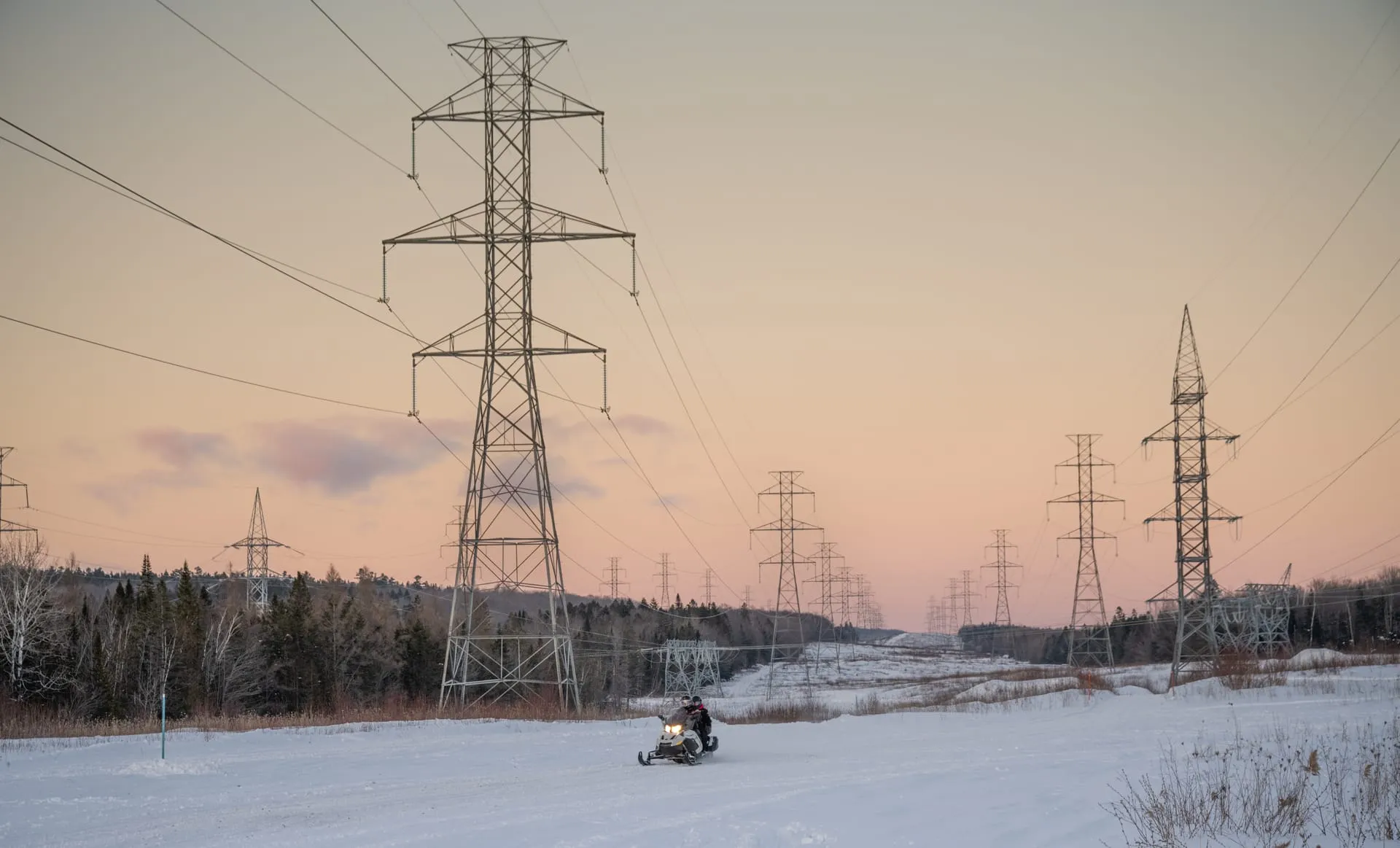
Range, endurance and permission, in that order. The IS-9 has a 65 km maximum range and up to 120 min, but a route of tens of kilometres is beyond visual line of sight, and Transport Canada limits that to Level 1 Complex operations. Plan relay take-off points, a pilot with the right certificate and a declared aircraft. See BVLOS drone inspection and power line inspection drone selection.
How do drones fit Canada’s wildfire seasons?
The 2023 season burned about 15 million ha, roughly six times the 2.5 million ha average (15 ÷ 2.5 = 6). Small aircraft map hotspots and perimeters, with the IS-9 preferred on cold mornings; a large aircraft such as the RX-120 belongs to a trained brigade under special operations permission. See wildfire firefighting drones.
What about heavy lift to remote sites?
An HL-150 carries 120 kg rated and 150 kg at the limit, and its brochure range falls from 44.6 km unloaded to 13.8 km at 100 kg. At 257.8 kg it is a large aircraft, so each campaign needs its own permission, not a routine licence. For transmission-line construction compare the stringing guide and the battery and charging guide.
Example: which class is each aircraft?
Example (take-off weights are brochure figures; confirm on the quotation). An IS-9 at 7.3 kg with a 3 kg sensor weighs about 10.3 kg, so it is small (limit 25 kg). A CW-65 at 111 kg is medium (25–150 kg). An HL-150 at 257.8 kg is 257.8 − 150 = 107.8 kg over the medium limit, so it is large and falls under special operations. Whether the battery is counted in each figure is confirmed on the quotation.
What about import and certification?
Ask three things before ordering: the model’s Transport Canada safety assurance declaration (we have not verified that any VEXAFLY model is listed), its radio certification with ISED and the import steps with the Canada Border Services Agency. Confirm each with your customs broker. We supply the product documents your authority asks for.
Next step
Send your route length, winter temperature and the weight class you want to stay in. We reply with the aircraft that fit that class; for the longest routes start from the inspection drone range.
Q & A
Common questions
01Which drone weight class does my industrial drone fall into in Canada?
Transport Canada uses take-off weight: small is 250 g to 25 kg, medium is over 25 kg up to 150 kg and large is over 150 kg. A 7 kg inspection drone is small, a 111 kg cleaning drone is medium and a 257.8 kg heavy-lift or fire aircraft is large.
02Do I need an SFOC for a heavy-lift drone?
Aircraft over 150 kg are in the large class, which Transport Canada treats as special operations needing permission, in practice a special flight operations certificate applied for project by project. Confirm the current process with Transport Canada before you plan.
03Can industrial drones fly at −40 °C?
Only aircraft rated for it. The IS-9 brochure lists −40 °C to 50 °C and an IP67 airframe; the DS-1 dock lists −35 °C to 50 °C. Cold batteries give less, so we size sorties for your temperature in the quotation.
04What does RPAS Safety Assurance mean for an imported drone?
For advanced and Level 1 Complex operations Transport Canada expects the manufacturer to declare that the model meets Standard 922, covering things such as the control link, detect-and-avoid and the environmental envelope. Only listed models are eligible, so ask for the declaration number before ordering; we do not claim any model is listed.
05How are drones used in Canada’s wildfire season?
Typical tasks are thermal hotspot mapping, perimeter and burn-scar surveys and, for trained fire teams, pod or hose work with a heavy aircraft. The 2023 season burned about 15 million ha, around six times the average.
06Can I fly beyond visual line of sight along a pipeline in Canada?
Transport Canada’s page says beyond-visual-line-of-sight flight is for Level 1 Complex operations only, with a minimum age of 18. Long linear routes therefore need that pilot certificate and an eligible aircraft.
References
- 1Drone operation categories and pilot certificates — Transport Canada
- 2Choosing the right drone for advanced and complex operations — Transport Canada
- 3Who we are and what we do — Canada Energy Regulator
VEXAFLY Aviation Technology Co., Ltd.. VEXAFLY Aviation Technology Co., Ltd. — industrial drone maker in Nanjing. Our application engineers write and check these pages and configure inspection, cleaning, lift and fire-response systems for project buyers. About VEXAFLY