Heavy lift
Drone Power Line Stringing in 2026: Which Aircraft for Which Span?
Drone power line stringing in 2026: what the drone pulls, line load by span, where it fits in the stringing procedure, wind limits and which aircraft size fits.
- Author
- VEXAFLY Aviation Technology Co., Ltd.
- Scope
- Heavy lift
- Published
- Length
- 4 min read · 6 sources
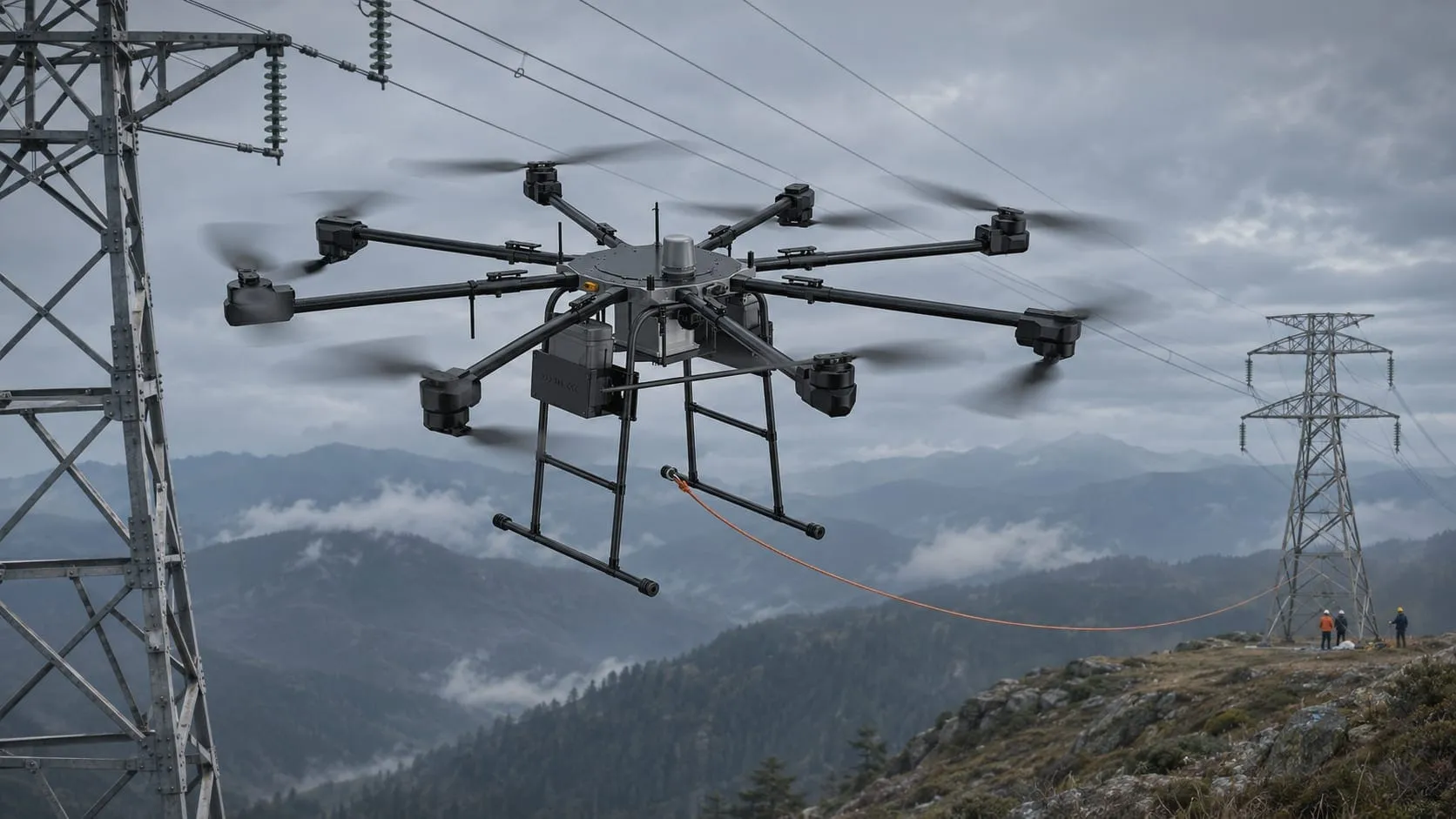
Short answer: drone power line stringing means flying a light pilot line over the structures and through the blocks, so crews can use it to pull heavier lines and then the conductor. In 2026 a 100 kg-class aircraft can have enough margin for spans up to about 400 m with light rope; for longer spans and river crossings plan on a 150 kg-rated aircraft and a measured line load. Our HL-100 and HL-200 are cargo aircraft, so stringing use needs the right fitting and the contractor’s procedure.
Which aircraft for your span?
The bands below are planning guides built on the line-load example further down. They are not maker limits.
| Span and crossing | What the drone carries | Aircraft class to start from | Check before you commit |
|---|---|---|---|
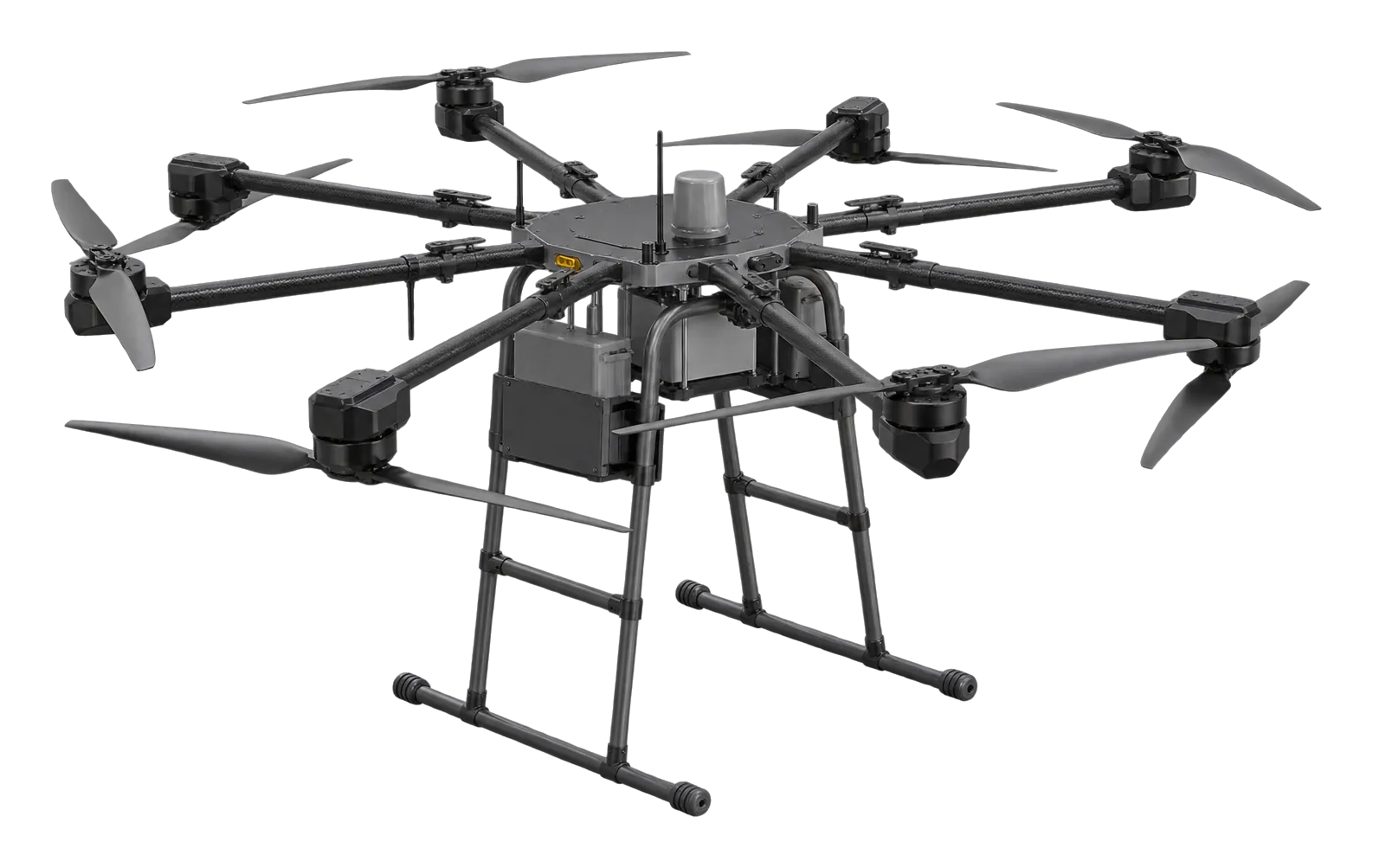
| Up to about 400 m, light rope, open ground | Pilot line | 100 kg class (HL-100) | The Fraser River span of 335 m averaged about 35 kg |
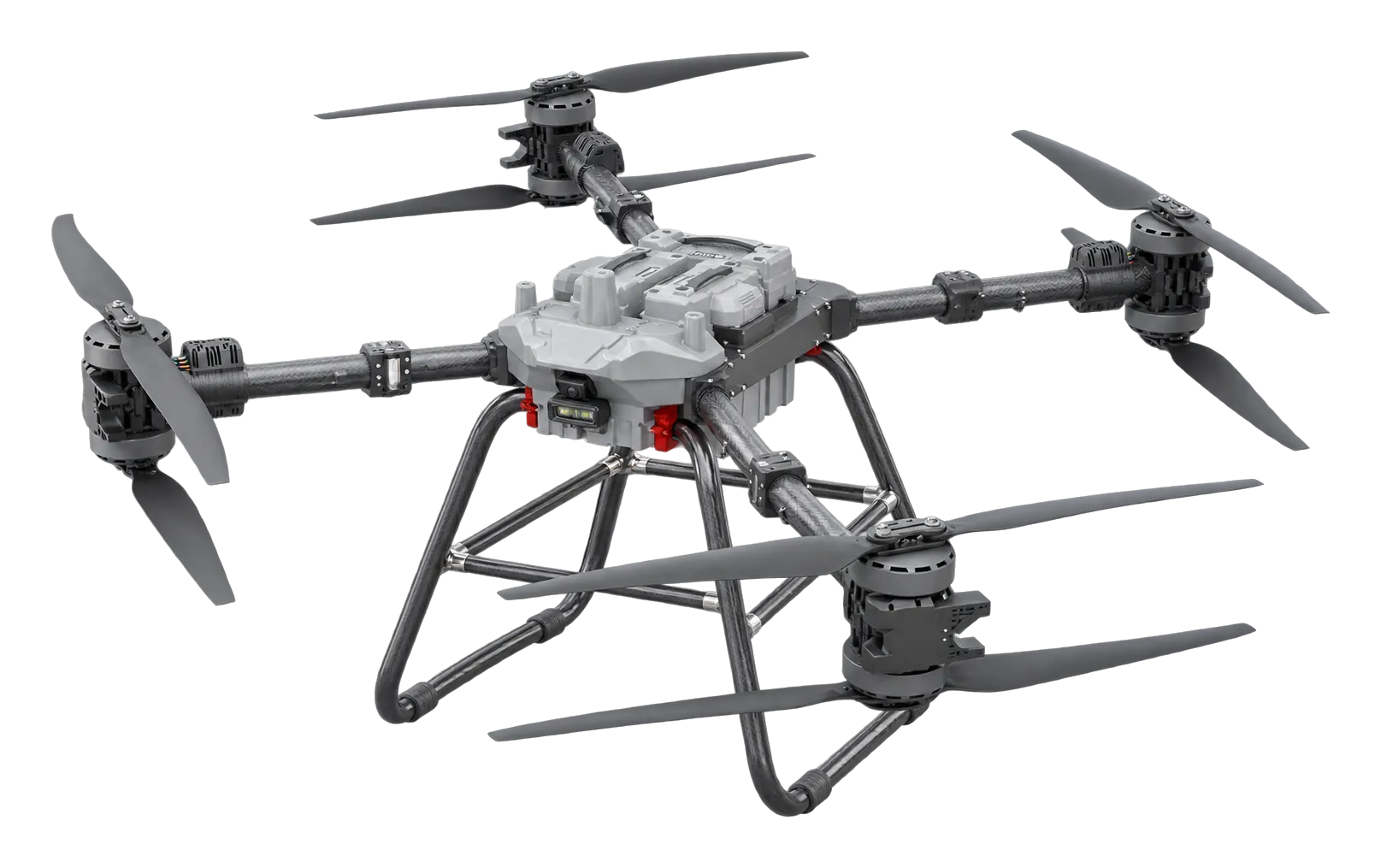
| 400–800 m, standard pilot line | Pilot line | 150 kg-rated class (HL-200) | Scaled line load of 52–84 kg |
| Over 800 m, river or canyon, heavier rope | Pilot line | HL-200 or larger | IEEE 524 excludes special river and canyon crossings |
| Over an energised line or a road | Pilot line | Any, plus protection | OSHA requires barriers or equivalent measures |
| Fittings, insulators and tools to towers | Cargo, not stringing | HL-100 or HL-200 | Piece weight, drop zone, wind |
The HL brochures give no pull-force rating, so ask us for the fitting and the figure you need.
What does the drone actually pull?
A pilot line, and nothing heavier. On Entergy’s Amite South project in Louisiana, a drone installs an initial pulling line through blocks mounted on the transmission structures, and construction crews use that line to pull the following lines and the conductor. The new 230 kV and 500 kV lines cover more than 150 miles, and supervisors report rope installation time cut by about 75 % on some sections, from about seven days to a day and a half. Drone Volt describes the same sequence: a first light cable, then heavier ones. Infravision pairs its stringing drone with an electric puller-tensioner on an off-road trailer and has strung twelve long spans at an operating mine.
How heavy is the line load?
On the Fraser River at Big Bar Ferry, a DJI FlyCart 100 crossed a span of 1,100 ft (about 335 m) with an average line load of about 35 kg. Wind was 2–3 m/s gusting to 7 m/s; nine flights took about three hours, and the line pull itself took about seven minutes.
Example (assumption: line load grows in proportion to span): 35 kg ÷ 335 m is about 0.10 kg per metre of suspended line.
| Span | Estimated line load | Share of HL-100 rating (100 kg) | Share of HL-200 rated load (150 kg) |
|---|---|---|---|
| 335 m (Fraser River, measured average) | 35 kg | 35 % | 23 % |
| 500 m | 52 kg | 52 % | 35 % |
| 800 m | 84 kg | 84 % | 56 % |
At 800 m an HL-100 would be using 84 % of its rating, which is too thin once gusts arrive, while an HL-200 keeps about 44 % margin. Real line load depends on the rope, the sag and the tensioner setting, so confirm it with the stringing contractor’s load cell.
Where does the drone fit in the stringing procedure?
- Survey the route and plan the pull, including crossings.
- Crews mount the blocks on the structures.
- The drone flies the pilot line through the blocks.
- The pilot line pulls a stronger pulling line.
- The pulling line draws the conductor through with a puller-tensioner.
OSHA 1926.964 sets the rules for the crew in the US: use the tension-stringing method, barriers or equivalent measures where lines could contact energised parts; do not exceed the load ratings of stringing lines, pulling lines, conductor grips and rigging; keep two-way radio contact between the reel tender and the pulling-rig operator; keep everyone out from directly under overhead operations while a line is moving; and use temporary protective grounds where induced voltage is possible. IEEE 524-2016 is the guide to stringing methods, equipment and tools for overhead conductors.
What wind and weather stop the job?
The Fraser River plan names the contingencies a crew should write down: wind limits, line entanglement, overload, an emergency abort and secondary landing zones. Set the wind limit with the contractor from the aircraft’s own limit and the line load, then stop below it. The HL product pages publish no wind limit; ask for the figure for your configuration before you plan crossings.
Can a heavy-lift drone also supply the towers?
Yes, and it is the HL range’s stronger case. The HL-100 (60 kg airframe, IP67) carries fittings and tools between towers, and the HL-200 carries insulators and heavier parts. See construction site drone delivery and mountain site drone transport.
Best for your line job
- Best for spans up to about 400 m with light rope: a 100 kg-class aircraft, as 35 kg over 335 m at Fraser River leaves wide margin.
- Best for long spans and river crossings: HL-200, with 150 kg rated margin over an estimated 84 kg at 800 m.
- Best for moving fittings and tools tower to tower: HL-100, with a 60 kg airframe and IP67 protection.
Next step
Send the span lengths, rope type and wind limit your contractor works to through the contact form. Utilities and stringing contractors who want to build a service can also read our partner programme and the guide to power line inspection drones.
Q & A
Common questions
01How long a span can a drone pull a line across?
The Fraser River project crossed 1,100 ft (about 335 m). Longer spans depend on rope weight and wind, so size the aircraft from the line load, not from the span alone.
02Does the drone pull the conductor itself?
No. It pulls a pilot or lead line; crews then pull heavier lines and the conductor with a puller-tensioner.
03Can it work near energised lines?
It can fly the pilot line across them, but the crew must keep protection in place: OSHA 1926.964 calls for barriers or equivalent measures where lines could contact energised parts. Follow your utility’s procedure.
04What wind is too much?
The limit comes from the aircraft and the line load. At Fraser River the wind was 2–3 m/s gusting to 7 m/s, and the plan had wind limits and an abort. The HL product pages publish no wind limit, so ask us for the figure for your configuration.
05Is a stringing drone the same as a cargo drone?
No. A stringing drone is a system built to pull lines, in Infravision’s case with an electric puller-tensioner on a trailer. A cargo drone is built to lift loads on a hook, and we publish no pull-force rating for the HL aircraft.
References
- 1Drone Stringing Technology Expedites Entergy's Transmission Line Construction Project — T&D World
- 21926.964 Overhead lines and live-line barehand work — OSHA
- 3IEEE 524-2016 Guide for the Installation of Overhead Transmission Line Conductors — IEEE Standards Association
- 4Big Bar Ferry Line Pull: Heavy Lift Drone Logistics Across the Fraser River — In Flight Robotics
- 5Using Drones for Powerline Stringing — Infravision
- 6Cable pulling by drone — Drone Volt
VEXAFLY Aviation Technology Co., Ltd.. VEXAFLY Aviation Technology Co., Ltd. — industrial drone maker in Nanjing. Our application engineers write and check these pages and configure inspection, cleaning, lift and fire-response systems for project buyers. About VEXAFLY