Inspection
Power Line Inspection Drones in 2026: Which Setup Fits Your Line?
Power line inspection drone selection for 2026: distribution or transmission, towers or corridors, docked or crewed, payloads, km per flight and rules.
- Author
- VEXAFLY Aviation Technology Co., Ltd.
- Scope
- Inspection
- Published
- Length
- 4 min read · 6 sources
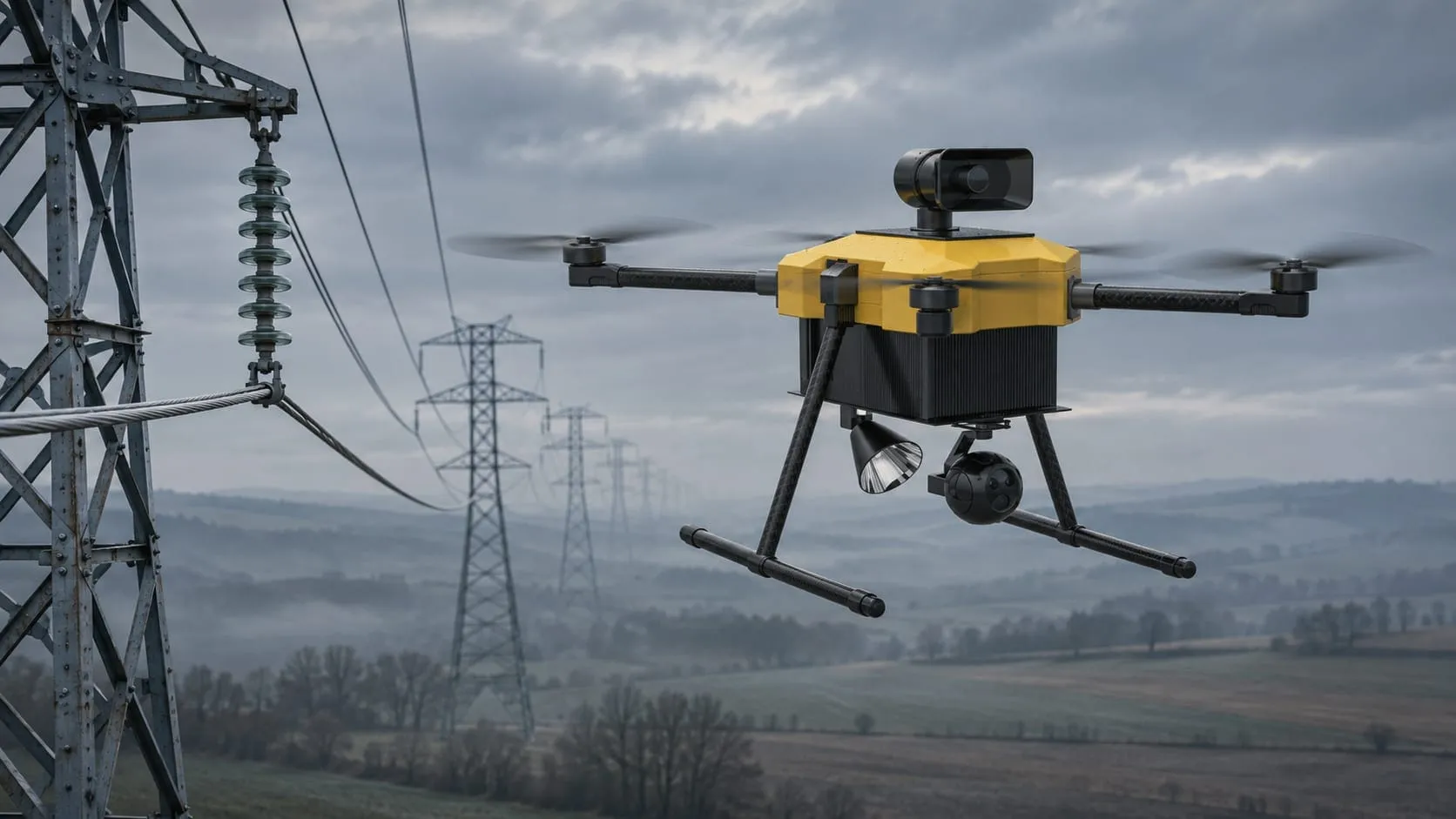
Short answer: in 2026 the best power line inspection drone is decided by the line, not by the brand. Use a compact aircraft such as the IS-4X for distribution feeders, the IS-4 for tower close-ups, the IS-9 for long corridors and cold or wet routes, and a DS-1 dock with an IS-4 only for segments you fly again and again near a substation.
Which setup fits which line?
| Line and job | Aircraft | Payload | Flight mode | Where it stops |
|---|---|---|---|---|
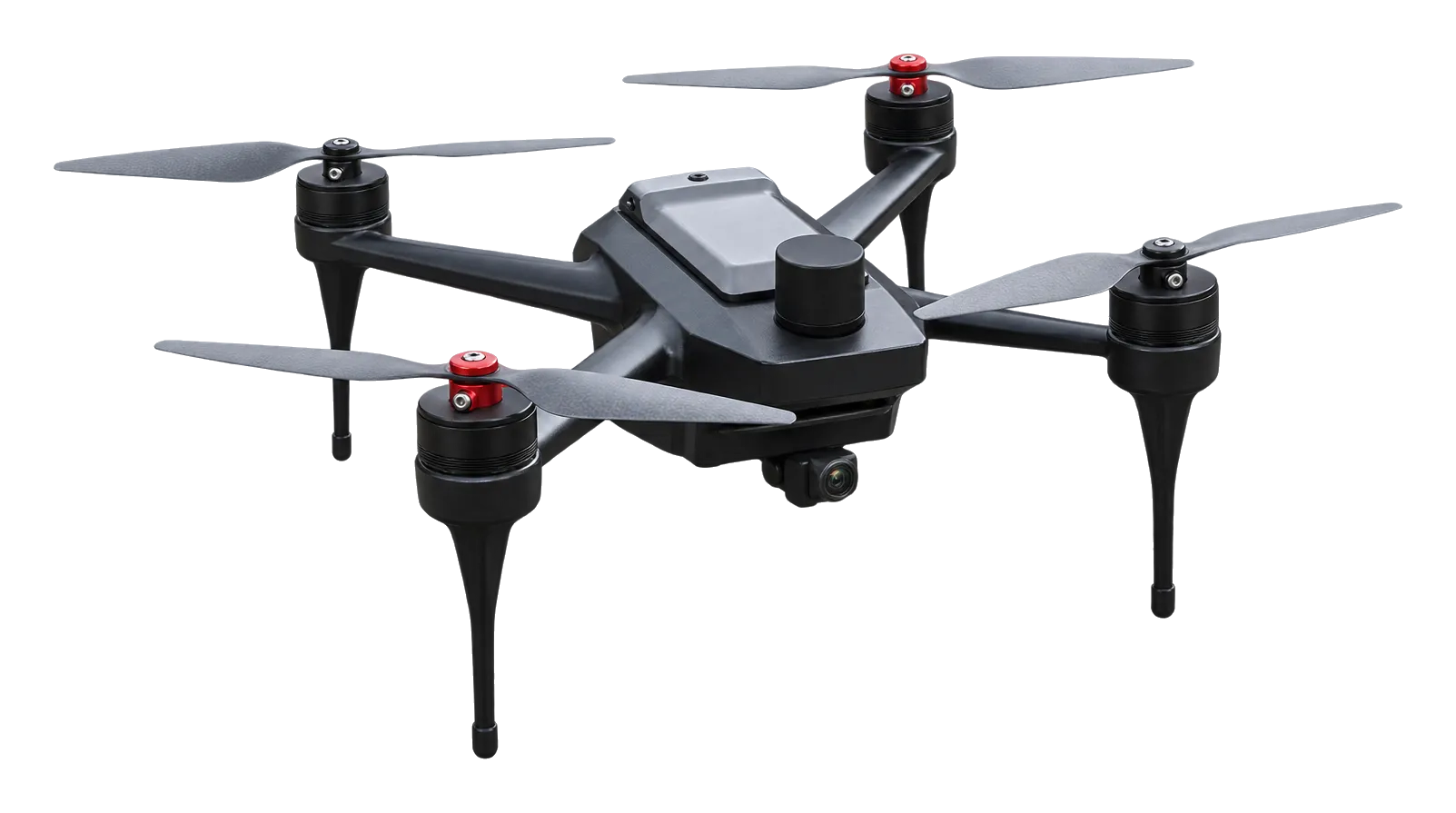
| Distribution feeder, short roadside spans | IS-4X | Zoom or thermal | Visual line of sight, crew by car | 5 km range, wind level 6 |
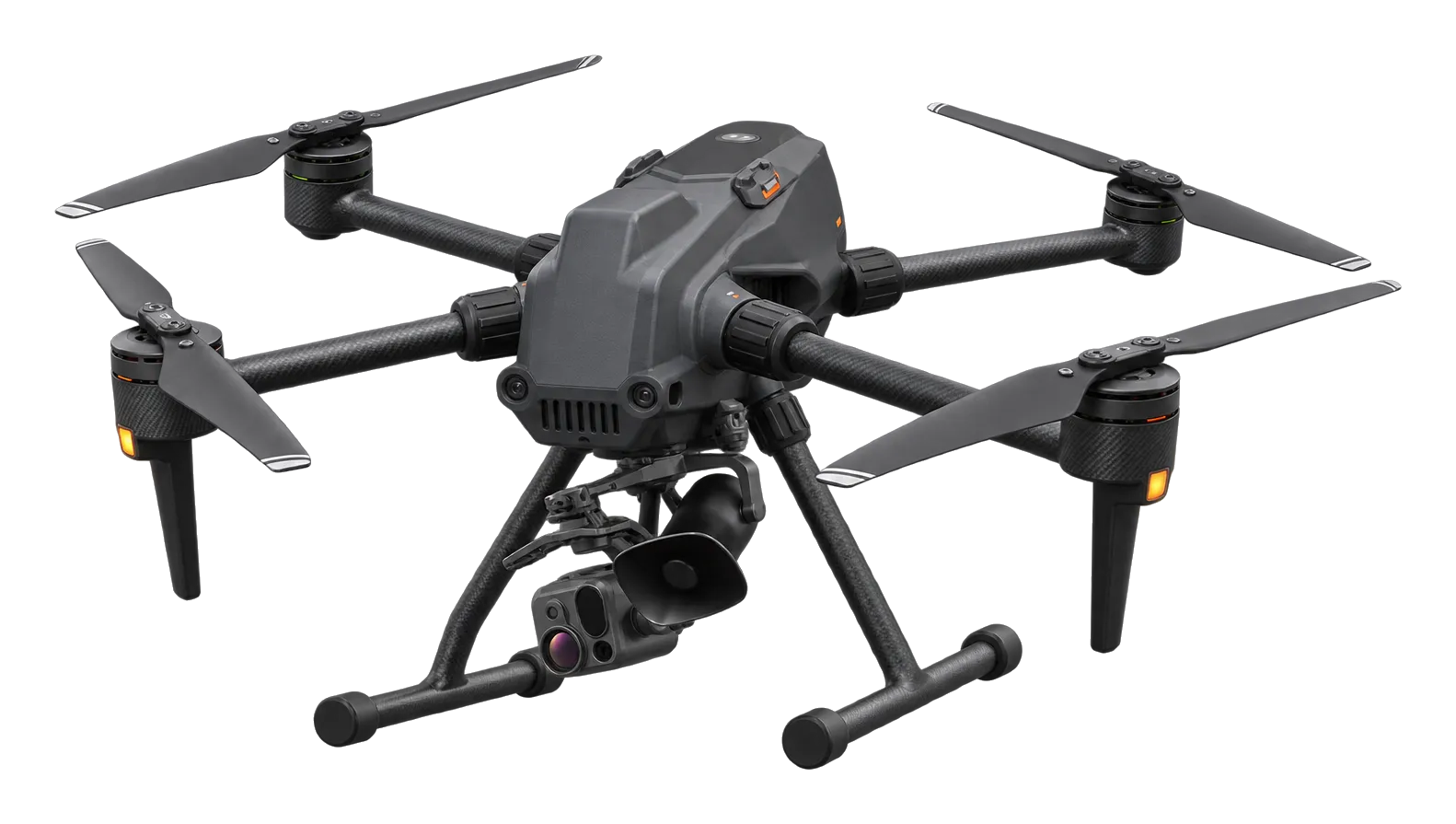
| Transmission towers, close inspection | IS-4 | Four-optical (18× zoom plus IR) | Short visual legs | 63 min, 3 kg, IP45 |
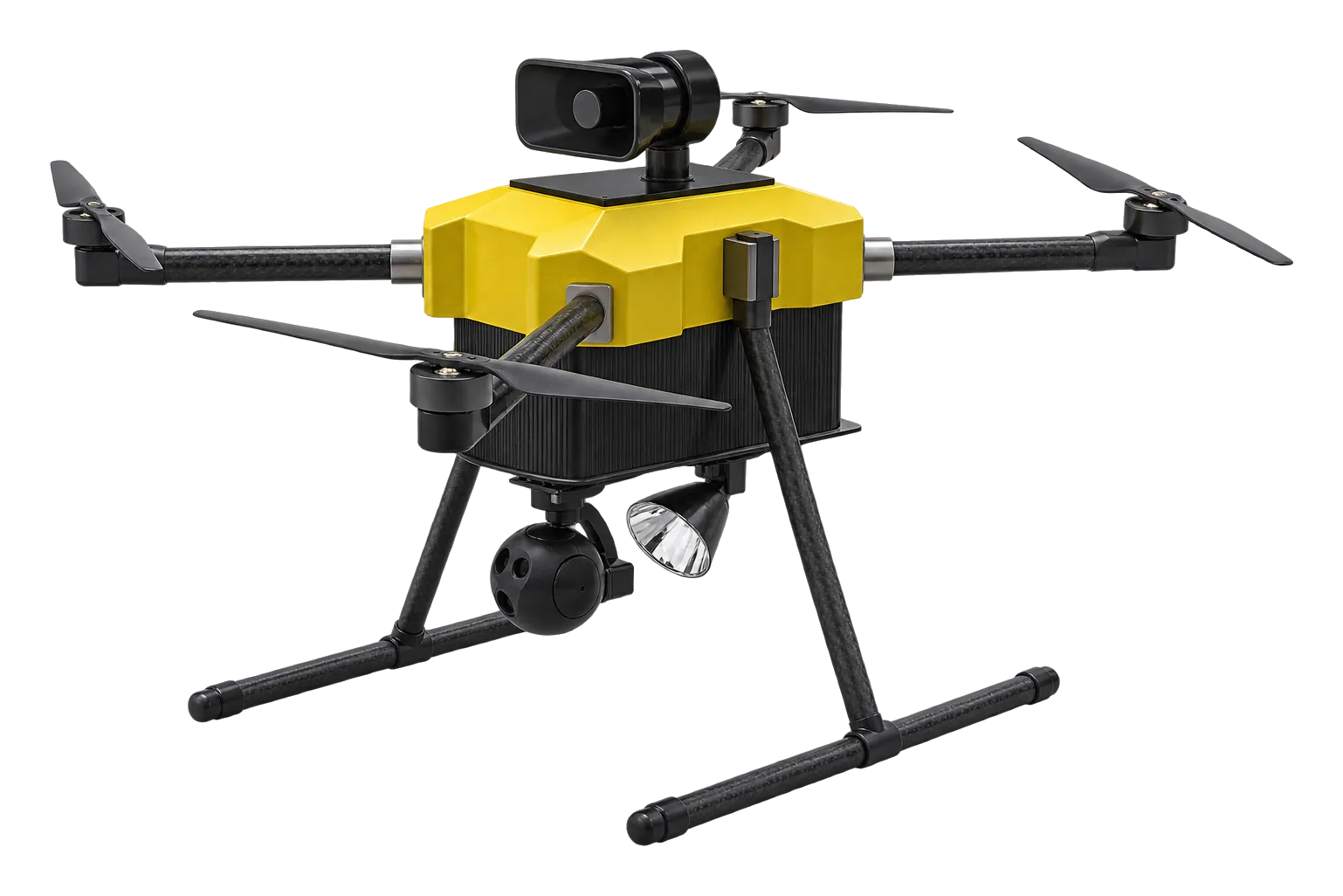
| Transmission corridor, vegetation patrol | IS-9 | Zoom and thermal gimbal, heavier sensors | Beyond sight with approval, or visual legs | Approval for long legs |
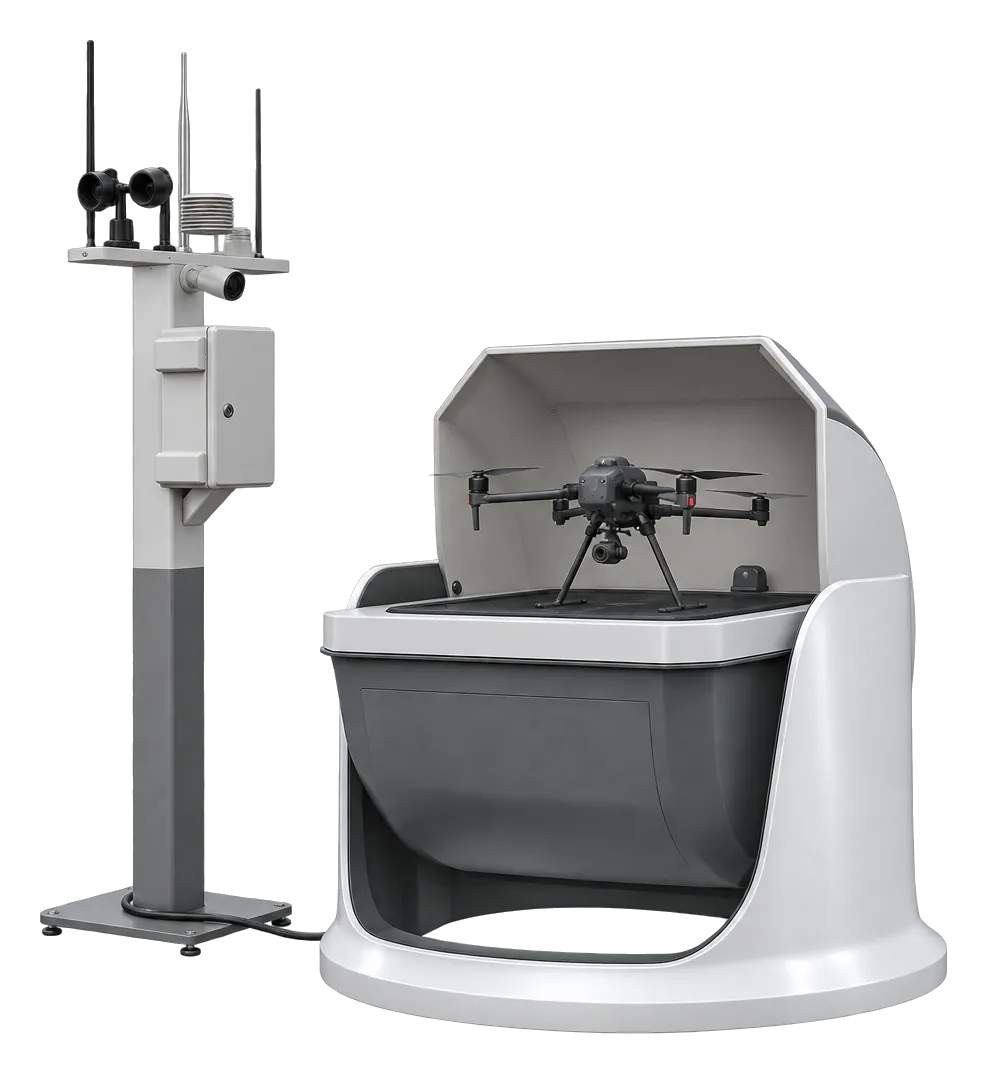
| Segments near a substation, repeated | DS-1 plus IS-4 | Thermal and zoom | Docked, remote | 8 km control range, needs power and Ethernet |
| Cold, wet or mountain route | IS-9 | As above | Crewed | Payload above 5 kg |
Which payload sees which defect?
| Sensor | Finds | Check before ordering |
|---|---|---|
| Zoom camera | Cracked insulators, loose pins, damaged dampers, corrosion | Zoom ratio at the stand-off distance you will use |
| Thermal camera | Hot joints, clamps and connectors | Fly under load; ask for the camera resolution |
| LiDAR | Clearance to trees, conductor sag, terrain | Weight against the IS-9 table (3–5 kg) |
We list no LiDAR model. Send us the unit and its weight and we check it against the IS-9 endurance table.
How far can one flight go?
Example only, with assumed figures. An IS-9 carrying a 2 kg zoom and thermal gimbal has 75 minutes of brochure endurance. Keep a 30 % reserve: 75 × 0.7 = 52 minutes usable. At 8 m/s along the corridor that is 8 × 60 × 52 = 24,960 m, about 25 km flown. Out and back from one take-off point that is about 12.5 km of line per sortie; with a second crew landing the aircraft at the far end it is about 25 km one way. Both need approval to fly beyond sight.
For towers the limit is time, not distance. An IS-4 has 63 minutes, so 63 × 0.7 = 44 minutes usable. Assuming 10 minutes per tower (four faces, insulators and a thermal pass), 44 ÷ 10 gives 4 towers per battery; a 40-tower line needs 10 batteries.
Towers or corridor: are they the same job?
No. Tower work is slow and close: hovering, zooming, a thermal pass, then the next tower. Corridor patrol is fast and linear, looking for vegetation, sag, missing hardware and access problems, then handing defects to a close-up flight. Vegetation checks have their own clock: in the US, NERC standard FAC-003-5 requires inspecting 100 % of the lines it covers at least once per calendar year, with no more than 18 calendar months between inspections of the same line.
When does a dock make sense on a line?
For a short segment you want flown weekly or after every storm, such as the span leaving a substation or a river crossing. The DS-1 works only with the IS-4 and has an 8 km control range, far less than a long line. The crew-hours arithmetic is in drone dock or crewed inspection; prices are in drone dock price.
What do cold, wet and mountain routes change?
Pick by rating. The IS-9 is IP67 and works from −40 °C to 50 °C; the IS-4 is IP45 with a 5,000 m service ceiling and wind level 7. In freezing weather keep batteries warm before take-off. Steel towers and strong fields can disturb a magnetic compass, so flight-test on your own line and use RTK for hover accuracy (±0.1 m on the IS-4).
What do the rules allow?
In the US, Part 107.51 caps flight at 400 ft above ground, with an exception near tall structures; beyond-sight flight needs a waiver (see BVLOS drone inspection). In the EU, long-corridor flights usually fall in the specific category. US buyers of foreign-built drones should check three things before ordering: FCC Covered List status, the Section 232 duty (100 % on drones with integrated thermal imagers and on docking stations from 3 September 2026) and FAA approval for aircraft of 55 lb or more. Confirm with your customs broker and the FAA; see importing from China and FCC certification.
Quick picks
- Best for tower close-ups: IS-4, 63 min, 3 kg payload, RTK hover to ±0.1 m.
- Best for long corridors and cold routes: IS-9, up to 120 min, IP67, −40 °C.
- Best for repeated segments near a substation: DS-1 plus IS-4, 8 km control range.
- Best for quick distribution checks: IS-4X, 2 kg frame, IP67, 60 min.
Next step
Send the line length, voltage class, terrain, how often you patrol now and which defects matter. We reply with an aircraft and payload and a kilometres-per-sortie estimate for your route, through the contact form.
Q & A
Common questions
01What is the best drone for power line inspection?
It depends on the line. Use a compact aircraft for distribution feeders, a 3 kg-class aircraft with zoom and thermal for tower close-ups, and a long-endurance aircraft for corridors.
02Does a distribution line need a different drone from a transmission line?
Usually yes. Distribution spans are short and roadside, so a light aircraft that one person carries is enough. Transmission lines are long and tall, so endurance, wind rating and zoom matter more.
03How many kilometres of line can a drone inspect per flight?
In our example an IS-9 with a 2 kg payload covers about 12.5 km of line out and back, or about 25 km one way with a landing crew. Real figures depend on payload, wind, speed and the reserve you keep.
04Do I need thermal, zoom or LiDAR?
Zoom finds damaged insulators, pins and dampers. A thermal camera finds hot joints and clamps under load. LiDAR measures clearance to trees and conductor sag. Many crews carry zoom and thermal together and add LiDAR for vegetation work.
05Can I fly above 400 feet near a transmission tower?
In the US, Part 107 allows flight higher than 400 ft above ground only within a 400 ft radius of a structure, and no higher than 400 ft above the top of that structure. Other countries have their own limits, so check your authority.
06How much does a power line inspection drone cost?
Our reference prices, FOB China, are US$4,000–6,700 for the IS-4X, US$9,100–11,400 for the IS-4 and US$42,800–50,000 for the IS-9, varying with configuration and quantity. One published cost model puts drone inspection near $61 per mile against about $260 per mile by helicopter.
References
- 114 CFR 107.51 Operating limitations for small unmanned aircraft — eCFR (US Government)
- 2Part 107 Waivers — Federal Aviation Administration
- 3FAC-003-5 Transmission Vegetation Management — NERC
- 4Drone Powerline Inspections: A Practical Guide — SPH Engineering
- 5Best Drones for Power Line Inspection in 2026 — DroneTrader
- 6Civil Drones — Specific Category — EASA
VEXAFLY Aviation Technology Co., Ltd.. VEXAFLY Aviation Technology Co., Ltd. — industrial drone maker in Nanjing. Our application engineers write and check these pages and configure inspection, cleaning, lift and fire-response systems for project buyers. About VEXAFLY