Heavy lift
Heavy Lift Drone for Construction in 2026: Which Jobs Suit It and Which Don't
Heavy lift drone for construction in 2026: jobs by aircraft, drone vs crane, rooftop delivery, hard-to-fly loads, wind limits and where drones do not fit.
- Author
- VEXAFLY Aviation Technology Co., Ltd.
- Scope
- Heavy lift
- Published
- Length
- 4 min read · 6 sources
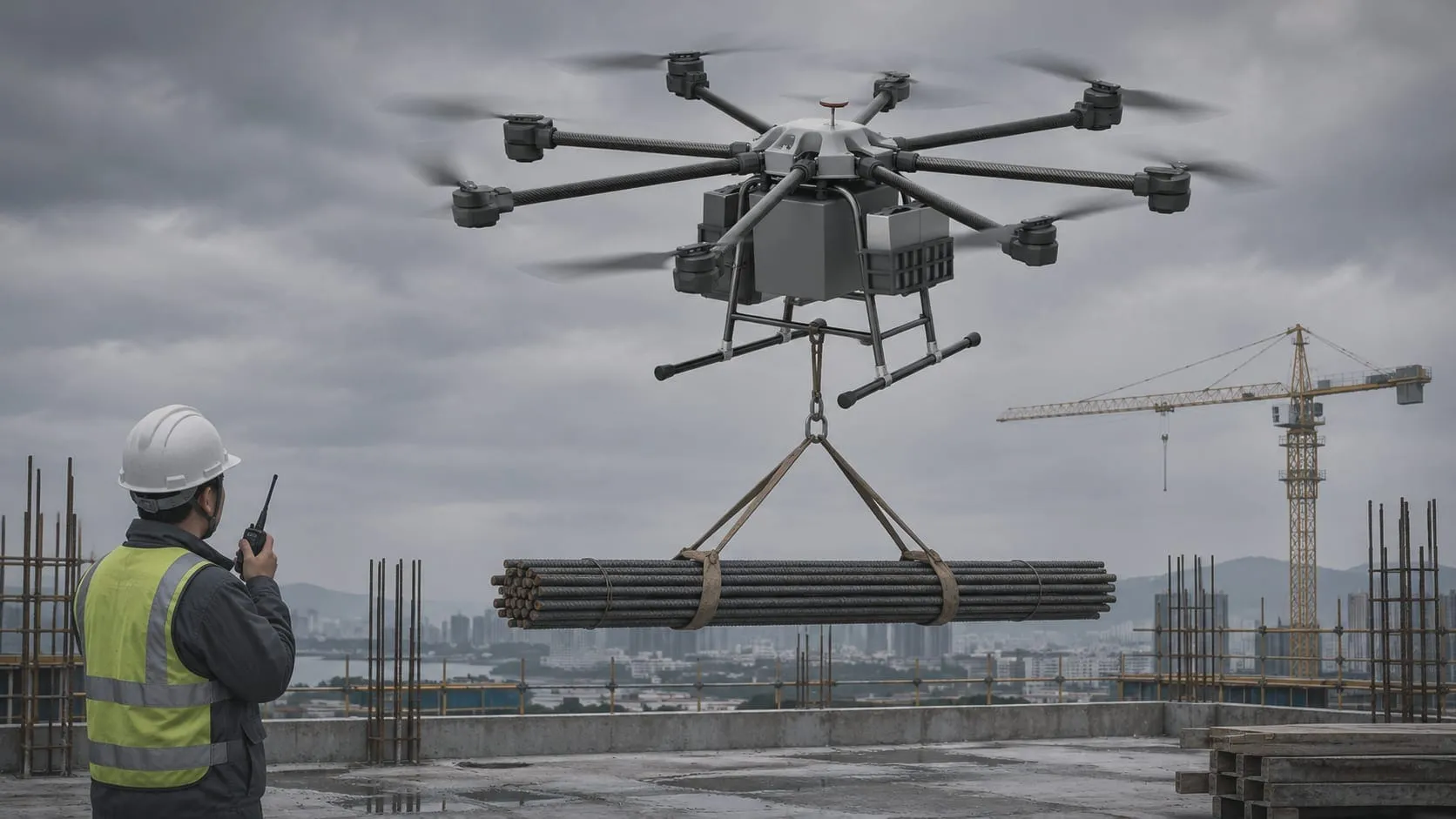
Short answer: a heavy lift drone for construction earns its place where a crane cannot reach or a road cannot be built: roofs behind power lines, tower sites on hills, river and ravine crossings and soft ground in nature reserves. In 2026 it moves pieces up to about 100–200 kg, a few minutes per trip. Where a crane can park next to the building, the crane is usually quicker.
Which construction jobs suit a heavy-lift drone?
The planning loads are our assumptions for a first plan, not maker limits.
| Job | Planning load per lift | Access problem | Best fit |
|---|---|---|---|
| Rooftop deliveries | About 80 kg: roofing packs, fixings | No lift; crane boom blocked | HL-100, with a winch to lower |
| Tower erection on hills | Pieces up to 150 kg | No access road, a climb of hundreds of metres | HL-200 |
| Slope works, retaining walls | 40–80 kg: bags, anchors, tools | Steep ground, no plant access | HL-100 or HL-150 |
| River and ravine crossings | Tools and parts over several trips | No bridge yet | HL-150, 19.2 km at 80 kg |
| Nature reserves, soft ground | Sheet piles of about 85 kg | No road plates allowed | HL-200 on a sling |
Two cases show the range. In Kezhou, Xinjiang, a DJI FlyCart 100 delivered maintenance tools across the Gaizi River to a 220 kV tower in two trips, about 30 minutes in all. In the Netherlands, Drone Lift flew 24 steel sheet piles up to 800 m into a national park in one day.
Drone or crane?
| Question | Crane | Heavy-lift drone |
|---|---|---|
| Reach | Boom length and firm ground to stand on | Flies over obstacles; a winch lowers the load (DJI lists 0–30 m, 10–15 m recommended) |
| Load | Heavy and bulky | Up to 150–200 kg; sheet materials are harder than compact loads |
| Wind | Works to its own limits | Most heavy-lift drones are rated to about 12 m/s |
| Failure | Typically leaves the load suspended; can tip when overreaching | A failed drone does not leave the load hanging; it cannot tip |
| Time | Continuous | Battery-limited: about 10 minutes at most with 100 kg on one operator’s aircraft, 4–5 minutes on typical missions |
| City use | Common | Lifts to upper floors in city centres are “almost impossible” to approve |
Dronewatch, the European drone-industry site that supplies these points, says drones fill the operational gap between crane and helicopter. Our HL-200 table gives 18 minutes at 100 kg, so aircraft differ; either way the battery sets the day.
Can a drone deliver to a roof?
Yes, where a crane cannot. In March 2026 SKYSHIFT used a DJI FlyCart 100 to deliver materials to a factory roof in Osaka that had no elevator and power lines that stopped a crane boom. A winch lets the aircraft hover and lower loads without landing. The rules are the hard part: US Part 107 restricts flights over people (section 107.39), and aircraft this heavy sit outside Part 107 anyway; in the EU they fall into the specific category and need an operational authorisation.
Example (assumed quantities): 1,500 kg of roofing materials must reach a factory roof, with the staging area about 120 m from the building. The HL-100 is planned at 80 kg per lift, 80 % of its rating, because packs are bulky and catch wind. 1,500 ÷ 80 = 18.75, so 19 lifts. At about 5 minutes per cycle, consistent with the 4–5 minute missions Dronewatch reports, that is 19 × 5 = 95 minutes of flying, spread over several battery sets. An HL-200 at 100 kg per lift needs 15 lifts, or 75 minutes. A crane beside the building would be quicker; the drone wins when the boom cannot reach.
What loads are hard to fly?
- Sheet materials such as solar panels and boards catch the wind far more than compact loads.
- Long or flexible loads twist and swing under the aircraft.
- Anything hanging swings like a pendulum when the aircraft accelerates or brakes, so rigging uses certified gear with a minimum safety factor of three.
What wind can a heavy-lift drone work in?
Most heavy-lift drones are rated to about 12 m/s, but the rating is for the aircraft, not for a sheet of plywood hanging below it. Set a lower limit for large flat loads and for gusty roof edges. The HL product pages publish no wind limit, so ask us for the figure for your configuration before you plan.
Where are drones not allowed or not sensible?
- City-centre lifts to upper floors, which Dronewatch calls almost impossible to approve.
- Flights over people, which US Part 107 restricts and most authorities treat strictly.
- Single picks above 200 kg; a helicopter or a crane does those (see drone vs helicopter).
- Flat sites with road access and a crane already on site.
Best for your site
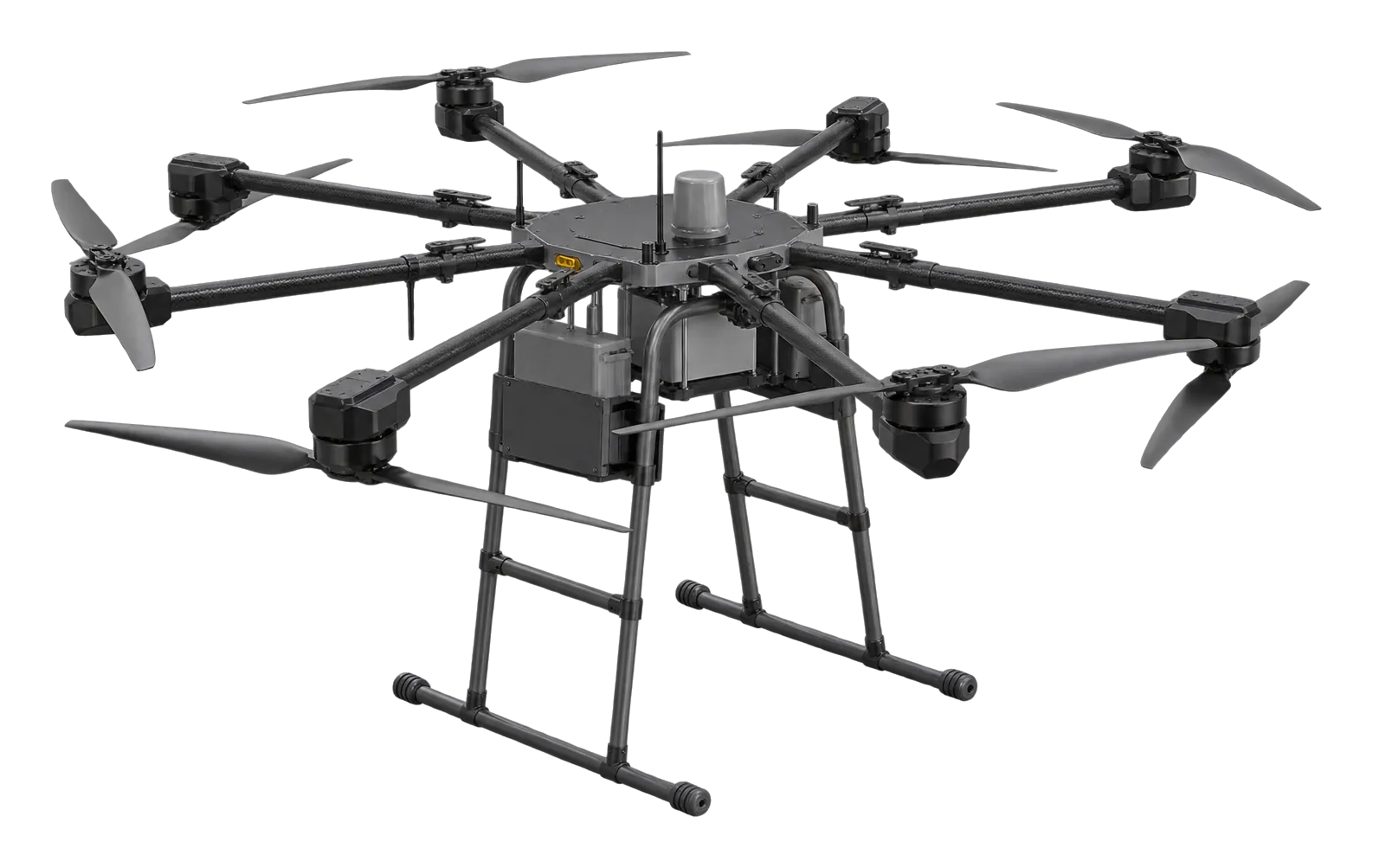
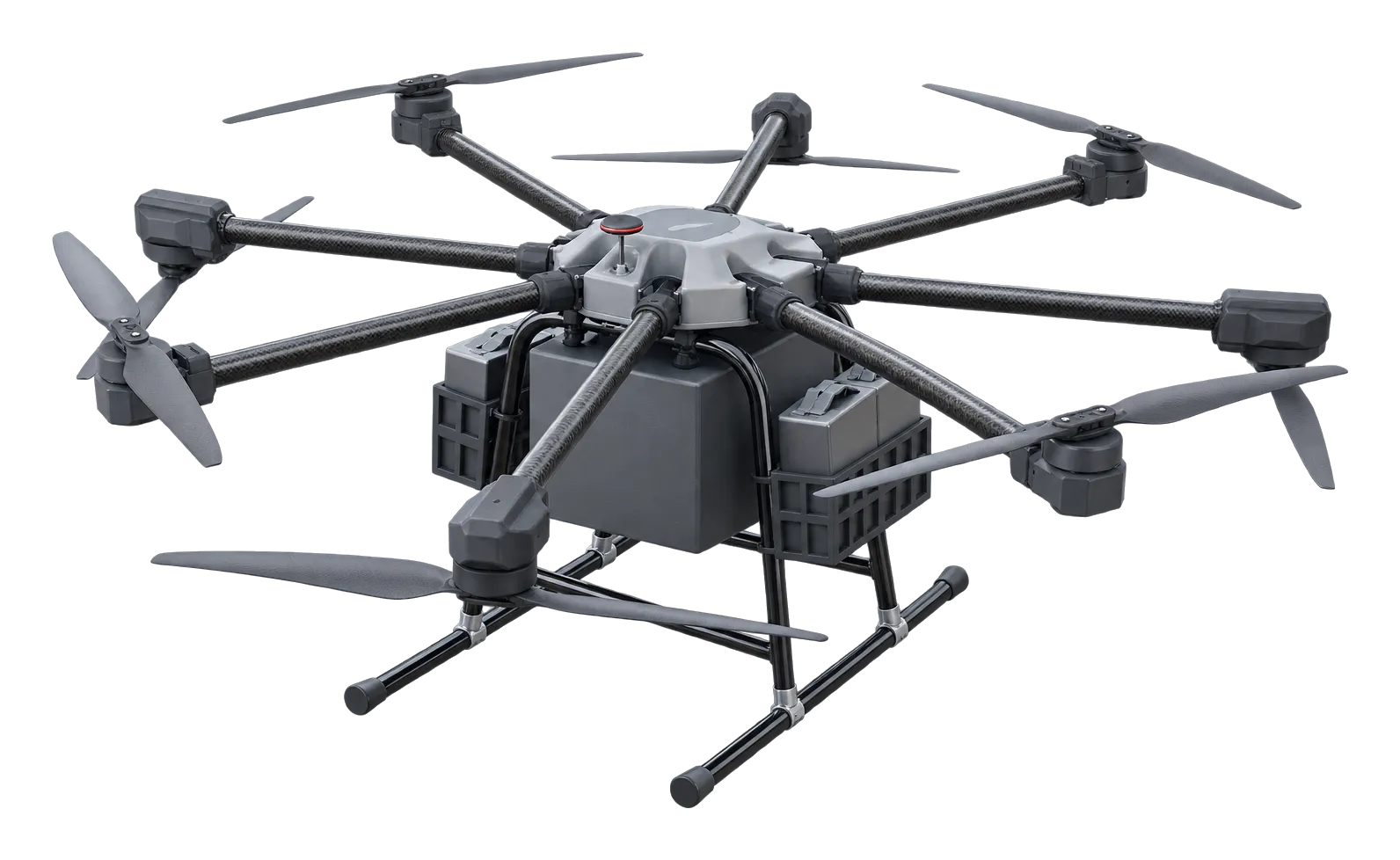
- Best for rooftop deliveries where a crane cannot reach: HL-100, 100 kg rated, planned at 80 kg per lift.
- Best for tower erection materials on hills: HL-200, 150 kg rated.
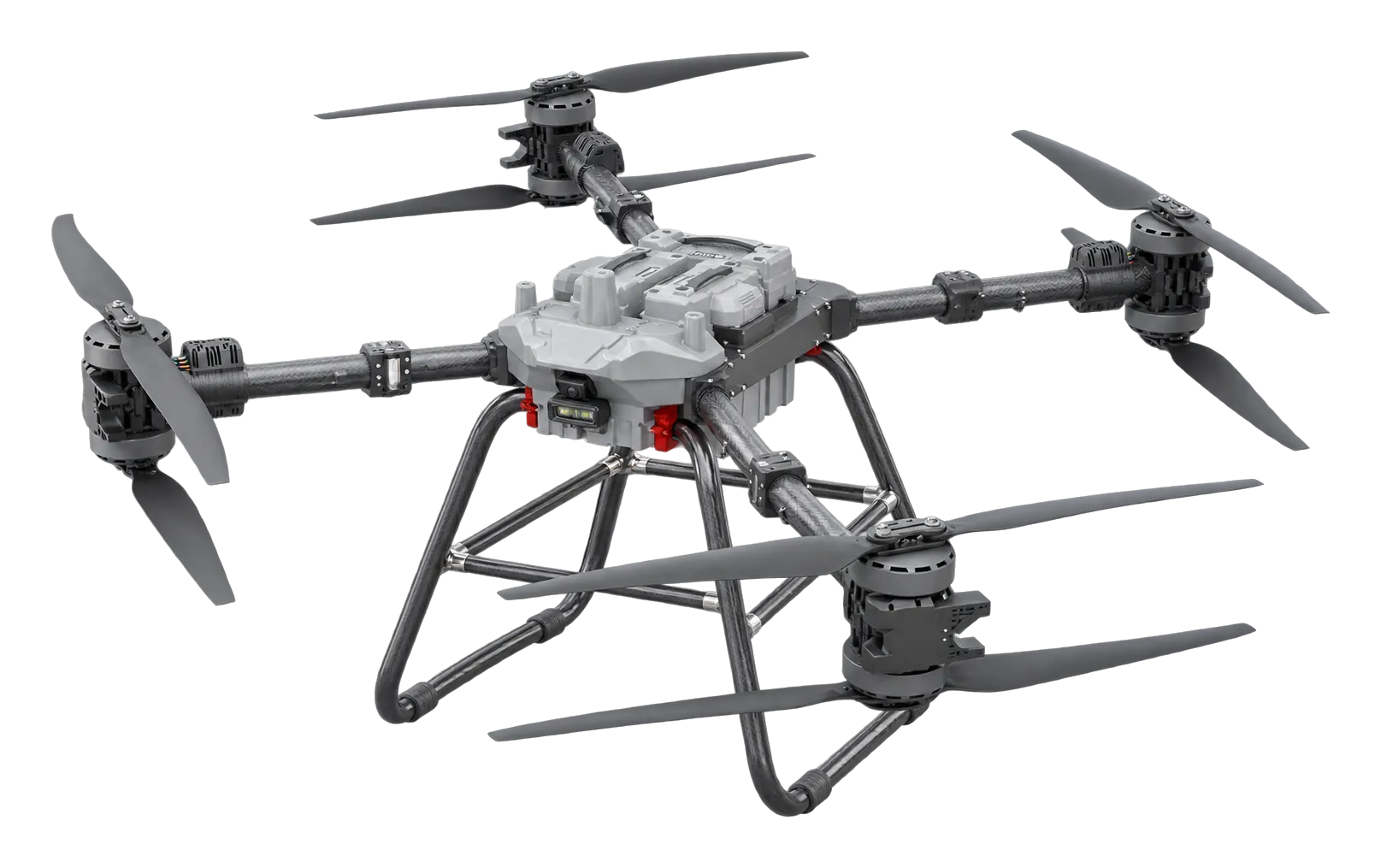
- Best for spread-out sites and river crossings: HL-150, 19.2 km at 80 kg.
- Best for nature reserves and soft ground: any HL aircraft with a sling or winch, as no road plates are needed.
Next step
Send the job type, the heaviest piece, the distance and the access problem through the contact form. For ground work on the same site see construction progress monitoring drones; for hill sites read mountain site drone transport.
Q & A
Common questions
01How much does a heavy lift drone for construction cost?
Our reference FOB China ranges are US$25,000–49,000 (HL-100), US$46,500–49,000 (HL-150) and US$31,500–45,300 (HL-200). The cargo drone price guide shows what the working set adds.
02Is there a drone that can lift 200, 300 or 400 pounds?
Yes. 200 lb is 91 kg, inside the 100 kg class (HL-100). 300 lb is 136 kg, within the HL-200’s 150 kg rated load. 400 lb is 181 kg, above the HL-200’s rated load but under its 200 kg maximum, so split it where you can.
03Can a drone replace a crane?
Not in general. A drone suits pieces up to 150–200 kg where a boom cannot reach or a road cannot be built. Where a crane can park beside the building, it is usually quicker.
04What wind can a heavy-lift drone work in?
Most heavy-lift drones are rated to about 12 m/s, but sheet materials are harder than compact loads. The HL product pages publish no wind limit, so ask us for the figure for your configuration.
05What permits does a construction lift need?
In the US, aircraft over 55 lb generally need a Section 44807 exemption; in the EU they fall into the specific category; in the Netherlands drones over 25 kg need a TUG permit. Start the approval before the aircraft arrives.
References
- 1Drone vs Crane: The Reality of Heavy Lift Drone Operations — Dronewatch Europe
- 2Heavy-Lift Drones in Construction: Moving Materials Where Traditional Equipment Falls Short — gnss.ae
- 314 CFR 107.39 Operation over human beings — eCFR / FAA
- 4Civil Drones — Specific Category — EASA
- 5Drone hoisting improves grid maintenance in mountains — China Daily
- 6DJI FlyCart 100 specs — DJI
VEXAFLY Aviation Technology Co., Ltd.. VEXAFLY Aviation Technology Co., Ltd. — industrial drone maker in Nanjing. Our application engineers write and check these pages and configure inspection, cleaning, lift and fire-response systems for project buyers. About VEXAFLY