Inspection
Solar Farm Inspection Drones in 2026: Setup by Plant Size, Layout and Sun Conditions
Solar farm inspection drone guide for 2026: flight hours by plant size, valid thermal conditions, resolution, portable or docked, and hot dusty sites.
- Author
- VEXAFLY Aviation Technology Co., Ltd.
- Scope
- Inspection
- Published
- Length
- 4 min read · 4 sources
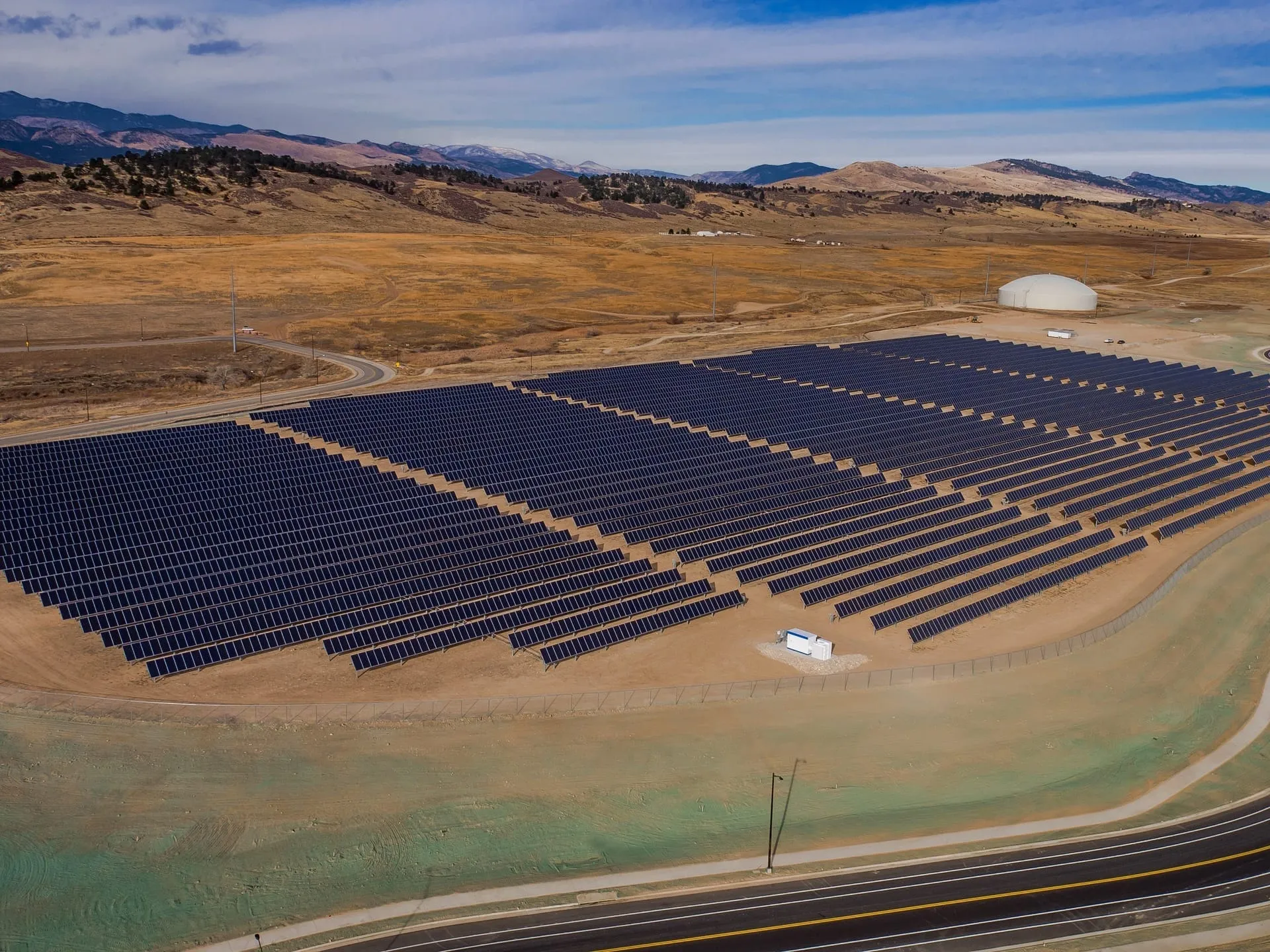
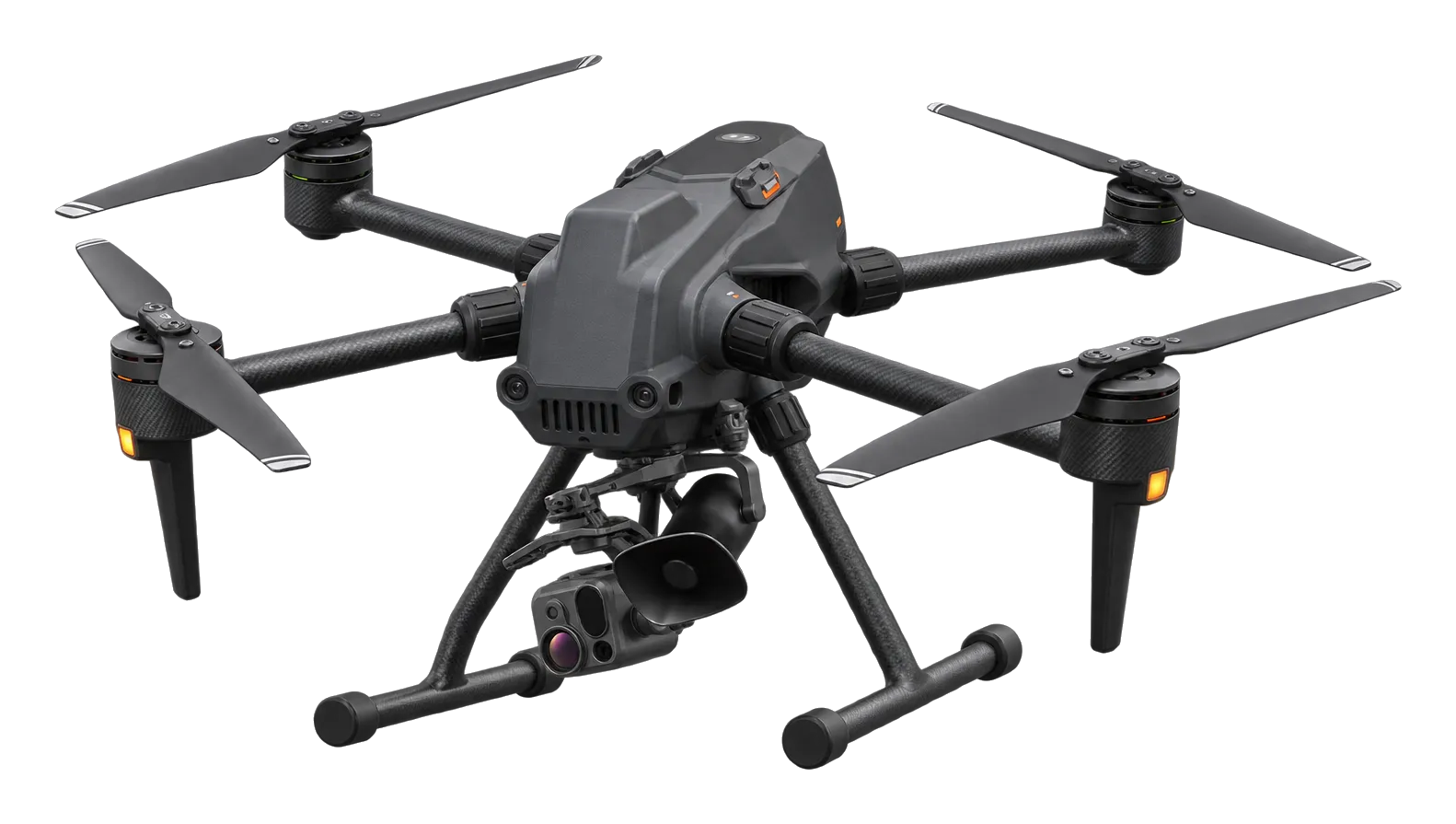
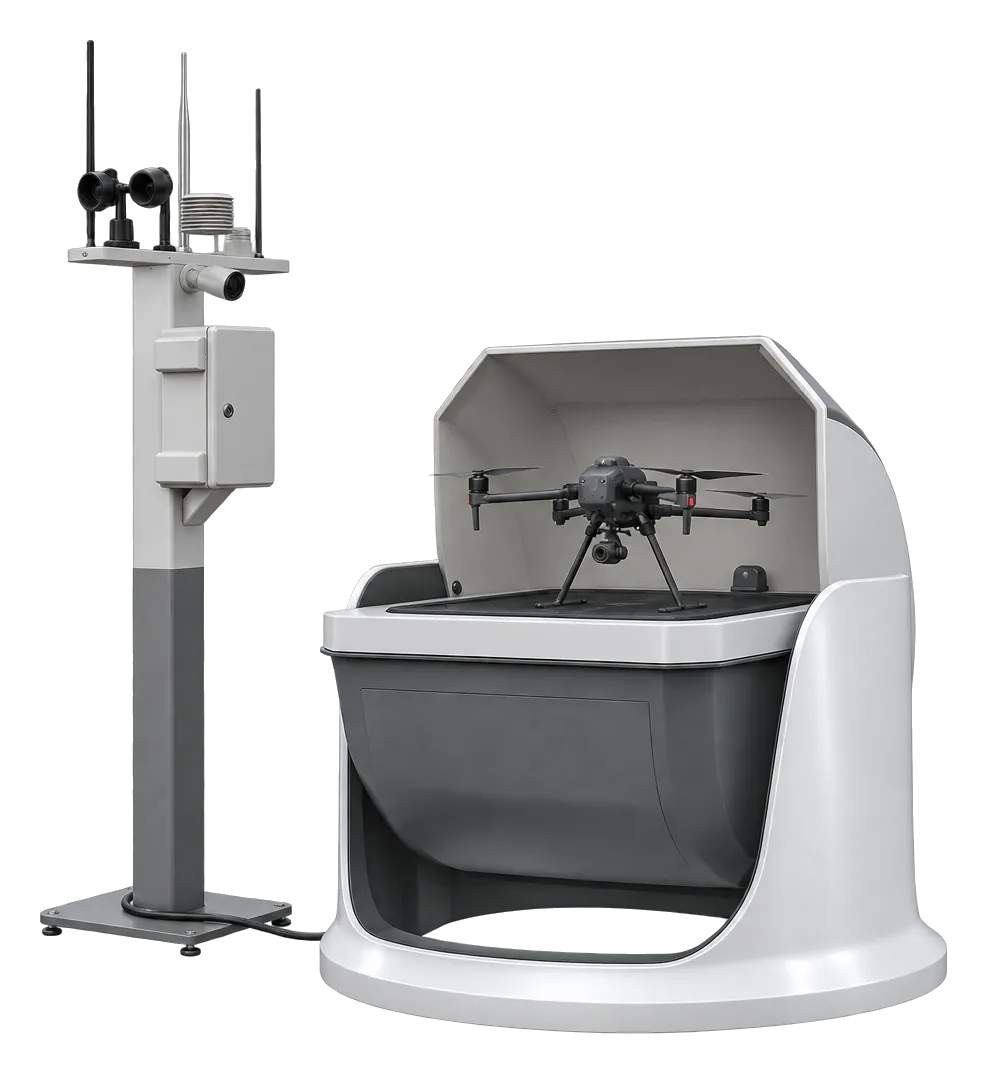
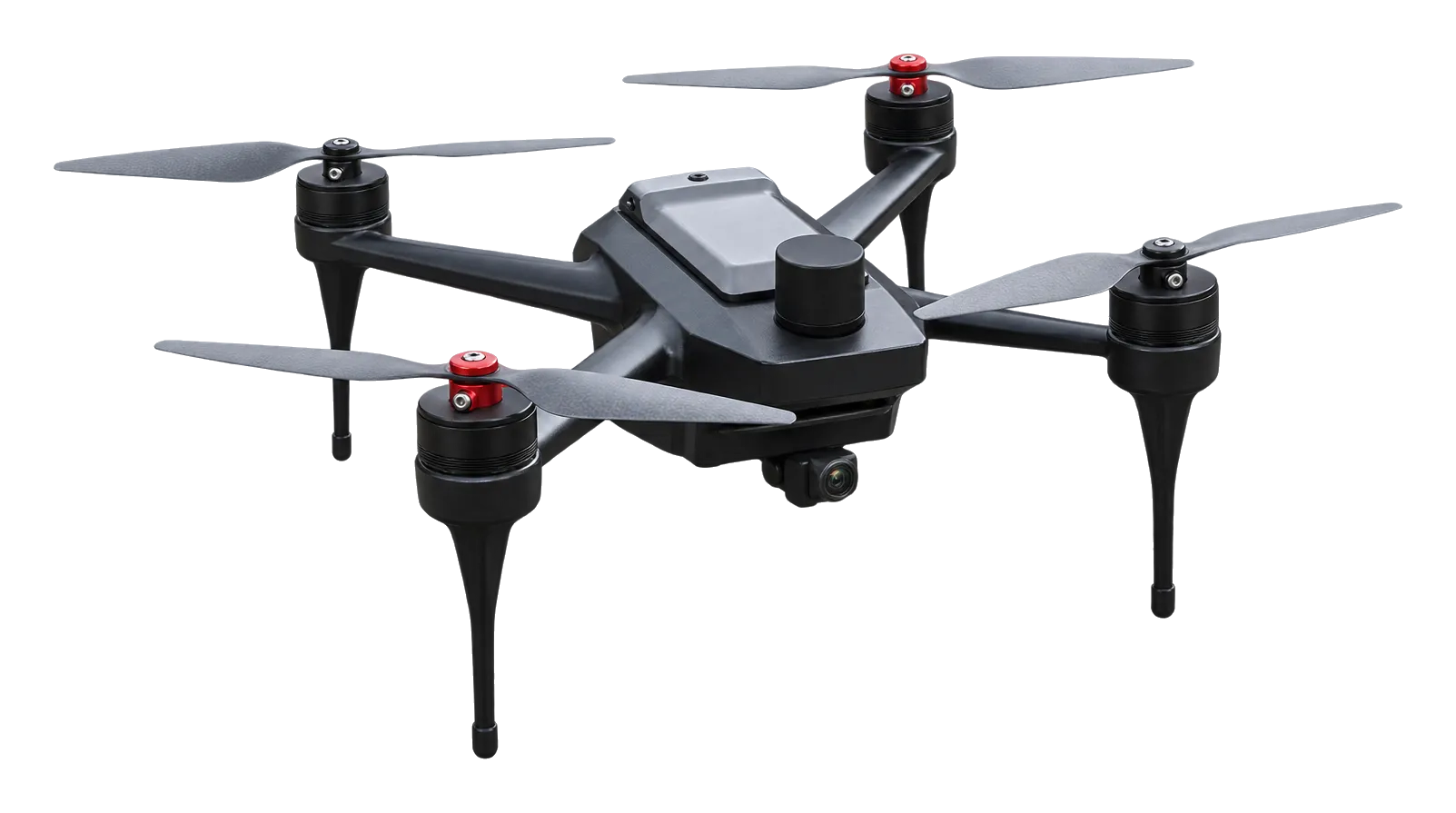
Short answer: in 2026 the right solar farm inspection drone setup follows plant size and layout. Use the IS-4X for rooftops and quick checks, the IS-4 with a thermal gimbal for ground plants up to about 20 MWp, and a DS-1 dock with an IS-4 for remote plants where short flights inside the sunny window beat long drives.
Which setup fits which plant?
| Plant | Size | Flight hours at 2 MWp/h | Setup | Limit |
|---|---|---|---|---|
| Rooftop commercial | up to 1 MWp | up to 0.5 | IS-4X | 5 km range, 2.5 kg payload |
| Ground-mount | 1–20 MWp | 0.5–10 | IS-4, thermal gimbal | Valid-sun window |
| Utility-scale | 20–100 MWp | 10–50 | Two IS-4 crews, or DS-1 on site | Crew days, batteries |
| Remote desert plant | any | as above | DS-1 plus IS-4 | Power and network at the dock |
| Trackers or fixed tilt | any | as above | Same; agree tracker position with the O&M team | Glare angle |
Flight hours use the 2 MWp per hour figure from the IEA PVPS review (T13-10:2018, a large PDF) for ideal conditions.
When is a thermal image valid?
| Condition | Value | Why |
|---|---|---|
| Irradiance | Above 600 W/m² | Faults show up under load |
| Sky | No cloud passing | Clouds change irradiance and cell temperature |
| Wind | Low | Wind cools the modules |
| Ambient | Stable | Comparison between modules needs equal conditions |
The IEA PVPS review cites irradiance above 600 W/m² and constant ambient conditions, and IEC TS 62446-3 is the standard for outdoor infrared thermography. Measure irradiance in the plane of the modules.
What resolution, altitude and speed?
The standard sets a maximum of about 3 cm of module edge per pixel. Ground resolution is flight height × pixel pitch ÷ focal length. Ask for the thermal camera’s pixel pitch and focal length, set the flight height so the result stays below 3 cm, and slow down where wind or sun glare reduces quality. The IS-4 takes a 1K infrared dual-optical gimbal or a four-optical gimbal with infrared.
How long does a plant take?
Example only, with assumed figures. A 20 MWp ground-mount plant at 2 MWp per hour needs 20 ÷ 2 = 10 flying hours. An IS-4 gives about 63 × 0.7 = 44 usable minutes per battery, so 600 ÷ 44 ≈ 14 flights. If the valid window is 4 hours around midday, one aircraft needs 10 ÷ 4 = 2.5, so 3 days; two aircraft need 2 days. Hired, a thermal survey at $150–500 per MW costs 20 × $150–500 = $3,000–10,000 a scan; a handheld walk-down at $800–1,200 per MW costs $16,000–24,000. Window length varies with site and season.
Portable crew or docked drone?
A crew is cheaper for plants visited a few times a year. A dock suits a plant you survey monthly or after storms: the DS-1 flies short sorties inside the window without a site visit, in a plant that has power and Ethernet. The arithmetic of visits is in drone dock or crewed inspection and the cost in drone dock price.
How do hot, dusty and remote sites change it?
IP67 means dust-tight and protected against temporary immersion; IP45 does not mean dust-proof. The IS-4X is IP67 and the IS-9 IP67 with −40 to 50 °C, while the IS-4 is IP45. The DS-1 works up to 50 °C at IP54. Ask us for the IS-4 and IS-4X operating temperatures in the quotation. See drones in extreme heat. US buyers: thermal-camera drones are in the 100 % Section 232 duty group from 3 September 2026; check FCC Covered List status, duty and FAA approval for aircraft of 55 lb or more with your customs broker, per importing from China.
Inspection or cleaning?
Inspect first. The thermal and visible images show which blocks are soiled and which have faults; a cleaning drone then washes only where it pays. See solar panel cleaning drones and our cleaning range.
Quick picks
- Best for plants up to about 20 MWp: IS-4 with a thermal gimbal, 63 min, 3 kg.
- Best for remote utility-scale plants: DS-1 plus IS-4, daily flights inside the sun window, −35 to 50 °C.
- Best for rooftops and quick checks: IS-4X, 2 kg frame, IP67.
- Best for plants that also need washing: pair inspection with a cleaning drone.
Next step
Send the plant size in MWp, the layout, the tracker type and your current inspection interval through the contact form. We return flight hours, batteries and a setup.
Q & A
Common questions
01Can a drone inspect solar panels?
Yes. A thermal camera shows hot cells, hot spots, failed bypass diodes and strings that are out of service, and a visible camera shows soiling, cracks and shading. It finds where to look; it does not replace electrical tests.
02What conditions are needed for a valid thermal inspection?
Irradiance above 600 W/m² in the plane of the modules, a clear sky and low wind, with stable ambient conditions. IEC TS 62446-3 is the standard for outdoor infrared thermography of PV plants.
03How many MW can a drone inspect per day?
IEA PVPS reports 2–3 MWp per hour of net raw aerial infrared imaging in ideal conditions. Multiply by the hours of your valid window; at 2 MWp per hour and 4 valid hours, that is about 8 MWp a day per aircraft.
04What thermal camera resolution do I need?
The standard sets a maximum of about 3 cm of module edge per pixel. Ground resolution is flight height × pixel pitch ÷ focal length, so ask for both figures and set the flight height from them.
05Is a dock worth it on a solar farm?
For large or remote plants where you want short flights inside the sun window and fewer site visits. For a plant visited a few times a year, a portable aircraft is cheaper.
06Should I use an inspection or a cleaning drone?
Both do different jobs. Inspect first to find soiling and faults, then send the cleaning drone where it is needed.
References
VEXAFLY Aviation Technology Co., Ltd.. VEXAFLY Aviation Technology Co., Ltd. — industrial drone maker in Nanjing. Our application engineers write and check these pages and configure inspection, cleaning, lift and fire-response systems for project buyers. About VEXAFLY