Agriculture
Vineyard Drone Spraying in 2026: Rows, Slopes, Spray Rates and EU and US Rules
Vineyard drone spraying in 2026: matching aircraft to row spacing and slope, spray rates from the Turin study, and the EU ban and US rules explained.
- Author
- VEXAFLY Aviation Technology Co., Ltd.
- Scope
- Agriculture
- Published
- Length
- 4 min read · 5 sources
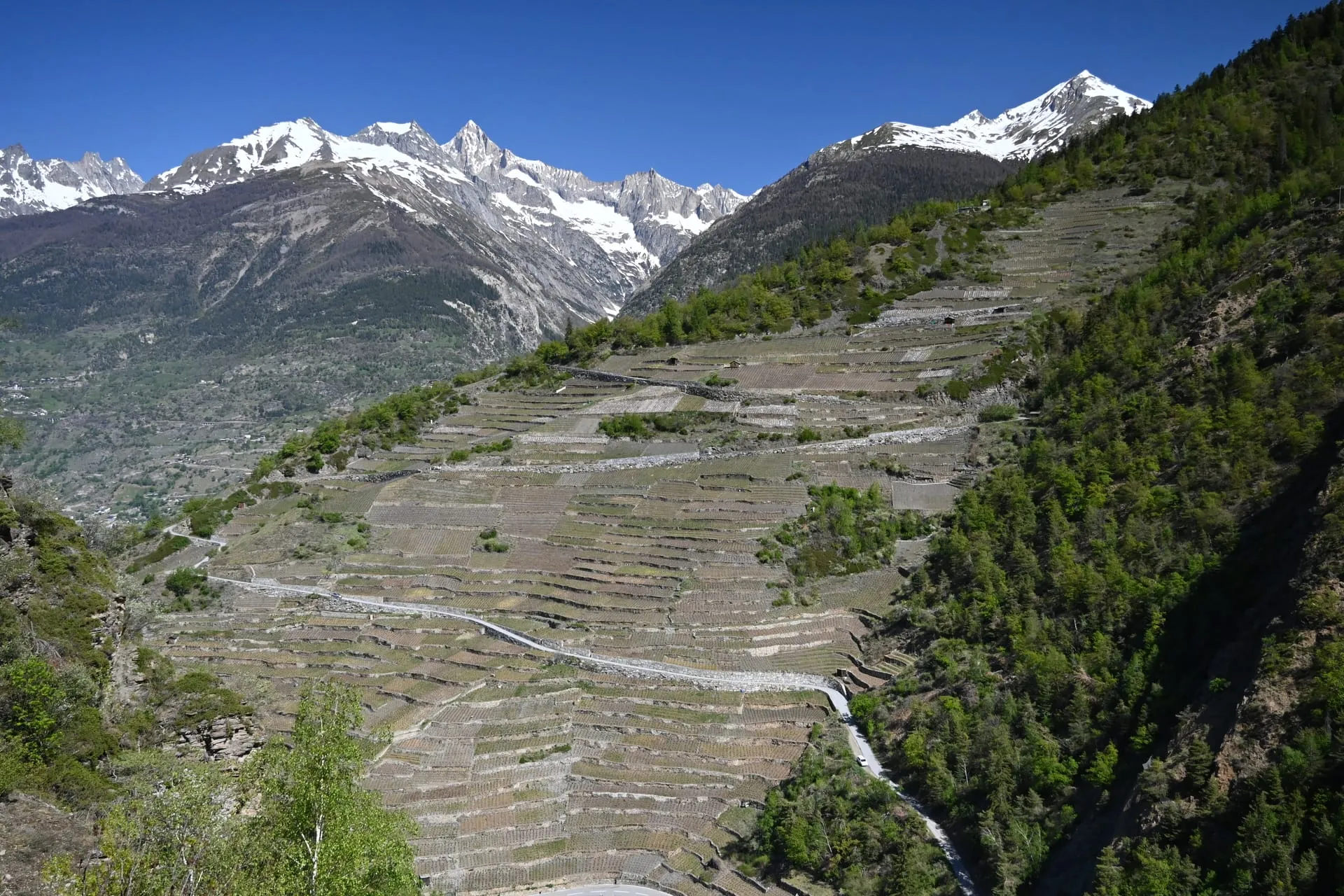
Short answer: in 2026 vineyard drone spraying suits steep, small and terraced blocks where tractors and aircraft struggle, and it stays slow at the volumes vines need. Match the aircraft to row spacing and slope: the AS-10 / AS-20 for small steep blocks, the AR-30 / AR-50 for fungicide and spreading on medium hillside blocks. In the EU, aerial spraying is banned by default, and the product label always decides.
Which vineyard suits a drone?
Existing pages are dealer or maker guides. Here the vineyard sets the aircraft.
| Vineyard | Canopy stage | Aircraft | Pass pattern |
|---|---|---|---|
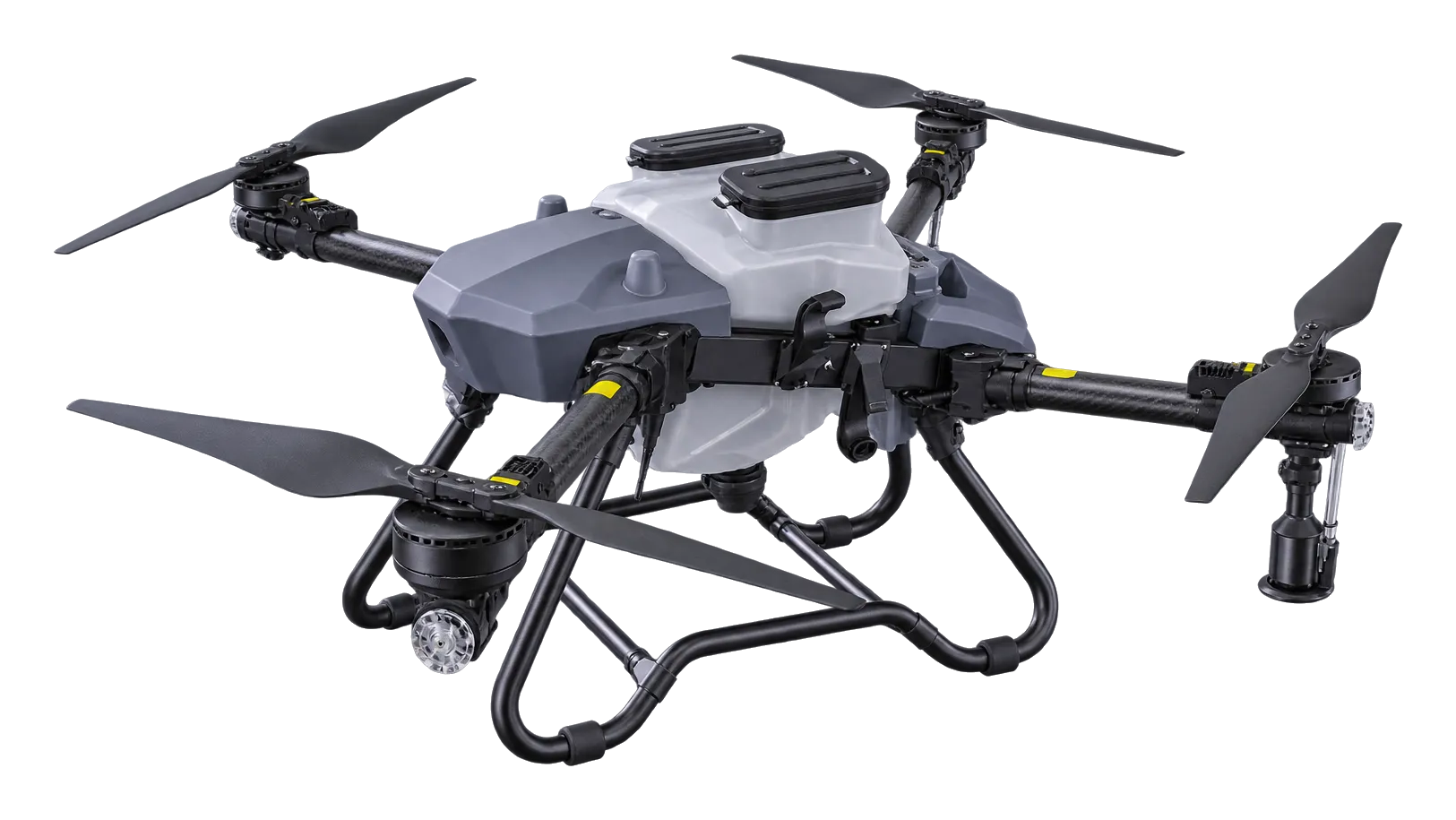
| Steep terraces, under 3 ha | Any | AS-10 (10 L, 26 kg MTOW) | Along the row, slow |
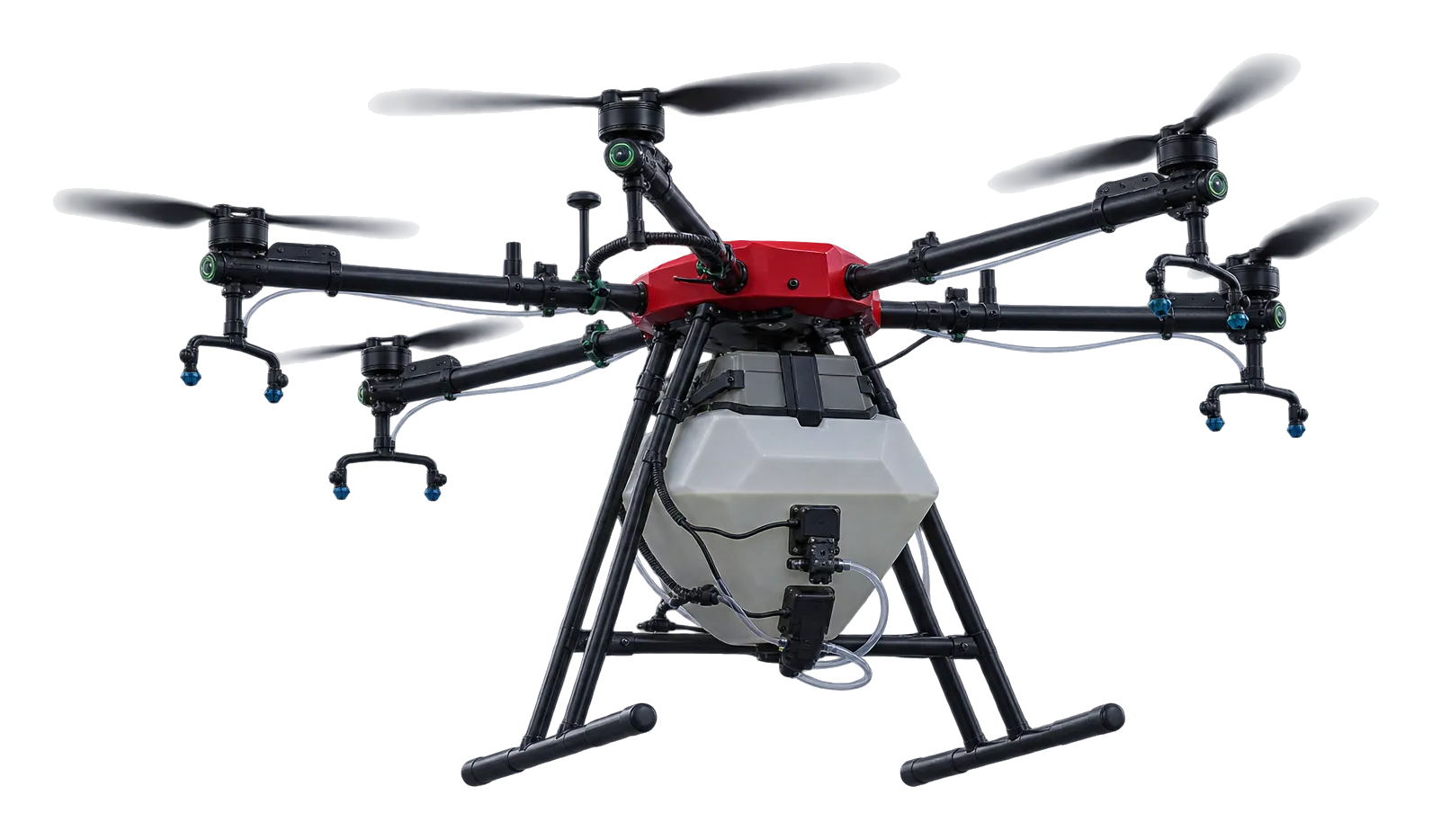
| Hillside, 3–20 ha | Early to mid-season | AS-20 (20 L, 3–6 m) | Along the row; one or two rows per pass |
| Medium blocks, rows 2–2.5 m | Fungicide, fine droplets | AR-30 / AR-50 (50–500 µm) | Two-row passes |
| Rows with trellis wires, power lines, tree lines | Any | Ground sprayer | Drone stops where wires cross the flight line |
How much spray per hectare?
The Turin study, summarised by SPH Engineering from a 2026 paper in Precision Agriculture, flew a ten-litre custom kit over Asti vineyards (5,000 vines per hectare, 2.5 m rows) at 2.70 m above ground, 1.5 m/s and five rates: 54.2, 72.9, 90.6, 105.8 and 142.2 L/ha, in 45 flights. Higher volume raised deposit, but not spraying efficiency, and the most spray reached the ground mid-season, when the canopy had risen toward the aircraft. Ohio State’s fact sheet says drone tanks hold 2–5 gallons (about 8–19 L) and rates run 1–2 gallons per acre (about 9–19 L/ha) in general use, a tank lasting 4–10 minutes, and that little research compares drone and conventional sprayers in vineyards. Treat both as references: the label sets the dose and minimum volume.
What height and direction?
Fly along the row at a steady height above the canopy, with terrain following on slopes. The Turin study used 2.70 m above ground. Heading control matters: the downwash must go where the rows are, not across them, and the wind should cross the row at a low angle. For drift control, see drone spray drift control.
How long does one block take?
Example (assumed inputs, an estimate): a 20 ha hillside vineyard with 2.5 m rows, sprayed by an AR-30 covering two rows per pass: 5 m × 1.5 m/s × 60 % = 4.5 m²/s, about 1.6 ha/h, so about 12.3 hours of spraying. At 100 L/ha (inside the Turin range) the job needs 2,000 L:
| Aircraft | Tank | Loads |
|---|---|---|
| AR-30 | 30 L | 67 |
| AR-50 | 50 L | 40 |
| AS-20 | 20 L | 100 |
This is why low-volume vineyard work stays slow: the aircraft is not the limit, the volume is.
Is drone spraying legal in European vineyards?
Directive 2009/128/EC Article 9(1) requires Member States to prohibit aerial spraying. A derogation is allowed in special cases only if there is no viable alternative or clear advantages, the product is explicitly approved for aerial spraying, the operator and enterprise are certified, residential areas are protected and the best drift-reducing technology is used. In December 2025 the Commission’s proposal reached the Council (file 2025/0409(COD)), with a new Article 9a that would let Member States exempt certain drone types; as of our check it is not adopted. Check your national authority and the current status of the proposal before you plan a drone programme. Every aircraft above 25 kg is in the EU “specific” category and needs an operational authorisation.
What should US buyers check?
US buyers have three checks before ordering a foreign-built drone: its FCC Covered List status, the Section 232 duty and FAA approval for aircraft of 55 lb or more. Confirm with your customs broker and the FAA. Spray work falls under FAA Part 137 and the pesticide label; in California, the Department of Pesticide Regulation and your county agricultural commissioner also apply. Details: importing industrial drones from China and drone FCC certification. We do not state that any of our aircraft can be imported or flown in the US.
What about mildew timing and coverage?
Downy and powdery mildew programmes are timed by weather and growth stage. The drone changes how the product is applied, not when it should be. Coverage under leaves is the weak point, so fine droplets and a slow pass matter more than speed. We make no efficacy promise; run a deposition test on one block before a season-long programme.
Where does the drone stop?
Wires, trellis posts, tree lines and hedges, neighbours’ houses, schools and water. A high canopy mid-season brings the leaves close to the rotors. If the take-off point is a long walk away, battery swaps slow the day. See agricultural drones for hilly terrain.
Best for …
- Best for steep terraces and small blocks: the AS-10, 10 L tank, 26 kg MTOW.
- Best for medium hillside blocks: the AS-20, 20 L tank, 3–6 m width.
- Best for fine-droplet fungicide work and spreading: the AR-30 / AR-50, 50–500 µm droplets, 4–8 m spray width.
Reference prices run from US$2,700 to 7,000 for the AS-10 / AS-20 and US$5,800 to 14,000 for the AR-30 / AR-50 (FOB China; configuration decides).
Next step
Send us your row spacing, slope, block sizes and country, and the product label you plan to use. We reply with a pass pattern and an aircraft shortlist. Also see our Australia market page.
Q & A
Common questions
01How much does drone spraying cost per acre?
Service prices vary by country and product, and we do not publish a figure. For your own cost, divide the aircraft price, batteries, crew and chemicals by the hectares you spray in a season; reference prices for our aircraft are on the product pages.
02How big an area can one vineyard drone cover in a day?
In rows spaced 2.5 m and at low speed, an AR-30 doing two rows per pass covers about 1.6 ha an hour of spraying time on our example inputs. A day is fewer hours than that, because of refills and weather.
03Is drone spraying legal in EU vineyards?
By default no. Directive 2009/128/EC Article 9 requires Member States to prohibit aerial spraying, with narrow derogations. A Commission proposal of December 2025 would let Member States exempt certain drone types; it was not adopted when we checked. Ask your national authority.
04What height and droplet size for vines?
The Turin study flew 2.70 m above ground with terrain following at 1.5 m/s. Our AS-10 / AS-20 use 110–400 µm droplets and the AR-30 / AR-50 50–500 µm. The label and drift conditions decide the droplet size.
05Can a drone spray steep terraces?
Often yes, which is why drones are used in small-acreage European and Asian vineyards where terrain stops conventional aircraft. Wires, posts and tree lines remain the limits.
References
- 1Directive 2009/128/EC, Article 9 Aerial spraying (original text) — legislation.gov.uk (EU directive as adopted)
- 2Proposal amending Directive 2009/128/EC (Council doc 17055/25) — Council of the European Union
- 3Vineyard Drone Spray Rates Tested Across 3 Growth Stages — SPH Engineering
- 4Advancements in Technology for Reduction of Pesticides Used in Orchards and Vineyards (FABE-538) — Ohio State University Extension
- 5Dispensing Chemicals and Agricultural Products (Part 137) with UAS — FAA
VEXAFLY Aviation Technology Co., Ltd.. VEXAFLY Aviation Technology Co., Ltd. — industrial drone maker in Nanjing. Our application engineers write and check these pages and configure inspection, cleaning, lift and fire-response systems for project buyers. About VEXAFLY