Agriculture
Drone Spray Drift in 2026: A Go / No-Go Guide by Site, Wind and Droplet Size
Drone spray drift in 2026: a site-by-site go / no-go table with wind limits, flight height, droplet size, inversions and a pre-flight checklist.
- Author
- VEXAFLY Aviation Technology Co., Ltd.
- Scope
- Agriculture
- Published
- Length
- 4 min read · 6 sources
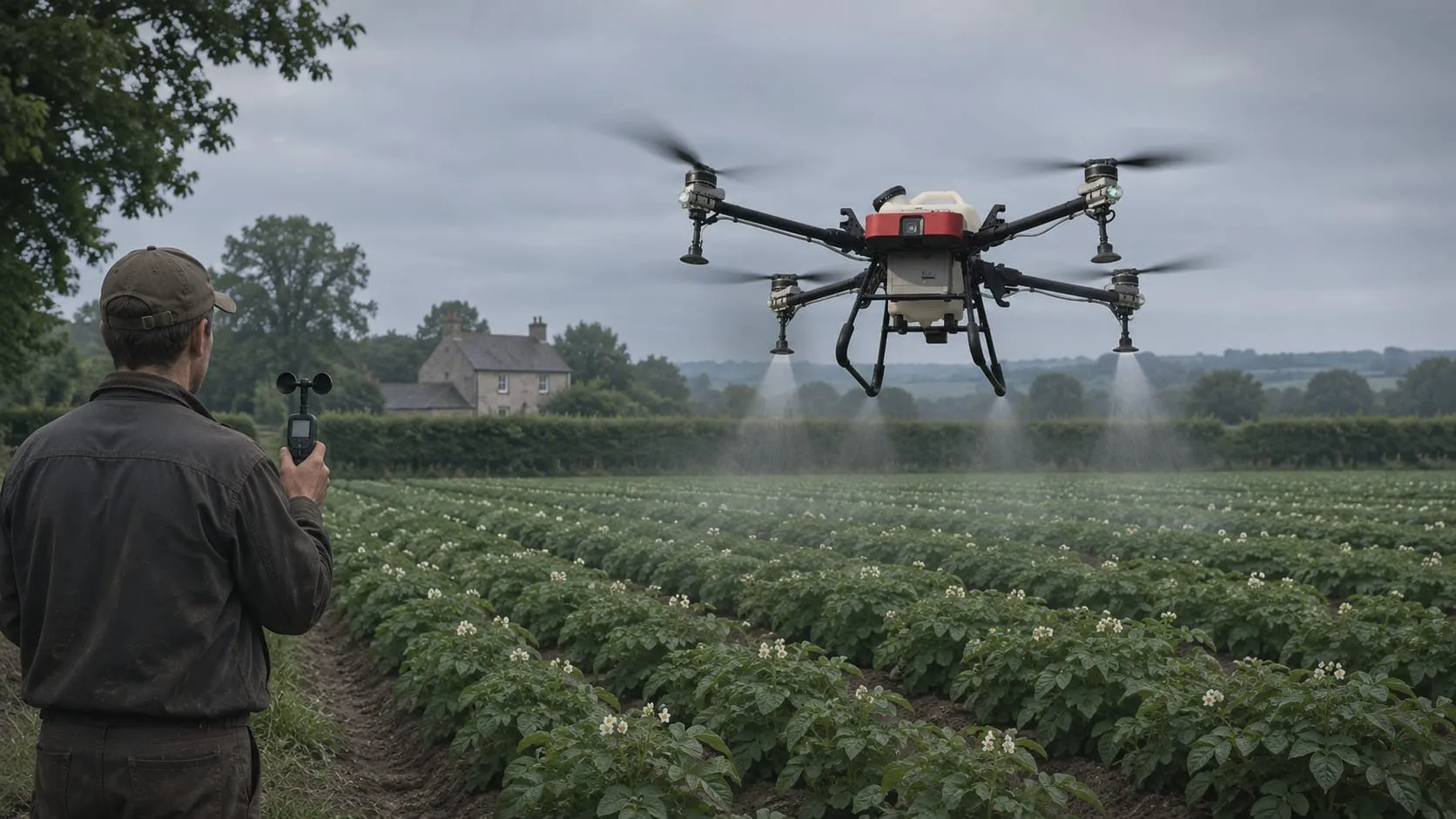
Short answer: in 2026 you control drone spray drift by deciding, field by field, whether to fly at all. Use the lowest safe height, a coarser droplet class, a slower speed and calm-but-not-inverted air, and leave a buffer where the label or the neighbour demands one. If you cannot meet those on a given edge, do the edge on another day.
Which sites need which precautions?
| Site | Height and droplet | Speed | Go / no-go cue |
|---|---|---|---|
| Open field, nothing sensitive nearby | Lowest safe height, medium droplets | Normal | Go if wind is within the label range |
| Orchard edge, wind toward the orchard | Low, coarser droplets | Slower | Go only for edge passes when wind blows away |
| Next to a vineyard, organic block or garden | Lowest height, coarse droplets | Slow | No-go if wind blows toward it |
| Near a watercourse | Low, coarse | Slow | Follow the label’s buffer; leave edge swaths unsprayed |
| Hillside with downslope air | Low, coarse | Slow | Stop in the cool evening when air drains downhill |
| Calm clear evening | n/a | n/a | No-go until you have checked for an inversion |
What does the research say about height and speed?
Purdue’s chapter on spray-drone challenges reports that a drone more than 10 ft (3 m) above the canopy is likely to cause higher off-target drift, and that drift rises considerably with speed and height. Ground booms run about 24–30 in above the target. Many labels also ask for a minimum of 5–10 gallons per acre, which drones struggle to meet.
What wind speed is too much?
- Ohio State: wind is the most critical factor; problems are likely above 7 mph (about 11 km/h).
- Agriculture Victoria: with no wind range on the label, spray only when wind is above 3 km/h and below 13 km/h, and measure wind at the target with a windsock, smoke, a weather station or a ground observer. This is one Australian state’s rule, shown as an example.
- EPA: spray in calm weather and when no rain is forecast for 24 hours.
How do I spot a temperature inversion?
NDSU describes inversions as stable air when wind falls below 4–5 mph (6–8 km/h). They begin before sunset on calm, clear evenings, and dew, frost and fog are signs. Ontario’s test: read two thermometers at about 10 cm and 3 m above the ground; if the upper one is warmer, small droplets can hang in the air and travel kilometres. Labels and rules prohibit application during inversions, so a calm night is not an automatic green light; see night drone spraying.
Worked example: an orchard edge
Example only — assumed figures; the label sets the real buffer. An AS-30 sprays a block with a vineyard 40 m downwind. Wind is 9 km/h from the orchard toward the vineyard.
| Setting | Choice | Why |
|---|---|---|
| Height | 3 m or lower | Purdue links height above 10 ft to more drift |
| Droplets | Coarse end of the 110–400 µm range | Fewer fines |
| Speed | 4 m/s instead of 6 | Less drift |
| Last two swaths | About 14 m at 7 m effective swath | Left unsprayed until wind blows away from the vineyard |
If the label needs a buffer larger than that, the buffer wins.
Does a centrifugal or pressure nozzle drift less?
Either can give coarse droplets. The AR-30 / AR-50 set droplet size from 50 to 500 µm and fly 2.5–3.5 m above the crop; the AS-30 has eight high-pressure nozzles at 110–400 µm. Compare them in centrifugal vs pressure nozzle.
Can shelter belts help?
Yes, in a limited way. Ontario’s guidance is that wind recovers about 15 times the tree height downwind of a dense belt and about 30 times for an open one. A 10 m dense hedge still leaves wind back to normal about 150 m downwind, so do not assume it protects a neighbour 50 m away.
Pre-flight checklist
- Read the label’s aerial section and your regulator’s drone guidance.
- Measure wind at the target, not at the road.
- Check for inversion signs: calm, clear, dew, fog.
- Set height, speed and droplet class and record them.
- Mark buffers on the map and the aircraft’s route.
Best for:
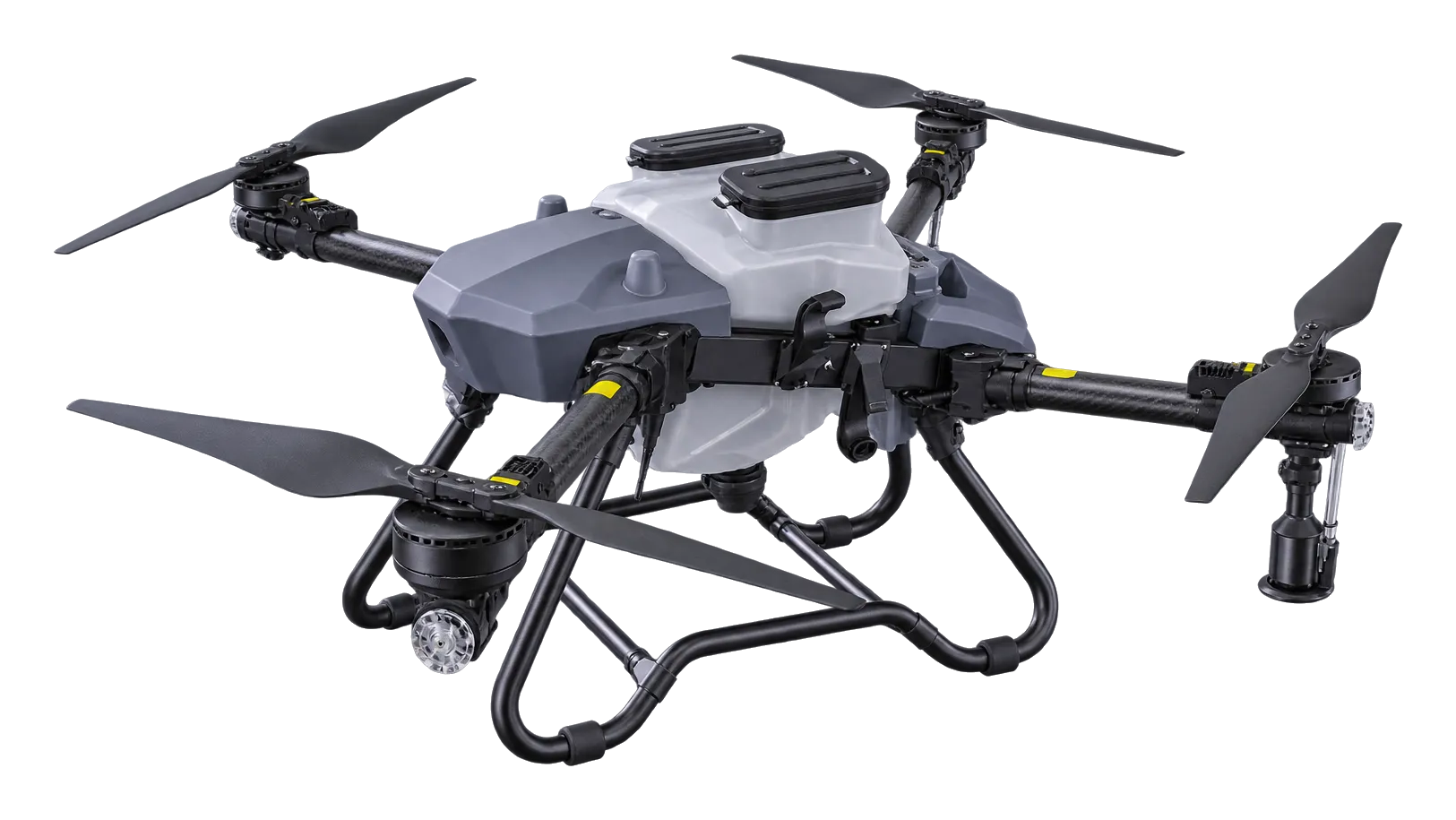
- Best for fields next to sensitive crops: AR-30 / AR-50, droplet size set in software, 2.5–3.5 m above crop.
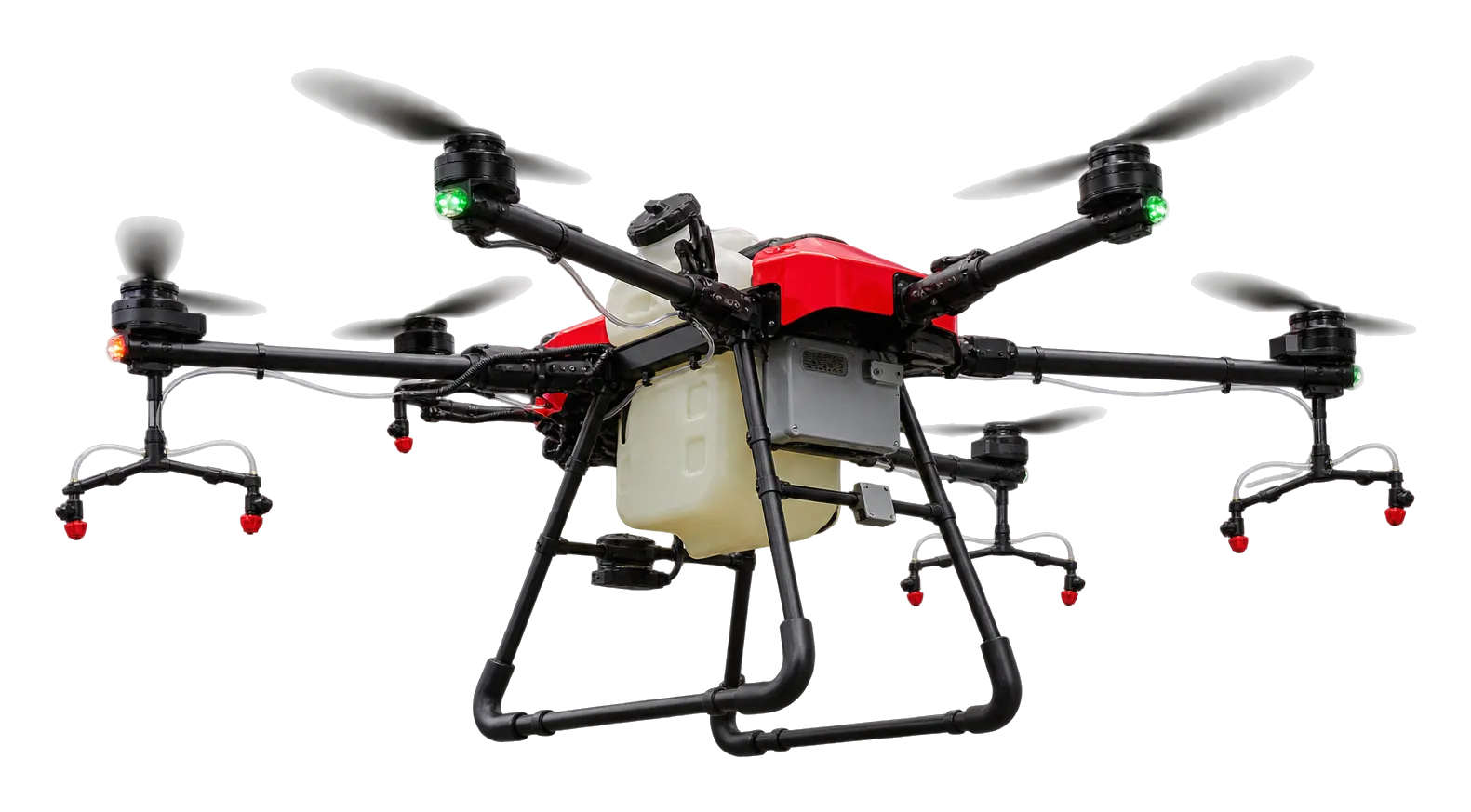
- Best for small blocks and orchard edges: AS-30, 8 nozzles, 8 L/min and low flight.
Next step
Send us your crops, neighbours and local wind records and we will suggest nozzle and height settings to test. See also vineyard drone spraying, our service page and the agriculture range.
Q & A
Common questions
01What causes drift from a spray drone?
Fine droplets, high flight, high speed and wind. Purdue lists height above the canopy and speed as the biggest levers on a drone, and the EPA defines drift as droplets or dust moving off target at or soon after application.
02What wind speed is too much?
There is no single number. Ohio State says drones may suffer problems above 7 mph (about 11 km/h); Victoria's rule is 3–13 km/h when the label is silent. Your label and local regulator come first.
03How high should the drone fly?
Ohio State says drones are usually flown 7–12 ft above the canopy and Weedsmart quotes 3–5 m. Purdue links heights above 10 ft (3 m) to higher drift, so choose the lowest safe height for the crop.
04How do I know there is an inversion?
Calm, clear air at dusk or dawn, dew, frost or fog. Ontario suggests two thermometers, one about 10 cm and one about 3 m above the ground; a warmer upper reading points to an inversion.
05Do buffer zones apply to drones?
Label buffers and no-spray areas apply to the product, whatever the applicator. Read the aerial section of the label and your state or national lead agency's advice, for example the Office of Indiana State Chemist in the US.
06Can additives fix drift?
Only drift-reduction adjuvants that the label or regulator allows. Social-media advice to add dish soap is not guidance and can break the label.
References
- 1Current Challenges of Using Spray Drones (PPP-154 ch. 4) — Purdue Extension
- 2Air Temperature Inversions: Causes, Characteristics and Potential Effects on Pesticide Spray Drift (AE1705) — NDSU Extension
- 3Thermal inversions and spray drift — Ontario Ministry of Agriculture, Food and Agribusiness
- 4Drone or remotely piloted aircraft spraying — Agriculture Victoria
- 5Introduction to Pesticide Drift — US EPA
- 6Drones for Spraying Pesticides: Opportunities and Challenges — The Ohio State University CFAES
VEXAFLY Aviation Technology Co., Ltd.. VEXAFLY Aviation Technology Co., Ltd. — industrial drone maker in Nanjing. Our application engineers write and check these pages and configure inspection, cleaning, lift and fire-response systems for project buyers. About VEXAFLY