Cleaning
Roof Cleaning Drone in 2026: Which Roofs, Which Mix, How Many Loads
Roof cleaning drone in 2026: which roofs a drone can wash, chemistry and pressure by roof type, how many loads one roof takes, runoff and permits.
- Author
- VEXAFLY Aviation Technology Co., Ltd.
- Scope
- Cleaning
- Published
- Length
- 4 min read · 9 sources
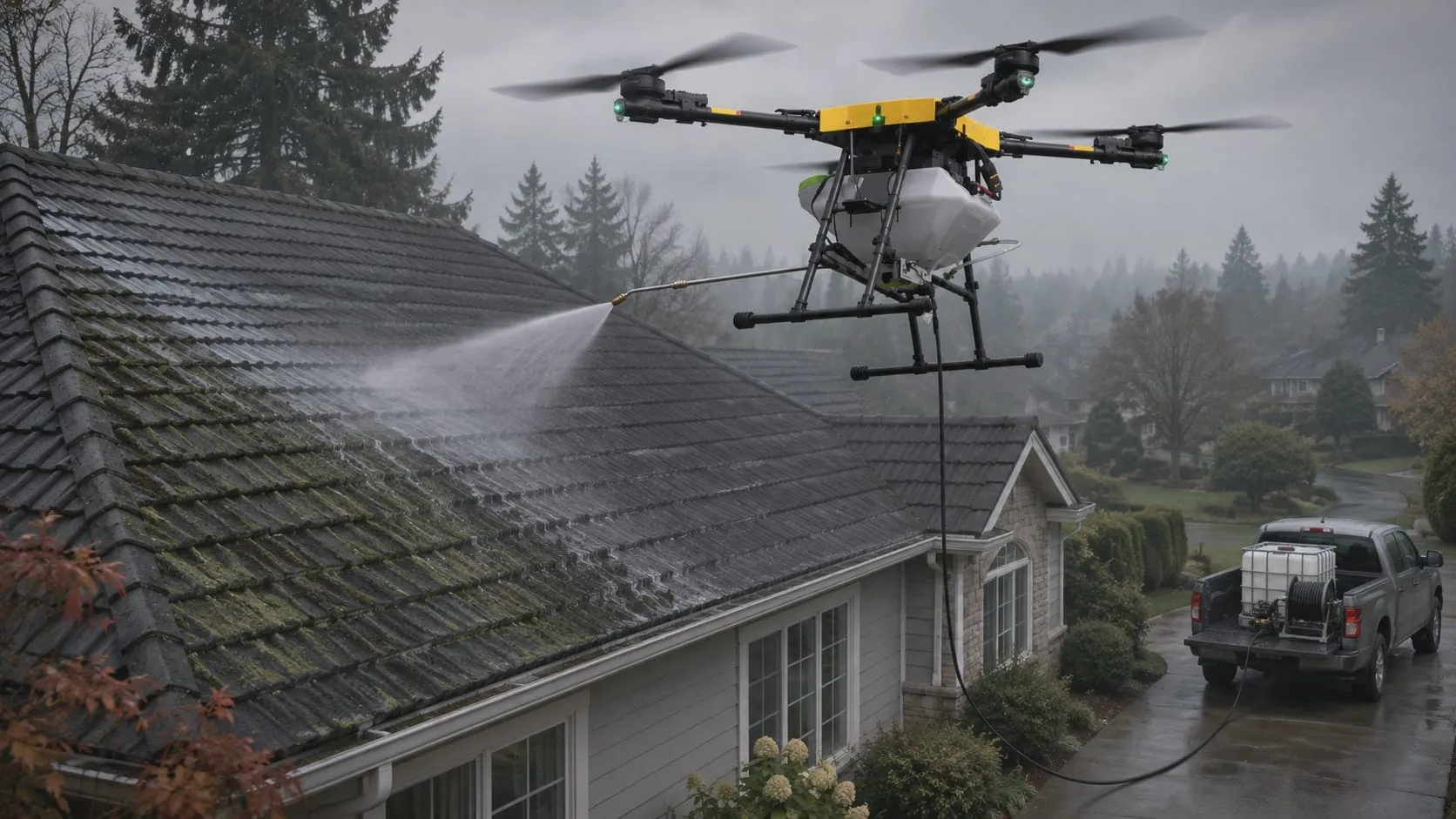
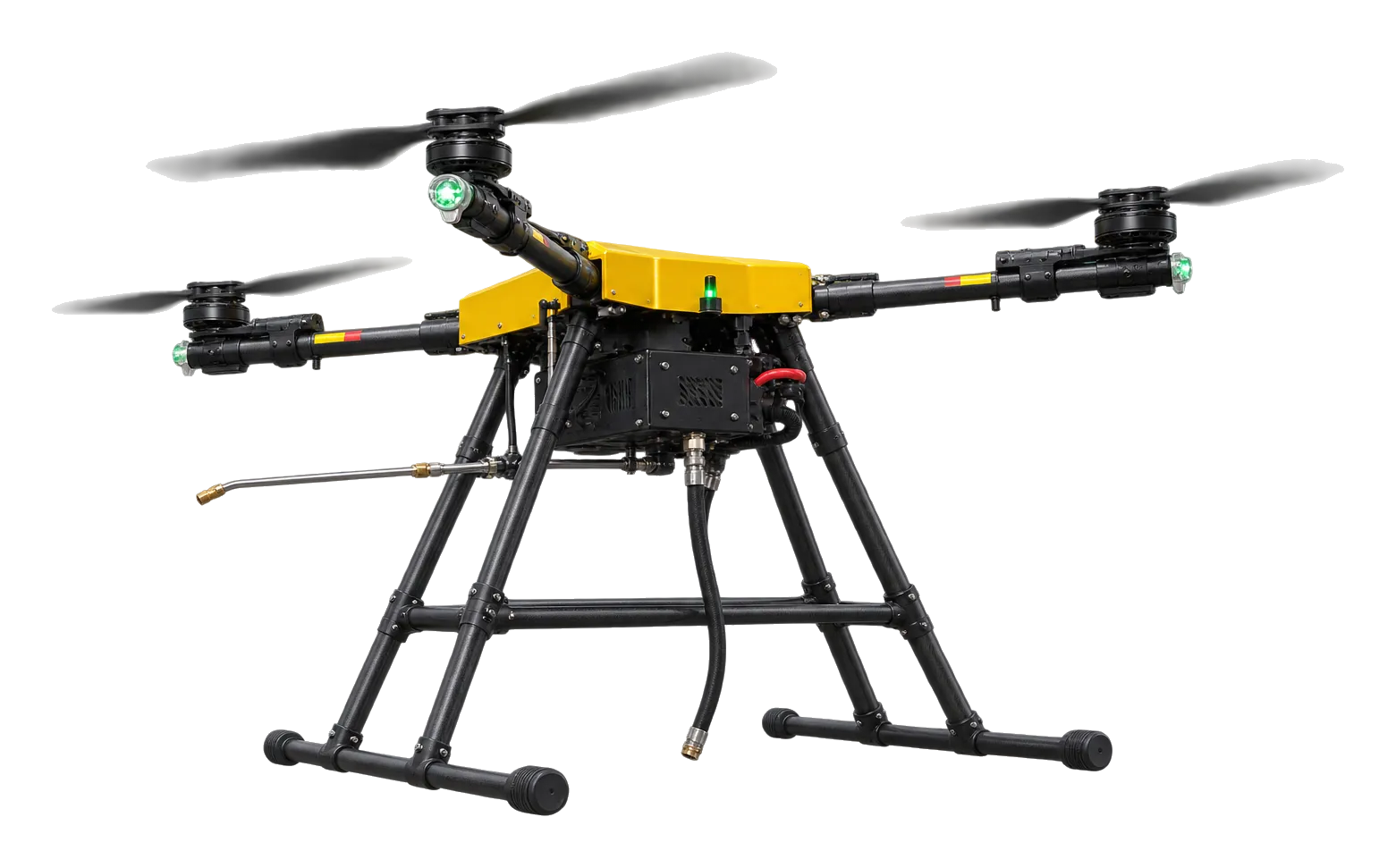
Short answer: in 2026 a roof cleaning drone can wash shingle, tile, metal and membrane roofs with nobody on the surface, but the roof decides the method. Asphalt shingles take a soft wash at low pressure, painted steel takes clean fresh water, and tile and membrane need a test patch and the maker’s care guide. A tank aircraft such as the CW-30T is the usual tool: at an assumed 0.25 L/m² one 30 L load covers about 120 m².
Which roof can a drone clean, and with what?
| Roof | Chemistry | Pressure | Lance | Watch for | Source |
|---|---|---|---|---|---|
| Asphalt shingle | 50:50 liquid chlorine bleach and water, 15–20 min dwell, never allowed to dry | Low-pressure rinse; no power washer, no brush | 90° down | Granule loss; other chemicals need the shingle maker’s approval; algae can return | ARMA |
| Clay or concrete tile | A roof-treatment product used to its label | Set from a test patch | 90° down | Broken tiles if someone walks on them, which the drone avoids | Tile maker’s care guide |
| Painted steel (COLORBOND type) | Clean fresh water | Low; check the coating maker | 90° down | Areas that rain cannot reach need the wash | BlueScope |
| Single-ply membrane | As the membrane maker allows | As the maker allows | 90° down | Seams and roof penetrations | Membrane maker’s guide |
| Any roof with solar modules | Water only, unless the module maker allows more | Within the module limit (Trina 4 MPa, First Solar 35 bar) | 45° down | Module warranty | Trina, First Solar |
Why soft wash, not pressure, on most roofs?
The shingle makers’ association tells owners not to use a power washer, a brush or a broom: high pressure damages the surface and scrubbing loosens the granules. Its method is the bleach mix above, applied by sprayer and rinsed at low pressure. That maps onto the CW-30T: 0.8–1.8 MPa at the nozzle is 116–261 psi, with a 3–5 m throw. The CW-30P pump is rated 28 MPa, which is 4,061 psi, so keep it for large metal or concrete roofs and agree the pump setting with us before the first job.
The drone also removes the walk-on. Cleaning makes a roof slippery, and falls to a lower level caused 389 of the 1,034 construction deaths in the US in 2024 (OSHA, citing BLS data).
How much mix does one roof take?
Example (assumptions, not a quotation): a 400 m² concrete-tile roof, mix applied at 0.25 L/m² (set it from a test patch and the product label), rinse equal to the mix volume, 10 minutes of spraying per sortie plus 5 minutes to refill and swap batteries (the brochure gives 8–15 min flight time).
| Step | Arithmetic | Result |
|---|---|---|
| Mix | 400 m² × 0.25 L/m² = 100 L; 100 ÷ 30 L | 3.3, so 4 loads |
| Rinse | Same volume | 4 loads |
| Time | 8 loads × 15 min | 120 min |
On shingles add the 15–20 minute dwell before each rinse, and work in sections so one section dwells while the next is sprayed.
What about solar panels on the same roof?
Module makers set their own limits. Trina’s Vertex manual allows compressed-water cleaning up to 4 MPa, with pH 6–8 water, and no cleaning in wind above Beaufort 4. First Solar allows at most 35 bar at the nozzle and asks for cleaning between dusk and dawn. Wash the shingles or tiles around the array with the CW-30T and keep roof chemicals off the glass. Module cleaning intervals are in our frequency guide.
Where does the runoff go?
Roof water runs to gutters, downpipes and then storm drains. In San Diego, discharging polluted wash water into the storm drain system is illegal, with penalties up to US$10,000 per day per incident; the city’s method is to control, contain and capture. Plug or divert downpipes, recover the water, and wet plants first, since bleach harms landscaping. Never mix bleach with ammonia or acids: it releases chlorine or chloramine gas.
Do you need a licence or permit?
In the US, Part 107 covers small aircraft under 55 lb at take-off; the CW-30 is 60 kg (132 lb) at maximum take-off weight, so the route is a Section 44807 exemption. Part 107.36 bars carrying hazardous material, and dispensing chemicals falls under Part 137, so ask the FAA or an aviation lawyer how your roof mix is classed. In the EU, spraying and aircraft of 25 kg or more fall in the specific category. Our over-55-pounds guide sets out the US path.
Tank or hose for roofs?
The tank version has no hose to drag over ridges and suits steep tile roofs. The hose-fed CW-30P gives 32 L/min (1,920 L an hour) and, on a tether, unlimited flight time, so it suits large flat or metal roofs; see the tethered versus tank guide. Prices are in the price guide.
Which setup fits which roof?
- Best for steep tile roofs: CW-30T, no hose over the ridge, 30 L, 3–5 m throw.
- Best for large flat or metal roofs: CW-30P on a tether, 32 L/min, flight time not limited by batteries.
- Best for roofs with solar modules: CW-30T at 0.8–1.8 MPa, well inside the 4 MPa module limit.
Next step
Send the roof type, area, pitch, gutter layout and the product you plan to use. We reply with the lance angle, load count and pump set-up. More cleaning aircraft are in the cleaning range.
Q & A
Common questions
01Can you use a drone to clean a roof?
Yes. The aircraft hovers above the roof and sprays a mix or rinse water from a lance angled 90° down. Nobody walks on the surface and no brush touches it. It washes; it does not scrub, so heavy moss growth may still need hand work.
02Do roofers need a drone licence for cleaning work?
Paid drone work needs a pilot qualification in most countries, and heavier aircraft need extra permission. US Part 107 covers aircraft under 55 lb at take-off, while the CW-30 is 60 kg (132 lb), so look at Section 44807. EU rules put spraying and aircraft of 25 kg or more in the specific category. Ask your own aviation authority.
03What is the best drone for inspecting roofs?
A compact inspection drone with a zoom or thermal camera, such as the IS-4X, not a cleaning drone. See our guide to inspection payloads before choosing.
04Will drone washing damage a shingle roof?
High pressure and brushing do. The shingle makers’ association tells owners to avoid both and to get the shingle maker’s approval for any chemical other than its own method. A low-pressure tank aircraft stays inside that advice.
05How long does a roof stay clean?
The shingle makers’ association says the effect of cleaning can be temporary and discoloration may return. One Australian drone service claims results on tile and painted steel in one to two weeks; that is a vendor claim, not a measured figure.
References
- 1Algae & Moss Prevention and Cleaning for Asphalt Roofing Systems — Asphalt Roofing Manufacturers Association
- 2Algae Discoloration of Roofs — Asphalt Roofing Manufacturers Association
- 3Easy to Maintain — BlueScope (COLORBOND steel)
- 4OSHA’s Fall Prevention Campaign — OSHA
- 514 CFR 107.36 Carriage of hazardous material — eCFR
- 6Pressure Washing fact sheet — City of San Diego
- 7Dangers of Mixing Bleach with Cleaners — Washington State Department of Health
- 8Vertex Series User Manual — Trina Solar
- 9PV Module Cleaning Guidelines — First Solar
VEXAFLY Aviation Technology Co., Ltd.. VEXAFLY Aviation Technology Co., Ltd. — industrial drone maker in Nanjing. Our application engineers write and check these pages and configure inspection, cleaning, lift and fire-response systems for project buyers. About VEXAFLY