Inspection
Facade Inspection Drone in 2026: What a Drone Can Check and What Still Needs Hands-On
Facade inspection drone in 2026: what a drone can check, where programmes such as NYC FISP still require hands-on work, payloads, resolution maths and rules.
- Author
- VEXAFLY Aviation Technology Co., Ltd.
- Scope
- Inspection
- Published
- Length
- 4 min read · 8 sources
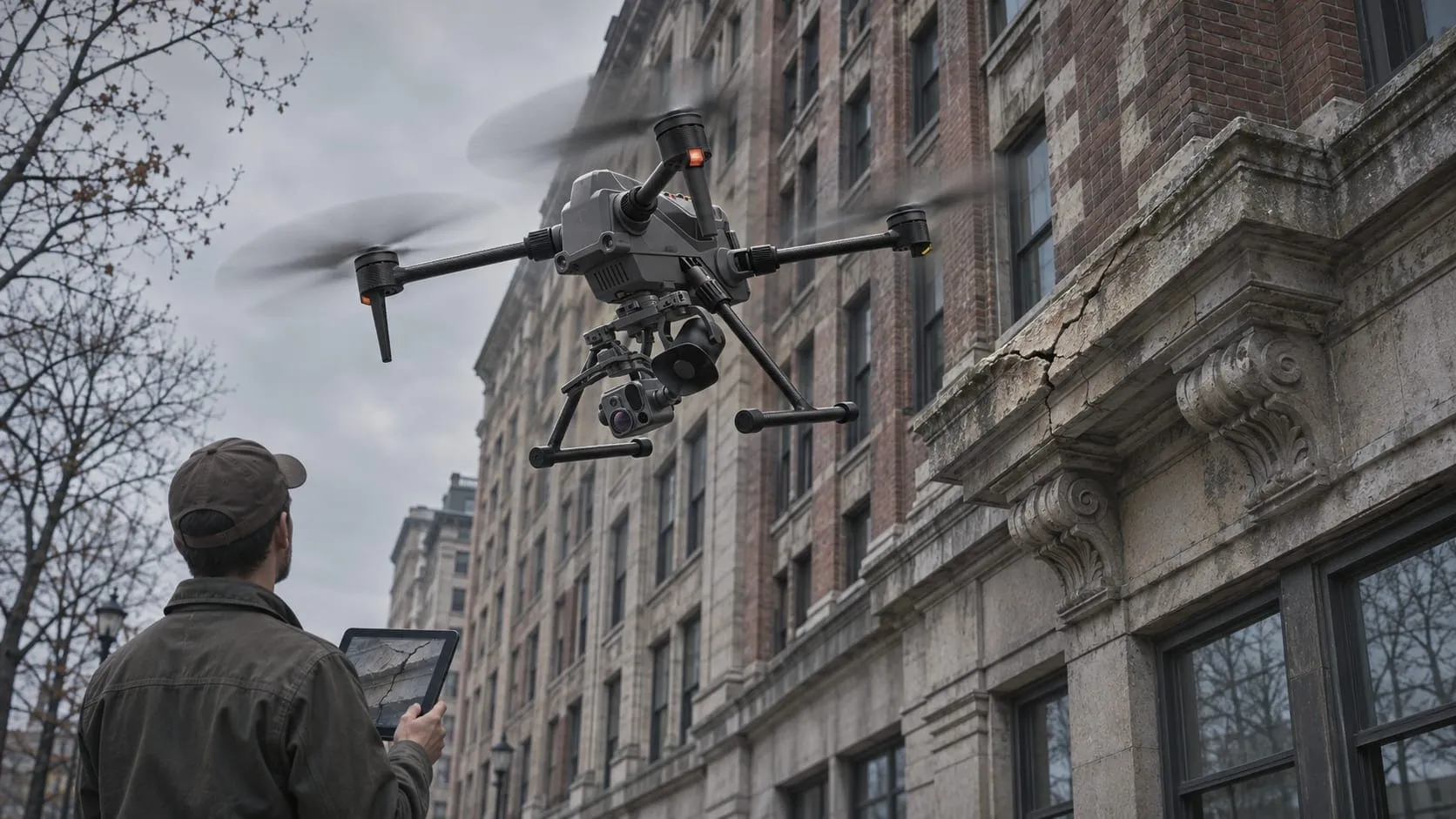
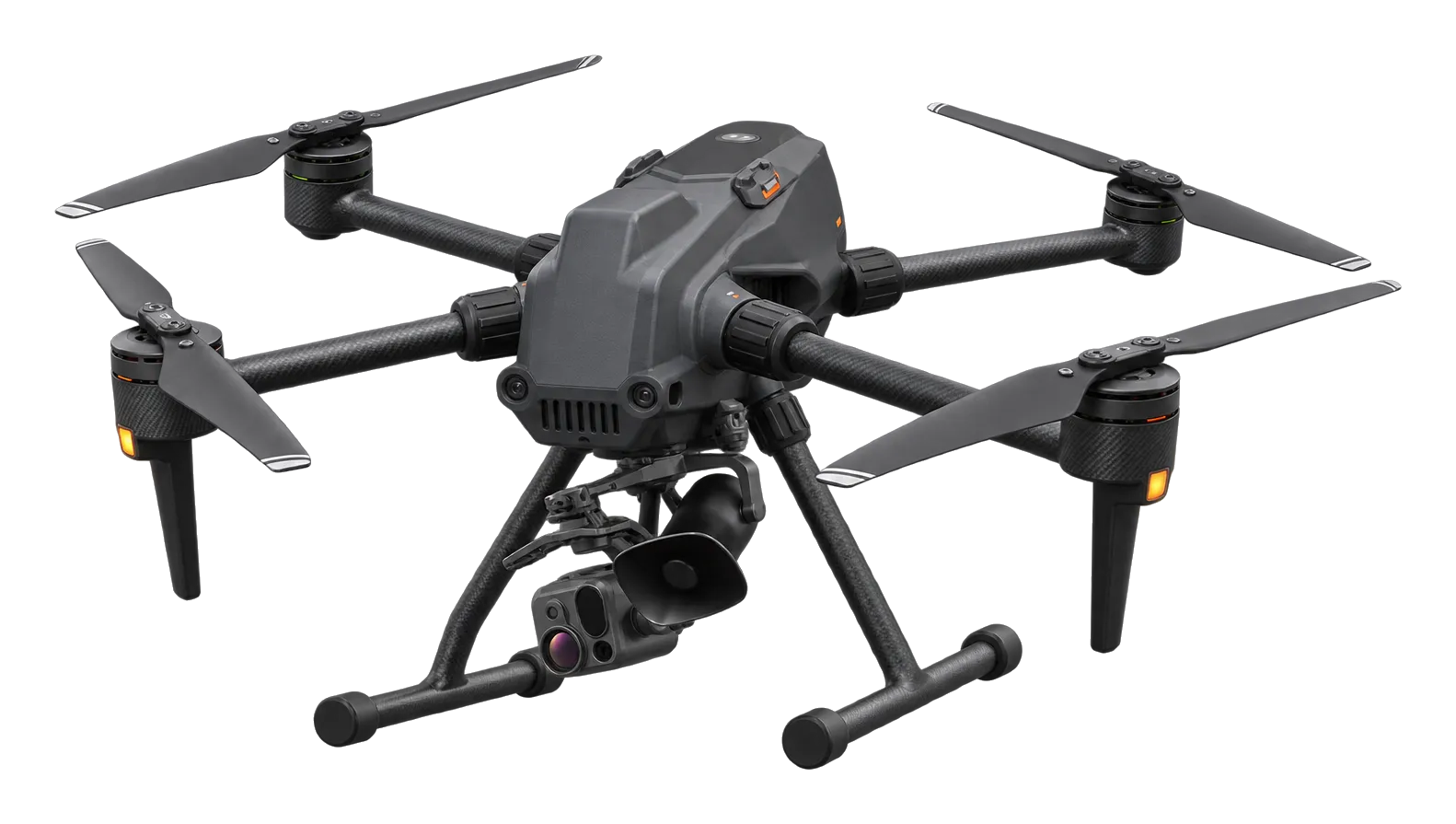
Short answer: in 2026 a facade inspection drone collects the visual and thermal data that a qualified inspector reviews; it does not replace the inspector touching the wall. NYC’s FISP FAQ says drones may be used but do not replace the close-up, hands-on inspection. Use the IS-4 (with the DS-1 dock) for scheduled portfolio work and the IS-4X for quick surveys in tight streets.
What can a drone check on a facade, and what still needs hands-on?
| Defect | Drone method | Resolution to plan for | Still needed hands-on |
|---|---|---|---|
| Cracks, spalling, open joints | Zoom or 8K stills, square to the wall | About 1 mm per pixel (planning assumption) | Sounding and probes to find hollow or loose areas |
| Loose parapet, coping, cladding fixings | Close zoom views of each fixing | 1–2 mm per pixel | The inspector touches and tests |
| Cracked glazing, failed sealant | Zoom stills | 1–2 mm per pixel | Close check where the programme requires it |
| Heat loss, wet insulation, thermal bridges | Thermal pass | Per payload data sheet | A probe to confirm moisture |
| Balconies, signs, antennas, roof edge | Zoom orbit | 2 mm per pixel | Safe access to the item |
Which programmes accept drones?
| Programme | Covers | Cycle | Drones | Source |
|---|---|---|---|---|
| NYC FISP | Buildings above six storeys | Every five years; close-ups at intervals of not more than 60 ft along each public-right-of-way facade | May be used; they do not replace the hands-on inspection | NYC Buildings |
| Philadelphia | Exterior walls and appurtenances above 60 ft | Every five years; waiver possible after a substantial restoration | Not addressed in the pages we checked | L&I |
| Singapore (PFI) | Buildings over 13 m once over 20 years old | Every seven years, led by a Competent Person | May assist the visual inspection; TR78:2020 sets drone practice; SAC accredits bodies from 12 July 2023 | BCA, SAC |
| Hong Kong (MBIS) | Buildings aged 30 years or more, except domestic buildings of three storeys or fewer | A Registered Inspector is appointed after notice | Not addressed in the page we checked | Buildings Department |
ASTM E2270 is the standard practice for periodic facade inspection for unsafe conditions. NYC’s buildings department has studied wider drone use, so check the current text of NYC’s facade rule (1 RCNY 103-04) before you plan.
Where do the NYC rules stop a drone?
NYC’s 2020 rule sets close-up inspections at intervals of not more than 60 ft along each public-right-of-way facade, and the hands-on work is usually done from a swing stage, man-lift or fire escape. The city’s drone report says drones add visual data (photos, video, thermal) but cannot replace sounding and probing, and a qualified professional must review the data. Take-off is a second limit: Admin Code §10-126(c) bars take-off and landing outside designated places, and the department says it applies to drones. See our New York guide and Singapore guide.
Zoom, thermal or both?
| Payload | What it is | Best use |
|---|---|---|
| IS-4 four-optical gimbal | 48 MP zoom, 18x optical, plus infrared | Cracks and heat patterns in one flight |
| IS-4 1K IR dual-optical gimbal | Thermal and visible | Heat loss and moisture patterns |
| IS-4 8K camera | High-resolution stills | Crack mapping at about 1 mm per pixel |
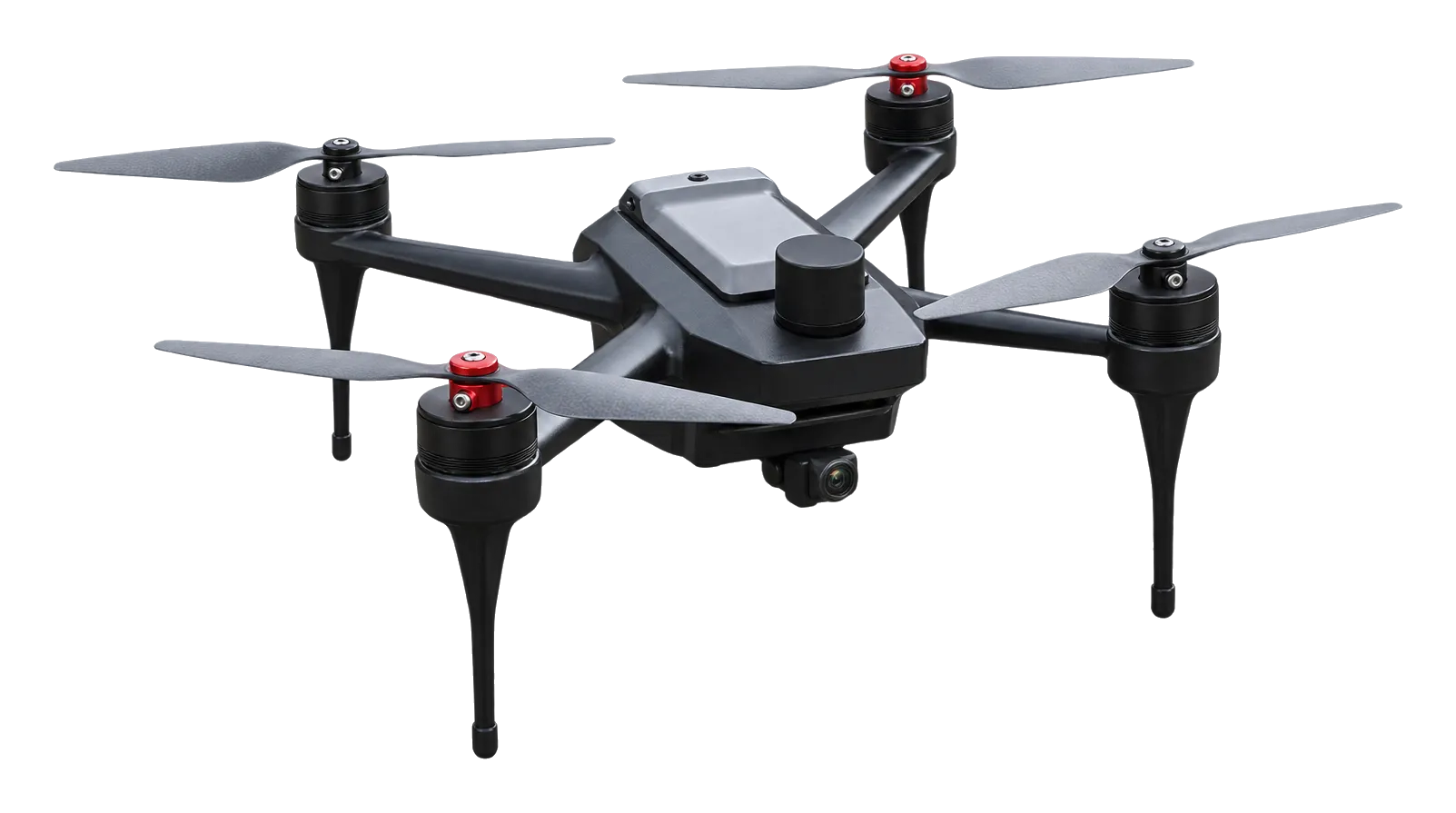
| IS-4X quick-release modules | Zoom or thermal, up to 2.5 kg | Swap per job |
How close and how sharp?
Example (assumptions, not a standard): an 8,000 × 4,500 px frame; check the payload data sheet.
| Step | Arithmetic | Result |
|---|---|---|
| Pixel size, 8 m of wall in the frame | 8,000 mm ÷ 8,000 px | 1 mm per pixel |
| From further back, 16 m of wall | 16,000 mm ÷ 8,000 px | 2 mm per pixel |
| Columns on a 40 m wide elevation, 20 % overlap | 40 ÷ (8 × 0.8) = 6.25 | 7 |
| Rows on a 60 m tall elevation | 60 ÷ (4.5 × 0.8) = 16.7 | 17 |
| Frames | 7 × 17 | 119 |
How does the aircraft behave beside a building?
Glass and steel disturb satellite signals and compasses, so RTK matters: the IS-4 holds ±0.1 m with RTK and senses obstacles from 0.7 m ahead. The IS-4 is rated wind level 7 and IP45, so no heavy rain; the IS-4X is level 6 and IP67. In the US, 107.51 allows flight up to 400 ft above a structure within 400 ft of it. US buyers should also confirm, before ordering any foreign-built aircraft, whether the model is on the FCC Covered List, whether the Section 232 duty applies (as worded, 100 % for thermal-camera drones and docks) and which FAA rules cover it. Our import guide and FCC guide set out the steps.
IS-4 or IS-4X for your portfolio?
The IS-4 flies 63 minutes and is the aircraft for the DS-1 dock; the IS-4X flies 60 minutes and fits a case one person carries. For payload choices read the inspection payload guide; for prices see the inspection drone price guide.
- Best for scheduled portfolio surveys: IS-4 with the DS-1 dock, 63 min, RTK ±0.1 m.
- Best for one-off surveys in tight streets: IS-4X, 2 kg frame, one-person carry, IP67.
- Best for heat-loss and moisture checks: IS-4 with the four-optical gimbal or the 1K IR gimbal.
Next step
Send the building list, facade heights and the programme that applies, and we match aircraft and payload. See the inspection range and our guide to bridge inspection for similar close-up work.
Q & A
Common questions
01What are facade inspections?
Periodic checks of a building’s outer wall for unsafe conditions such as loose cladding, parapets and fixings. Programmes set the cycle and who must do the work; ASTM E2270 is a standard practice for this work.
02Can a drone replace a hands-on facade inspection?
Not under NYC’s FISP. Its FAQ says drones may be used but do not replace the close-up inspection, and its drone report says visual data cannot replace sounding and probing. Singapore allows drones to assist the visual inspection.
03What kind of drone do people use to do inspections?
A compact aircraft with a zoom, thermal or high-resolution camera and precise positioning near the wall. Our IS-4 has RTK hover accuracy of ±0.1 m and obstacle sensing from 0.7 m; the IS-4X is the lighter one-person option.
04How much does an inspection drone cost?
Reference prices FOB China are US$9,100–11,400 for the IS-4 and US$4,000–6,700 for the IS-4X, before payload options, freight and duty. See our inspection drone price guide.
05Do occupants need to be told?
Singapore’s TR78:2020 asks for at least three days’ notice to occupants and anonymisation of images. It is a good practice anywhere, and your local privacy rules may add to it.
References
- 1FAQ: Changes to Façade Rule (FISP) — NYC Department of Buildings
- 2Local Law 102 of 2020 report: unmanned aircraft systems for façade inspections — NYC Department of Buildings
- 3New Regulations for Periodic Inspection of Building Façades to start from 1 January 2022 — Building and Construction Authority Singapore
- 4Launch of New Accreditation Area on Building Façade Inspection using Drones — Singapore Accreditation Council
- 5Mandatory Building Inspection Scheme — Buildings Department, Hong Kong
- 6How do I request a waiver of a facade inspection (FAQ TP_004) — City of Philadelphia, Department of Licenses and Inspections
- 7E2270 Standard Practice for Periodic Inspection of Building Facades for Unsafe Conditions — ASTM International
- 814 CFR 107.51 Operating limitations for small unmanned aircraft — eCFR
VEXAFLY Aviation Technology Co., Ltd.. VEXAFLY Aviation Technology Co., Ltd. — industrial drone maker in Nanjing. Our application engineers write and check these pages and configure inspection, cleaning, lift and fire-response systems for project buyers. About VEXAFLY