Cleaning
Drone Cleaning Business Equipment in 2026: Which Kit for Which Job
Drone cleaning business equipment in 2026: which jobs to take first, the kit for each, CASA rules for aircraft over 25 kg, site survey and water rules.
- Author
- VEXAFLY Aviation Technology Co., Ltd.
- Scope
- Cleaning
- Published
- Length
- 4 min read · 5 sources
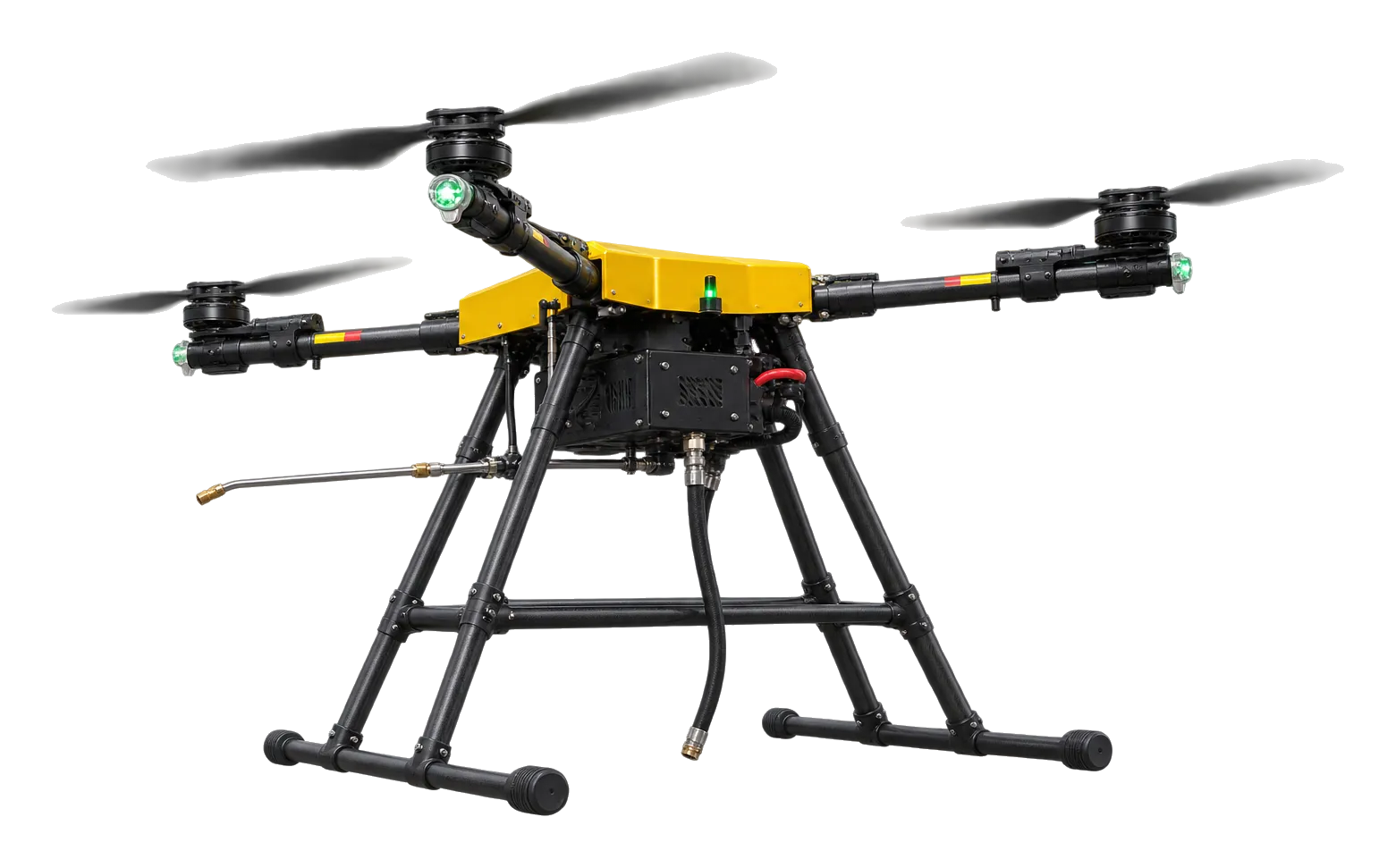
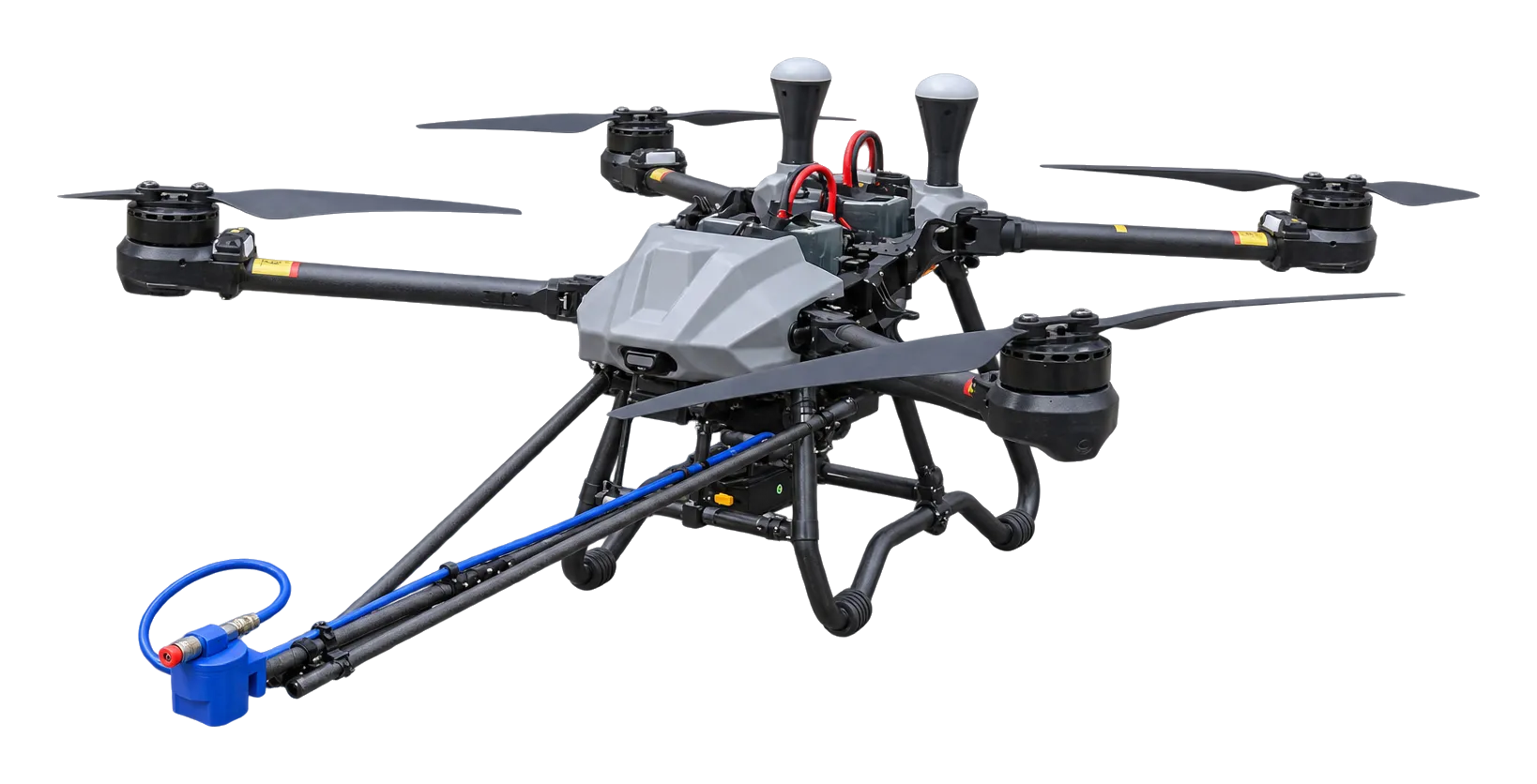
Short answer: in 2026 the right drone cleaning business equipment follows the jobs you accept. A first fleet is one hose-fed CW-30P with a 5.5 kW ground pump for roofs, glass to about 50 m and rooftop solar. Add a CW-65 and a 13 kW unit when towers above 50 m appear. Both aircraft are above 25 kg, which in Australia puts them in CASA’s medium class, so plan the licences before the purchase. This page covers kit and jobs, not a business plan.
Which job needs which kit?
| Job | Height | Water route | Kit | Take it as a starter? |
|---|---|---|---|---|
| Roofs, gutters and canopies, 2–4 storeys | Under 15 m | Tap or tank | CW-30P, lance at 90° down | Yes |
| Glass and cladding, 5–10 storeys | 15–35 m | Tap or standpipe | CW-30P with 5.5 kW pump | Yes |
| Rooftop solar | Roof level | Tank or tap | CW-30T (30 L) or CW-30P, lance at 45° | Yes |
| Towers, 14–28 storeys | 50–100 m | Ground pump and hose | CW-65 with 13 kW unit, tether | Later |
| Heritage, recessed or heavily soiled facades | Any | Any | Hand crew; drone rinses | Decline in year one |
Storeys are counted at about 3.5 m each. iDrone Corp’s Australian price bands (currency not stated) are 800–2,500 for 5–10 storeys, 2,500–8,000 for 10–25 and 8,000–25,000 and up above that, against scaffold hire of 10,000–50,000 and up.
What licences does a drone over 25 kg need in Australia?
| Item | What CASA publishes | What it means here |
|---|---|---|
| Weight class | Medium RPA is above 25 kg and up to 150 kg | CW-30 (60 kg MTOW) and CW-65 (111 kg MTOW) are both medium |
| ReOC | Needed to operate as a drone service provider for hire or reward; the certificate names manufacturer and model for aircraft above 25 kg | Expect your model on the certificate |
| RePL | A pilot under a ReOC holds a RePL; below 150 kg the ratings are type-specific | Plan type-specific ratings |
| Procedures | Written procedures and manuals, pilot training, records, registration | Write once for the fleet |
Rules change, so check the current CASA pages and confirm with CASA before you buy.
Starter kit or full kit?
| Item | Starter kit | Full kit |
|---|---|---|
| Aircraft | 1 CW-30P (CW-30 range US$4,500–10,600 FOB) | CW-30P plus CW-65 (US$11,300–16,000 FOB) |
| Ground pump | 5.5 kW | 5.5 kW and 13 kW units |
| Power | Battery rotation | Tether for long jobs |
| Water | Hose to a tap or standpipe | Tank trailer and RO / DI unit |
| Wash water | Bunds and vacuum recovery | The same, sized for towers |
| Vehicle, insurance, training | Local quotations | Local quotations |
What does the site survey check?
- Height of each elevation and the glass or cladding type.
- Recesses, balconies and sunshades that block the spray.
- Entrances, the drop zone and a way to close the pavement.
- Tap or standpipe, and its flow.
- Drains, gutters and stormwater inlets.
- Power for the pump, and roof access if you stage the pump up there.
- Wind exposure at roof level.
Where will the water come from?
Sydney Water says you may need a metered standpipe when there is no normal connection, with an ABN or ACN and business use only. Hunter Water requires standpipes to be metered and hired from it. Apply before the first job.
Where does the wash water go?
Tablelands Regional Council in Queensland explains that pressure-cleaning wastewater is a prescribed water contaminant and that it is unlawful to let it enter gutters or stormwater; it points to bunds, vacuum recovery and licensed disposal. Other states differ: check your state EPA.
Example: how many aircraft for ten jobs a month?
Assumptions: ten jobs a month, all up to 45 m, each 1,500 m² of glass; an effective 250 m² per hour once set up; 12 usable flight minutes per battery pack and 60 minutes to recharge.
- Spraying time per job: 1,500 ÷ 250 = 6 h, so about one job per working day. Ten jobs fill about 10 days a month, and one aircraft is enough.
- Flights per job: 360 min ÷ 12 = 30.
- Battery packs for continuous work: 60 ÷ 12 + 1 = 6. On a tether, none.
- A CW-65 pays only once jobs above 50 m arrive.
Which jobs should a new operator turn down?
Heritage stone, recessed glass, heavy build-up, busy pavements that cannot be closed, sites with no water or no way to recover wash water, and any tower above 50 m before you own a CW-65.
Which kit is best for what?
- Best for a first fleet: CW-30P with a 5.5 kW pump, to about 50 m.
- Best for adding towers: CW-65 with a 13 kW unit, to 100 m.
- Best for rooftop solar rounds: CW-30T, 30 L tank, no hose to run.
- Best for long single-site jobs: tethered power, no flight-time limit.
Next step
List the first five jobs you expect, with height, facade and water source. We reply with a kit list and a quotation. See partner opportunities for service operators, after-sales service, the Australia page and pilot training; the pump and hose guide sizes the ground kit, and the solar cleaning business guide covers panels.
Q & A
Common questions
01What equipment do I need to start a drone cleaning business?
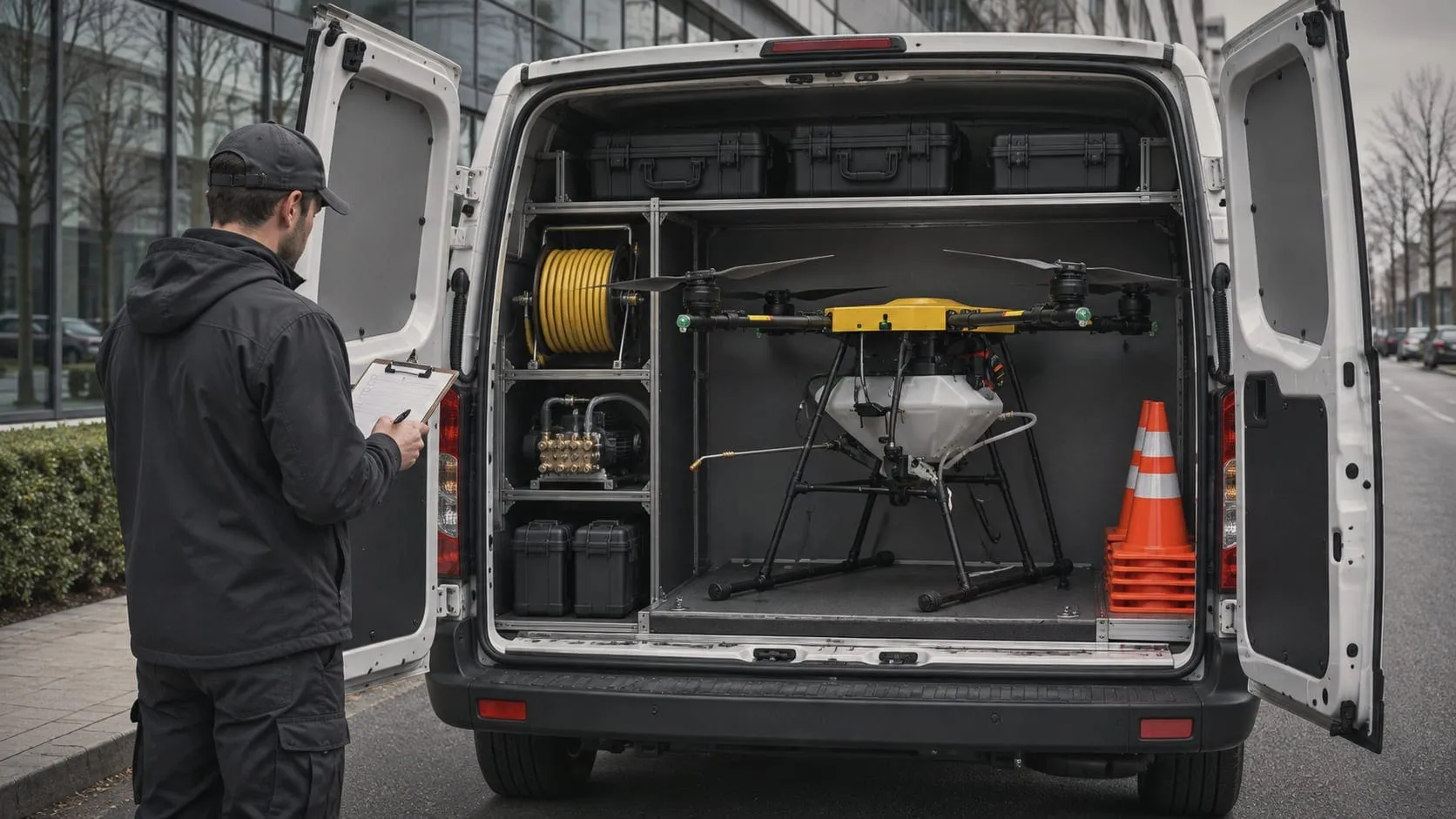
For a first fleet: a CW-30P, a 5.5 kW ground pump, hose, batteries or a tether, a way to treat water for glass, a bund and vacuum recovery for wash water, and insurance. Add a CW-65 and a 13 kW unit for towers.
02What licence do I need for a cleaning drone in Australia?
A service provider needs a CASA ReOC and its pilots a RePL. Aircraft above 25 kg are medium RPA, and the ReOC lists their model. Check the current CASA pages before you buy.
03Is drone building cleaning effective?
For washing and rinsing glass and cladding, yes. It does not replace scrubbing for heavy build-up or recessed glass.
04Which jobs should I turn down at first?
Heritage stone, recessed or heavily soiled glass, busy pavements that cannot be closed, sites without water or a way to recover wash water, and anything above 50 m until you own a CW-65.
05Is a solar panel cleaning business profitable?
It depends on soiling rate, electricity price and your costs. Our guide to drone solar panel cleaning as a business works through it.
References
- 1Metered standpipes — Sydney Water
- 2Standpipes and water carriers — Hunter Water
- 3Water Pressure Cleaning — Tablelands Regional Council (Qld)
- 4Drone Cleaning Cost Australia: Pricing Guide 2026 — iDrone Corp
- 5How Pressure Washing Drones Actually Work — Lucid Bots
VEXAFLY Aviation Technology Co., Ltd.. VEXAFLY Aviation Technology Co., Ltd. — industrial drone maker in Nanjing. Our application engineers write and check these pages and configure inspection, cleaning, lift and fire-response systems for project buyers. About VEXAFLY