Agriculture
Best Agricultural Spraying Drone in 2026: Choose by Crop, Terrain and Farm Size
The best agricultural spraying drone in 2026 fits your crop, terrain and acreage. Selection matrix, public specs by class, rates and a worked example.
- Author
- VEXAFLY Aviation Technology Co., Ltd.
- Scope
- Agriculture
- Published
- Length
- 5 min read · 11 sources
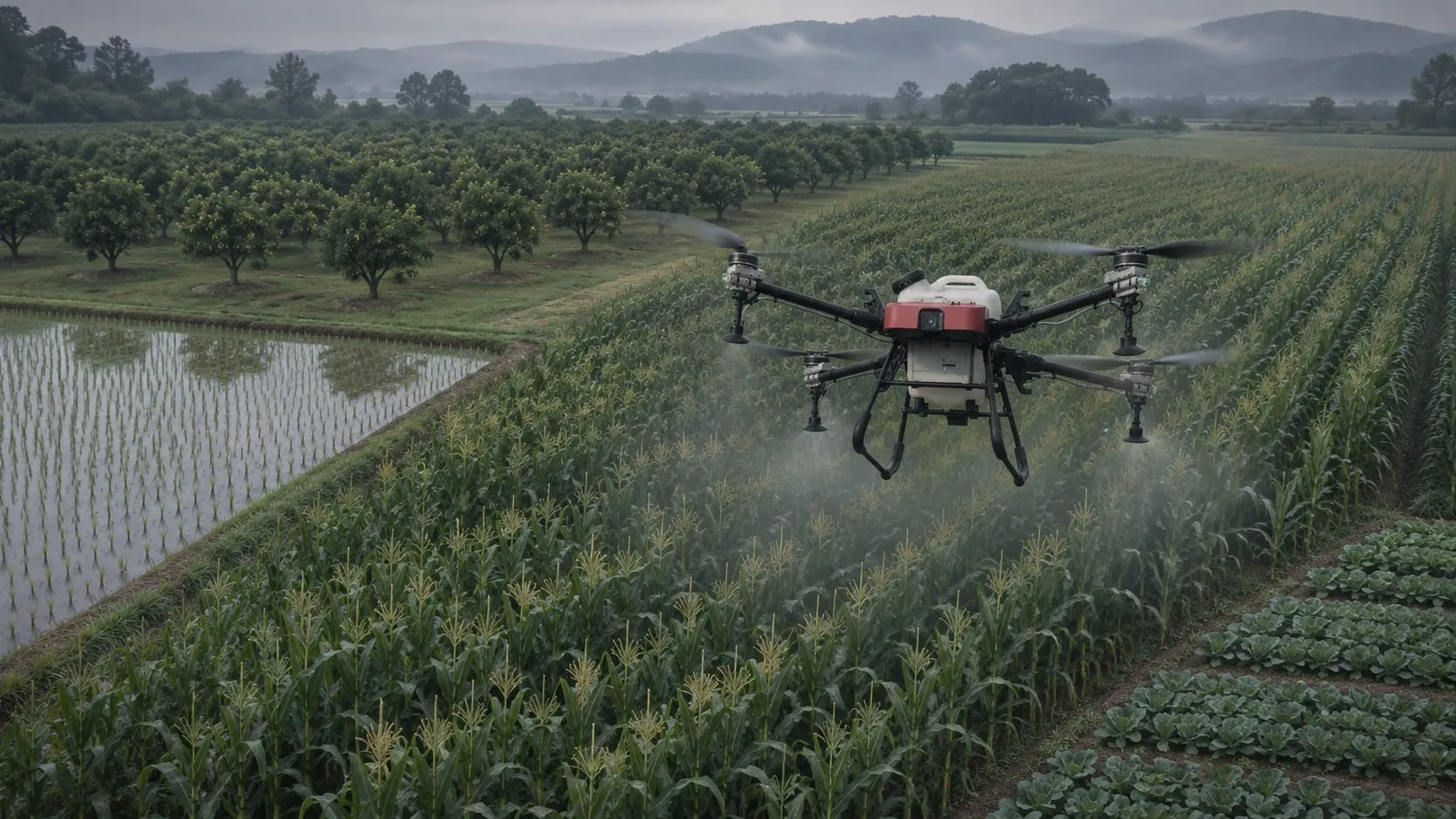
Short answer: the best agricultural spraying drone is not a brand. It is the aircraft that finishes your acreage inside your spray window, on your terrain, at your dose. Crop, slope and farm size narrow the choice to one or two tank classes; specifications and a field pattern test decide the rest. In 2026 this guide compares by class with public figures and does not rank makers.
What is the best spraying drone for my farm?
Most ‘best’ lists come from a seller of the winners. Start from the farm.
| Crop group | Terrain | Farm size | Class to shortlist | VEXAFLY model |
|---|---|---|---|---|
| Corn, soy, wheat | Flat to rolling | Under 400 ha | 30 L | AS-30 |
| Corn, soy, wheat | Flat to rolling | 400–1,000 ha | 50–62 L | AS-50 / AS-65 |
| Row crops, contractors | Flat | Over 1,000 ha | 100 L | AS-100 |
| Rice paddies | Flat, small blocks | 20–200 ha | 30 L, spray and spread | AS-30 |
| Orchards, vineyards | Rolling to steep | 5–50 ha | 10–30 L, fine droplets | AS-10 / AS-20, AR-30 / AR-50 |
| Tea, coffee, terraces | Steep | Under 20 ha | 10–20 L | AS-10 / AS-20 |
Which specifications decide ‘best’?
- Tank litres and payload kilograms, listed separately.
- Flow. Needed L/min = hectares per hour × litres per hectare ÷ 60; at 13 ha/h and 20 L/ha that is 4.3 L/min.
- Effective swath, measured: Virginia Tech defines it as the width above 50 % of peak coverage.
- Loaded flight time, not hover time with no load.
- IP rating (IEC 60529), terrain sensing and radar.
- Parts, repair and training, as Purdue Extension advises.
Which aircraft do buyers compare in 2026?
| Class | Aircraft buyers often compare (maker figures) | VEXAFLY equivalent |
|---|---|---|
| 30–40 L | DJI Agras T50: 40 L, 40 kg payload, 4–11 m, 92 kg take-off | AS-30: 30 L, 6–9 m, up to 68 kg take-off |
| 50 L | XAG P100 Pro: 50 L, 50 kg payload, 22 L/min | AS-50: 50 L, 8–20 m, 99 kg take-off, 20 L/min |
| 70 L | EAVISION EA-J150: 70 L rated, 4–15 m, 145 kg take-off | AS-72: 72 L, 8–18 m, 166 kg take-off |
| 100 L | DJI Agras T100: 100 L, 100 kg payload, 5–13 m, 175 kg take-off | AS-100: 100 L, 8–15 m, 254 kg take-off |
Makers measure under their own conditions, so rows are not one-to-one.
Example: a 1,500-acre corn and soy farm
Example: a 1,500-acre farm (607 ha) must finish a fungicide pass in 10 days of 6 flying hours at 2 gal/acre (18.7 L/ha). That is 60 hours, so the aircraft must deliver 1,500 ÷ 60 = 25 acres an hour (10.1 ha/h). The University of Kentucky model gives:
| Tank class | Acres per hour | Hectares per hour | Hours for 1,500 acres | Fits 60 h? |
|---|---|---|---|---|
| 30 L | 21.3 | 8.6 | 70.4 | No |
| 40 L | 32.2 | 13.0 | 46.6 | Yes, 29 % above the need |
| 72 L | 49.8 | 20.2 | 30.1 | Yes |
One 40–50 L aircraft is the simplest fit; two 30 L aircraft also work (42.6 acres an hour, 35.2 hours) with two pilots. Ownership clears Missouri’s break-even of 980 acres a year; one hired pass at US$16 per acre costs US$24,000.
How much do farmers pay for drone spraying?
| Dose | Litres per hectare | Custom rate per acre | Per hectare |
|---|---|---|---|
| 2 gal/acre | 18.7 | US$15 | about US$37 |
| 3 gal/acre | 28.1 | US$22 | about US$54 |
| 4 gal/acre | 37.4 | US$29 | about US$72 |
| 5 gal/acre | 46.8 | US$36 | about US$89 |
These are the Kentucky model’s custom rates; acres per hour fall by about 15–30 % for each extra gallon above 2.
How many acres per hour will you really get?
Use all-in rates. The Kentucky model adds 4 minutes per flight for take-off, ferry and landing and 2 between flights; Ohio State notes a 5-gallon tank empties in 2–3 minutes at row-crop rates. Maker peaks such as 8–12 ha/h for the AS-30 or up to 35 ha/h for the AS-100 are spraying-only maxima.
How do you test a shortlist?
Lay paper strips or water-sensitive cards across the swath, fly the same passes with each aircraft at your working height and speed, and read the width above 50 % of peak coverage. Virginia Tech’s example measured 4.0 m at a 15 % coefficient of variation and 4.9 m at 25 %, so always state the CV. Then time a block and check litres used against dose.
What should US buyers check?
Foreign-built spray drones raise three questions in the US: FCC Covered List status, the Section 232 duty (100 % above 25 kg take-off weight from 3 September 2026) and the FAA route for aircraft of 55 lb or more. They concern foreign-built drones generally, not one maker. See importing industrial drones from China and FCC certification; your customs broker and the FAA confirm. More on the United States market page.
Which aircraft is best for which job?
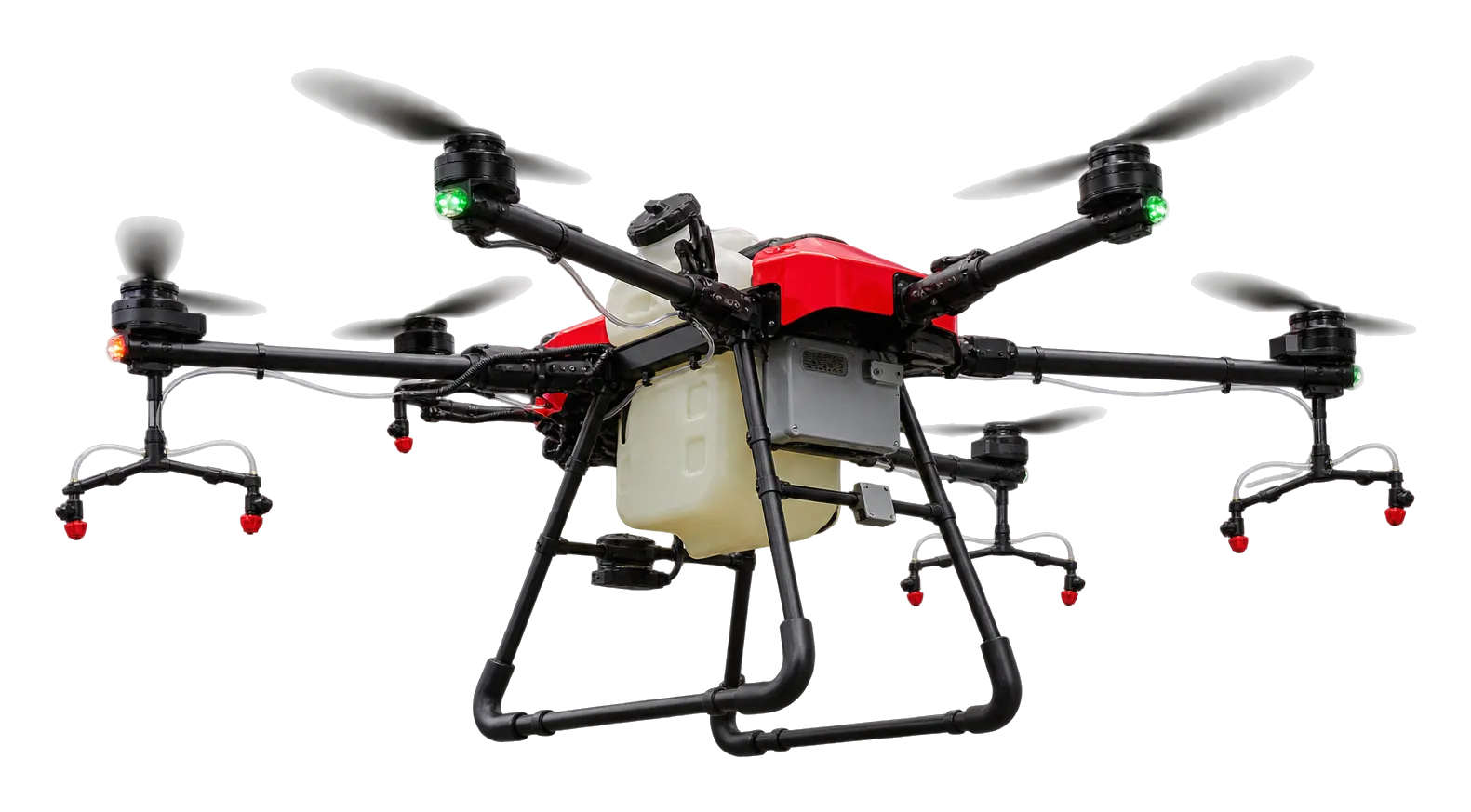
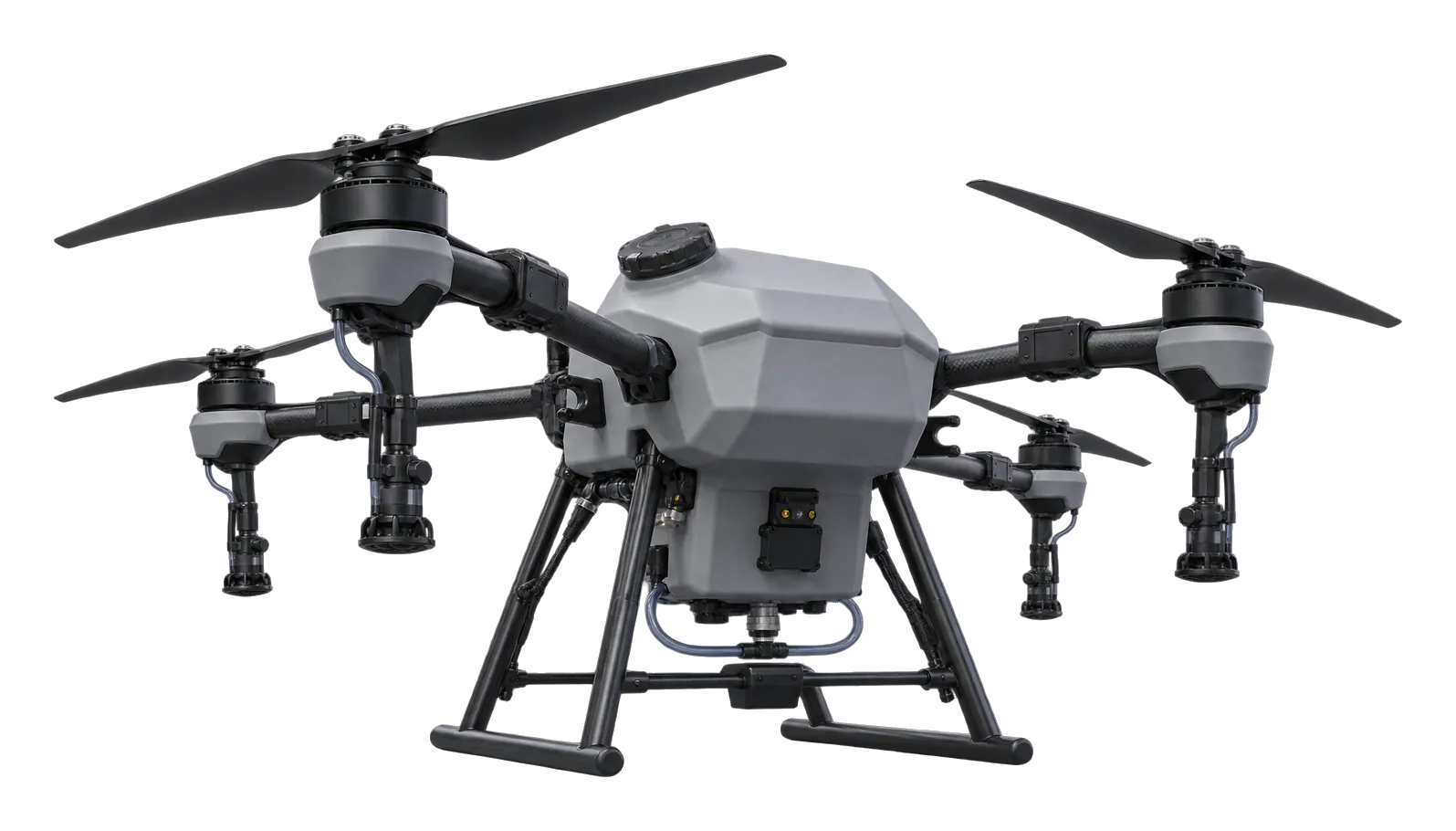
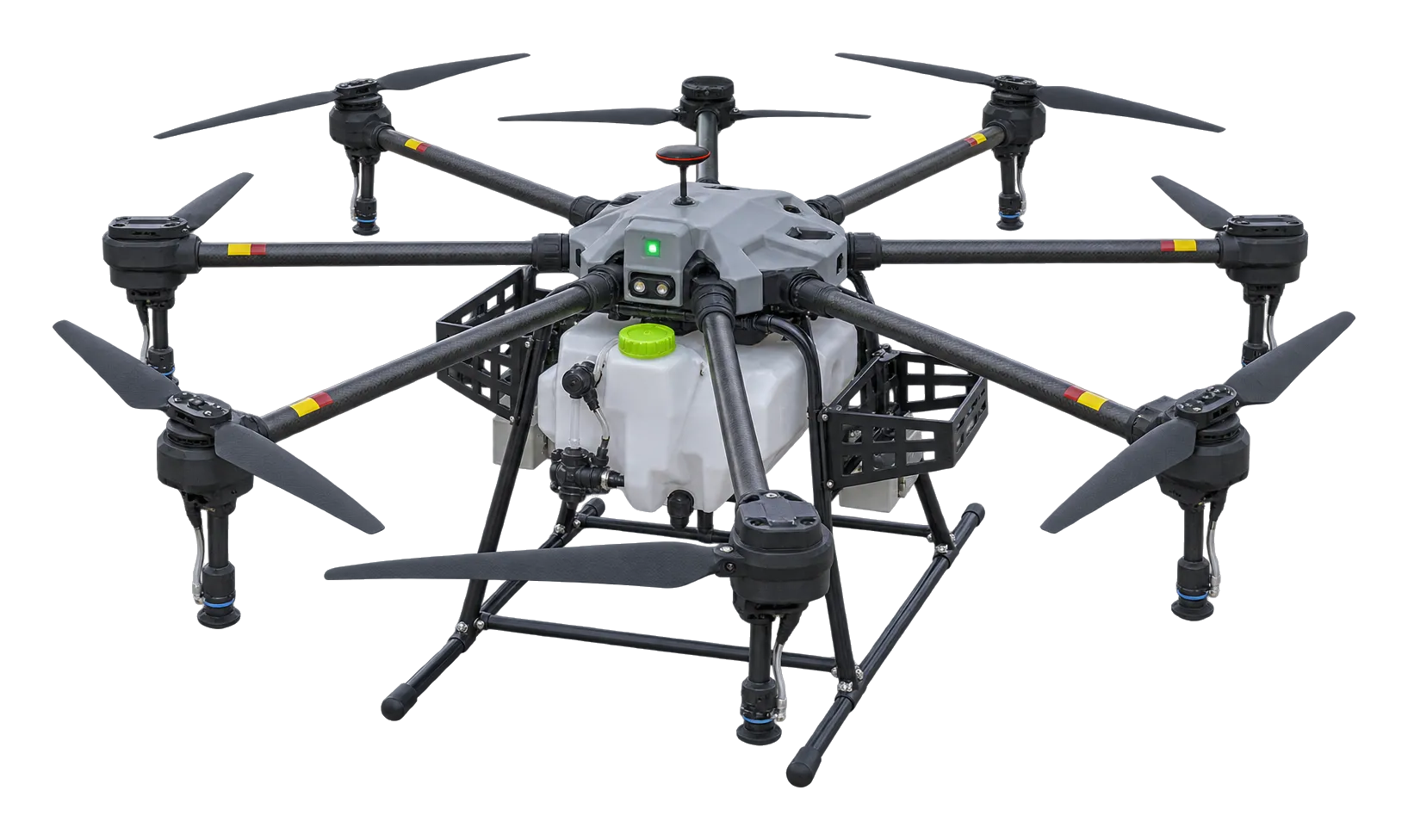
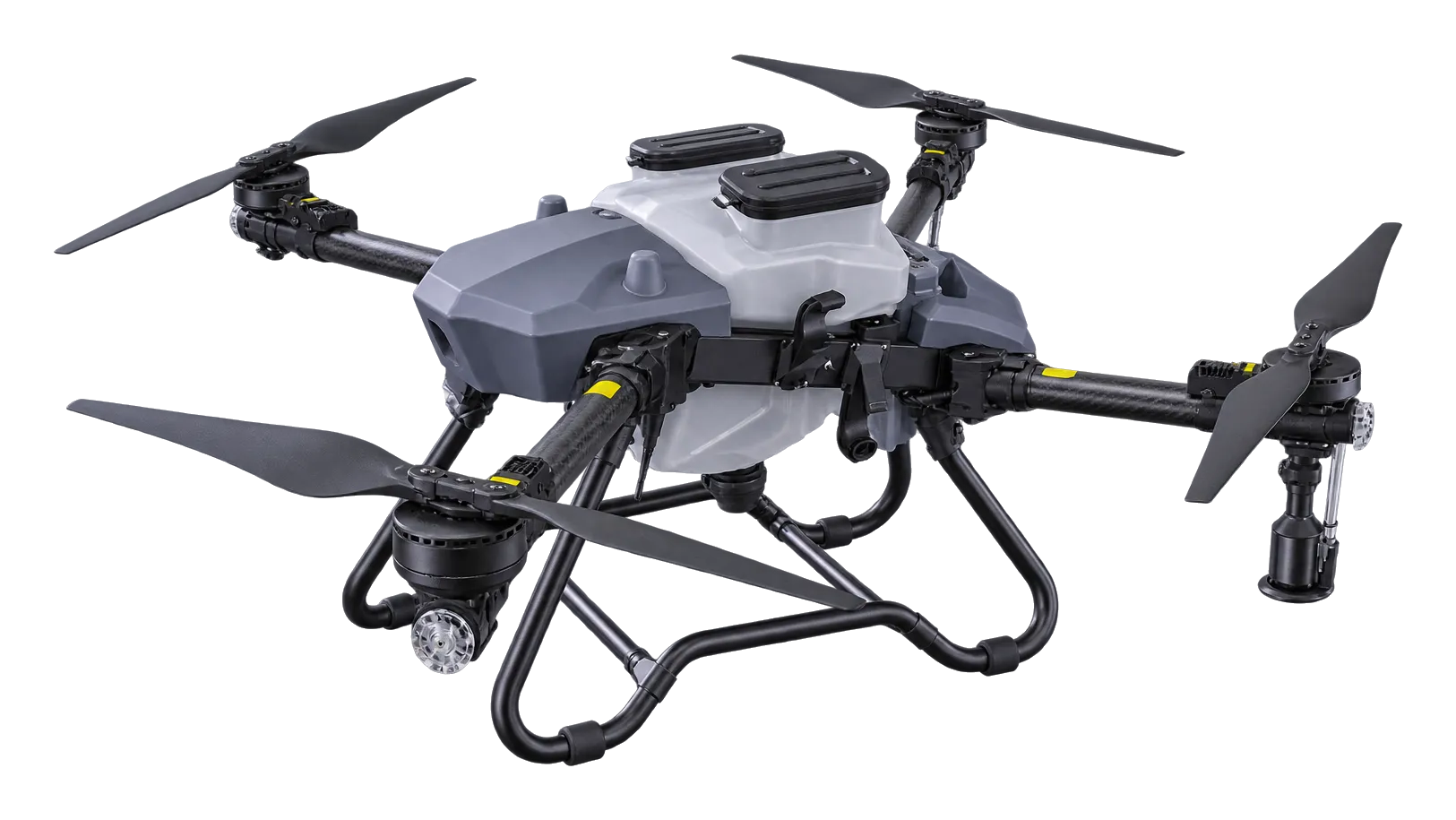
- Best for small and hilly farms: the AS-10 / AS-20, 10–20 L, 26 / 43 kg take-off weight.
- Best for mixed spraying and spreading on plains: the AS-30, 30 L spray and 40 L spread.
- Best for rice and cereals: the AS-50 / AS-65, 8–20 m swath, 20 L/min.
- Best for hillside orchards with fine droplets: the AR-30 / AR-50, 50–500 µm, 16 L/min.
- Best for farms above 2,000 acres (about 800 ha) and contractors: the AS-100, 100 L, 24 L/min.
Do the sums with the size calculator, read the hilly terrain guide, compare makers in the China manufacturers guide and see drones versus tractor spraying.
Next step
Send your acreage, spray window, dose and slope. We reply with a shortlist of two aircraft and the all-in hours for each.
Q & A
Common questions
01What are the best drones for agricultural spraying?
No universal answer. Row crops on rolling land often use a 40–50 L class; orchards and hills a compact aircraft with adjustable droplets; very large blocks a 70–100 L class. Compare by crop, terrain, farm size and support.
02What is the best alternative to DJI Agras?
Choose by class. At 20 L compare the DJI Agras T25P with the AS-20; at 40–50 L the T50 and XAG P100 Pro with the AS-50; at 100 L the T100 with the AS-100. Ask every maker for litres, kilograms, loaded flight time and parts support, then field-test.
03How much do farmers pay for drone spraying?
The Kentucky model used custom rates of US$15 per acre at 2 gal/acre rising to US$36 at 5, about US$37–89 per hectare; the Missouri model used US$16 per acre. Rates vary by region, crop and product.
04How many acres can an AG drone spray per hour?
In the Kentucky model at 2 gal/acre a 30 L class covers 21.3 acres an hour, a 40 L class 32.2 and a 72 L class 49.8. Maker peaks run higher than all-in field rates.
05Is a bigger spray drone always better?
No. At low doses the battery limits each flight, so a larger tank may never empty, and bigger aircraft need more power, transport and approvals. Fragmented or steep fields suit smaller aircraft.
References
- 1Drone Sprayer Sizing for Agricultural Applications (AEN-174) — University of Kentucky Cooperative Extension
- 2Economics of Drone Ownership for Agricultural Spray Applications (G1274) — University of Missouri Extension
- 3Drones for Spraying Pesticides: Opportunities and Challenges — The Ohio State University CFAES
- 4Spray Drones in Agriculture: Technology, Regulation and Field Operations (SPES-819) — Virginia Cooperative Extension
- 5DJI Agras T50 specs — DJI Agriculture
- 6DJI Agras T25P specs — DJI Agriculture
- 7DJI Agras T100 specs — DJI Agriculture
- 8XAG P100 Pro — XAG
- 9EA-J150 specs — EAVISION
- 10Adjusting Imports of Unmanned Aircraft Systems and UAS Components into the United States — The White House
- 11Conditional approval and exemption of certain UAS from the FCC Covered List (DA 26-875) — Federal Communications Commission
VEXAFLY Aviation Technology Co., Ltd.. VEXAFLY Aviation Technology Co., Ltd. — industrial drone maker in Nanjing. Our application engineers write and check these pages and configure inspection, cleaning, lift and fire-response systems for project buyers. About VEXAFLY