Market · Site conditions
Agricultural Drones in the Philippines 2026: Rice, Typhoon Season and Which Tank Class
Agricultural drones in the Philippines in 2026: tank class by farm size, rice spraying and seeding, typhoon-season planning, island logistics and CAAP checks.
- Author
- VEXAFLY Aviation Technology Co., Ltd.
- Scope
- Market · Site conditions
- Published
- Length
- 4 min read · 6 sources
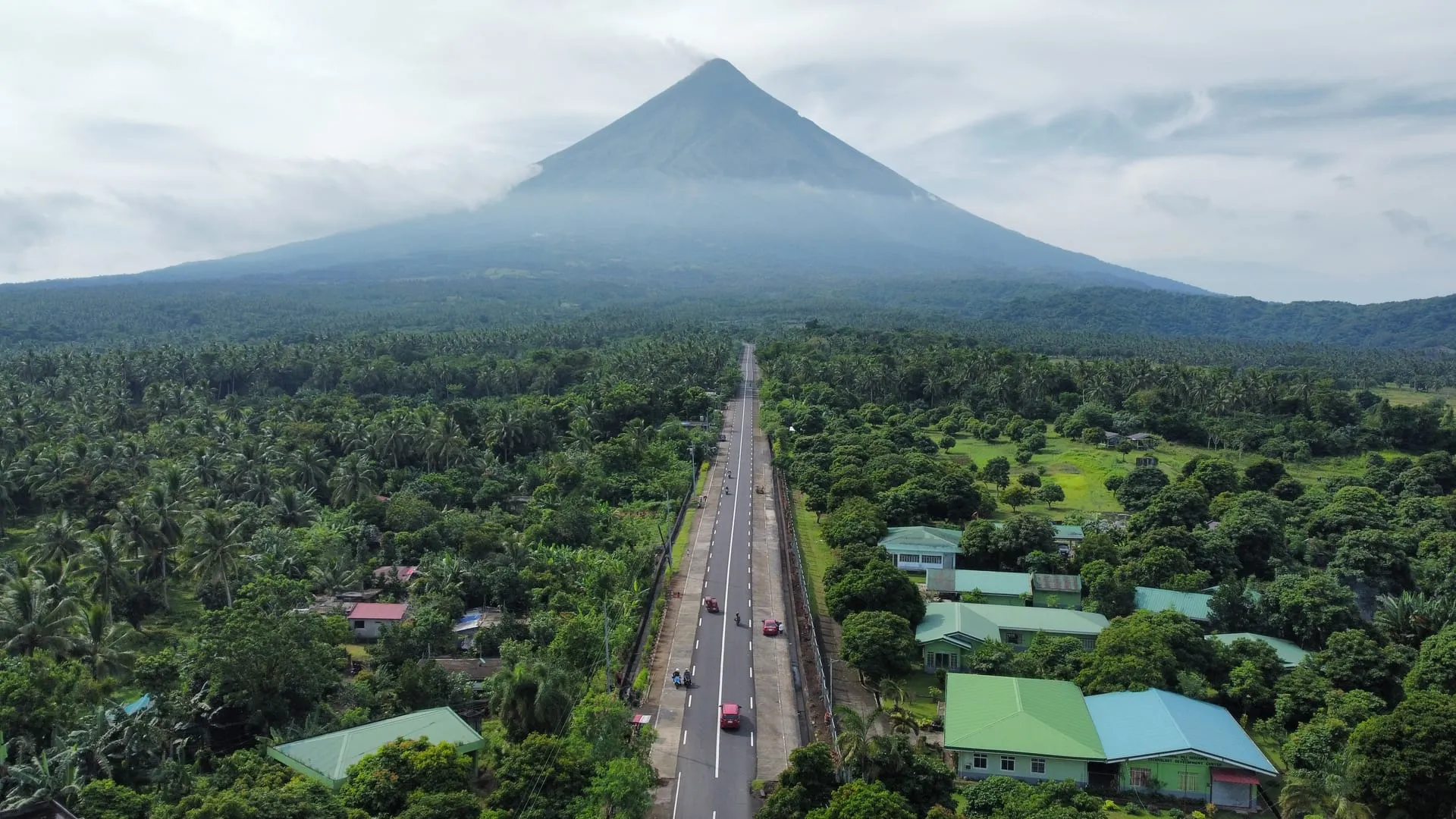
Short answer: agricultural drones in the Philippines are picked by farm size and tank class first, and by the typhoon calendar second. The 30 L AS-30 fits paddies and small cooperatives, the 50–62 L AS-50 / AS-65 fits larger blocks, and every one of them is far above small-drone limits, so CAAP’s current rules apply before the order.
Site conditions at a glance
| Condition | Figure | What it means for equipment |
|---|---|---|
| Typhoons | About 20 tropical cyclones enter the area a year, 8–9 cross the country; about 70 % develop from July to October (PAGASA) | Stow and service plan for the season |
| Rice output | 2025/26 paddy forecast 19.7 Mt; main season about 60 % of output, secondary about 40 %; typhoons Fung-wong and Kalmaegi caused losses in October–November 2025 (FAO) | Two peak windows a year for spraying and seeding |
| Direct seeding trial | DA-PhilRice and IRRI demonstrated drone direct seeding and variable-rate fertiliser to 150 Laguna farmers in February 2026; one farmer said he carries 5 kg at a time by hand (IRRI) | Spreader aircraft have a farmer audience |
| Government pilots | The Department of Agriculture is exploring AI drones for pest forecasting, with pilots on three banana farms in Davao del Norte and Davao de Oro (DA) | A camera aircraft such as the IS-4 fits scouting |
| Policy | SEARCA published a 2026 policy brief on making agricultural drones accessible to rice farmers (SEARCA) | Cooperative and service-provider models are on the agenda |
Facts checked on 28 November 2026. We did not find a verified island count or rice area in hectares, so none is given.
Which tank class for which farm?
| Farm or cooperative | Typical block | Aircraft | Why |
|---|---|---|---|
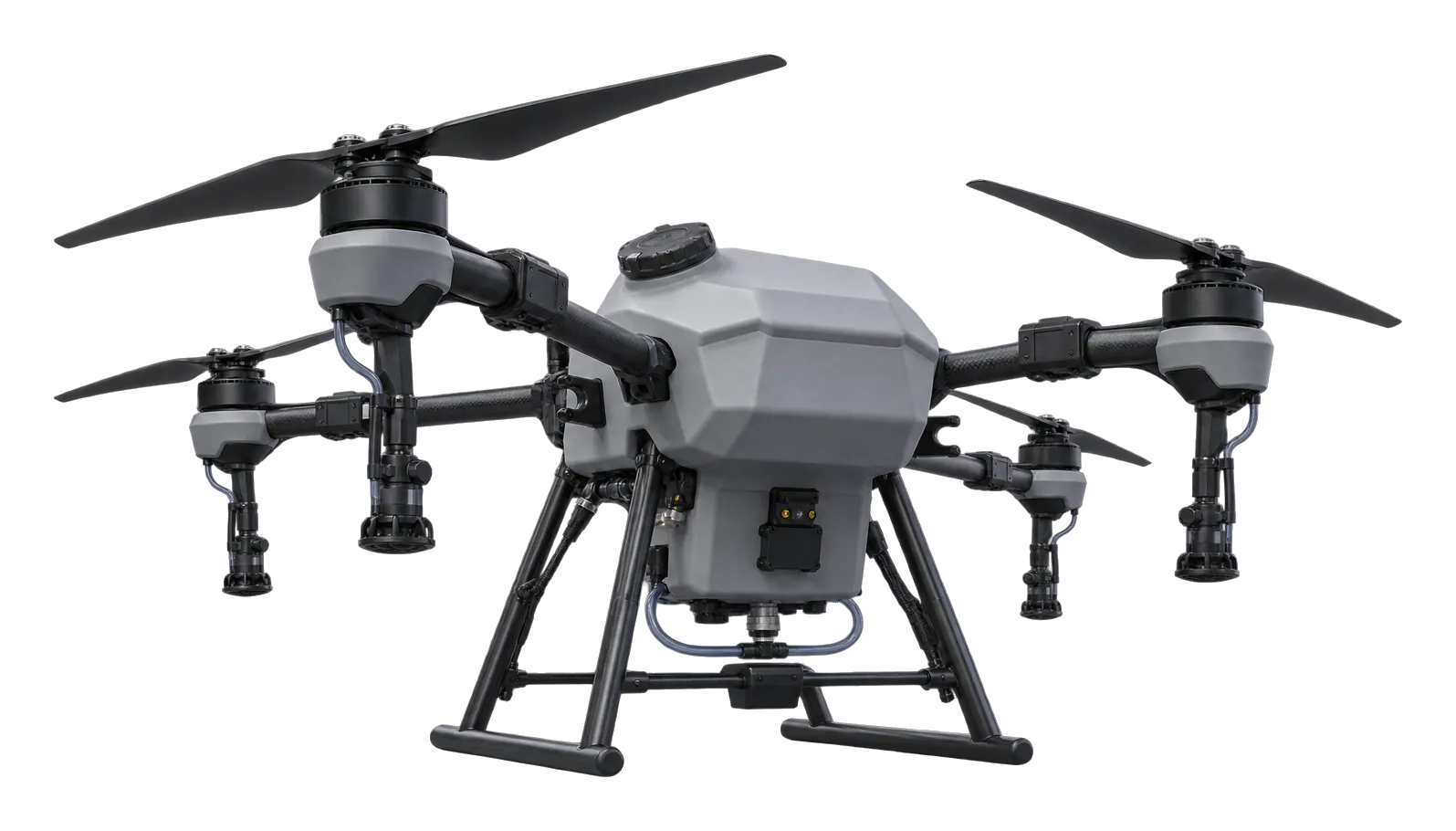
| Smallholder group, paddies of 1–5 ha | small, irregular | AS-30 | 30 L spraying, 40 L spreading, 68 kg MTOW (AS-30X 78 kg) |
| Cooperative, 50–200 ha | mixed | AS-30 plus a second unit | Two aircraft share a day’s work |
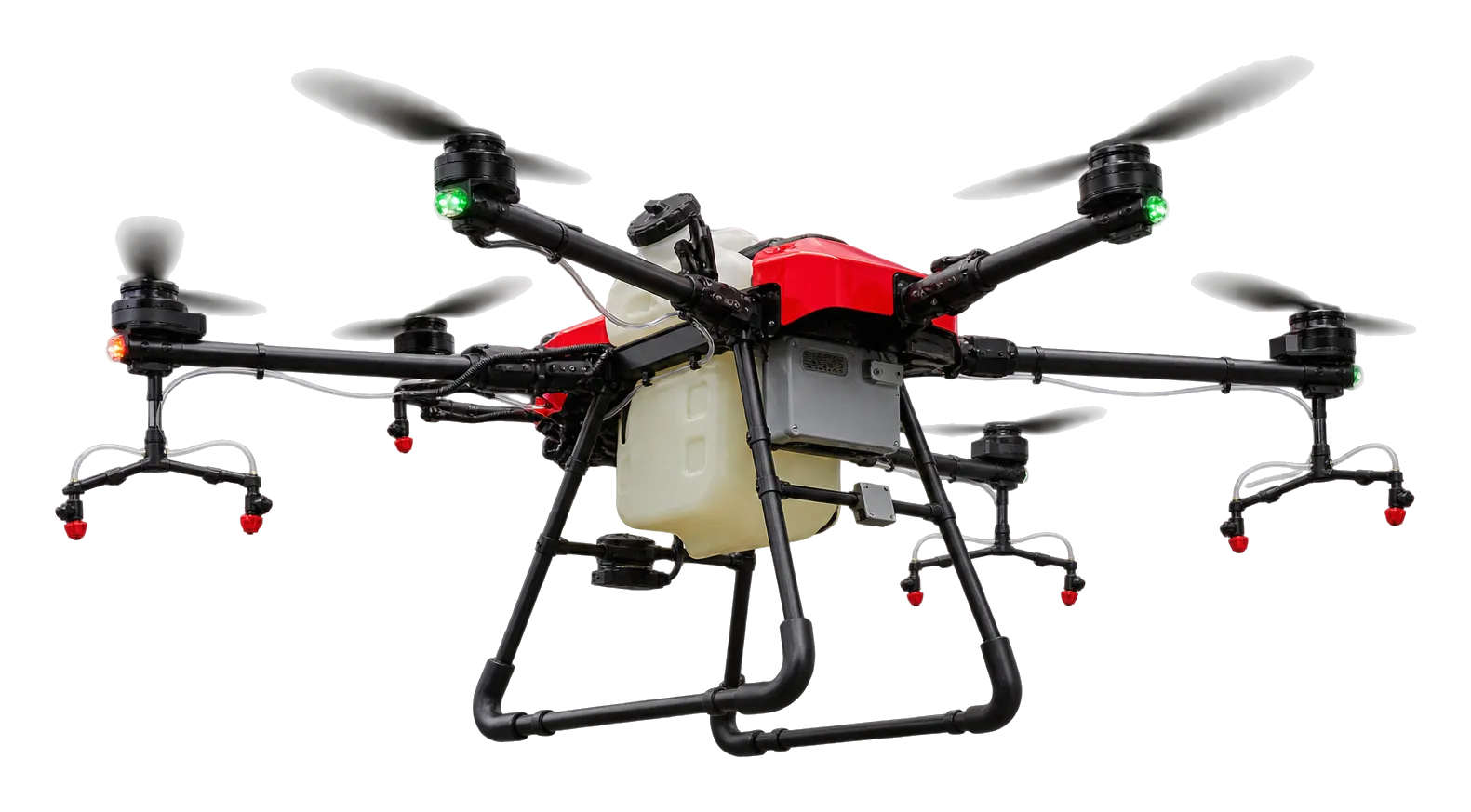
| Service provider, large contiguous blocks | 20 ha and up | AS-50 / AS-65 | 50 or 62 L, 8–20 m width, 70 L spreader, 99 / 111 kg MTOW |
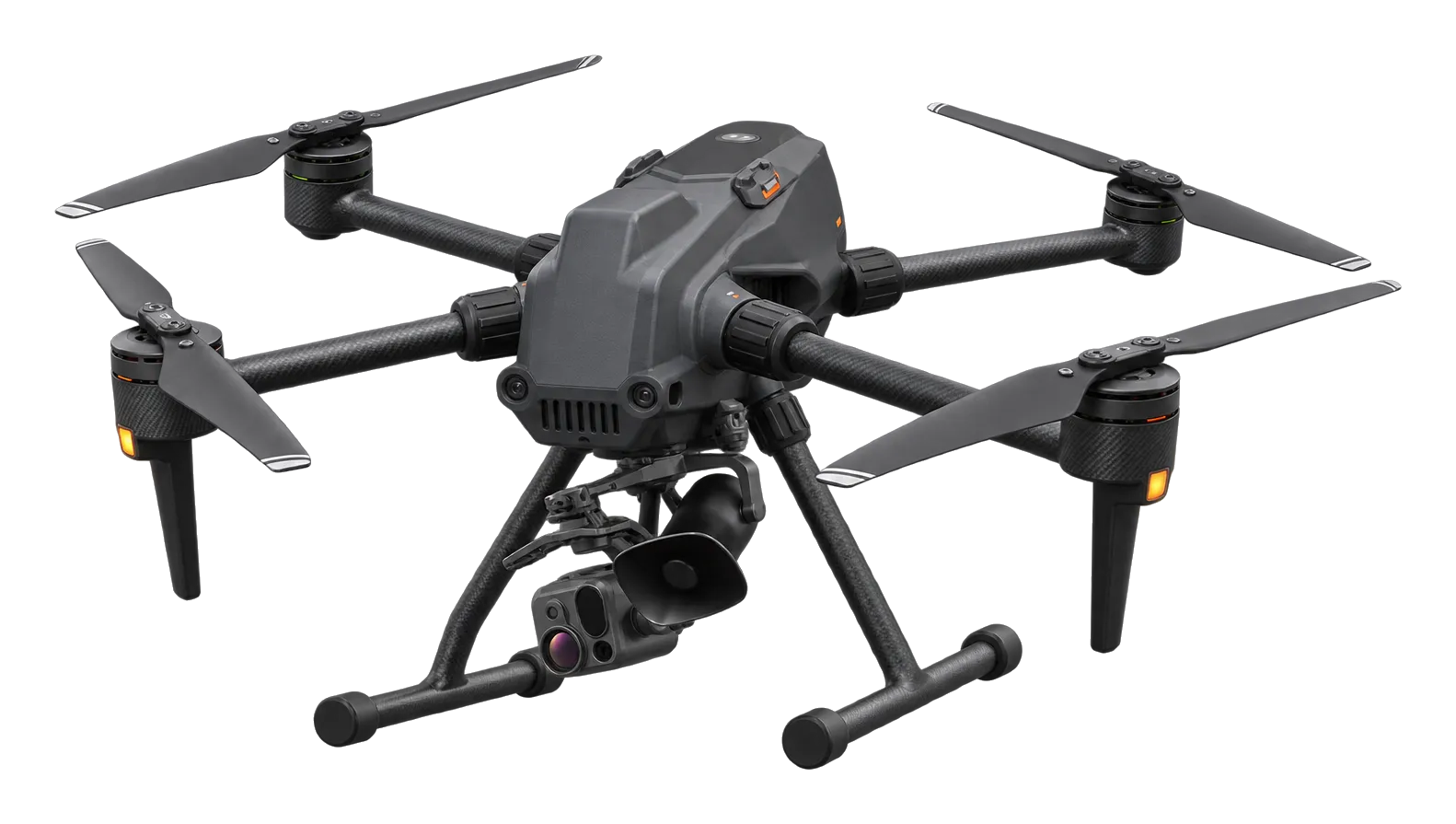
| Scouting and storm damage | any | IS-4 | 63 min, 3 kg payload, IP45 (no rain) |
Spraying, seeding and fertiliser
For spraying, the AS-30 has eight high-pressure nozzles at 8 L/min; the AS-50 / AS-65 has two centrifugal nozzles with an adjustable 8–20 m swath. For seeding and fertiliser, the spreaders hold 40 L (AS-30) or 70 L (AS-50 / AS-65), with granules from 0.5 to 10 mm on the larger aircraft. Spray product, label and application rate are agronomic and legal choices for your adviser; see our rice paddy spraying guide and price by crop.
What does CAAP need?
CAAP is the regulator. Commentary websites quote weight thresholds and distances, but we could not read CAAP’s own pages when we checked, so we leave the numbers out. Ask CAAP for the current rules on registration, operator certification and controller certificates for aircraft of 68–111 kg, and on insurance for paid work. This page does not say any aircraft is registered or certified in the Philippines.
Example: a 100 ha cooperative season
Example (assumed application volume; the label sets the real one). A 100 ha rice cooperative at 15 L/ha needs 100 × 15 = 1,500 L per pass. With the AS-30 at 30 L per load that is 1,500 ÷ 30 = 50 tank loads. At the maker’s 8–12 ha/h quote, 100 ÷ 12 ≈ 8.3 h to 100 ÷ 8 = 12.5 h of spraying per pass, so one aircraft covers it in two working days and two aircraft in one.
- Best for small paddies and young cooperatives: the AS-30, 30 L spray, 40 L spread, 8–12 ha/h.
- Best for contractors on large blocks: the AS-65, 62 L, 70 L spreader, up to 20 L/min.
- Best for scouting and storm damage maps: the IS-4, 63 min.
How do you plan around typhoons?
Order spare propellers, batteries and pumps before July. After a storm, rinse, inspect and test before the next job; IP67 helps but does not replace the check. Keep a mapping flight with the IS-4 ready to document damage for the cooperative’s records.
What about island logistics?
Parts arrive by sea freight or courier; lithium batteries for large aircraft normally go by sea, so stock spares on the island that needs them. Confirm duty, radio approval and import permits with your customs broker. Dealers and service companies can read more on our partners page.
Metro Manila towers: what a cleaning drone reaches
Makati’s tallest building, Park Central North Tower, is 276 m, and the city’s first 150 m building dates from 1992; Makati has about 630,000 people on 25 km² (CTBUH). The City of Manila’s tallest, Grand Riviera Suites, is 230 m (CTBUH). A CW-65 works up to 100 m, so roughly the lower third of the Makati tower; the rest stays with gondolas. For a 40-storey block at 3.2 m a floor (128 m, an assumption), 100 ÷ 3.2 ≈ 31 floors by drone and 9 by gondola. Ninoy Aquino International Airport is run by the Manila International Airport Authority; flights near it need clearance, and the city government may have its own permit requirements, so check both. We found too few facts specific to Manila itself to give it a separate page.
Next step
Send field sizes, crop calendar and whether you want spraying, spreading or both. We reply with tank loads per block and the CAAP questions to ask before ordering.
Q & A
Common questions
01How much land can one spray drone cover in a day?
The manufacturer quotes 8–12 ha an hour for the AS-30. Over a 10-hour day with refills and battery swaps the real figure is lower, and weather, field shape and water supply decide it. We size it for your fields in the quotation.
02Can drones seed rice directly?
Yes. The AS-30 has a 40 L spreader and the AS-50 / AS-65 a 70 L spreader for granules up to 10 mm. IRRI and the Department of Agriculture have run direct-seeding demonstrations with Laguna farmers. Seed rate and variety are agronomic choices for your adviser.
03What does CAAP require for a 30 L spray drone?
CAAP regulates drone operations in the Philippines. Commentary sites give thresholds, but we have not verified them against CAAP’s own pages, so we do not repeat them. Check CAAP’s current rules for registration, operator certification and pilot controller certificates before ordering.
04How do typhoons affect drone operations?
Flights stop and aircraft are stowed. Peak months are July to October, and typhoons Fung-wong and Kalmaegi caused rice losses in October and November 2025. Plan spares and battery stock before the season and service after it.
05Which tank size suits a cooperative?
Match tank to the largest single block and the refill distance. For paddies of a few hectares the 30 L class is enough; for large contiguous blocks, 50–62 L reduces refills. Tank litres are not payload kilograms: water counts against the take-off weight.
References
- 1Tropical Cyclone Information — PAGASA
- 2GIEWS Country Brief: Philippines — FAO
- 3IRRI showcases drone-assisted rice farming to Laguna farmers — International Rice Research Institute
- 4DA eyes AI-driven drones to bring Philippine farms closer to smart farming — Department of Agriculture Philippines
- 5Makati – The Skyscraper Center — Council on Tall Buildings and Urban Habitat
- 6Manila – The Skyscraper Center — Council on Tall Buildings and Urban Habitat
VEXAFLY Aviation Technology Co., Ltd.. VEXAFLY Aviation Technology Co., Ltd. — industrial drone maker in Nanjing. Our application engineers write and check these pages and configure inspection, cleaning, lift and fire-response systems for project buyers. About VEXAFLY