Agriculture
Drones for Rice Paddies in 2026: Plot Size, Bunds, Typhoons and the Right Aircraft
A drone for rice paddies in 2026: match aircraft to plot size and task (spray, fertilise, direct-seed), plan for typhoons and check Philippine rules.
- Author
- VEXAFLY Aviation Technology Co., Ltd.
- Scope
- Agriculture
- Published
- Length
- 5 min read · 5 sources
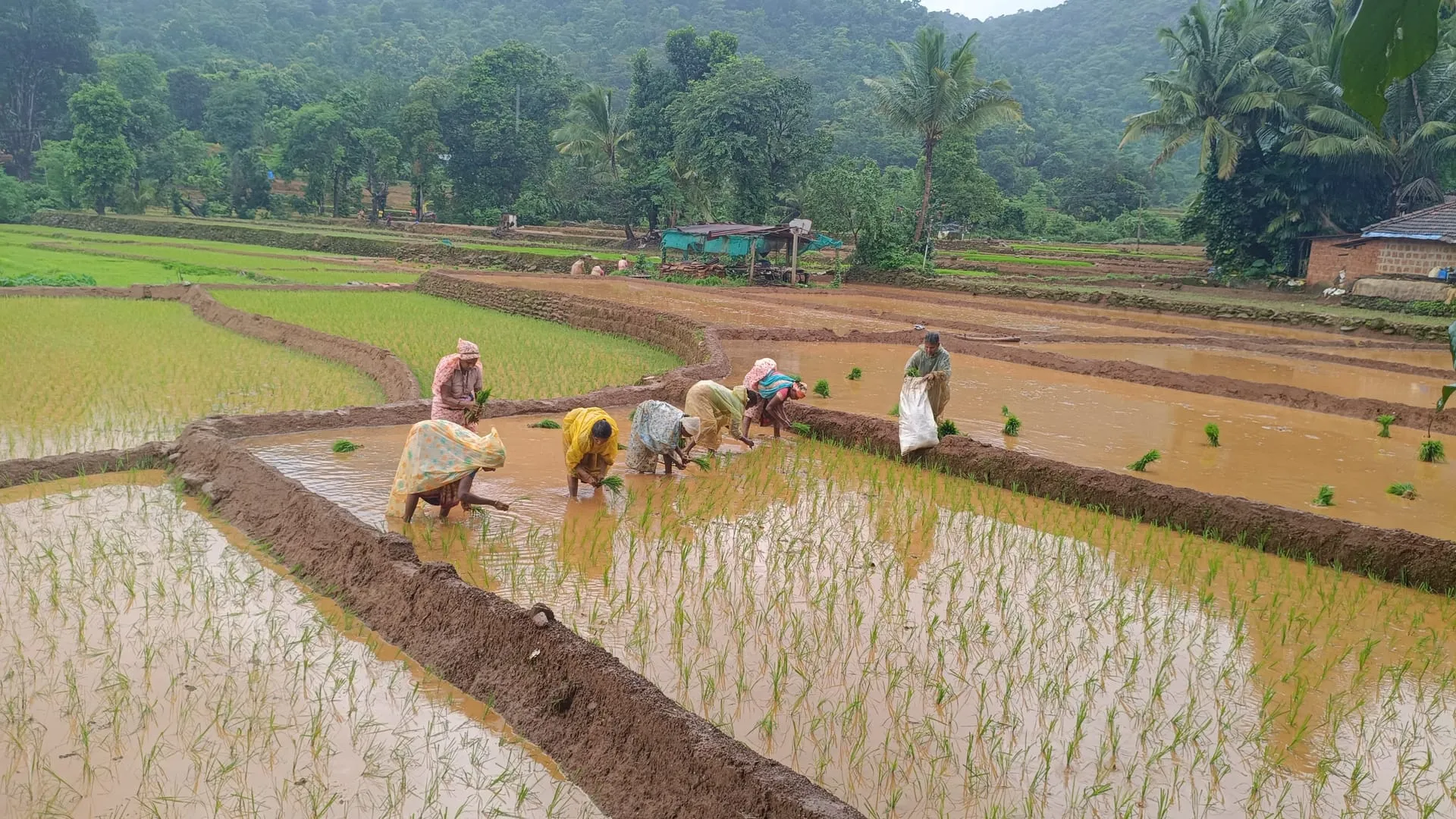
Short answer: in 2026 the best drone for rice paddies is chosen by plot size and task, not by tank size alone. For paddies of 0.2–1 ha and mixed spraying, spreading and seeding, a 30 L aircraft is usually enough; for blocks above 5 ha and regular fertiliser rounds, a 50–62 L aircraft saves refills. Check the pesticide label and your aviation and pesticide authorities before you fly.
Which drone fits which paddy?
The matrix below starts from the field, not from one maker’s settings. Plot sizes and settings are planning values; the label and a test flight confirm them.
| Plot size | Task | Aircraft | Planning notes |
|---|---|---|---|
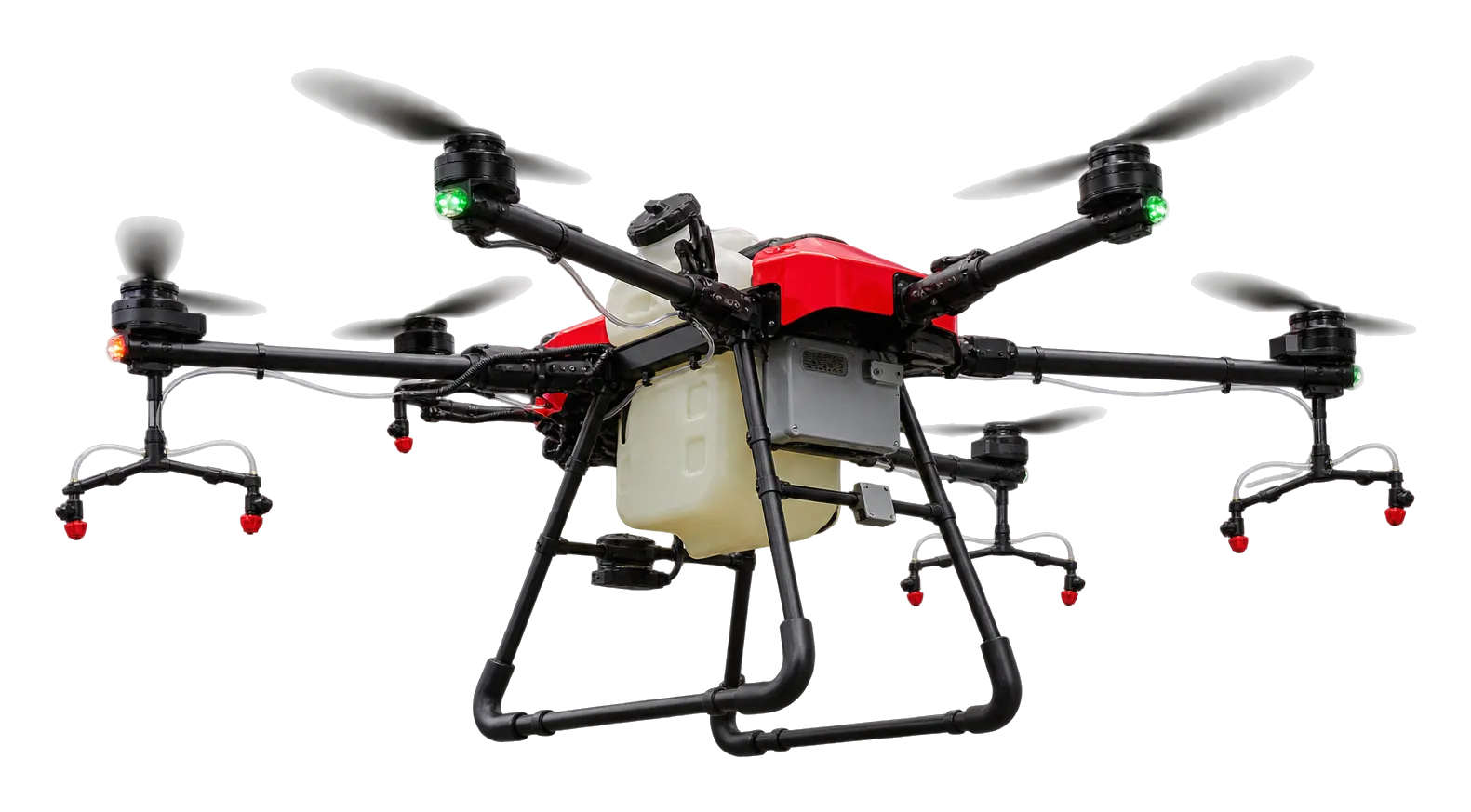
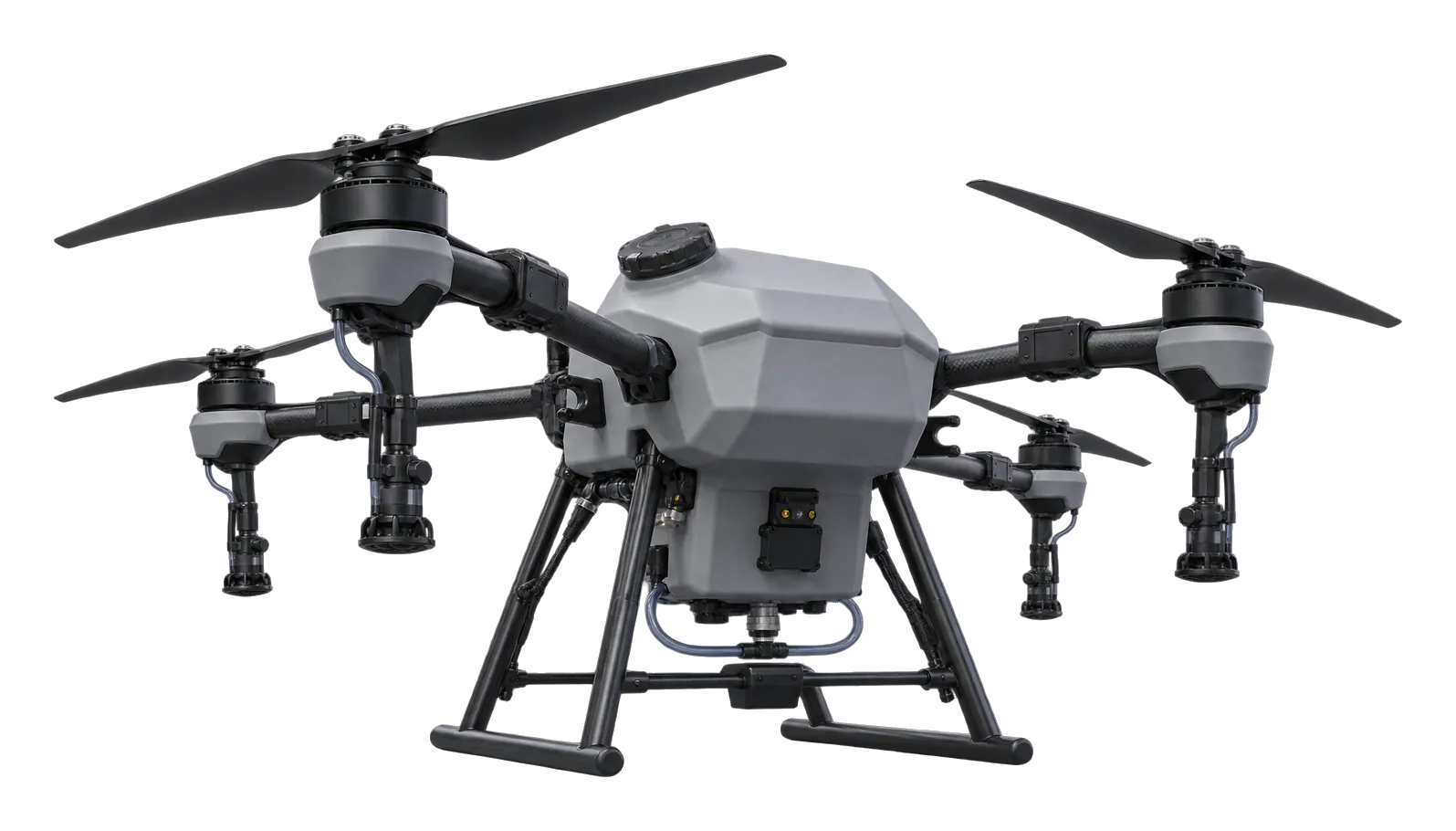
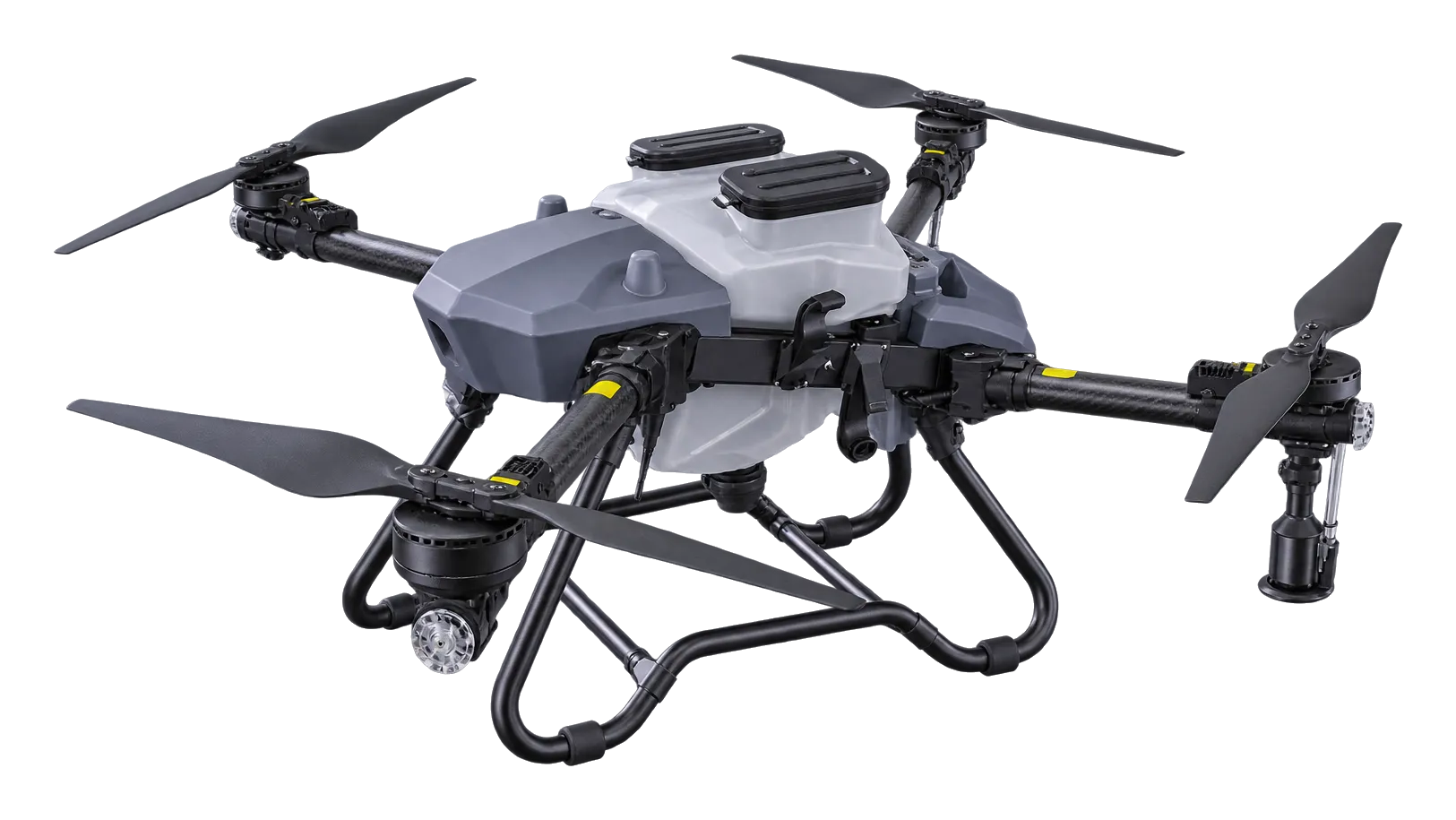
| 0.2–1 ha, many bunds | Spray, light fertiliser | AS-30 (30 L spray, 40 L spreader, 6–9 m) | Short passes; efficiency 35–45 % |
| 1–5 ha, mixed | Spray, fertiliser, seed | AS-30 or AS-50 / AS-65 | Choose by how often you refill |
| Above 5 ha, blocks in a cluster | Fertiliser rounds, spraying | AS-50 / AS-65 (50 / 62 L, 70 L spreader, 8–20 m) | Larger swath pays off on long runs |
| Terraced paddies on slopes | Spray, granules | AR-30 / AR-50 | Flies 2.5–3.5 m above crop, 4–8 m spray width |
Tank litres are not payload kilograms, and spreader litres are not kilograms of seed or fertiliser. Weigh one full hopper of your own product.
Why do small plots and bunds cut the work rate?
The brochure rate assumes long straight runs. A paddy of 0.5 ha is 50 m by 100 m: a drone at 4 m/s crosses it in 25 seconds, then turns, shifts to the next plot and often waits for a refill. Field efficiency (the share of time actually spraying) falls from about 50 % on a large block to 35–45 % in a patchwork of small plots. Landing pads on bunds, wet mud at the field edge and a water source that is not at the plot all add minutes per load.
What does the work-rate arithmetic look like?
Example (assumed inputs, an estimate): a cluster of small paddies totalling 40 ha gets a fungicide at an assumed 20 L/ha (the label decides the real dose), so 800 L in total.
| AS-30 | AS-50 | |
|---|---|---|
| Effective width × speed | 6 m × 4 m/s | 10 m × 4 m/s |
| Field efficiency | 40 % | 35 % |
| Area rate | 9.6 m²/s ≈ 3.5 ha/h | 14 m²/s ≈ 5.0 ha/h |
| Spraying time for 40 ha | about 11.6 h | about 7.9 h |
| Loads of 800 L | 27 (30 L) | 16 (50 L) |
The tank is 67 % bigger, but the saving in time is only about 32 %, because small plots hold back the larger aircraft’s wider swath. On a single 40 ha block the gap would be wider.
Can a drone direct-seed and fertilise rice?
Yes, with a spreader. The maker of one widely used drone range publishes rice-seeding guidance: 140–200 kg of seed per hectare, 4–5 m above the crop at 6–7 m/s, route spacing of 4.5–5.5 m, a levelled field within about 5 cm and pre-germinated sprouts no longer than 1–3 mm so they do not block the spreader. Treat these as another maker’s reference, not as our settings, and test with your own seed. For fertiliser, 3–4 m above the crop at 6–7 m/s is a typical reference. The AS-30 has a 40 L spreader (0.5–5 mm), the AS-50 / AS-65 a 70 L spreader (0.5–10 mm); see also our guides on seeding drones and fertiliser spreading.
How do typhoons and the wet season change the plan?
PAGASA reports that about 20 tropical cyclones enter the Philippine area of responsibility each year, 8–9 of them cross the country, and nearly 70 % form between July and October. For a rice crop this means: spray early in the dry windows, keep batteries charged and a generator on hand, avoid spraying within hours of forecast rain (check the label for rain-fastness), and park and strap down aircraft before a storm. IP67 sealing helps with splashes and mud; it is not permission to fly in rain or strong wind.
What permits does a drone sprayer need in the Philippines?
The Fertilizer and Pesticide Authority (FPA) issued Memorandum Circular No. 25 of 2024 on pesticide application with remotely piloted aircraft; it covers operators, technicians, service providers and end users. In March 2026 FPA, CAAP and the Civil Aeronautics Board met to align their rules, and FPA announced a new circular on night flying, flight permits and pilot licensing. CAAP and CAB register drones and issue flight permits; FPA regulates the inputs applied by drone and licenses spraying operators. Because the rules are moving, check the current FPA circular and the CAAP requirements before you buy or quote work. More on this country: Philippines market page.
Is a service team better than owning a drone?
For a farm under about 20 ha, usually yes. Cooperatives, local government units and contractors can spread the cost over many farms, and a trained crew reaches the work rate above. The Department of Agriculture Bicol office treated 1 ha and 11.15 ha of rice against green leafhopper (the tungro vector) in 2021 and advised spraying only when necessary. IRRI notes that labour is about a third of rice production cost in the Philippines, which is why pilots are becoming a service business. If you plan one, read agricultural drone pilot training and our service page.
What do you need at the field edge?
- A clean water source for mixing, within a short drive of the paddies.
- A hard landing pad on a bund or a lorry bed; mud and standing water foul batteries and sensors.
- Spare battery sets and a charging plan; one battery per flight is a normal planning figure for a 30 L aircraft.
- A spotter for people, buffalo and power lines, and a map of nearby houses and water sources.
Best for …
- Best for 0.2–1 ha paddies and mixed work: the AS-30, with 30 L spray / 40 L spread and a 6–9 m swath.
- Best for blocks above 5 ha and fertiliser rounds: the AS-50 / AS-65, with 8–20 m swath and a 70 L spreader.
- Best for terraced rice on slopes: the AR-30 / AR-50, spraying 2.5–3.5 m above the crop in 4–8 m strips.
Reference price ranges (FOB China, varying with configuration and quantity, final price on quotation): AS-30 US$5,800–7,100, AS-50 / AS-65 US$7,300–13,300, AR-30 / AR-50 US$5,800–14,000. See all options under agricultural drones.
Next step
Send us the number and average size of your paddies, the tasks you want and the nearest water source. We reply with the aircraft, the number of batteries and a work-rate estimate for your plots.
Q & A
Common questions
01Which agricultural drone is best for rice paddies?
It depends on plot size and task. For paddies of 0.2–1 ha and mixed work, a 30 L aircraft such as the AS-30 is usually enough. For blocks above 5 ha and regular fertiliser rounds, a 50–62 L aircraft with a 70 L spreader, the AS-50 / AS-65, saves refills.
02Can a drone direct-seed and fertilise rice?
Yes, with a spreader module. The AS-30 has a 40 L spreader and the AS-50 / AS-65 a 70 L one. Seed and fertiliser differ in density, so weigh one full hopper of your own product to learn the kilograms per load.
03Which permits cover drone spraying of rice in the Philippines?
Operators generally deal with two bodies: the Fertilizer and Pesticide Authority (FPA) for the pesticide side and the Civil Aviation Authority (CAAP) for the aircraft and flight permission. FPA is revising its 2024 circular in 2026, so check the current circular before you start.
04How many hectares a day in small paddies?
Far fewer than the brochure figure. With 0.5–1 ha plots, an efficiency of 35–45 % is realistic, which on a 30 L aircraft is roughly 3–4 ha an hour of spraying time. Walking between plots and refilling come on top.
05Can drones work in the rainy season?
Between showers, yes, if the airframe is sealed (IP67 on our AS and AR range) and the label allows it. Most crews stop before rain and in strong wind, and plan spraying for the dry windows around forecast storms.
References
- 1FPA to develop protocols, standards and monitoring of drone use in agriculture through Drones4Rice project — Fertilizer and Pesticide Authority
- 2FPA hosts inter-agency meeting with CAAP, CAB to harmonize regulation of drone use for pesticide applications — Fertilizer and Pesticide Authority
- 3Tropical Cyclone Information — PAGASA
- 4DA Bicol uses drone technology to control rice Tungro virus — Department of Agriculture Regional Field Office 5
- 5IRRI, PhilRice launch drone protocols to boost rice farming in the Philippines — International Rice Research Institute
VEXAFLY Aviation Technology Co., Ltd.. VEXAFLY Aviation Technology Co., Ltd. — industrial drone maker in Nanjing. Our application engineers write and check these pages and configure inspection, cleaning, lift and fire-response systems for project buyers. About VEXAFLY