Agriculture
Seeding Drone in 2026: Which Seed, Which Spreader and Which Field Suits It
Seeding drone guide for 2026: cover crops, pasture, rice and slopes matched to seed rate, spreader size, load per flight, calibration and reference prices.
- Author
- VEXAFLY Aviation Technology Co., Ltd.
- Scope
- Agriculture
- Published
- Length
- 5 min read · 4 sources
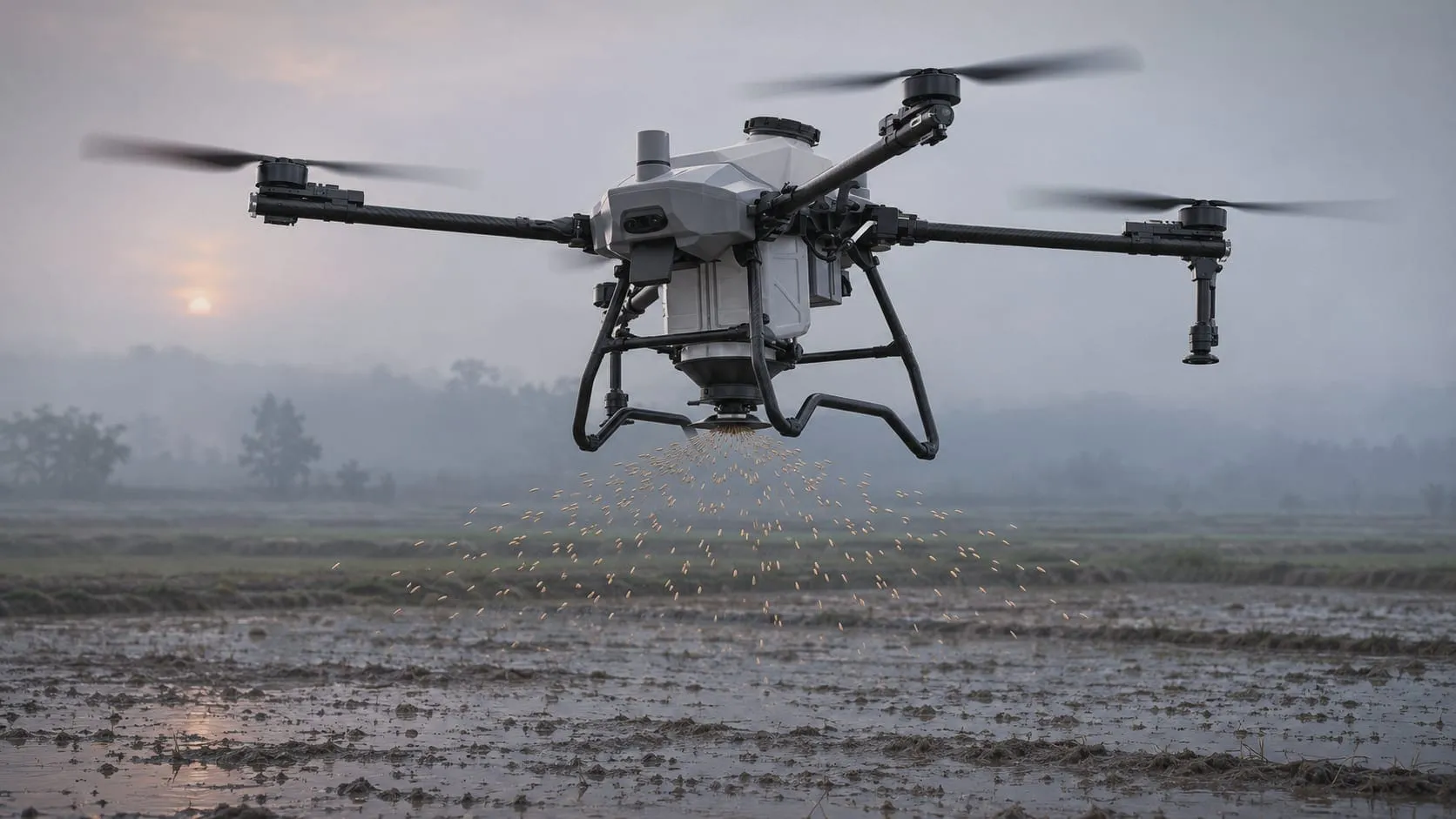
Short answer: in 2026 a seeding drone is worth buying when your seed, rate and field fit its spreader: cover crops into standing crops, pasture on slopes and rice on levelled paddies. Choose the hopper by kilos of your own seed per load, not by litres, and calibrate before the first job. It is a poor fit for seed mixes, very light seed in wind and rough, unlevelled ground.
Which seeding job is yours?
Start with the job, because it fixes the rate, the height and the hopper.
| Job and site | Typical rate | Hopper that fits | Where it stops working |
|---|---|---|---|
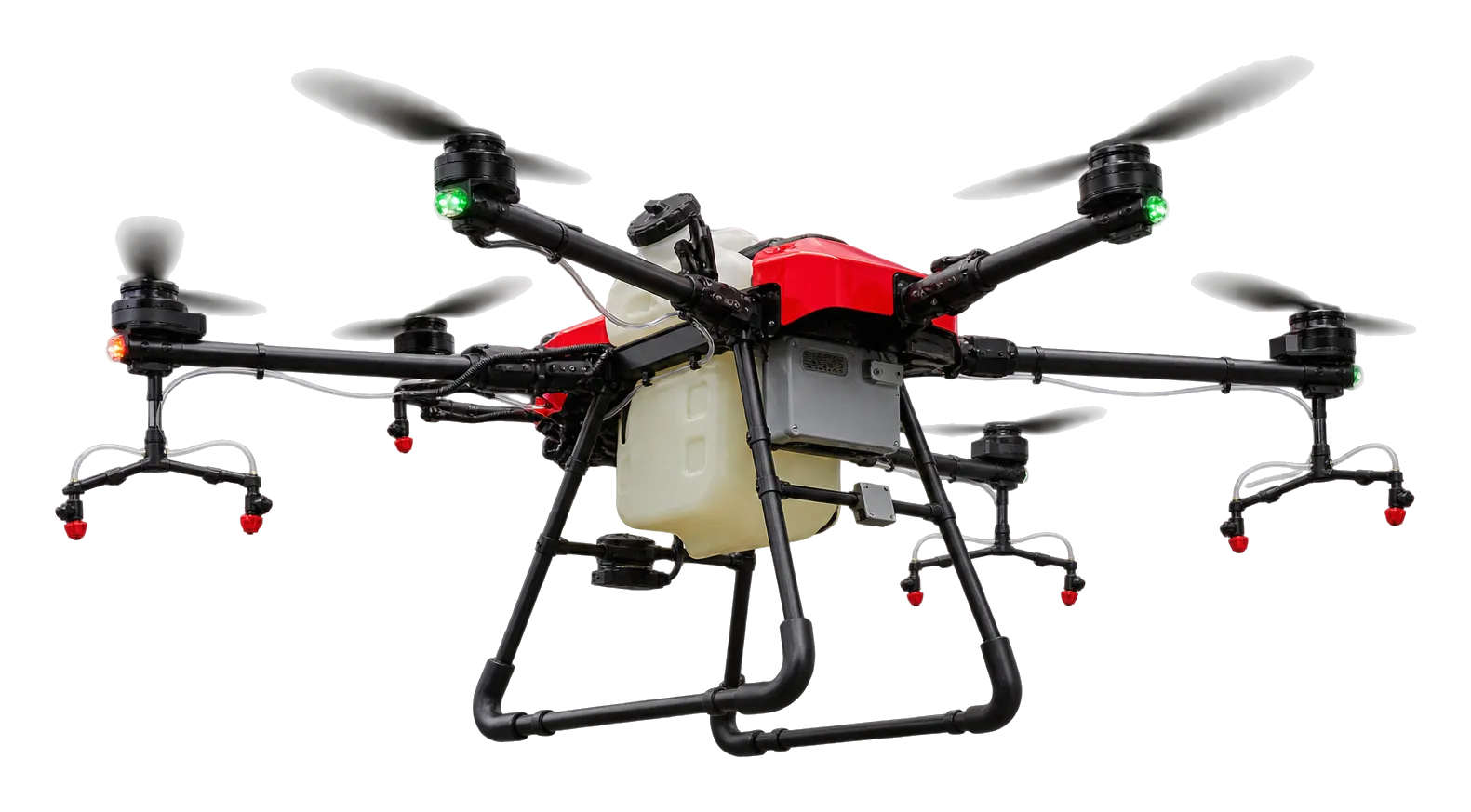
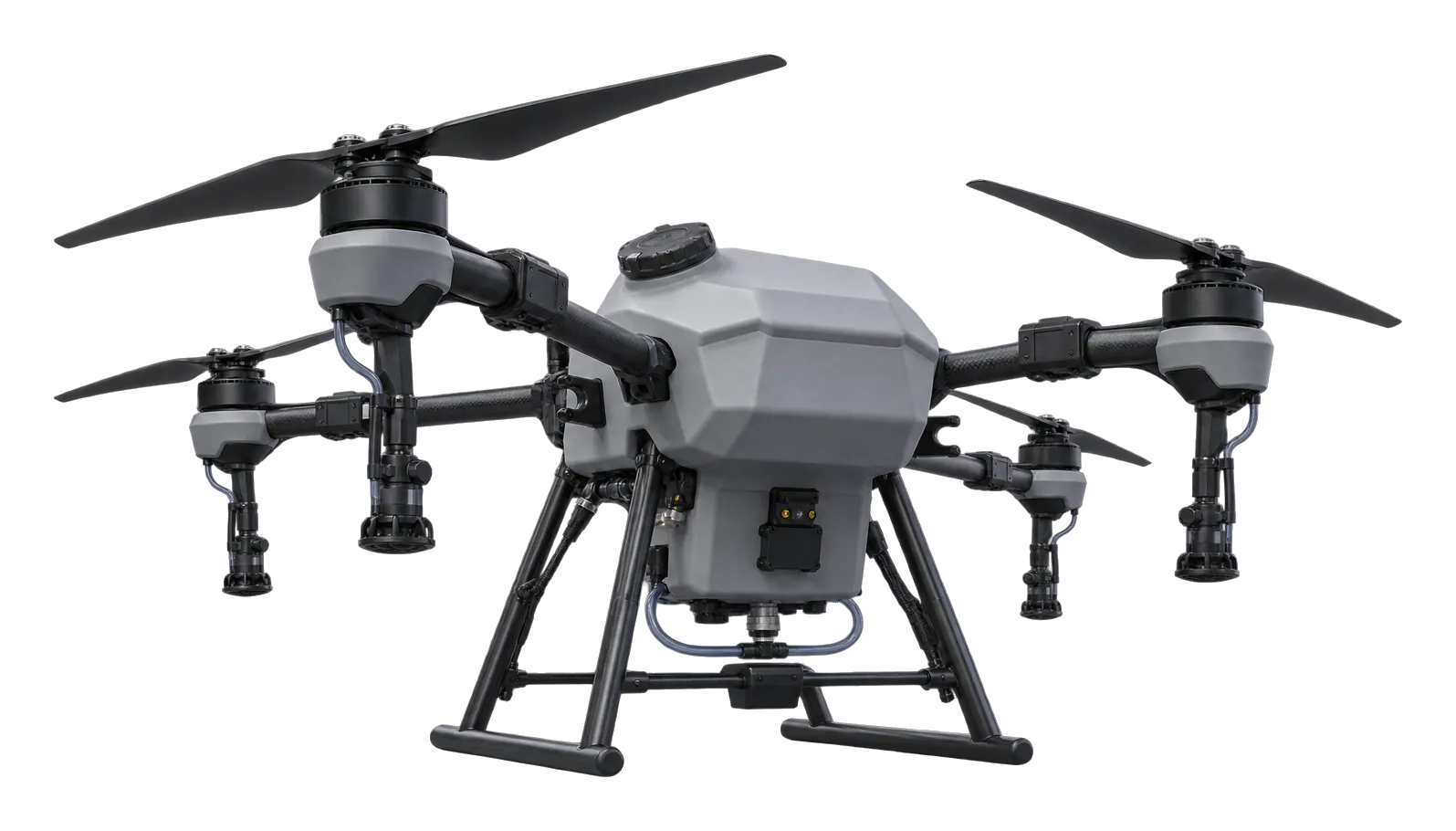
| Cereal rye or radish cover crop into standing corn or soybeans | 20–60 lb/acre (22–67 kg/ha), plus 20–50 % allowance | AS-30 40 L | Light seed drifts even in low wind |
| Pasture overseeding on slopes | Set by the seed supplier | AS-30 or AS-50 / AS-65 | Mixed seed sizes separate in the hopper |
| Dry rice direct seeding | 30–60 kg/ha in field studies | AS-50 / AS-65 70 L | Unlevelled fields, standing water over 5 cm in places |
| Pre-germinated rice | 140–200 kg/ha (DJI guide) | AS-50 / AS-65 or AS-100 | Sprouts over 3 mm block the gate |
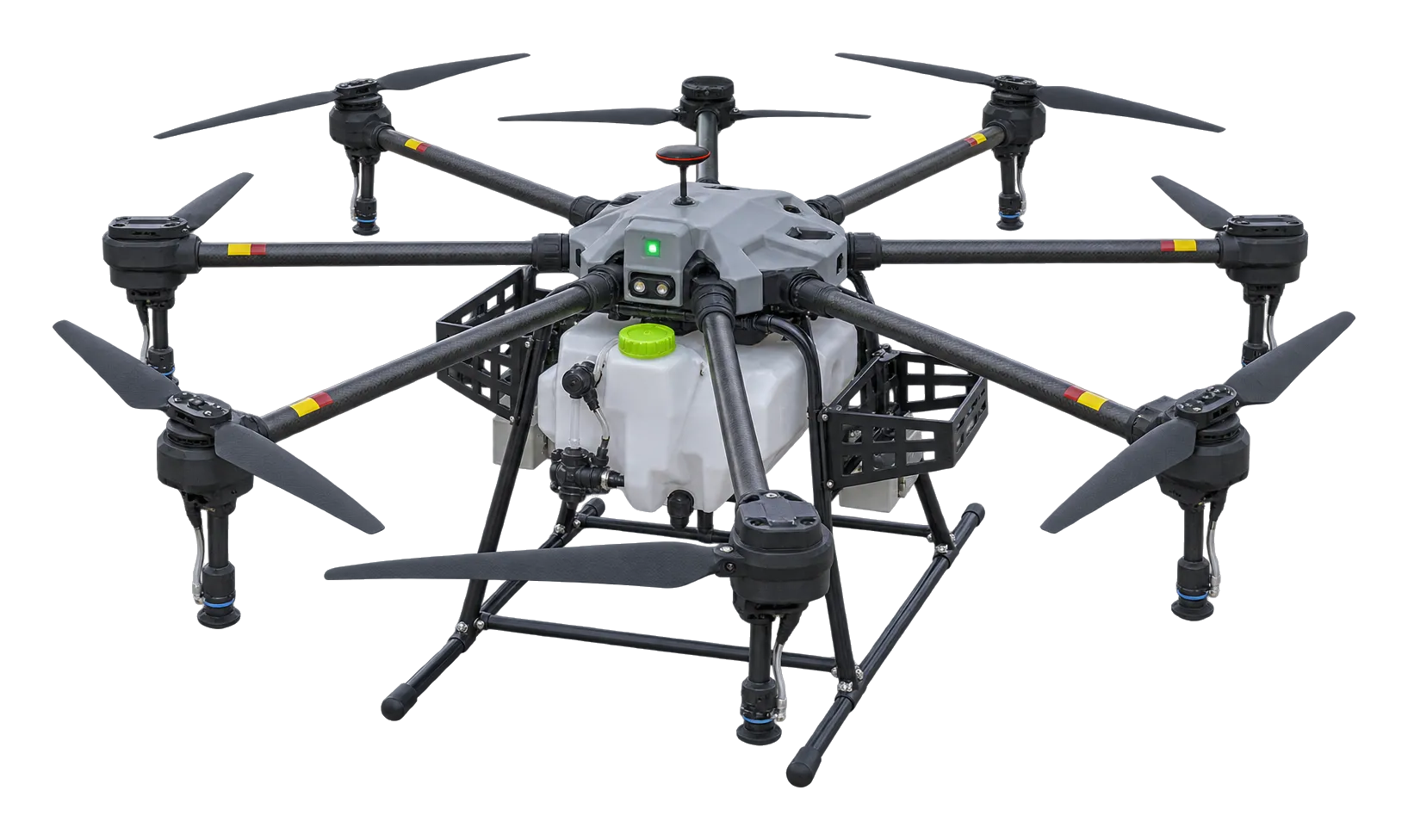
| Large custom cover-crop jobs | As above | AS-100, 120 kg per load | Refill logistics, not the aircraft |
The AS-10 and AS-20 cannot seed; they spray only.
How much seed per hectare, and per load?
Alabama Extension gives nominal drone rates of 20–60 lb/acre. Multiply by 1.121 for kg/ha. Its advice is to raise the rate by 20–50 % to offset bird and rodent losses or weaker emergence, so a plan at 50 lb/acre becomes 60–75 lb/acre in the hopper.
| Rate (lb/acre) | kg/ha | kg for 10 ha | AS-100 loads per 10 ha (120 kg) |
|---|---|---|---|
| 20 | 22 | 224 | 1.9 |
| 40 | 45 | 448 | 3.7 |
| 60 | 67 | 673 | 5.6 |
For the 40 L and 70 L hoppers, divide the kilos for your area by the kilos you weighed in one full hopper.
Can a drone direct-seed rice?
Yes, and there are two different jobs. A field study in Plant Science Today tested 30–60 kg/ha of dry seed; in the search summary of that paper a 40 kg/ha drone rate matched drum seeding at 30 kg/ha and saved seed against hand broadcasting. A Philippine trial (SEARCA abstract) tested 40, 60 and 80 kg/ha, found no significant yield effect from the rate and recommended 60 kg/ha.
DJI’s maker guide covers pre-germinated rice: 140–200 kg/ha at 4–5 m height and 6–7 m/s, route spacing of 6 m or less, a field level to within 5 cm and sprouts of 1–3 mm. The two rate ranges do not conflict: wet seed weighs more. Always say which one you are quoting.
Which seeds cause trouble?
- Mixes: seed of different sizes and weights separates and throws to different distances. Alabama Extension suggests spreading each species on its own pass where needed.
- Light, fluffy seed (radish, clover): drifts in light wind. Seed at calm times and fly low.
- Sprouted rice: sprouts longer than about 3 mm tangle in the gate.
- Coated or oversized seed: check it against the spreader’s granule range: 0.5–5 mm on the AS-30, 0.5–10 mm on the AS-50 / AS-65.
Worked example: 40 ha of cereal rye
Example only — assumed figures. Plan: 50 lb/acre plus a 30 % allowance for predation = 65 lb/acre, about 73 kg/ha. With the AS-100 at 120 kg per load, one load covers 120 ÷ 73 ≈ 1.6 ha, so 40 ha needs about 25 loads. Work rate check: 7 m route spacing × 6 m/s × 0.5 field efficiency = 21 m²/s, about 7.6 ha/h of flying. At 73 kg/ha that is about 555 kg of seed an hour reaching the refill point, roughly five loads an hour, so the loading crew, not the aircraft, sets the pace.
How do you calibrate before the first job?
- Run a static flow test: set the gate, run the spreader on the ground for a timed period into a bag, weigh it and convert to kg/min.
- Set the rate by speed and route spacing, using your flow figure.
- Run a pan test: lay out trays across the swath, fly one pass, and compare seed per tray. Adjust the route spacing so uniformity is acceptable.
- Repeat for every new seed lot, because size and weight change flow.
What does a seeding drone cost?
| Model | Hopper | Reference price (FOB China) |
|---|---|---|
| AS-30 | 40 L, 0.5–5 mm | US$5,800–7,100 |
| AS-50 / AS-65 | 70 L, 0.5–10 mm | US$7,300–13,300 |
| AS-100 | 120 kg | US$24,200–29,100 |
Reference prices vary by configuration and quantity; the final price is on the quotation. Alabama Extension’s custom-hire figure of US$10–20 per acre excluding seed is a useful check on what contractors charge.
Rules and next step
Rules differ by country. In the US, check three things before ordering a foreign-built drone: its FCC Covered List status, the Section 232 duty and FAA approval for aircraft of 55 lb or more; see our import guide and FCC guide. Elsewhere, ask your aviation authority.
Best for:
- Best for cover crops in standing corn or soybeans on mid-size farms: AS-30, 40 L hopper, 0.5–5 mm seed.
- Best for large rice or cereal blocks: AS-50 / AS-65, 70 L hopper, granules to 10 mm.
- Best for big custom seeding jobs: AS-100, 120 kg per load.
Related reading: fertilizer spreading drone selection, rice paddy spraying and the agriculture range. Send us your seed type, rate and field size through the contact form and we will size the hopper and loads for you.
Q & A
Common questions
01How does drone seeding work?
A hopper on the aircraft feeds seed to a spinning disc through a gate or auger. The drone flies a set route at 3–6 m above the ground and the disc throws seed sideways into a swath. Alabama Extension lists disc speeds of 400–1,300 rpm, with faster discs giving a wider swath.
02How much seed can a drone carry per flight?
Current hoppers hold about 25–100 kg according to Alabama Extension. Ours are rated 40 L (AS-30), 70 L (AS-50 / AS-65) and 120 kg (AS-100). The kilos in a litre hopper depend on the seed, so weigh a full hopper.
03Can I use a spray drone for seeding?
Only if it has a dry spreader option. The AS-10 and AS-20 are spray-only. The AS-30, AS-50 / AS-65 and AS-100 take a granule spreader in place of the spray tank.
04Is drone seeding cheaper than drilling?
Not always. Alabama Extension puts custom drone seeding at about US$10–20 per acre (US$25–49 per hectare) excluding seed, which can exceed drilling cost. It pays on wet ground, standing crops and small or irregular fields where a drill cannot go.
05Can a drone seed rice directly?
Yes, with limits. A field study in India tested 30–60 kg/ha of dry seed, and DJI's maker guide covers pre-germinated seed at 140–200 kg/ha. The field must be level and the sprouts short enough not to block the spreader.
06Can I import a Chinese seeding drone into the US?
In the US, check three things before ordering a foreign-built drone: its FCC Covered List status, the Section 232 duty and FAA approval for aircraft of 55 lb or more. Confirm with your customs broker and the FAA.
References
- 1Use of Drones for Aerial Seeding of Cover Crops — Alabama Cooperative Extension System
- 2Exploring the feasibility of using drones for seeding of rice (Oryza sativa L.) — Plant Science Today
- 3A Comprehensive Guide to Using Agricultural Drones for Rice Spreading and Fertilization — DJI Agriculture
- 4Dispensing Chemicals and Agricultural Products (Part 137) with UAS — Federal Aviation Administration
VEXAFLY Aviation Technology Co., Ltd.. VEXAFLY Aviation Technology Co., Ltd. — industrial drone maker in Nanjing. Our application engineers write and check these pages and configure inspection, cleaning, lift and fire-response systems for project buyers. About VEXAFLY