Agriculture
Agricultural Drone Price in 2026: What Each Crop and Terrain Really Costs
Agricultural drone price in 2026 by crop and terrain: tank class, reference FOB China prices, a US dealer comparison, cost per hectare and hidden extras.
- Author
- VEXAFLY Aviation Technology Co., Ltd.
- Scope
- Agriculture
- Published
- Length
- 5 min read · 6 sources
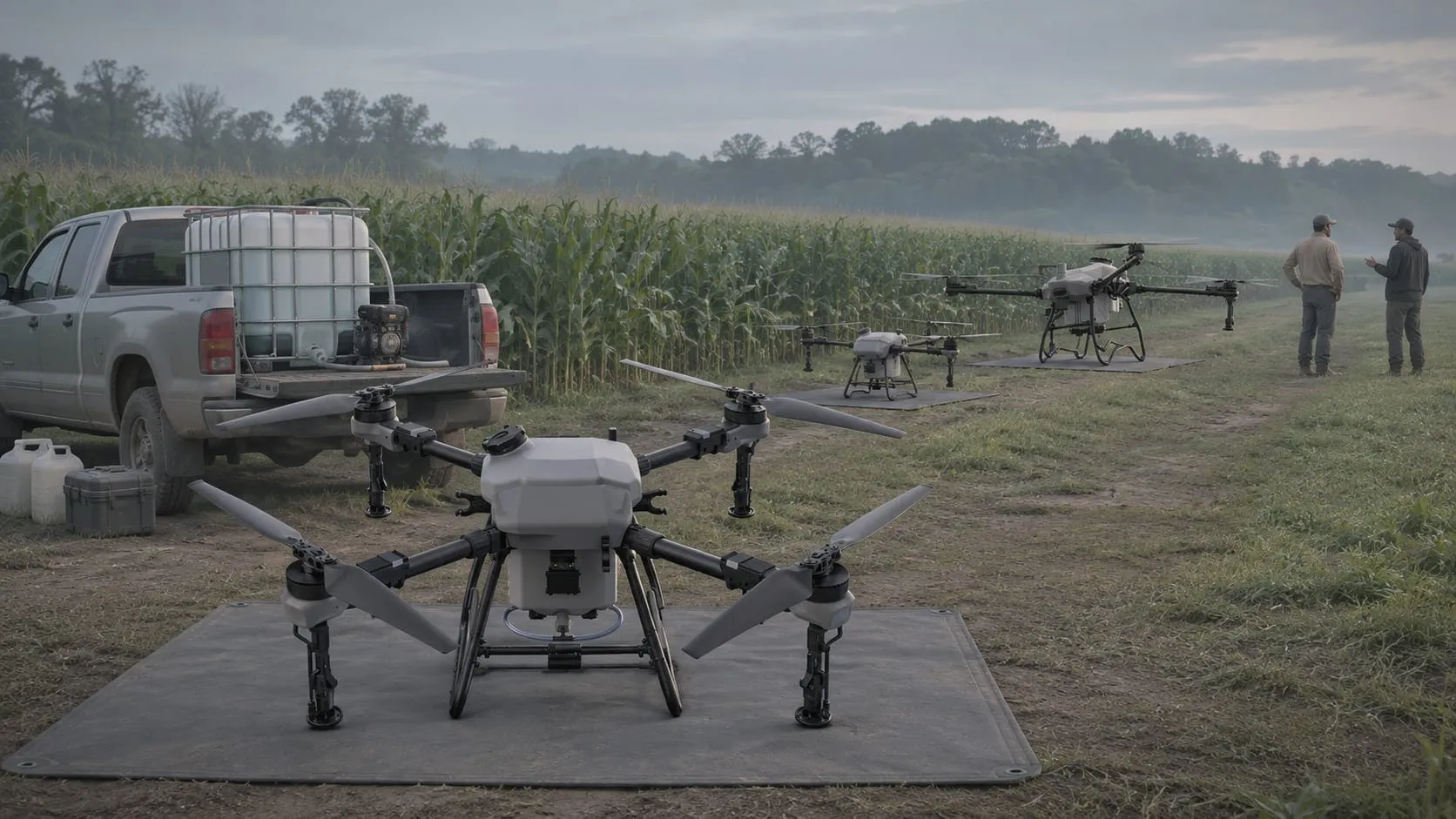
Short answer: in 2026 the agricultural drone price you should plan for depends on the tank class your crop and terrain need, not on one sticker figure. Our reference FOB China prices run from US$2,700 at the low end of the 10–20 L range to US$29,100 at the top of the 100 L range, before extra batteries, freight and duty. Choose the class first, add the full set-up cost, then divide by the hectares you will really treat.
Which tank class does your crop and terrain need?
Start from the field. Bands are rules of thumb, and tank litres are not payload kilograms.
| Site | Typical area | Tank class | Model | Reference price (FOB China) |
|---|---|---|---|---|
| Terraces, tea, vegetables | Under 20 ha, steep or irregular | 10–20 L | AS-10 / AS-20 | US$2,700–7,000 |
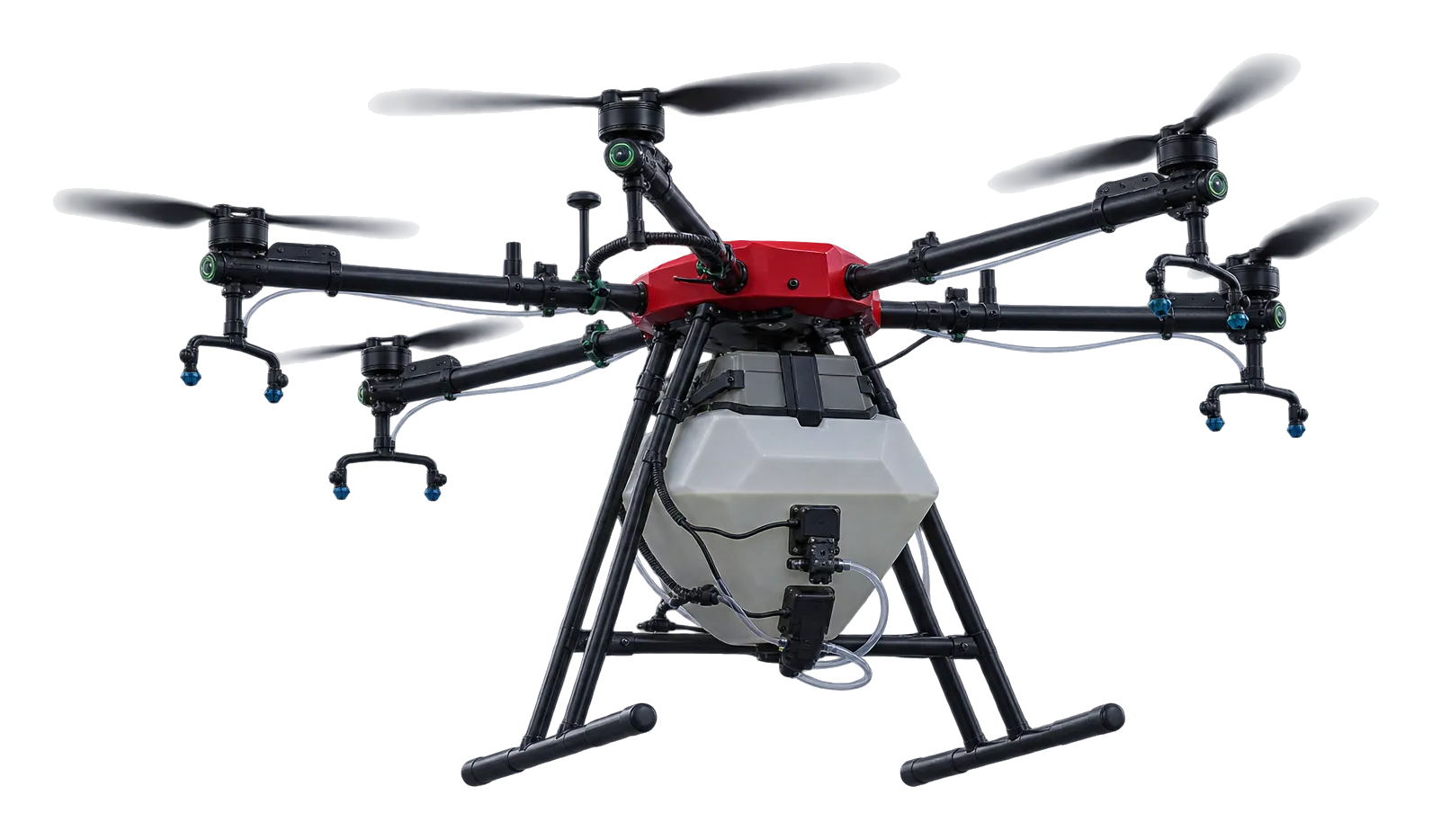
| Hillside orchards | 5–50 ha, tree rows | 30 L, six rotors | AS-30X | US$5,800–7,100 |
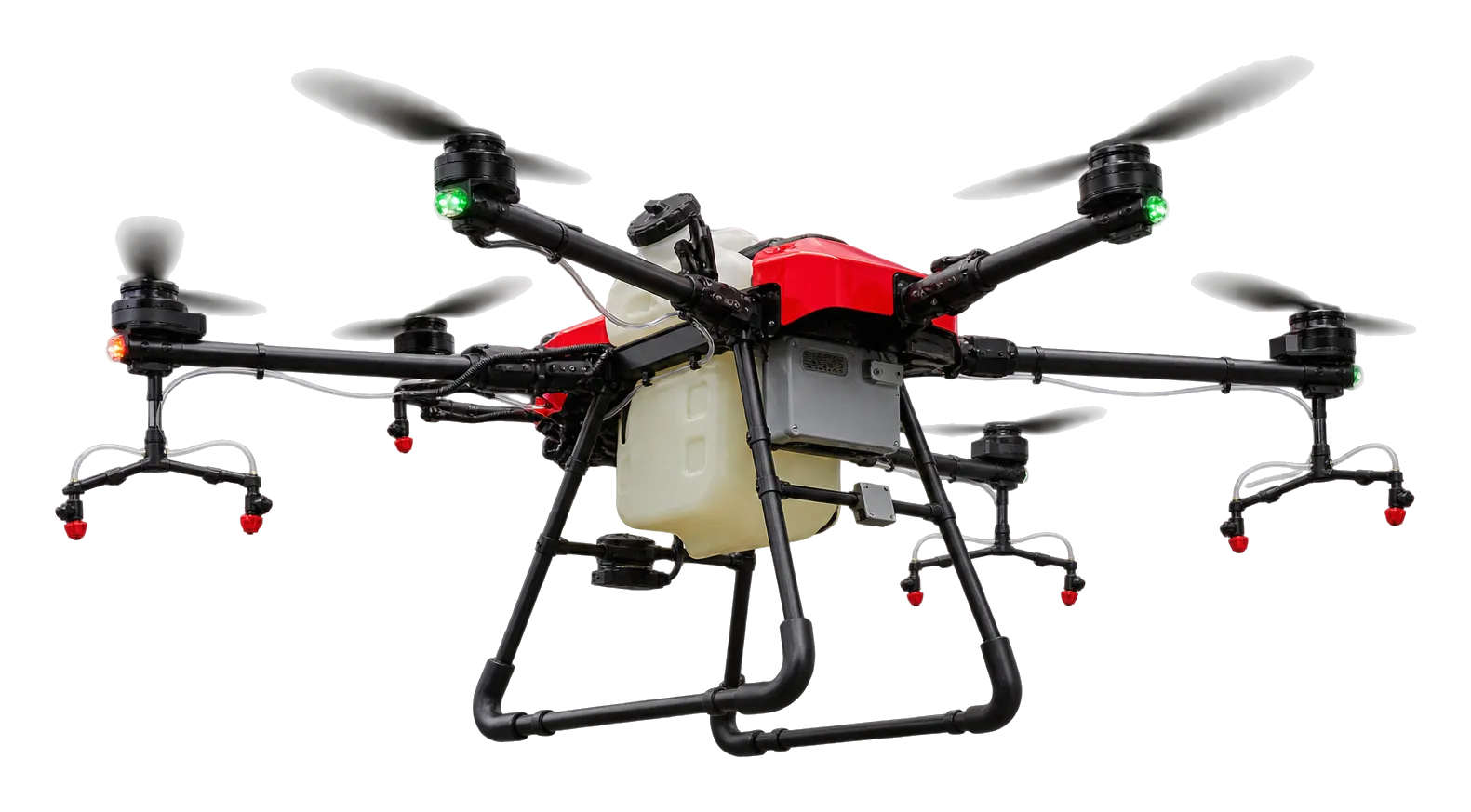
| Paddy rice, small cereal blocks | 20–200 ha | 30 L spray, 40 L spread | AS-30 | US$5,800–7,100 |
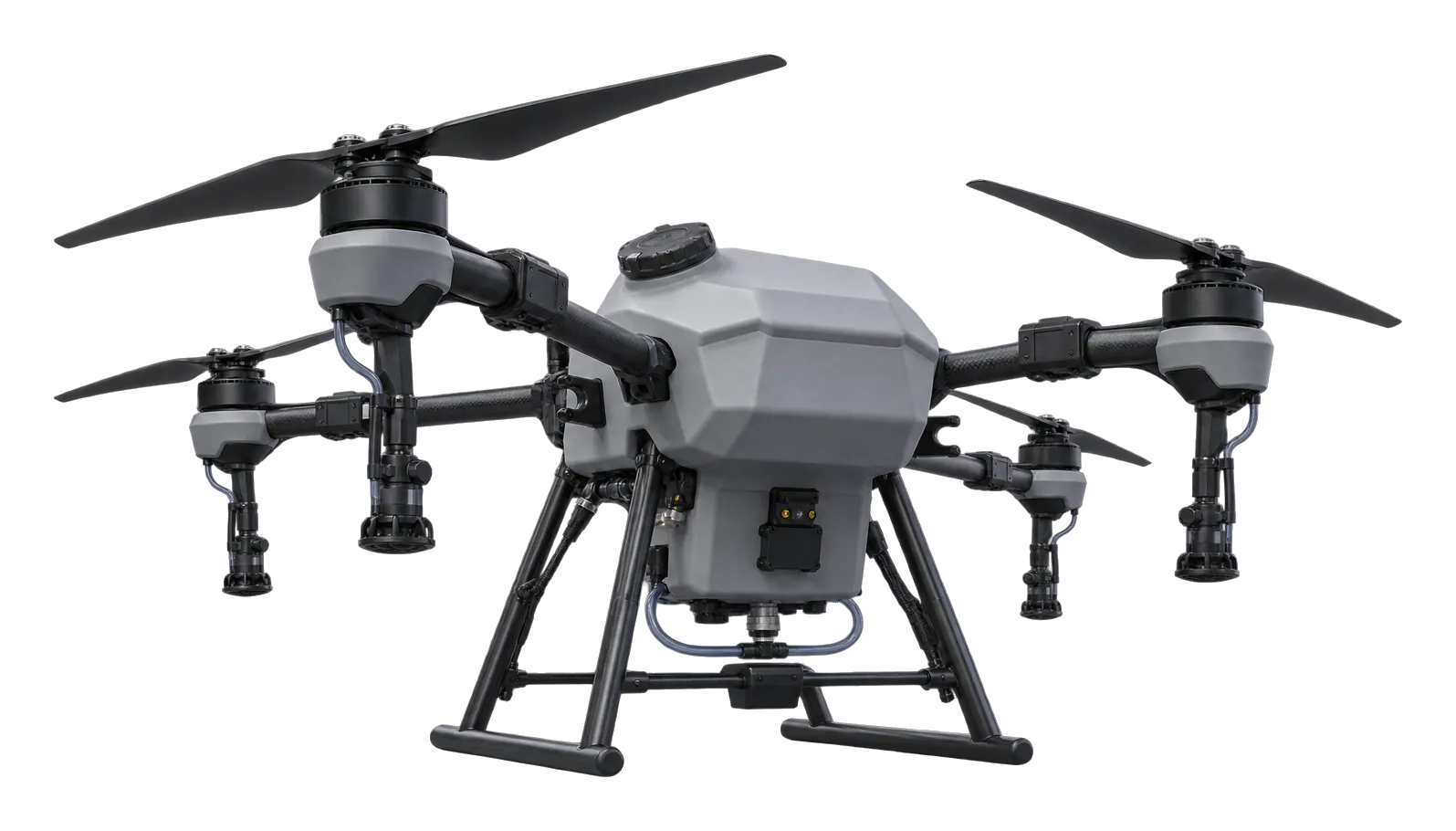
| Cereals, soy, cotton on plains | 200–1,000 ha | 50–62 L, 8–20 m swath | AS-50 / AS-65 | US$7,300–13,300 |
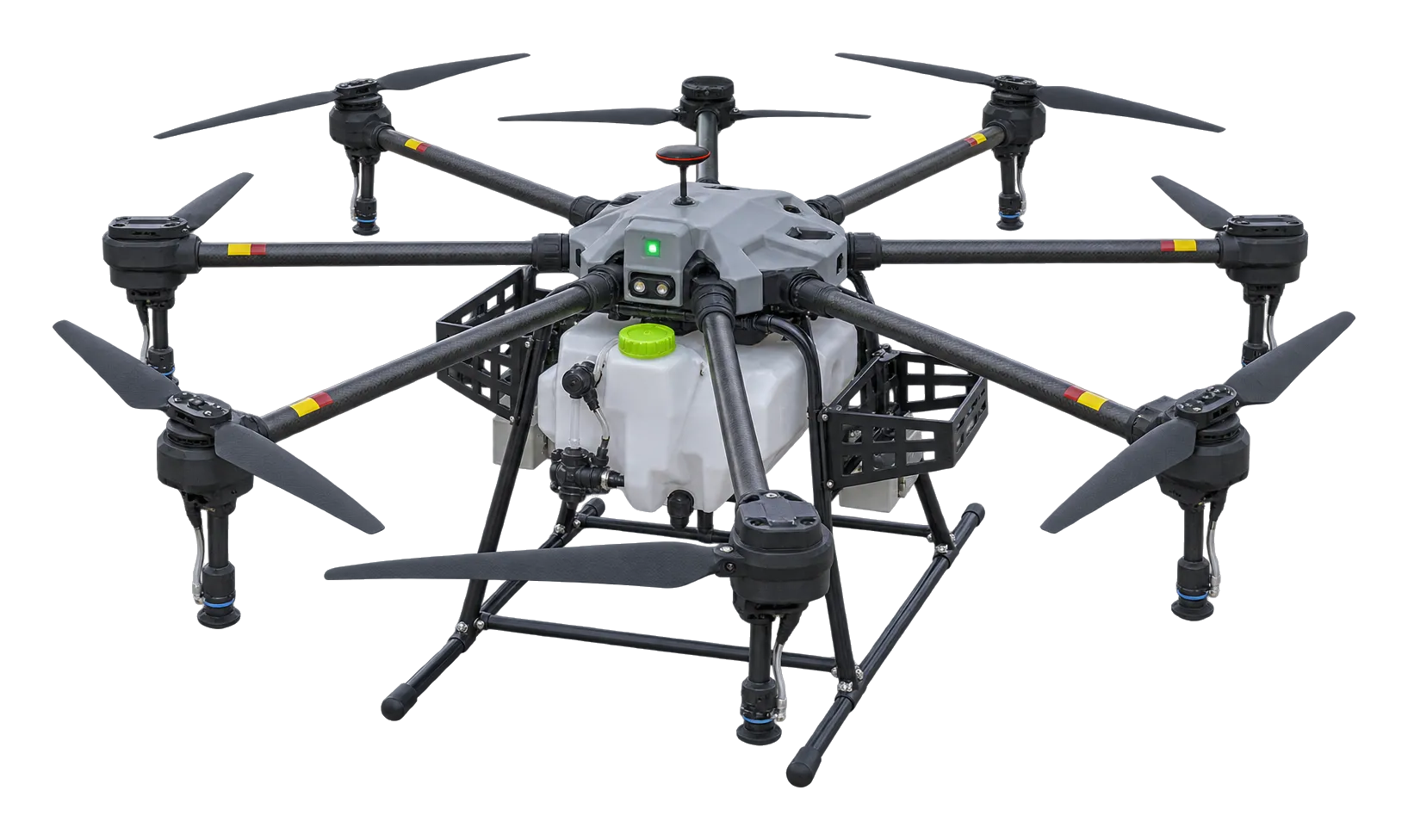
| Broadacre and contractors | Over 1,000 ha | 100 L | AS-100 | US$24,200–29,100 |
| Plantations with heavy spreading | Large blocks, bulky fertiliser | 92–150 L, 170–210 L spreader | AS-92 and AS-150 | US$15,400–34,800 |
Prices are reference values (FOB China); configuration and quantity change them, and the final price is on the quotation.
How much does each class cost in 2026?
A dealer package is a cross-check, not a like-for-like price.
| Class | VEXAFLY aircraft, reference FOB China | Public US dealer package, 2026 | Why they differ |
|---|---|---|---|
| 30–40 L | AS-30: US$5,800–7,100 | DJI Agras T50 (40 L tank): about US$25,000 | The package adds three batteries, a charger, dealer margin and US delivery |
| 100 L | AS-100: US$24,200–29,100 | DJI Agras T100 (100 L tank): about US$40,000 | Same |
Dealer figures: Talos Drones, a US DJI dealer, 2026 buyer’s guide. Ask any supplier to itemise aircraft, batteries and charger.
What else goes into the budget?
The aircraft is the smaller part of a set-up. The University of Missouri’s 2025 cost model (US prices, 40 L-class aircraft) lists:
| Item | Missouri model (US, 2025) |
|---|---|
| Drone package including charger | US$23,000 |
| Extra battery | US$2,500 each |
| Generator | US$7,500 |
| Trailer | US$9,000 (farm) or US$14,500 (custom operator) |
| Total, farm: one drone, three batteries, kit | US$56,000 |
The model assumes batteries last 1,000 charge cycles or five years. Use it as a checklist of what to ask for, not as our price list.
What does a treated hectare cost?
In the same model a farmer treating 1,000 acres (about 405 ha) a year pays about US$12.27 per acre, roughly US$30 per hectare; a custom operator treating 4,000 acres (about 1,620 ha) reaches US$7.39, roughly US$18. Against custom hire at US$16 per acre (about US$40 per hectare), a farm breaks even at about 980 acres, or 397 ha, a year.
Count every pass: 100 ha sprayed four times is 400 treated ha.
Example: the same estate on plains and on terraces
Example: a 120 ha estate must be sprayed within three days of six flying hours, 18 hours in all, so it needs 120 ÷ 18 = 6.7 ha/h. Work rate is effective width × speed × field efficiency, our rule of thumb, with refills ignored.
| Site | Assumptions | Rate | Aircraft needed | Aircraft cost (reference) |
|---|---|---|---|---|
| Plains | 12 m × 6 m/s × 50 % = 36 m²/s | 13 ha/h | 1 × AS-50 / AS-65 | US$7,300–13,300 |
| Terraces | 4 m × 3 m/s × 35 % = 4.2 m²/s | 1.5 ha/h | 5 × AS-10 / AS-20 (6.7 ÷ 1.5 = 4.4) | US$13,500–35,000 |
The terrace estate needs roughly 1.9 to 2.6 times the aircraft cost, or a longer window: over eight days (48 h) it needs 2.5 ha/h, which two small aircraft meet for US$5,400–14,000. Refills slow both sites, so these are lower bounds.
How long does it take to spray 40 acres?
The University of Kentucky model, at 2 gal/acre (about 18.7 L/ha), gives acres per hour by tank size. Forty acres is 16.2 ha.
| Tank class (model) | Acres per hour | Hours for 40 acres |
|---|---|---|
| 30 L | 21.3 | 1.9 |
| 40 L | 32.2 | 1.2 |
| 72 L | 49.8 | 0.8 |
Are agricultural drones worth it?
In the Missouri model, yes above about 397 ha of treated area a year; below it, hiring costs less. Purdue Extension notes drones may be the only option for small, odd-shaped or obstacle-ringed fields.
Buying from China: what to check before you pay
In the US, check three things before ordering a foreign-built spray drone: FCC Covered List status, the Section 232 duty (100 % on aircraft above 25 kg take-off weight from 3 September 2026) and FAA approval for aircraft of 55 lb or more. All our aircraft are above 25 kg at take-off (the AS-10 is 26 kg). Our guides to importing from China and FCC certification list the steps; confirm with your customs broker and the FAA.
Which class is best for which buyer?
- Best for terraces and small plots: the AS-10 / AS-20, 10–20 L, from US$2,700 reference.
- Best for paddies and mixed spraying and spreading: the AS-30, 30 L spray plus 40 L spread, US$5,800–7,100.
- Best for cereals and rice at 200–1,000 ha: the AS-50 / AS-65, 8–20 m swath, US$7,300–13,300.
- Best for contractors above 1,000 ha: the AS-100, 100 L tank, 24 L/min, US$24,200–29,100.
The sums behind these bands are in the size calculator and the hilly terrain guide; see the agricultural range.
Next step
Send crops, plot sizes, slopes and treated hectares per season through the contact form. We reply with the class, a reference price and extras on separate lines.
Q & A
Common questions
01How much does an agricultural drone cost?
Reference FOB China prices for our range start at about US$2,700 and reach US$29,100 for the AS-100, before batteries, freight and duty. A US dealer lists packages of about US$25,000 (40 L tank) and US$40,000 (100 L tank) with three batteries and a charger.
02What is the cheapest spray drone that is still worth buying?
For terraces, tea and vegetables, the 10–20 L class (US$2,700–7,000 reference). For rice and cereals above about 20 ha, the 30 L AS-30 from US$5,800.
03How many acres can an agricultural drone spray per hour?
In the University of Kentucky model at 2 gal/acre, a 30 L class covers about 21 acres an hour (8.6 ha/h) and a 40 L class about 32 (13 ha/h). Makers quote higher peaks, for example 8–12 ha/h for the AS-30.
04Is it cheaper to hire a spraying contractor?
Below about 397 ha (980 acres) a year, hiring at US$16 per acre was cheaper than owning in the Missouri model; above it, ownership won. Count each pass as treated hectares.
05Can I import a Chinese spray drone into the US?
Three US checks come first: FCC Covered List status, the Section 232 duty and the FAA route for aircraft of 55 lb or more. All AS models exceed 25 kg at take-off. Your customs broker and the FAA confirm the details.
References
- 1Economics of Drone Ownership for Agricultural Spray Applications (G1274) — University of Missouri Extension
- 2Drone Sprayer Sizing for Agricultural Applications (AEN-174) — University of Kentucky Cooperative Extension
- 3Best Ag Sprayer Drone for Your Farm: 2026 Buyer's Guide — Talos Drones
- 4Considerations Before Purchasing a Drone (PPP-154) — Purdue Extension
- 5Adjusting Imports of Unmanned Aircraft Systems and UAS Components into the United States — The White House
- 6Conditional approval and exemption of certain UAS from the FCC Covered List (DA 26-875) — Federal Communications Commission
VEXAFLY Aviation Technology Co., Ltd.. VEXAFLY Aviation Technology Co., Ltd. — industrial drone maker in Nanjing. Our application engineers write and check these pages and configure inspection, cleaning, lift and fire-response systems for project buyers. About VEXAFLY