Heavy lift
Starting a Heavy Lift Drone Business in 2026: Services, Kit, Crew and Permits
Heavy lift drone business in 2026: which services you can sell, the kit and crew each needs, permits and insurance by region, and how to size a job.
- Author
- VEXAFLY Aviation Technology Co., Ltd.
- Scope
- Heavy lift
- Published
- Length
- 4 min read · 6 sources
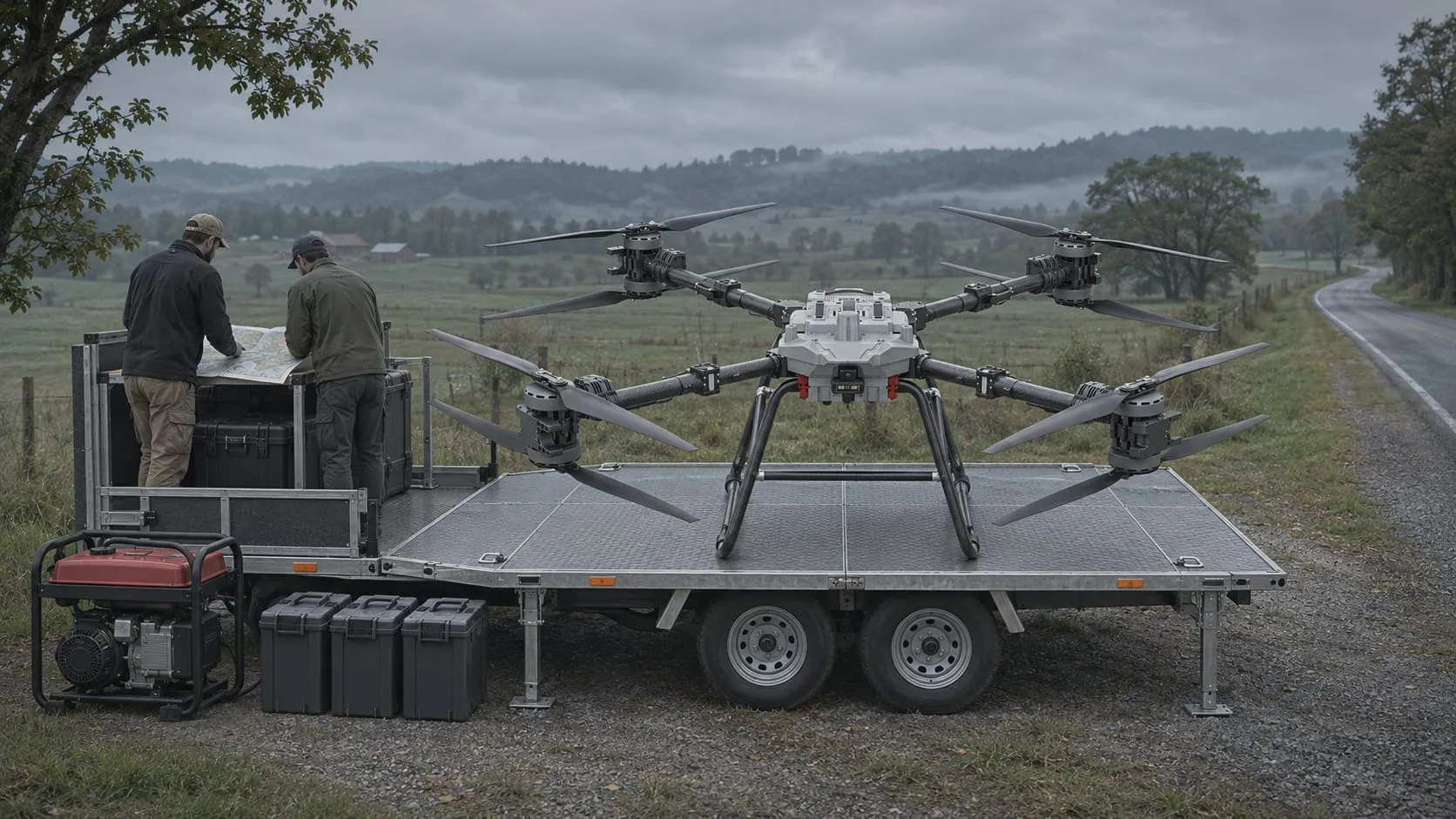
Short answer: a heavy lift drone business is a service business before it is an aircraft purchase. In 2026 the order is: choose the service you can win, list the kit and crew that service needs, find the permit path for your country, and only then pick the aircraft. We do not show revenue figures; demand and rules differ too much between countries.
Which heavy-lift services can you sell?
Here is the menu of services with the kit that goes with each:
| Service | Typical load | Aircraft | Extra kit | Permit path |
|---|---|---|---|---|
| Line stringing support (pilot line, first cable) | 20–100 kg | HL-100, HL-200 | Pulleys, swivel, camera | Aviation authority plus utility’s own safety rules |
| Tower and mountain materials | 50–150 kg | HL-200 | Slings, nets, spotter radios | Specific / exemption route |
| Rooftop deliveries | 30–100 kg | HL-100, HL-200 | Winch or long line | City permissions, exclusion zones |
| Island and valley supply | 20–60 kg over 5–20 km | HL-150 | Spare battery sets, charger | Beyond-line-of-sight approval |
| Relief contracts | 20–100 kg | HL-100, HL-150 | Pre-packed kit, generator | Emergency approval process |
| Agriculture | Spraying, spreading | See agriculture range | Separate rules |
A drone-as-a-service provider that pulls cables describes its work as first a light cable, then heavier ones, on high-voltage lines and cable cars, with the flight permits included in the service.
What kit does each service need?
Beyond the aircraft: two to five battery sets, a charger and generator or solar trailer (see battery planning), rigging that is rated and marked (sling load guide), radios, weighing scale, spare propellers, a landing mat and a first-aid kit. A European operator notes that a smaller drone is sometimes used to survey the site first.
Who is on the crew?
A typical set-up to adapt to your authority’s rules:
- Pilot in command with the type training and authority qualification.
- Spotter (visual observer) watching the aircraft and airspace.
- Rigger at the hook-up, who attaches the load and checks the weight.
- Receiver at the drop who unhooks and gives the stop signal.
- Battery and generator technician who runs the rotation.
One European heavy-lift operator describes performance as roughly a 50/50 balance between technology and pilot skill. Our service and training page covers pilot training.
Which permits and insurance do you need?
| Region | Rule in short | Official page |
|---|---|---|
| US | 55 lb and heavier: Section 44807 exemption with operations manual, plus a certificate of waiver; for hire carriage of property, Part 135 questions | FAA |
| EU | Over 25 kg MTOM falls in the specific category; operational authorisation from the national authority | EASA |
| UK | SORA-based operational authorisation; third-party insurance, always for 20 kg or more | UK CAA |
| Australia | ReOC to trade; over 150 kg needs additional certification; remote pilot licence per type | CASA |
In the US, three checks come before ordering a foreign-built aircraft: FCC Covered List status, the Section 232 duty and FAA approval at 55 lb or more, confirmed with a customs broker and the FAA. Our guides on importing industrial drones and FCC certification explain the first two. Generic permits often allow only a limited number of operating days a year, so project-specific approvals are common.
How do you size a job for a quote?
Use crew-days: tonnes × 1,000 ÷ (load per trip × trips per aircraft-day × aircraft), plus mobilisation and a weather allowance.
Example (estimate; all inputs except product data are assumptions): 40 t of tower materials, pieces of 100 kg or less, a 1.5 km route, HL-200 rated 150 kg.
| Input | Case A | Case B |
|---|---|---|
| Load per trip | 100 kg | 60 kg |
| Trips per aircraft-day | 50 (well below the 150 short sorties a day reported on Yunnan 300 m hops) | 50 |
| Aircraft | 2 | 2 |
| Flying days | 40,000 ÷ (100 × 50 × 2) = 4.0 | 40,000 ÷ (60 × 50 × 2) = 6.7 |
| Plus 1 day mobilise, 25 % weather allowance | (4 + 1) × 1.25 = about 6 days | (6.7 + 1) × 1.25 = about 10 days |
Use this to quote time, then price it yourself.
Start with one aircraft or two?
One aircraft is enough to learn and win the first job. Two give redundancy and let one fly while the other has maintenance, and the example shows how a second aircraft halves the flying days. Keep a spare propeller set and motors whichever you choose.
Buy, lease or partner?
Buying gives control; partnering with an existing operator gives a permit path. We support resellers and service companies through the partner programme, and OEM projects through OEM and ODM. See also heavy lift drone for sale.
Best for …
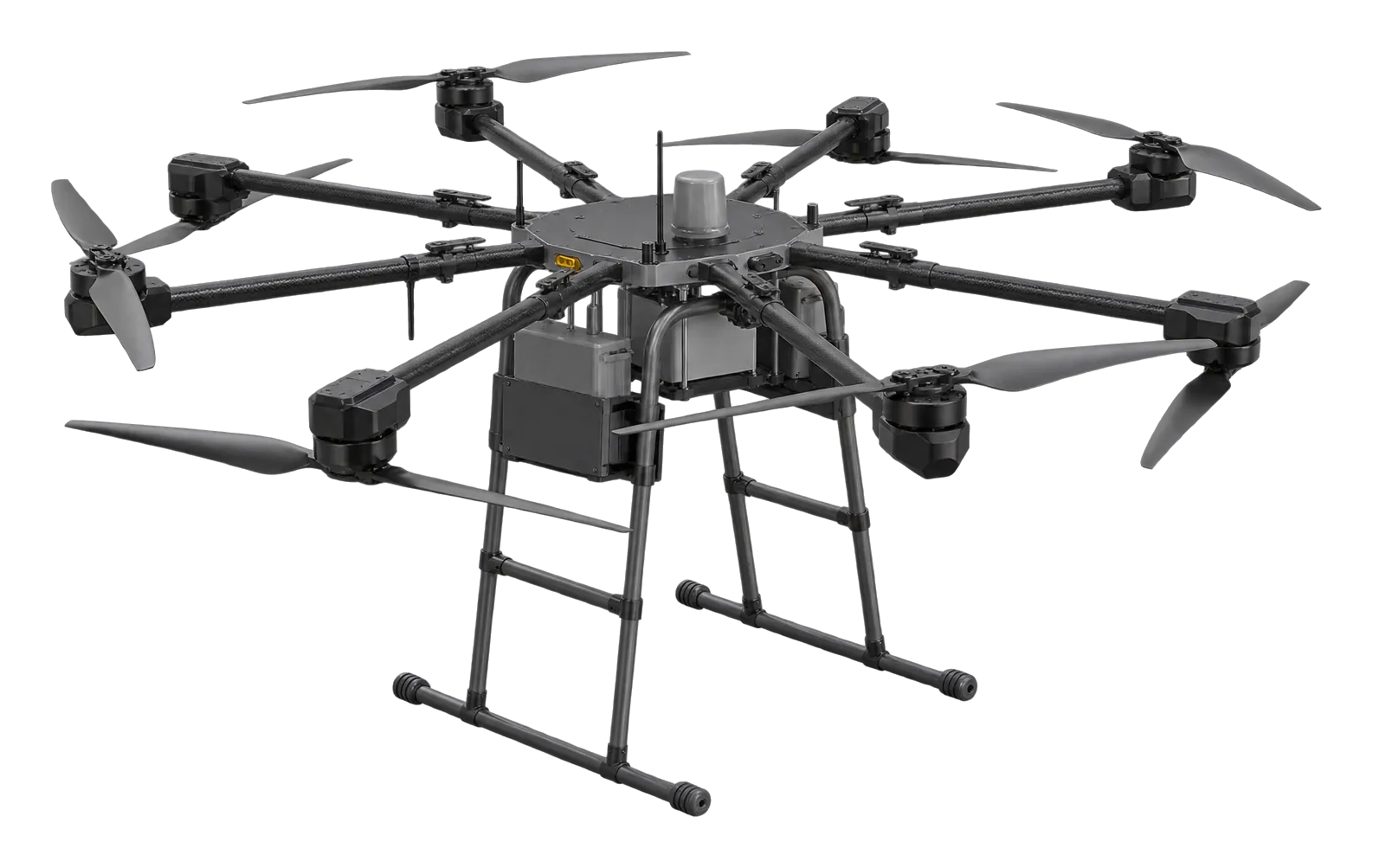
- Best first aircraft for site logistics services: HL-100, 60 kg airframe, 100 kg rated.
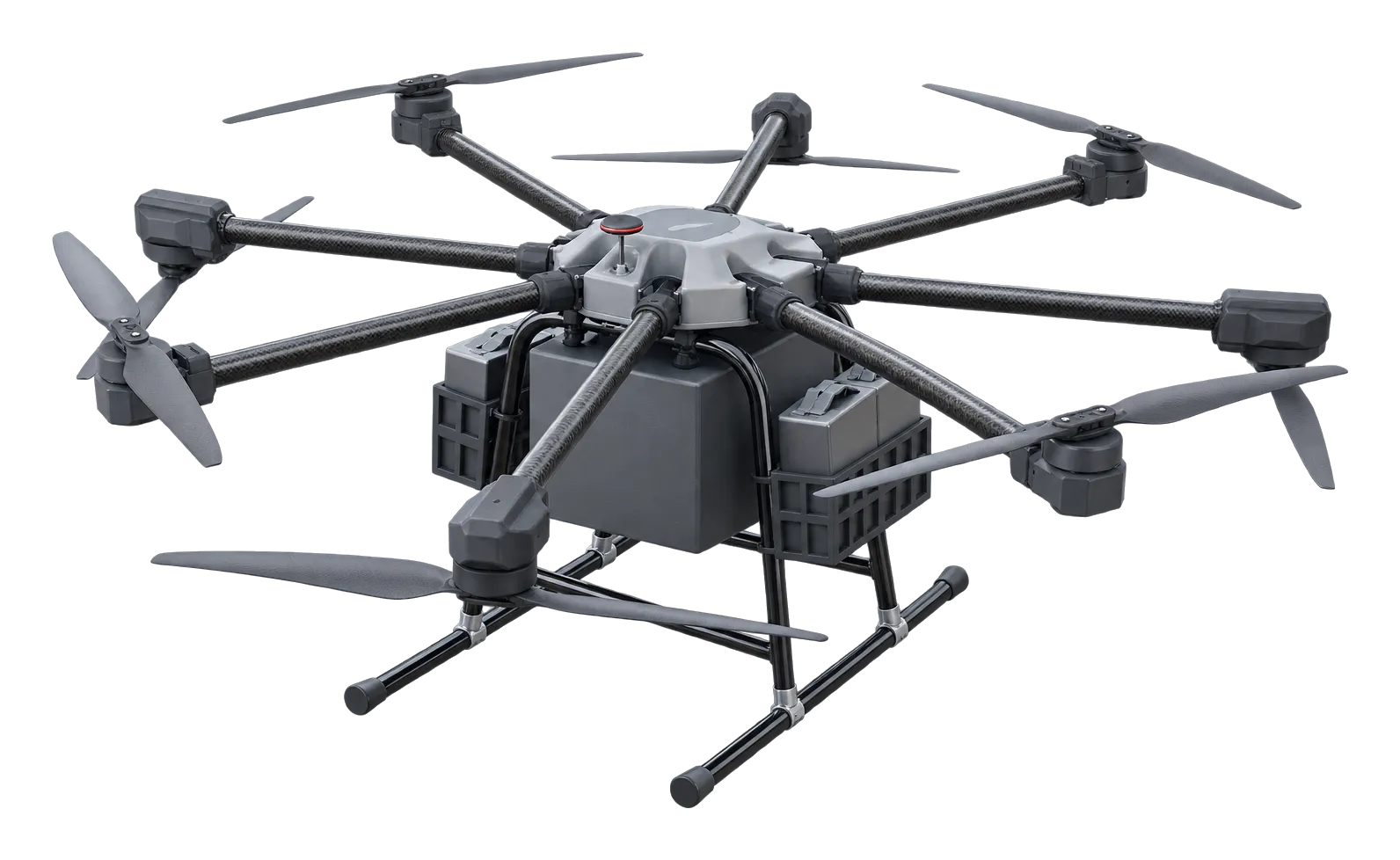
- Best for long supply legs (islands, valleys): HL-150, 24 km at 60 kg in still air.
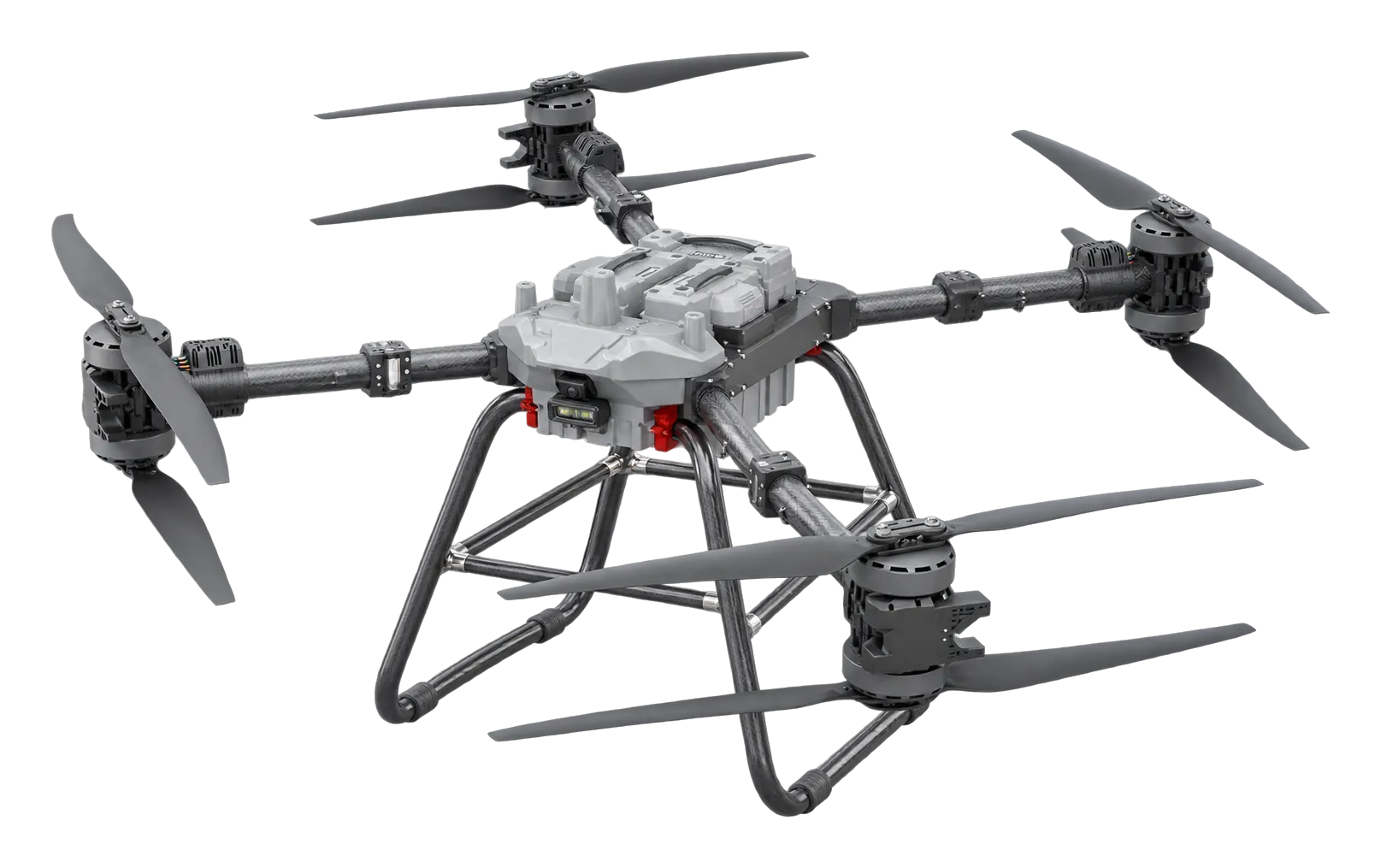
- Best for tower and foundation materials: HL-200, 150 kg rated, 12 km at 150 kg.
Next step
Send us the service you plan to sell, the country and the first client’s job through the contact form; we reply with a kit list and a permit question list for your authority.
Q & A
Common questions
01What is the most profitable drone business?
We cannot give a profit figure, and nobody can without local data. Heavy-lift services with steady demand are utility line work, construction material lifts, island and mountain supply and emergency contracts; the winners are the ones with permits, a trained crew and repeat clients.
02How much does a heavy lift drone cost?
The aircraft is only part of the budget: our reference prices (FOB China, final price on quotation) run from US$25,000 for an HL-100 to US$49,000 for an HL-150, with the HL-200 at US$31,500–45,300. Add batteries, charging, rigging, training and insurance. See the cargo drone price guide.
03Do I need insurance?
In the UK, commercial flying needs at least third-party insurance and aircraft of 20 kg or more must always have it. Liability is generally insurable if the rules are followed. Check requirements with your authority and insurer.
04How many aircraft should I start with?
One aircraft covers one job; two give you redundancy, a way to survive a maintenance day and double the output. Do not commit before you have a first client and a permit path.
05Can I fly these in the US?
For a US start-up, three checks come before any order of a foreign-built aircraft: FCC Covered List status, the Section 232 duty and FAA approval at 55 lb or more. Carrying property for hire adds Part 135 questions. Your customs broker and the FAA confirm all of it.
References
- 1Section 44807: Special Authority for Certain Unmanned Aircraft Systems — Federal Aviation Administration
- 2Insurance requirements (drones) — UK Civil Aviation Authority
- 3Cable pulling by drone — Drone Volt
- 4Civil Drones — Specific Category — EASA
- 5Drone vs Crane: The Reality of Heavy Lift Drone Operations — Dronewatch Europe
- 6Package Delivery by Drone (Part 135) — Federal Aviation Administration
VEXAFLY Aviation Technology Co., Ltd.. VEXAFLY Aviation Technology Co., Ltd. — industrial drone maker in Nanjing. Our application engineers write and check these pages and configure inspection, cleaning, lift and fire-response systems for project buyers. About VEXAFLY