Agriculture
Agricultural Drone Dealer Guide for Kenya in 2026: What to Stock by Market Type
Agricultural drone dealer guide for Kenya in 2026: which models to stock for highland, rice and large-farm markets, demo units, spares, altitude and KCAA steps.
- Author
- VEXAFLY Aviation Technology Co., Ltd.
- Scope
- Agriculture
- Published
- Length
- 4 min read · 11 sources
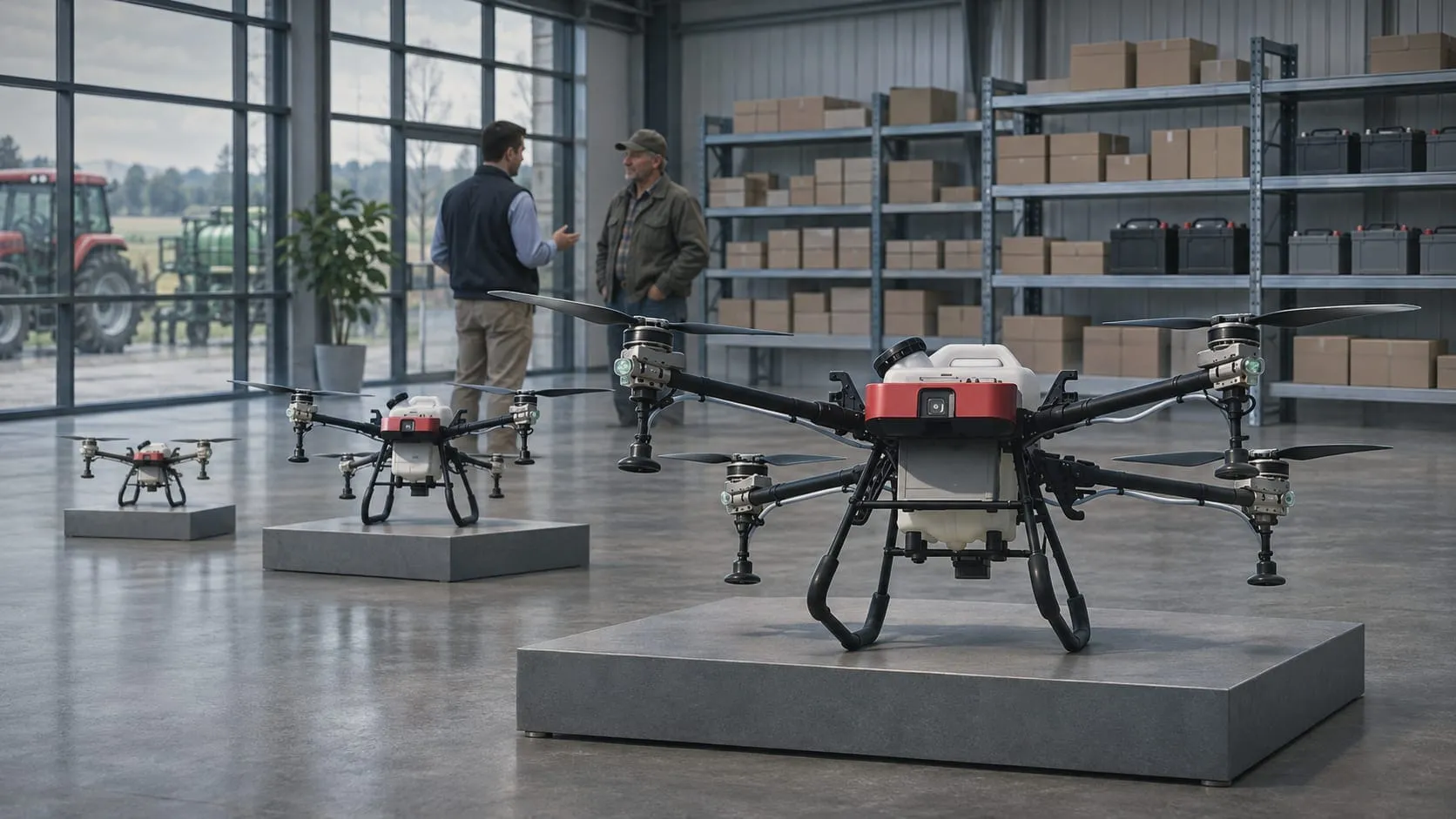
Short answer: an agricultural drone dealer in Kenya should stock by market type: compact 10–20 L aircraft for highland tea and coffee plots, the 30 L AS-30 for irrigated rice, and a 50–62 L AS-50 / AS-65 for large wheat and maize farms, plus frames and parts for repairs. In 2026 start with about eight aircraft and a demo for each terrain type, and settle the KCAA import and selling authorisations before the first shipment.
Which models should a dealer stock first?
| Market type | Typical plot | Model | Tank and take-off weight | Why it fits |
|---|---|---|---|---|
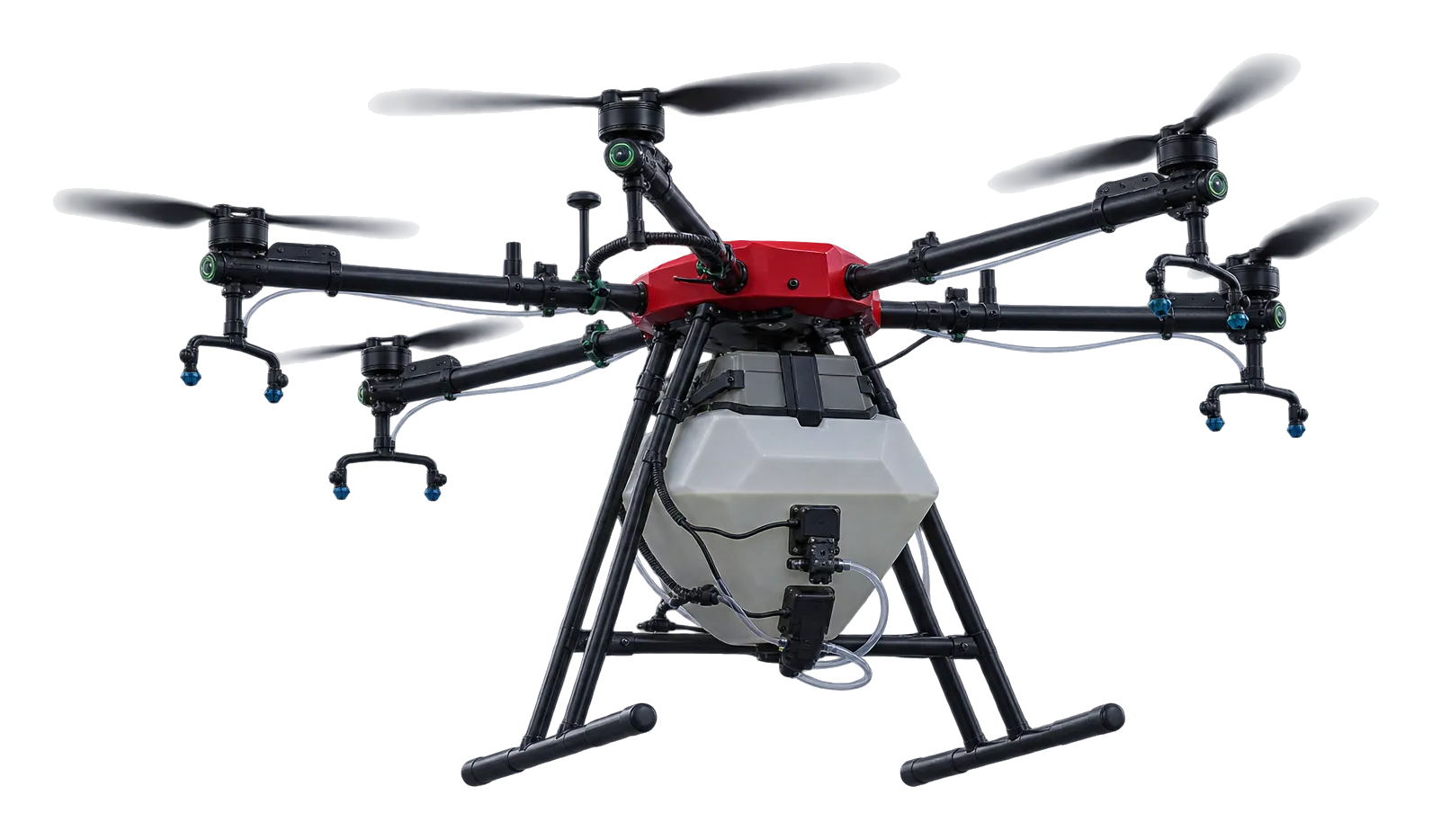
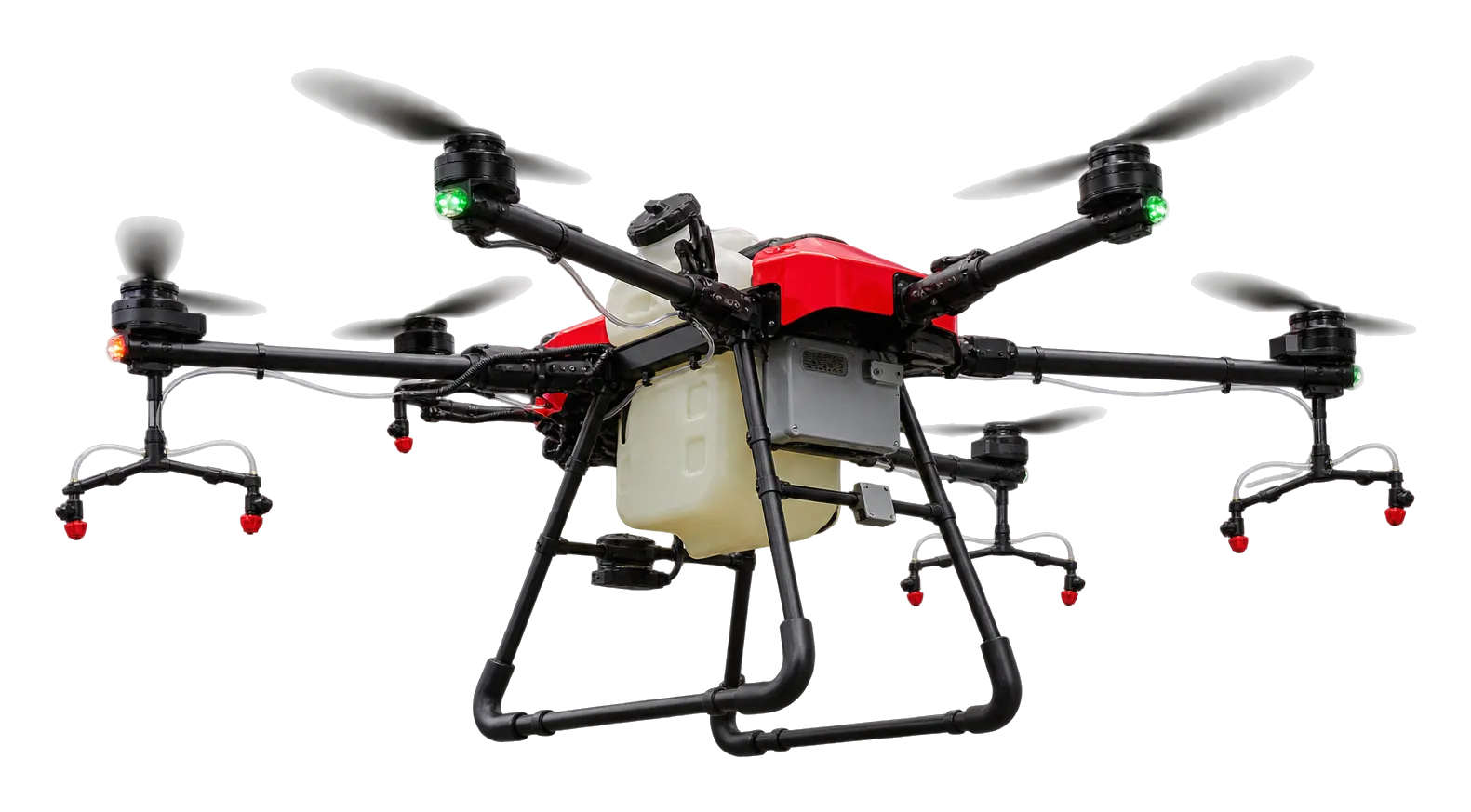
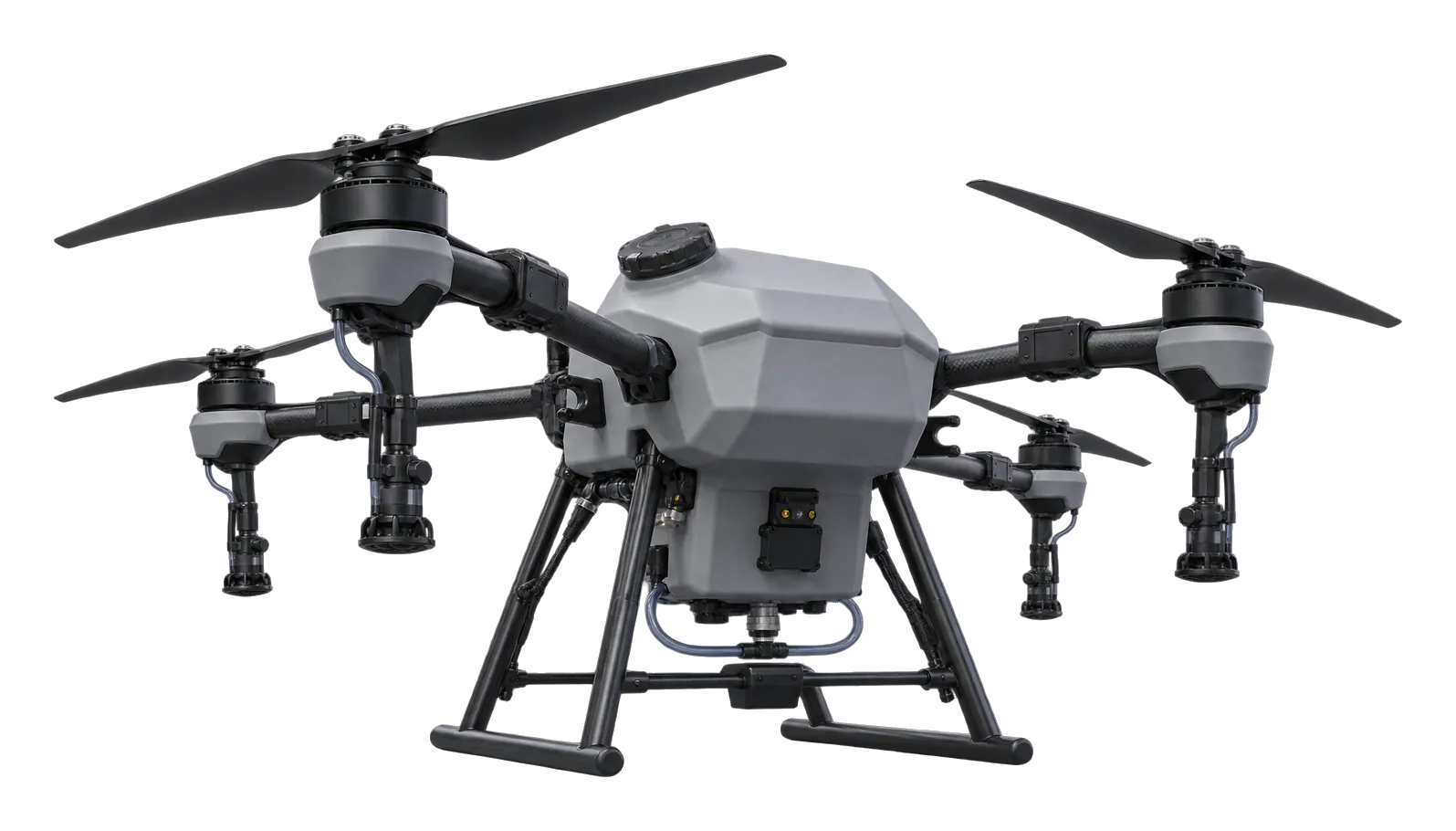
| Highland tea and coffee | Small, steep, irregular | AS-10 / AS-20 | 10 / 20 L; 26 / 43 kg | Folds to 750 / 870 mm square; lands on narrow terraces |
| Highland orchards, mixed hillsides | 5–50 ha with slopes | AR-30 / AR-50 | 30 / 50 L; 70 / 95 kg | Centrifugal nozzles; flies 2.5–3.5 m above the crop |
| Irrigated rice | 20–200 ha, flat | AS-30 | 30 L spray, 40 L spread; up to 68 kg | Spraying and spreading on one IP67 airframe |
| Wheat and maize plains | 200 ha and up | AS-50 / AS-65 | 50 / 62 L; 99 / 111 kg | 8–20 m swath, 20 L/min |
| Sugarcane and large estates | Large blocks | AS-50 first; AS-92 later | 92 L, 170 L spreader | Add when volumes justify it |
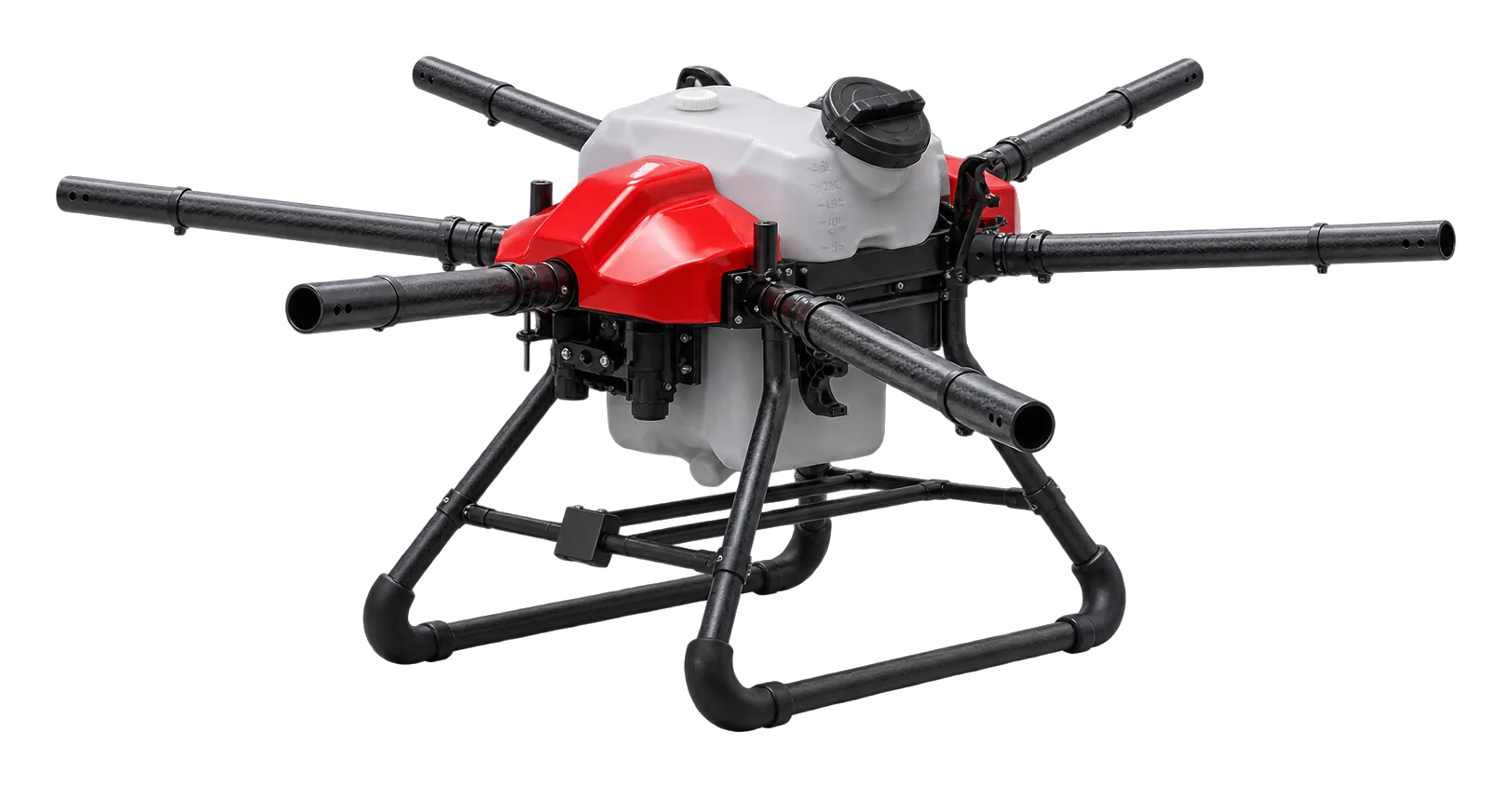
| Workshops, assemblers | Repair and rebuild | AF frames | 10 / 20 / 30 L class | US$500–1,100 per frame |
Irrigated rice is where spray passes add up: The Star reported in 2024 that Mwea scheme farmers expected more than 160,000 tonnes against 120,000 the year before, and in January 2026 that farmers in Karaba can grow up to three seasons a year after the Thiba Dam.
What does altitude do to the models you stock?
Lift falls with air density: about 86 % of sea level at 1,500 m, 82 % at 2,000 m and 78 % at 2,500 m (standard atmosphere, our calculation from NASA’s model; hot days are lower). DJI publishes a payload reduction of 10 kg per 1,000 m for its own T50; ask us for the figure for each model you stock rather than borrowing that one. Tell highland customers that loads will be planned below the nominal tank size.
How many demo units, and which?
One aircraft per terrain type: a compact one for terraces, an AS-30 for rice and mixed work, an AS-50 for the large-farm customer. Demonstrate on the customer’s own field with water only and spray cards on the ground, and bring three battery sets per aircraft.
Example: an opening order for a mixed territory
Example: assume the territory is 60 % small highland plots, 30 % irrigated rice and 10 % large farms (our assumption). An opening order is 4 compact aircraft, 3 AS-30 and 1 AS-50 as the large-farm demo.
| Item | Quantity | Reference price each (FOB China) | Subtotal |
|---|---|---|---|
| AS-10 / AS-20 | 4 | US$2,700–7,000 | US$10,800–28,000 |
| AS-30 | 3 | US$5,800–7,100 | US$17,400–21,300 |
| AS-50 | 1 | US$7,300–13,300 | US$7,300–13,300 |
| Total aircraft | 8 | US$35,500–62,600 |
Battery sets at three per aircraft come to 24. Prices are for the aircraft only; extra battery sets, freight, duty and local taxes are not included.
What spare parts and frames should be on the shelf?
Before the first season, stock propeller sets, nozzle or disc sets, strainers and seals, a spare arm and landing gear per two or three aircraft, and extra battery sets. AF frames let a workshop rebuild after a crash; arms and landing gear are sold as spares. The spare parts guide has a stock table.
What does KCAA require from a drone dealer?
The Civil Aviation (Unmanned Aircraft Systems) Regulations 2020 set three rules a dealer meets. Importing a UAS or component needs a KCAA permit after security clearance (regulation 7). Making, assembling, modifying, testing or selling UAS needs authorisation (regulation 8). Each UAS is registered and marked (regulation 9). Category A in the First Schedule covers visual line-of-sight flight up to 400 ft and up to 25 kg including payload. Every model here is heavier at full load (the AS-10 is 26 kg), so read the First Schedule for the categories that apply. KCAA also lists a newer regulation set, so check the current rules. This is a guide, not legal advice.
Who else regulates spraying and imports?
The Pest Control Products Board regulates pest control products, and label and local rules apply to every spray job. The Kenya Bureau of Standards runs a pre-export verification of conformity (PVoC) programme; ask your clearing agent whether it applies. We do not promise that any use is permitted.
How do tenders and NGOs buy?
FAO has published retender notices for a drone procurement in Vihiga (2024/045 and 2025/045); one requires bidders to know drone licensing in Kenya. A dealer with KCAA authorisations and a clear specification sheet is ready to bid. Our tender specification guide shows how buyers write these requirements.
- Best for highland tea and coffee plots: the AS-10, 10 L, folds to 750 mm.
- Best for irrigated rice: the AS-30, 30 L spray plus 40 L spread, IP67.
- Best for large wheat and maize farms: the AS-50 / AS-65, 8–20 m swath, 20 L/min.
- Best for workshops and assemblers: the AF frames, US$500–1,100 per frame.
See our partner programme, service, the Kenya market page and rice paddy spraying.
Next step
Tell us your territory mix, expected customers and KCAA status through the contact form. We reply with an opening order, the extras listed separately and a demo plan.
Q & A
Common questions
01Where can I buy an agricultural drone in Kenya?
KCAA publishes a page listing UAS resellers and distributors, and local dealers sell several brands. To import and resell you need KCAA authorisation first. We supply dealers from China with a one-unit minimum order; see our partner programme page.
02Do I need a KCAA licence to sell drones?
Yes, you need KCAA authorisation before dealing in UAS or their components (regulation 8 of the 2020 regulations), and a separate permit to import (regulation 7). KCAA now lists a newer regulation set, so check which version applies.
03Which drone models should a dealer stock first?
Match the market: AS-10 / AS-20 for highland smallholders, AS-30 for irrigated rice, AS-50 / AS-65 for large wheat and maize farms. Add AF frames and parts for repairs, and keep an AS-50 as a demo.
04How many batteries per drone should a dealer sell?
Three sets per aircraft as a minimum, as Ohio State advises, and four if the charger is slow. Ask us for the charging time of the model you sell.
05Should a dealer stock frames and parts?
Yes. Customers who crash an aircraft want it flying within days. Spare arms, landing gear and propellers cover most repairs, and an AF frame (US$500–1,100 reference) lets a workshop rebuild.
References
- 1Unmanned Aircraft Systems (Drones) — Kenya Civil Aviation Authority
- 2Unmanned Aircraft Systems Resellers/Distributor — Kenya Civil Aviation Authority
- 3The Civil Aviation (Unmanned Aircraft Systems) Regulations, 2020 — Kenya Civil Aviation Authority
- 4Pest Control Products Board — Pest Control Products Board (Kenya)
- 5PVoC Applications — Kenya Bureau of Standards
- 62024/045 Retender Procurement of Drone — FAO via UN Global Marketplace
- 7Retender 2025/045 Procurement of drone (Vihiga) — FAO via UN Global Marketplace
- 8Farmers in Mwea Irrigation Scheme to harvest 160,000 metric tonnes of rice — The Star (Kenya)
- 9Mwea rice farmers smile all the way to the bank after scheme expansion — The Star (Kenya)
- 10Earth Atmosphere Model (metric units) — NASA Glenn Research Center
- 11Drones for Spraying Pesticides: Opportunities and Challenges — The Ohio State University CFAES
VEXAFLY Aviation Technology Co., Ltd.. VEXAFLY Aviation Technology Co., Ltd. — industrial drone maker in Nanjing. Our application engineers write and check these pages and configure inspection, cleaning, lift and fire-response systems for project buyers. About VEXAFLY