Buying
Industrial Drone OEM and ODM in 2026: What an Integrator Can Change and What Stays Fixed
Industrial drone OEM and ODM in 2026: what labels, payload mounts and dock SDK work can change, what stays fixed, order size and your own responsibilities.
- Author
- VEXAFLY Aviation Technology Co., Ltd.
- Scope
- Buying
- Published
- Length
- 4 min read · 4 sources
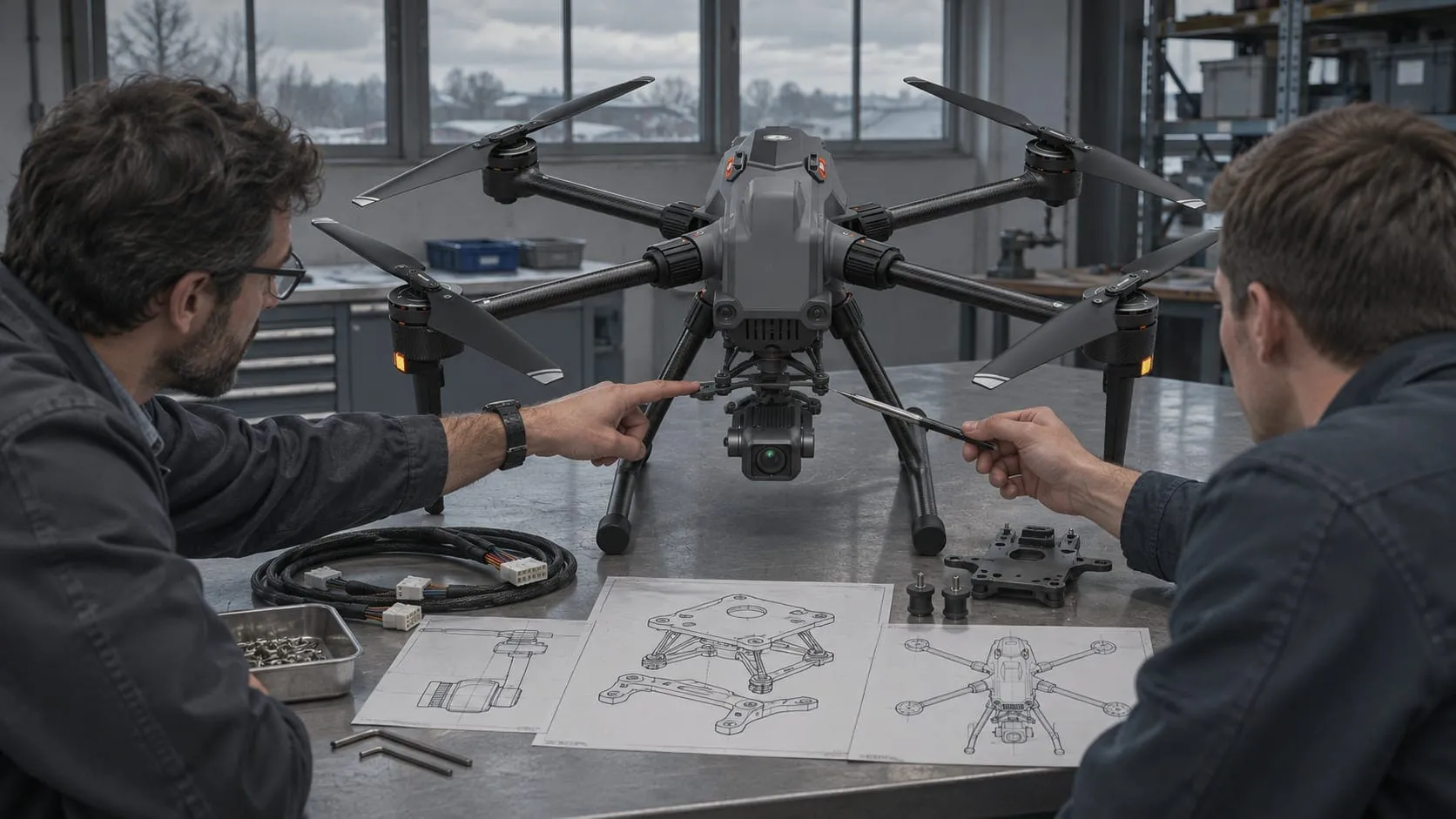
Short answer: an industrial drone OEM order puts a standard aircraft under your brand, and ODM-style work changes the product for your solution. Labels, packaging, manuals, payload mounts, data interfaces and the dock SDK can change; airframe structure and colour stay fixed by default. In 2026 the practical question is how much you change, because that sets the order size, the schedule and who answers for what.
Which OEM scope fits your business?
Think of the scope as a ladder. Each rung changes more, needs more from you and moves the schedule.
| Scope | What changes | What we need from you | Order size | Effect on lead time |
|---|---|---|---|---|
| Label only | Your name on the aircraft | Logo files, label positions | Per quotation | Small |
| Label, manuals, packaging | Plus box, manual and document set | Brand guide, languages, markets | Per quotation | Moderate |
| Payload mount and data interface | A sensor or tool that is not on the standard list | Weight, size, power, data format | Per quotation, scope-dependent | Longer; needs test flights |
| Dock integration | The DS-1 controlled from your platform through its SDK | Your platform’s interface description | Per quotation | Software time on your side too |
| Airframe or colour change | Structure or paint | Not offered by default; ask per model | Per quotation | Depends on the answer |
What can carry your brand, and what stays fixed?
Usually the label, the packaging, the manuals and the product documents. The airframe structure and colour do not change by default. The reason is practical: the brochure figures, the test results and the document set belong to one tested configuration. Change the structure and those papers no longer describe your aircraft.
Which integrations fit which site?
| Integrator business | Aircraft | Typical change |
|---|---|---|
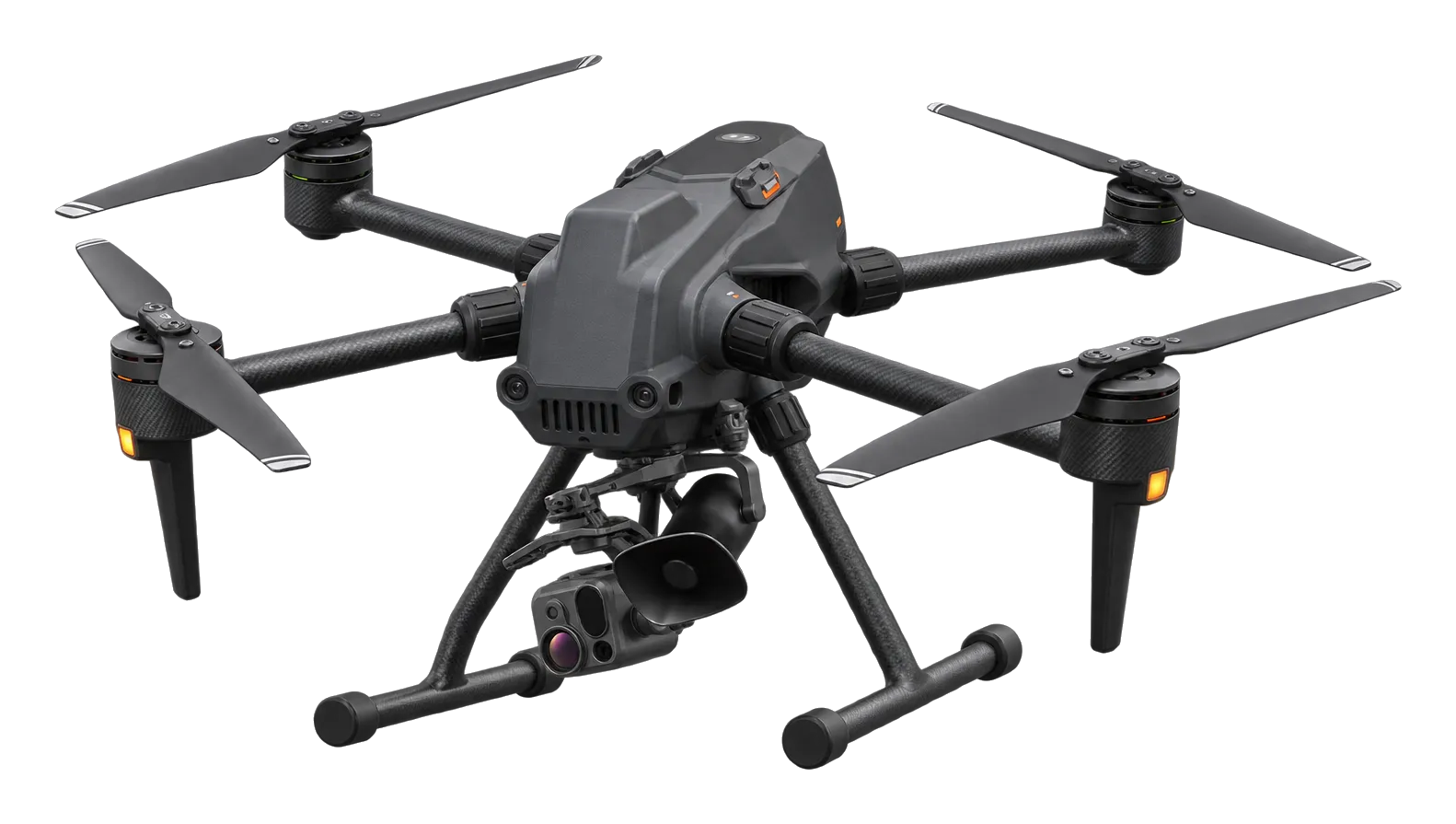
| Docked inspection for substations and plants | IS-4 + DS-1 | Sensor choice, SDK link to your monitoring platform |
| Long-route inspection | IS-9, payload bay 3–5 kg | Mount for your sensor or speaker |
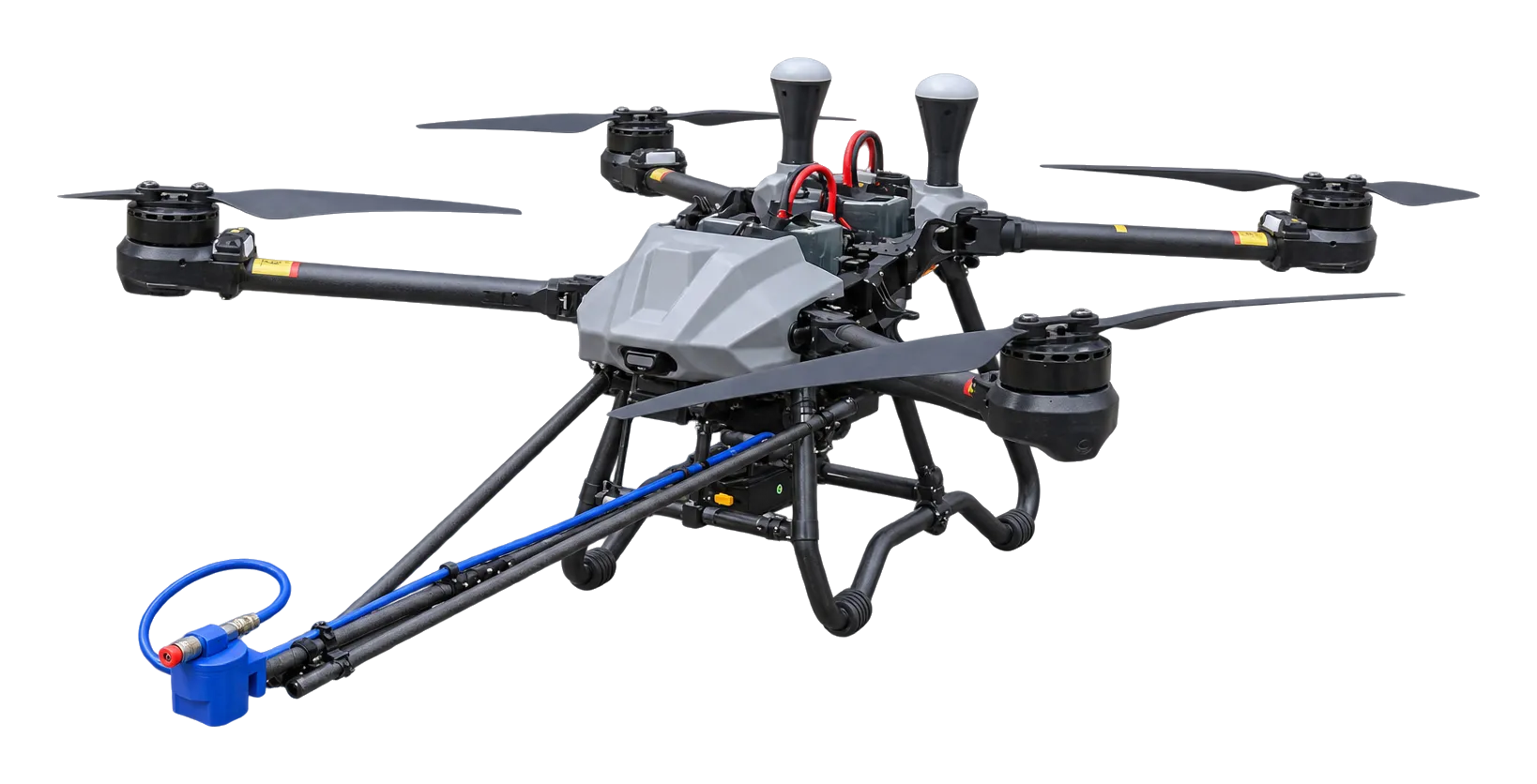
| Facade cleaning service brand | CW-65 | Your labels, manuals in your language; ground pump 5.5 or 13 kW and power option agreed per site |
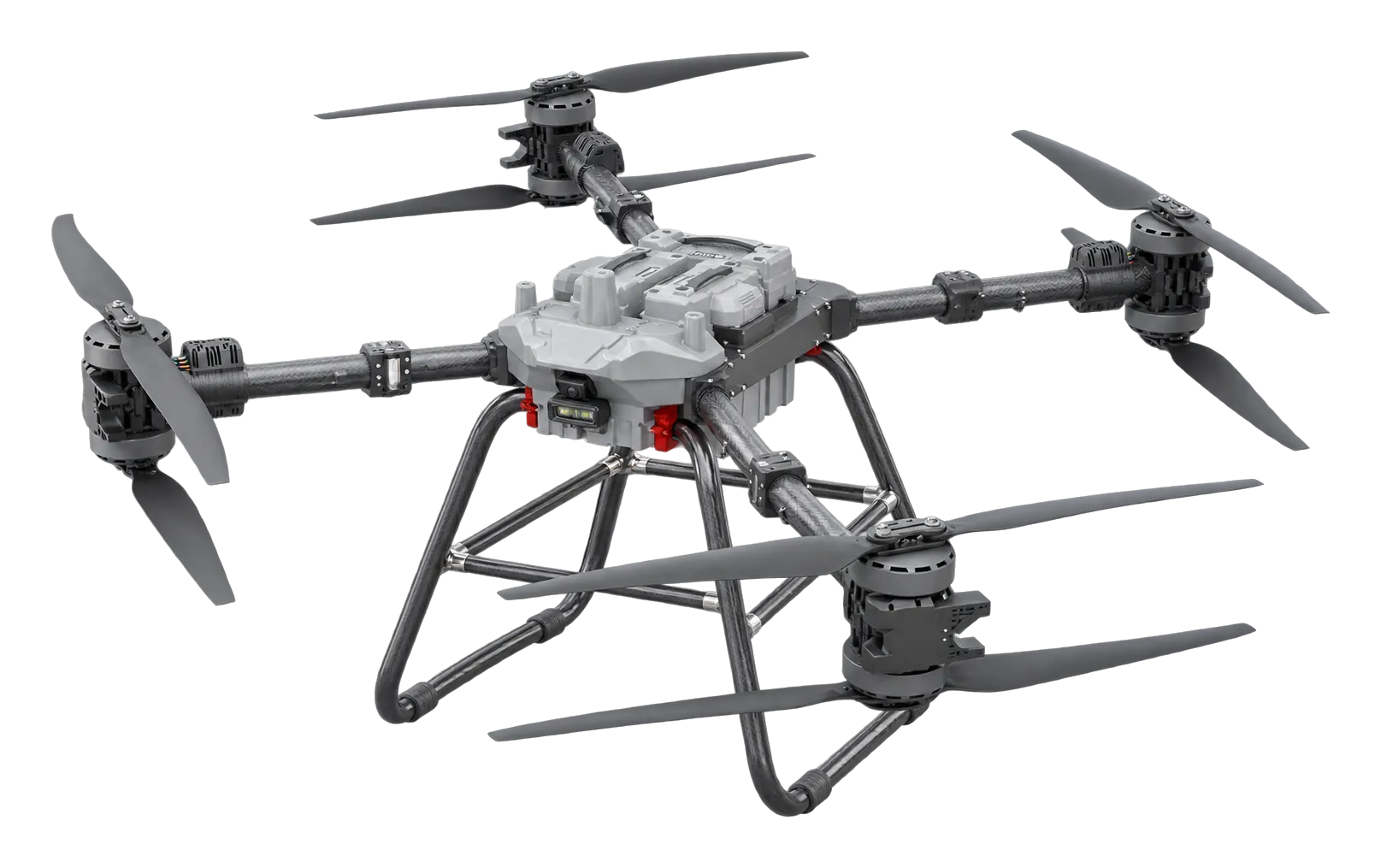
| Lift contractor | HL-200 | Hook or sling arrangement, FPV camera, your safety manual |
How many units do I need for an own-brand order?
There is no single number. Standard aircraft start from 1 unit, which is how most integrators test a model with a first client. Own-brand quantities depend on the model and how much is changed, and are fixed in the quotation. Do not rely on a figure from a consumer-drone page; those MOQs describe cheap aircraft made in thousands. Our MOQ and sample guide explains the difference.
What does an OEM project timeline look like?
We do not promise weeks or months in a guide, because the scope decides. The order is stable, though: scope, proposal, a standard sample for approval, then the series. Chinese export licensing, where it applies, is checked per model and destination and can add time. Ask for the schedule in writing and compare it with your own sales calendar. If you are weighing several suppliers, compare their quotations line by line.
When the drone carries my brand, what am I responsible for?
You become the first call for your customer: training follow-up, spare parts, warranty claims you pass back to us, and the local paperwork. In the US, the FCC rule on equipment identification asks for a new application when the identifier changes, while a model or trade-name change on its own is not a change of identification. Combined with the Covered List, a rebranded foreign-built drone is not a shortcut. Country-of-origin marking also continues: your label does not replace “Made in China”. Read our notes on FCC status before you quote US customers, and confirm with your own counsel. Register your brand as a trademark in each market too; the USPTO and WIPO Madrid pages explain how.
Example: a docked-inspection integrator’s first year
Example only. An integrator plans six IS-4 inspection kits over twelve months. Reference aircraft price is US$9,100–11,400 each (FOB China, dock and payloads quoted separately):
- Month 1: one standard IS-4 as a sample, US$9,100–11,400.
- Month 2–3: approve your labels, manual and packaging on the sample.
- Month 4: series of five, 5 × US$9,100–11,400 = US$45,500–57,000.
- Total aircraft only: US$54,600–68,400 for six.
The sample costs the same per aircraft as the series would at the reference range, but it lets you find mistakes while only one unit is paid for. Any own-brand surcharge or quantity discount is set in the quotation.
Best for …
- Best for system integrators: payload and SDK work on the IS-4 and DS-1 (3 kg payload, 8 km control range).
- Best for regional distributors: label, manual and packaging scope only, so the schedule stays short.
- Best for cleaning service brands: CW-65 under your label with manuals in your language and a ground pump sized to your buildings.
- Best for lift contractors: HL-200 (200 kg maximum, 150 kg rated) with your hook arrangement and safety manual.
Next step
Send your markets, the models you want to sell, your brand files and how you will support customers through the contact form. The OEM / ODM page lists what we confirm, and partner terms cover regional supply.
Q & A
Common questions
01What is the difference between OEM and ODM for drones?
OEM is our aircraft under your brand. ODM-style work changes the product for your solution: a payload mount, a data interface, or connecting the DS-1 dock to your platform through its SDK. Both are scoped per model and confirmed in the quotation.
02Can you integrate my own payload or sensor?
On the IS series, payload mounts and third-party sensors are discussed per project. Send the sensor’s weight, size, power draw and data format so we can check it against the aircraft’s 3 kg (IS-4) or 3–5 kg (IS-9) payload.
03Is there a minimum order for own-brand drones?
A single standard aircraft is available. Own-brand quantities vary with the model and the scope of change, and the quotation states them. Our guide to [sample orders and MOQ](/blog/drone-moq-sample-order/) explains why.
04How long does an OEM project take?
We do not publish a fixed lead time because it depends on the scope. Labels and manuals take less time than interface work, and Chinese export licensing, where it applies, can add time. The quotation states the schedule.
05Who supports the end customer?
You do, under your brand, with training and spare parts from us. We agree the support plan before the first delivery.
06Does my brand change the certification or FCC status?
No. A model or trade-name change does not give a foreign-built drone a new regulatory position, and country-of-origin marking still applies to own-brand goods. Check the rules of each destination market.
References
- 147 CFR 2.933: Change in identification of equipment — eCFR (National Archives)
- 219 CFR Part 134: Country of Origin Marking — eCFR (National Archives)
- 3FCC fact sheet: UAS and UAS critical components on the Covered List — Federal Communications Commission
- 4Trademark basics — USPTO
VEXAFLY Aviation Technology Co., Ltd.. VEXAFLY Aviation Technology Co., Ltd. — industrial drone maker in Nanjing. Our application engineers write and check these pages and configure inspection, cleaning, lift and fire-response systems for project buyers. About VEXAFLY