Agriculture
Banana Plantation Drone Spraying in 2026: Sigatoka Programmes, Windows and Buffer Zones
Banana plantation drone spraying in 2026: spray quality for Black Sigatoka, the daily window, block size, buffer zones near homes and Philippine rules.
- Author
- VEXAFLY Aviation Technology Co., Ltd.
- Scope
- Agriculture
- Published
- Length
- 5 min read · 5 sources
Short answer: in 2026 banana plantation drone spraying is a quality-and-window problem. FAO’s Black Sigatoka manual sets the target: at least 50 drops per cm² with a volume median diameter of about 150 µm on vertical leaves, applied in cool, calm mornings. A drone meets that on small and irregular blocks and near homes; large regular blocks may still favour a plane. Label, buffers and national rules decide.
Which banana blocks suit a drone?
Competing pages are maker cases and one news item. Our matrix uses the conditions that actually limit the job.
| Block | Wind / temperature window | Distance to homes and water | Method |
|---|---|---|---|
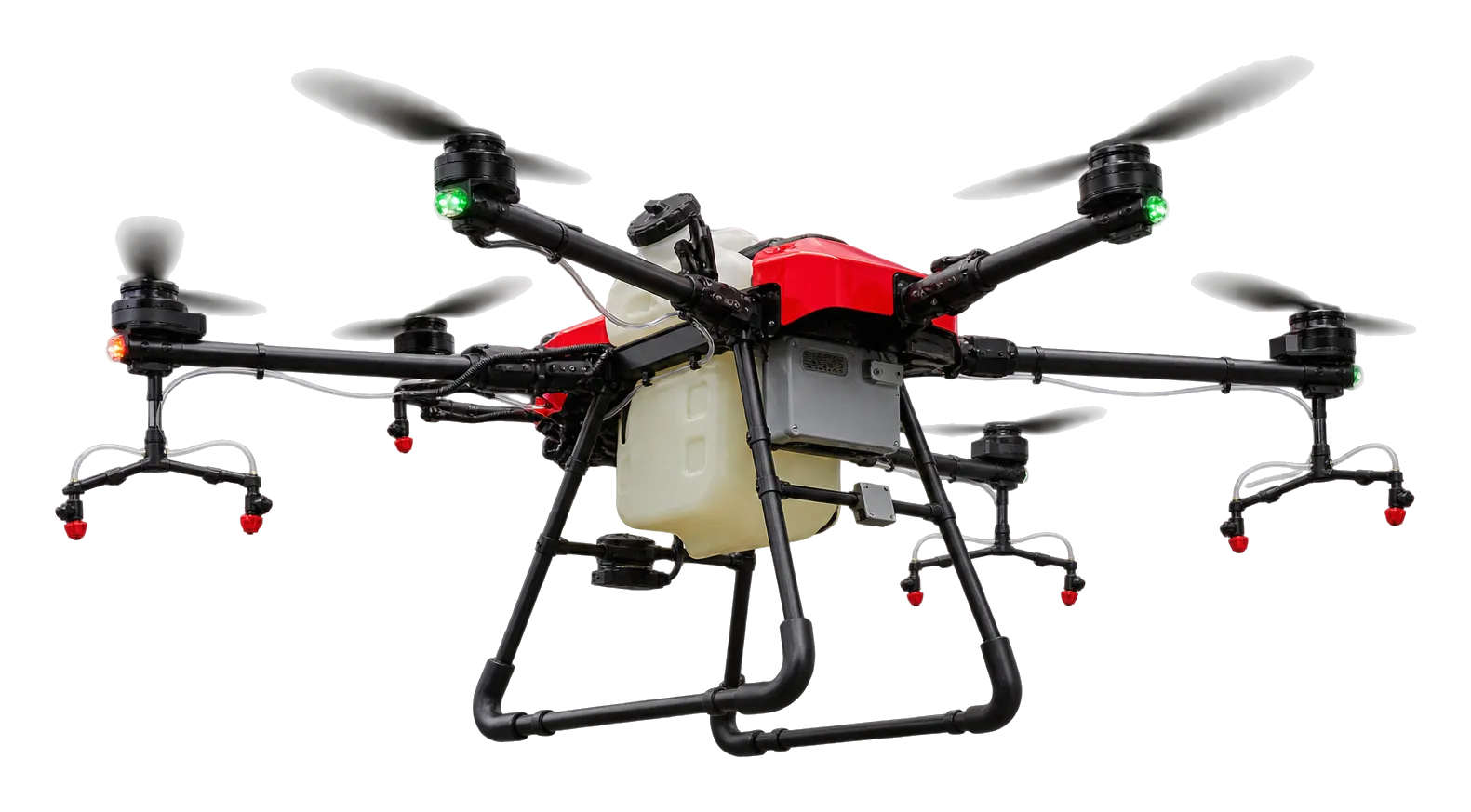
| Above 20 ha, regular, oil carrier | Morning, under 28 °C, wind up to 2 m/s | Label buffer kept | AS-50 / AS-65 (8–20 m, 30–500 µm) |
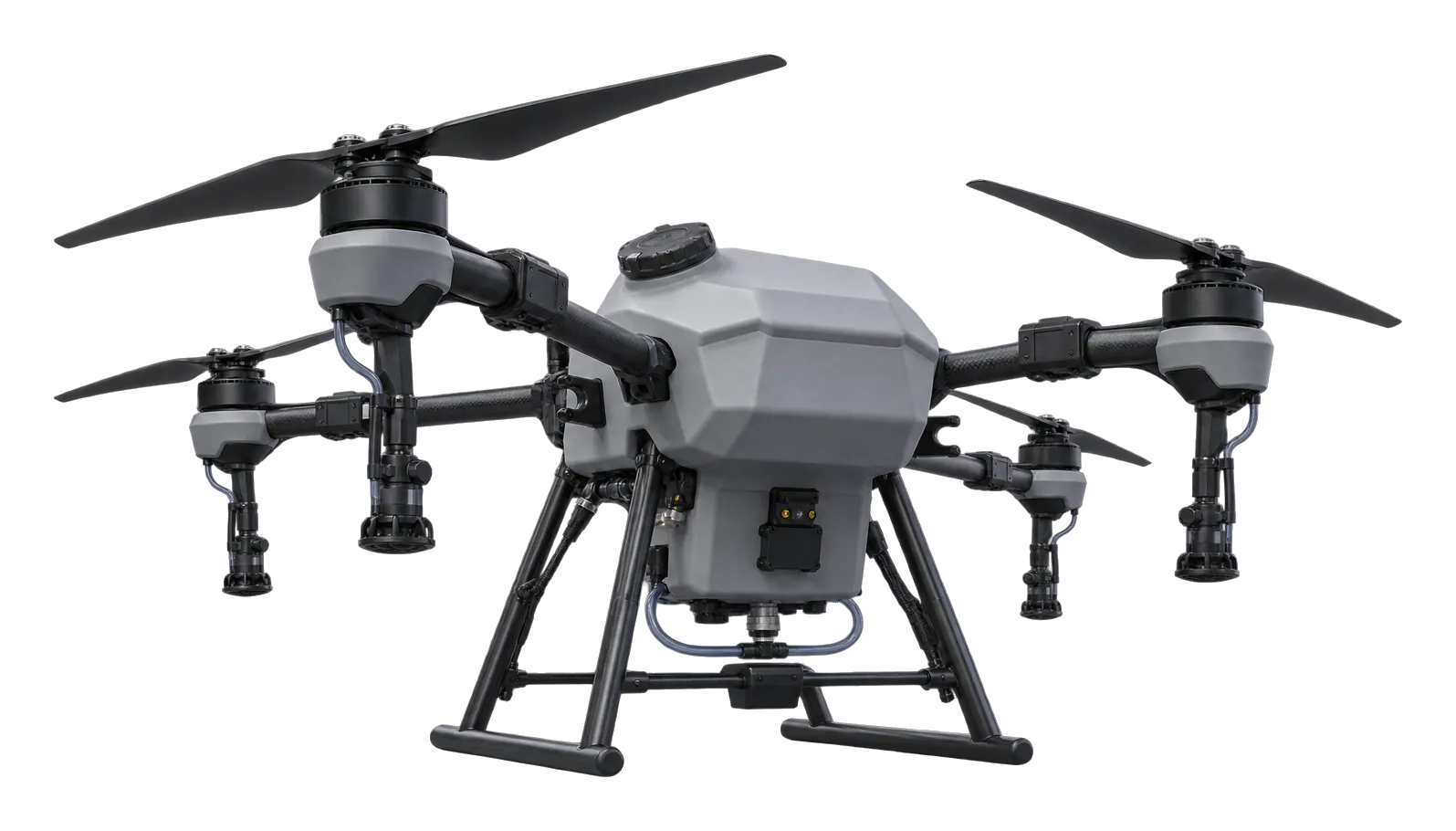
| Under 20 ha or irregular | Same | Close to a village or river | AS-30 (8 high-pressure nozzles, 6–9 m) |
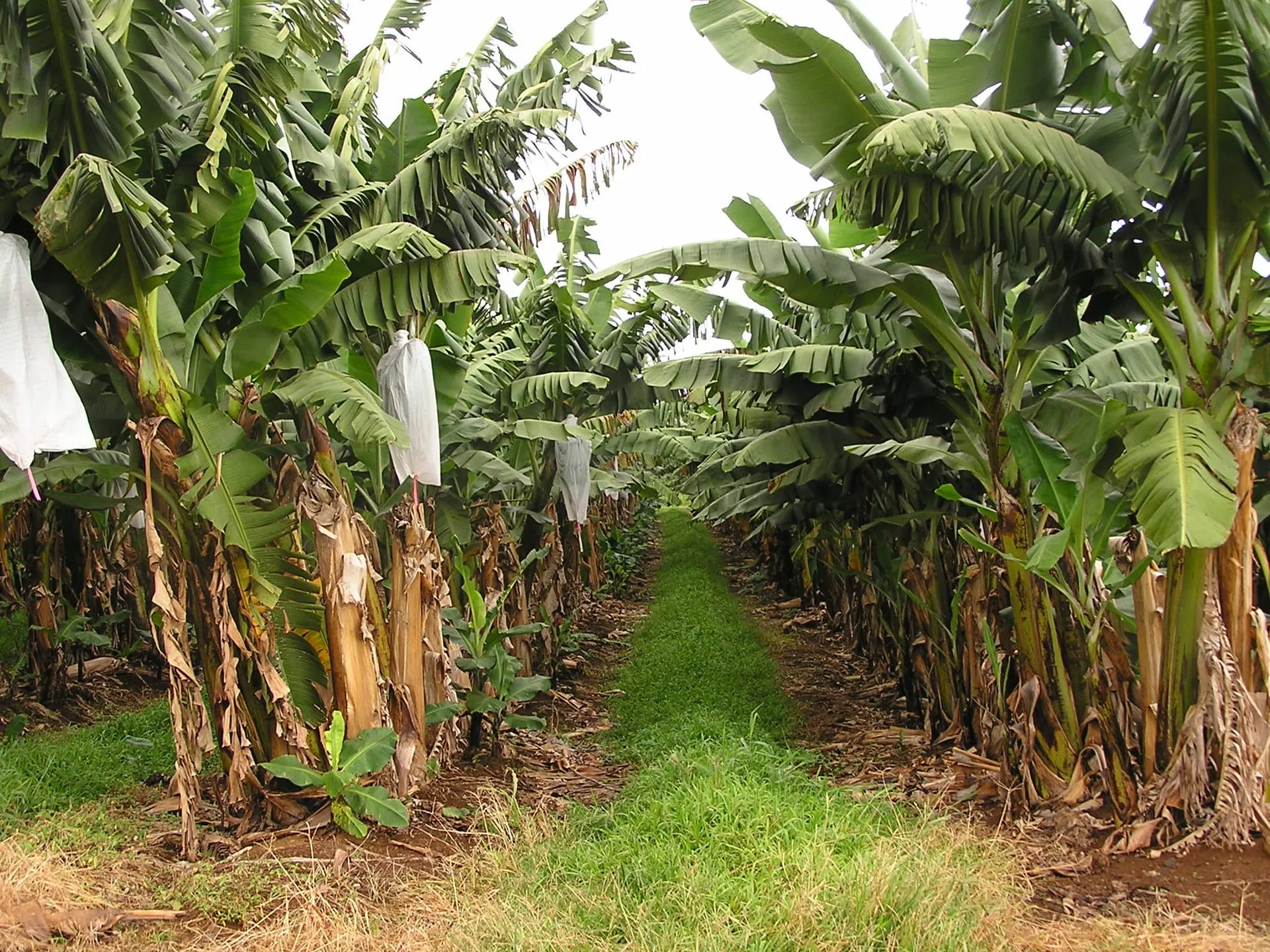
| Blocks with tall plants and few gaps | Same | Any | Aircraft or ground mist blower; drone only above canopy |
| Windy or rainy site | Window under 2 h | Any | Plan a ground method as well |
What spray quality does Sigatoka control need?
FAO’s Black Sigatoka manual (2012) states two numbers a buyer can use: at least 50 drops per cm² and a volume median diameter of about 150 µm on vertical leaves. It also says that mineral oil or oil-in-water carriers give good coverage at 12–25 L/ha and produce 120–300 µm droplets that do not evaporate, that field shape, plant density and removing obstacles are essential to treatment quality, and that aerial application should be avoided on rainy or windy days. The same manual notes that GPS guidance improved aircraft spraying. Our centrifugal nozzles on the AS-50 / AS-65 produce 30–500 µm droplets, so droplet size can be set to the label.
What is the spray window?
FAO advises spraying in the early morning or late evening, avoiding temperatures above 28 °C, wind above 2 m/s and temperature inversions, and preferring light wind of about 1 m/s. In a warm lowland that often leaves two to three usable hours after dawn. That window, not the brochure rate, sets how many aircraft you need.
What does a plantation round look like?
Example (assumed inputs, an estimate): a 50 ha block gets an oil emulsion at 20 L/ha (assumed, within FAO’s 12–25 L/ha), so 1,000 L per round.
- AS-50: 10 m effective width × 5 m/s × 50 % efficiency = 25 m²/s = 9 ha/h, so 5.6 h of spraying and 20 loads of 50 L.
- With a 3 h morning window, one AS-50 covers about 27 ha a morning: two mornings, or two aircraft.
- If the programme runs every two weeks (an assumption), 26 rounds × 50 ha = 1,300 ha sprayed a year.
Each round also needs the oil, mixing water and battery sets at the field edge; plan a nurse truck and a team of two or three.
Why is aerial spraying near homes sensitive in the Philippines?
In 2007 Davao City adopted Ordinance 0309-07, banning aerial spraying and setting a 30 m buffer zone; the Court of Appeals voided it in 2009 and the Supreme Court affirmed on 16 August 2016 (G.R. 189185). The ordinance is not in force, but the episode shows how strongly neighbours react. Today pesticide application by drone falls under the FPA circular of 2024 and its revision, and flights under CAAP. Always follow the label buffer, tell neighbours before a round and keep spray records. See our Philippines market page.
Drone, plane or ground mist blower?
The Sigatoka pressure is heavy: a review in Molecular Plant Pathology reports up to 66 applications a year in some places, more than 30 % of production costs spent on the disease and about US$1,000 per hectare per year on large plantations (a 2003 estimate). At that frequency the aircraft that wins is the one that is available on the right morning. Drones remove the need for an airstrip, can fly small and irregular blocks and can fly closer to the edges, but their daily area is smaller than a plane’s. A mist blower on a tractor still handles low plants and gaps. Link the choice to block size, wind exposure and nearby homes.
Can drones also help find disease?
In Davao Region, about 15,500 ha are affected by Fusarium wilt, and a DA-11 project uses drone imaging and AI to count plants and detect symptoms, reporting 96–99 % accuracy in monthly assessments (PNA, November 2026). Scouting is a separate job from spraying: use an imaging aircraft or a camera on a lighter drone, not the sprayer.
What about Ecuador and other exporters?
Ecuador’s civil aviation authority issued a 2023 resolution allowing banana producers to use drones above 150 kg MTOW for spraying; confirm the current requirements with the DGAC and the agricultural agency Agrocalidad. Aircraft above 150 kg, such as the AS-92, AS-100 and AS-150, sit outside many national small-drone categories; check before you buy. More on routes in night drone spraying and palm oil plantation drones.
Best for …
- Best for blocks above 20 ha with low-volume oil sprays: the AS-50 / AS-65, 8–20 m width, centrifugal 30–500 µm nozzles.
- Best for small or irregular blocks near villages: the AS-30, 6–9 m width, high-pressure nozzles for narrow strips.
- Best for mixed plantations that also spread fertiliser: the AS-50 / AS-65 with a 70 L spreader.
Our reference FOB China prices are lower for the AS-30 (US$5,800–7,100) than for the AS-50 / AS-65 (US$7,300–13,300); configuration and quantity change the final quotation.
Next step
Tell us your block sizes, distance to homes and water, the carrier you use and your morning window. We reply with the aircraft count and a sample round plan. Compare with other methods under agricultural drones.
Q & A
Common questions
01Can drones spray banana plantations?
Yes, above the canopy, where they apply fungicide for Black Sigatoka and foliar products. They are not suitable for work between plants, and the label and national rules decide whether drone application of a given product is allowed.
02Do I need a permit in the Philippines?
Pesticide application by drone falls under the Fertilizer and Pesticide Authority (FPA) circular of 2024, and the aircraft and flight permission under CAAP. FPA is revising its rules in 2026, so check the current circular before you start.
03Is aerial spraying banned near homes in Davao?
No blanket ban stands today. Davao City’s 2007 ordinance, which banned aerial spraying and set a 30 m buffer, was voided by the Supreme Court on 16 August 2016. Buffers now come from the label and national rules, and neighbours still matter.
04Drone or plane for Sigatoka?
Planes cover large, regular blocks quickly. Drones suit small and irregular blocks, blocks near homes and farms that cannot justify an airstrip. Many plantations will use both, chosen by block.
05Can a drone fly between tall banana plants?
No. Drones fly above the canopy. Reaching the lower leaves is a matter of droplet size, carrier and downwash, not of flying through the plantation.
References
- 1A holistic integrated management approach to control Black Sigatoka disease of banana (technical manual) — FAO
- 2Mycosphaerella fijiensis, the black leaf streak pathogen of banana — Molecular Plant Pathology (via PMC)
- 3G.R. No. 189185: Mosqueda v. Pilipino Banana Growers & Exporters Association (16 Aug 2016) — Supreme Court of the Philippines (via LawPhil)
- 4DA-11: Drone-AI project shows promise vs Fusarium wilt — Philippine News Agency
- 5FPA hosts inter-agency meeting with CAAP, CAB to harmonize regulation of drone use for pesticide applications — Fertilizer and Pesticide Authority
VEXAFLY Aviation Technology Co., Ltd.. VEXAFLY Aviation Technology Co., Ltd. — industrial drone maker in Nanjing. Our application engineers write and check these pages and configure inspection, cleaning, lift and fire-response systems for project buyers. About VEXAFLY