Heavy lift
Heavy Lift Drones in 2026: What 30, 100, 150 and 200 kg Classes Can Really Carry
Heavy lift drones in 2026 by payload class: 30–40, 100, 150 and 200 kg. Real range at load, slings and winches, altitude, and when you need an exemption.
- Author
- VEXAFLY Aviation Technology Co., Ltd.
- Scope
- Heavy lift
- Published
- Length
- 3 min read · 3 sources
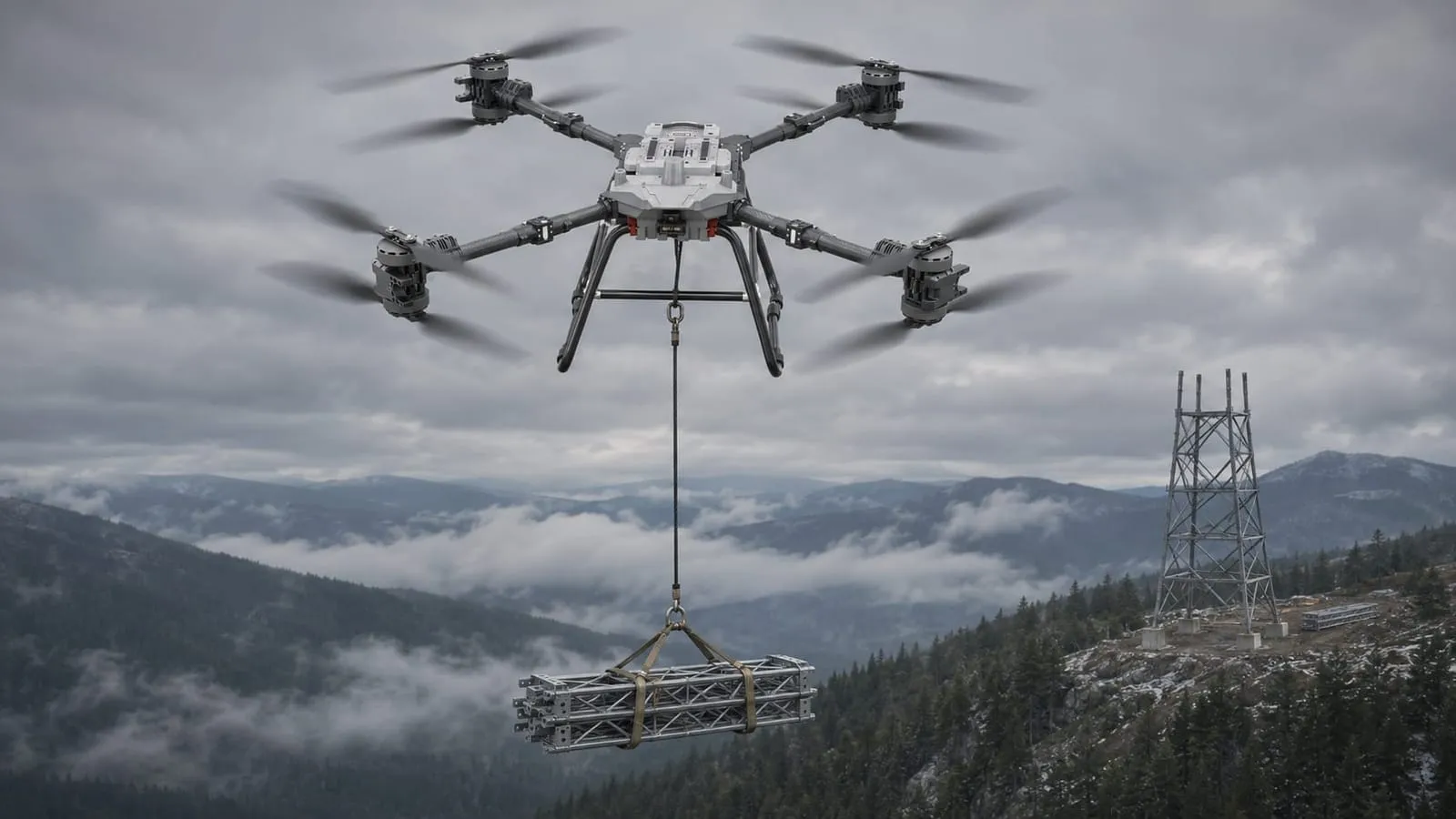
Short answer: in 2026 heavy lift drones fall into four practical classes: 30–40 kg delivery drones, and 100 kg, 150 kg and 200 kg transport drones for construction, power lines, mountains and islands. Choose by the load you carry every day, then check the range at that load — it is often a third of the empty range. Altitude, heat and wind reduce it further.
Payload classes at a glance
| Class | Typical example | Rated / max payload | Range at a heavy load | Best for |
|---|---|---|---|---|
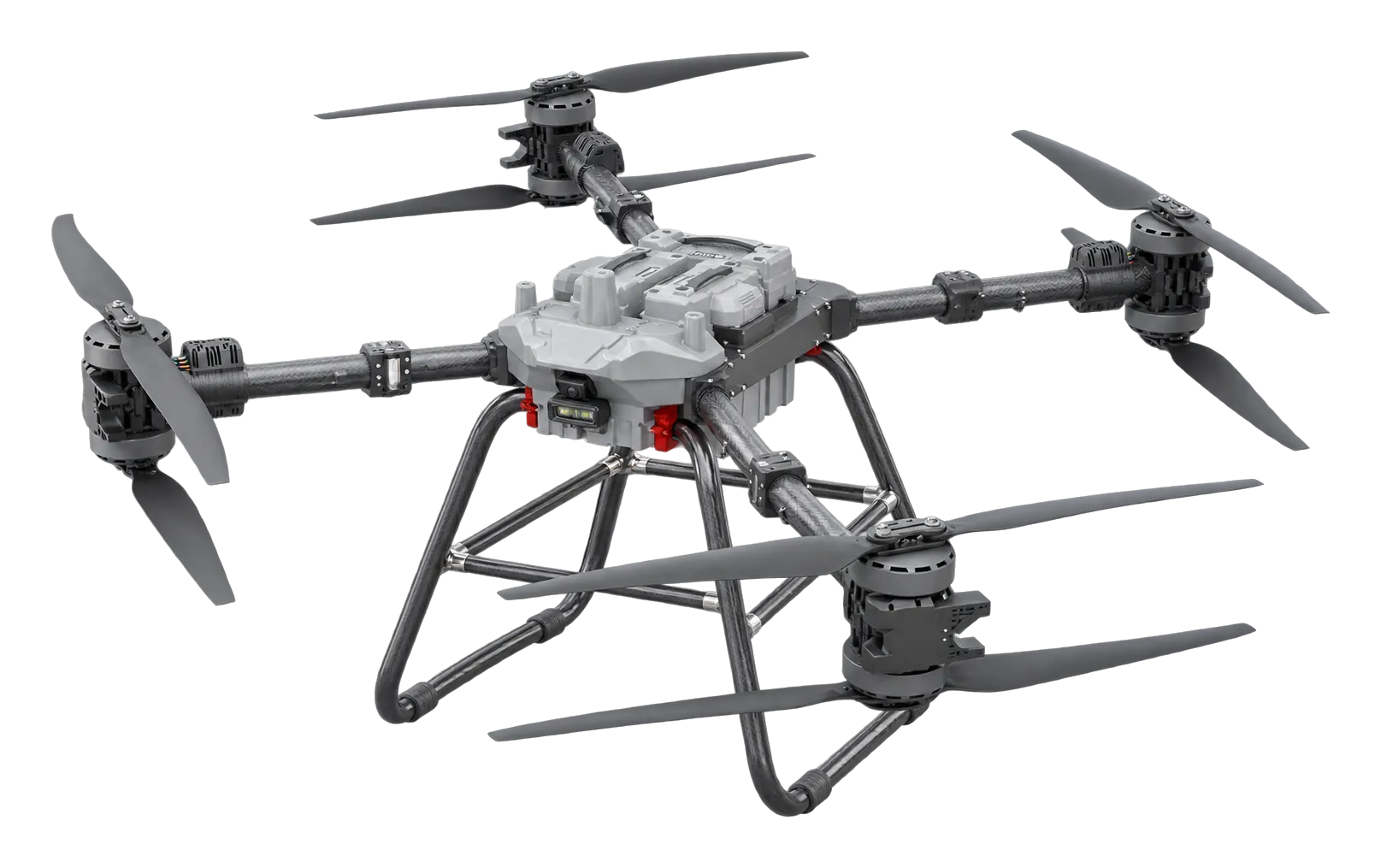
| 30–40 kg | Delivery drones such as the DJI FlyCart 30 | 30 kg (dual battery) / 40 kg (single battery) | 16 km at full load (maker figure) | Parcels, medical supplies, light site deliveries |
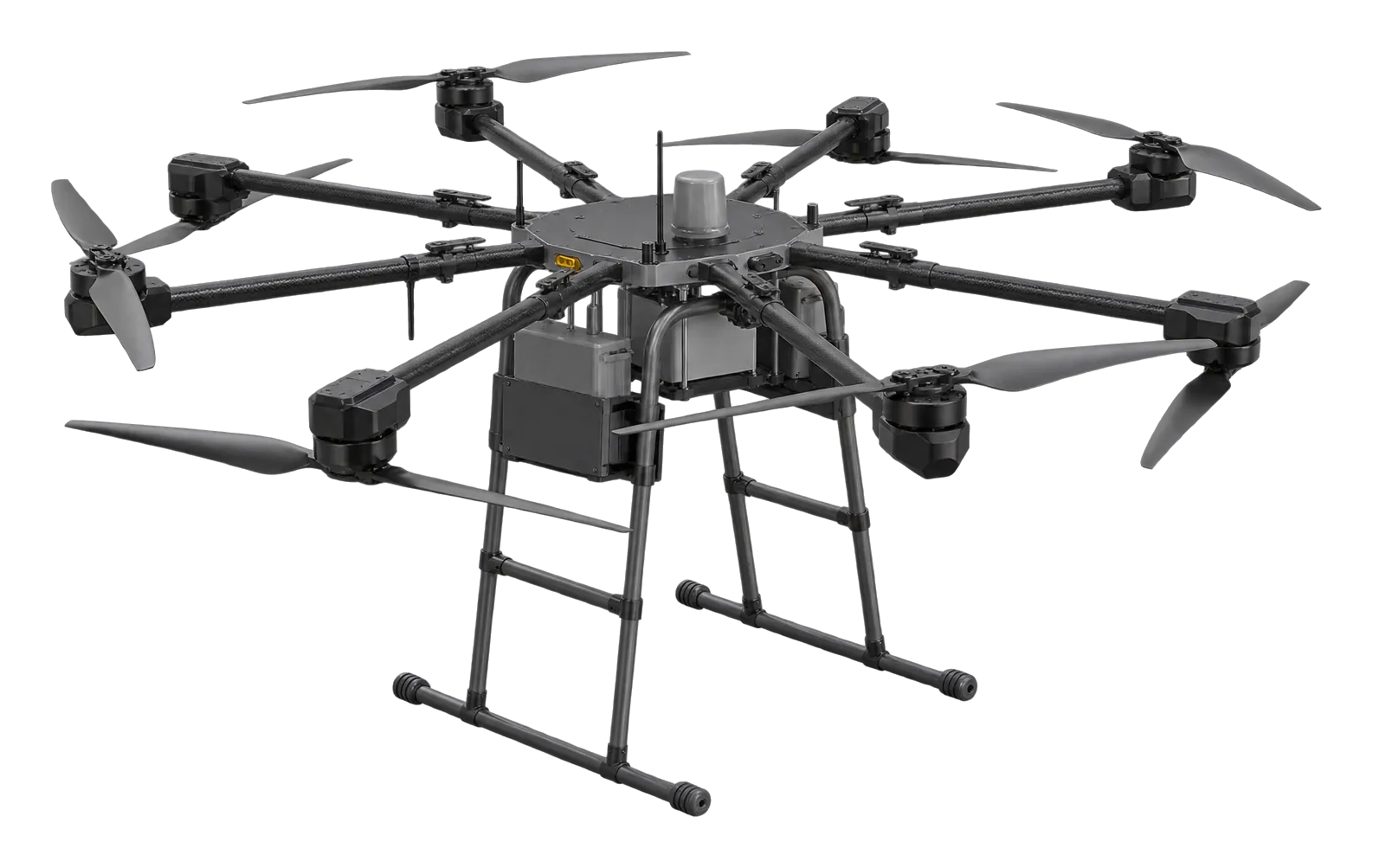
| 100 kg | HL-100 | 100 kg rated | Ask for the load table | Tools, insulators and supplies around one site |
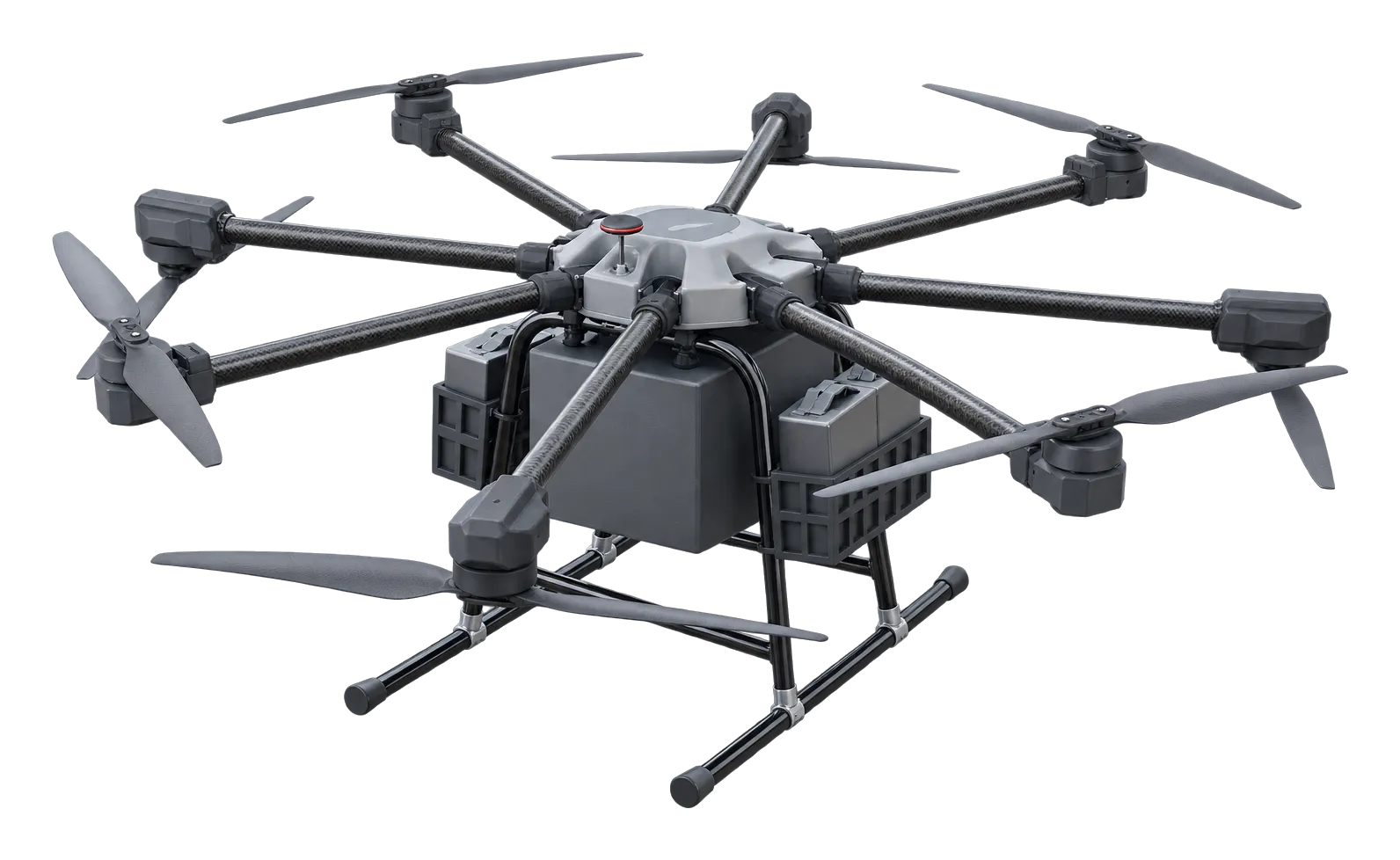
| 150 kg | HL-150 | 120 kg rated / 150 kg max | ~13.8 km with 100 kg | Longer carries of medium loads: camps, islands |
| 200 kg | HL-200 | 150 kg rated / 200 kg max | ~12 km with 150 kg | Heavy single loads over short distances: towers, slopes |
Figures for VEXAFLY aircraft are reference values from the manufacturer brochure; the DJI figures are from DJI’s own specification page.
Best for power-line and tower construction: the 200 kg class, because single loads are heavy and distances short. Best for supply runs: the 150 kg class, with its better range at 40–80 kg.
Why does range fall so fast with load?
A multirotor holds itself up with thrust. Every extra kilogram means more power just to hover, so the battery empties faster. The HL-200 table shows it clearly:
| Load | Flight time | Range |
|---|---|---|
| 20 kg | 40 min | 41 km |
| 60 kg | 28 min | 29.4 km |
| 100 kg | 18 min | 15.7 km |
| 150 kg | 15 min | 12 km |
These are theoretical, still-air values. Climbs, hovering to place a load and headwind all shorten them.
What about altitude and heat?
Thin air gives less lift. At high sites — Andean mines, Himalayan power lines, Alpine huts — the same aircraft carries less. Hot afternoons have the same effect. Plan the heaviest loads for cool mornings and keep a wider reserve above about 2,000 m. Ask for the maker’s guidance for your altitude before you size the fleet.
Worked example: material to a tower
Example only, an estimate. A line crew must move 600 kg of fittings 3 km up a slope to a tower site. With 100 kg per trip that is 6 trips. Each round trip is 6 km — well inside the 15.7 km the HL-200 table gives for 100 kg — so the reserve covers the climb and hovering to set loads down. With one battery set charging while another flies, the crew finishes in a morning. The same job at 150 kg per trip saves two trips but uses most of the reserve; most crews would not plan it that way.
Slings, hooks and winches
- Sling and hook with release: the standard. Light, simple, lets the pilot set loads down without landing.
- Cargo frame or box: for bulk items and supplies.
- Winch: lowers loads onto towers, ships or slopes from a hover; heavier and costs more.
- Load camera: the HL-150 carries a 2K gimbal pod and the HL-200 an FPV camera to watch the load.
Rules for drones this heavy
Heavy-lift drones are far above the 25 kg (55 lb) limit of standard small-drone rules. In the US, operations above 55 lb generally need an exemption under Section 44807; in the EU they fall into the specific or certified category. Carrying external loads over people is restricted almost everywhere. Start the approval process before the aircraft arrives.
Next steps
Compare costs in our cargo drone price guide, see all aircraft in the heavy-lift range, or send your load weights, distances and site altitude through the contact form.
Q & A
Common questions
01What drone can lift 200 kg?
Drones in the 200 kg class, such as the HL-200, list 200 kg as the maximum payload. For daily work the rated payload is lower (150 kg on the HL-200), and the range at full load is short — about 12 km with 150 kg in the brochure table.
02How much can a heavy lift drone lift?
Commercial heavy-lift drones range from about 30–40 kg (delivery class) to 200 kg and more. The useful figure is the load you can carry over your distance with a reserve, which is well below the maximum.
03How much do heavy lift drones cost?
Public FOB listings from Chinese suppliers in November 2026 ranged from about US$25,000 for 100 kg class aircraft to about US$49,000 for 150 kg class. See our cargo drone price guide for the full table.
04Can a drone lift a person?
Cargo drones are not approved to carry people. Passenger aircraft are a separate category with their own airworthiness rules; see our personal eVTOL guide.
05Sling or winch?
A fixed sling or hook with release is simple and light. A winch lowers loads without landing, which helps on towers and slopes, but adds weight and cost. Tell us what you carry and we confirm the attachment.
References
- 1DJI FlyCart 30 specs — DJI
- 2Section 44807: Special Authority for Certain Unmanned Systems — Federal Aviation Administration
- 3Specific category — civil drones — European Union Aviation Safety Agency
VEXAFLY Aviation Technology Co., Ltd.. VEXAFLY Aviation Technology Co., Ltd. — industrial drone maker in Nanjing. Our application engineers write and check these pages and configure inspection, cleaning, lift and fire-response systems for project buyers. About VEXAFLY